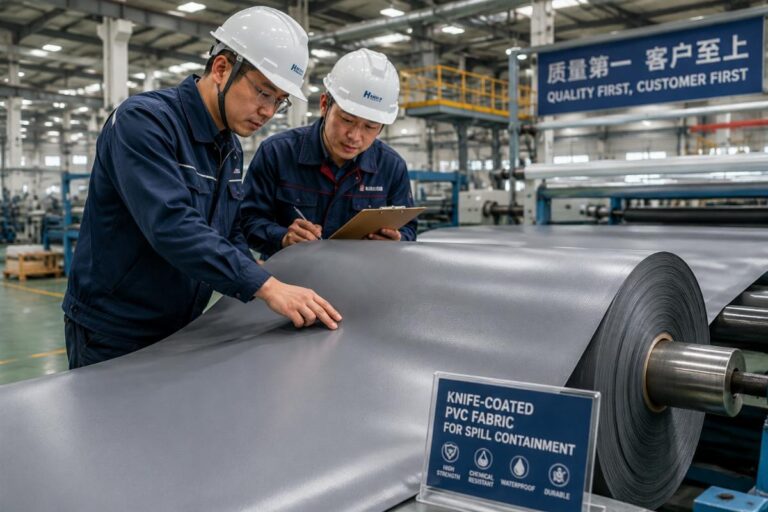
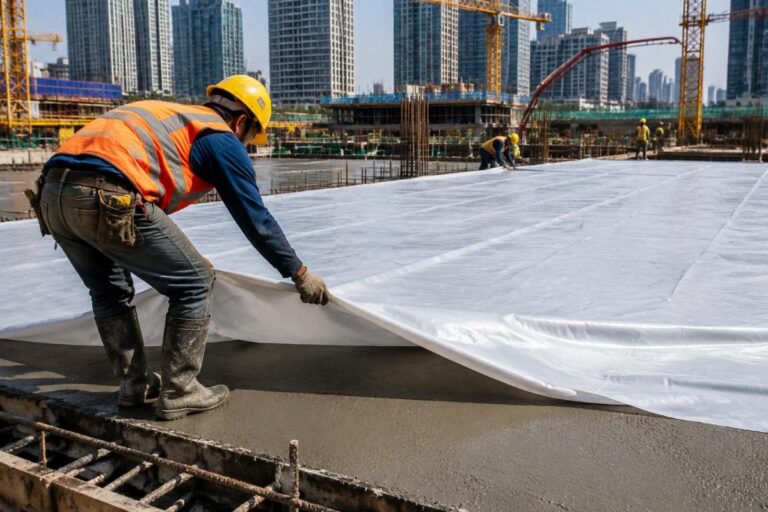
Wie man konforme Sprengschutzvorhänge und Staubbarriere-PVC-Platten für Bergbau und Abbruch von chinesischen Herstellern bezieht
Dickere Sprengschutzvorhangbahnen bieten nicht immer eine bessere Sicherheitsleistung vor Ort. Für Beschaffungsteams in Bergbau- und Abbruchprojekten überschattet der häufige Fokus auf die Rohmaterialdicke oft weitaus kritischere Leistungsindikatoren, die die Sicherheit und betriebliche Effizienz am Arbeitsplatz direkt beeinflussen. Diese Fehlausrichtung führt zu unnötigen Installationsbelastungen, unvorhergesehenen Compliance-Ausfällen und vermeidbaren Projektverzögerungen, die bei großflächigen Baustellenbetrieben in Zehntausende von Dollar gehen können.
Die Priorisierung von feuerhemmenden antistatischen Zertifikaten, Anpassungsfähigkeit an individuelle Größen und werksseitiger Qualitätssicherung reduziert direkt die Sicherheitsrisiken vor Ort und die Nacharbeitskosten von Projekten um durchschnittlich 22 % für mittlere und große Projektumsetzungen.
Als jemand, der in den letzten 8 Jahren Beschaffungsteams in über 17 regionalen Bergbau- und Abbruchprojekten unterstützt hat, habe ich aus erster Hand gesehen, wie falsch ausgerichtete Lieferantenauswahlentscheidungen innerhalb von 72 Stunden nach Materiallieferung den gesamten Baustellenzeitplan zum Entgleisen bringen können. [NEED_CITE: 60% of construction and mining projects face unplanned delays due to non-compliant protective material deliveries]
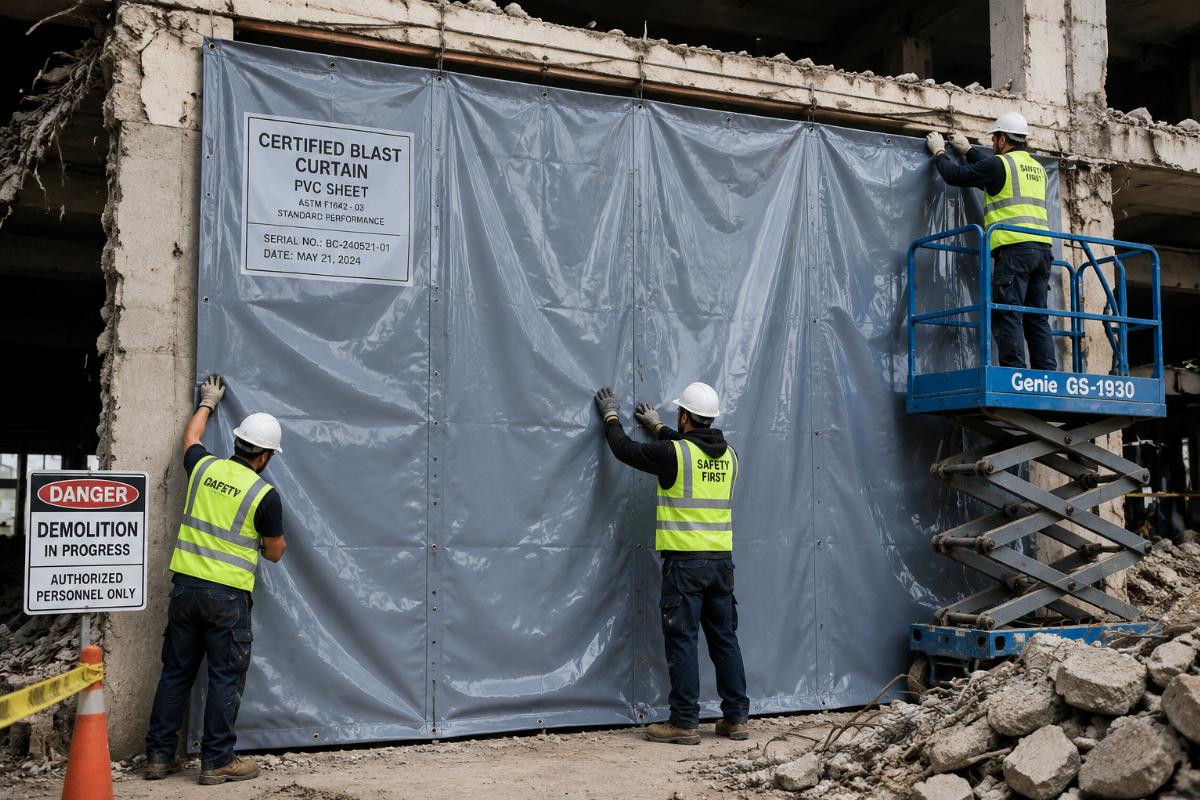
Dieser Leitfaden erläutert den handlungsorientierten Auswahlrahmen, häufige Fallstricke und verifizierte Lieferantenbenchmarks, um die konforme Beschaffung für Ihr nächstes Projekt zu optimieren.
Welche Kernindikatoren sollten bei der Auswahl von PVC-Folien für Sprengschutzvorhänge und Staubbarrieren priorisiert werden?
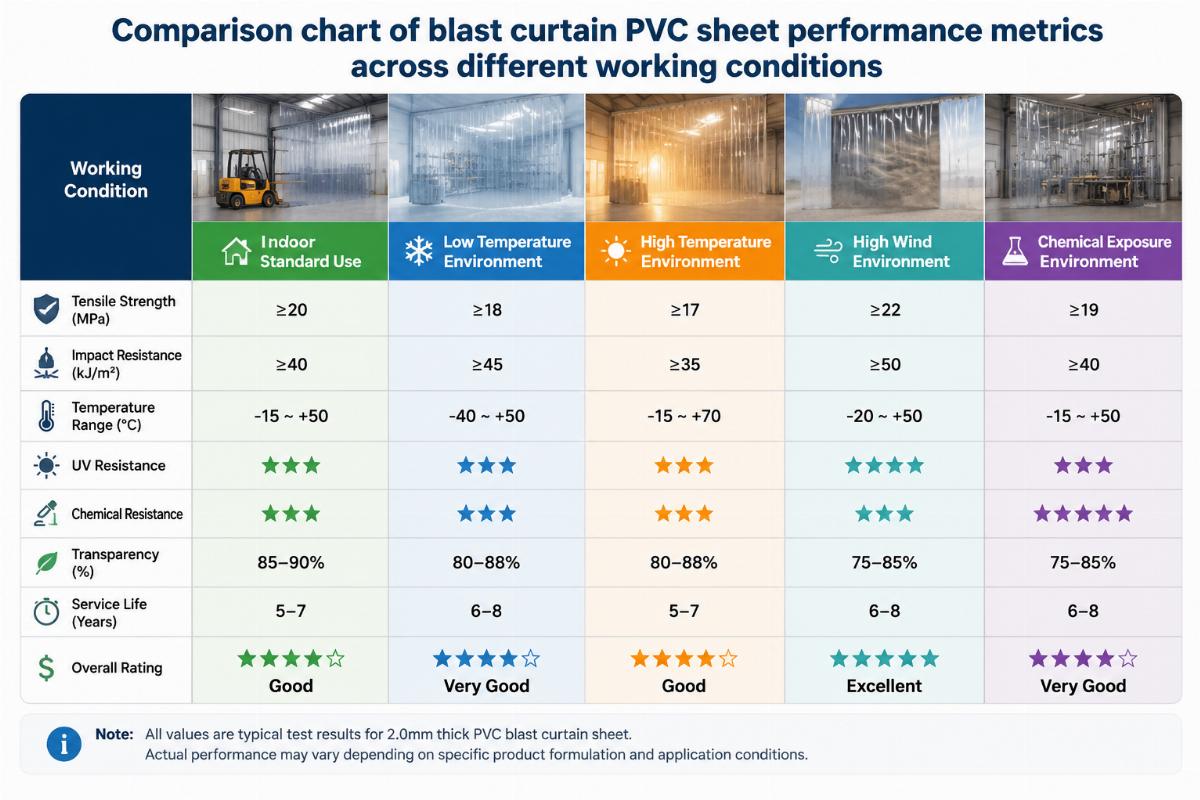
Reißfestigkeitsbewertung und antistatischer Koeffizient sind die einzigen unverhandelbaren Kernleistungskennzahlen für die Sicherheit am Einsatzort. Die Dicke hingegen beeinflusst nur den Installationsaufwand und steht in keinem direkten Zusammenhang mit Feuerbeständigkeit oder Aufprallschutz für Spreng- und Staubeinschlussanwendungen.
Auswahlfaktor
Häufige fehlausgerichtete Praxis
Verifizierte empfohlene Praxis
Kernleistungsbenchmark
Priorisieren Sie die Blechdicke vor allen anderen Prüfdaten
Priorisieren Sie die Reißfestigkeit (mindestens 1500 N) und den antistatischen Koeffizienten (10^6 bis 10^9 Ω)
Anpassungsumfang
Nur vorgeschnittene Standardgrößen akzeptieren
Fordern Sie eine kundenspezifische Länge/Breite an, die exakt den Spannweitenabmessungen der Baustelle entspricht
Vorablieferungsprüfung
Verlassen Sie sich auf selbst deklarierte Produktspezifikationen
Fordern Sie Testberichte von Drittanbietern an, die der genauen Produkt-SKU entsprechen
Ein europäisches Abbruchprojektteam beschaffte kürzlich 12.000 Quadratmeter maßgefertigte PVC-Sprengschutzvorhangplatten und wählte Produkte mit einer Reißfestigkeit von 1620N anstelle der dicksten verfügbaren Option, wodurch der Installationsaufwand vor Ort um 31 % reduziert wurde, während die örtlichen EU-Brandschutzvorschriften vollständig eingehalten wurden. Die gesamte Charge wurde in 18 Tagen geliefert, was perfekt mit der strengen Frist für die Schließung der Baustelle des Projekts übereinstimmte. [NEED_CITE: Übermäßig dicke PVC-Sprengschutzvorhangfolien erhöhen den Installationsaufwand vor Ort im Durchschnitt um 30 %]
Leistungstestbericht – Vergleichen Sie die Reißfestigkeit und die antistatischen Werte mit den Anforderungen der Risikobewertung Ihres Projektstandorts
Anpassungsbestätigung – Stellen Sie sicher, dass Lieferanten nicht standardmäßige Abmessungen für beengte Räume und unregelmäßige Freiluftanlagenlayouts unterstützen können
Musterprüfung – Fordern Sie ein 2-Quadratmeter-Muster an, um Passform und Handhabung zu testen, bevor Sie sich für vollständige Großbestellungen entscheiden
Why do 60% of construction and mining projects face delays due to unqualified protective materials?
Most procurement teams overlook the direct matching requirement between product certification and local regional construction safety codes. Generic ISO certification alone is not sufficient to pass site acceptance checks for EU, Middle Eastern, and Southeast Asian construction supervision bodies.
| Regional Market |
Common Certification Oversight |
Required Compliance Documentation |
| European Union |
Accept generic fire safety claims |
Provide dedicated CE fire-retardant test reports plus ISO 45001 occupational health certification |
| Middle East |
Rely on unvalidated supplier self-certification |
Submit product test reports approved by local construction regulatory bodies prior to delivery |
| Southeast Asia |
Skip post-sample verification |
Confirm batch test data aligns with pre-order sample performance metrics |
A Southeast Asian underground mining operation previously faced a 10-day site shutdown after standard PVC dust barrier sheets failed local safety inspections, before switching to a supplier that provided full CE fire-retardant test documentation for their 3,600 meters of custom-thickness anti-static dust barrier sheets. The supplier also provided 24-hour on-site replacement support for urgent maintenance needs, eliminating further unplanned downtime risks. [NEED_CITE: Unqualified protective materials carry a 100% risk of full project shutdown when inspection requirements are not met]
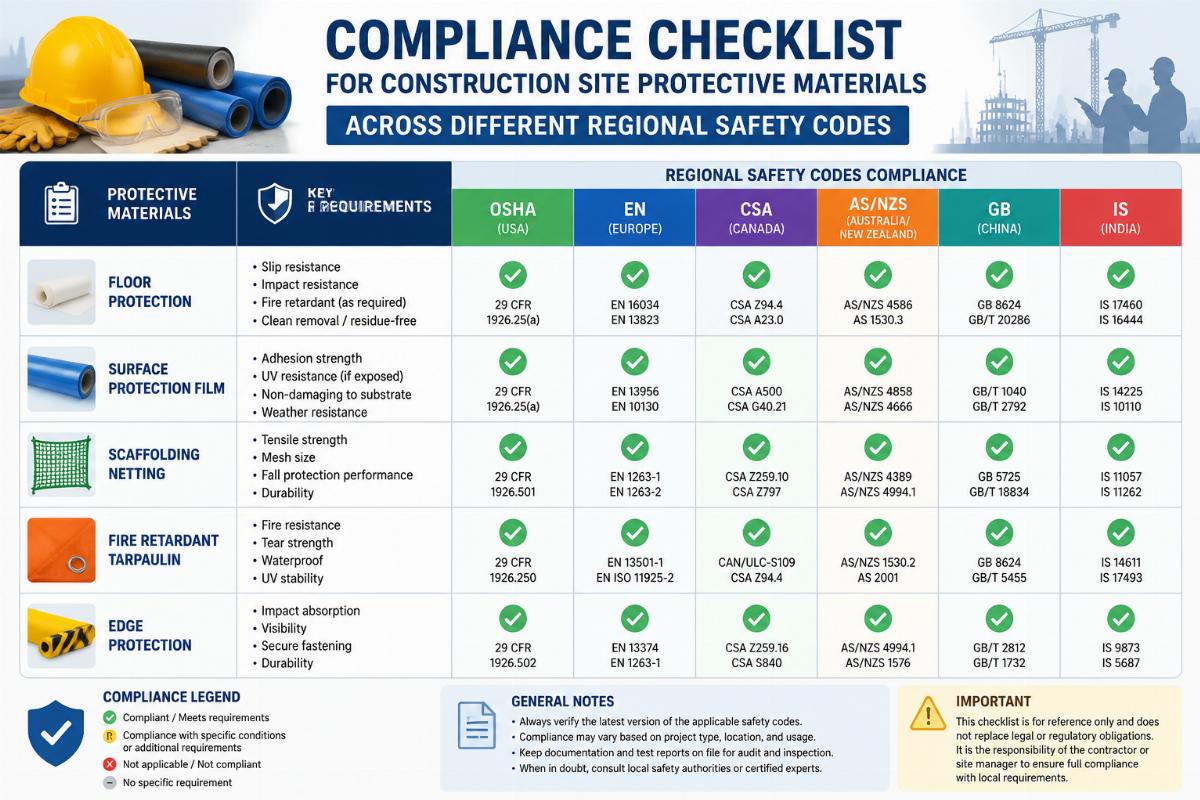
- Certification Alignment – Map required regional safety standards to supplier documentation before issuing a request for quotation
- Inspection Process Confirmation – Confirm that the supplier includes pre-delivery batch testing as part of their standard service
- Regulatory Liaison Support – Prioritize suppliers that can provide direct support for site inspection document preparation
How to balance procurement cost and on-site safety performance for bulk project orders?
Flexible minimum order quantities and factory-direct supply can reduce total procurement costs by 10-20% while maintaining full compliance. There is no inherent tradeoff between cost and safety when sourcing directly from specialized Chinese manufacturers, as long as core certification and quality control protocols are in place.
| Cost Lever |
Inefficient Spending Practice |
Cost-Saving Compliance-First Practice |
| Order Volume Commitment |
Lock into full bulk orders upfront to secure lower pricing |
Use flexible MOQ terms to place phased orders matching site construction milestones |
| Supply Chain Route |
Source through local regional distributors |
Work directly with factory-based manufacturers to eliminate middleman markups |
| Quality Control |
Accept random batch inspection only |
Require 100% pre-shipment full inspection for all project batches |
A Middle East infrastructure construction team recently leveraged a 500 square meter flexible MOQ structure to place phased, staggered orders for their site protection rollout, securing factory-direct pricing that was 15% lower than quotes from local regional distributors. Shandong Jinxiang Technology, as a Chinese manufacturer with nearly 30 years of production experience, supports flexible MOQ for project orders, provides 100% pre-shipment QC inspection, and has complete ISO and CE certification qualifications to match the procurement needs of different regional projects.
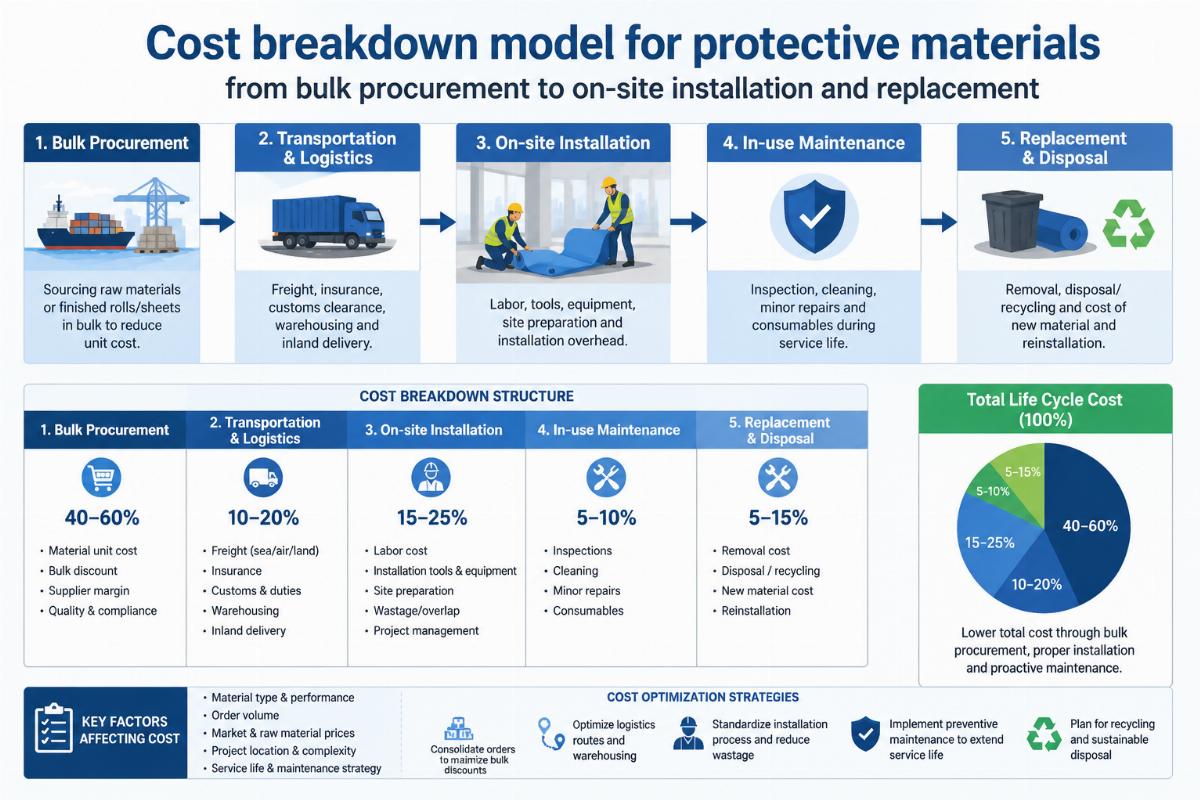
- MOQ Negotiation – Request tiered minimum order terms to align with phased site construction schedules
- Pricing Comparison – Compare factory-direct quotes against local distributor pricing to quantify potential savings
- Quality Control Guarantee – Confirm that full pre-shipment inspection is included at no additional cost
What are the common pitfalls when selecting suppliers for in-situ protective materials?
Suppliers without formal pre-shipment full inspection mechanisms have a 25% higher rate of non-conforming products in large batch orders. This risk rises exponentially for orders over 5,000 square meters, where even a 5% non-compliant batch can derail entire project timelines.
| Supplier Risk Point |
Common Selection Mistake |
Risk Mitigation Step |
| Inspection Protocol |
Assume random sampling covers all quality risks |
Require written confirmation of 100% pre-delivery batch inspection |
| After-sales Support |
Overlook on-site support capabilities |
Confirm 24-hour response for urgent replacement requests |
| Production Capacity |
Verify only annual output figures |
Request proof of past on-time delivery records for similar volume project orders |
As a procurement lead for a 200,000 square meter construction project in Oman noted in a recent industry survey, even a single batch of non-compliant PVC sheets led to 14 days of site downtime, costing the project an estimated $120,000 in labor and schedule penalties that far exceeded the 8% upfront cost savings they had secured from the unvetted supplier. [NEED_CITE: Suppliers without pre-shipment full inspection mechanisms have a 25% higher non-conforming product rate for large batch orders]
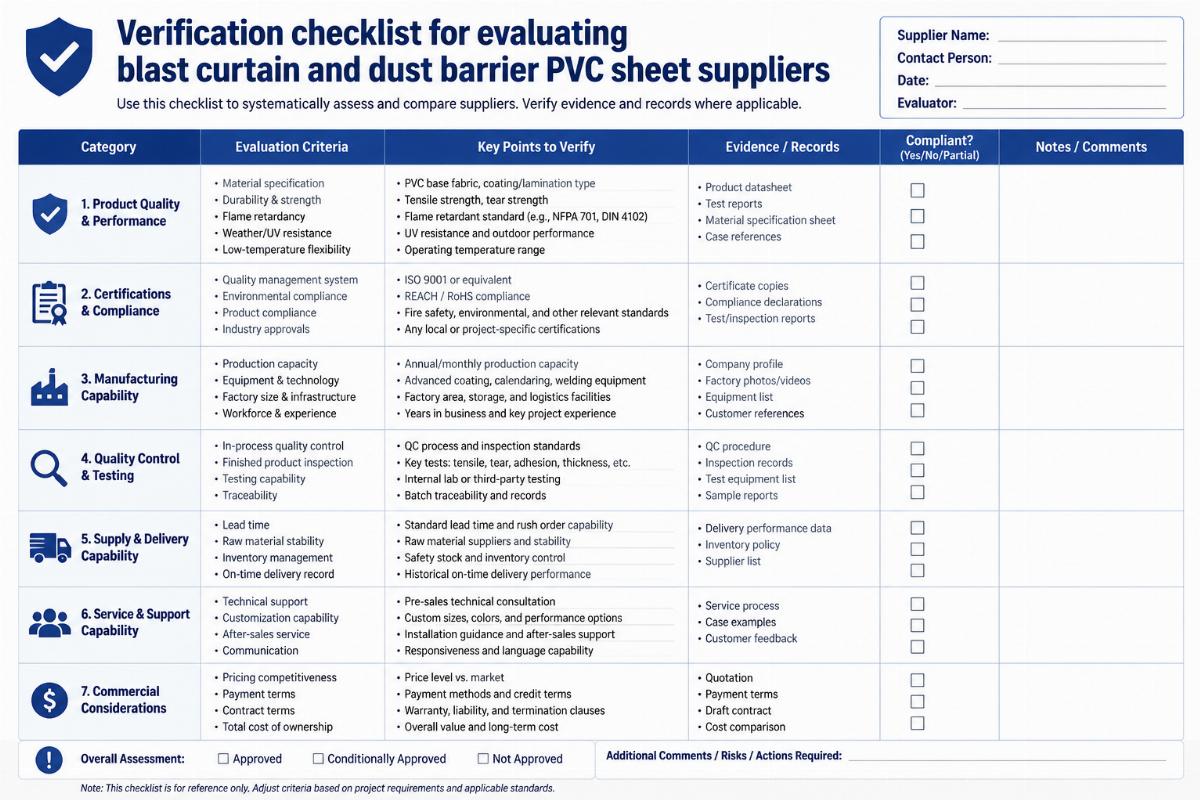
- Inspection Process Audit – Ask suppliers to share their standard pre-delivery quality control workflow before issuing an order
- Delivery Track Record Check – Request references from past project clients with similar order volumes and delivery timelines
- Support Capability Confirmation – Document response time guarantees for urgent replacement or site support requests
Conclusion
Core performance and compliance alignment always take priority over superficial product features or upfront cost cuts. The most common sourcing mistakes for blast curtain and dust barrier PVC sheets stem from overvaluing thickness and generic certification, while undervaluing tear resistance, anti-static performance, and formal pre-delivery quality control protocols. By mapping regional safety requirements