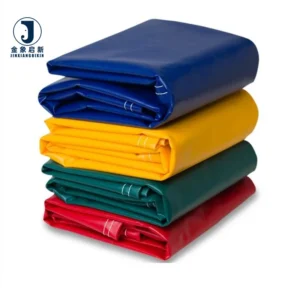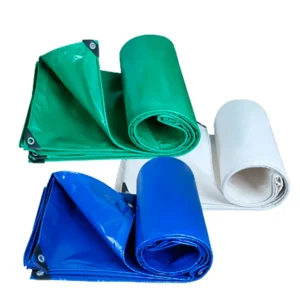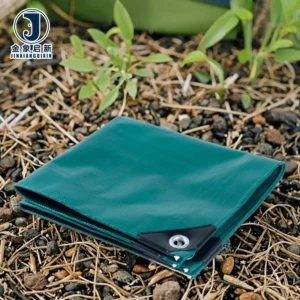
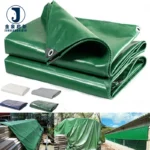
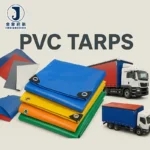
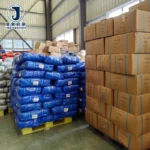
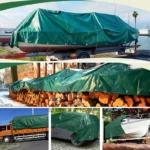
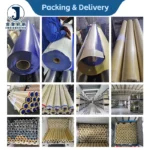
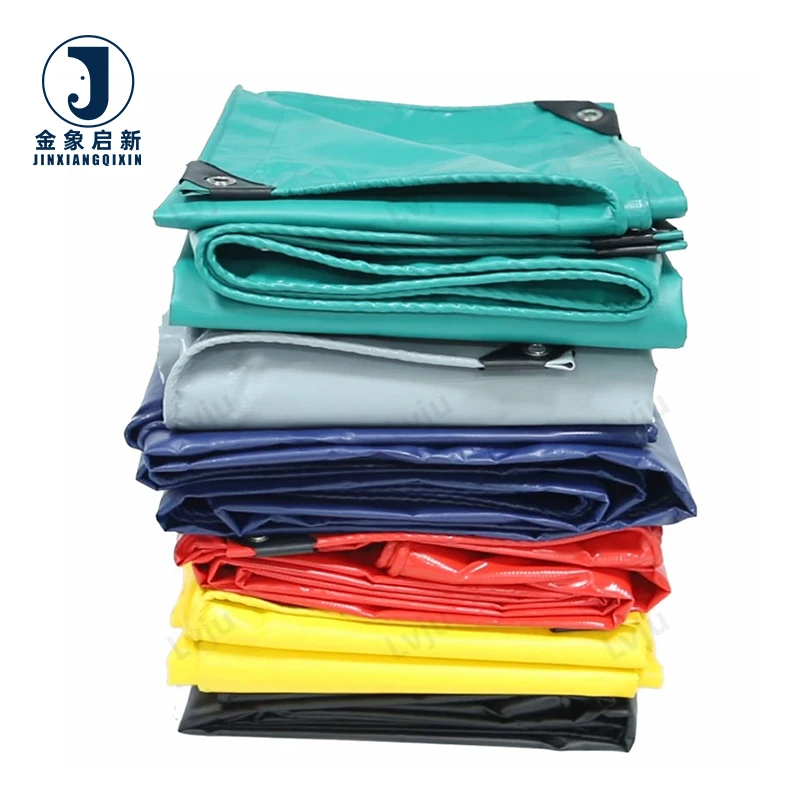
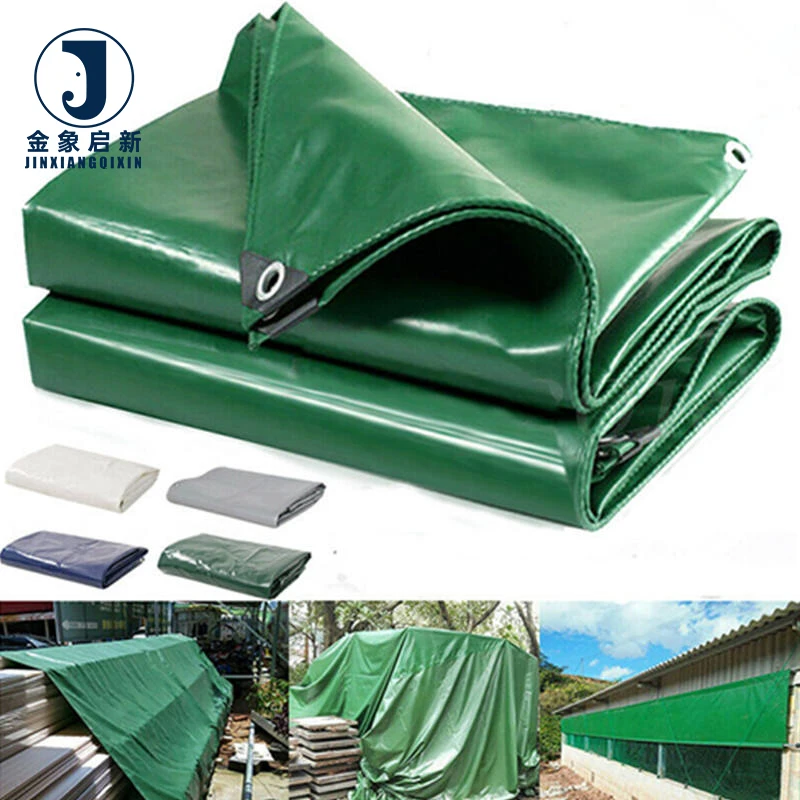
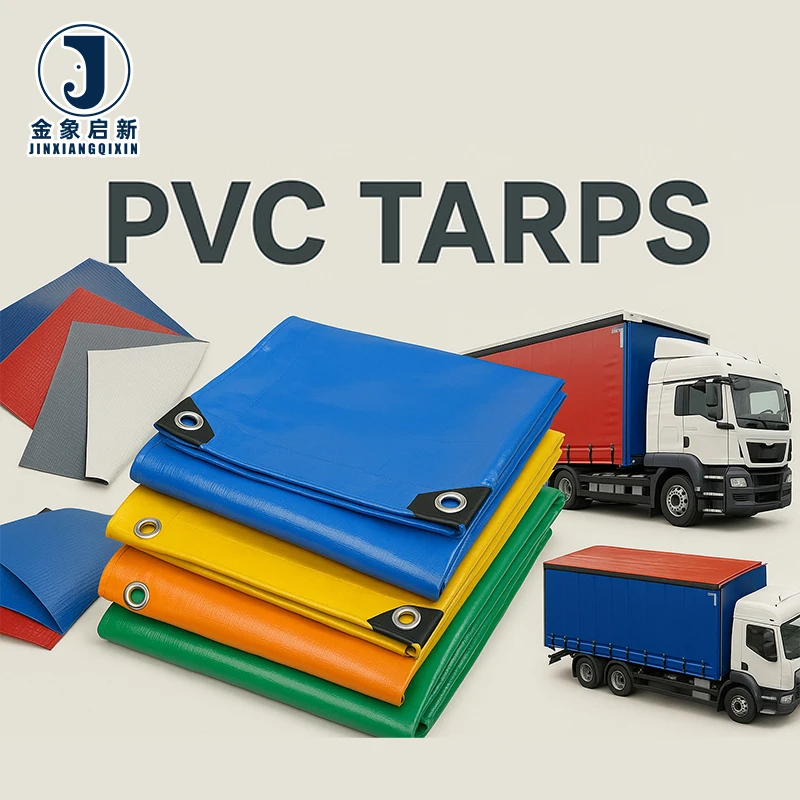
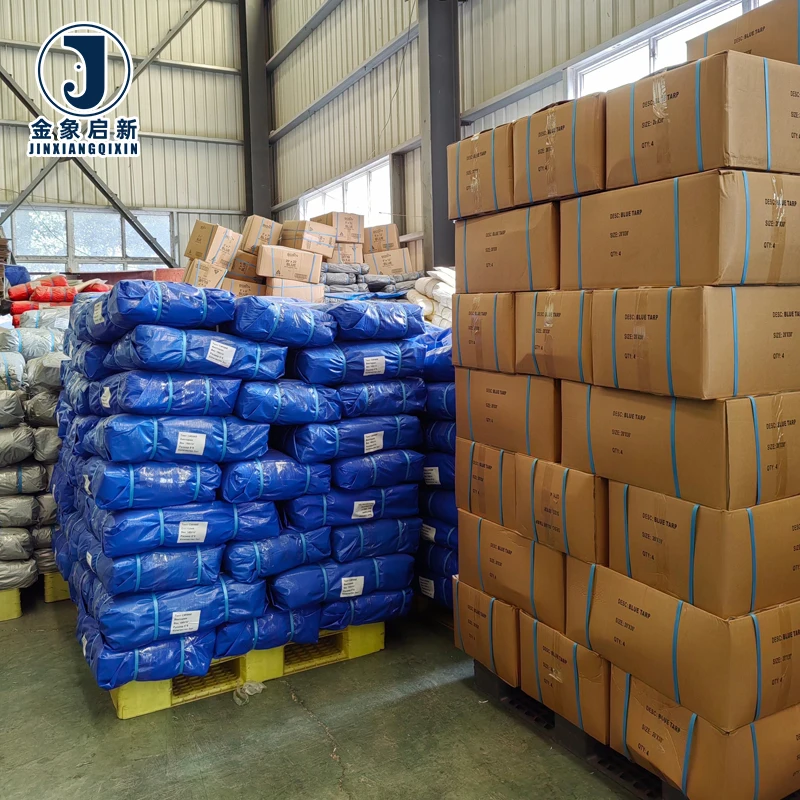

Coating Adhesion Control — Knife-coating at 500 GSM is monitored through in-process peel and weight checks, keeping the PVC layer bonded to the base fabric within tolerance from first metre to last.
Technical Specifications
| Parameter | Value |
|---|---|
| Product Type | PVC Knife-Coated Fabric |
| Weight | 500 GSM |
| Coating Material | High Density Virgin PVC |
| Coating Method | Knife Coated |
| Colour Options | Double-side colour options available |
| Waterproof | Yes — fully waterproof coated construction |
| UV Treatment | Available in UV-stabilised grades — confirm the grade required for your market |
| Flame Retardant | Available in flame retardant grades — confirm the grade required for your market |
| Custom Width | Available |
| Custom Length | Available |
| Eyelets & Reinforced Hems | Available on finished panels |
| Pattern Printing & Branding | Available |
Application Suitability
| Application | Exposure & Requirement |
|---|---|
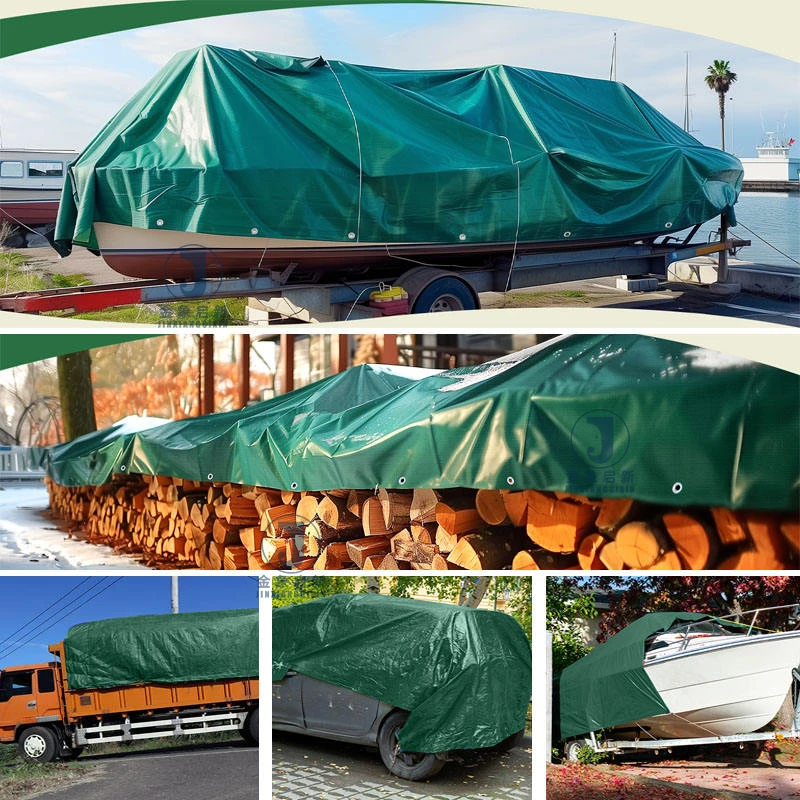
| Tent and canopy structures | Sustained UV exposure, wind loading, rain ingress, frequent pack-and-redeploy flex cycles |
| Truck and trailer tarpaulin covers | Road abrasion, constant vibration, flex at tie-down points, weather and salt spray |
| Awning and sun shade covers | Direct sunlight, thermal cycling, pooling water on low-slope installations |
| Ship and marine rainproof covers | Salt-laden atmosphere, UV, mechanical abrasion from deck hardware |
| Balcony wind barrier screens | Continuous wind load, UV, visual consistency across adjacent panels |
| Home and garden plant protection covers | Seasonal UV, moisture, handling during install and removal |
| Outdoor furniture and equipment covers | UV, rain, dust ingress, repeated fit-and-remove cycles |
What Happens When the Roll Weight Does Not Match the Quotation
A quoted 500 GSM PVC Knife-Coated Fabric must arrive at 500 GSM — verified by scale, not assumed by trust.
In coated fabric procurement, the gap between the specification on paper and the material on the warehouse floor is where most disputes begin. Rolls that arrive lighter than agreed reduce tensile reserves, shorten service intervals, and shift the cost burden to the fabricator who must replace failed panels in the field. For tent manufacturers and truck cover builders buying PVC Knife-Coated Fabric by the roll, the incoming weight check is the first and most consequential quality gate [NEED_CITE: incoming inspection protocols for coated textile rolls per ISO 3801].
How Knife Coating Differs From Other PVC Fabric Processes
Knife coating applies a measured PVC paste layer directly onto the base fabric under controlled blade gap and tension. This method produces a consistent coating weight across the full roll width, which is critical when fabricators are heat-welding seams on PVC Knife-Coated Fabric for tensioned tent and canopy structures. Unlike laminated constructions where a pre-formed film is bonded to the scrim, knife coating allows the PVC to penetrate the base weave, improving peel strength at the interface.
Why Coating Adhesion Matters at the Weld Line
When a truck side curtain or tent panel flexes under load, the highest stress concentrates at the heat-welded seam rather than the body of the fabric. If the PVC coating has poor adhesion to the base yarn, the weld zone delaminates before the fabric itself reaches its tensile limit. Our knife-coating process controls paste viscosity and cure temperature so that the coating bonds into the base fabric structure, not just onto its surface [NEED_CITE: peel adhesion test methods for coated fabrics per ISO 2411]. This directly affects how well finished panels hold up at flex points over repeated use cycles.
Reading the Specification Sheet Beyond GSM
The 500 GSM figure tells you the total mass per square metre but not how that mass is distributed between base fabric and coating. A fabric with a heavier coating and lighter base yarn may match the same GSM as one with a denser scrim and thinner coat, yet their tensile, tear, and weld behaviour will differ substantially. For structural tent and awning applications, the base fabric denier and weave density determine how loads distribute across the panel. Coating thickness governs waterproofing, abrasion resistance, and heat-weld receptivity. When evaluating PVC Knife-Coated Fabric for your project, request the full construction breakdown — base yarn count, mesh density, and coating weight — rather than relying on GSM alone. UV and flame retardant treatments are available as additional options; confirm the specific grade and test basis required for your target market before placing an order.
The Cost of Colour Inconsistency Across a Multi-Roll Order
When fabricators install panels cut from different rolls side by side on a truck trailer or a tent canopy, even a slight shade variation becomes visible in daylight. This is not a cosmetic issue — it triggers rejection at the installation site, forcing the contractor to replace entire panels and absorb the labour and downtime cost. Batch-to-batch colour matching requires disciplined pigment dosing and curing conditions throughout production [NEED_CITE: colour consistency standards for coated textiles in transport and architectural applications]. Before committing to a multi-roll order, request a cutting sample from each production batch and verify shade alignment under the lighting conditions the finished installation will experience.
Why Fabricators Source This Material Here
Coating weight is verified at every stage — incoming base fabric is weighed, in-process coating thickness is measured, and finished rolls are sampled before dispatch to confirm the stated 500 GSM is met.
Three full production lines and 36 sets of professional equipment support bulk roll output with consistent lead times for repeat orders.
A dedicated R&D team develops custom width, colour, and branding samples within days, reducing the time from initial enquiry to production release.
Quality inspection covers every roll at every stage, with 100% pre-shipment checks catching coating defects, colour drift, and weight deviation before the goods leave the factory.
Nearly 30 years of coated fabric production experience means the process parameters for PVC Knife-Coated Fabric at this weight grade are established and repeatable, not experimental.
Documentation & Verification
- Material specification sheet stating GSM, base fabric construction, and coating method for each roll batch
- UV and flame retardant test reports referenced to batch number where applicable grades are specified
- Pre-shipment inspection record confirming weight verification per roll against the stated 500 GSM
- ISO and CE certificates supporting export compliance documentation
- Roll packing list with net weight, gross weight, and roll count for container loading verification
- Certificate of origin issued for customs clearance at destination port
Fabrication, Handling & Storage
- Heat-weld this 500 GSM knife-coated fabric using hot air or wedge welders calibrated for PVC; verify seam peel strength on a test offcut before full production runs.
- Store rolls vertically on end-caps in a shaded, ventilated area to prevent flat-spot deformation of the coating surface under self-weight.
- When cutting panels from multiple rolls, sequence the roll numbers and orient cuts consistently to minimise visible shade variation across installed panels.
- Clean finished covers with mild detergent and water; avoid solvent-based cleaners that can soften the high-density virgin PVC coating and reduce surface integrity.
- For field repairs, use compatible PVC repair tape or liquid PVC adhesive matched to the knife-coated surface chemistry for lasting bond strength.
Requesting a Quote That Matches Your Project
Provide the intended application and the environmental conditions the fabric will face — UV exposure duration, wind loading, temperature range — so the correct treatment grade can be recommended. Specify the roll width and length you need, along with annual volume, to confirm production scheduling and batch consistency. If your project requires a specific colour match or printed branding, share the Pantone or RAL reference and request a physical sample for approval before full production.
Frequently Asked Questions
Q: How is the stated 500 GSM verified before the rolls ship?
A: Each production run is sampled and weighed per unit area against the quoted specification. A pre-shipment inspection record documents the measured GSM for every roll in the order, and this record is included with the shipping documentation so you can cross-check on receipt.
Q: What test reports come with UV-stabilised and flame retardant grades?
A: Where UV or flame retardant treatment is specified, the corresponding test report is issued and referenced to the production batch number. Confirm the test standard required by your market — such as DIN 4102 for flame classification or a specific UV exposure protocol — at the enquiry stage so the correct grade is produced and documented.
Q: Can custom width and colour be held consistent across a multi-roll order?
A: Yes. Pigment dosing and coating parameters are locked at the start of each production batch. We supply cutting samples from each batch for your shade approval, and the pre-shipment inspection includes a visual comparison of rolls within the same order to catch any drift before dispatch.
Q: What welding methods are compatible with this knife-coated fabric?
A: Hot air welding and heated wedge welding are both compatible with the high-density virgin PVC coating surface. We recommend running a weld parameter test on a sample offcut to establish temperature, speed, and pressure settings before committing to full panel production.
Q: What documentation is included with each shipment?
A: Every shipment includes a material specification sheet, a roll packing list with weight and count, ISO and CE certificates, and a pre-shipment inspection record. Where applicable, UV and flame retardant test reports and a certificate of origin are also included for customs and compliance purposes.