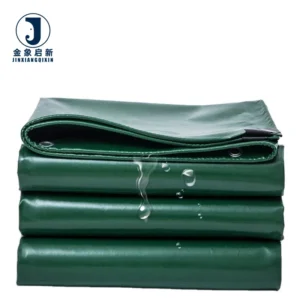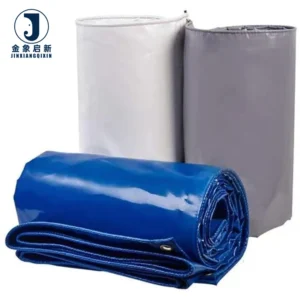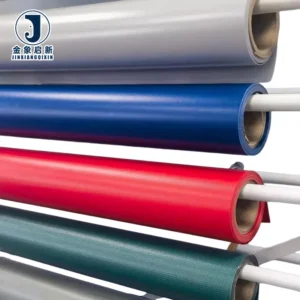
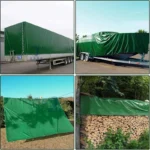
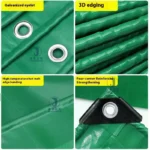
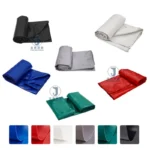

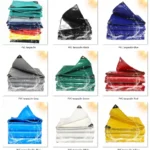
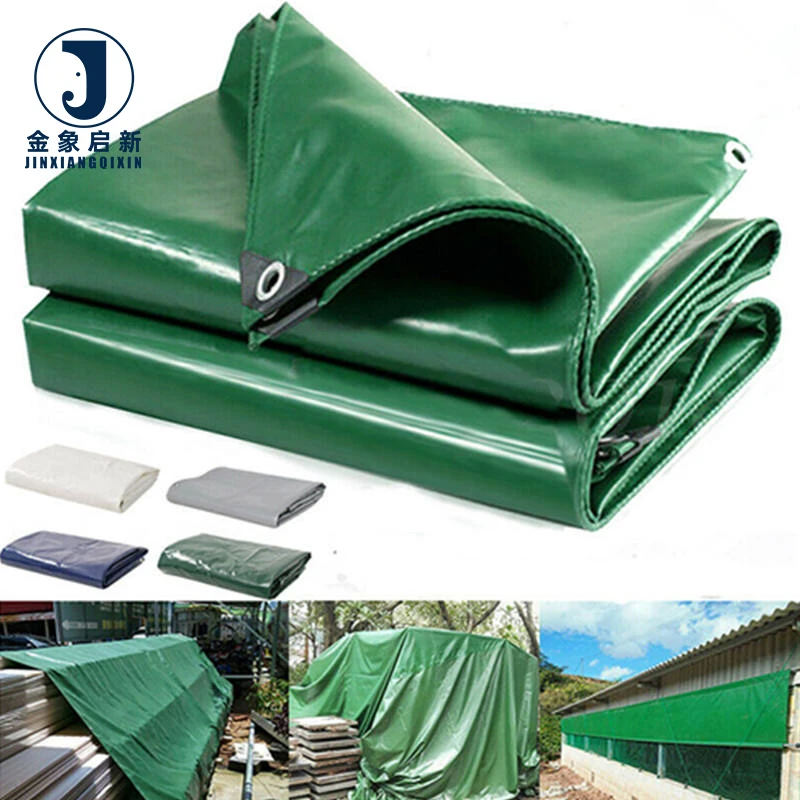
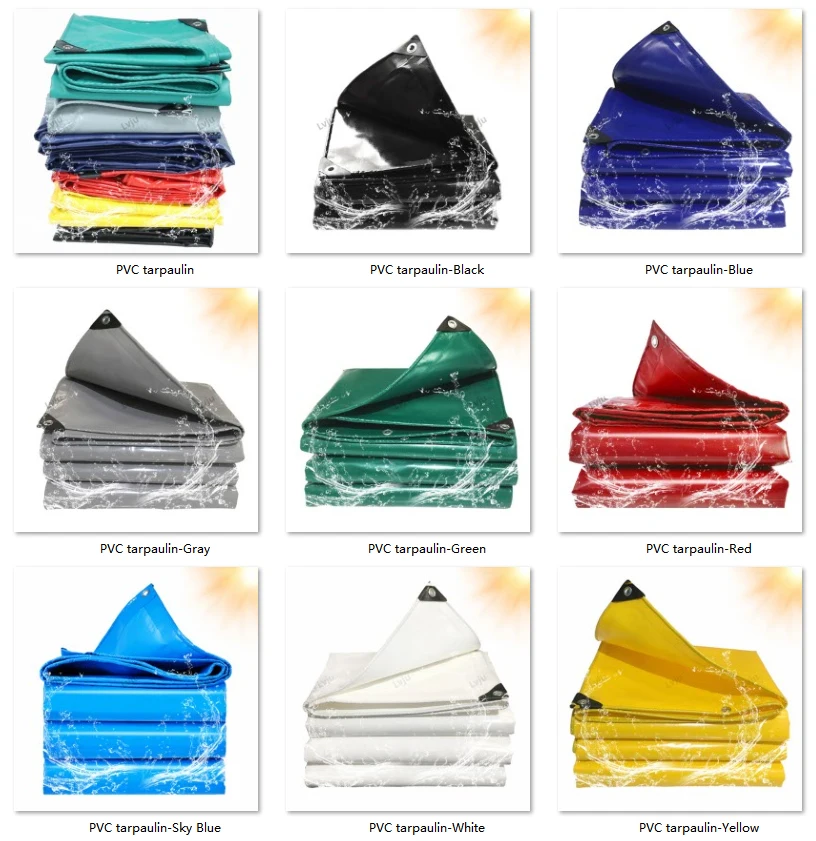
Three production lines — dedicated coating capacity allows hot-melt and laminated PVC processes to run simultaneously, keeping 650gsm industrial duct fabric on schedule even when fire-retardant and anti-static treatments extend cycle times.
Technical Specifications
| Parameter | Value |
|---|---|
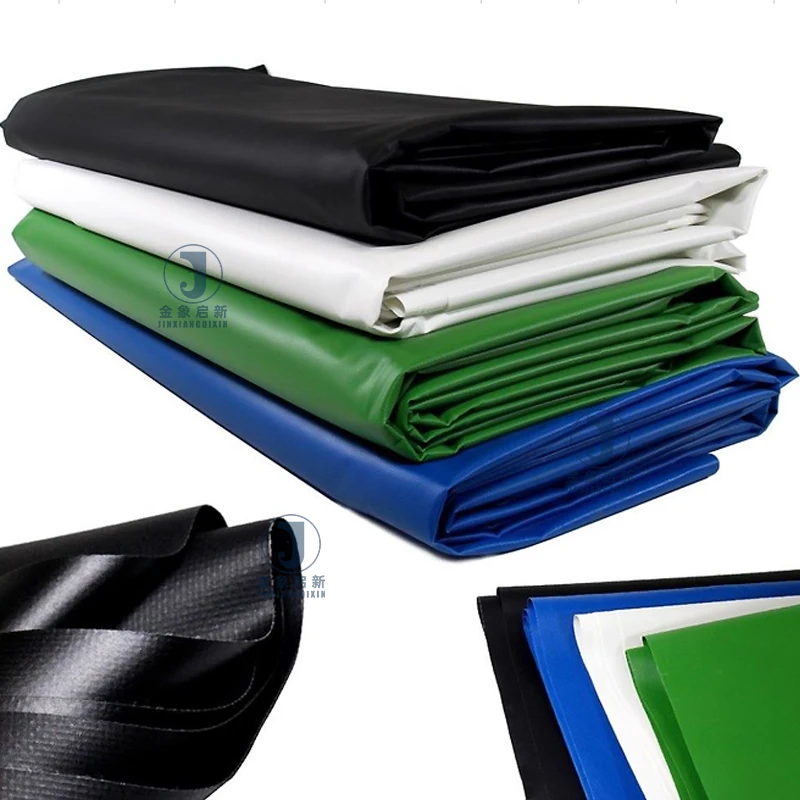
| Product Type | PVC Tarpaulin Roll |
| Weight | 650 gsm |
| Base Fabric | 100% high tenacity polyester yarns |
| Coating Material | PVC |
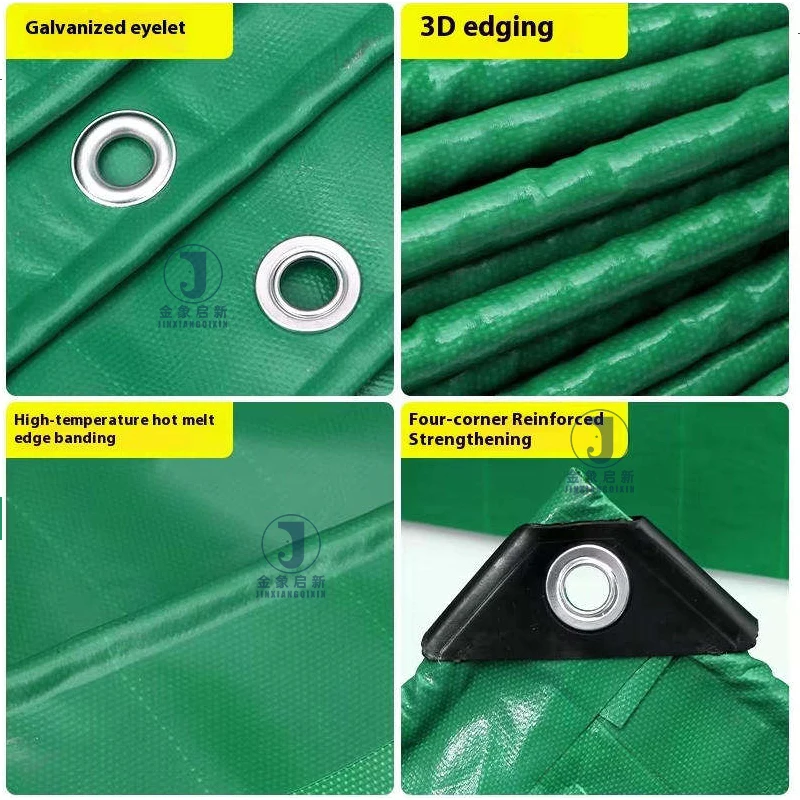
| Coating Method | Laminated technology & Hot-melt Coating technology |
| Waterproof | Yes |
| Cold Crack Resistance | Yes |
| Anti-Mildew | Yes |
| Anti-Static Treatment | Yes (surface resistance standard not stated in source) |
| Flame Retardant | Available as special treatment (grade not stated in source) |
| Anti-Cold | Available as special treatment (test basis not stated in source) |
| Color Fastness | Best color fastness (test basis not stated in source) |
| Tensile Strength | Good strength (test standard not stated in source) |
| Tear Strength | Outstanding tearing strength for welding (test standard not stated in source) |
| Adhesion Strength | Good adhesion strength (test standard not stated in source) |
| Printing Compatibility | Digital printing compatible |
| Outdoor Service Life | 3-5 years (source value — verify against manufacturer catalog) |
Application Suitability
| Application | Exposure & Requirement |
|---|---|
| Mine and tunnelling ventilation duct | Continuous airflow load, combustible dust environment, mandatory fire-retardant and anti-static compliance on site |
| Aviation ground-support ducting | Fuel-rich tarmac exposure, rapid deployment and teardown, flame-retardant certification required by airfield authority |
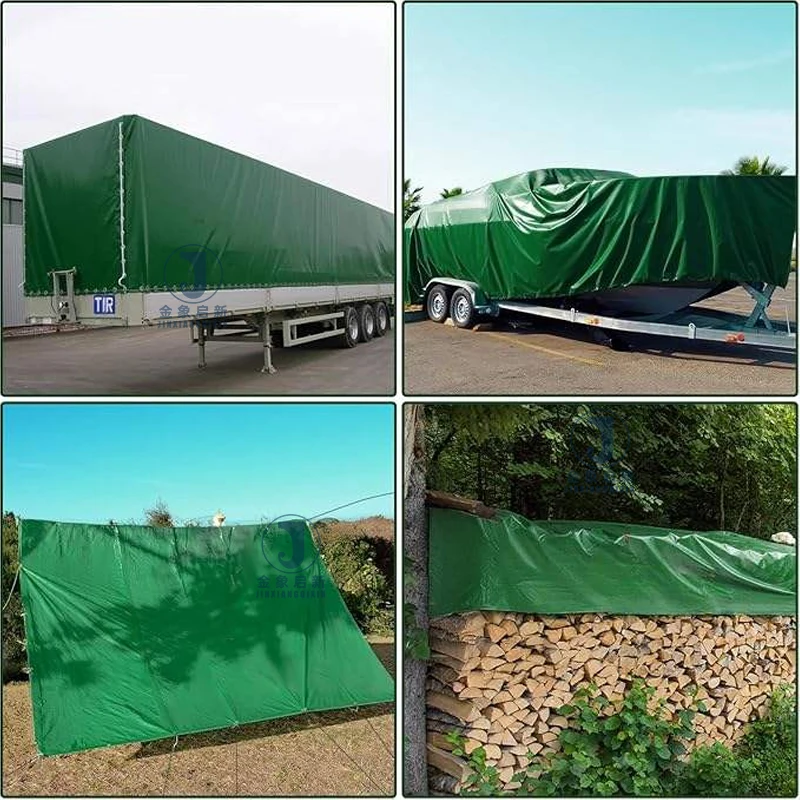
| Inflatable and membrane structures | Biaxial tension, UV exposure, wind-driven rain, seam integrity under cyclic pressure |
| Temporary construction ventilation | Abrasive particulate in airstream, mechanical contact with scaffold, seasonal temperature swings |
Why Ventilation Duct Fabric Fails the Site Compliance Inspection
A duct roll arriving without the fire-retardant or anti-static test report matched to your project specification is a roll that cannot be installed.
Mining and tunnelling contractors routinely specify ventilation duct fabric with flame-retardant and anti-static properties, only to discover at the gatehouse that the supplier shipped a standard grade or provided a generic certificate that does not cover the batch delivered. The consequence is not a paperwork delay — it is a ventilation shutdown underground until compliant material is sourced and flown in at emergency freight cost. When sourcing PVC tarpaulin roll fire retardant and anti-static for regulated sites, the test report must name the standard, the grade achieved, and the batch or roll reference. Anything less leaves the site engineer unable to sign off [NEED_CITE: mine ventilation duct fire safety compliance standards].
Fire-Retardant Grades and Market-Specific Requirements
Different jurisdictions enforce different fire classification systems for ventilation ductwork in occupied or hazardous spaces. A PVC tarpaulin roll fire retardant to one standard may not satisfy the authority having jurisdiction on your project. When you request a quotation, specify whether the site requires classification per DIN 4102, NFPA 701, M2, or another regional standard so that the correct additive package is compounded into the PVC coating before production begins. Our R&D team formulates flame-retardant treatments as a special order, and the resulting test report ships with the roll documentation.
Anti-Static Performance in Combustible Dust Environments
Underground mining and certain industrial processing environments generate airborne particulate that can ignite from a static discharge on the duct surface. Anti-static treatment for this PVC tarpaulin roll is available as a surface modification that reduces charge accumulation during high-velocity airflow. The critical verification step is a surface resistance test report that documents the measured value against the threshold required by the site safety plan. Confirm the target resistance range at inquiry stage so the treatment can be validated before dispatch [NEED_CITE: anti-static surface resistance thresholds for mining ventilation ducts].
Hot-Melt Coating, Base Fabric, and Duct Seam Integrity
The 650 gsm weight of this fabric is achieved through a 100% high-tenacity polyester base fabric combined with PVC applied via laminated and hot-melt coating technology. Hot-melt coating penetrates the yarn interstices more thoroughly than simple knife-over-roll coating, which directly affects adhesion strength between the PVC layer and the polyester scrim. For duct fabrication, this matters because the longitudinal seam is typically heat-welded, and the weld must carry the full hoop stress generated by internal air pressure. A coating that has poor adhesion to the base yarn will delaminate at the weld edge before the fabric itself reaches its tear limit. The outstanding tearing strength for welding reported for this grade reflects the bond quality that hot-melt processing delivers, reducing the likelihood of seam failure during duct service life [NEED_CITE: tensile and tear test methods for coated fabrics per ISO 1421].
Coating Method and Dimensional Stability Under Airflow Load
Ventilation ducts operate under positive or negative pressure, meaning the fabric wall is under continuous biaxial tension. A laminated PVC coating locks the warp and weft yarns into a fixed grid, limiting yarn migration and maintaining the original panel dimensions across temperature fluctuations. This dimensional stability prevents the duct from sagging between support rings or developing wrinkles that restrict airflow. The 650 gsm construction provides sufficient mass to resist flutter at typical mine ventilation velocities while remaining light enough for a two-person crew to handle during installation and strike.
The Cost of Shipping a Duct Roll Without the Right Paperwork
A ventilation duct roll that meets the physical specification but arrives without the fire-retardant or anti-static certificate required by the site inspector cannot be unrolled. The contractor pays standby charges for the installation crew, rents temporary ventilation equipment at premium daily rates, and air-freights a replacement batch from the nearest stocked source. All of this is avoidable when the test report, matched to the correct standard and grade, ships inside the roll core with the packing list [NEED_CITE: documentation requirements for fire-retardant fabric in mining ventilation].
Why Sourcing Through Jinan Jinxiang Works for Technical Fabric
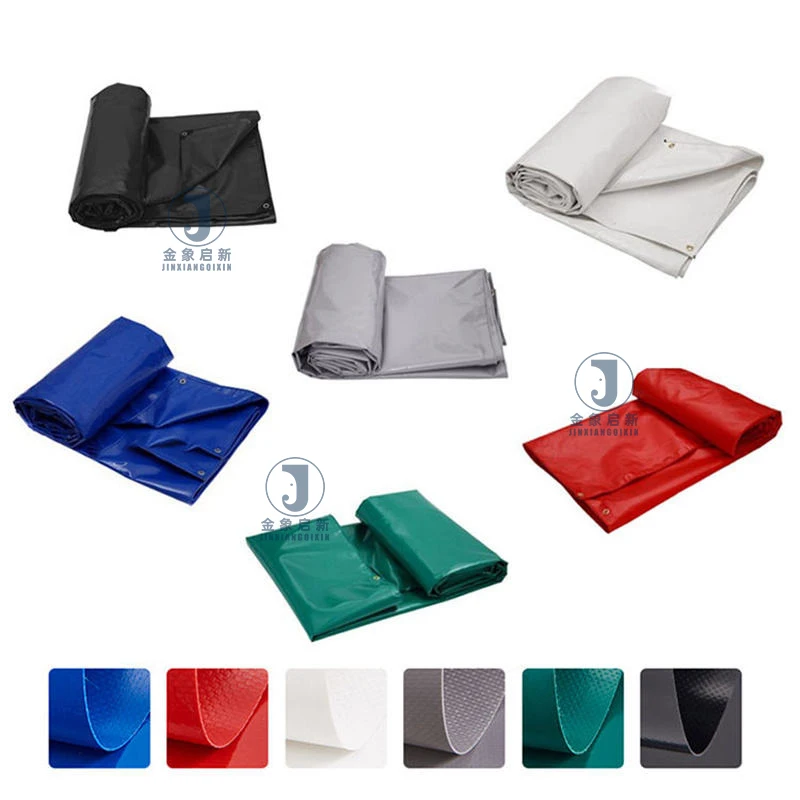
Hot-melt coating and laminated technology on three dedicated production lines give us control over PVC adhesion and weight consistency roll-to-roll, which is the foundation of reliable duct seam welding. A 10-person R&D team handles flame-retardant formulation and anti-static treatment matching, developing samples within days so you can weld-test before committing to a production run. Dedicated QA/QC at every production stage with 100% pre-shipment inspection means each roll is weighed and visually checked before it leaves the Huaiyin District facility. Full documentation — specification sheet, test reports, packing list, certificate of origin — travels with the consignment, not in a separate email three days after the vessel sails. Custom widths and colours are available with reasonable minimums, and pattern printing for duct identification markings can be integrated during the coating pass.
Documentation & Verification
- Material specification sheet stating 650 gsm, base fabric denier, and coating type for the exact roll ordered
- Fire-retardant test report naming the standard and grade achieved, matched to the site compliance requirement
- Anti-static surface resistance test report provided where the treatment has been specified at inquiry
- Pre-shipment inspection record with roll-by-roll weight verification against the stated 650 gsm
- Certificate of origin and customs documentation included for international dispatch
- Roll packing list detailing net weight, dimensions, and roll count per consignment
Fabrication, Handling & Storage
- Heat-weld seams at temperatures suited to hot-melt PVC coating; test weld parameters on a sample strip of the 650 gsm grade before full production
- Store rolls upright on end-caps to prevent flat-spotting on the polyester base fabric, which can cause tracking issues during duct unrolling
- Avoid folding the coated fabric at temperatures below its cold-crack threshold; allow rolls to acclimatise before winter site deployment
- Use compatible PVC solvent cement for field repairs on the 650 gsm material, matching the coating chemistry for a permanent bond
- Plan cutting layout to maximise roll width utilisation and minimise transverse weld seams in the finished duct
- Clean the PVC surface with mild detergent only; aggressive solvents may degrade the anti-static or flame-retardant treatment layer
Before You Request a Quotation
Provide the ventilation application — mine shaft, tunnel drive, aviation ground support, or membrane structure — along with the internal pressure and airflow velocity the duct must sustain. State the fire-retardant standard and grade required by the authority having jurisdiction, and whether anti-static treatment is mandatory with the target surface resistance value. Specify the roll width and length you need, any colour or identification printing requirement, and whether you want the material shipped as roll stock or as finished duct sections. If your project has a compliance audit timeline, share the inspection date so sample development and test reporting can be scheduled accordingly.
Frequently Asked Questions
Q: What fire-retardant grade can be supplied, and which test standard applies?
A: Flame-retardant treatment is available as a special order for this 650 gsm PVC tarpaulin roll. The applicable test standard — DIN 4102, NFPA 701, M2, or another — must be confirmed at inquiry stage so the correct additive package is formulated. The resulting test report, naming the grade achieved, ships with the roll documentation for site compliance inspection.
Q: How is anti-static performance verified for mining duct applications?
A: Anti-static treatment reduces surface charge accumulation during high-velocity airflow in combustible dust environments. A surface resistance test report is provided when this treatment is specified, documenting the measured value against your site safety threshold. Confirm the required resistance range during the inquiry so the formulation can be validated before production begins.
Q: How do you confirm 650 gsm weight on arrival and prevent GSM discrepancy?
A: Every roll undergoes weight verification during our 100% pre-shipment inspection, and the result is recorded on the inspection report that ships with the consignment. The material specification sheet states the 650 gsm target, base fabric denier, and coating weight so you can cross-check on receipt without relying solely on the quotation.
Q: What duct construction methods are compatible with this fabric?
A: The hot-melt coated PVC surface supports heat welding with strong adhesion to the polyester base fabric, producing seams that resist delamination under internal pressure. The outstanding tearing strength for welding reported for this grade makes it suitable for longitudinal and circumferential duct seams fabricated with standard hot-air or wedge weld equipment.
Q: What documentation ships with the roll for site compliance?
A: Each consignment includes a material specification sheet, fire-retardant and anti-static test reports where applicable, a pre-shipment inspection record, a roll packing list, and a certificate of origin. This documentation package is prepared to satisfy the compliance audit requirements of mining, tunnelling, and aviation ventilation site inspectors.