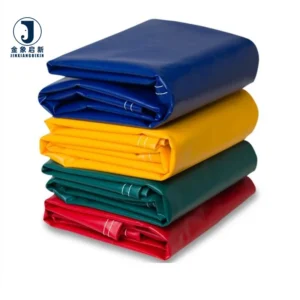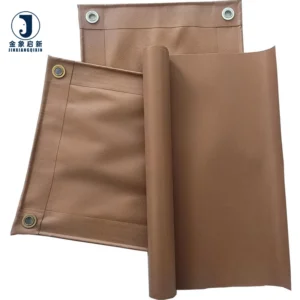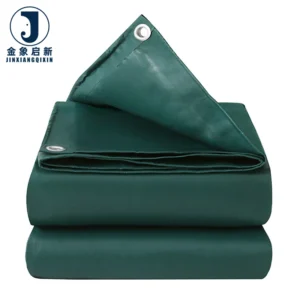
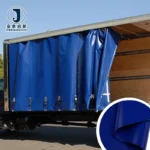
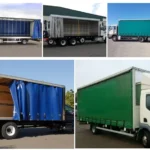
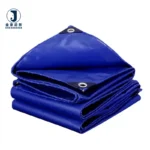
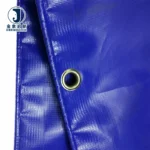
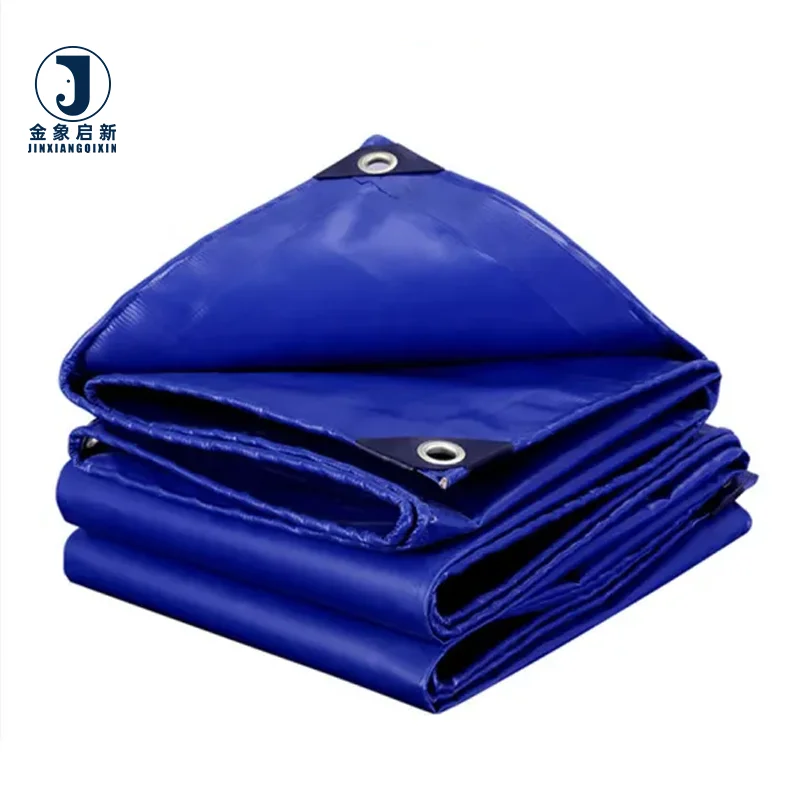
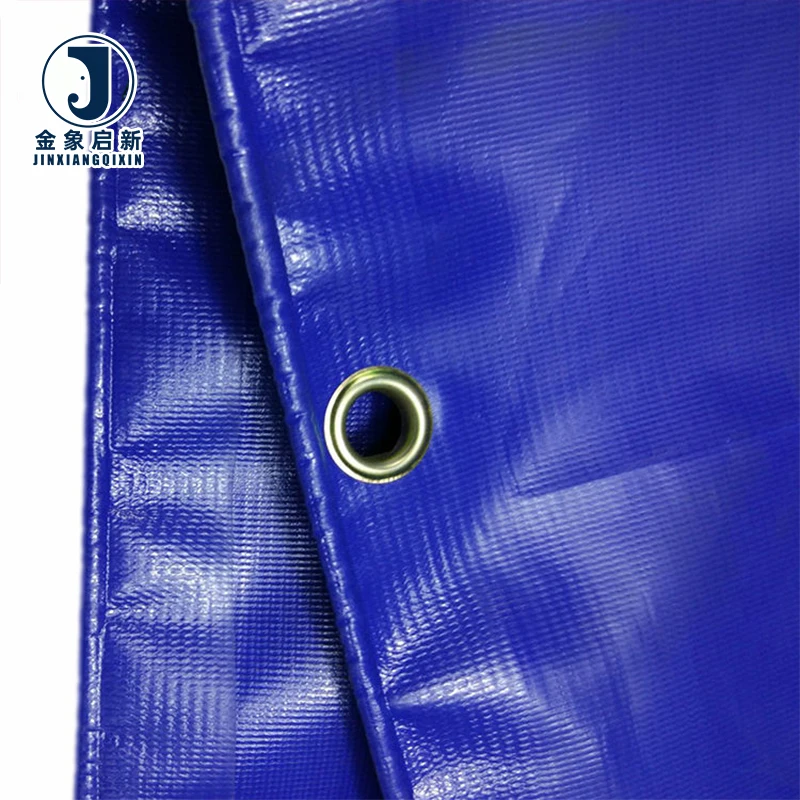
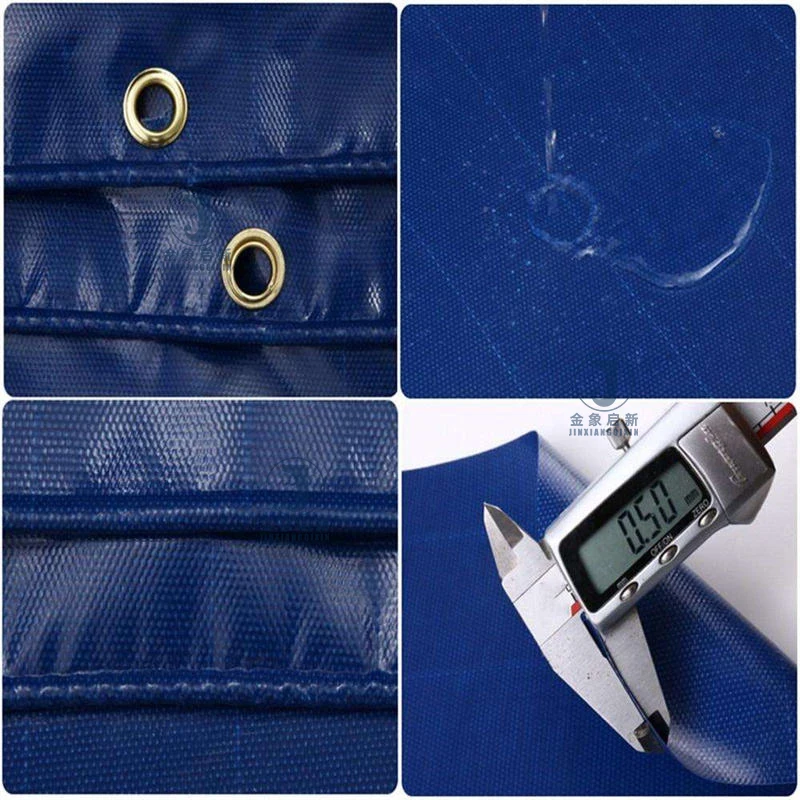
Coating Process Mastery — Nearly three decades focused on coated fabric production, with dedicated QA at every stage ensuring the 900GSM PVC coated tarpaulin fire retardant certified grade you specify is the one that arrives on site.
Technical Specifications
| Parameter | Value |
|---|---|
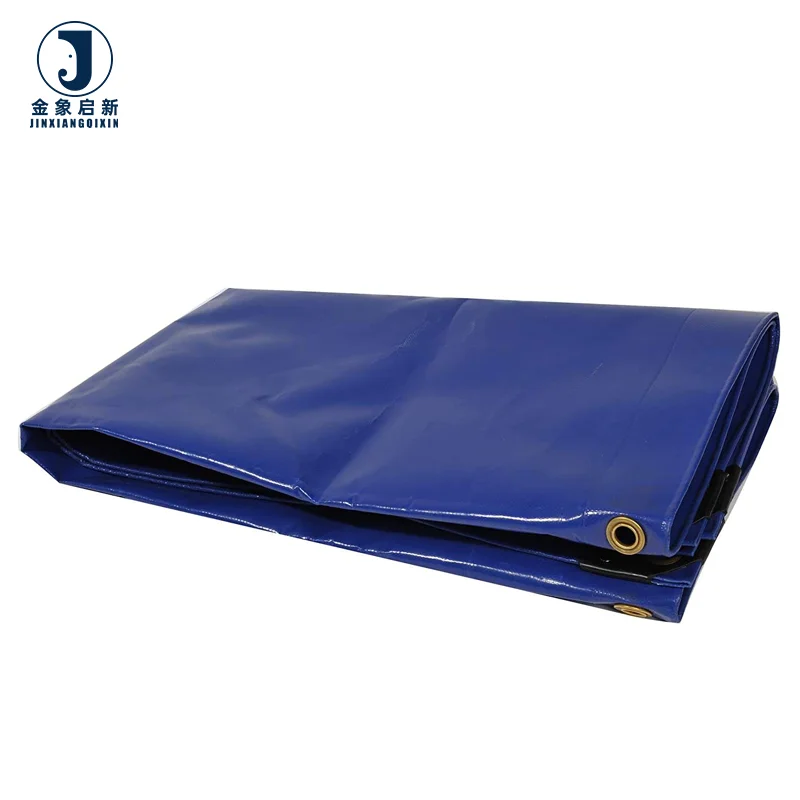
| Product Type | PVC Coated Tarpaulin |
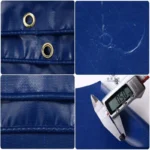
| Weight | 900GSM |
| Base Fabric Denier | 1000DX1000D (options: 200DX300D, 500DX500D, 840DX840D) |
| Coating Material | PVC |
| Surface Finish | Glossy or matte |
| Color Options | Blue, yellow, black, green, white, custom colors available |
| Temperature Range | -15ºC to 70ºC |
| Flame Retardant | FR treated (grade not stated — confirm the grade required for your market) |
| UV Treatment | Customized (test basis not stated — request test report for your specification) |
| Anti-Mildew | Anti fungal treated |
| Waterproof Rating | Waterproof, rain-resistant |
| Size Options | 3x4m, 6x8m, 8x10m, 10x12m or custom made |
| Working Life | 3-10 years depending on usage environment |
| Certifications | ISO 9001, CE |
Application Suitability
| Application | Exposure & Requirement |
|---|---|
| Mining ventilation duct | Continuous particulate-laden airflow, fire risk underground, anti-static compliance required for methane environments |
| Tunnelling exhaust systems | High humidity, chemical fumes, strict fire-retardant certification demanded by site safety officers |
| Aviation ground support covers | Static discharge risk near fuel systems, flame-retardant compliance for tarmac operations |
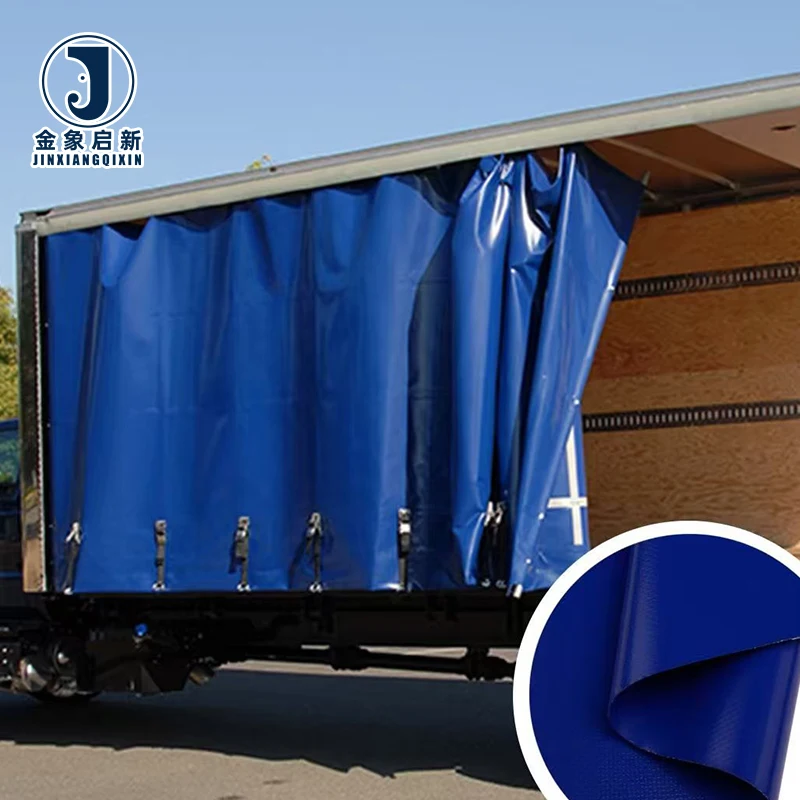
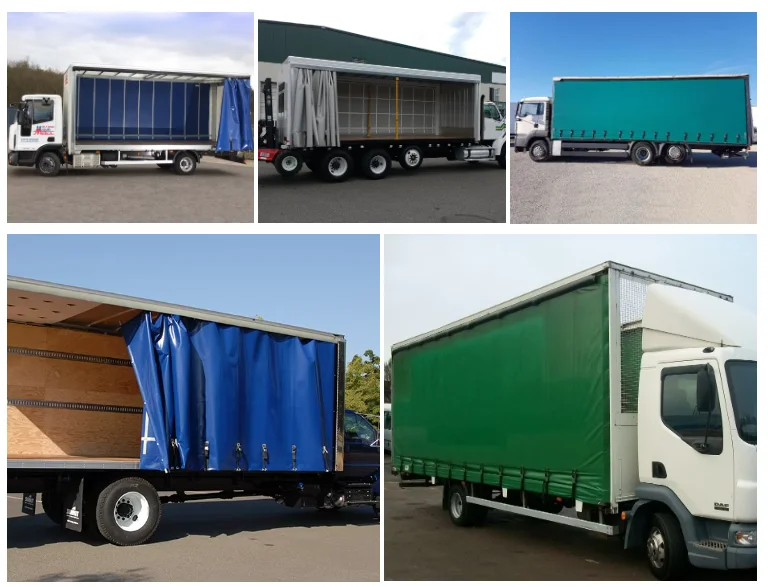
| Lorry and truck curtain sides | Constant flexing at load points, road abrasion, UV and weather exposure during transit |
| Heavy-duty transport load protection | High tensile demand from tie-down tension, puncture risk from sharp-edged cargo |
Why the Fire-Retardant Certificate Matters More Than the Label
A fabric marked "FR treated" without a stated grade is a liability waiting for the site inspector.
When ventilation duct or lorry curtain fabric arrives on a mining or aviation site, the safety officer checks the test report — not the quotation. A 900GSM PVC coated tarpaulin fire retardant certified claim means nothing if the grade does not align with local regulation. M2 in France, B1 in Germany, NFPA 701 in North America: each standard uses different test methodology, and a pass under one does not guarantee compliance under another. I have seen entire duct installations rejected at commissioning because the supplier provided a certificate for the wrong classification. [NEED_CITE: DIN 4102 fire classification for building materials]
How Fire-Retardant and Anti-Static Pathways Align with Site Compliance
Mining and tunnelling contractors face dual requirements: the ventilation duct fabric must resist ignition and prevent static buildup in particulate-rich atmospheres. The 900GSM PVC coated tarpaulin fire retardant certified configuration is available with both treatment pathways, but each requires separate test documentation. Fire-retardant performance is assessed against the specific standard your jurisdiction mandates, while anti-static treatment is verified through surface resistance measurement. Requesting both reports before production begins eliminates the gap between what was quoted and what the site auditor accepts.
Base Fabric Architecture and Its Role in Duct Integrity
The base fabric denier directly influences how the finished duct behaves under negative pressure. A 1000DX1000D weave provides the structural backbone that prevents duct collapse during high-velocity airflow, while lighter denier options serve less demanding ventilation runs. The PVC coating encapsulates the yarn intersections, contributing to both airtightness and the adhesion surface required for longitudinal seam welding. [NEED_CITE: tensile and tear test methods for coated fabrics per ISO 1421] When the duct flexes at directional changes or suspended anchor points, it is the interplay between yarn tensile capacity and coating adhesion that determines whether the seam holds or delaminates first.
Reading the Specification Sheet Beyond GSM
A 900GSM weight grade indicates the total mass per square metre — base fabric plus coating combined. Two fabrics can share the same GSM yet perform very differently: one may carry a heavier base fabric with thinner coating, yielding higher tensile strength but reduced surface durability; the other may use lighter yarn with thicker PVC, offering superior abrasion resistance but lower tear propagation resistance. The denier specification alongside GSM gives you the complete picture. Coating method also matters — knife-over-roll coating produces a stronger bond to the base fabric compared to simple lamination, directly affecting how the material behaves during high-frequency welding and how the weld line holds under sustained mechanical load. Temperature range from -15ºC to 70ºC defines the operating envelope: below the lower limit, PVC stiffens and becomes susceptible to cracking at fold lines; above the upper limit, the coating softens and weld integrity can degrade under tension.
What Happens When the Grade Does Not Match the Site
Supplying ventilation duct fabric without the correct fire-retardant certification creates a cascade of consequences. The contractor installs the duct, the site safety audit flags the missing or mismatched test report, and the entire run must be stripped and replaced — often under compressed project deadlines. [NEED_CITE: underground mining ventilation compliance and fire-retardant duct requirements] Anti-static requirements carry similar risk: in environments where combustible dust or methane is present, fabric that accumulates static charge becomes an ignition source, and the liability falls on whoever signed off the procurement. Colour inconsistency across rolls in the same order creates visible banding once the material is installed side by side, forcing aesthetic rejection even when performance is adequate.
Why Procurement Teams Source This Grade Through Jinan Jinxiang
Process control over coating weight and adhesion is maintained across three full production lines, ensuring the 900GSM you approve at sample stage is replicated across every roll in the production run. The 10-person R&D team handles material selection for specific compliance pathways, matching fire-retardant and anti-static chemistry to the test standard your market requires. Dedicated quality inspection at every production stage catches coating weight deviation before it leaves the line, and 100% pre-shipment inspection provides a verified weight record for each roll. Samples for custom fire-retardant grades or colour specifications are developed within days, letting you validate compliance and appearance before committing to full production volume.
Documentation & Verification
- Material specification sheet stating GSM, base fabric denier, and coating weight for every roll
- Fire retardant test report with stated grade provided when treatment is specified
- Anti-static surface resistance report for mining and aviation duct applications
- Pre-shipment weight inspection record confirming GSM matches the quotation
- Roll packing list with colour reference and batch traceability codes
- Certificate of origin and customs documentation for international dispatch
Fabrication, Handling & Storage
- High-frequency welding recommended at manufacturer-specified parameters to maintain 900GSM coating adhesion at seam lines
- Reinforced hem construction required at tie-down points where lorry curtain fabric experiences concentrated load
- Rolls stored upright on pallets to prevent compression marks on glossy or matte PVC surface
- Allow material to reach above 10ºC before unrolling to avoid low-temperature coating crack at fold lines
- Mild detergent cleaning preserves anti-fungal treatment; solvent-based cleaners may degrade flame-retardant chemistry
What We Need to Quote Accurately
Provide the ventilation or transport application, the fire-retardant grade or anti-static standard your site mandates, and the duct diameter or curtain panel dimensions required. Confirm whether you need supply by the roll for your own fabrication, or cut-to-size panels with welded hems and seam construction. Specify colour references and annual volume so we can align production scheduling with your project timeline.
Frequently Asked Questions
Q: How do I verify the fire retardant grade matches my site’s regulatory requirement?
A: Share the specific standard your site demands — such as M2, B1, NFPA 701, or DIN 4102 — at inquiry stage. Our R&D team formulates the treatment chemistry to meet that classification and provides the corresponding test report before production begins, ensuring documentation aligns with your safety audit requirements.
Q: What anti-static test standard is supplied with the fabric for mining or aviation use?
A: We provide a surface resistance test report for the specific roll batch when anti-static treatment is specified. The test method aligns with the compliance framework your site safety officer requires. Confirm the target resistance range at inquiry so we match the treatment accordingly.
Q: How is GSM verified on arrival — do you provide a pre-shipment weight inspection record?
A: Every roll undergoes weight verification during our 100% pre-shipment inspection. You receive a documented inspection record stating the measured GSM for each roll in your order, so you can cross-reference arrival weight against the quotation without needing to conduct your own destructive sampling.
Q: Can lorry curtain fabric be cut to specific trailer model dimensions rather than generic sizes?
A: Yes. Provide the trailer model drawings or exact panel dimensions, and we cut and weld to those specifications rather than supplying standard rectangles. This eliminates on-site trimming and ensures the curtain fits the track and tie-down points without modification.
Q: What is the minimum order for custom width or fire retardant grade on 900GSM PVC tarpaulin?
A: Minimum order varies depending on whether you require a standard or custom fire-retardant grade and whether the order is roll stock or finished panels. Share your target width, colour, treatment specification, and estimated volume so we can provide a production minimum that aligns with your project scope.