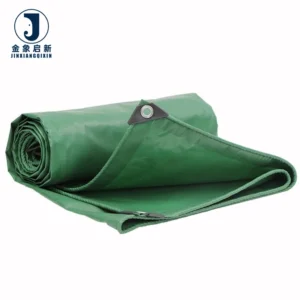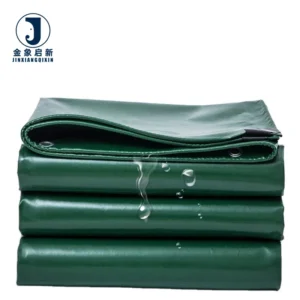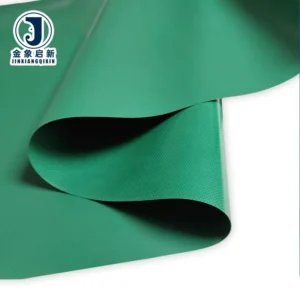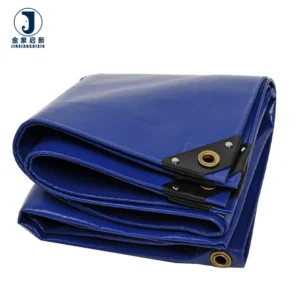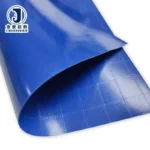
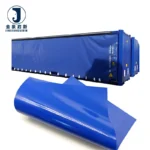
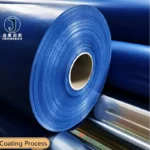
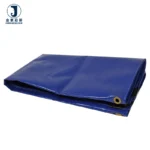
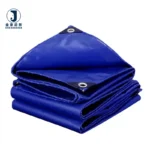
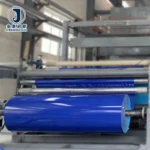
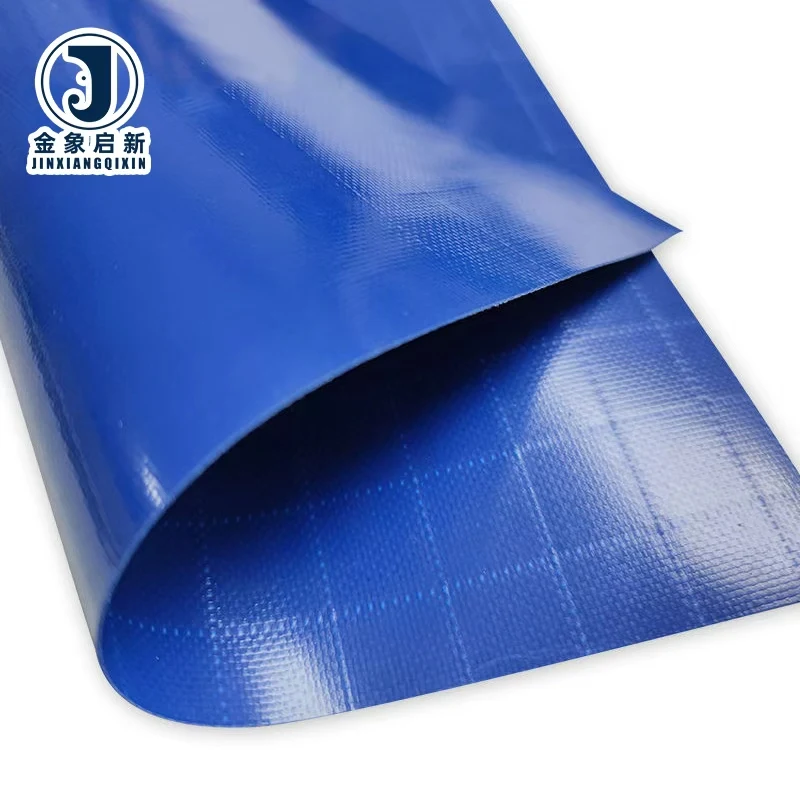
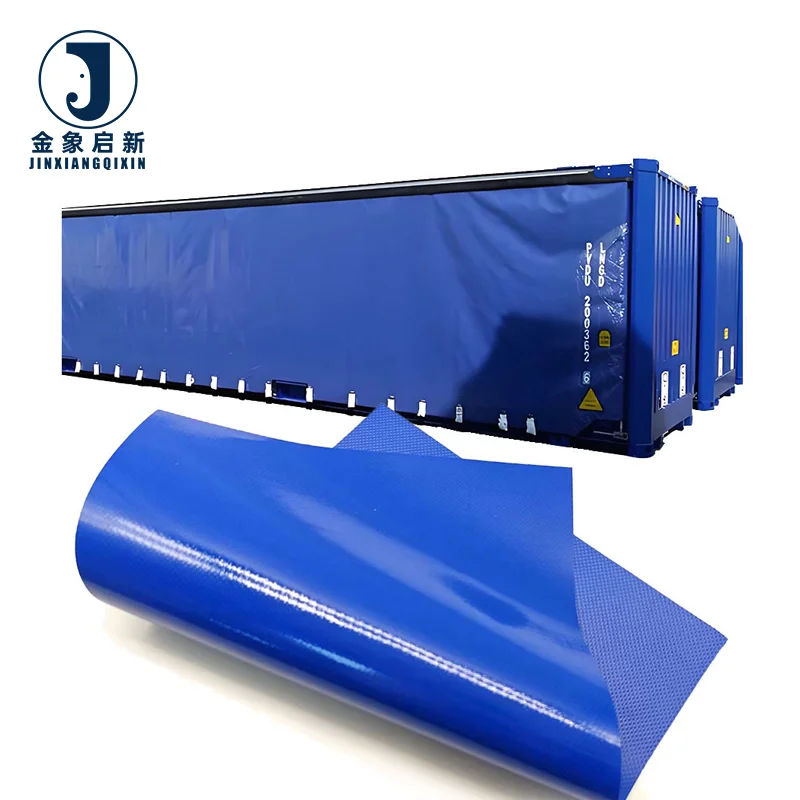
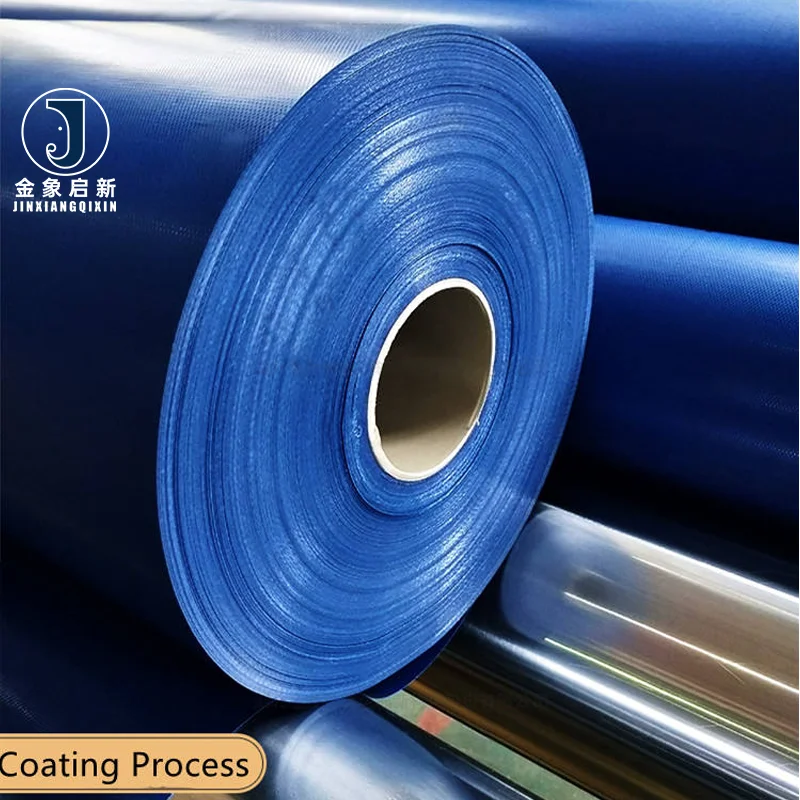
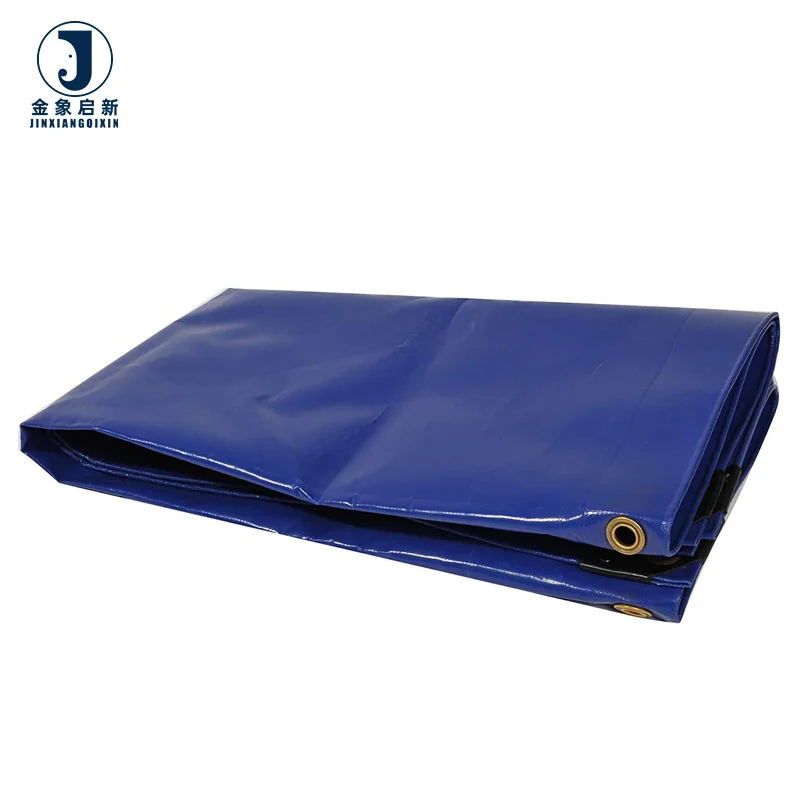
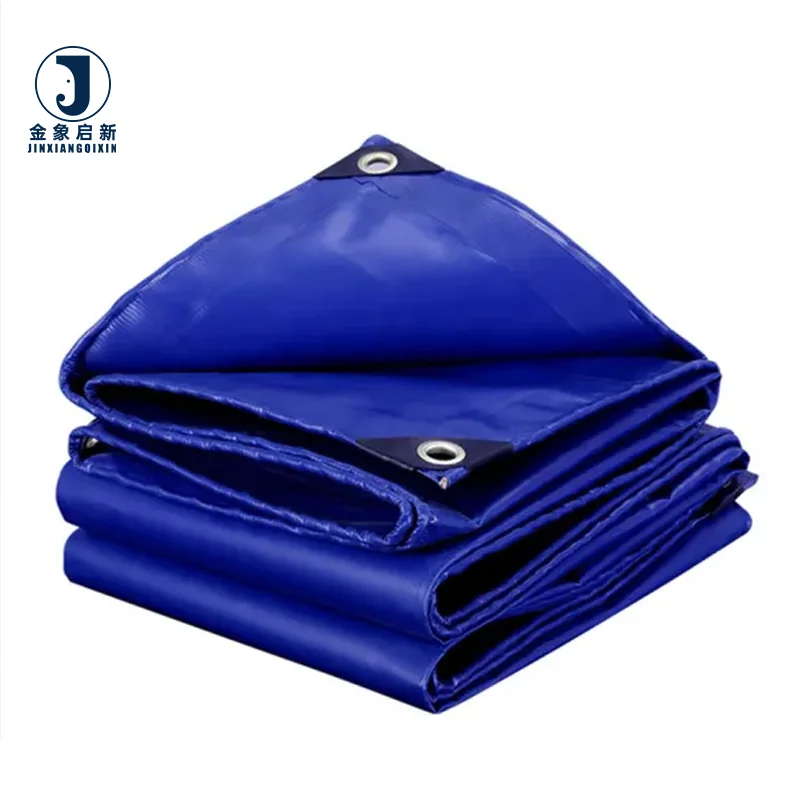
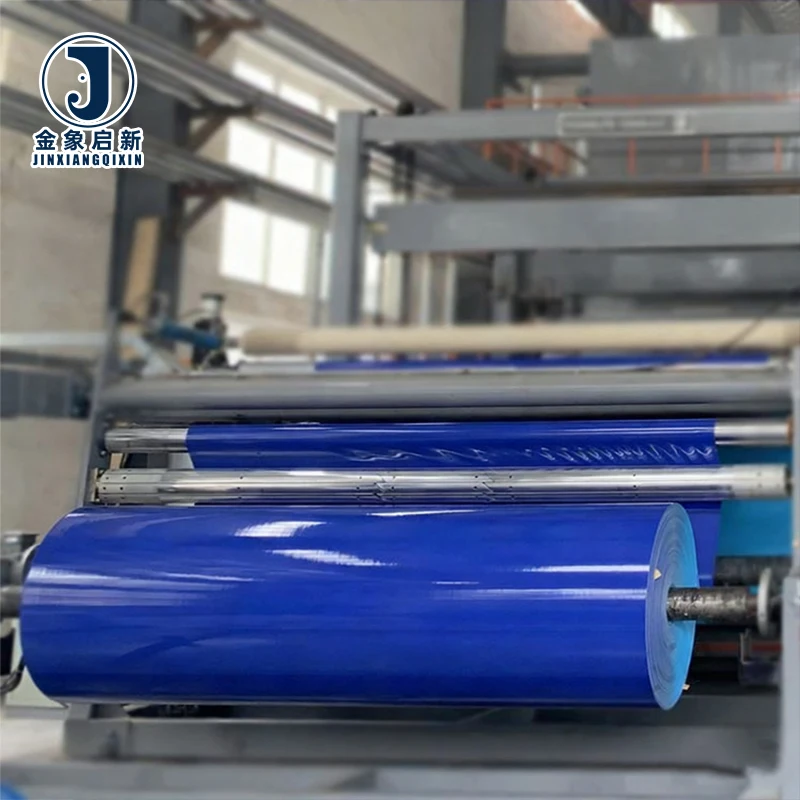
Coating Process Control — Deep process control over coating weight and adhesion across every roll, with dedicated QA/QC verifying material properties before dispatch for industrial ventilation and specialist structure projects.
Technical Specifications
| Parameter | Value |
|---|---|
| Product Type | PVC Tarpaulin Roll |
| Material | PVC Coated Fabric |
| Weight Range | 50 g/m² ~ 300 g/m² (confirm the grade for your project) |
| Thickness | 0.2 mm – 0.4 mm (8 mil – 16 mil) |
| Weave Density Options | 6×6 / 6×7 / 7×7 / 7×8 / 8×8 / 9×9 / 8×10 / 10×10 / 12×12 / 14×14 / 14×16 |
| Width Options | 6 ft / 8 ft / 10 ft / 12 ft / 2 m / 4 m / 6 m |
| Roll Length | 100 yards / 100 meters / Custom |
| Color Options | Blue / Blue-Orange / Green / Grey / Black / Clear / Grey-Green / Orange / Custom |
| Key Features | Waterproof / Washable / Tear Resistant / Mildew Proof / Anti-aging / UV Treatment (test basis not stated in source) |
| Anti-Static | Mentioned — surface resistance standard not stated in source (grade not stated in source) |
| Roll Packaging | Hard paper tube core, wrapped in tarpaulin sheet |
Application Suitability
| Application | Exposure & Requirement |
|---|---|
| Mining ventilation duct | Subsurface airflow, particulate loading, mandatory anti-static and fire-retardant compliance per site regulation |
| Tunnelling duct fabrication | High-velocity air movement, continuous flex at support rings, seam integrity under vibration |
| Inflatable and membrane structure | Inflation pressure load, wind uplift, UV exposure on exterior panels |
| Aviation hangar temporary enclosure | Weather protection for sensitive works, large unsupported spans, rapid deploy and strike |
| Construction site weather barrier | Scaffolding attachment points, wind-driven rain, puncture from debris |
What "Anti-Static" Means Without a Measured Surface Resistance
A label alone does not satisfy a mine safety officer or a tunnelling compliance audit.
When a ventilation duct arrives on site bearing an anti-static PVC Tarpaulin Roll tag but no test report showing surface resistance in ohms, the installation halts until documentation catches up. Mining and tunnelling contractors face this regularly: the procurement specification calls for anti-static treatment, the supplier confirms it in writing, yet the shipment paperwork omits the measurable value or the standard it was tested against. [NEED_CITE: surface resistivity testing standards for anti-static fabrics in mining ventilation]
The gap between a claim and a verified grade is where project schedules stall. A duct fabricated from material that cannot demonstrate compliance must be replaced before the ventilation system is commissioned, costing not just the material but the fabrication labour and the delayed air supply to the working face.
Selecting Weave Density for Duct and Membrane Performance
The weave density you choose determines how the base fabric behaves under the specific loads of your application. A 6×6 or 7×7 weave yields a lighter, more flexible panel suited to temporary enclosure where rapid deployment matters more than sustained pressure load. Moving to 10×10 or 12×12 increases the yarn count per inch, giving the PVC coated substrate greater dimensional stability when inflated or subjected to continuous negative pressure in a ventilation duct.
For membrane structures that must hold shape under wind uplift, the higher weave densities in the 14×14 or 14×16 range provide the tensile backbone the coating alone cannot supply. The PVC Tarpaulin Roll grade must match the structural demand, not just the waterproofing requirement.
Coating Behaviour at Weld Lines and Flex Points
Every duct has circumferential welds where sections join and longitudinal seams where flat panels are formed into a tube. At these junctions the PVC coating must bond to itself under heat and pressure, and that bond must survive repeated flexing as the duct pressurises and depressurises. [NEED_CITE: peel strength test methods for heat-welded PVC coated fabrics per ISO 1421]
When the coating weight is too low for the flex cycle the application demands, the weld line fails before the base fabric does. This is why coating weight verification per roll matters as much as the base fabric GSM — a 300 g/m² roll with insufficient coating at the weld zone will part at the seam while the body fabric remains intact.
Reading GSM and Weave Density Together
A common mistake is specifying a PVC Tarpaulin Roll by GSM alone and assuming that number dictates strength. In reality, GSM is the sum of the base fabric weight and the coating weight, and two rolls at the same GSM can perform very differently depending on how that weight is distributed. A roll that achieves its GSM through heavy coating on a sparse weave will have good waterproofing but lower tear resistance than one that builds GSM through a denser base fabric with proportionate coating.
The weave density options from 6×6 through 14×16 correspond to different base fabric constructions, and the coating applied over each must be matched to the end use. Thickness across the range spans 0.2 mm to 0.4 mm, and that thickness reflects both the yarn diameter and the coating build-up. For a ventilation duct that must resist collapse under negative pressure, the base fabric density carries more of the structural load than the coating does, making the weave selection as critical as the total weight. [NEED_CITE: relationship between base fabric denier and tensile strength in coated technical textiles]
Width options from 2 m to 6 m affect how many longitudinal seams your duct fabrication will require — wider rolls mean fewer welds, fewer potential failure points, and less fabrication time per section.
The Cost of Specifying Without Test Documentation
When a contractor orders material described as anti-static or fire retardant but accepts delivery without a corresponding test report, the risk transfers entirely to the installation side. Mining sites that mandate specific surface resistance values will not commission a ventilation system until the duct material is verified — and verification after fabrication is far more expensive than verification before cutting. [NEED_CITE: mine safety compliance requirements for ventilation duct materials]
Batch colour inconsistency across rolls in the same order forces a fabricator to either accept a visible mismatch on a membrane structure or reject the affected rolls and absorb the delay. Colour variance between rolls is a production control issue, not a material defect, and it is preventable with in-process QA that checks each roll against a master reference before it leaves the line.
Procurement Backed by Process Evidence
Three full production lines and 36 sets of professional equipment support the bulk capacity needed for large duct fabrication orders, with scheduling that holds delivery dates.
A 10-person R&D team handles material selection and sample development, producing test rolls within days so you can verify weld behaviour and colour match before committing to full production.
Dedicated QA/QC runs at every production stage, with 100% inspection before shipment — every roll is checked for GSM, coating integrity, and colour consistency against the order reference.
ISO and CE certified production underpins the documentation package that accompanies each dispatch, giving your compliance team the paperwork the site demands.
Nearly 30 years focused on coated fabric has produced process control over coating weight and adhesion that shows in the consistency from the first roll to the last in your order.
Documentation & Verification
- Material specification sheet stating exact GSM, base fabric denier, coating type, and colour reference for each roll
- Test report for anti-static surface resistance and flame-retardant grade where applicable to your site regulation
- ISO and CE certificates included in the shipment documentation package
- Pre-shipment inspection record confirming 100% roll-by-roll QA with weight and colour verification
- Certificate of origin and customs support documentation for cross-border delivery
Fabrication, Handling & Storage
- Heat-weld at temperatures matched to the PVC coating thickness — 0.2 mm material requires lower dwell time than 0.4 mm to avoid base fabric scorch
- Store rolls upright on the hard paper tube core to prevent flat-spotting and coating crease marks that show after deployment
- Cut panels from the same roll where colour match is critical for adjacent membrane panels
- Reinforce eyelet zones with additional PVC patches when the selected GSM grade is at the lighter end of the range
- Allow cold-stored rolls to reach ambient temperature before unrolling to prevent coating crack at low-flex points
- Clean with mild detergent only — solvent-based cleaners can soften the PVC coating and reduce weld integrity at repair patches
Before You Request a Quote
Provide the ventilation duct diameter, section length, and the air pressure or inflation load the fabric must sustain. Specify the anti-static surface resistance value or fire-retardant grade your site regulation requires, along with the test standard your compliance team will accept. State the roll width that minimises seams for your duct geometry, the total linear metres needed, and whether you require sample rolls for weld parameter testing before the full order ships.
Frequently Asked Questions
Q: Can you supply test reports for anti-static surface resistance?
A: Anti-static treatment is available, but the specific surface resistance standard and measured value must be confirmed against your site regulation before production. Request the test report format your compliance team requires at the inquiry stage so the correct grade is selected and documented before dispatch.
Q: Which fire-retardant grades are available for mining ventilation duct?
A: Fire-retardant grades are available in multiple classifications. The grade your mine or tunnel requires — whether M2, B1 per DIN 4102, NFPA 701, or a local equivalent — must be stated at inquiry so the correct formulation is used and the matching test report accompanies your shipment.
Q: How do I choose the right weave density for duct versus membrane?
A: Ventilation duct walls under continuous negative pressure benefit from higher weave densities that provide dimensional stability. Membrane structure panels subject to wind uplift require tensile strength from a dense base fabric. Share your load calculations and we recommend the weave density and GSM combination suited to your engineering requirement.
Q: How do you ensure colour consistency across multiple rolls?
A: Every roll is checked against the order colour reference during 100% pre-shipment inspection. If your project places adjacent panels from different rolls in visible positions, flag this at order placement so rolls from the same production batch are allocated to your order and inspected side by side before packing.
Q: What roll widths are available for duct fabrication?
A: Rolls are supplied in widths of 2 m, 4 m, and 6 m, with narrower options at 6 ft, 8 ft, 10 ft, and 12 ft. Wider rolls reduce the number of longitudinal welds in your duct sections. Specify the width that matches your duct circumference to minimise fabrication seams and potential failure points.