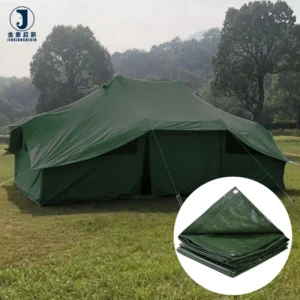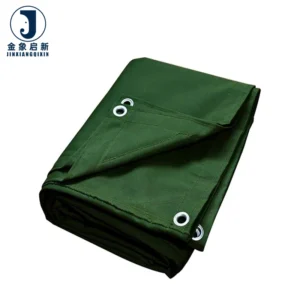
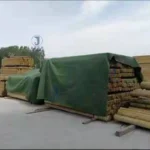
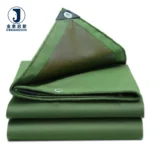
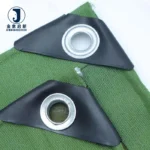
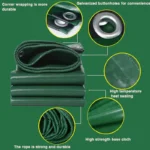
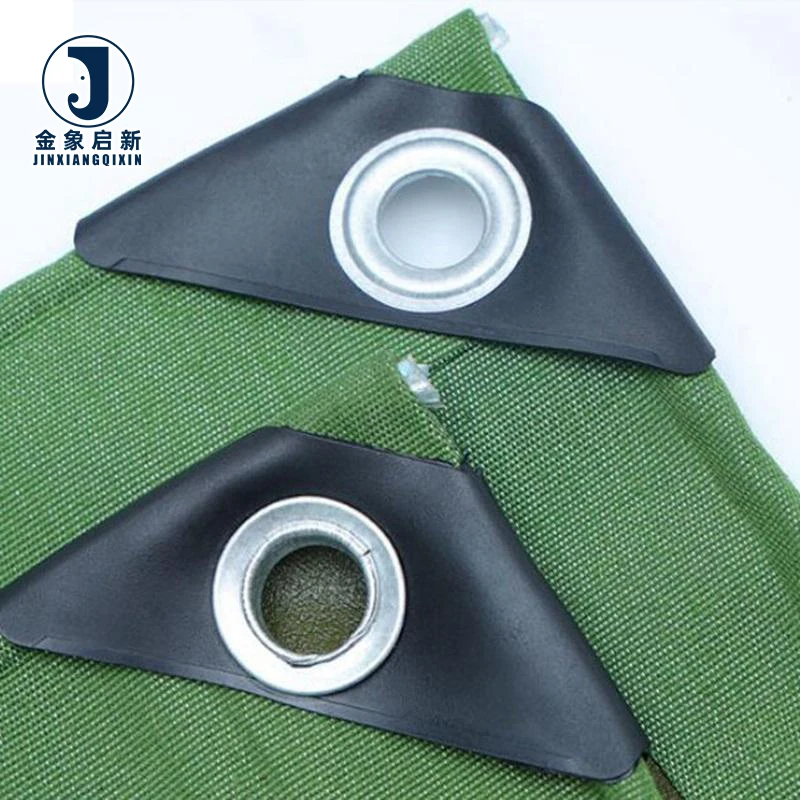
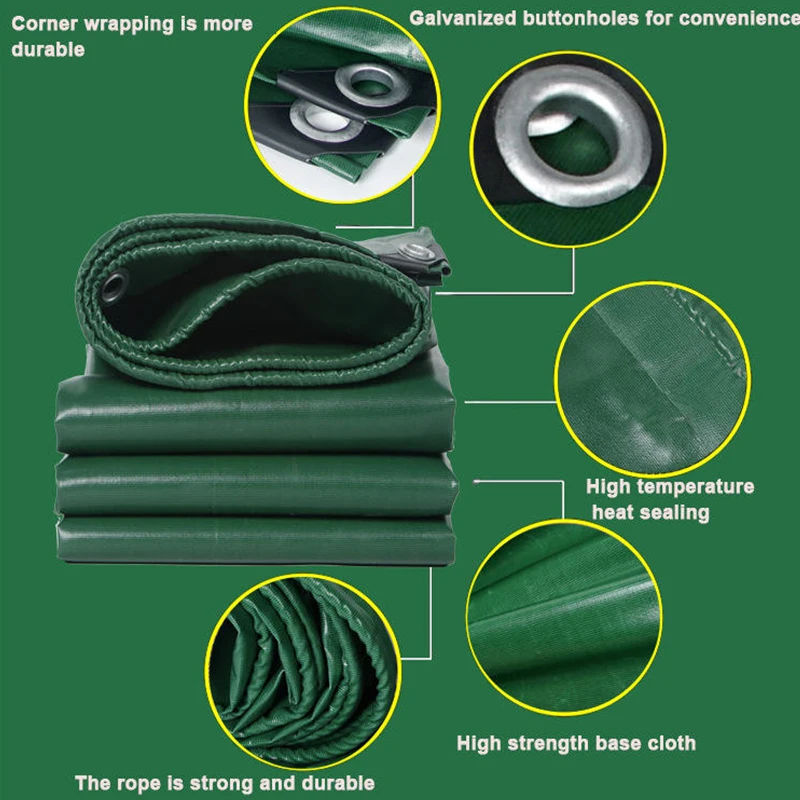
Proven coating adhesion control — Hot-melt and laminated coating processes applied to high-tenacity polyester mesh deliver consistent coating-to-fabric bond strength, verified through in-process QA on every production run for blackout tarpaulin destined for fire-sensitive transport and specialist structure use.
Technical Specifications
| Parameter | Value |
|---|---|
| Product Type | Blackout Tarpaulin – Fire Retardant |
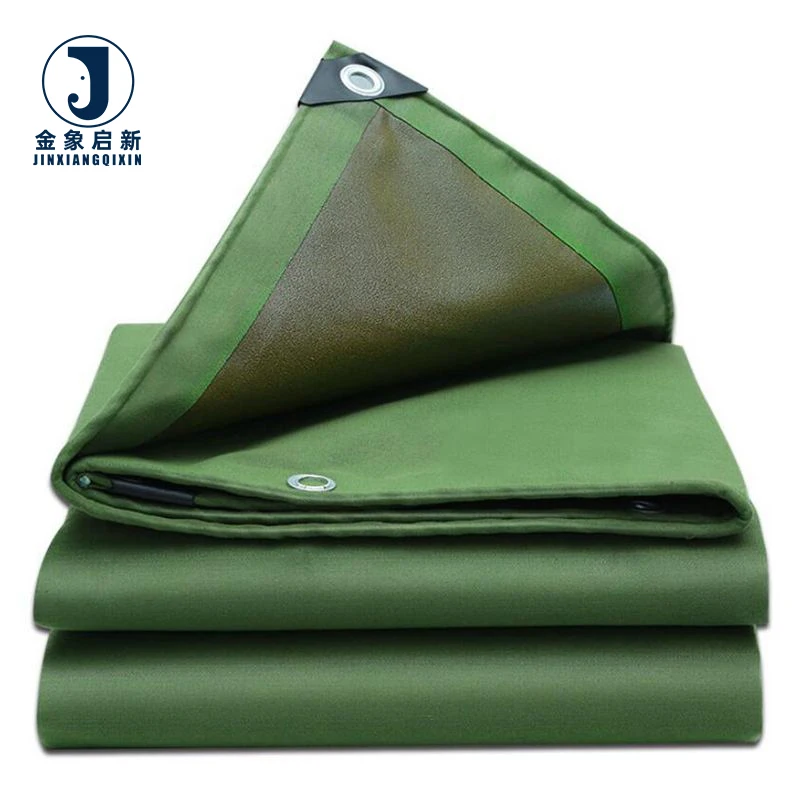
| Material | PVC + High-strength polyester mesh fabric |
| Coating Method | Laminated technology & Hot-melt Coating technology |
| Weight (GSM) | 350gsm, 420gsm, 500gsm, 550gsm, 600gsm, 750gsm |
| Total Thickness | 0.32mm, 0.35mm, 0.4mm, 0.45mm, 0.5mm, 0.65mm |
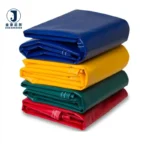
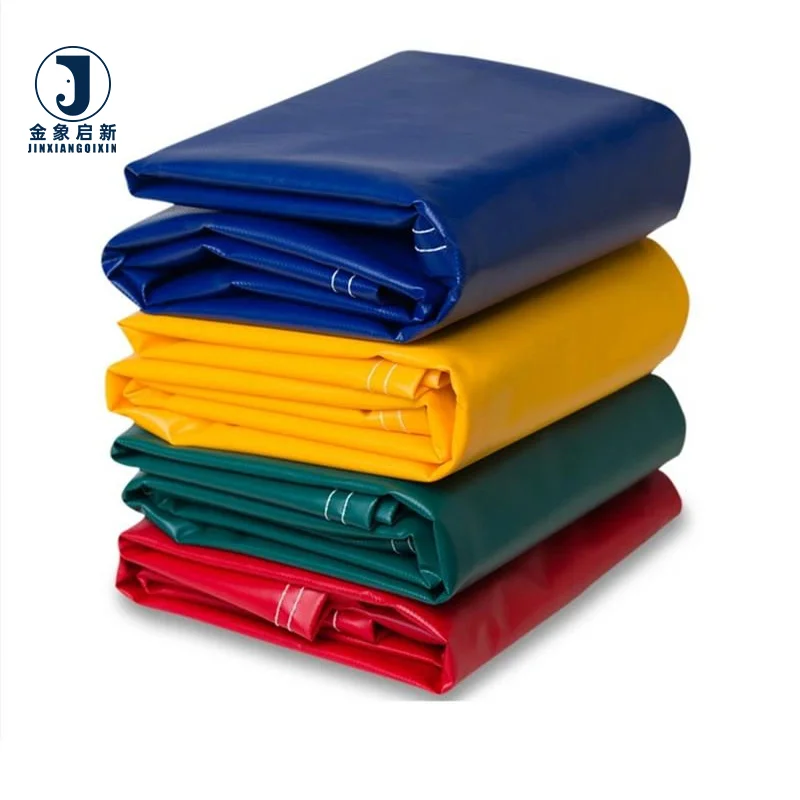
| Color | Blue / Red / Yellow / Light blue / Grey (Customized) |
| Roll Size | 2m width × 75m length / 2.1m width × 50m length |
| Finish Product Size | Custom items as per customer’s needs or sold by inventory |
| Key Features | Cold crack resistance, anti-mildew, anti-static treatment available (surface resistance range to be confirmed per order), waterproof, sunproof (UV test basis to be confirmed), outstanding tearing strength for welding, best color fastness |
| Standards | ISO, CE (certification details supplied with order documentation) |
Application Suitability
| Application | Exposure & Requirement |
|---|---|
| Mining and tunnelling ventilation duct | Continuous negative or positive pressure, abrasive dust contact, fire-retardant and anti-static compliance mandatory for underground inspection |
| Aviation ground support ducting | Jet blast proximity, fuel vapour exposure, fire code compliance at military or civilian airfield |
| Inflatable and membrane structure | Biaxial tension, solar heat gain, wind uplift, fire classification for occupied or public spaces |
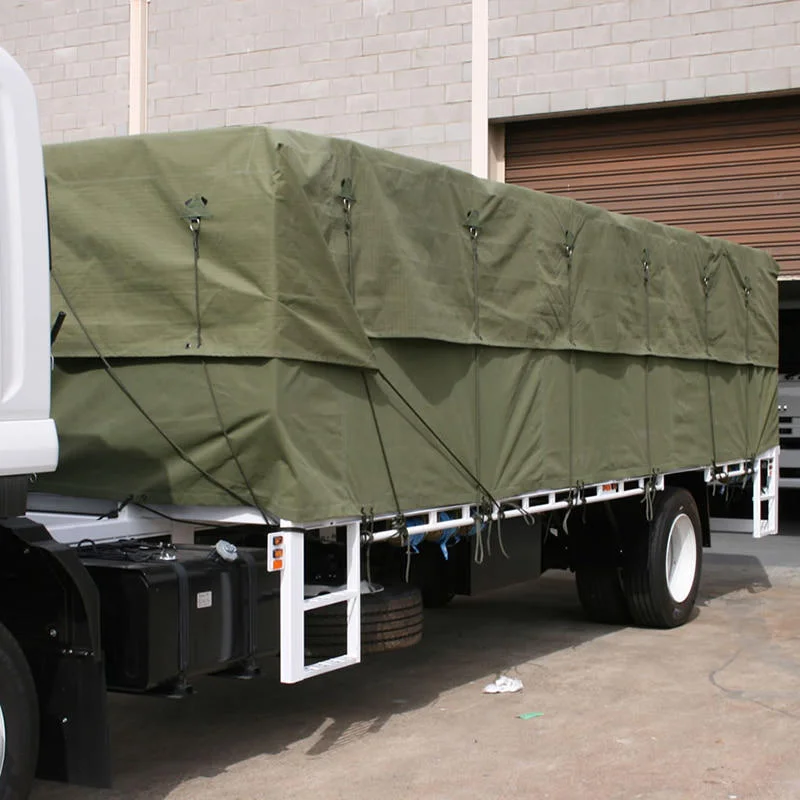
| Truck cover and side curtain | Constant flexing at load points, road debris abrasion, UV exposure, blackout requirement for light-sensitive cargo |
| Temporary containment and enclosure | Chemical splash resistance, rapid deployment, tear propagation resistance during installation |
Why a "Fire Retardant" Label Without a Grade Halts Your Site Inspection
Fabric that carries a fire-retardant claim but no test standard attached cannot pass handover documentation in regulated environments.
When a mining ventilation specification calls for a particular fire classification, the site safety officer does not accept the words "fire retardant" on a data sheet. They look for a test report citing a recognised standard — DIN 4102, NFPA 701, M2, or B1 — with results that match the destination market’s building or underground code. PVC Coated Tarpaulin fire retardant grades are available across this range, but the exact grade must be confirmed against your local regulatory requirement before production begins [NEED_CITE: fire classification standards for coated fabrics in underground and public-occupancy environments]. Without that alignment, the duct or membrane structure sits on site waiting for paperwork while installation deadlines slip.
Coating Process and Weld Integrity for Duct Fabrication
The hot-melt and laminated coating methods used on this PVC coated tarpaulin create a strong bond between the PVC layer and the polyester mesh substrate. This adhesion strength matters most at the welded seams where duct sections join or where membrane panels overlap. A coating that separates from the base fabric under heat-welding pressure produces a joint that fails before the body of the fabric does. Consistent coating weight across the roll width ensures that welding temperature and dwell time remain predictable from the first seam to the last.
Anti-Static Treatment and Underground Compliance
Anti-static treatment is available for this fabric family, addressing the requirement in mining and tunnelling projects where static discharge poses an ignition risk in methane-bearing atmospheres. The surface resistance value must match the threshold set by the site’s safety management plan. Confirming the required ohms-per-square range at inquiry stage ensures the treatment applied during coating meets the compliance target and that the test result can be documented before the roll ships [NEED_CITE: anti-static surface resistance thresholds for underground ventilation materials].
Reading GSM, Thickness and Coating Method Together
Weight in GSM and total thickness are listed across multiple grades — 350gsm at 0.32mm through to 750gsm at 0.65mm — but these figures only describe mass and dimension, not structural behaviour. Tensile and tear performance depends on the base fabric denier, the weave density of the polyester mesh, and how thoroughly the PVC penetrates the yarn intersections during coating. A laminated fabric at 550gsm may outperform a knife-coated fabric at the same weight if the mesh has a tighter weave and the lamination achieves deeper yarn encapsulation. For ventilation duct applications under continuous pressure, the coating method and base fabric construction together determine how well the duct resists ballooning, seam creep and fatigue cracking over extended service. Roll width — available at 2m or 2.1m — influences how many longitudinal welds are needed to fabricate a given duct diameter, directly affecting fabrication time and potential leak paths.
What Happens When Compliance Documentation Is Missing at Delivery
A ventilation duct installed underground without the fire-retardant or anti-static test report attached to the batch documentation triggers a stop-work notice. The cost is not limited to replacing the fabric; it includes idle crews, delayed blast cycles and rescheduled inspection windows. Batch-to-batch colour variation between rolls installed side by side on a membrane structure creates a visual defect that the architect rejects at handover, requiring removal and reinstallation. These outcomes trace back to a single procurement gap: specifying performance requirements without requiring the matching test documentation as a condition of dispatch [NEED_CITE: documented causes of coated fabric rejection at project handover].
Why Industrial Buyers Source This Fabric Here
Three full production lines and 36 sets of professional equipment support bulk roll output with reliable scheduling for time-critical project deliveries. A 10-person R&D team handles material specification, custom width requests and sample development, returning samples within days when a project engineer needs to validate weld parameters or colour match before committing to a full container. Dedicated QA and QC at every production stage with full pre-shipment inspection means each roll is checked against the stated GSM, colour reference and coating weight before packing. Deep process control over coating weight and adhesion, built over decades of coated fabric production, ensures that welding behaviour on the fabrication floor stays consistent from the first roll to the last. Fire-retardant and anti-static test documentation is prepared as part of the order paperwork, not requested as an afterthought.
Documentation & Verification
- Material specification sheet stating GSM, base fabric denier, coating weight and colour reference for each roll batch
- Fire-retardant test report citing the specific standard grade required for the destination market
- Anti-static surface resistance test result matched to the project’s safety threshold
- Pre-shipment inspection record with roll-by-roll weight and dimension verification
- Certificate of origin and customs documentation for international project clearance
Fabrication, Handling & Storage
- Heat-weld seam temperature and dwell time must be calibrated to the specific GSM grade — 350gsm and 750gsm require different settings to avoid coating burn-through or incomplete fusion
- Roll storage on flat racks prevents permanent creasing that shows as visible lines on membrane structure surfaces after tensioning
- Cold crack resistance allows transport and unrolling in low temperatures, but fabric should be allowed to acclimatise before welding to ensure consistent seam adhesion
- Anti-mildew treatment supports extended storage in humid conditions, though rolls should remain wrapped until fabrication to prevent surface contamination
- Cut pattern layout should account for the 2m or 2.1m roll width to minimise offcut waste and reduce the number of structural weld seams
Requesting a Specification Match for Your Project
Provide the fire-retardant or anti-static standard required by your site safety plan or local building code, along with the target GSM grade and any colour or width requirements. If the application is a ventilation duct, include the duct diameter and operating pressure so the correct fabric weight and coating type can be recommended. For membrane or inflatable structures, share the design tensile loads and fire classification category to confirm the grade that satisfies both structural and regulatory demands.
Frequently Asked Questions
Q: Which fire-retardant standard applies to my destination market for ventilation duct fabric?
A: Different markets reference different standards — DIN 4102 and B1 in parts of Europe, NFPA 701 in North America, M2 in France. Confirm the standard cited in your project specification at inquiry stage so the correct grade is produced and the matching test report is included in your shipment documentation.
Q: How is anti-static performance verified on PVC coated tarpaulin for underground use?
A: Anti-static treatment is applied during the coating process, and surface resistance is measured against the threshold required by the site safety plan. The test result is documented and supplied with the batch paperwork so the installation contractor can present it during underground compliance inspection.
Q: What GSM grade is recommended for ventilation duct versus membrane structure applications?
A: Ventilation ducts under continuous pressure typically use mid-to-high GSM grades to resist ballooning and seam fatigue, while membrane structures may specify based on biaxial tensile design loads. The R&D team reviews your project parameters and recommends the grade that balances structural performance with fabrication handling.
Q: Can custom widths and colours be produced while maintaining fire-retardant certification?
A: Custom widths and colours are available within the production capability, and fire-retardant treatment is applied across the full batch. The test report references the specific production run, so the certification remains valid regardless of the colour or width selected for your project order.