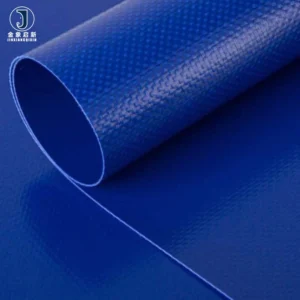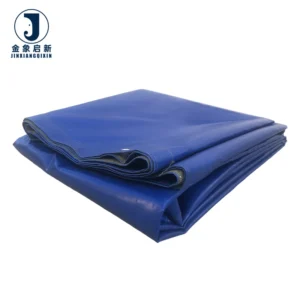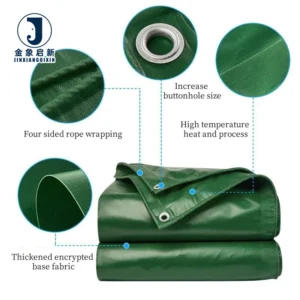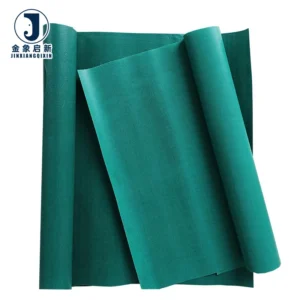
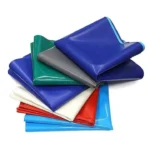
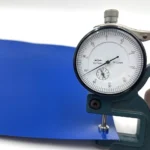
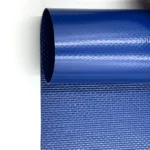
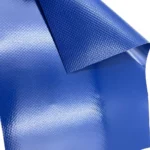
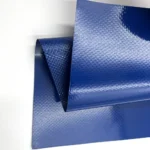
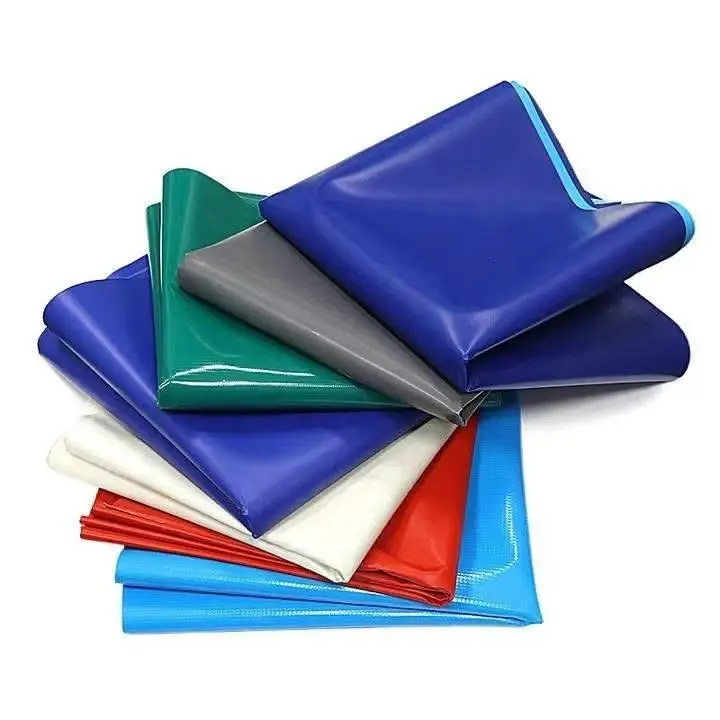
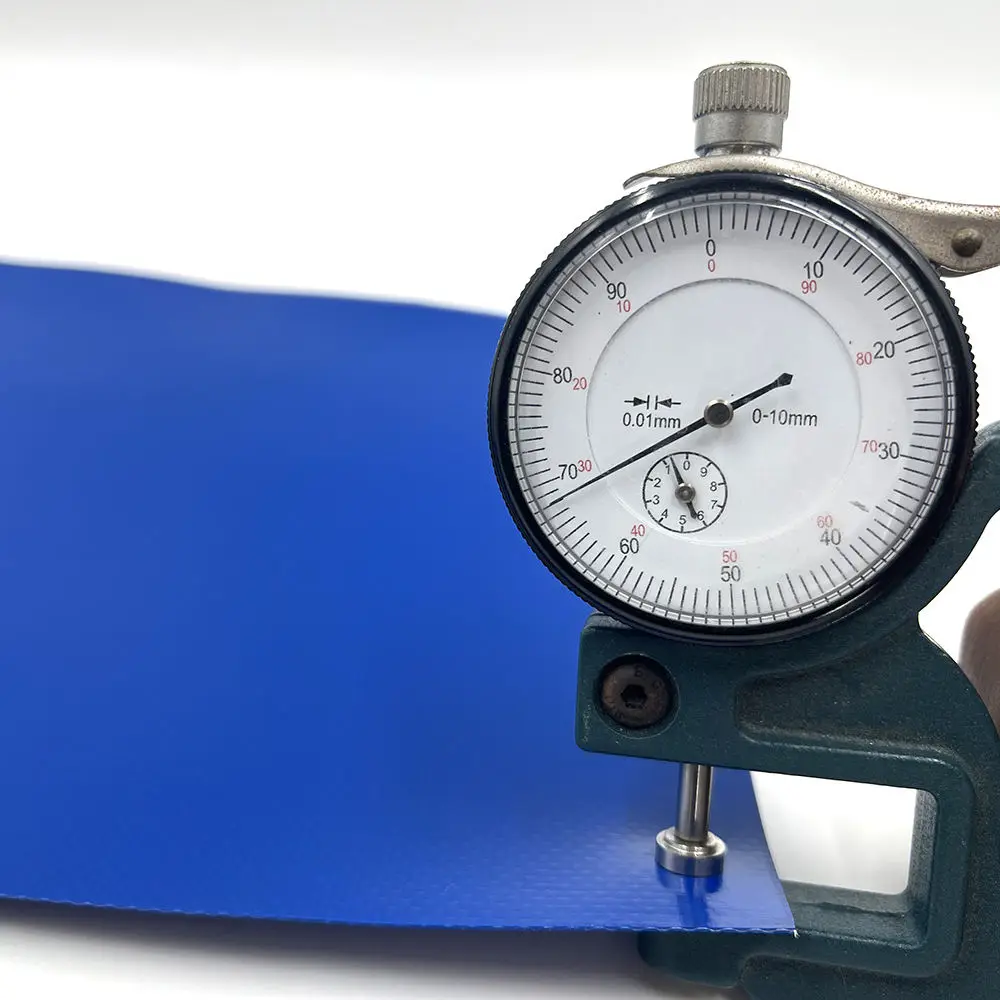
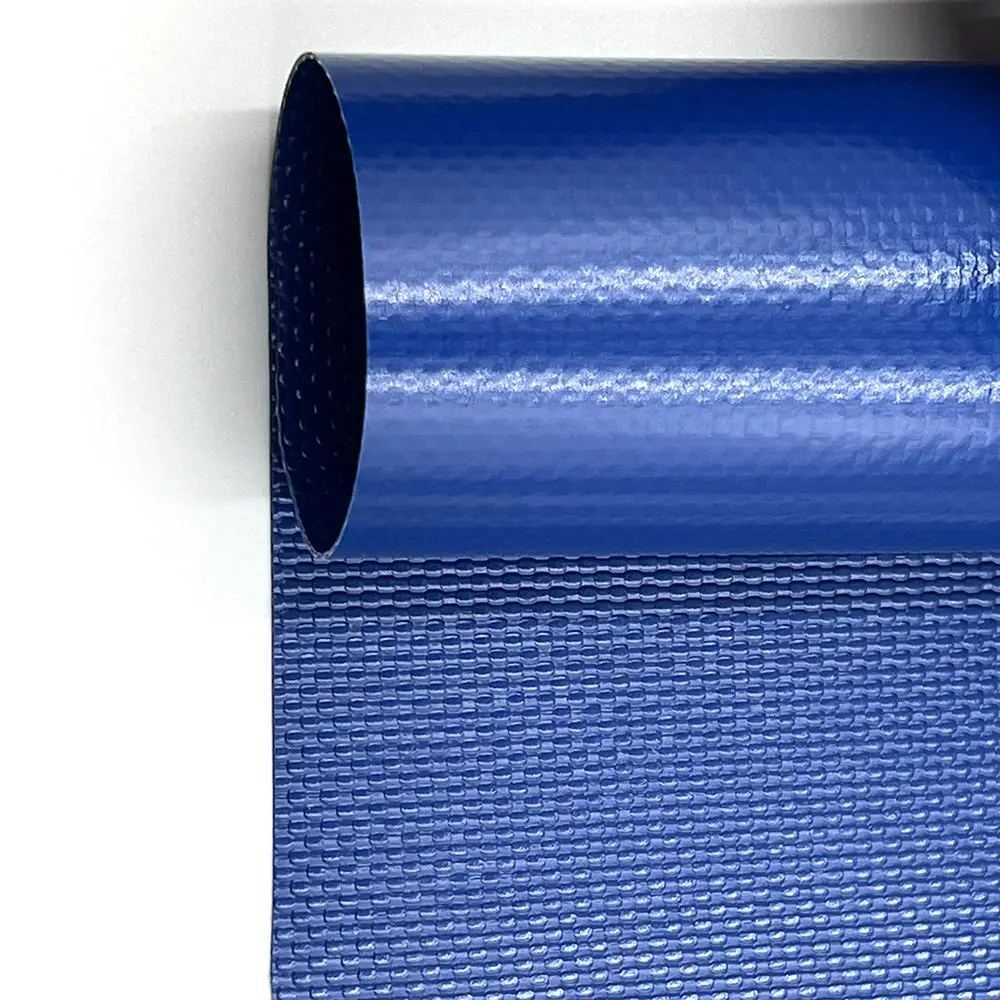
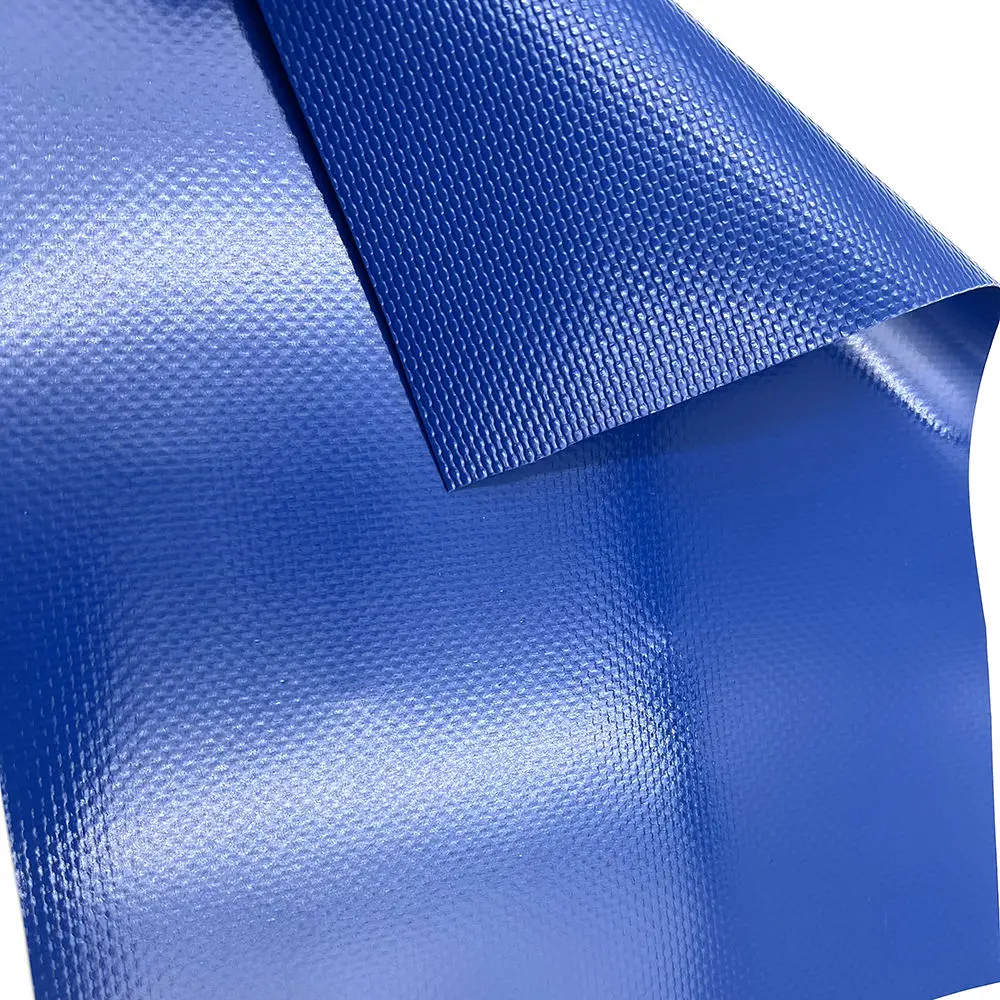
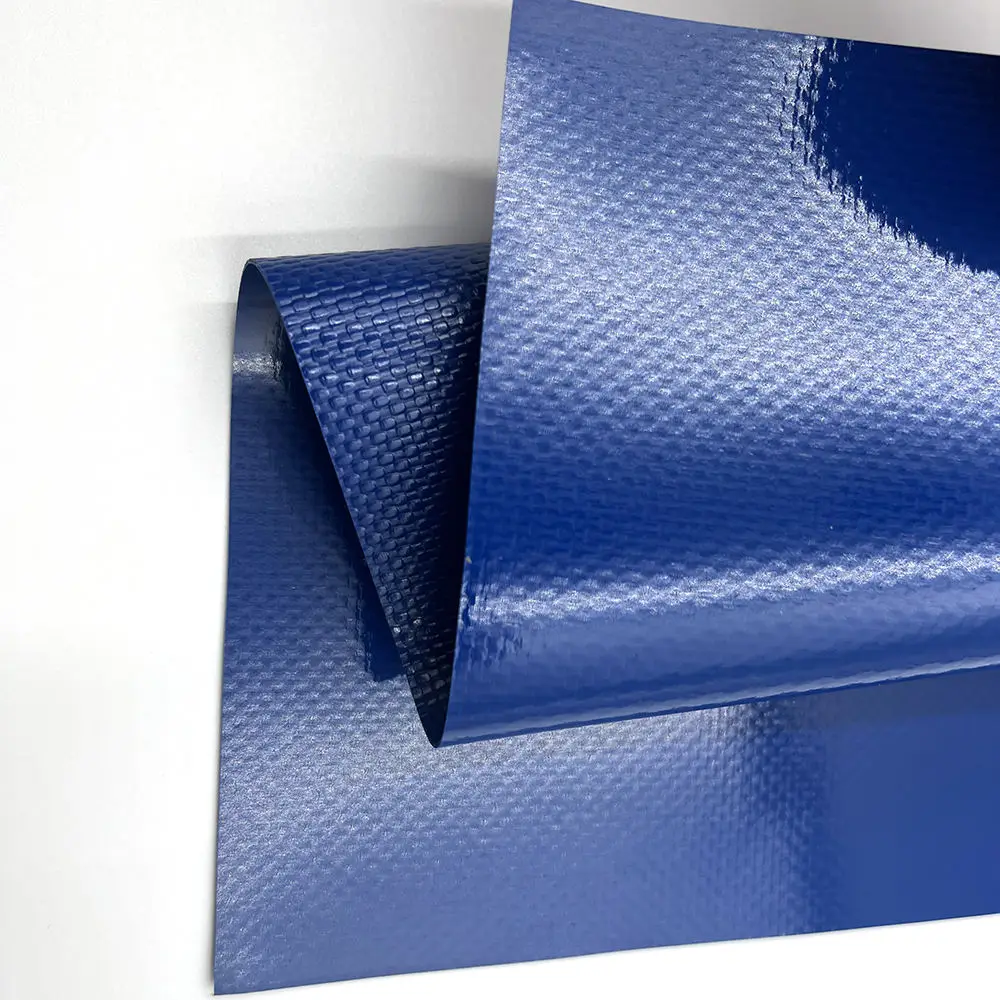
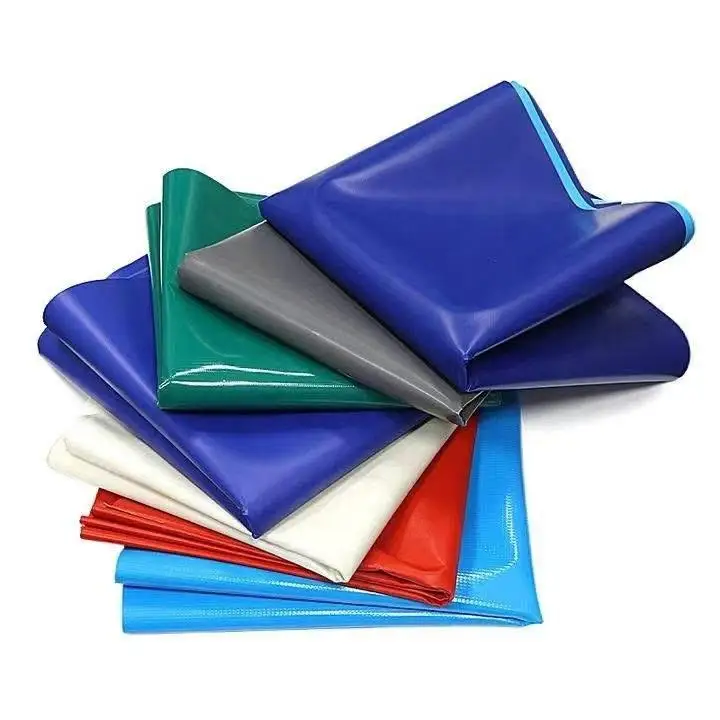
Process Control Over Coated Fabric — Nearly 30 years focused on PVC knife coated construction, ensuring consistent coating weight, adhesion, and roll-to-roll batch uniformity for large-format technical textile projects.
Technical Specifications
| Parameter | Value |
|---|---|
| Product Type | PVC Coated Tarpaulin |
| Coating Method | Knife coated |
| Coating Material | PVC |
| Color | Blue |
| Flame Retardant | Available in flame retardant grades — confirm the grade required for your market |
| UV Treatment | Available with UV resistant treatment — confirm test basis with sales before specifying |
| Antibacterial & Mildew Proof | Yes |
| Oil & Stain Resistance | Yes |
| Acid & Alkali Resistance | Yes |
| Temperature Resistance | High temperature and cold resistant (range available on request) |
| Anti-Oxidation & Weather Resistance | Yes |
| Flexibility | Highly flexible, resistant to cracking |
| Self-Cleaning | Yes |
| Welding Options | HF, Hot Air, Sewing |
| Standards | ISO, CE |
Application Suitability
| Application | Exposure & Requirement |
|---|---|
| Tensile structures | Long-term UV exposure, wind load, welded seam integrity at stress points |
| Airport hangars | Fire retardant compliance, large-span membrane tension, weather sealing |
| Stadium architectural structures | Complex curvature welding, public safety fire codes, aesthetic surface consistency |
| Portable storage structures | Abrasion from assembly and disassembly, water ingress prevention, UV degradation |
| Shade systems and shadings | Continuous solar exposure, colour stability, tear resistance at fixing points |
Why "Fire Retardant" Without a Grade Is a Specification Gap, Not a Feature
Always require the fire classification standard on the material spec sheet before you commit to a roll order.
When a PVC knife coated tarpaulin is described simply as fire retardant without referencing a test standard such as DIN 4102, NFPA 701, or M2, the buyer has no way to confirm whether the fabric will pass the fire safety inspection required at the installation site. Airport hangars, stadium canopies, and mining ventilation structures each fall under different fire codes depending on the jurisdiction, and a generic claim does not satisfy the building inspector or the site safety officer. This is a recurring source of project delay and material rejection [NEED_CITE: DIN 4102 fire classification for building materials]. For every knife coated tarpaulin order intended for enclosed or public-access structures, request the test report that matches the grade your local authority requires before production begins.
Coating Adhesion and Weld Seam Integrity for Membrane Fabricators
When fabricators build tensile structures or architectural membranes, the weld seam often becomes the failure point long before the PVC coated fabric itself degrades. Knife coated PVC tarpaulin produces a uniform coating layer that bonds directly to the base fabric, creating a surface that accepts HF and hot air welding with consistent heat transfer across the seam. This means fabricators working with this blue PVC knife coated tarpaulin can set welding parameters once and maintain them throughout a production run, reducing the scrap rate that comes from seam delamination on unevenly coated material.
Batch Colour Consistency Across Multiple Rolls in One Project
Large-format tensile structures and stadium architectural membranes often require several rolls installed side by side, where even slight colour variation becomes visible under direct sunlight. Roll-to-roll colour consistency is verified through in-process QA at every production stage. This is particularly relevant for shade systems and airport hangar covers where the blue PVC knife coated tarpaulin surface forms a continuous visual field. Buyers specifying this knife coated tarpaulin fire retardant grade for high-visibility architectural projects should confirm the colour reference code and request a pre-production sample from the same batch [NEED_CITE: colour consistency verification methods for coated textile rolls].
How Knife Coating Differs from Lamination and Calendering
Knife coating applies liquid PVC directly onto the base fabric, allowing the coating to penetrate the weave and form a mechanical bond that substantially improves peel strength compared to laminated alternatives. This matters for tensile and membrane structures where the fabric operates under continuous tension and the coating must not separate from the base cloth at stress concentrations. The knife coated process also allows tighter control over coating weight distribution across the full width of the roll, which translates to predictable behaviour during HF and hot air welding. Base fabric denier and weave density work together with the coating weight to determine the final tensile and tear performance — a heavier coating alone does not compensate for a loosely woven base cloth, and specifying GSM without reference to the base fabric construction gives an incomplete picture of how the material will perform under load.
The Hidden Cost of Specifying Without Verification
When the material specification sheet is not checked against the physical roll on arrival, discrepancies in coating weight or fire retardant treatment may only surface during welding or, worse, during the site inspection after installation. A fire retardant grade that does not match the local building code can halt a stadium or hangar project at the certification stage, forcing the contractor to source replacement material under compressed timelines. Weld seam failures that originate from inconsistent coating adhesion are often discovered only after the structure has been under tension for a period, making rework costly and disruptive [NEED_CITE: tensile and tear test methods for coated fabrics per ISO 1421]. Colour variation between rolls in the same shipment, if not caught at pre-shipment inspection, becomes a visible defect once the membrane panels are joined and viewed from ground level.
Why Procurement Teams Source This Fabric Here
Three full production lines and 36 sets of professional equipment provide the bulk capacity needed for large-volume roll orders without sacrificing lead time reliability. The 10-person R&D team handles material selection, custom width development, and sample preparation within days for projects that require fire retardant or UV treatment confirmation before commitment. A dedicated QA/QC process runs at every production stage, with 100% inspection before shipment ensuring that each roll of blue PVC knife coated tarpaulin matches the stated specification. Coating process control developed over decades of focused production means GSM and adhesion values stay within tolerance across the full production run, reducing the batch variability that causes problems downstream at the fabrication stage.
Documentation & Verification
- Material spec sheet stating GSM, base fabric construction, coating method, and colour reference
- Fire retardant and UV test reports matched to the grade requested — confirm with sales before order
- ISO and CE certificates on file and available for compliance submissions
- Pre-shipment inspection record covering every roll in the dispatch
- Roll packing list with batch numbers for traceability across the project
Fabrication, Handling & Storage
- HF and hot air welding both compatible — set temperature parameters based on knife coated PVC layer thickness
- Sewing requires UV-resistant thread to match the fabric’s weather exposure rating
- Store rolls upright on pallets to prevent flat-spot deformation of the PVC coating surface
- Allow cold-stored rolls to reach ambient temperature before unrolling to avoid coating micro-cracking
- Use mild detergent for cleaning — the self-cleaning surface treatment resists aggressive chemical cleaners
- Cut patterns to minimise seam count on large tensile structures, leveraging the available roll width
Request a Specification and Sample
To move forward, share the fire retardant grade required by your local building authority, the total linear metres and roll width needed, and whether the project calls for HF or hot air welded seams. A material sample from the production batch can be prepared within days so your fabrication team can run weld tests and confirm colour under project lighting conditions before the full order enters production.
Frequently Asked Questions
Q: What fire retardant grades are available and how do I confirm the right one?
A: Fire retardant treatment is available in multiple grades. The correct classification depends on your local building code — common standards include DIN 4102, NFPA 701, and M2. State your required grade at inquiry stage so the matching test report can be prepared and supplied with the shipment documentation.
Q: How is UV resistance verified before I commit to a full roll order?
A: UV resistant treatment is available and supported by test documentation. Request the specific test report that corresponds to your project’s exposure requirements before placing the order. A sample from the production batch can be sent for independent verification if needed.
Q: Which welding methods work best with this knife coated fabric?
A: The fabric supports HF welding, hot air welding, and sewing. HF welding typically delivers the strongest seam for tensile and membrane structures, while hot air suits on-site repairs. Confirm welding parameters with your fabricator using a production sample before cutting full panels.
Q: Can I order custom widths or colours with reasonable lead times?
A: Custom widths and colours are available through the R&D team, with samples developed within days for approval. Specify the required dimensions and colour reference at inquiry stage. Minimum order quantities and lead times vary by specification and are confirmed in the quotation.