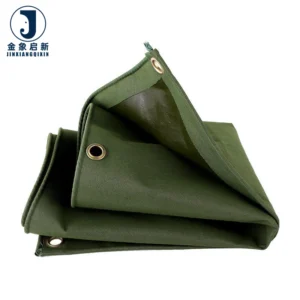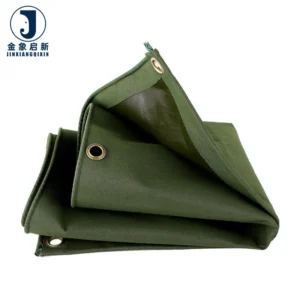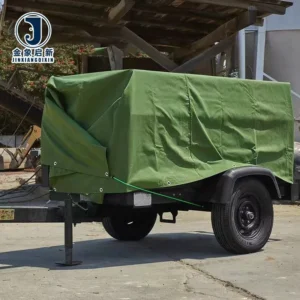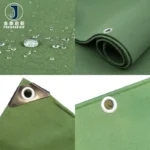

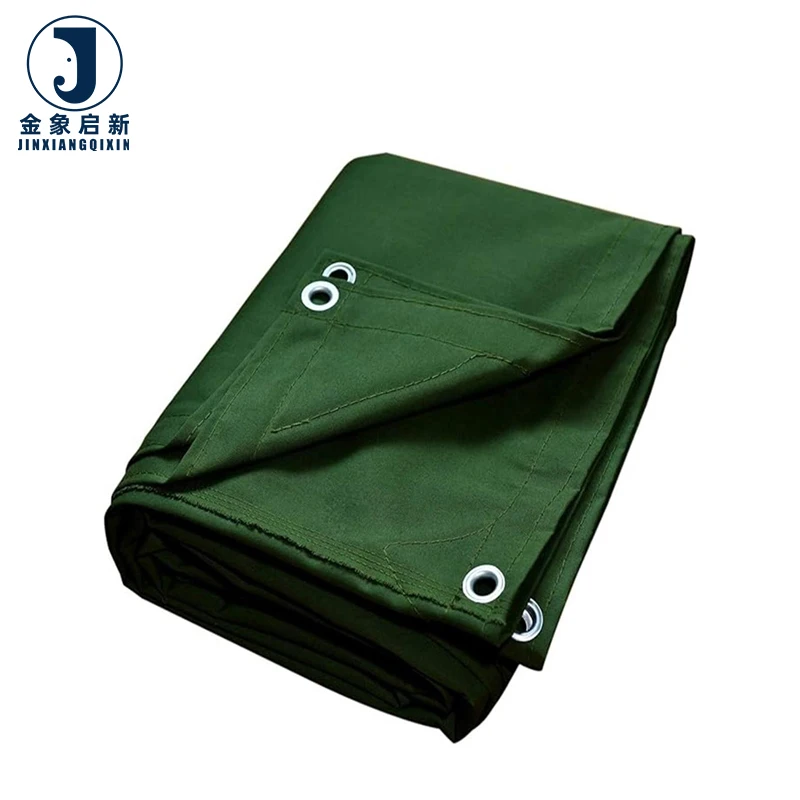
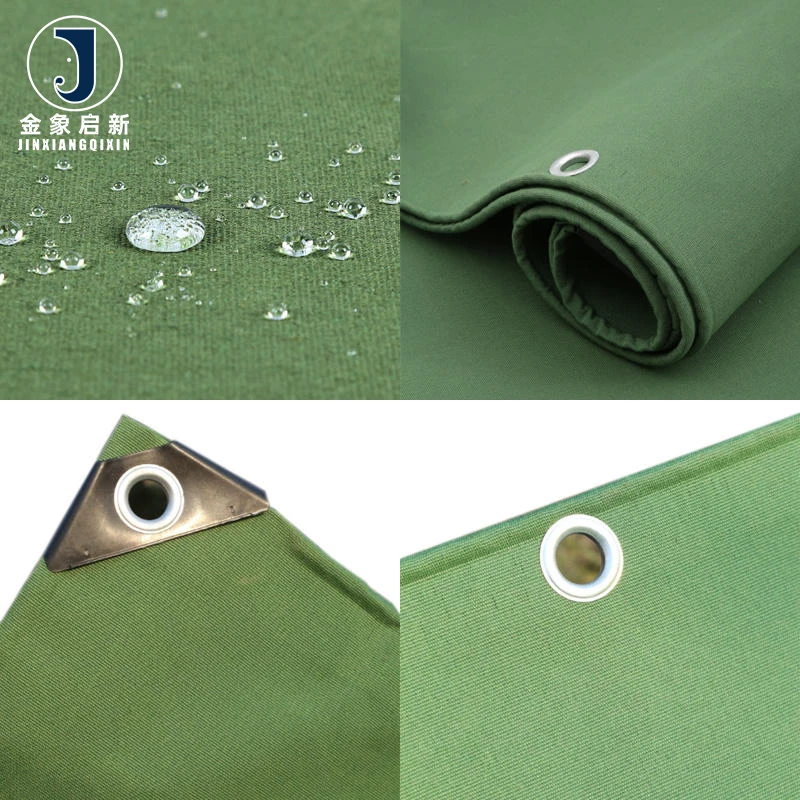
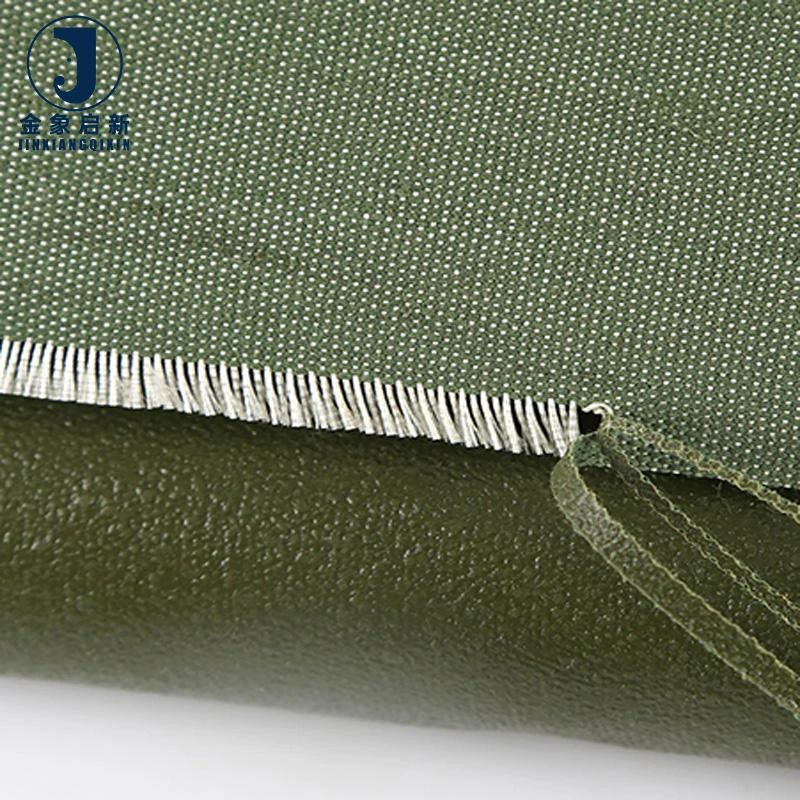

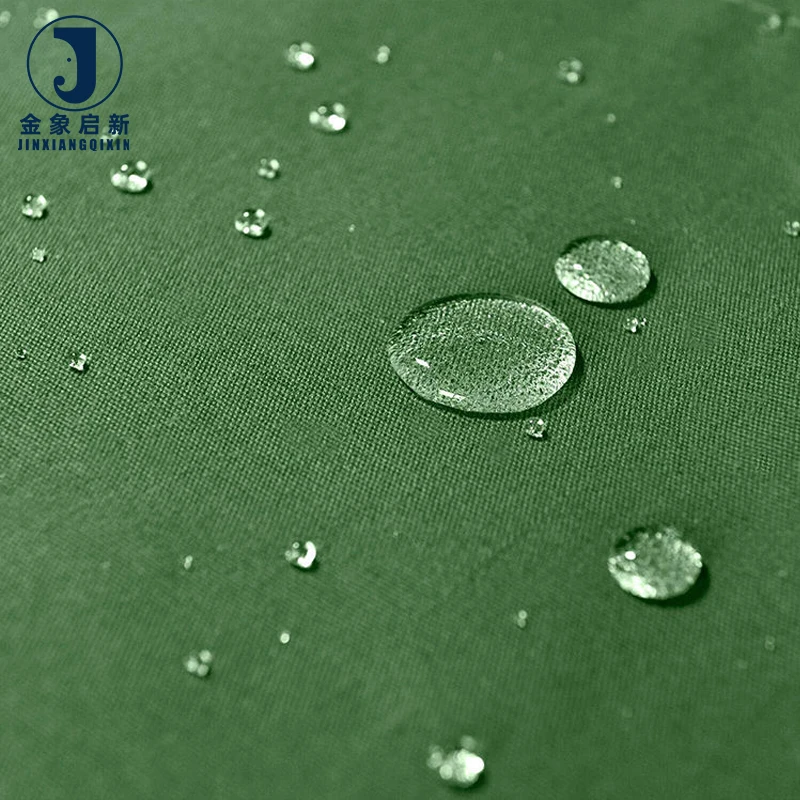
Deep Coating Process Control — three full production lines with 36 sets of professional equipment maintain precise lamination pressure and adhesion uniformity across every 2m × 100m roll of 600gsm laminated canvas tarpaulin.
Technical Specifications
| Parameter | Value |
|---|---|
| Product Type | Laminated Canvas Tarpaulin |
| Base Fabric | Polyester cotton industrial textile, 8–12 strands of fine cotton yarn |
| Coating Method | Laminated (high-density woven upper layer, weather-resistant low-density reinforced backing) |
| Weight | 600gsm |
| Thickness Options | 0.5mm / 0.6mm / 0.7mm |
| Roll Width | 2m |
| Roll Length | 100m |
| Color Options | Army Green Camouflage / Custom |
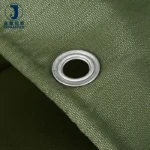
| Eyelet Spacing | Rust-proof aluminum holes every 1 meter at corners and hem |
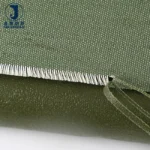
| Edge Construction | Folding and seams welded and sewn with poly ropes |
| Waterproof Rating | Stated waterproof (test basis not stated) |
| UV Treatment | Stated UV resistant (test basis not stated) |
| Anti-Mildew | Stated mold resistant (test basis not stated) |
| Flame Retardant Grade | Not stated — confirm the grade required for your market |
| Anti-Static | Not stated |
| Certification | CE, ISO |
Application Suitability
| Application | Exposure & Requirement |
|---|---|
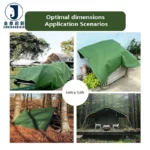
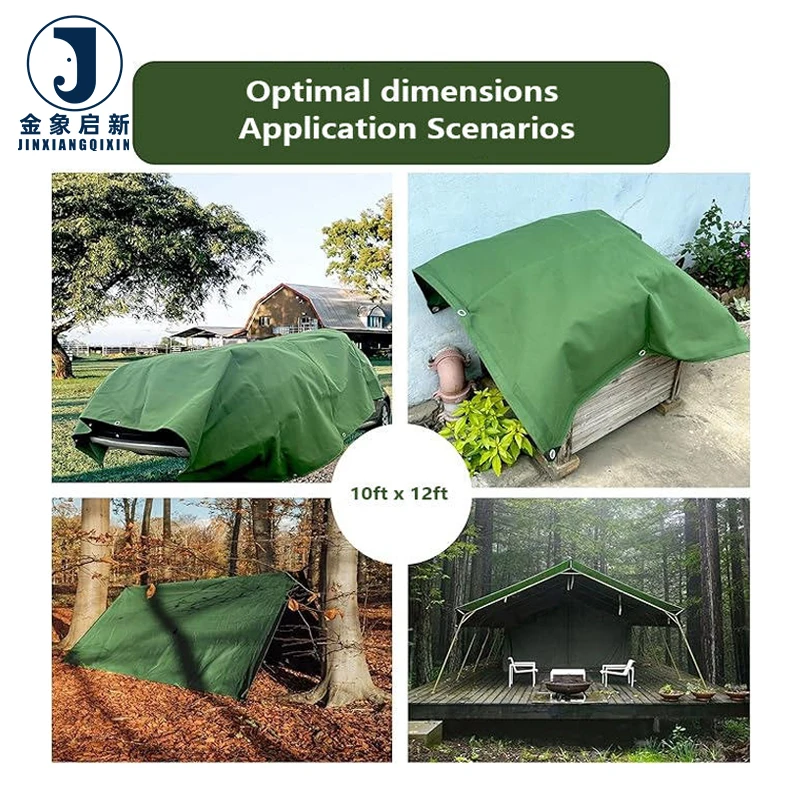
| Truck and trailer load cover | Constant road vibration, wind-induced flexing at seams, abrasion from cargo edges, prolonged UV exposure |
| Construction site open-air cover | Heavy rainfall, pooled water on flat surfaces, equipment impact, dust and debris accumulation |
| Tent and temporary structure fabric | Repeated assembly and disassembly, tension stress at grommet points, multi-season weather cycles |
| Asphalt and material stockpile cover | High-temperature contact from freshly laid asphalt, chemical exposure from bitumen fumes, puncture risk |
| Engine hood and machinery cover | Oil and grease contact, localized heat, vibration-induced abrasion against metal surfaces |
Why Welded Seams Fail Before the Canvas Tarpaulin Fabric Does
The flex point concentrates stress where the hem meets the main panel, and a seam that was not engineered for repeated load movement will split long before the 600gsm fabric body shows wear.
In transport and construction cover applications, the perimeter of the tarpaulin absorbs the highest dynamic forces — every gust of wind and every shift in the cargo pulls directly against the eyelet line and the welded hem. When lamination adhesion is uneven or the poly-rope reinforcement is undersized for the fabric weight, the bond separates at the fold line, leaving the main canvas body intact but the cover unusable. Buyers who specify Heavy Duty Laminated Canvas Tarpaulin 600gsm based on body weight alone often discover this failure mode only after the first season of deployment. [NEED_CITE: tensile and tear test methods for coated fabrics per ISO 1421]
How Lamination Bonding Affects Real-World Tear Performance
The polyester cotton base fabric in this laminated canvas tarpaulin uses 8–12 strands of fine cotton yarn woven into a high-density upper layer. That woven face provides the primary tensile resistance, but it is the lamination bond to the low-density reinforced backing that determines whether a small puncture propagates into a full-panel tear. When the adhesive layer between the two plies is applied at consistent pressure and temperature, the resulting composite behaves as a single unit under load, distributing stress across a wider area rather than letting it concentrate at the damage point.
Edge Reinforcement Engineered for Flex-Point Durability
Every hem on this Heavy Duty Laminated Canvas Tarpaulin 600gsm is folded, welded, and then sewn around a poly rope — a three-step construction that addresses the most common failure sequence observed in truck and site covers. The weld fuses the lamination layers at the fold, the sewing provides mechanical retention independent of the adhesive bond, and the poly rope distributes tie-down forces across the hem width rather than letting them concentrate at individual stitch holes. Rust-proof aluminum eyelets spaced at 1-meter intervals along the corners and hem further reduce point-loading on the canvas body during tensioning. [NEED_CITE: hem reinforcement standards for flexible covers in transport applications]
Reading the 600gsm Weight in Context with Thickness and Weave
A 600gsm rating describes total areal density but does not distinguish between a heavy coating on a light base fabric and a lighter coating on a dense weave. Here, the polyester cotton base fabric with 8–12 strands of fine cotton yarn carries a substantial portion of that weight, meaning the woven structure itself contributes significant tensile and tear resistance rather than relying on coating mass alone. The three thickness options — 0.5mm, 0.6mm, and 0.7mm — allow buyers to select the grade that matches their abrasion and puncture exposure: the thinner option suits applications requiring frequent folding and handling, while the 0.7mm variant provides maximum mechanical protection for stationary covers exposed to sharp cargo edges or construction debris. Choosing the correct thickness avoids both under-specifying for high-impact environments and over-specifying where flexibility and weight savings matter more.
What Happens When Batch Consistency Slips Across Multiple Rolls
A single truck cover cut from one roll may perform perfectly, but logistics fleets ordering container quantities need every roll to deliver identical lamination adhesion, color depth, and GSM. When coating weight drifts downward in later rolls of the same order, the resulting covers are lighter than the agreed specification and may fail prematurely under the same load conditions the original sample survived. Color variation between rolls becomes visible once panels are installed side by side on adjacent trailers, creating aesthetic complaints even when functional performance remains intact. These inconsistencies force buyers into costly incoming inspection or, worse, field replacements after the covers are already deployed. [NEED_CITE: batch consistency challenges in coated fabric production]
Why Sourcing This Canvas Tarpaulin Through a Specialist Line Matters
Three dedicated production lines equipped with 36 sets of professional equipment allow lamination parameters — temperature, pressure, dwell time — to be locked in for each thickness grade rather than adjusted on the fly. A 10-person R&D team handles material selection and sample development, so custom color matching or non-standard eyelet spacing can be validated before the production run begins. Dedicated QA/QC at every stage with 100% pre-shipment inspection means each roll of Heavy Duty Laminated Canvas Tarpaulin 600gsm is checked for GSM, lamination bond integrity, and edge construction before it leaves the facility. Samples for custom width, color, or print requirements are developed within days, giving buyers physical confirmation before committing to bulk volumes. CE and ISO certification underpin the documentation package, supporting customs clearance and compliance verification in destination markets.
Documentation & Verification
- Material specification sheet stating GSM, base fabric denier, lamination method, and selected thickness grade per roll
- Pre-shipment weight test record verifying 600gsm against the quotation value for each production batch
- UV and mold-resistance test reports available — confirm the test standard required for your market before ordering
- Roll packing list detailing width, length, color, and thickness grade for container loading reconciliation
- Certificate of origin and customs documentation prepared for destination-country import requirements
Fabrication, Handling & Storage
- Weld temperature and dwell time must match the 0.5mm / 0.6mm / 0.7mm thickness grade to avoid delamination at seams
- Eyelet insertion through the 600gsm laminated layers requires matched die clearance to prevent cracking around the aluminum ring
- Store 2m × 100m rolls upright on pallets to prevent flat-spot deformation of the laminated backing layer
- Allow cold-stored rolls to reach ambient temperature before unrolling to avoid creasing the reinforced backing
- Clean the woven polyester cotton face with mild detergent only; solvent-based cleaners may degrade the lamination bond
- Field repairs on the laminated backing respond to heat-activated patch tape rather than solvent-based adhesives
Requesting a Quotation That Matches Your Actual Requirements
Provide the intended application and the specific environmental exposures — road abrasion for truck covers, pooled water for construction stockpiles, or repeated tension cycles for tent structures — so the correct thickness grade is recommended. Confirm whether your market requires fire-retardant or anti-static certification, as the standard 600gsm laminated canvas tarpaulin does not carry these grades by default. Specify roll stock or custom cut-to-size requirements, including any non-standard eyelet spacing or color matching across multiple rolls, to allow accurate lead-time and sample planning.
Frequently Asked Questions
Q: How is the 600gsm weight verified, and can I receive a pre-shipment sample?
A: Each roll undergoes weight verification as part of the 100% pre-shipment inspection, with test records available for buyer review. A pre-shipment sample from the production batch can be dispatched for your own GSM confirmation and physical evaluation before the full order ships. Request the inspection record at the time of order placement.
Q: What UV and mold-resistance test reports support the weatherproof claims?
A: UV and mold-resistance treatments are stated for this laminated canvas tarpaulin, but the specific test standards are not published in the base specification. Buyers should confirm the test method required by their destination market — such as ISO 4892 for UV or ASTM G21 for mold — and request corresponding reports before finalizing the order.
Q: Can eyelet spacing be customized from the standard 1-meter interval?
A: Yes, the standard rust-proof aluminum eyelet spacing at corners and hem can be adjusted during the fabrication stage. Custom spacing is developed through the sample process, so buyers should provide tie-down configuration drawings or specify the required interval. The R&D team will produce a sample panel confirming placement and reinforcement before production begins.
Q: Which thickness grade suits truck covers versus construction site covers?
A: The 0.5mm option suits applications where frequent folding and handling are required, such as transport covers that are removed and stored daily. The 0.7mm grade is better suited to stationary construction covers exposed to sharp debris and prolonged pooled water. The 0.6mm serves as a balanced middle ground for mixed-use scenarios.
Q: Is the Army Green Camouflage color consistent across multiple rolls in a bulk order?
A: Color consistency across the 2m × 100m rolls is maintained through controlled dye batches and in-line inspection. For orders spanning multiple production runs, buyers should request a color reference sample and confirm tolerance requirements. The QA process checks for shade variation before dispatch, and any roll falling outside the agreed range is held for review.