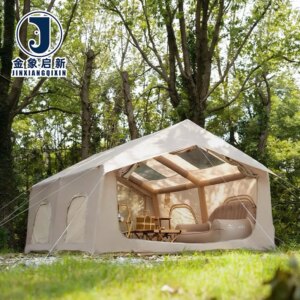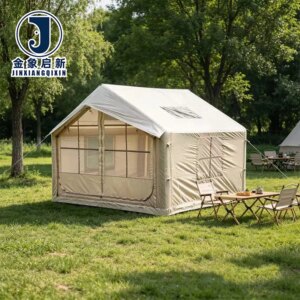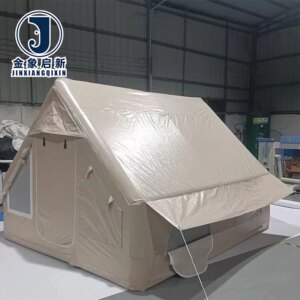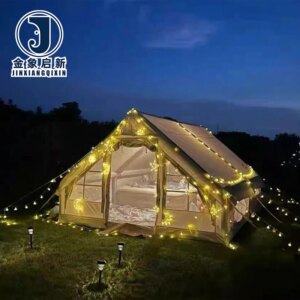
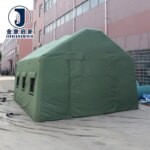
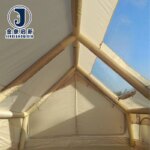

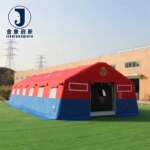
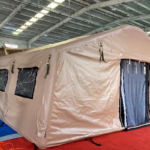
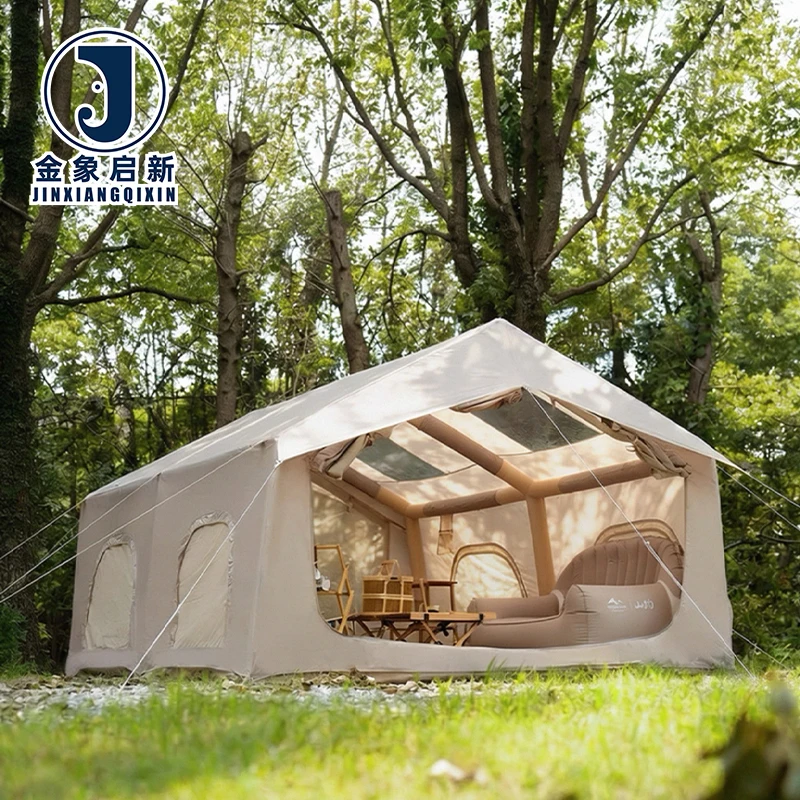
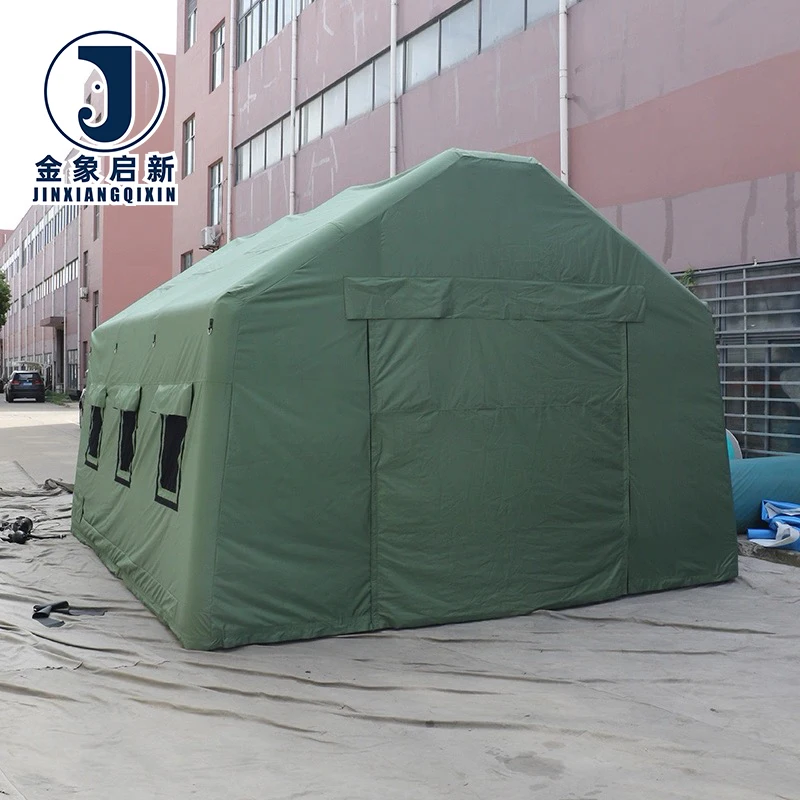
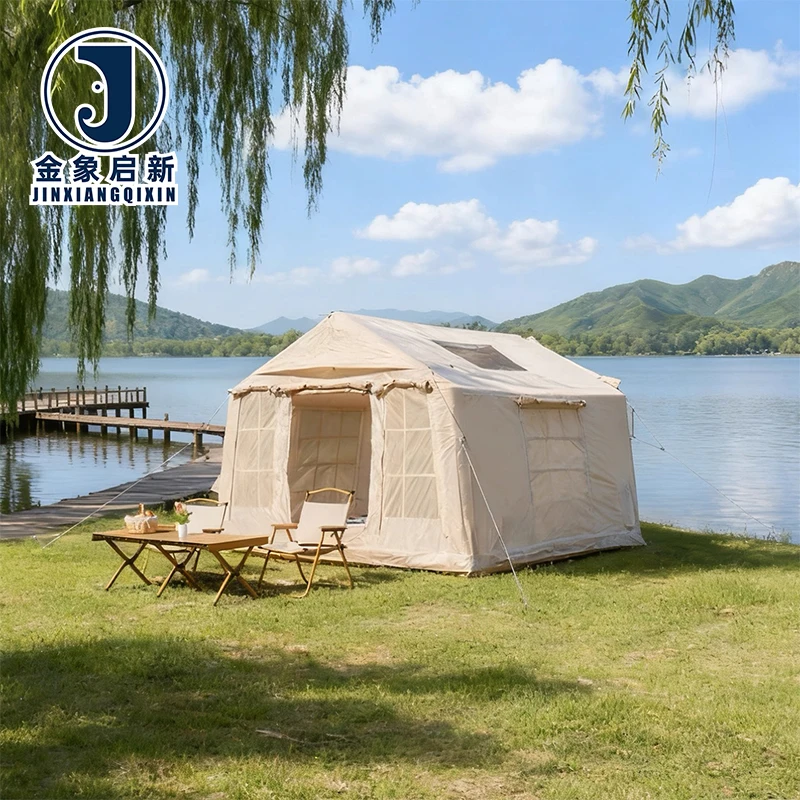
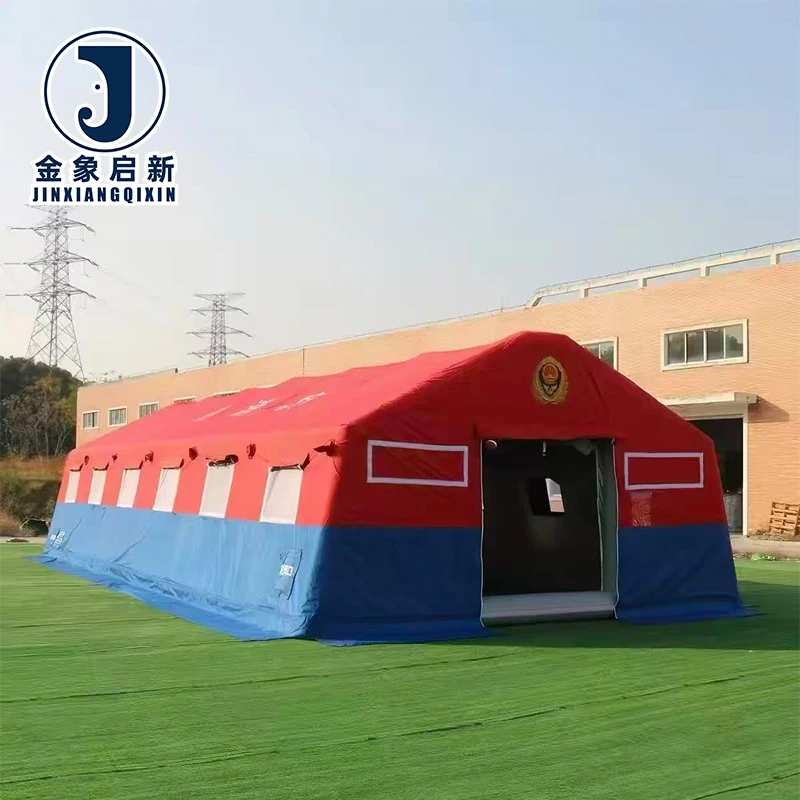
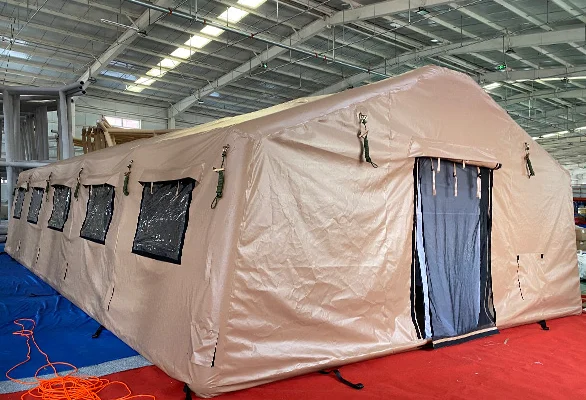
Certified Manufacturing Traceability — Every Inflatable Tent order ships with batch-specific material documentation and ISO/CE compliance records, ensuring procurement teams can verify PVC tarpaulin grades and fire performance claims before deployment.
Technical Specifications
| Parameter | Value |
|---|---|
| Product Type | Inflatable Tent |
| Core Material | PVC tarpaulin |
| Construction | Single layer |
| Configuration | Extended Type |
| Season Rating | 4-Season |
| Capacity | 2-8 Person |
| Opening Mechanism | Quick Automatic Opening |
| Key Features | Waterproof, UV-resistant (test basis not stated), tear-resistant |
| Customization | OEM & ODM, sample customization, pattern printing |
| R&D Support | 10 technicians |
| Quality Control | Full-process QA & QC inspection |
| Standards | ISO9001, ISO14001, ISO45001, CE |
Application Suitability
| Application | Exposure & Requirement |
|---|---|
| Disaster relief shelter deployment | Rapid setup under adverse weather, continuous UV and moisture exposure, transportability over rough terrain |
| Industrial site command center | Extended stationary use, equipment protection, wind and rain resistance, personnel safety in temporary zones |
| Emergency equipment storage | Waterproof integrity, UV degradation resistance, structural stability under inflation load |
| Temporary logistics staging | High-frequency assembly and teardown, abrasion from ground contact and cargo handling |
| Specialist inflatable membrane structures | Custom geometry, sustained inflation pressure, coating adhesion under flex and thermal cycling |
Why Inflatables Fail When Certification Is Missing on Site
Compliance documentation must ship with the product, not arrive weeks later by email.
When an inflatable tent or membrane structure arrives at a mining, tunnelling, or disaster relief site without verifiable fire-retardant or anti-static certification, the entire deployment stalls. Site safety officers reject the installation, contractors face schedule penalties, and procurement teams scramble to source replacements. [NEED_CITE: site compliance requirements for temporary inflatable structures in industrial zones]. The problem is rarely the fabric itself — it is the gap between what was promised at quotation and what documentation actually accompanies the shipment.
Rapid Inflation Architecture for Time-Critical Deployments
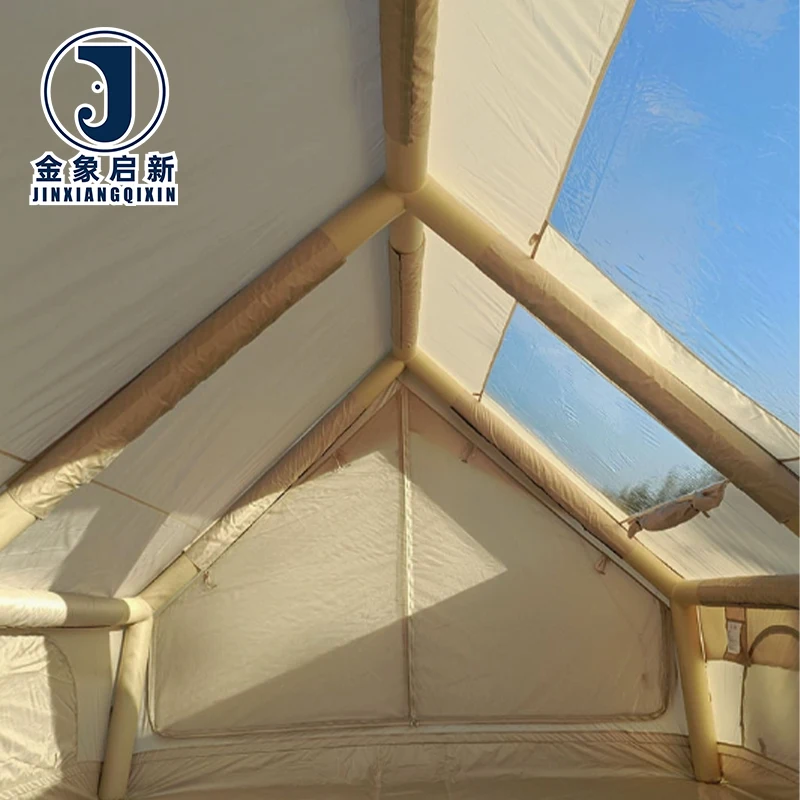
The quick automatic opening mechanism built into this inflatable tent eliminates the manual pole assembly that delays conventional shelters. For emergency response teams and site contractors, the difference between a structure that inflates in minutes versus one that requires a crew to assemble is measured in operational readiness. This Inflatable Tent manufacturer engineers the air-beam geometry and valve configuration to sustain inflation pressure across temperature swings encountered in 4-season field use.
Coated Fabric Behaviour Under Sustained Inflation Load
PVC tarpaulin used in inflatable membrane structures must maintain coating adhesion while the fabric remains under constant biaxial tension from internal air pressure. Unlike static covers, the material in an inflatable camping tent cycles through pressure changes as ambient temperature shifts throughout the day. The single-layer construction specified here balances transport weight against the tensile demands of sustained inflation, and the 10-technician R&D team adjusts coating formulation to match the structural load path of each custom configuration. [NEED_CITE: biaxial stress behaviour in inflated PVC membrane structures].
How PVC Coating Weight and Base Fabric Interact in Inflatable Applications
The performance of PVC tarpaulin in inflatable structures depends on the relationship between coating weight, base fabric denier, and weave density — not on any single value in isolation. Coating weight determines waterproof integrity and surface durability, while the base fabric’s warp and weft density governs how loads distribute across the inflated form. Knife-coated PVC achieves deeper penetration into the base weave, producing stronger adhesion at the weld seams where inflatable panels join. Surface finish — whether glossy or matte — influences both field cleaning and the adhesion of pattern printing applied during customization. For buyers specifying custom inflatable structure fabric, requesting the base fabric specification alongside the coating weight reveals whether the material will hold air-beam geometry under load or gradually deform at the seam lines.
The Hidden Cost of Specifying Inflatable Fabric on Weight Alone
Selecting inflatable structure material based solely on a quoted weight value creates exposure that only appears once the structure is inflated and loaded. A fabric that meets the stated weight but uses a lighter base fabric with heavier coating will show adequate stiffness on the roll yet creep at the heat-welded seams under sustained inflation pressure. [NEED_CITE: weld seam failure modes in PVC coated fabrics under constant tension]. Batch-to-batch colour variation becomes visible when multiple inflatable units stand side by side at a relief site or commercial installation. Procurement teams who skip sample validation before committing to a production run absorb these costs as rework, replacement, or site rejection.
Why Procurement Teams Source Inflatable Structures Here
Three full production lines and 36 sets of processing equipment support volume runs of custom inflatable structure fabric without compressing lead times on repeat orders. The 10-technician R&D team handles material selection, pattern printing layout, and sample development — producing validation samples within days so buyers can confirm inflation behaviour before mass production. Full-process QA and QC inspection covers every stage from coating to final packing, with pre-shipment inspection records traceable by order number. ISO9001, ISO14001, ISO45001, and CE standards are maintained across production, providing the compliance framework that industrial and institutional buyers require. The 9,180 square meter facility consolidates coating, fabrication, and inspection under one operation, reducing hand-off points where specification drift typically occurs.
Documentation & Verification
- Material specification sheet confirming PVC tarpaulin grade, coating weight, and base fabric details per batch
- ISO9001, ISO14001, ISO45001, and CE certificates included with each shipment for customs and site compliance
- Pre-shipment inspection record with roll-by-roll verification against the order specification
- UV and fire performance test reports provided where the specified grade includes those treatments
- Roll packing list and certificate of origin prepared for cross-border logistics
- Pattern printing proof and colour reference confirmed before production begins
Fabrication, Handling & Storage
- Heat-weld seam parameters must match the PVC tarpaulin coating formulation to prevent joint failure under inflation pressure
- Store rolled inflatable fabric vertically on pallets to avoid flat-spot creasing that affects air-beam geometry
- Use compatible PVC adhesive for field repairs, matching the coating type specified in the material sheet
- Allow cold-stored rolls to reach ambient temperature before unfolding to prevent coating micro-cracking
- Confirm valve and flange cutout positions against the inflation layout before final panel welding
What We Need to Start Your Inflatable Structure Inquiry
Provide the intended application environment — disaster relief, mining site, commercial installation — along with the deployment conditions the structure will face including wind exposure, temperature range, and duration of use. Specify any fire-retardant or anti-static grades required by your site safety regulations or local building codes. Indicate whether you need roll stock of custom inflatable structure fabric for your own fabrication, or finished inflatable tent units with valve and seam configuration complete.
Frequently Asked Questions
Q: What fire-retardant or anti-static certifications are available for inflatable structure fabric?
A: Fire-retardant and anti-static treatments are available in grades matched to specific market requirements. The applicable certification depends on your site regulations — mining, aviation, and construction sectors each reference different standards. We supply test documentation with the shipment confirming the grade specified at order. Confirm the classification your project requires so we align the coating formulation accordingly.
Q: How is UV resistance validated for extended outdoor deployment of inflatable tents?
A: UV resistance in PVC tarpaulin is achieved through coating additives selected during formulation. The test basis for UV performance varies by market and application duration. We provide UV test reports where the specified grade includes documented UV treatment. For long-term outdoor installations, share your expected exposure duration and regional UV index so our R&D team can recommend the appropriate coating formulation.
Q: What customization options exist for size, printing, and material on inflatable tents?
A: Our 10-technician R&D team supports full OEM and ODM customization including pattern printing, panel dimensions, valve placement, and material thickness. Sample development is completed within days for specification confirmation before mass production. Each custom inflatable structure fabric order is produced on dedicated lines with in-process quality checks ensuring consistency across the production run.
Q: How does the quick automatic opening mechanism perform under adverse weather?
A: The inflation system is engineered for rapid deployment across 4-season conditions. Air-beam geometry and valve specifications are adjusted based on the temperature range and wind exposure of the target environment. We recommend sharing your typical deployment conditions so the inflation parameters can be calibrated accordingly during sample development.
Q: What documentation accompanies each inflatable tent shipment for compliance?
A: Every shipment includes a material specification sheet, ISO and CE certificates, pre-shipment inspection records, and a roll packing list. Fire performance or UV test reports are included where applicable to the specified grade. Certificate of origin and customs documentation are prepared for cross-border delivery. All records are traceable by order number for audit purposes.