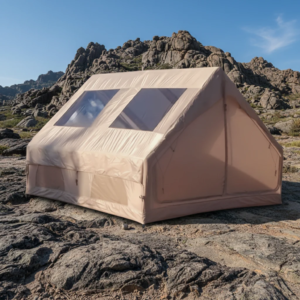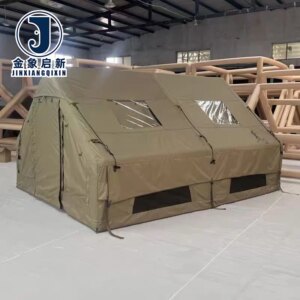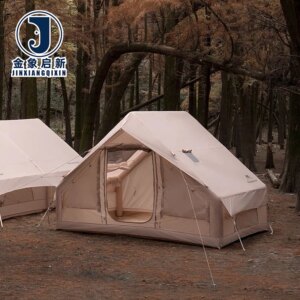
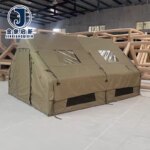
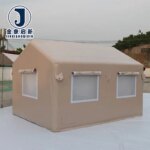
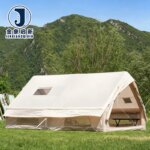
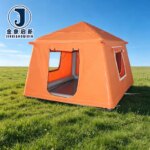
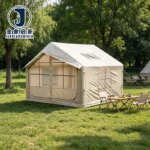
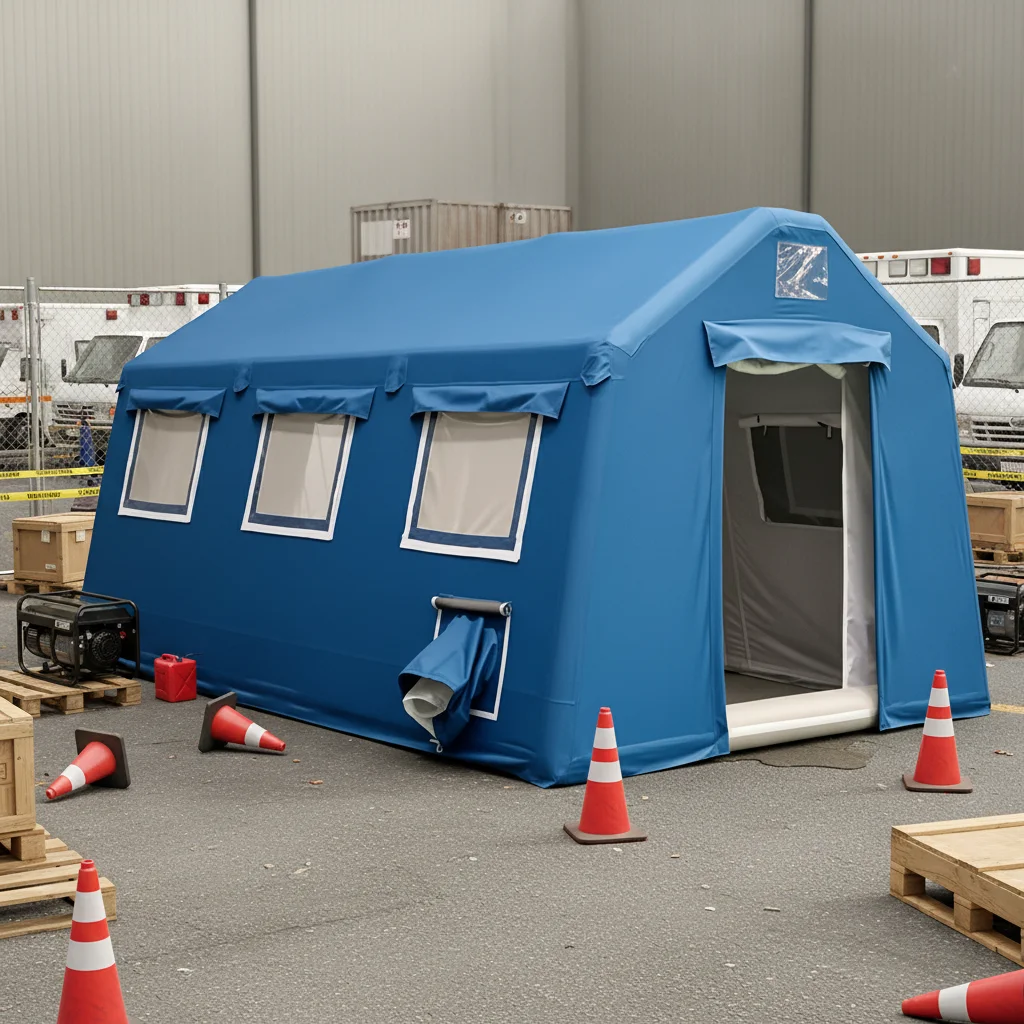
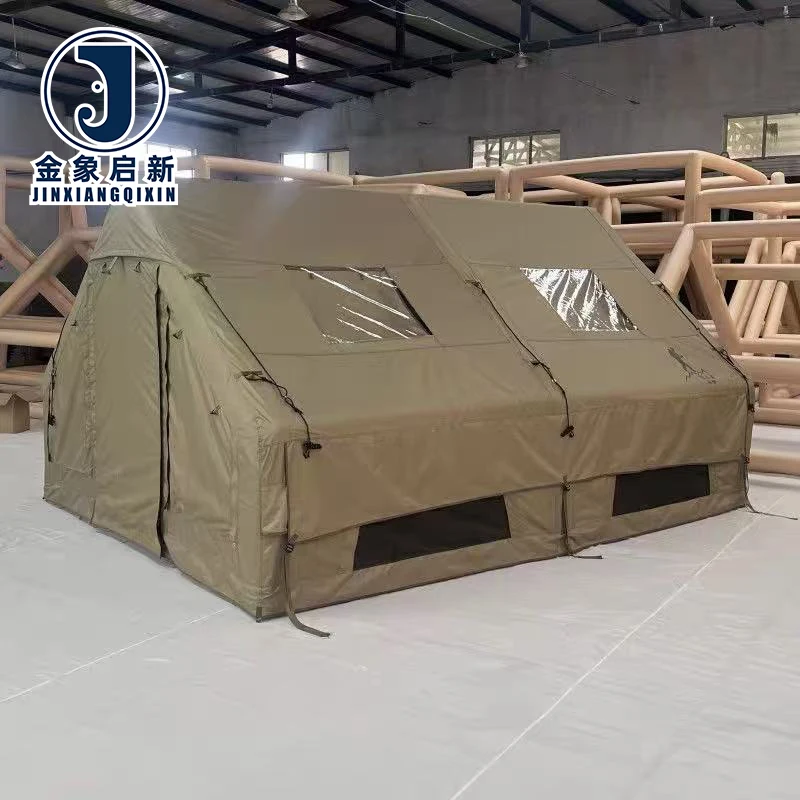
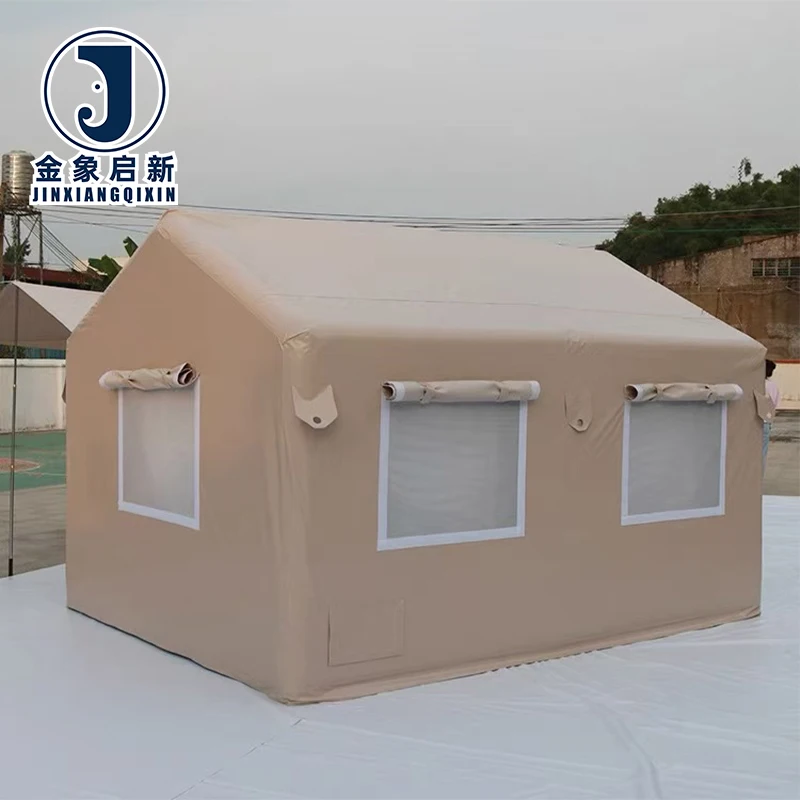
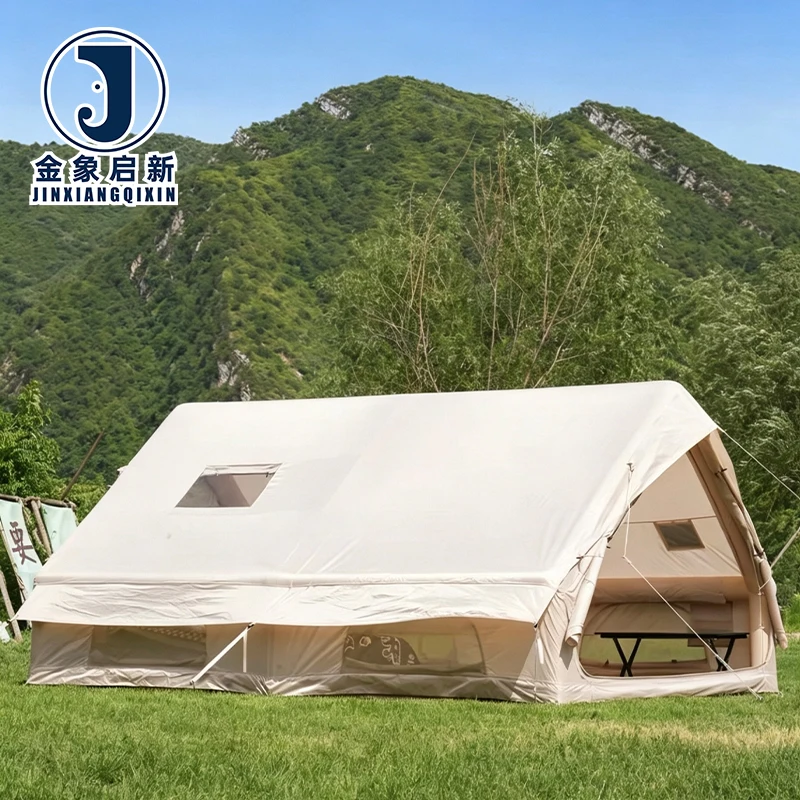
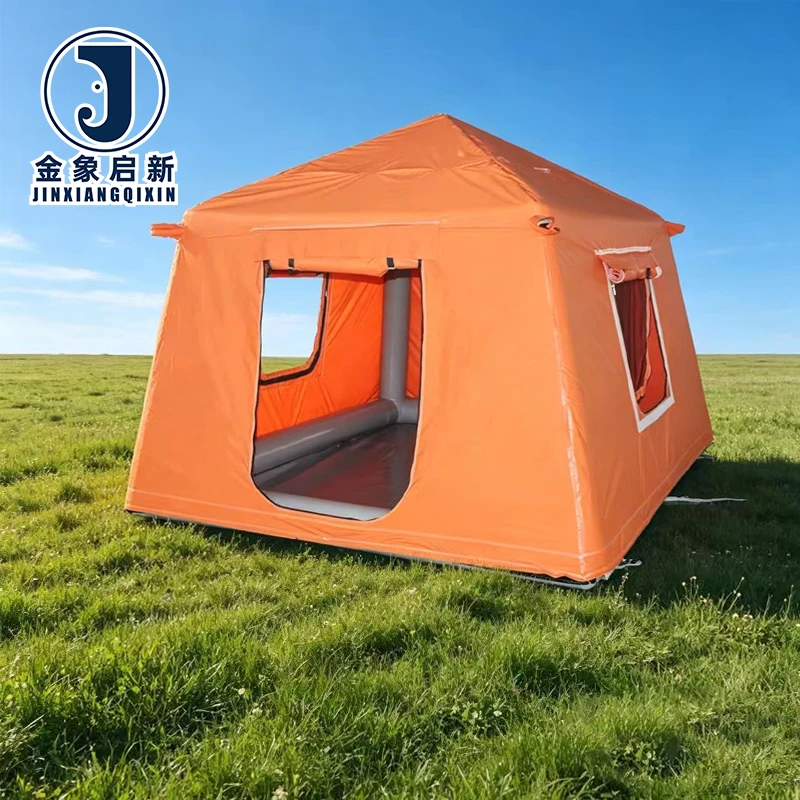
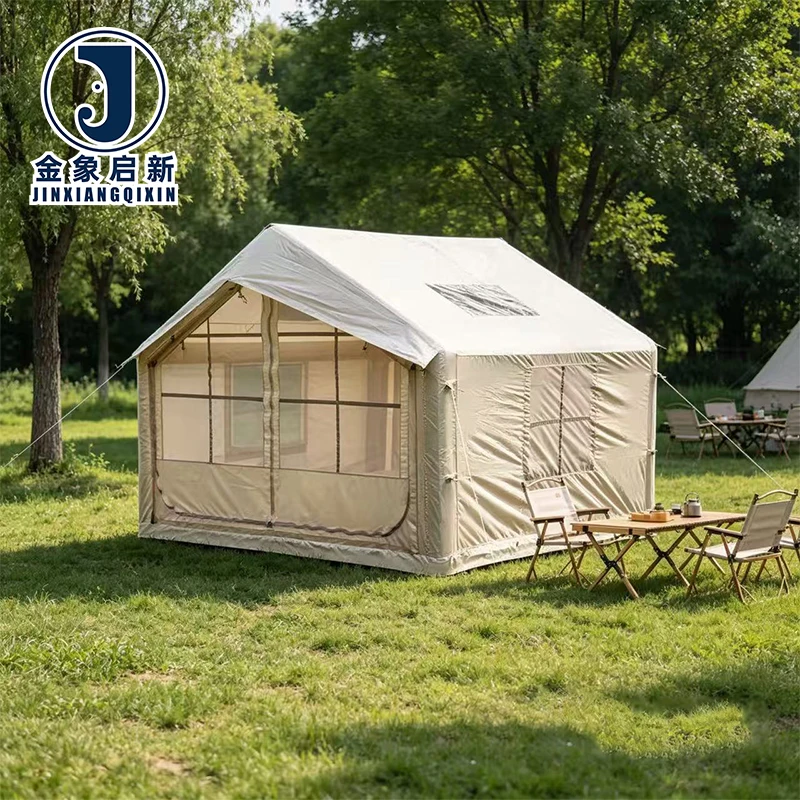
Coating Weight Control — nearly three decades focused on coated fabric production, with dedicated QA/QC verifying PVC knife-coated layers on every inflatable tent before dispatch.
Technical Specifications
| Parameter | Value |
|---|---|
| Product Type | Inflatable Tent |
| Core Material | PVC knife-coated tarpaulin |
| Construction | Single layer, extended type |
| Deployment Method | Quick automatic opening |
| Waterproof Performance | Fully waterproof coated construction |
| Flame Retardant | Available in flame retardant grades — confirm the grade required for your market (grade not stated in source) |
| UV Resistance | UV-resistant coating available (test basis not stated in source) |
| Air Pressure Retention | Minimum 24-hour retention test per unit |
| Environmental Testing | Temperature cycling and UV exposure simulation |
| Seam Integrity | Standardized tensile testing on all welded seams |
| Quality Standards | ISO 9001, ISO 14001, ISO 45001, CE |
| Customization | OEM & ODM sizing, color options, pattern printing |
Application Suitability
| Application | Exposure & Requirement |
|---|---|
| Emergency response command centers | Rapid deployment under severe weather, frequent inflation/deflation cycles, high visibility demands |
| Disaster relief temporary shelters | Prolonged outdoor exposure, wind loads, water ingress prevention, occupant safety |
| Mobile field operations bases | Repeated transport and setup, abrasion from ground contact, four-season temperature swings |
| Temporary storage during disaster recovery | Equipment and inventory protection from precipitation, UV degradation over extended deployment |
| Infrastructure maintenance shelters | Wind loading on inflated structure, worker safety compliance, fire-retardant requirements on regulated sites |
What Happens When Inflatable Shelters Ship Without Documented Compliance
Every certified PVC inflatable tent leaves our facility with the test records and compliance documentation your site demands — not a verbal assurance.
Procurement teams sourcing temporary shelters for mining, tunnelling, or aviation sites regularly receive inflatable structures that lack the fire-retardant or anti-static certification the regulatory framework requires. The tent arrives, inflation works, but the site safety officer asks for the paperwork and the answer is silence. This stalls project mobilisation and forces emergency re-sourcing at premium cost. The PVC inflatable tent you specify must arrive with compliance documentation that matches your site’s regulatory obligations, not a generic material claim. [NEED_CITE: industrial site fire safety classification for temporary inflatable structures]
Fabric Construction for Rapid-Deployment Shelter Demands
The PVC knife-coated fabric used in this Inflatable Tent delivers the tensile and tear resistance required when structures face wind loads and repeated setup cycles. Knife coating forces the PVC compound into the base fabric weave under controlled pressure, creating mechanical adhesion that resists delamination during inflation stress. This coating method is critical for inflatable structures where the membrane carries the structural load.
Seam Engineering Under Inflation Pressure
Welded seams on inflatable shelters experience continuous stress at internal pressure points. Our production process includes standardized tensile testing on seams to verify they hold under sustained inflation. A seam that fails before the fabric does creates a single-point failure that deflates the entire structure. [NEED_CITE: tensile and tear test methods for coated fabrics per ISO 1421]
Understanding Coating Method and Structural Performance
PVC knife coating builds the fabric from the base cloth outward, embedding the polymer into the yarn structure rather than simply laminating a film on top. This produces higher peel strength at the coating-to-fabric interface, which matters when an inflatable membrane flexes under wind gusts or internal pressure changes. The base fabric denier and weave density determine how much tensile load the material carries before the coating contributes. A heavier base cloth with a tight weave resists tear propagation better than a lighter cloth carrying the same coating weight. Buyers comparing materials should evaluate coating method, base fabric construction, and total weight together rather than treating GSM as the sole indicator of strength.
Specification Gaps That Surface After Deployment
When an inflatable tent arrives on site without verified material documentation, problems emerge during the first severe weather event or the first safety audit. Flame retardant claims without a stated grade leave site managers unable to satisfy the fire marshal. UV resistance asserted without a test basis means the membrane may degrade during a multi-week deployment under direct sun, weakening the structure when it is needed most. Batch-to-batch colour variation across multiple shelters installed side by side undermines the professional appearance of a disaster relief camp or corporate field operation. [NEED_CITE: coating weight verification and batch consistency standards for PVC tarpaulin]
Why Procurement Teams Source This Inflatable Tent Here
Our 9,180 m² production facility runs three full production lines with 36 sets of professional processing equipment, supporting volume orders of PVC inflatable tent units with reliable scheduling. A 10-technician R&D team handles material selection, sizing, and sample development — samples for custom requirements are developed within days, not weeks. Dedicated QA/QC staff inspect every production stage, and each inflatable unit undergoes a minimum 24-hour air pressure retention test before packing. Environmental simulation testing covering temperature cycling and UV exposure is performed to verify material behaviour under field conditions. ISO 9001, ISO 14001, ISO 45001, and CE certification underpin the quality management system, with documentation provided per batch.
Documentation & Verification
- Material specification sheet stating coating method, base fabric, and performance parameters per batch
- Fire-retardant and anti-static certification documentation available on request to match site regulatory requirements
- Batch inspection report detailing air pressure retention test results and seam tensile data
- ISO 9001, ISO 14001, ISO 45001, and CE certificates supplied for procurement compliance
- Raw material certificates and production process records provided to support quality audits
- Pre-shipment inspection record confirming unit count, dimensions, and visual quality
Fabrication, Handling & Storage
- Weld seams using temperature and dwell settings matched to the PVC knife-coated layer thickness to prevent delamination
- Inflate fully in a controlled environment to verify air retention before field deployment of each PVC inflatable tent
- Store rolled units upright in a dry, shaded area to prevent creasing that weakens the PVC coating at fold lines
- Use only PVC-compatible cleaners on the coated surface to avoid chemical softening of the knife-coated finish
- Repair minor punctures with PVC-compatible adhesive patches applied to clean, dry coating surfaces
- Allow cold-stored units to acclimatise before inflation to prevent low-temperature stiffness damaging seam welds
Preparing Your Inflatable Tent Inquiry
Provide the deployment environment — including typical wind loads, temperature range, and expected duration of continuous inflation — so we can recommend the appropriate PVC knife-coated fabric grade. Specify the fire-retardant or anti-static classification your site requires, along with any regulatory standard that must be referenced on the compliance documentation. Indicate whether you need OEM sizing, pattern printing, or standard dimensions, and state your target batch quantity to confirm production scheduling.
Frequently Asked Questions
Q: What fire-retardant grades are available and how do I confirm which applies to my site?
A: Our PVC inflatable tent fabric is available in flame retardant grades. The specific grade applicable to your project depends on local regulations and site safety requirements. Provide your target market or site specification, and we will confirm which grade matches your compliance obligation and supply the corresponding test documentation with the shipment.
Q: Can you provide anti-static compliance documentation for mining and tunnelling applications?
A: Anti-static treatment is available for inflatable structures deployed in environments where static discharge poses a risk. Surface resistance documentation can be supplied on request. Share your site-specific regulatory framework, and our technical team will confirm whether the treatment meets your threshold and include the relevant certification in the batch documentation package.
Q: How is air pressure retention tested before shipment?
A: Every PVC inflatable tent undergoes a minimum 24-hour air pressure retention test in our facility. The unit is inflated to operating pressure and monitored for pressure drop over the full test period. Results are recorded in the batch inspection report, which accompanies the shipment documentation so you have verification on arrival.
Q: What OEM and ODM customization options are supported?
A: We support full OEM and ODM customization including non-standard sizing, colour selection, pattern printing, and access point configurations. Our 10-person R&D team develops production-grade samples within days for your approval before full-scale manufacturing begins, ensuring the final PVC inflatable tent matches your exact deployment requirements.
Q: What certified documentation is included with each shipment?
A: Each shipment includes a batch inspection report, material specification sheet, ISO 9001, ISO 14001, ISO 45001, and CE certificates. Fire-retardant and anti-static test documentation is provided where applicable. Raw material certificates and production process records are available to support your procurement compliance and regulatory audit requirements.