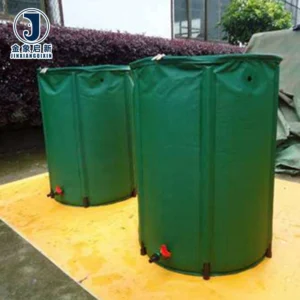

Proven Coating Expertise — nearly three decades of focused coated-fabric production inform every collapsible rain barrel we manufacture, with process control over PVC adhesion and mesh integrity.
Technical Specifications
| Parameter | Value |
|---|---|
| Product Type | Water Storage Tank |
| Material | PVC Mesh Cloth with PVC Support Rod |
| Capacity Options | 200L / 380L / 500L / 750L |
| Fabric Options | 500D / 1000D PVC Tarpaulin |
| Waterproof Rating | Waterproof (test basis not stated in source) |
| UV Treatment | Anti-UV (test basis not stated in source) |
| Flame Retardant Grade | Flame Retardant (grade not stated in source) |
| Anti-Static | Anti-Static (surface resistance or standard not confirmed) |
| Anti-Mildew | Yes |
| Anti-Bacteria | Yes |
| Tear Resistance | Tear-Resistant (test standard not stated in source) |
| Abrasion Resistance | Abrasion-Resistant (test standard not stated in source) |
| Shrink Resistance | Shrink-Resistant |
| Windproof | Yes |
| Certifications | ISO, CE |
Application Suitability
| Application | Exposure & Requirement |
|---|---|
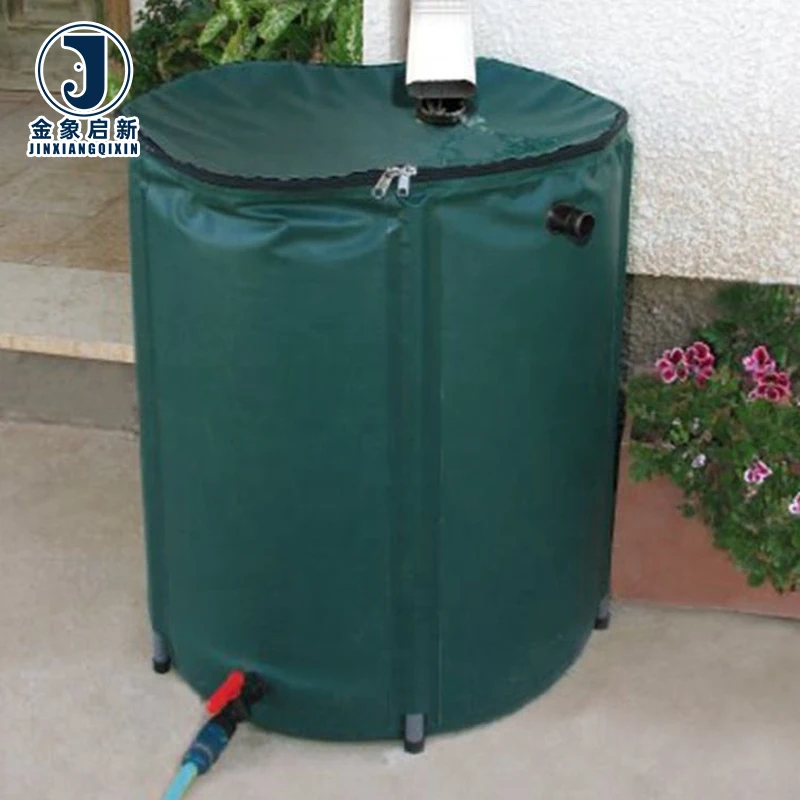
| Garden rainwater collection | Continuous UV exposure, seasonal temperature swings, standing water contact, algae and mildew prevention |
| Agricultural and aquaculture water reserve | Remote placement, high-volume seasonal demand, exposure to soil and organic contaminants |
| Temporary industrial water storage | Site relocation, rough ground contact, compliance with environmental water management targets |
| Sustainable water management systems | Long-term outdoor deployment, regulatory compliance, repeated fill-and-drain cycles |
Why "Waterproof" Is Not Enough for a Rain Barrel That Holds Water for Months
A collapsible PVC water storage tank must resist biological growth and UV degradation, not just keep water in.
Many water storage products claim waterproof construction but fail within a season because the inner surface develops mildew or the outer coating breaks down under sun exposure. The standing water inside a rain barrel creates an ideal environment for bacterial colonisation, while the exterior faces direct UV radiation day after day. When both failure modes occur simultaneously, the stored water becomes contaminated and the fabric loses structural integrity. [NEED_CITE: ISO 1421 tensile and tear test methods for coated fabrics used in water containment]
Collapsible Design That Actually Holds Shape When Full
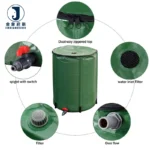
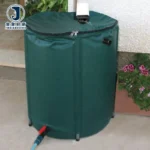
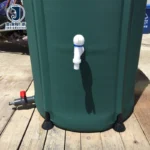
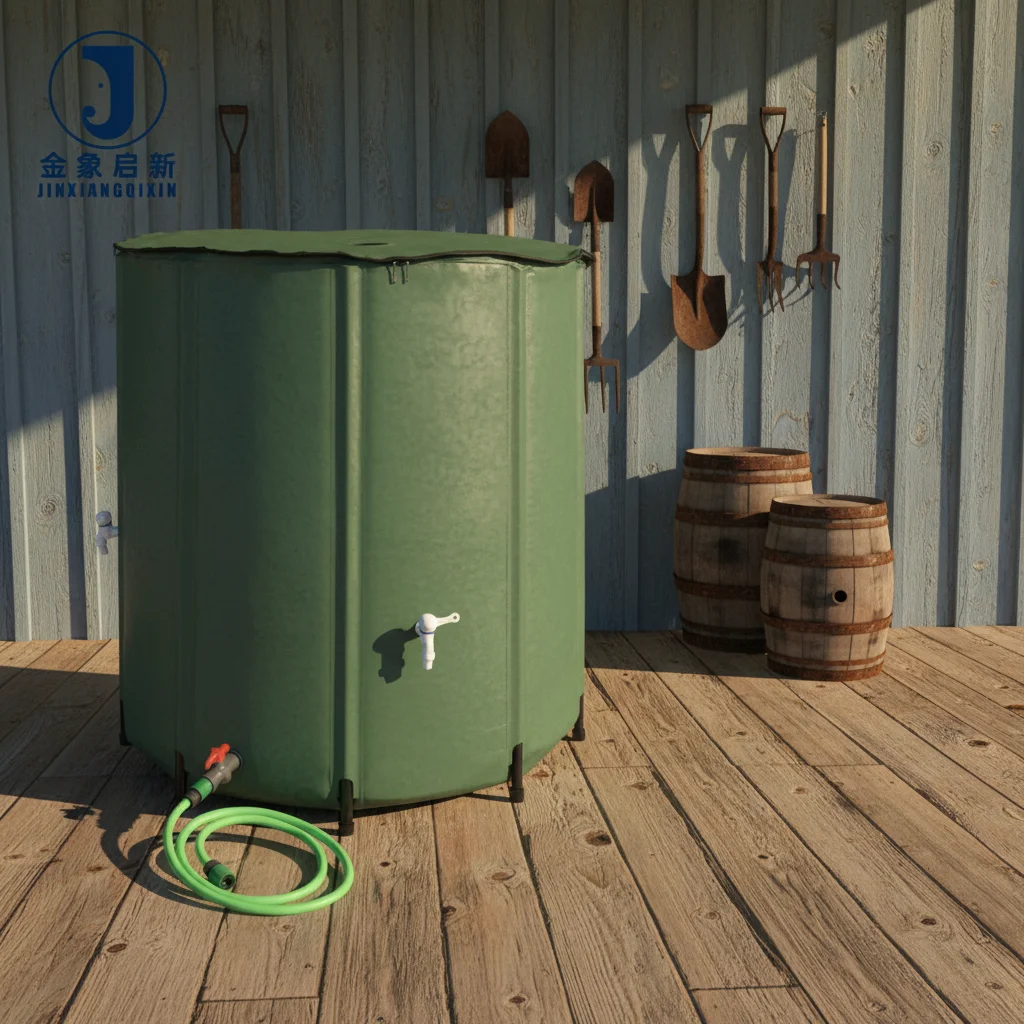
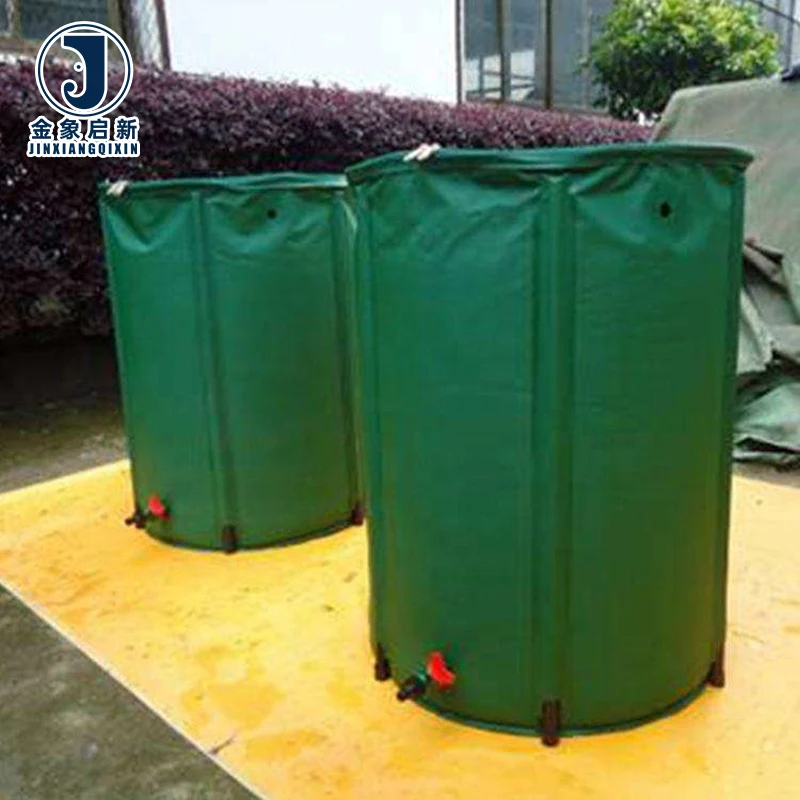
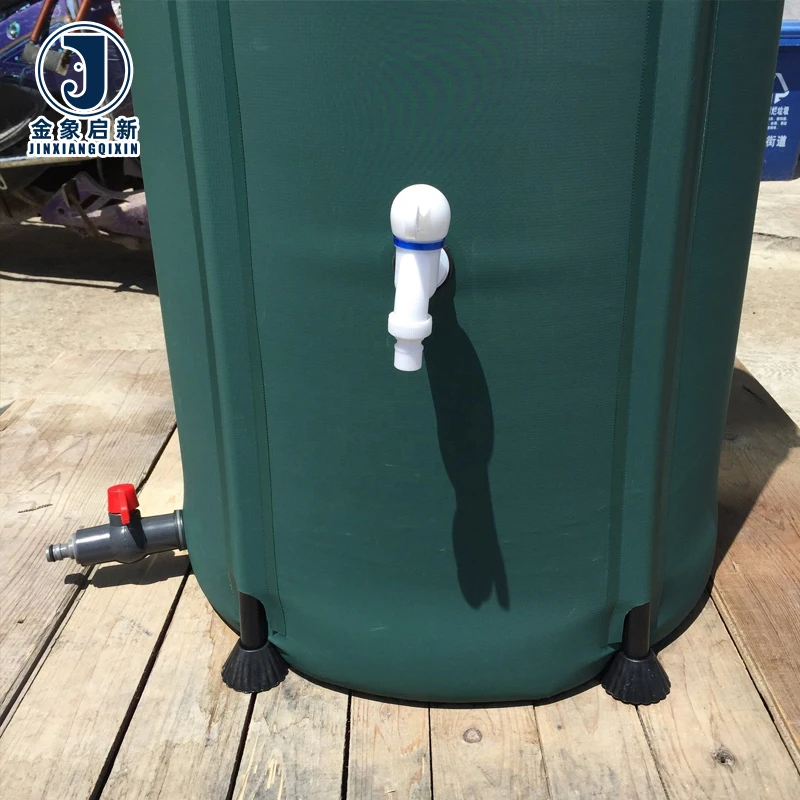
The PVC mesh cloth body works with dedicated PVC support rods to maintain barrel form under full water load. Without rigid internal or external support, flexible water containers bulge unpredictably and stress the seam welds at the base. Our collapsible PVC water storage tank integrates the support structure into the design, so the unit stands vertically whether filled to capacity or partially loaded. This matters especially for the 750L variant, where hydrostatic pressure at the base is significant.
Dual Denier Options Match Fabric Weight to the Installation Environment
Buyers selecting between 500D and 1000D PVC tarpaulin should match the denier to expected handling frequency and environmental exposure. The 500D option suits sheltered garden installations where the barrel is set once and left in place. The 1000D option handles repeated relocation, rougher ground contact, and higher wind loads typical of open agricultural sites. Each denier grade carries the same treatment package — anti-UV, anti-mildew, and anti-bacteria — applied during the coating stage. [NEED_CITE: relationship between denier count and tear propagation resistance in PVC-coated mesh]
Reading the Specifications Beyond the Capacity Number
Capacity in litres tells you how much water the barrel holds but says nothing about how it performs outdoors over time. The 500D and 1000D base fabric deniers determine tear propagation resistance — higher denier means more yarns per cross-section resisting a tear once initiated. The PVC coating weight, which is separate from denier, governs waterproofing and UV barrier performance. A barrel with high denier but thin coating may resist tearing yet allow water permeation or UV breakdown. Anti-mildew and anti-bacteria treatments are embedded during coating and address the interior water quality challenge that plain PVC cannot solve. The collapsible structure depends on the PVC support rods maintaining stiffness — if the rod material softens under heat, the barrel loses vertical stability even if the fabric remains intact.
The Hidden Cost of Overlooking Treatment Verification
A buyer who accepts a barrel based on capacity and price alone often discovers problems in the second season. Mildew inside the barrel contaminates irrigation water and damages crops or ornamental plants. UV degradation on the exterior causes the PVC coating to chalk and crack, leading to slow leaks that go unnoticed until the barrel is nearly empty. Flame retardant claims without documentation become a liability if the barrel is installed near a structure and a local inspector requests compliance evidence. These failures do not appear in the first weeks — they accumulate over months of sun and water exposure. [NEED_CITE: PVC coating degradation mechanisms under prolonged UV and standing water exposure]
Why Source This Collapsible PVC Water Storage Tank From Jinxiang
Nearly thirty years of coated-fabric production means our team understands how PVC mesh behaves under hydrostatic load and seasonal temperature variation. Three full production lines and 36 sets of professional equipment allow us to run barrel fabric and finished units simultaneously without delaying roll-stock orders. The 10-person R&D team develops custom capacity configurations and fitting layouts when standard 200L–750L options do not match your site plan. Dedicated QA/QC inspects every barrel at the seam-weld, support-rod, and fitting-attachment stages before shipment. Samples for custom requirements are developed within days, so you can verify material feel and weld integrity before committing to production volume.
Documentation & Verification
- Material specification sheet confirming base fabric denier, PVC coating type, and treatment package for each barrel batch
- UV and flame retardant test reports provided where applicable, matched to the treatment grade specified on your order
- Pre-shipment inspection record covering seam weld integrity, support rod fitment, and inlet/outlet attachment
- ISO and CE certificates available to support compliance documentation in your target market
- Roll packing list and certificate of origin included with every dispatch for customs clearance
Fabrication, Handling & Storage
- Heat-weld seams using temperature and dwell settings matched to the 500D or 1000D PVC mesh cloth grade to avoid under- or over-melting
- Confirm PVC support rod diameter matches the sleeve dimension before assembly to prevent barrel collapse under full load
- Store collapsed barrels in a dry, shaded environment to protect anti-UV and anti-mildew treatments before deployment
- Clean interior surfaces with mild, non-chlorine detergent to preserve anti-bacteria coating without degrading PVC
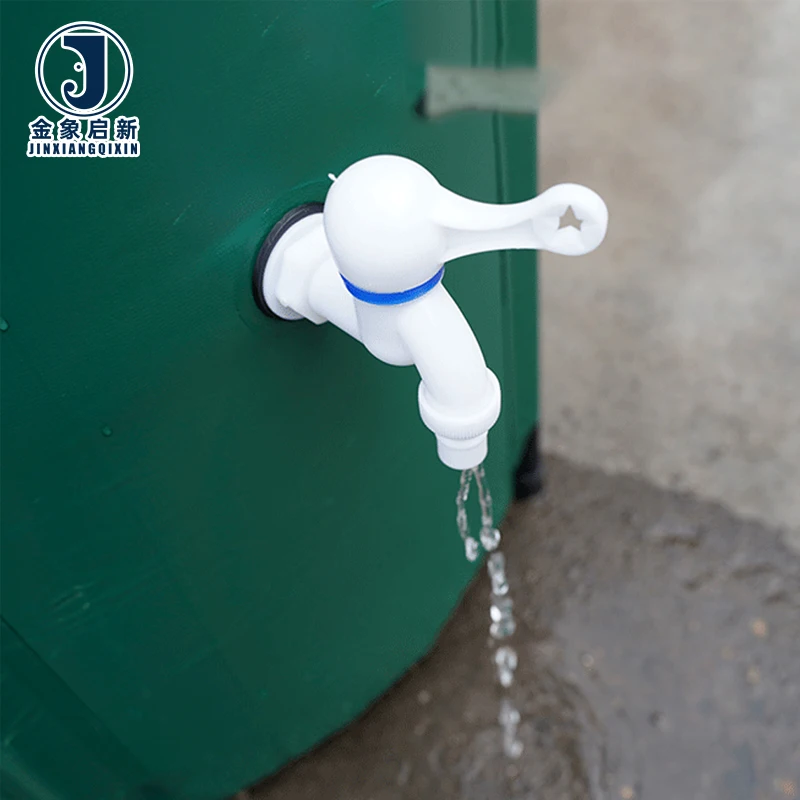
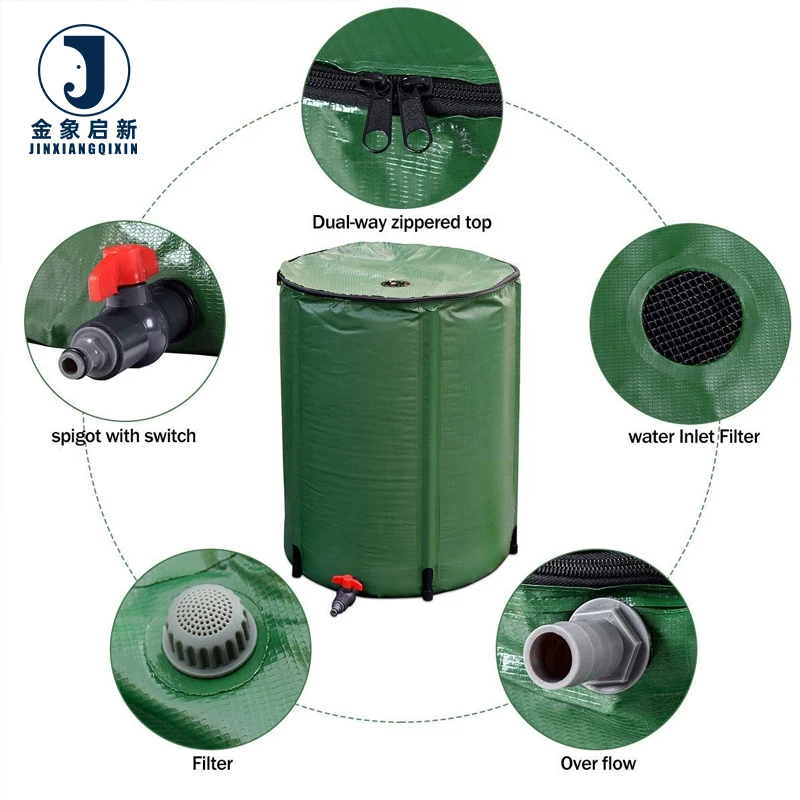
- Inspect inlet and outlet fittings after transport, as vibration can loosen threaded connections on the PVC mesh body
What to Include With Your Enquiry
Provide the installation environment — whether the barrel will sit on soil, concrete, or a raised platform — along with expected sun exposure and local climate conditions. Specify the capacity range and whether you need standard fittings or custom inlet/outlet configurations for your rainwater harvesting layout. Confirm any fire safety or environmental compliance requirements your market imposes on water storage installations near structures. If custom branding or colour is required, share artwork and Pantone references so we can develop a sample before production.
Frequently Asked Questions
Q: What is the difference between 500D and 1000D PVC tarpaulin for water barrels?
A: The denier count refers to the base yarn thickness in the PVC mesh cloth. The 1000D fabric uses thicker yarns, providing higher tear propagation resistance and better performance under rough handling or high wind loads. The 500D option is lighter and suits sheltered garden installations where the barrel remains stationary. Both grades receive the same anti-UV, anti-mildew, and anti-bacteria treatment during coating.
Q: Can the barrel withstand freezing temperatures or direct sunlight long-term?
A: The PVC mesh cloth is treated for anti-UV resistance, though the specific test basis should be confirmed for your local solar exposure conditions. In freezing conditions, water expansion inside a filled barrel can stress seam welds and support rods. We recommend draining the barrel before prolonged sub-zero periods and storing it collapsed to protect the material during off-season months.
Q: How do I maintain the anti-bacteria and anti-mildew treatment?
A: Periodic interior rinsing with a mild, non-chlorine cleaning solution helps maintain water quality without damaging the PVC coating or the embedded treatment. Avoid abrasive brushes that could scratch the inner surface and create sites for biological growth. Inspect the interior visually each season and clean more frequently in warm, humid climates where algae pressure is higher.
Q: Is custom capacity or branding available for bulk orders?
A: Our R&D team can develop non-standard capacity configurations beyond the 200L, 380L, 500L, and 750L options to match specific rainwater harvesting layouts. Pattern printing and branding on the exterior PVC surface are available for volume orders. Share your target dimensions, fitting requirements, and artwork early so we can produce a sample for approval before full production begins.
Q: What certifications or test reports are provided with shipment?
A: Each shipment includes ISO and CE certificates, a material specification sheet confirming denier and treatment details, and a pre-shipment inspection record. For UV and flame retardant claims, test reports are provided where applicable — confirm the specific grade required by your local regulations at the enquiry stage so we can match the correct documentation to your order.