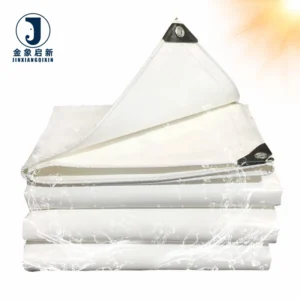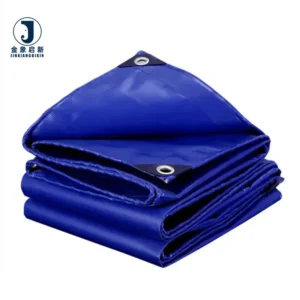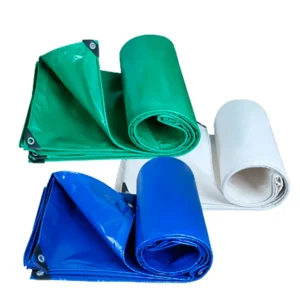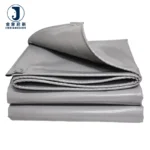
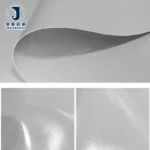
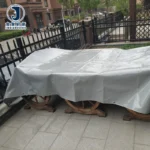
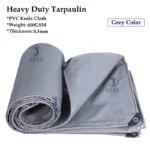
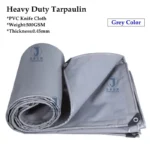
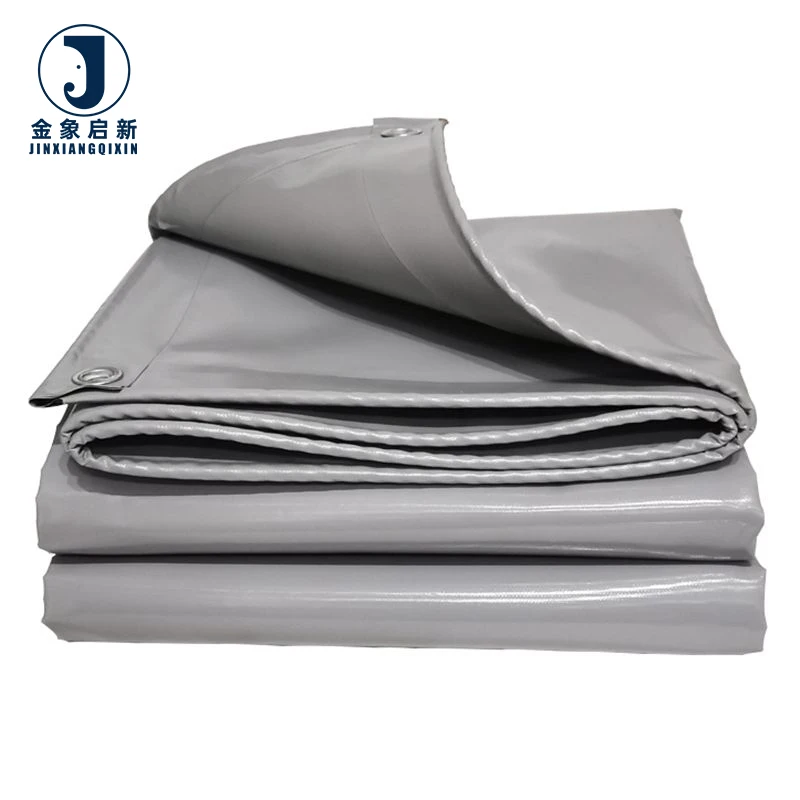
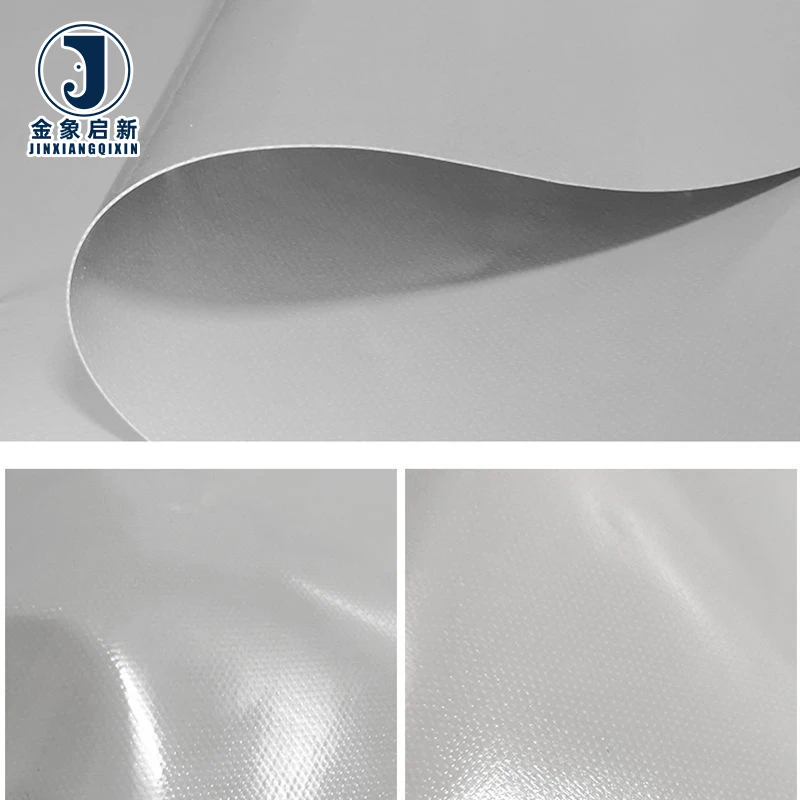
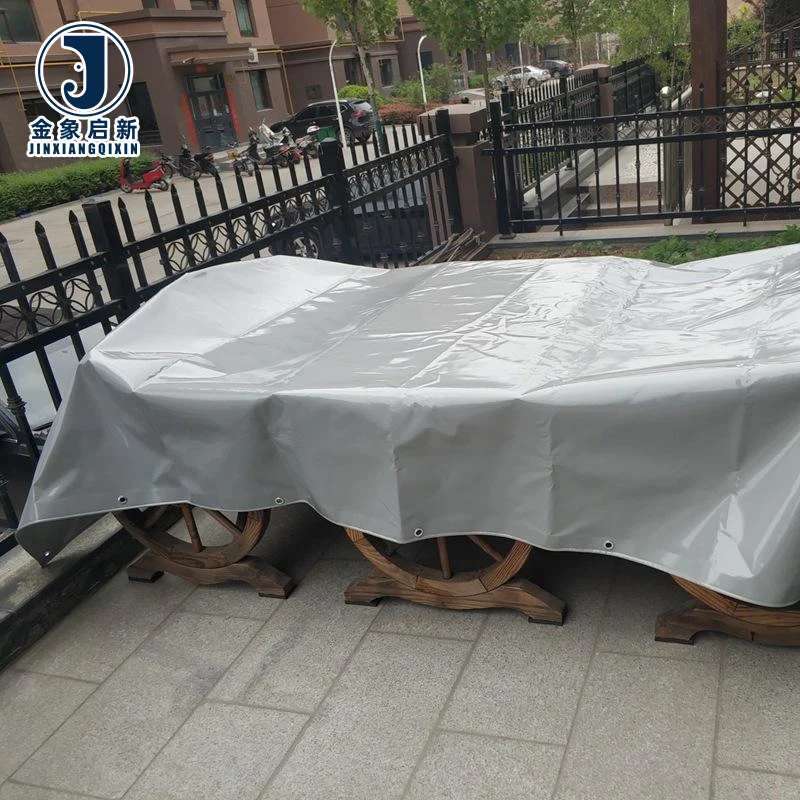
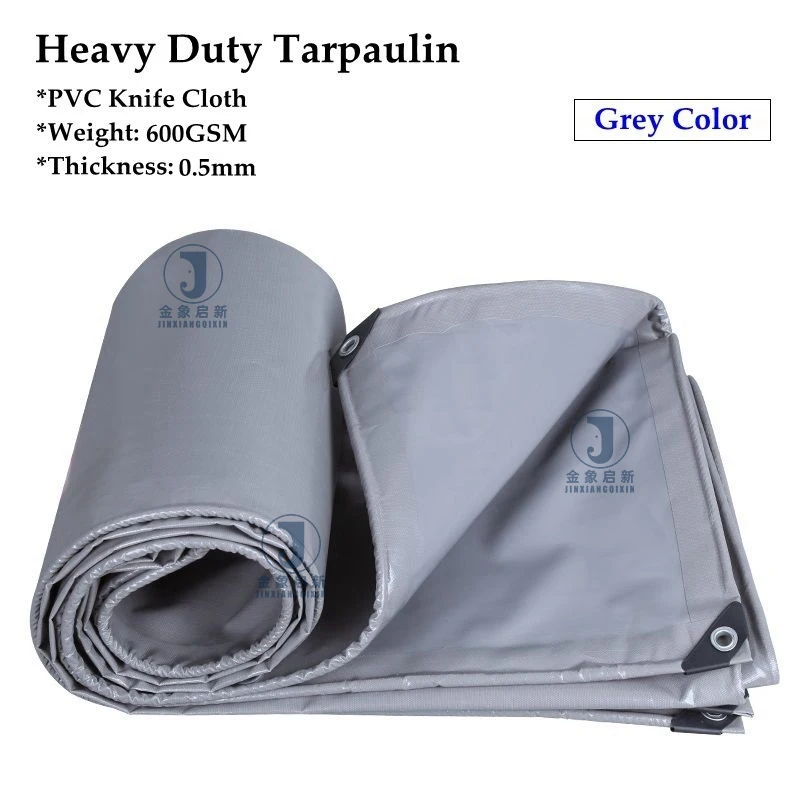
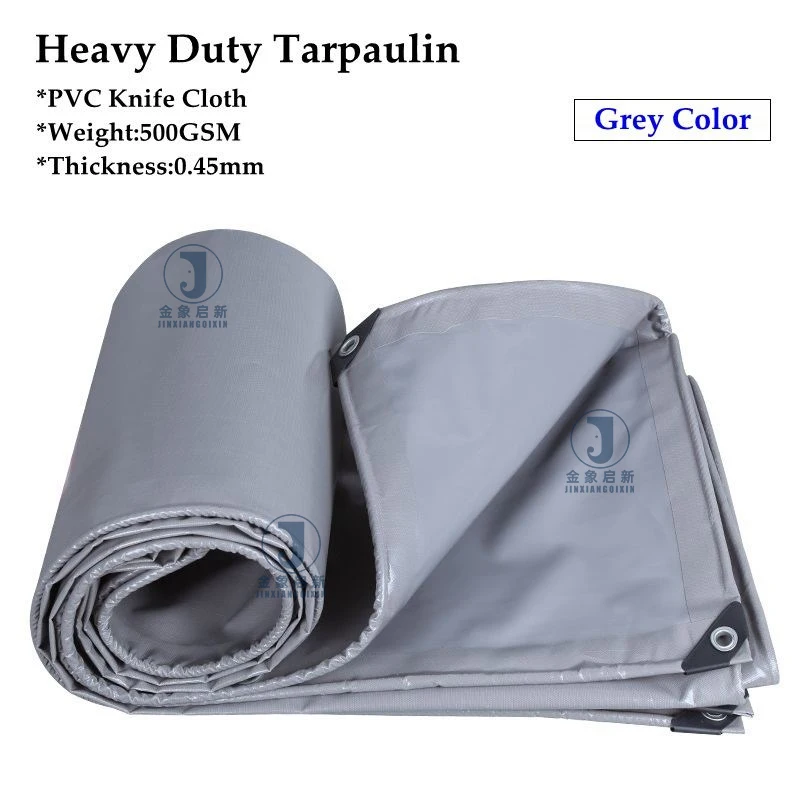
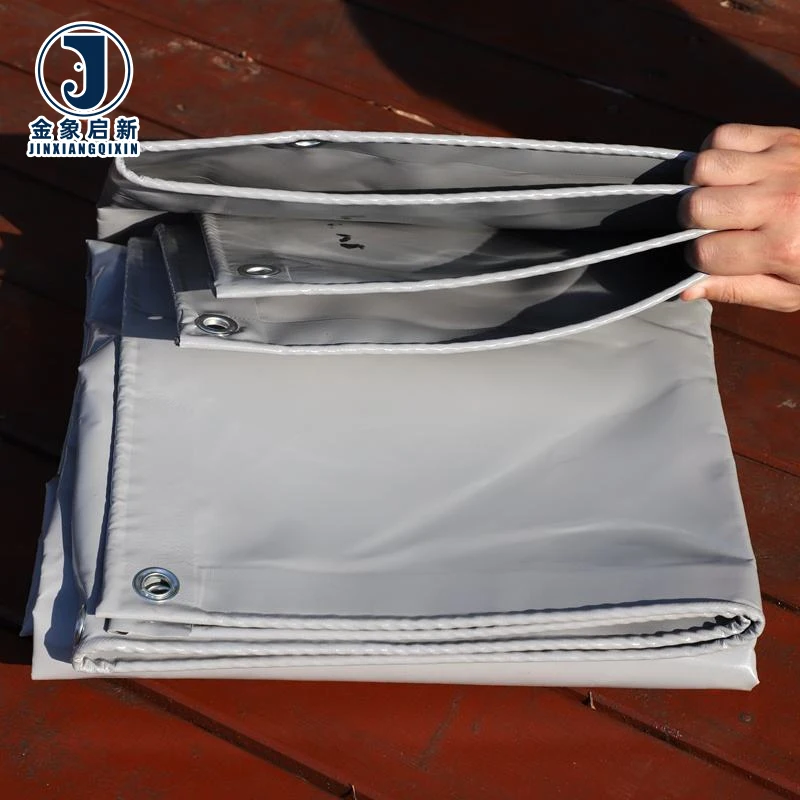
Deep Process Control Over Coating Weight — every roll of PVC knife-coated fabric leaves the line with verified GSM and documented adhesion, matching the spec sheet you approved at sampling.
Technical Specifications
| Parameter | Value |
|---|---|
| Product Type | PVC Knife-Coated Fabric |
| Weight Range | 500 to 800 g/m² |
| Coating Material | PVC |
| Coating Method | Knife coated |
| Waterproof Rating | Anti-permeable ≥ 20 KPa |
| Flame Retardancy | ≤ 10 seconds (grade not stated — confirm required grade for your market) |
| Low-Temperature Flexibility | No fracture at -30°C |
| Anti-UV Treatment | Anti-UV (test basis not stated — available in UV-stabilised grades) |
| Anticorrosion | Acid, alkali and brine resistant |
| Water Absorption | Almost zero |
| Seam Method | High-frequency heat welding |
| Surface Options | Glossy or matte finish (verify against current stock) |
Application Suitability
| Application | Exposure & Requirement |
|---|---|
| Mining ventilation duct | Underground moisture, chemical-laden air, fire-retardant and anti-static compliance |
| Tunnelling airflow systems | Continuous flex under positive and negative pressure, abrasion from particulate-laden airstreams |
| Aviation ground support ducting | Flame-retardant fabric required near aircraft, rapid deployment and retrieval cycles |
| Membrane and inflatable structures | Sustained wind load, UV exposure, welded seam integrity at stress concentrations |
| Temporary event enclosures | Quick assembly, weather exposure, compliance with public-assembly fire codes |
What Happens When Ventilation Fabric Lacks Certified Fire and Static Performance
A duct installed underground without verified fire-retardant and anti-static documentation can halt an entire site until compliance is proven.
Mining and tunnelling projects operate under strict ventilation standards that demand documented proof of flame retardancy and static dissipation. When fabric arrives with only a claim of "fire resistant" on the invoice and no test report referencing a recognised standard, site inspectors reject the installation. The contractor then faces re-procurement delays while the tunnel remains unventilated. [NEED_CITE: fire safety requirements for underground ventilation ductwork] Sourcing PVC knife-coated fabric backed by grade-specific test reports eliminates this compliance gap before material reaches the site.
Fire-Retardant Grades and the Documentation Chain
A claim of flame retardancy without a cited grade is not compliance — it is a hope. Different markets mandate different classification systems: DIN 4102 B1 for European construction sites, NFPA 701 for temporary structures in North America, M2 for French public-assembly venues. When you specify PVC knife-coated fabric for duct or membrane work, request the test report that names the exact standard and grade your project demands. Our QA team matches each production batch to the referenced test, so the report you submit to the site engineer corresponds to the rolls actually installed.
Anti-Static Performance in Underground and Aviation Environments
Static charge accumulation on duct surfaces in dry underground conditions creates an ignition risk where combustible dust or gas is present. Anti-static treatment modifies surface resistivity to allow controlled charge dissipation. For aviation ground support, static management prevents interference with sensitive avionics during duct connection. [NEED_CITE: surface resistivity testing methods for anti-static coated fabrics] When anti-static performance is specified, we provide surface resistance documentation tied to the batch, giving you a verifiable data point rather than a generic material claim.
How Base Fabric, Coating Weight and Knife Application Interact
The tensile and tear performance of knife-coated PVC depends on the interplay between base fabric denier, weave density and the coating weight applied by the knife edge. A heavier coating alone does not guarantee higher strength — a loosely woven base fabric will tear readily regardless of how much PVC sits on its surface. Knife coating forces the compound into the weave interstices under controlled blade pressure, creating mechanical adhesion that supports high-frequency welding without delamination. The waterproof rating of ≥ 20 KPa reflects coating integrity under hydrostatic pressure, relevant for ducts exposed to condensation and external water ingress. Low-temperature flexibility to -30°C indicates that the plasticiser system remains active in cold-climate storage or winter installation, preventing brittle fracture when the fabric is unrolled or flexed at sub-zero temperatures.
The Hidden Cost of Undocumented Material Properties
When flame-retardant grade is assumed rather than verified, the consequence surfaces at the worst possible moment — during a site safety audit or after a fire incident investigation traces back to non-compliant duct material. Similarly, if anti-static treatment was claimed but surface resistivity was never measured, static discharge events underground carry consequences far beyond material replacement costs. Colour variation between rolls installed side by side on a membrane structure forces partial teardown and re-fabrication. [NEED_CITE: common failure modes in industrial coated fabric installations] Each of these scenarios originates from a procurement step where documentation was treated as optional rather than mandatory.
Why Procurement Teams Source This Fabric Here
Three full production lines with 36 sets of professional equipment give us capacity to fulfil bulk ventilation duct orders without compressing lead times. A dedicated 10-person R&D team handles material selection, sample development and specification matching before production begins — not after a problem surfaces. Every production stage includes in-process QA, with 100% inspection before any roll is packed for dispatch. Samples for custom fire-retardant or anti-static requirements are developed within days, allowing you to verify performance before committing to a full order. Nearly 30 years of focused coated-fabric production means coating weight, adhesion and curing parameters are controlled through accumulated process knowledge, not trial and error.
Documentation & Verification
- Material specification sheet stating GSM, base fabric denier, coating method and weight for every roll
- Fire-retardant test report citing the specific grade matched to your site compliance requirement
- Anti-static surface resistance documentation where specified for mining and aviation duct projects
- Pre-shipment inspection record with roll-by-roll verification before dispatch
- Certificate of origin and customs documentation supporting cross-border shipment clearance
Fabrication, Handling & Storage
- High-frequency welding parameters should be adjusted to the specific GSM grade selected, as coating thickness affects energy absorption at the seam
- Store rolls upright on pallets in a covered area to prevent compression marks on the PVC surface that transfer into visible defects on fabricated ducts
- Unroll knife-coated fabric at ambient temperature; at sub-zero conditions the material stiffens and may crease before it relaxes to flat
- Cut patterns with allowance for weld overlap — high-frequency seams consume fabric width at each joint and must be factored into material yield calculations
- Clean fabricated ducts with neutral-pH detergent; acid or alkaline cleaners may attack the plasticiser system in the PVC coating over repeated wash cycles
Before You Request a Quote
Tell us the ventilation or structure application, the operating environment including temperature range and chemical exposure, and the fire-retardant or anti-static grade your project specification mandates. Confirm whether you need rolls in stock widths or custom-cut panels, and whether membrane or duct fabrication will be done at your facility or ours. If colour matching or branding is required, provide Pantone or RAL references so we can develop a sample for approval before full production.
Frequently Asked Questions
Q: What fire-retardant grade does this fabric carry, and does it meet my market’s compliance requirement?
A: The fabric is available in flame-retardant grades — the specific grade must be confirmed against your local standard. We supply test reports referencing DIN 4102, NFPA 701 or other standards as applicable. Provide your project specification and we will match the grade and documentation to your compliance requirement before production.
Q: How is anti-static performance measured and certified for mining ventilation applications?
A: Anti-static performance is evaluated through surface resistivity testing on the finished fabric. Where your site specification requires anti-static duct material, we provide test documentation stating measured surface resistance values for the supplied batch. Confirm the resistivity threshold required by your mine safety standard at inquiry stage.
Q: What is the relationship between GSM, base fabric denier and tensile strength in knife-coated PVC?
A: GSM reflects total weight of base fabric plus coating, but tensile and tear strength are primarily determined by base fabric denier and weave density. A high GSM with low-denier yarn may offer stiffness without strength. Our specification sheets list both GSM and base fabric construction so you can evaluate structural performance accurately.
Q: How are high-frequency welded seams tested for durability under duct airflow and flex stress?
A: Welded seam samples from each production run undergo peel and flex testing to confirm the bond survives repeated inflation and deflation cycles. The high-frequency heat-combined method fuses coating layers rather than stitching through them, eliminating needle holes that leak under positive pressure. Test records are retained per batch.
Q: What documentation is provided for customs and site inspection on specialist fabric orders?
A: Each shipment includes a material specification sheet, applicable fire-retardant and anti-static test reports, pre-shipment inspection record, packing list and certificate of origin. For projects requiring site-level compliance submission, we format documentation to match the inspector’s checklist requirements when specified at order stage.