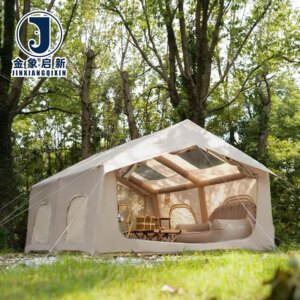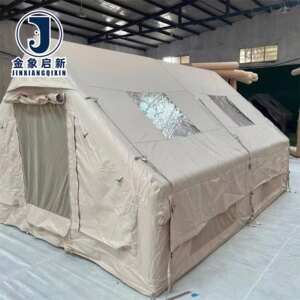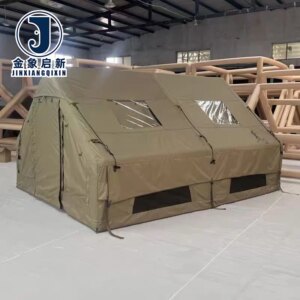
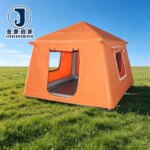
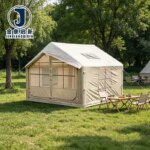
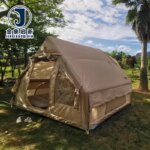
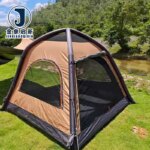
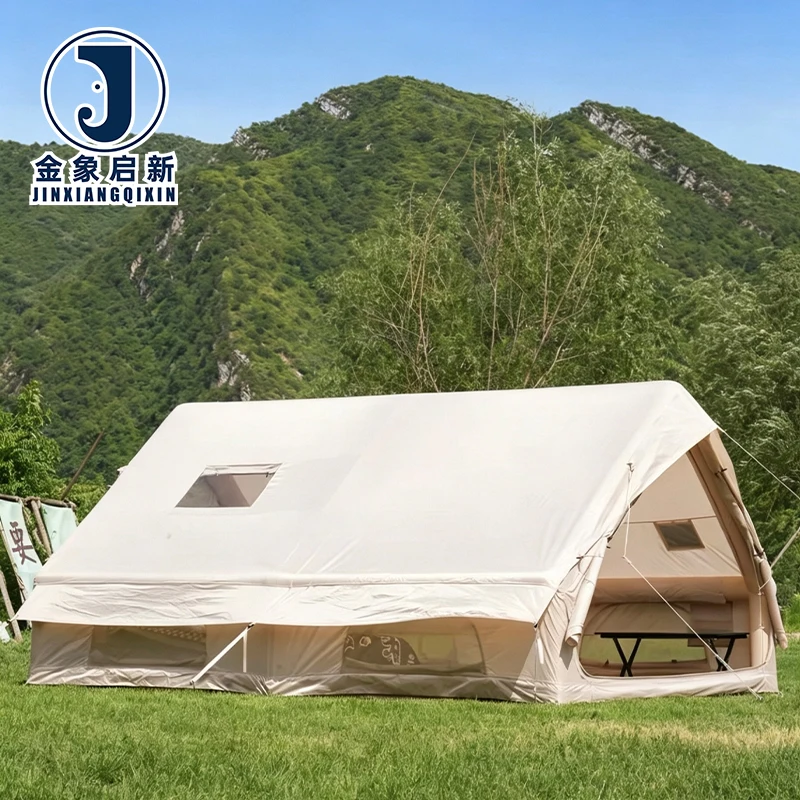
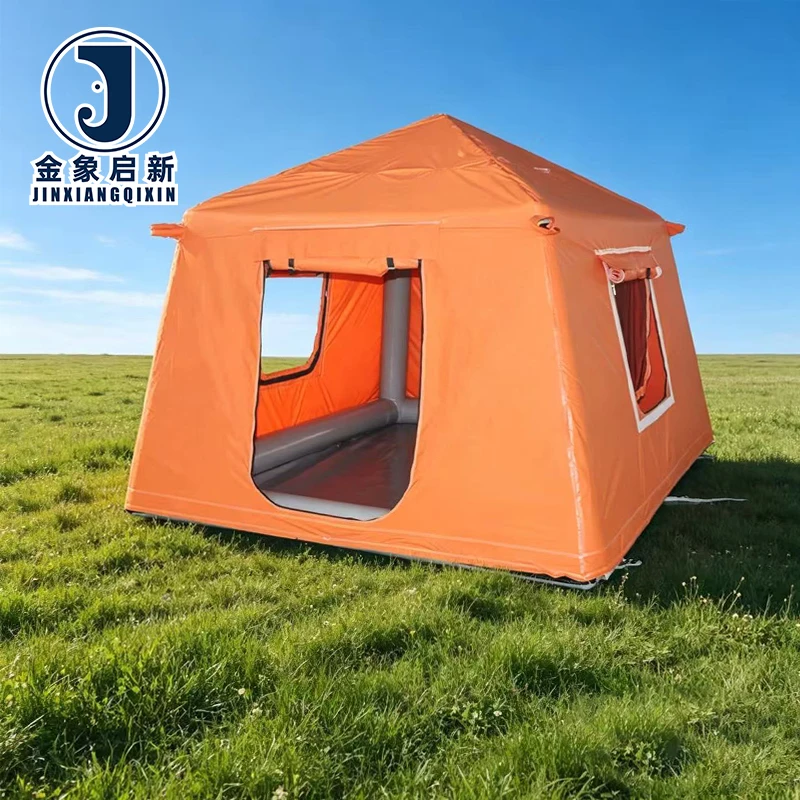
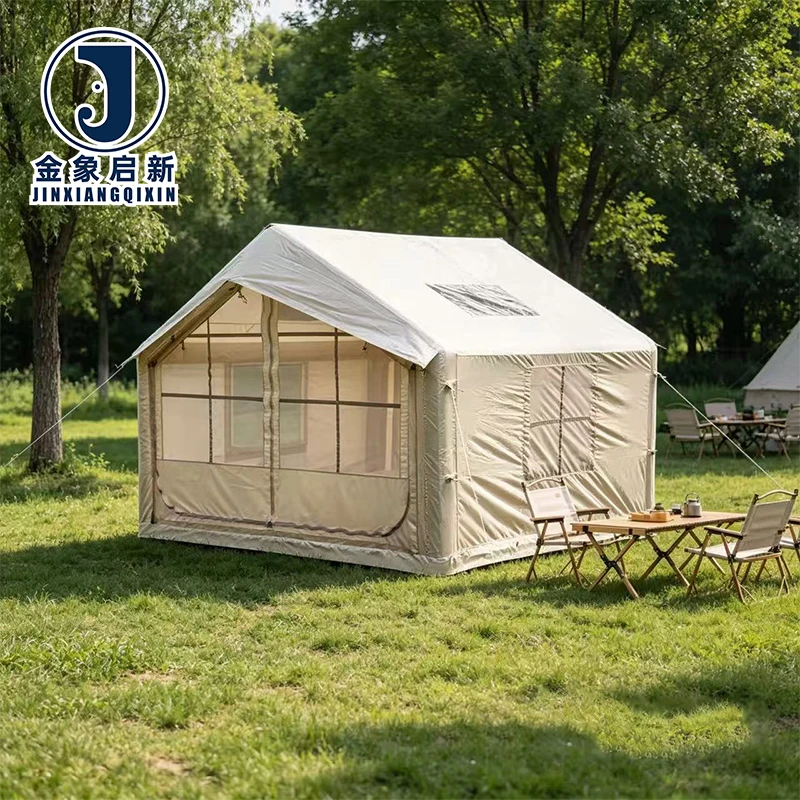
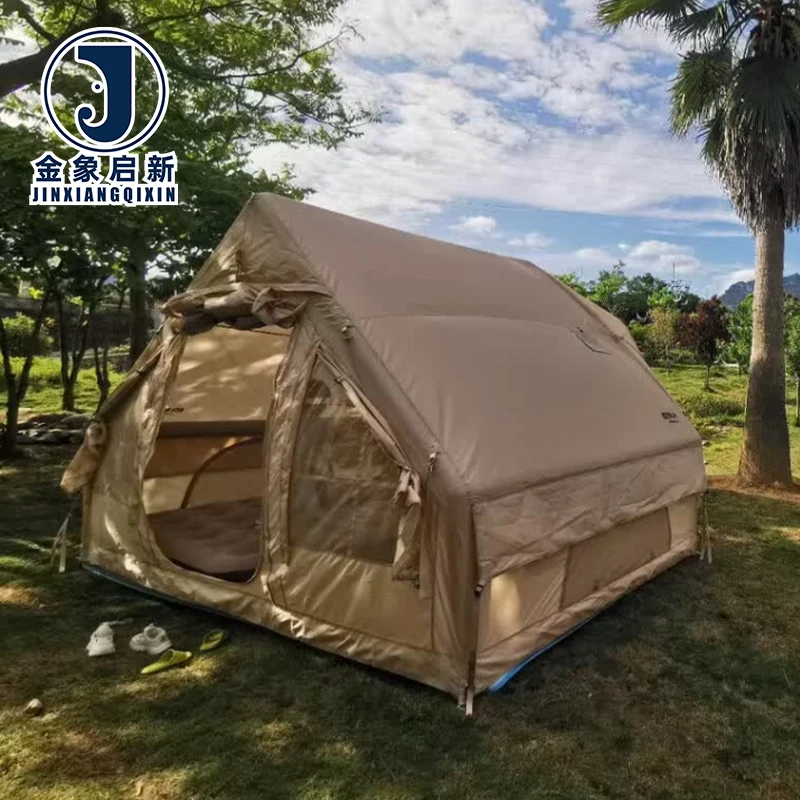
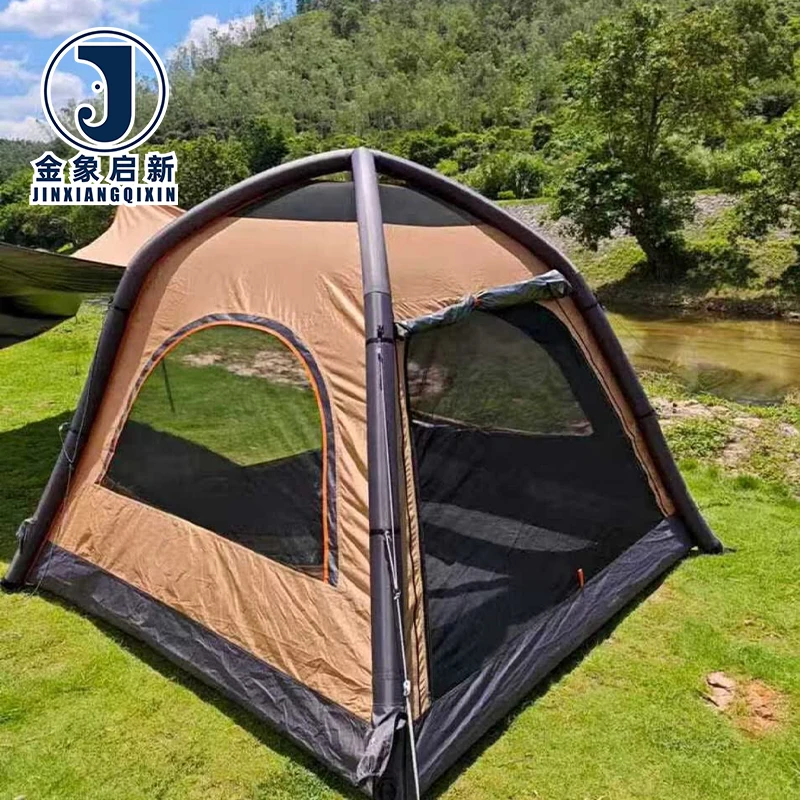
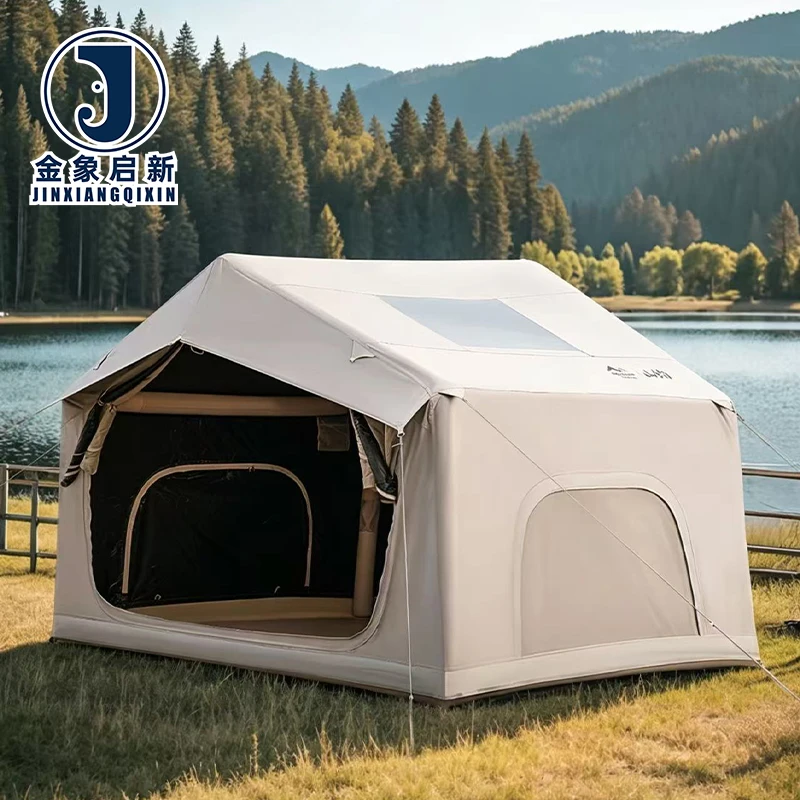
Coating Adhesion Control — Deep process mastery over PVC formulation and heat-sealed seam integrity ensures inflatable structures maintain air-holding performance under sustained internal pressure and field stress.
Technical Specifications
| Parameter | Value |
|---|---|
| Product Type | Inflatable Tent |
| Core Material | PVC tarpaulin |
| Key Performance | Waterproof, UV-resistant (test basis not stated in source), tear-resistant |
| Design Features | Quick automatic opening, single layer design, four-season structural integrity |
| Product Forms | 2-3 Person Quick Automatic Opening Four-Season Waterproof Outdoor Air Tent |
| Customization Service | OEM & ODM (sample customization, pattern printing) |
| Production Facility Area | 9180 square meters |
| Production Lines | 3 full production lines |
| Processing Equipment | 36 sets of professional processing equipment |
| R&D Team Scale | 10 technicians |
| Quality Control System | Strict full-process quality inspection with dedicated QA&QC staff on site |
| Standards | ISO9001, ISO14001, ISO45001, CE |
Application Suitability
| Application | Exposure & Requirement |
|---|---|
| Outdoor event management shelters | Rapid deployment cycles, repeated inflation/deflation, public visibility requiring clean appearance |
| Mobile field operations stations | Remote site transport, quick single-operator setup, weather exposure across seasons |
| Temporary construction site shelters | Equipment storage demands, dust and moisture ingress protection, frequent relocation |
| Commercial camping ground facilities | Guest-facing durability, high-frequency use cycles, professional aesthetic maintenance |
| Outdoor exhibition booths | Brand presentation surfaces, structural stability under varying wind loads, multi-event reuse |
Why Seam Engineering Matters More Than Fabric Weight for Inflatable Structures
Welded seams on inflatable tents fail under concentrated stress before the fabric itself does — a failure mode rooted in coating adhesion and heat-seal process control, not GSM alone.
When an inflatable tent reaches operating pressure, the highest mechanical loads concentrate at panel junctions and valve attachment points. Inflatable tent fabric manufacturers frequently encounter field returns where the PVC tarpaulin body remains intact but the bonded seam delaminates or splits. This pattern indicates insufficient coating-to-substrate adhesion or incorrect heat-seal temperature profiles during fabrication. The inflatable tent structure depends entirely on continuous air retention, making seam integrity the governing factor in service reliability rather than base fabric thickness. [NEED_CITE: tensile and tear test methods for coated fabrics per ISO 1421]
Precision Seam Construction for Air-Retaining Structures
The custom inflatable tent demands fabrication discipline that extends beyond standard tarpaulin converting. Each panel junction must withstand continuous internal pressure while accommodating flex cycles during inflation, deflation, and wind-induced movement. Our 36 sets of professional processing equipment include dedicated heat-seal stations calibrated for PVC tarpaulin coating characteristics, ensuring consistent bond strength across varying seam geometries. The 10-technician R&D team develops seam protocols matched to specific inflatable tent fabric specifications, accounting for coating thickness, base fabric weave, and intended pressure ranges.
Coating Formulation and Adhesion Verification
PVC tarpaulin used for inflatable tent manufacturing requires coating formulations that balance flexibility with peel strength. The coating must remain pliable across four-season temperature variations while maintaining sufficient adhesion to the base fabric under sustained peel forces at welded joints. Our process control protocols verify coating weight consistency and adhesion performance at each production stage. The QA&QC staff conduct in-process testing to confirm that heat-sealed seams achieve bond strength adequate for the inflatable tent’s design pressure and expected field conditions. [NEED_CITE: DIN 4102 fire classification for building materials]
Material Parameters That Determine Inflatable Tent Performance
The PVC tarpaulin core material selection governs multiple performance attributes simultaneously. Waterproof construction relies on continuous coating coverage without pinholes or thin spots that compromise barrier integrity. Tear resistance depends on base fabric denier and weave density working in conjunction with coating penetration into the yarn structure. UV-resistant treatment availability requires confirmation of the specific grade and test standard applicable to your market and expected exposure duration. Four-season structural integrity demands that the material retain flexibility at low temperatures without becoming brittle, while resisting softening or excessive stretch at elevated temperatures. The quick automatic opening mechanism functions reliably only when the inflatable tent fabric maintains consistent stiffness and recovery characteristics across the operating temperature range.
The Hidden Cost of Specification Mismatches in Inflatable Tent Procurement
Selecting inflatable tent fabric based solely on stated GSM or price per square meter creates downstream failures that surface only after deployment. Coating weight without verified adhesion testing produces seams that delaminate under sustained air pressure, requiring field repairs or complete unit replacement. UV-resistant claims without supporting test documentation lead to premature surface degradation and color fading visible to end users. Material stiffness unsuited to the intended automatic opening mechanism causes deployment failures in cold conditions or excessive sag at elevated temperatures. Batch-to-batch color variation across multiple inflatable tent units becomes apparent only during side-by-side installation at event sites. [NEED_CITE: coating adhesion test methods for PVC tarpaulin per ISO standards]
Why Technical Buyers Source Inflatable Tent Fabric Here
Nearly 30 years of focused coated fabric production provides process knowledge that translates directly to inflatable tent performance. The 9180 square meter facility with 3 full production lines supports volume requirements while maintaining batch consistency across custom inflatable tent orders. The 10-person R&D team handles material selection, pattern printing development, and custom sizing from initial inquiry through sample approval. Dedicated QA&QC staff conduct 100% pre-shipment inspection rather than statistical sampling, catching coating defects or seam weaknesses before dispatch. Sample development within days allows technical validation of custom inflatable tent specifications before committing to production volumes. ISO9001, ISO14001, ISO45001 and CE certifications provide documentation support for regulatory compliance and customs clearance across international markets.
Documentation & Verification
- Material specification sheet stating PVC tarpaulin base fabric, coating type, and performance parameters
- Pre-shipment inspection record confirming 100% inspection of inflatable tent fabric before dispatch
- ISO9001, ISO14001, ISO45001 and CE certificates available for regulatory and customs compliance
- UV-resistant and other treatment test reports where applicable to stated performance claims
- Roll packing list with batch traceability for custom inflatable tent orders
- Certificate of origin and customs documentation support for international shipment
Fabrication, Handling & Storage
- Heat-seal temperature and dwell time must match the specific PVC tarpaulin coating formulation for consistent seam adhesion
- Store rolls on cores in horizontal position to prevent permanent creasing that affects inflatable tent panel appearance
- Allow material to acclimate to ambient temperature before unrolling to avoid coating stress cracking in cold conditions
- Use PVC-compatible cleaners only; solvent-based products may degrade coating surface and affect subsequent heat-seal bonds
- Verify cutting layout to maximize yield from standard roll widths and minimize waste on custom inflatable tent dimensions
- Repair field damage with compatible PVC tarpaulin patches heat-sealed at manufacturer-recommended parameters
Requesting a Custom Inflatable Tent Fabric Quotation
Technical buyers should specify the intended application environment, expected deployment frequency, and any regulatory compliance requirements for their target market. Provide dimensional requirements, color or pattern printing specifications, and whether OEM/ODM sample development is needed before production commitment. Confirm the UV-resistant grade or other treatment standards required for your regional regulations and expected service conditions.
Frequently Asked Questions
Q: How is coating adhesion verified to ensure welded seams on inflatable structures hold under sustained air pressure?
A: Our in-process quality inspection verifies coating adhesion through peel testing at each production stage. The QA&QC staff confirm that heat-sealed seams achieve bond strength adequate for the design pressure before the inflatable tent proceeds to final inspection. This full-process approach catches adhesion failures before dispatch rather than in the field.
Q: What customization options are available for dimensions, opening mechanisms, and pattern printing on inflatable tent fabric?
A: OEM and ODM services cover custom dimensions matched to your specific inflatable tent design, pattern printing for branding or visibility requirements, and material selection optimized for your intended opening mechanism. The R&D team develops samples within days to validate specifications before production commitment.
Q: How do you control colour consistency across multiple inflatable tent units in the same order?
A: Batch consistency protocols ensure colour matching across all rolls allocated to a single custom inflatable tent order. Pre-shipment inspection includes visual comparison under standardized lighting to identify any variation before dispatch, preventing side-by-side installation mismatches at event sites.
Q: What certifications and documentation ship with each batch to support customs clearance and project compliance?
A: Each shipment includes ISO9001, ISO14001, ISO45001 and CE certificates, material specification sheets, pre-shipment inspection records, and certificate of origin. Additional test reports for UV-resistant or other treatments are provided where applicable to your regulatory requirements.
Q: What is the sample development lead time for custom inflatable tent specifications?
A: The R&D team develops samples within days for custom inflatable tent fabric specifications, allowing technical validation of material selection, coating characteristics, and fabrication parameters before committing to full production volumes.