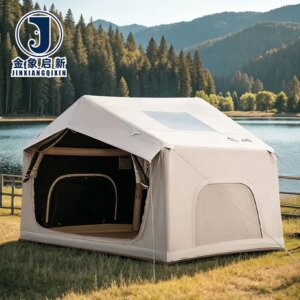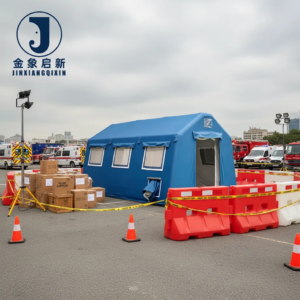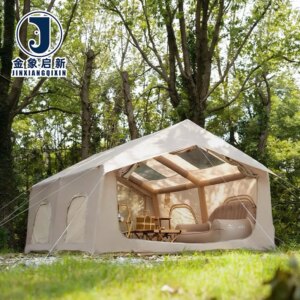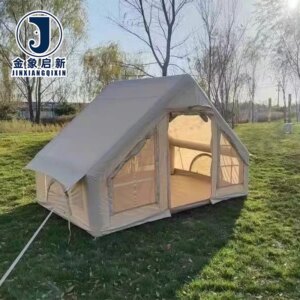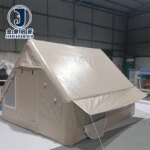
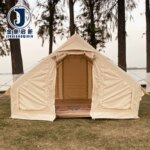
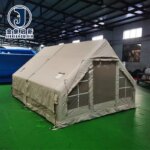
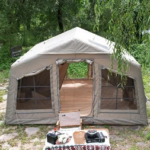
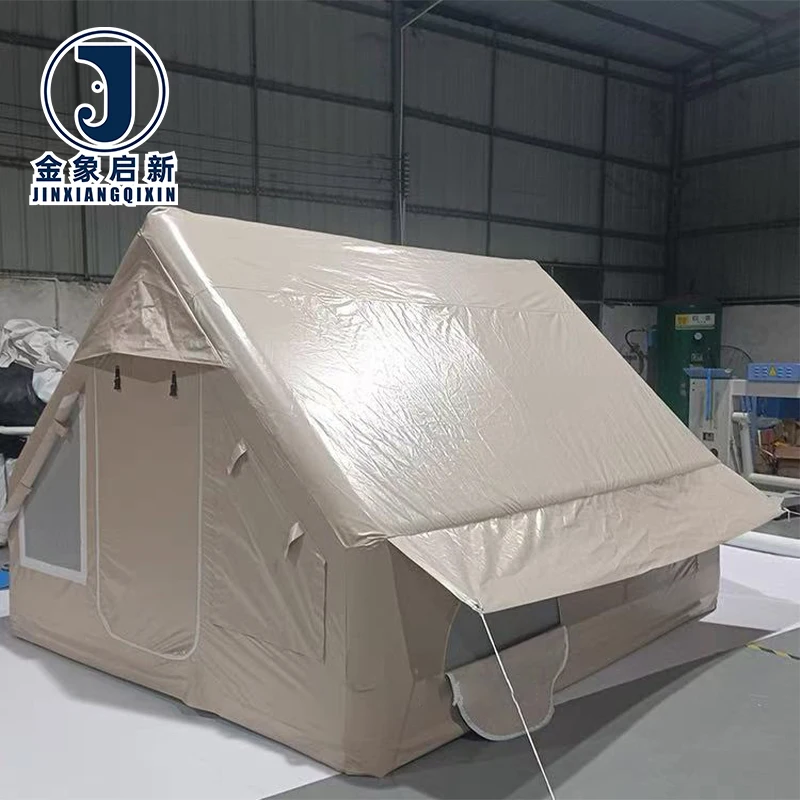
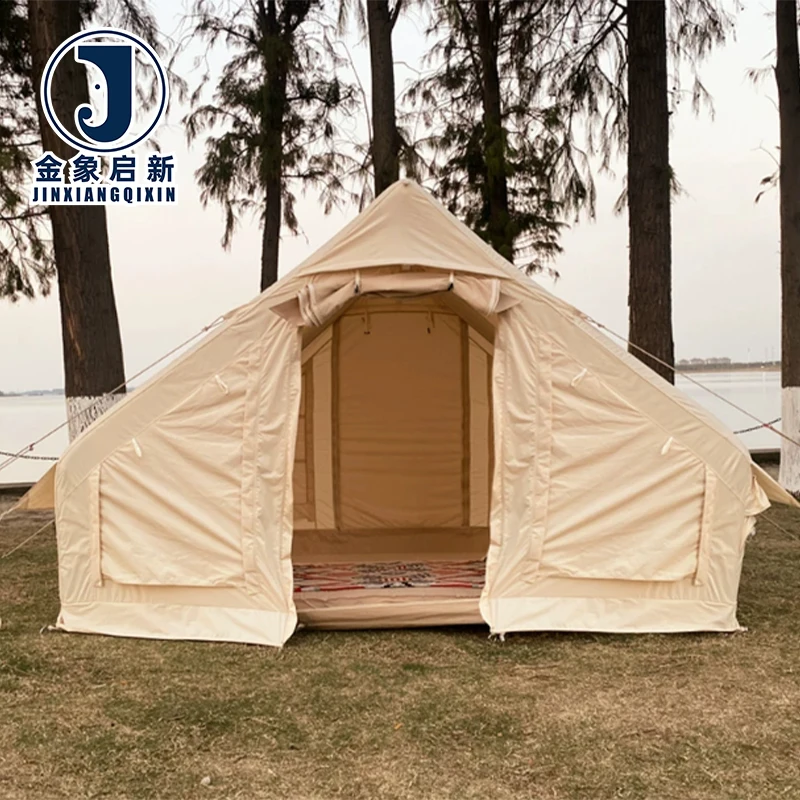
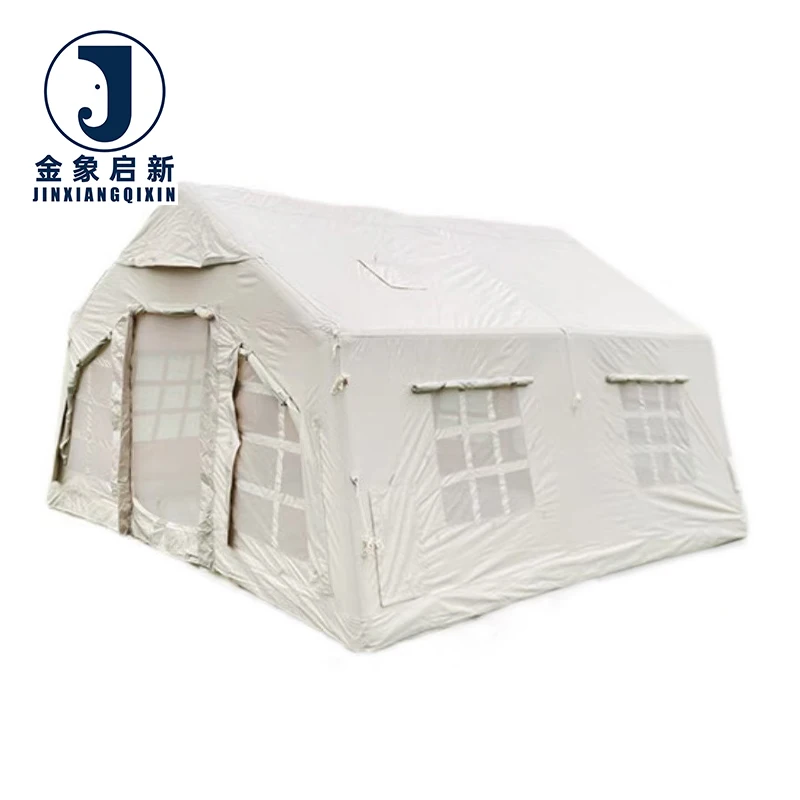
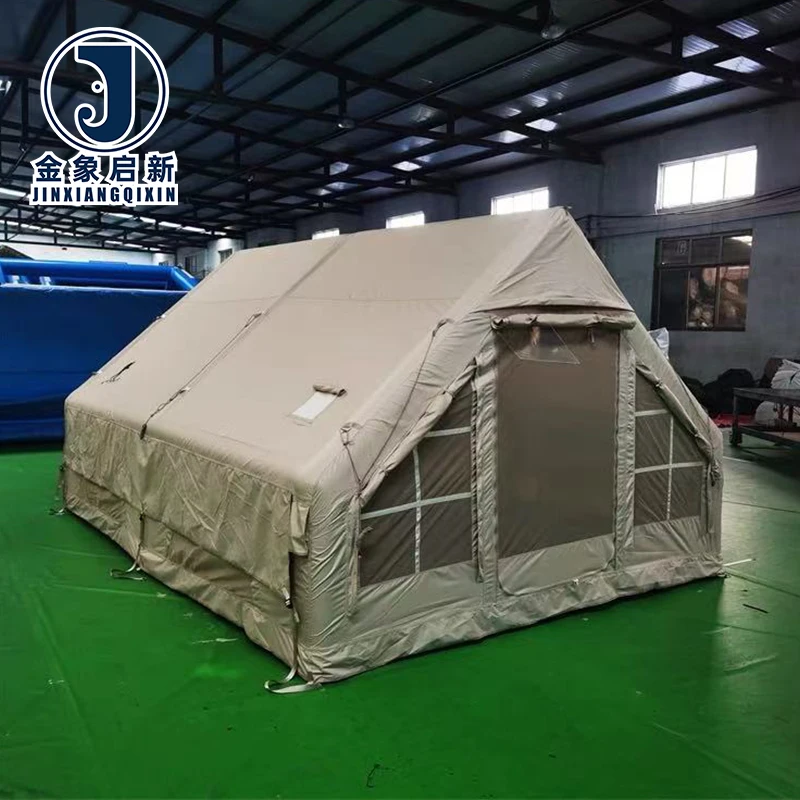
Proven Fabric Expertise — nearly three decades of PVC coating process control ensures each inflatable tent fabric batch meets fire-retardant and anti-static compliance before dispatch.
Technical Specifications
| Parameter | Value |
|---|---|
| Product Type | Inflatable Tent |
| Core Material | PVC tarpaulin |
| Capacity | 5-8 Person |
| Waterproof | Yes |
| UV-resistant | Available (test basis not stated — confirm grade required) |
| Tear-resistant | Yes (verify against manufacturer catalog) |
| Flame-retardant | Available in flame retardant grades — confirm the grade required for your market |
| Anti-static | Available (surface resistance or standard not stated — confirm specification) |
| Opening Mechanism | Quick automatic opening |
| Season Rating | All-season |
| Certifications | ISO 9001, ISO 14001, ISO 45001, CE |
| Customization | OEM & ODM, sample customization, pattern printing |
| Production Facility | 9,180 m² (source value — verify against manufacturer catalog) |
| Production Lines | 3 full production lines (source value — verify against manufacturer catalog) |
| Processing Equipment | 36 sets (source value — verify against manufacturer catalog) |
| R&D Team | 10 technicians (source value — verify against manufacturer catalog) |
Application Suitability
| Application | Exposure & Requirement |
|---|---|
| Mining and tunnelling temporary shelters | Confined underground environments, mandatory certified fire-retardant fabric, high humidity and mechanical abrasion |
| Aviation ground support inflatable structures | Electrostatic-sensitive zones near fuel and avionics, anti-static compliance mandatory, rapid deployment and teardown |
| Construction site crew accommodation | Continuous UV exposure, wind loading on inflated membrane, repeated inflation cycles over project duration |
| Emergency response and disaster shelters | Immediate deployment under uncontrolled conditions, all-season thermal performance, transport and storage durability |
| Large-scale event membrane structures | Public safety fire codes, branded surface printing, high foot-traffic abrasion at entry and anchor points |
What "Certified" Inflatable Tent Fabric Actually Means on a Job Site
Certification is only useful when the test report travels with the roll, not when it lives on a website.
Procurement teams on mining and tunnelling projects regularly face a familiar problem: the inflatable tent fabric arrives on site, the safety officer asks for the fire-retardant test certificate, and the supplier sends a generic PDF that does not reference the batch number or the specific grade ordered. Inflatable Tent Fabric fire retardant / anti-static / certified claims only hold weight when backed by traceable documentation tied to the material in hand. Without that link, the structure fails the site safety audit before it is even inflated. [NEED_CITE: fire classification standards for temporary membrane structures in mining environments]
Compliance Documentation That Travels With Every Batch
When a mining contractor specifies Inflatable Tent Fabric fire retardant / anti-static / certified material for a tunnel ventilation shelter, the fabric must arrive with test reports that reference the production batch, the coating weight, and the exact fire-retardant or anti-static grade applied. Our R&D team prepares a material specification sheet for each order, covering base fabric construction, coating formulation, and the treatment grade confirmed during sampling. This documentation package ships with the roll, not weeks later by email.
Fire-Retardant and Anti-Static Performance Verification
Fire-retardant grades for PVC inflatable tent fabric vary by market and application. A mining shelter in Australia may require a different classification than an aviation ground support structure in Europe. We supply fabric in available flame retardant grades — buyers confirm the grade required for their market and we match the formulation accordingly. Anti-static treatment follows the same principle: surface resistance values are confirmed per batch test report, ensuring the inflatable membrane meets the electrostatic discharge limits specified by the site safety plan. [NEED_CITE: surface resistance testing methods for anti-static coated fabrics]
How Coating Formulation Affects Inflatable Structure Performance
The PVC coating on inflatable tent fabric serves multiple functions simultaneously. The coating weight and formulation determine the fabric’s fire-retardant classification, its anti-static surface behaviour, and its resistance to UV degradation during extended outdoor deployment. The base fabric denier and weave density govern tensile and tear strength — critical when the inflated membrane is under constant internal pressure and exposed to wind loading. A heavier coating does not automatically mean a stronger fabric; the base fabric construction carries the structural load while the coating provides environmental protection and compliance properties. Glossy or matte surface finish options influence how well printed branding adheres and how easily the membrane cleans after exposure to dust and site contaminants. The relationship between these parameters determines whether the inflatable structure performs reliably across repeated inflation and deflation cycles.
The Hidden Cost of Specifying Inflatable Membrane Fabric on Price Alone
Fabric that arrives without verifiable fire-retardant certification creates a cascade of delays. The site safety officer rejects the material, the inflatable shelter cannot be erected, and the crew remains without accommodation while the procurement team sources replacement stock. Similarly, anti-static performance that was claimed but never tested becomes a liability the moment the structure is deployed near fuel handling or explosives storage. Batch-to-batch colour variation across rolls used in the same membrane structure becomes visible once the panels are heat-welded together and inflated in daylight. [NEED_CITE: coated fabric batch consistency requirements for membrane structure fabrication]
Why Project Teams Source Inflatable Structure Fabric Here
Our production process gives fabricators confidence in the material they receive. Three full production lines with 36 sets of processing equipment support consistent output volume for large membrane structure orders. A dedicated QA and QC team inspects every production stage, with 100% inspection before shipment — no batch leaves the facility without its coating weight verified against the specification sheet. The 10-person R&D team handles material selection, custom sizing, and pattern printing development, producing samples within days so buyers can validate the fabric before committing to full production. Nearly 30 years of coated fabric process control means the coating adhesion, fire-retardant formulation, and anti-static treatment are managed in-house rather than outsourced to third-party finishers. Every shipment includes a complete documentation package — material spec sheet, test reports, ISO and CE certificates, pre-shipment inspection record, and certificate of origin — so compliance is never a gap at the site gate.
Documentation & Verification
- Material specification sheet listing base fabric, coating weight, and confirmed fire-retardant grade per order
- Batch-traceable test reports for UV and flame-retardant performance tied to roll numbers
- ISO 9001, ISO 14001, ISO 45001 and CE certificates included in every dispatch package
- Pre-shipment inspection record confirming coating weight and visual quality before packing
- Certificate of origin provided for customs clearance at destination port
Fabrication, Handling & Storage
- Heat-weld seams at temperatures matched to PVC coating thickness to prevent delamination at inflated panel joints
- Store rolls upright on pallets to prevent creasing that weakens the coated surface before fabrication
- Use compatible PVC adhesive for field repairs on punctured inflatable membrane panels
- Avoid dragging rolls across unsealed concrete to protect the coating finish from abrasion damage
- Allow cold-stored fabric to reach ambient temperature before unrolling to prevent coating crack at low flexibility
Requesting a Fabric Specification for Your Project
To move from inquiry to sample, provide the intended application environment, the fire-retardant or anti-static grade required by your local regulations, and the membrane dimensions or roll quantities needed. If the project involves branded panels or custom colours, share the pattern artwork or colour references so the R&D team can develop a matched sample. Confirming whether you need finished cut-and-welded panels or fabric by the roll helps us structure the quotation and lead time accurately.
Frequently Asked Questions
Q: What fire-retardant grades are available for inflatable tent fabric and which standards do they meet?
A: We supply inflatable tent fabric in multiple flame retardant grades. The specific grade depends on the fire safety standard required by your market and application. During the inquiry stage, share your local compliance requirement and we will confirm the matching formulation, provide the relevant test report, and include it in the shipment documentation package.
Q: How is anti-static performance verified and what surface resistance values can be certified?
A: Anti-static treatment is applied during coating and verified through batch testing. Surface resistance values are recorded per production batch and documented in the test report that ships with your order. Confirm the surface resistance range required by your site safety plan so we can match the formulation to your specification.
Q: Can custom widths, colours and pattern printing be supplied for inflatable membrane structures?
A: Yes. Our R&D team handles custom sizing, colour matching, and pattern printing for inflatable tent fabric orders. Samples are developed within days for approval before mass production begins. Custom widths and lengths are available, subject to production line capability and minimum order quantities confirmed during quotation.
Q: What compliance documentation ships with each batch for mining and tunnelling projects?
A: Each batch ships with a material specification sheet, fire-retardant and anti-static test reports traceable to batch number, ISO and CE certificates, a pre-shipment inspection record, and a certificate of origin. This documentation package supports site safety audits and customs clearance without requiring follow-up requests after delivery.
Q: How does the sampling process work for custom inflatable structure fabric specifications?
A: Submit your application details, required certifications, and any custom colour or printing requirements. The R&D team develops a sample reflecting the specified coating formulation and treatment grade. Once you approve the sample, full production begins with in-process quality checks and 100% pre-shipment inspection before dispatch.