
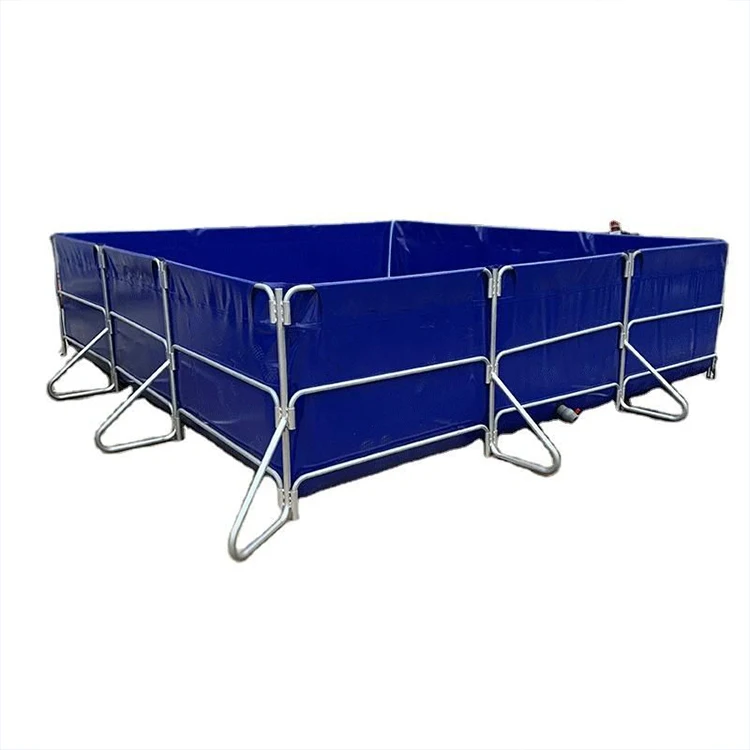
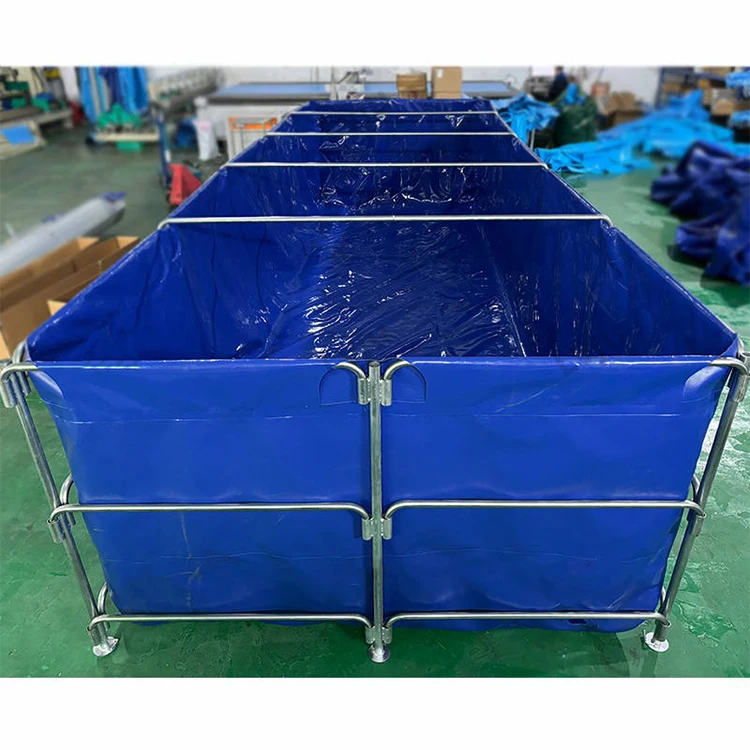
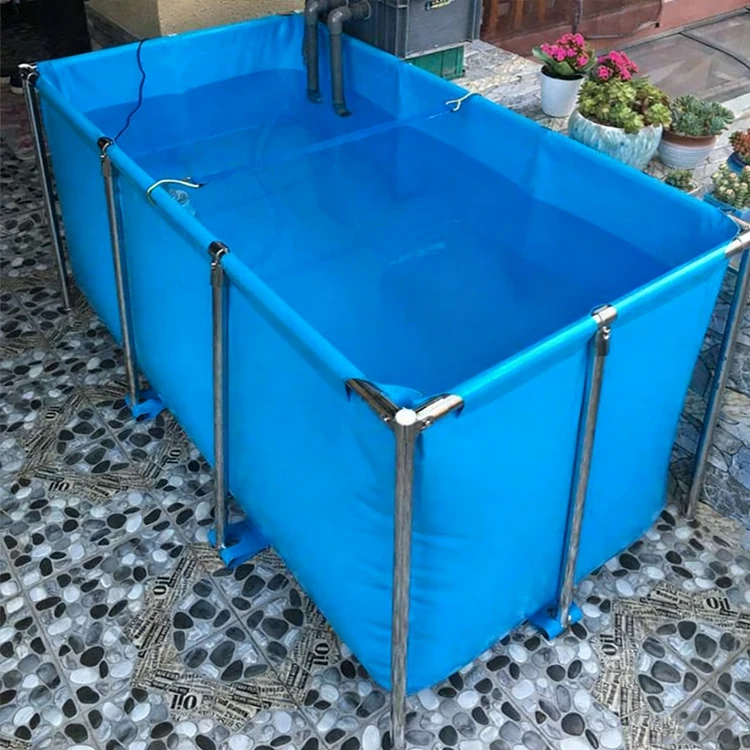
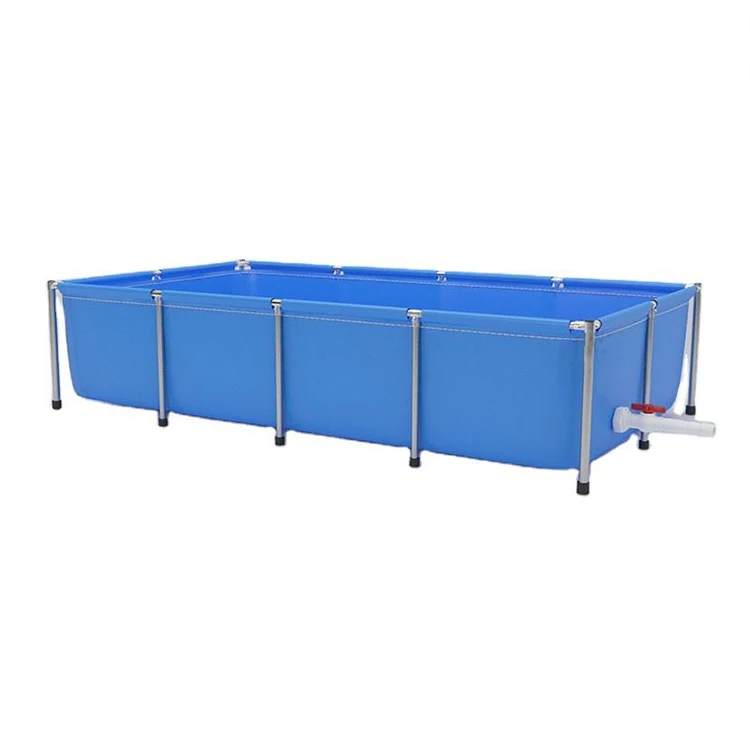
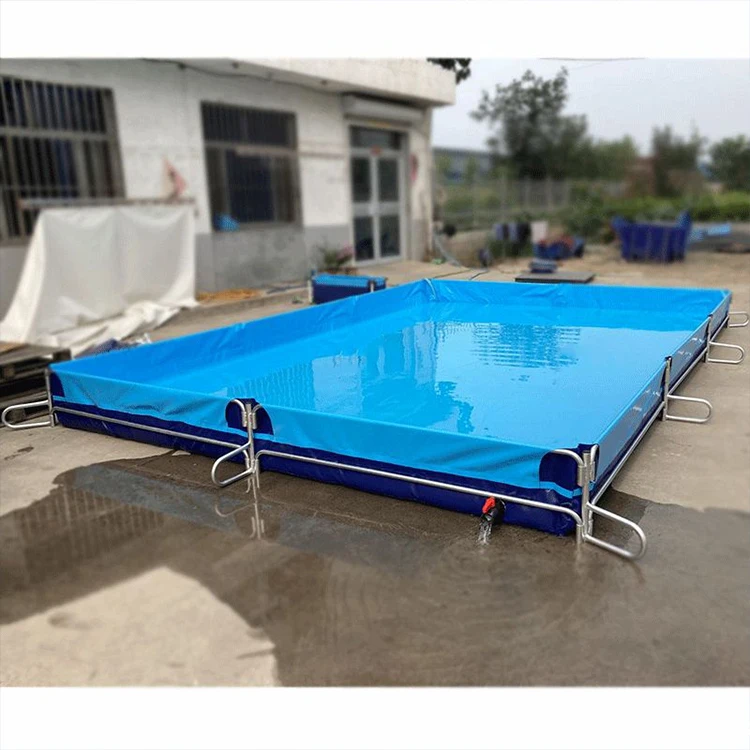
Coated Fabric Process Control — Our PVC coating lines maintain verified GSM output across every roll of pond liner, with in-process QA checkpoints catching adhesion or weight drift before the material leaves the factory.
Technical Specifications
| Parameter | Value |
|---|---|
| Product Type | PVC Tarpaulin Fish Pond Liner |
| Material | PVC Tarpaulin |
| Coating Material | PVC |
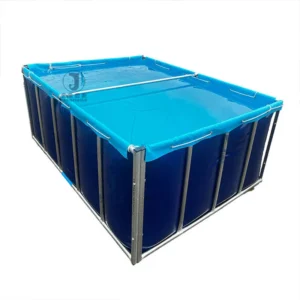
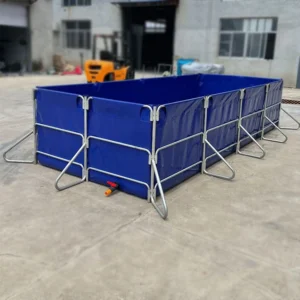
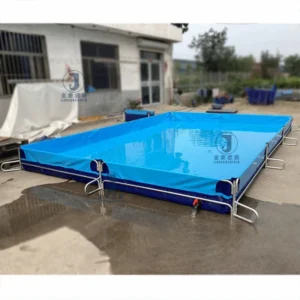
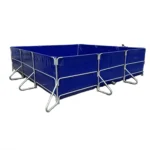
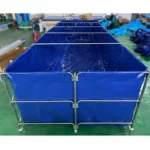
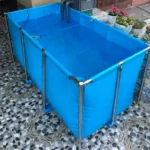
| Shape Options | Circular, Rectangular |
| Feature | Foldable |
| Application | Fish tank, Fish pond, Aquaculture water containment |
| Fire-Retardant Grade | Available — confirm the grade required for your market |
| Anti-UV Treatment | Available — confirm the test basis and grade for your region |
Application Suitability
| Application | Exposure & Requirement |
|---|---|
| Commercial aquaculture fish ponds | Permanent water contact, soil chemistry exposure, puncture risk from substrate, UV on exposed edges |
| Hatchery and nursery containment | Clean water environment for juvenile stock, frequent cleaning, biosecurity protocols |
| Portable and seasonal fish tanks | Repeated folding and deployment, transport abrasion, quick installation under field conditions |
| Recirculating aquaculture systems (RAS) | Continuous water containment, compatibility with filtration plumbing, sealed seam integrity |
Why Coating Weight Alone Does Not Guarantee a Watertight Pond Liner
A PVC tarpaulin fish pond liner can fail long before the base fabric reaches its limit — and the failure almost always starts at the seam, not the panel.
Buyers frequently specify GSM on paper but find the delivered material lighter than quoted once cut and weighed. A liner that arrives below the agreed coating weight will show pinhole leaks under hydrostatic pressure, particularly where the pond floor meets vertical walls. Coating adhesion to the base fabric matters as much as weight: a heavy coat that delaminates under flex is worse than a lighter coat that stays bonded. I have seen aquaculture operators replace an entire pond liner within months because the welded seams opened under water load — the fabric itself was intact [NEED_CITE: seam peel strength test methods for coated fabrics per ISO 1421]. The gap between a quoted GSM and a functioning liner is closed by process control, not by adding more material.
Welded Seam Behaviour Under Hydrostatic Load
PVC tarpaulin pond liners rely on heat-welded seams to hold water at the joints. The weld creates a fused bond between two coated surfaces, and the strength of that bond depends on coating formulation, welding temperature, and pressure applied during fabrication. A PVC tarpaulin fish pond liner manufacturer must control all three variables in-house to ensure the weld does not become the weakest point in the system. Circular pond geometries place radial tension on vertical seams, while rectangular ponds concentrate stress at corners. Our 10-person R&D team develops weld parameters matched to the specific coating weight and base fabric of each liner order, then verifies peel strength before the liner leaves the production floor.
Material Consistency Across Foldable Liner Panels
A foldable pond liner must survive compression during transport and return to full dimensional stability when deployed on site. Coating uniformity across the roll width directly affects how the liner folds and unfolds — a section with heavier coating will crease differently from a lighter section, creating visible stress lines that can develop into cracks over repeated use. We maintain coating weight tolerance through dedicated QA/QC at every production stage, inspecting each roll before it enters the cutting and welding area. This control is what allows our circular and rectangular pond liners to ship folded without developing permanent set marks at the fold lines [NEED_CITE: low-temperature flexibility testing for PVC coated fabrics].
How Base Fabric and Coating Interact in Pond Service
The base fabric of a PVC tarpaulin liner provides tensile and tear strength, while the PVC coating delivers waterproofing and chemical resistance. GSM alone does not determine performance: a 900 GSM liner built on a loosely woven base will tear more easily than a 650 GSM liner on a tight high-denier weave. The coating method — whether knife-over-roll, calendering, or lamination — governs how deeply the PVC penetrates the weave and how well it bonds under peel stress. For aquaculture use, knife-coated construction generally offers the best balance of adhesion and flexibility, allowing the liner to conform to uneven pond floors without cracking at the coating-to-fabric interface. Surface finish also plays a role: a smooth top surface resists algae adhesion and simplifies cleaning between production cycles, while the underside must tolerate abrasion against compacted soil or sand bedding.
The Hidden Cost of Underspecifying a Pond Liner
Choosing a pond liner based on price per square metre often leads to higher total cost once installation, water loss, and stock mortality are factored in. A liner that arrives below the quoted GSM will require more frequent patching and earlier full replacement, disrupting production schedules. Inconsistent coating across a batch means one section of a large pond may degrade under UV exposure while adjacent panels remain intact — forcing partial replacement that is difficult to weld to aged material [NEED_CITE: UV degradation patterns in PVC coated fabrics used outdoors]. When a liner is cut to a generic size that does not match the pond footprint, excess material must be folded and welded on site, introducing seam lines that were not part of the original fabrication plan and that often fail first.
Why Aquaculture Operators Source Liner Material Here
Nearly three decades of focused coated fabric production gives us deep process knowledge over coating weight, adhesion, and weld behaviour — the three variables that determine whether a pond liner holds water or fails at the seams. Three full production lines and 36 sets of professional equipment support bulk pond liner orders with reliable on-time delivery, even during peak aquaculture construction seasons. Our 10-person R&D team handles material selection, custom sizing, and sample development in-house, producing samples within days so buyers can verify fold behaviour and weld compatibility before committing to full production. Dedicated QA/QC at every production stage, with 100 percent pre-shipment inspection, ensures each liner meets the stated GSM, dimensional accuracy, and seam integrity before dispatch.
Documentation & Verification
- Material specification sheet stating base fabric denier, PVC coating type, and GSM for each pond liner order
- Pre-shipment inspection record verifying welded seam peel strength and dimensional accuracy against drawing
- UV and flame-retardant test reports supplied where applicable to the specified grade
- ISO and CE certificates covering the production facility and quality management system
- Roll packing list and certificate of origin for customs and import compliance
Fabrication, Handling & Storage
- Heat-weld seams at temperatures matched to the liner’s PVC coating formulation — test-weld a sample strip before full fabrication
- Fold the liner along pre-scored lines to avoid random creasing that stresses the PVC coating at uncontrolled points
- Store folded liners on pallets in a shaded, ventilated area to prevent heat build-up that can set permanent fold marks
- Clean the PVC surface with mild detergent only — solvents will soften the coating and reduce weld adhesion at repair patches
- For field repairs, apply a PVC-compatible patch with overlap extending beyond the damaged area and heat-weld all edges
What to Include in Your Liner Enquiry
To move quickly from enquiry to sample, provide the pond dimensions and whether you need circular or rectangular geometry, along with the total number of units and any site-specific requirements such as UV exposure or fire-retardant compliance. Specify whether you require finished liners with welded seams and reinforced edges or roll stock for your own fabrication. If your market demands particular certifications or test reports, state the standard and grade so we can match the material from the start.
Frequently Asked Questions
Q: How can I verify that the GSM on the delivered pond liner matches what was quoted?
A: Request the pre-shipment inspection record that accompanies every order — it documents the measured coating weight and base fabric GSM for your specific production run. On arrival, you can cut a sample panel of known area, weigh it, and compare against the stated specification. Any deviation should be reported with photos and the roll number for immediate resolution.
Q: Is anti-UV treatment necessary for outdoor fish ponds, and how is it tested?
A: Exposed pond liner edges and any portion above the waterline receive direct UV radiation that degrades unprotected PVC over time. Anti-UV treatment is available in different grades depending on your regional climate and expected exposure duration. Ask for the test report that corresponds to the UV grade you specify so you can evaluate suitability against your site conditions.
Q: How strong are the welded seams compared to the liner fabric itself?
A: Properly heat-welded PVC seams aim to approach the peel and shear strength of the parent fabric, but the actual result depends on coating formulation, welding temperature, and operator technique. We develop weld parameters for each material variant and verify peel strength during production. The pre-shipment inspection record includes seam test results for your order.
Q: Can the liner be custom cut to my exact pond dimensions, and is there a minimum order?
A: Both circular and rectangular pond liners are fabricated to custom dimensions based on your drawings. Minimum order depends on the material grade and whether you need finished liners or roll stock. Provide your dimensions and quantity at enquiry stage so we can confirm lead time and production scheduling for your project.