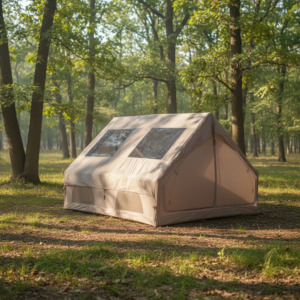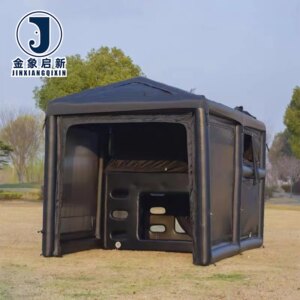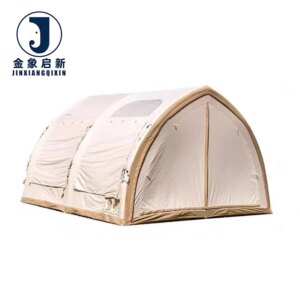
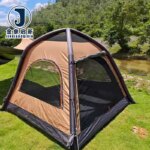
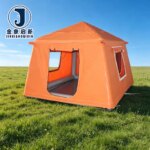


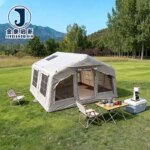
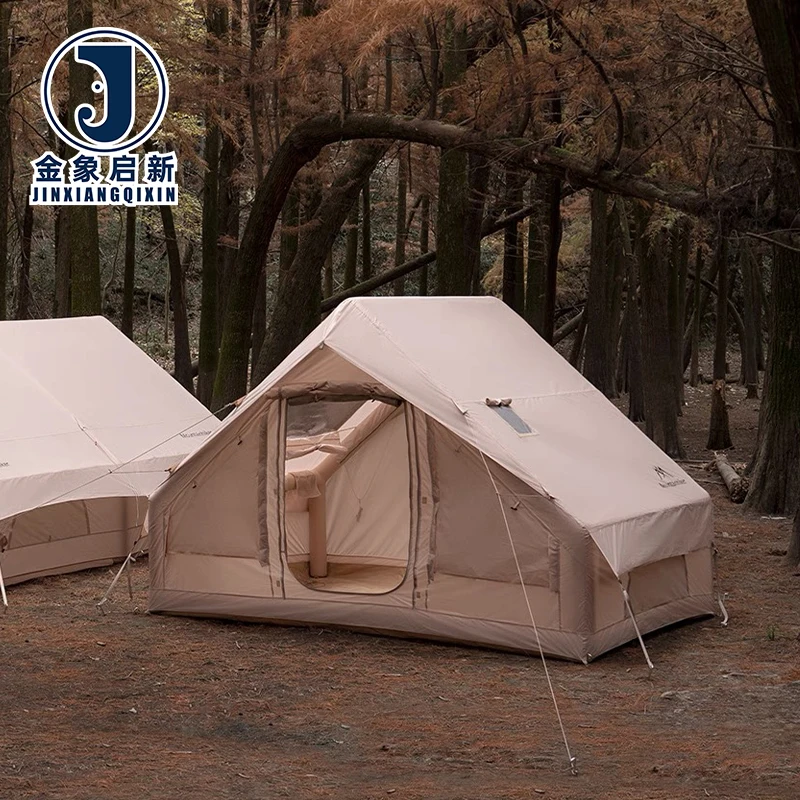
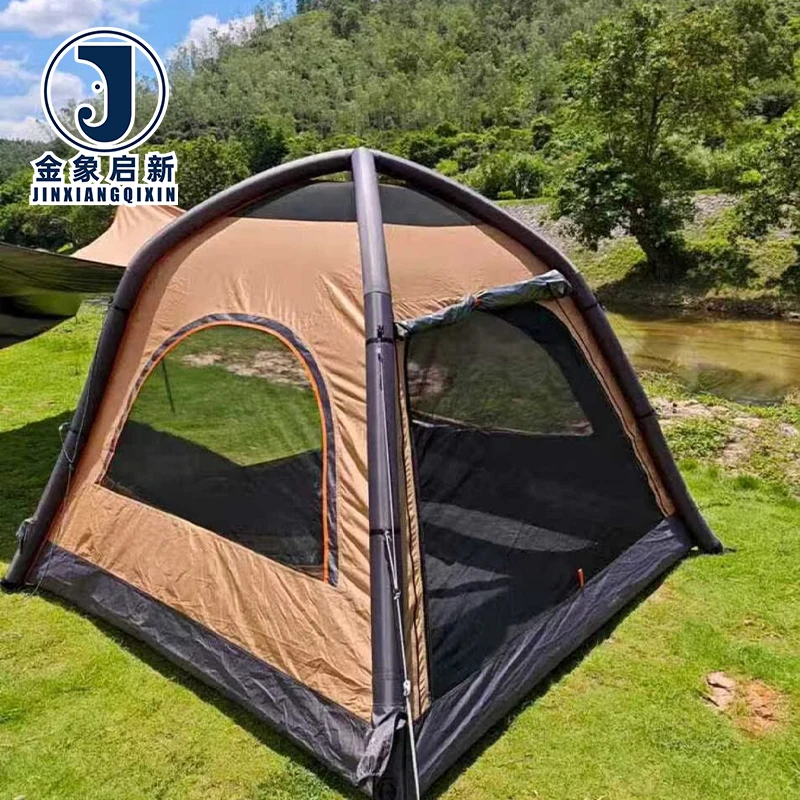
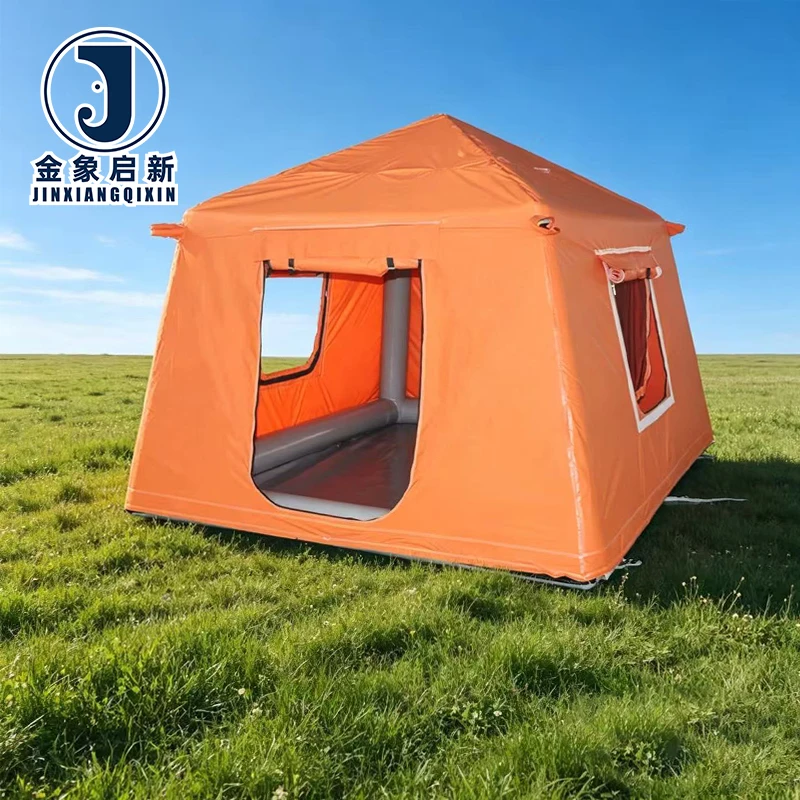
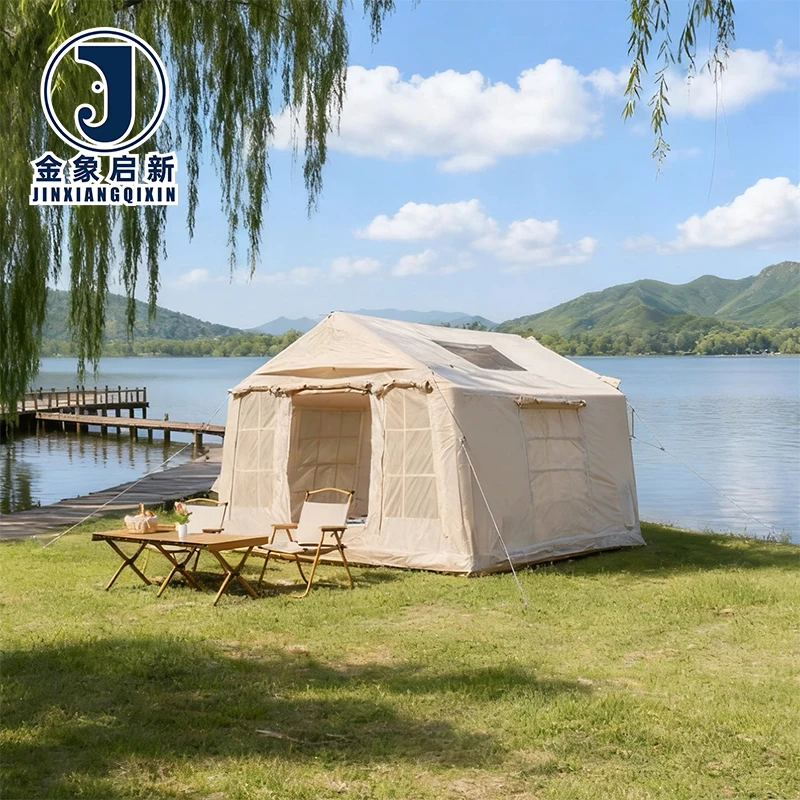
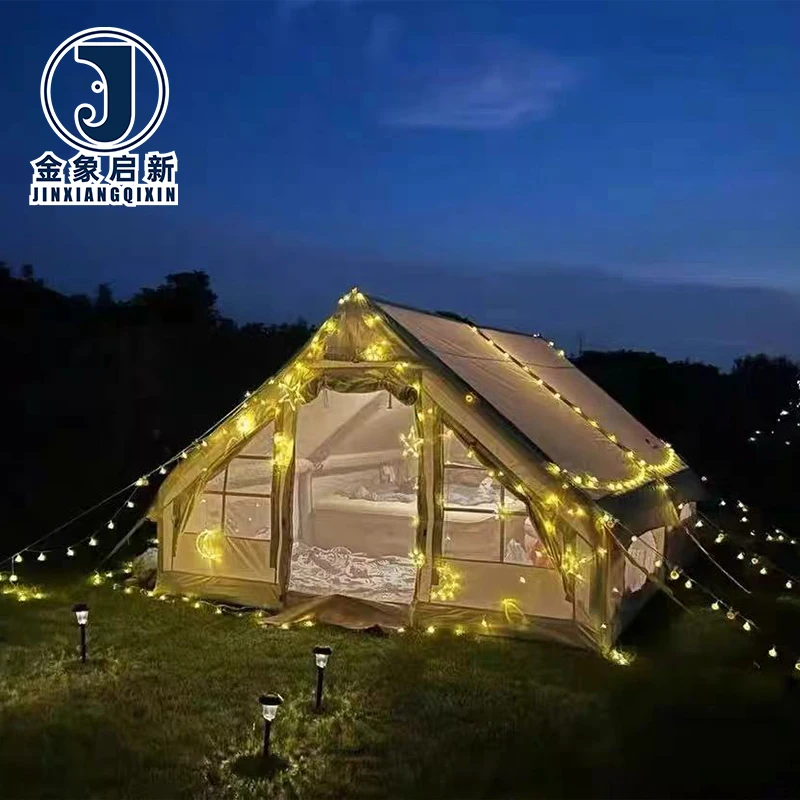
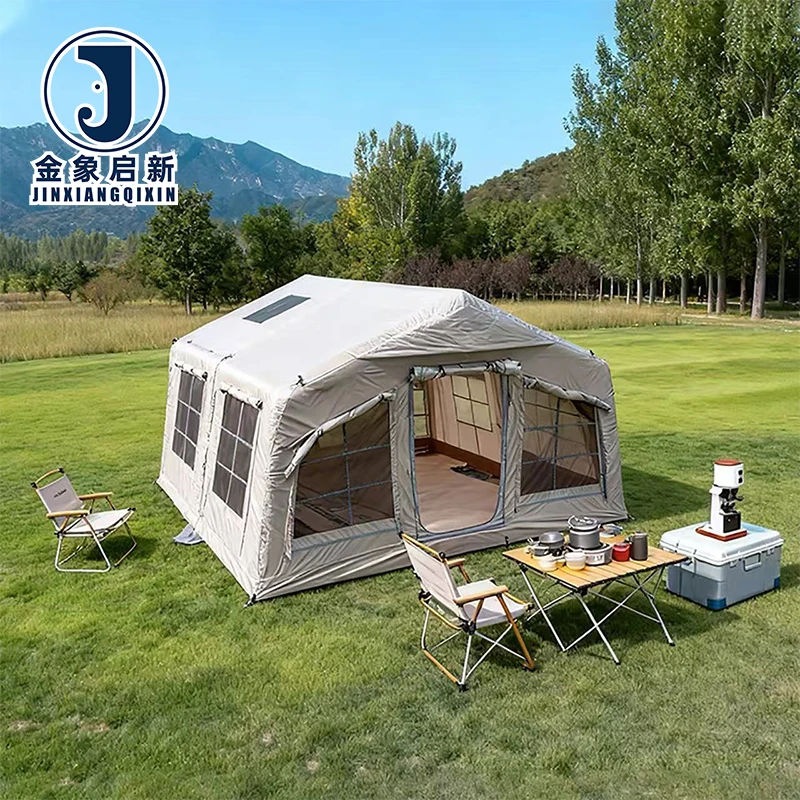
Process-Controlled Coated Fabric — Every roll of our inflatable tent material is produced under ISO-certified QA tracking, with documented fire-retardant and anti-static test parameters verified before dispatch.
Technical Specifications
| Parameter | Value |
|---|---|
| Product Type | Inflatable Tent Fabric |
| Core Material | PVC Tarpaulin (PVC knife-coated fabric) |
| Coating Material | PVC |
| Key Performance | Waterproof, UV-resistant, Tear-resistant |
| Fire-Retardant Treatment | Available in fire-retardant grades — confirm the grade required for your market |
| Anti-Static Treatment | Available in anti-static grades — confirm the standard required for your deployment |
| Customization Service | OEM & ODM (sample customization, pattern printing) |
| Capacity | 4-6 Person |
| Opening Mechanism | Quick Automatic Opening (inflatable structure) |
| Standards | ISO9001, ISO14001, ISO45001, CE |
Application Suitability
| Application | Exposure & Requirement |
|---|---|
| Commercial inflatable camping tent production | Airtight beam inflation cycles, prolonged sun exposure, ground moisture contact |
| Adventure tourism glamping structures | Repeated assembly and deflation, guest safety compliance, high-visibility branding |
| Industrial temporary shelter deployments | Regulated environment fire safety codes, static discharge prevention in dry climates |
| Outdoor gear manufacturer integration | Roll-to-roll consistency for automated cutting, certified material documentation for market entry |
Why "Fire-Retardant" on a Data Sheet Means Nothing Without a Test Grade
Certified compliance starts with documented test results, not marketing claims.
Manufacturers sourcing PVC Inflatable Tent fabric aftermarket supplier options frequently receive material labeled "flame retardant" only to discover during third-party validation that no recognized standard was actually applied. A commercial adventure tourism operator deploying inflatable shelters across multiple jurisdictions faces different fire codes in each region — fabric that passes in one market may fail inspection in another. Without a stated test basis, the buyer carries all the compliance risk [NEED_CITE: fire classification standards for temporary outdoor structures by region].
Airtight Beam Integrity Under Repeated Inflation
Inflatable tent structures depend entirely on the coated fabric’s ability to hold air pressure within beam chambers across hundreds of inflation and deflation cycles. PVC Inflatable Tent fabric aftermarket supplier materials must maintain coating adhesion to the base fabric under constant internal stress, particularly at welded seam junctions where the material is heat-fused. Knife-coated PVC construction provides the multi-layer bond strength necessary for these structural air chambers, preventing delamination that would compromise the entire shelter.
Static Discharge and Dry-Environment Deployment
When inflatable tents are deployed in arid climates or high-altitude environments, friction from wind movement and inflation equipment can generate surface static accumulation. Anti-static treatment options are available for our PVC Inflatable Tent fabric aftermarket supplier range — buyers should confirm the surface resistance standard required by their deployment environment [NEED_CITE: anti-static testing methods for coated textile surfaces]. Material safety documentation accompanies every shipment to support compliance verification at the point of use.
How Coating Weight and Base Fabric Density Interact
The structural performance of inflatable tent fabric depends on the relationship between PVC coating weight and the denier density of the woven base fabric. A heavier coating alone does not guarantee higher tear resistance if the underlying yarn count is low — tear propagation follows the path of least resistance through the weave structure. Knife-coating allows precise control over PVC penetration into the fabric interstices, creating a mechanical bond that supports heat-welding without coating separation. For inflatable beam applications, the coating must remain flexible at the fold points where beams curve, resisting micro-cracking that would compromise airtightness over repeated use cycles.
The Hidden Cost of Unverified Batch Specifications
When inflatable tent manufacturers receive rolls with inconsistent coating weight across a single order, the heat-welding parameters that work on one roll fail on the next — causing production line stoppages and seam rejection rates that erode profit margins. Color drift between rolls in the same shipment becomes visible only after panels are welded side by side on the finished tent, forcing rework or scrap. Fire-retardant treatment that was claimed but not documented to a specific standard leads to failed inspections at the deployment site, with the tent manufacturer bearing the liability [NEED_CITE: weld failure analysis for PVC coated fabrics under cyclic stress]. These consequences are preventable with pre-shipment inspection records and per-batch test documentation.
Why Production Control Matters for Inflatable Tent Fabric
Our 10-technician R&D team develops custom samples within days, validating material behavior for specific inflatable beam geometries before mass production begins. Three full production lines with 36 sets of professional equipment provide the capacity to maintain batch consistency across large roll orders without splitting production across different machines. Dedicated QA/QC monitoring at every coating stage ensures GSM and coating adhesion remain within specification — verified through 100% pre-shipment inspection rather than statistical sampling. OEM pattern printing and custom color matching are controlled in-house, eliminating the coordination gaps that occur when printing is outsourced. Every roll ships with a complete documentation package traceable to its production batch.
Documentation & Verification
- Material specification sheet confirming coating type, base fabric construction, and treatment options per roll
- Fire-retardant and anti-static test reports provided where applicable — confirm required grade at inquiry stage
- ISO9001, ISO14001, ISO45001, and CE certificates included with every shipment documentation package
- Pre-shipment inspection record with per-batch coating weight verification before dispatch
- MSDS and compliance documentation supporting market entry requirements for commercial outdoor equipment
Fabrication, Handling & Storage
- Heat-weld parameters must be calibrated to the specific PVC coating thickness — request our welding guide for this knife-coated fabric
- Store rolls horizontally on pallets to prevent permanent creasing that compromises inflatable beam airtightness
- Allow cold-stored rolls to reach ambient temperature before unrolling to prevent coating micro-cracking
- Use PVC-compatible cleaners only — solvent-based products may degrade the coating surface and compromise weld integrity
- Pattern printing areas require adjusted heat-weld temperature to maintain print definition at seam junctions
What We Need to Quote Your Project
Provide your target market’s fire safety classification requirements, the inflatable beam diameter and operating pressure your tent design specifies, and annual roll volume to determine production scheduling. If custom color matching or branded pattern printing is required, share your Pantone references and panel dimensions so we can confirm repeat alignment. Let us know whether you need rolls in standard widths or custom slit widths optimized for your cutting layout.
Frequently Asked Questions
Q: What fire-retardant grade does the inflatable tent fabric carry, and which markets does it satisfy?
A: Fire-retardant treatment is available in multiple grades depending on your target market’s regulatory framework. We do not claim a universal grade — instead, we ask buyers to specify the standard required for their deployment region, then provide the corresponding test report with the shipment. Confirm your market’s classification at the inquiry stage to ensure correct formulation.
Q: How is anti-static performance verified and what surface resistance is documented?
A: Anti-static treatment is available as an option for deployments in dry or high-altitude environments where static accumulation poses a risk. The specific surface resistance value depends on the formulation selected. Request the test documentation for the anti-static grade you require, and our R&D team will confirm whether it meets your deployment specification before production.
Q: What is the lead time and minimum order for custom width, colour, or printed branding?
A: Custom specifications involve sample development, approval, and scheduled production runs across our three coating lines. Lead times vary with order complexity — custom colors and pattern printing require additional setup. Provide your specifications at inquiry, and we will return a quotation with confirmed scheduling and minimum order requirements for your specific configuration.
Q: How do you ensure colour consistency across multiple rolls in one order?
A: Every production batch undergoes QA monitoring with digital parameter tracking at each coating stage. Pre-shipment inspection includes visual and measured color verification across all rolls in the order. We provide pre-shipment photos for buyer confirmation before dispatch, catching any drift before material leaves the facility.
Q: Do you supply finished inflatable tents or only the PVC fabric by the roll?
A: We supply PVC coated tarpaulin fabric by the roll for inflatable tent manufacturers to fabricate into finished products. Our capability covers material production, custom sizing, pattern printing, and treatment formulation — not finished tent assembly. OEM and ODM fabric customization is available, with sample development to validate material performance before your production commitment.