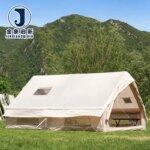
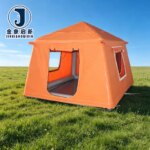

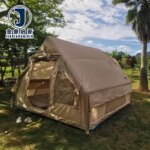
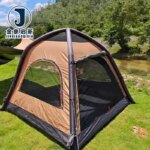
Proven Coating Expertise — nearly 30 years of PVC coating process control translated into consistent inflatable structure fabric that meets regulated site compliance.
Technical Specifications
| Parameter | Value |
|---|---|
| Product Type | Inflatable Tent |
| Core Material | PVC tarpaulin |
| Key Performance | Waterproof, UV-resistant, tear-resistant |
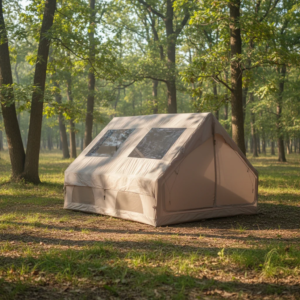
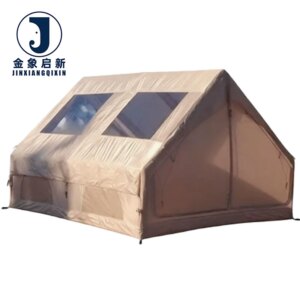
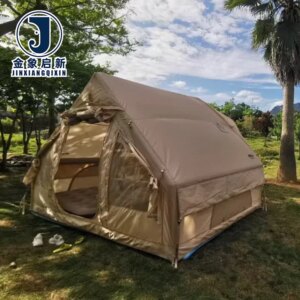
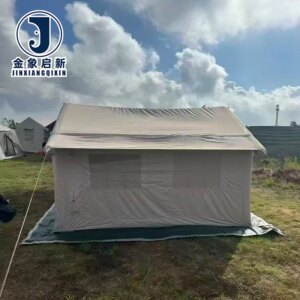
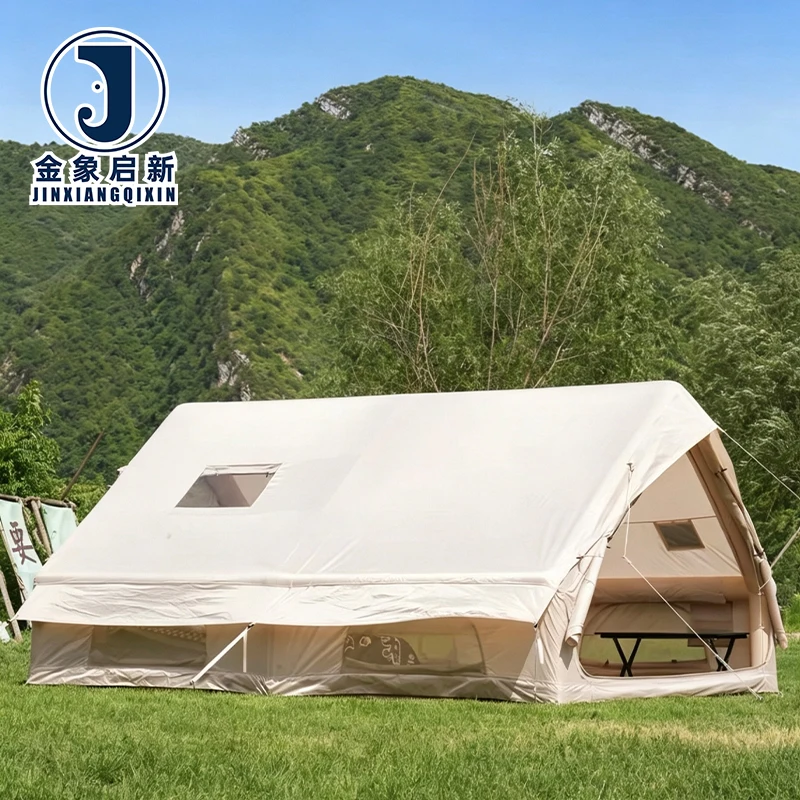
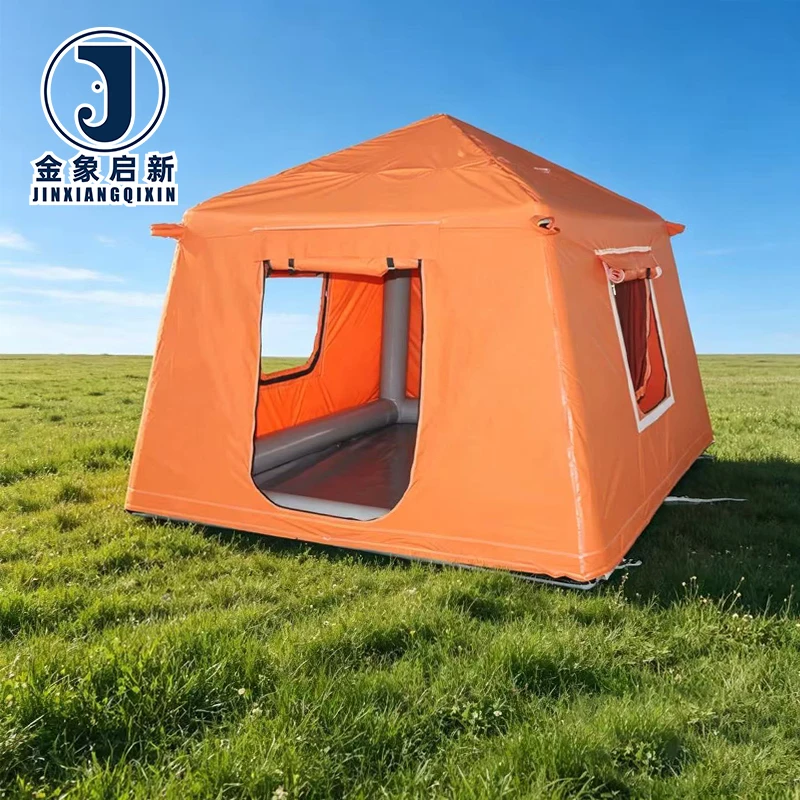
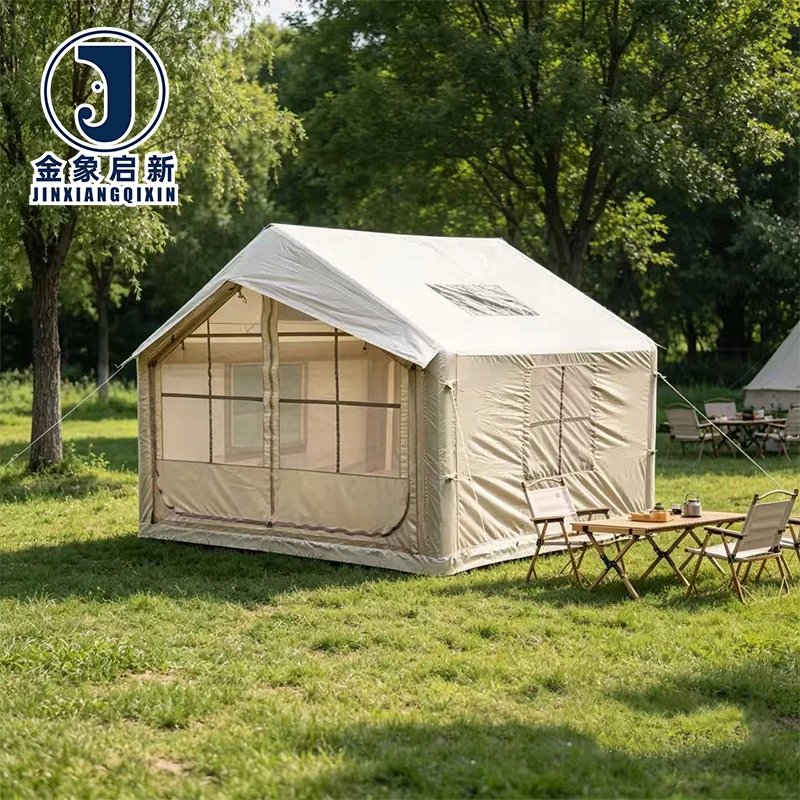
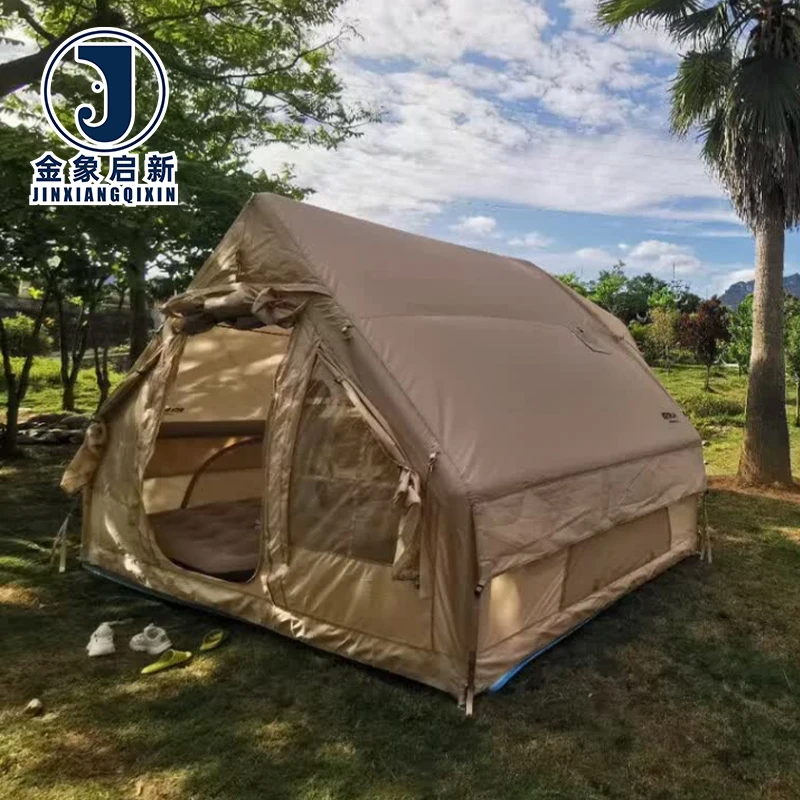
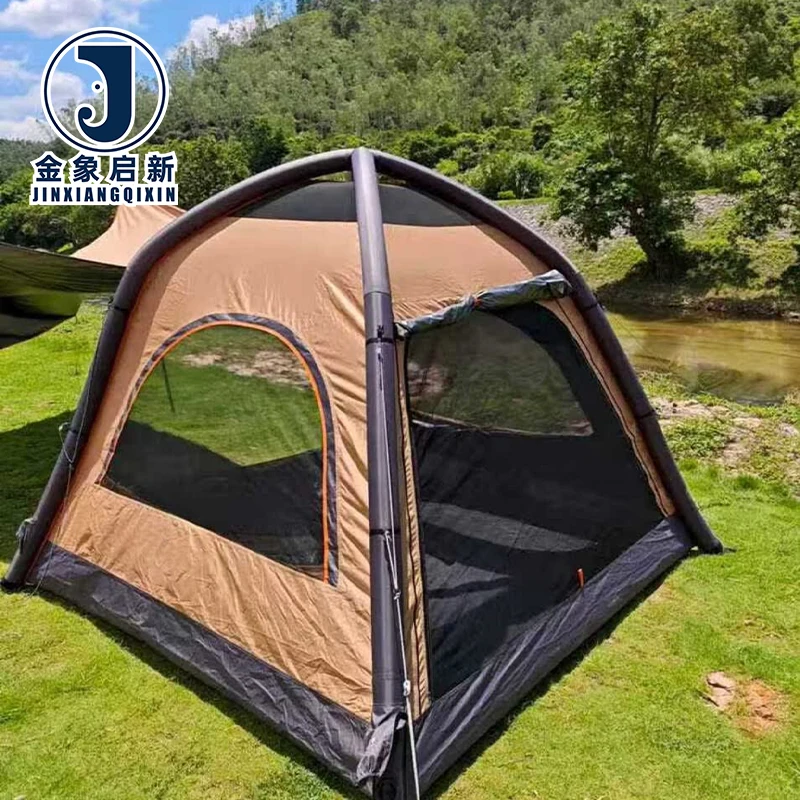
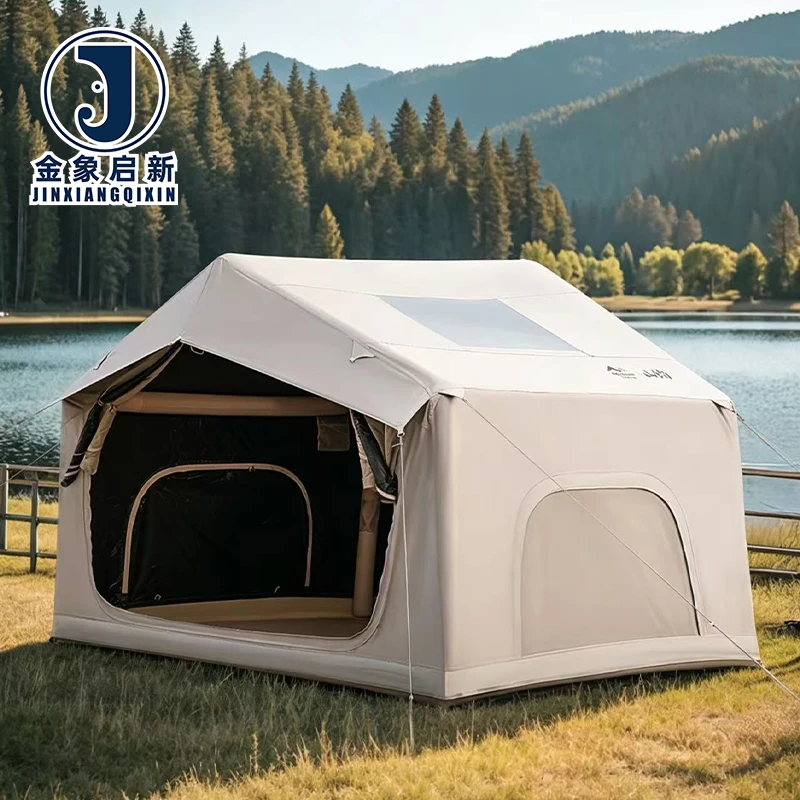
| Product Forms | 2-3 Person Quick Automatic Opening Four-Season Waterproof Outdoor Air Tent |
| Flame Retardant Grade | Available in flame retardant grades — confirm the grade required for your market |
| Anti-Static | Available in anti-static grades — confirm certification basis required |
| Customization Service | OEM & ODM including sample customization and pattern printing |
| Quality Control | Strict full-process inspection with dedicated QA and QC staff on site |
| Standards | ISO9001, ISO14001, ISO45001, CE |
Application Suitability
| Application | Exposure & Requirement |
|---|---|
| Construction site auxiliary shelters | Continuous outdoor weather, wind loading, repeated inflation cycles, site dust and debris abrasion |
| Outdoor event management structures | UV exposure across seasons, crowd proximity, rapid deployment and teardown cycles |
| Mobile field operations | Remote transport, variable climate zones, quick automatic opening for time-sensitive setups |
| Equipment storage facilities | Long-term water contact risk, UV degradation, internal humidity management |
| Commercial camping ground facilities | Four-season temperature variation, guest safety compliance, frequent assembly rotation |
| Outdoor exhibition booths | Branding visibility, structural stability under wind load, visual consistency across units |
Why Certification Documentation Matters More Than the Inflatable Tent Fabric Label
A material claim without a test report is a liability, not a specification.
Many inflatable structure fabrics arrive on site labelled as fire retardant or anti-static, only for the safety inspector to reject the installation because no batch-level test report accompanies the delivery. Mining, aviation and construction regulators do not accept a supplier’s word — they require documented proof tied to the specific roll or batch installed. PVC Inflatable Tent aftermarket supplier sourcing decisions frequently fail at this documentation gap, not at the material itself [NEED_CITE: site compliance rejection rates for temporary structures lacking batch-specific fire certification]. When an inflatable shelter is erected on a regulated site, every component must trace back to a verifiable standard.
Compliance Starts With the Material Specification Sheet
Inflatable tent fabric fire retardant and anti-static certified performance begins long before the material reaches the inflation blower. The base fabric denier, coating weight and treatment chemistry must be stated explicitly on the specification sheet, not implied by a product family description. Our 10-technician R&D team develops each PVC Inflatable Tent aftermarket supplier order with a material specification sheet that lists the exact coating method, base fabric construction and treatment parameters. This document travels with the shipment so that site engineers can cross-reference it against their local fire and safety codes without requesting additional paperwork weeks after delivery.
Weld Integrity Across Repeated Inflation Cycles
An inflatable structure lives and dies at its seams. Every inflation and deflation cycle applies flex stress to welded joints, and the first failure point is almost always where the fabric was joined, not the field of the material itself. Our 36 sets of professional processing equipment include dedicated high-frequency and hot-air welding stations calibrated for PVC tarpaulin thickness ranges, ensuring that the weld line achieves peel strength comparable to the base fabric [NEED_CITE: weld peel strength testing methods for PVC coated fabrics per ISO 1421]. Pre-shipment inspection verifies seam continuity on every unit before it leaves our facility.
Reading the Specification Beyond the Surface Claim
Waterproof, UV-resistant and tear-resistant are performance directions, not test results. The PVC tarpaulin core material delivers these properties through coating chemistry and base fabric construction rather than a single additive. Coating weight and base fabric denier work together — a heavier coating on a low-denier base may resist water ingress but tear under point load, while a high-denier base with insufficient coating may hold tensile load but allow moisture penetration at the weave intersections. Understanding this balance is where technical buying decisions separate functional inflatable structures from premature field failures [NEED_CITE: relationship between base fabric denier and coating weight in determining tear propagation resistance].
What Happens When the Specification Does Not Match the Site
An inflatable shelter deployed on a construction site without verified fire retardant documentation can shut down an entire project pending compliance review. Similarly, anti-static claims unsupported by surface resistance measurements create ignition risks in environments where combustible dust or volatile atmospheres are present. Batch colour variation across a multi-unit order for a commercial camping ground becomes visible the moment two tents are erected side by side, undermining the professional appearance the operator invested in [NEED_CITE: batch colour consistency standards for coated fabric in commercial applications]. These are not material defects — they are specification failures that originate in the procurement stage.
What Distinguishes This Manufacturing Approach
Depth of process control across three full production lines allows PVC inflatable tent orders to maintain coating consistency from the first roll to the last within a batch. The 10-person R&D team handles sample development, pattern printing and custom dimension engineering in-house, eliminating the communication lag that occurs when design and production sit in separate facilities. A 9,180 m² production facility with dedicated QA and QC staff at every stage means that inflatable tent fabric fire retardant or anti-static grades are verified during production, not only at final inspection. OEM and ODM programmes are supported from initial sample through to bulk delivery with full documentation continuity.
Documentation & Verification
- Material specification sheet stating PVC tarpaulin base fabric, coating type and colour reference per order
- Fire retardant and anti-static test reports with applicable standard references provided per batch where specified
- Pre-shipment inspection record confirming waterproof integrity and seam continuity before dispatch
- ISO9001, ISO14001, ISO45001 and CE certificates included with shipping documentation
- Certificate of origin and customs documentation supporting export compliance
Fabrication, Handling & Storage
- Heat weld parameters must match PVC tarpaulin coating thickness to prevent seam delamination during inflation cycles
- Store rolled inflatable tent fabric horizontally on padded racks to avoid permanent crease marks on the coated surface
- Clean PVC tarpaulin surfaces with neutral pH detergent only — solvents degrade coating adhesion at welded seams
- Allow cold-stored fabric to reach ambient temperature before unfolding to prevent coating crack at low-temperature flex points
- Inspect welded seams after each deployment cycle and repair with compatible PVC patch material before next inflation
Request a Technical Proposal
Provide your deployment environment, expected inflation frequency and any fire retardant or anti-static certification requirements specific to your jurisdiction. Include target dimensions, colour references and whether you require finished units or fabric rolls for your own fabrication line. Sample development is available for custom specifications before full production commitment.
Frequently Asked Questions
Q: What fire-retardant grade does the inflatable fabric meet and is it accepted in my target market?
A: Fire retardant grades are available across different standards depending on your regional requirements. We provide batch-specific test reports referencing the applicable standard once you confirm the grade your local fire code demands. Share your market and application so our R&D team can recommend the appropriate treatment specification before sampling.
Q: Can anti-static surface resistance be certified for mining or aviation site compliance?
A: Anti-static treatment is available and can be documented with surface resistance measurements tied to your site’s compliance framework. Specify the standard your safety officer requires and we will include the corresponding test report with your shipment. Early confirmation during the sampling stage ensures the treatment aligns with your inspection protocol.
Q: How are UV resistance and long-term outdoor exposure validated with test data?
A: UV resistance is stated as a performance direction of the PVC tarpaulin core material. When your project requires documented UV test results, we arrange third-party testing to the standard you specify and include the report with your order documentation. Request this at the quotation stage so lead times account for external lab scheduling.
Q: What custom dimensions and construction options are available for inflatable structure projects?
A: OEM and ODM customization covers dimensions, colour, pattern printing and opening mechanism configuration. Our 10-technician R&D team develops pre-production samples reflecting your exact specifications, allowing you to validate fit and inflation behaviour before authorising bulk production across our three full production lines.
Q: What compliance documentation ships with each order for customs and site inspection?
A: Every shipment includes a material specification sheet, pre-shipment inspection record, relevant ISO and CE certificates, certificate of origin and customs documentation. Where fire retardant or anti-static grades are specified, batch-level test reports accompany the packing list so site inspectors have immediate access to compliance evidence.