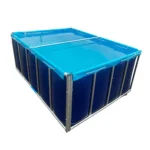

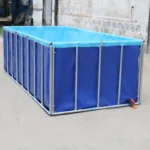
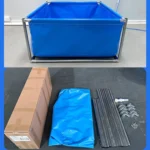
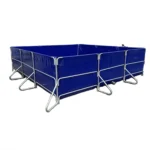
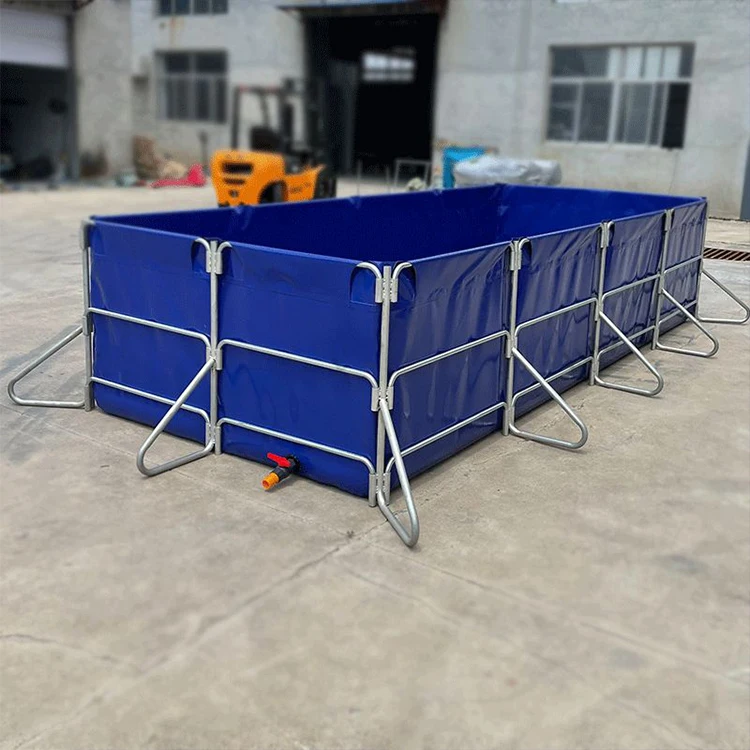
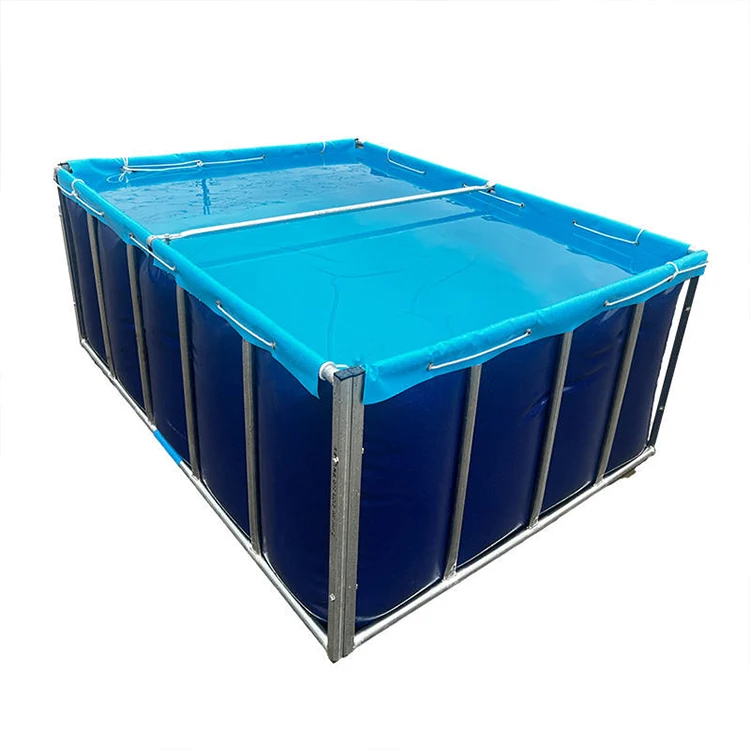
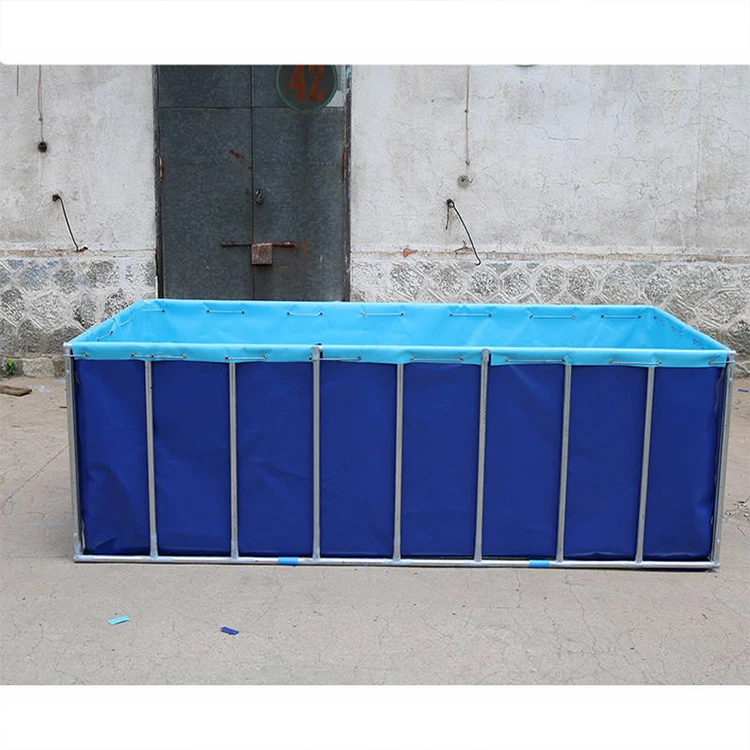

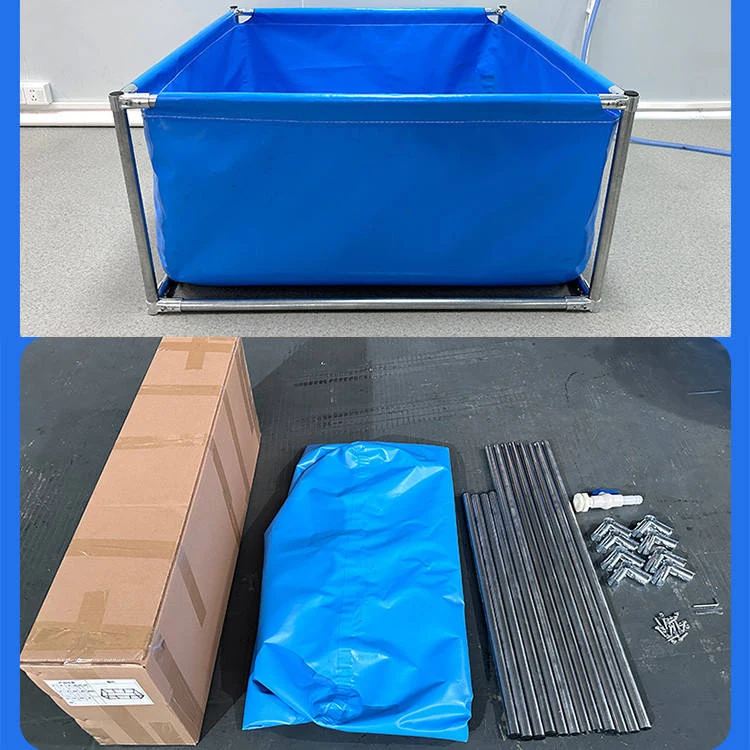

Process Control on Coating Adhesion — Our 10-person R&D team validates base fabric and coating bond strength at every stage, ensuring your PVC fish pond liner holds together long after filling.
Technical Specifications
| Parameter | Value |
|---|---|
| Product Type | PVC Fish Pond Tarpaulin |
| Shape Options | Circular / Rectangular |
| Material | PVC Tarpaulin |
| Feature | Foldable |
| Application | Fish Tank / Fish Pond |
| Custom Sizing | Available |
Application Suitability
| Application | Exposure & Requirement |
|---|---|
| Aquaculture recirculating pond liner | Continuous water immersion, biological load, seam integrity under hydrostatic pressure |
| Outdoor fish farming containment | UV exposure, temperature fluctuation, puncture risk from substrate |
| Hatchery and nursery water tanks | Chemical treatment contact, frequent draining and refilling, foldable storage between cycles |
| Agricultural water reservoir lining | Soil chemistry interaction, prolonged standing water, mechanical stress during installation |
Why Welded Seam Failure Costs You More Than Fabric Weight
A liner that splits at the weld before the fabric fails wastes your entire installation effort.
When a PVC fish pond liner fills with thousands of litres of water, hydrostatic pressure pushes outward on every seam. The flex points where the sidewall meets the floor experience cyclic stress each time the pond is filled and drained. If the heat-welded joint lacks penetration depth or the coating adhesion is weak, the seam separates under load while the main fabric remains intact. Buyers who specify only by GSM often discover this after the pond is full and stocked [NEED_CITE: tensile and tear test methods for coated fabrics per ISO 1421].
Coating Adhesion and What It Means for Water Containment
The bond between the PVC coating and the polyester base fabric determines whether a PVC Fish Pond Tarpaulin delaminates under sustained water pressure. When adhesion is insufficient, water migrates between the layers at cut edges or weld lines, causing blistering that spreads across the panel. Our coating process is monitored for weight consistency and peel strength, so the liner behaves as a single composite structure rather than two separate layers fighting each other.
Foldable Design and On-Site Deployment
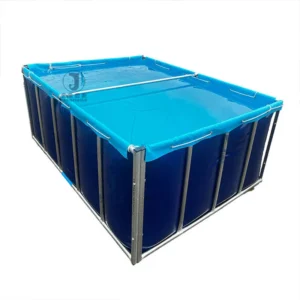
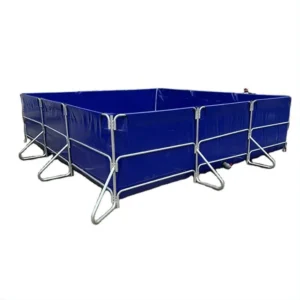
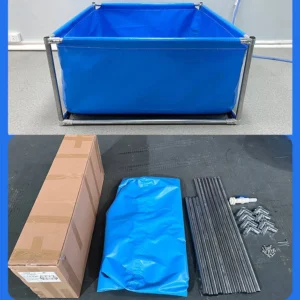
Circular and rectangular configurations ship folded, reducing transport volume compared to rigid tank alternatives. On site, the foldable PVC fish pond liner unfolds across a prepared base without requiring heavy lifting equipment. The material must recover from fold creases without cracking the coating, particularly in cooler conditions where PVC stiffens. This recovery behaviour depends on the plasticiser formulation and the base fabric weave, both controlled during production.
Reading the Specification Sheet Beyond Weight
A PVC tarpaulin pond liner’s performance depends on how base fabric denier, weave density, and coating weight interact. A heavier coating on a low-denier base may resist puncture but tear easily along the warp. Conversely, a tight weave with a thin coating offers high tensile strength but may allow water to wick through micro-gaps at the weld. The GSM figure alone cannot capture this balance — the material specification sheet should state base fabric construction and coating type alongside weight so buyers can assess suitability for their aquaculture environment [NEED_CITE: coating weight and adhesion standards for PVC coated fabrics].
The Hidden Cost of Specifying on Weight Alone
Buyers who approve a quotation based on a stated GSM without requesting base fabric details may receive a liner that meets the weight figure but uses a lighter base fabric compensated by excess coating. This imbalance shows up when the pond is dragged across rough ground during installation — the coating scratches through to the scrim, and water ingress follows. Across a multi-pond farm, replacing failed liners mid-season costs far more than verifying the full specification before production begins [NEED_CITE: PVC coated fabric delamination failure modes in aquaculture].
What Jinxiang Brings to Your Pond Liner Project
Nearly 30 years of coated fabric production gives our team deep process control over coating weight and adhesion on every PVC fish pond liner we produce. Three full production lines and 36 sets of professional equipment support bulk orders with consistent output across multiple ponds in the same farm. The 10-person R&D team handles custom sizing, developing samples within days so you can verify fit and weld behaviour before committing to the full order. Dedicated QA/QC runs at every production stage, with 100% inspection before dispatch — no roll leaves the facility without verification against your material specification sheet.
Documentation & Verification
- Material specification sheet stating base fabric denier, coating type, and GSM for your pond liner order
- Pre-shipment inspection record covering dimensions, weld integrity, and surface quality
- ISO and CE certificates available for compliance review
- Custom sizing confirmation drawing approved before production begins
- UV or flame-retardant test reports provided where applicable to your specification
Fabrication, Handling & Storage
- Heat-weld sidewall-to-floor joints using temperature and speed settings matched to the PVC coating formulation
- Store folded pond liners flat and dry, avoiding point loads that create permanent crease marks in the coating
- Unfold in ambient temperatures above 10°C to prevent coating stiffness and cracking at fold lines
- Clean biological buildup with mild detergent; avoid solvent-based cleaners that attack the PVC plasticiser
- Repair minor punctures with PVC-compatible adhesive patches applied to dry, cleaned surfaces
- Allow weld seams to cool fully under pressure before moving or filling the liner
What We Need from You to Quote Accurately
Provide the pond dimensions — diameter or length and width, sidewall height, and whether the base sits on soil, sand, or concrete. State the water chemistry if known, including salinity or treatment chemicals, so we can confirm coating compatibility. Let us know the quantity per size and your target delivery window so we can plan production across our lines. If you need samples for weld testing or fitment trials, specify that in your inquiry.
Frequently Asked Questions
Q: How do I verify the GSM of my PVC fish pond liner matches the quotation?
A: Request the material specification sheet before production, which states base fabric weight and coating weight separately. On delivery, you can cut a measured sample from the liner edge and weigh it to confirm total GSM. We conduct 100% pre-shipment inspection and provide the inspection record with your documentation package.
Q: What welding method ensures seam strength for water containment?
A: Hot-air or wedge welding fuses the PVC coating layers across the joint, creating a bond that should match or exceed the fabric strength. The correct temperature, speed, and pressure depend on the specific coating formulation. We can provide recommended welding parameters with your sample so your fabrication team can validate settings before full assembly.
Q: Can I order custom circular or rectangular pond dimensions?
A: Yes. Our R&D team develops custom-sized samples within days for approval before production. Provide your exact diameter or length-width-height figures, and we will confirm feasibility, minimum order quantity, and lead time based on current production scheduling.
Q: Is anti-UV treatment documented with test results?
A: Anti-UV treatment is available in various grades — confirm the grade required for your market and exposure conditions. Where applicable, we supply the test report supporting the stated UV resistance level alongside your shipment documentation.