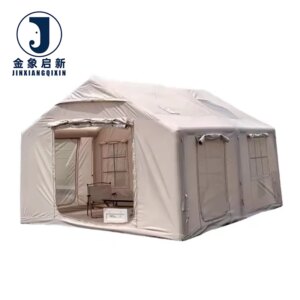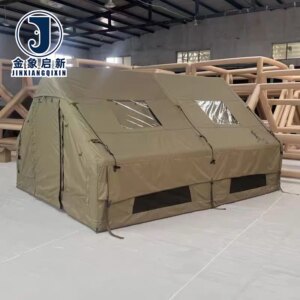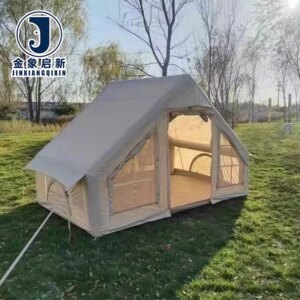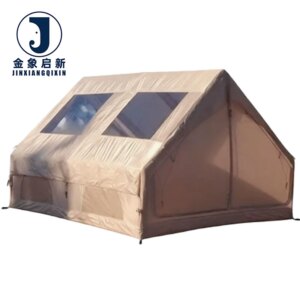
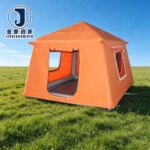


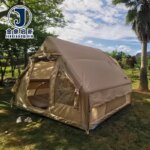
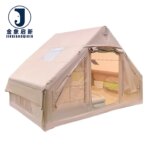
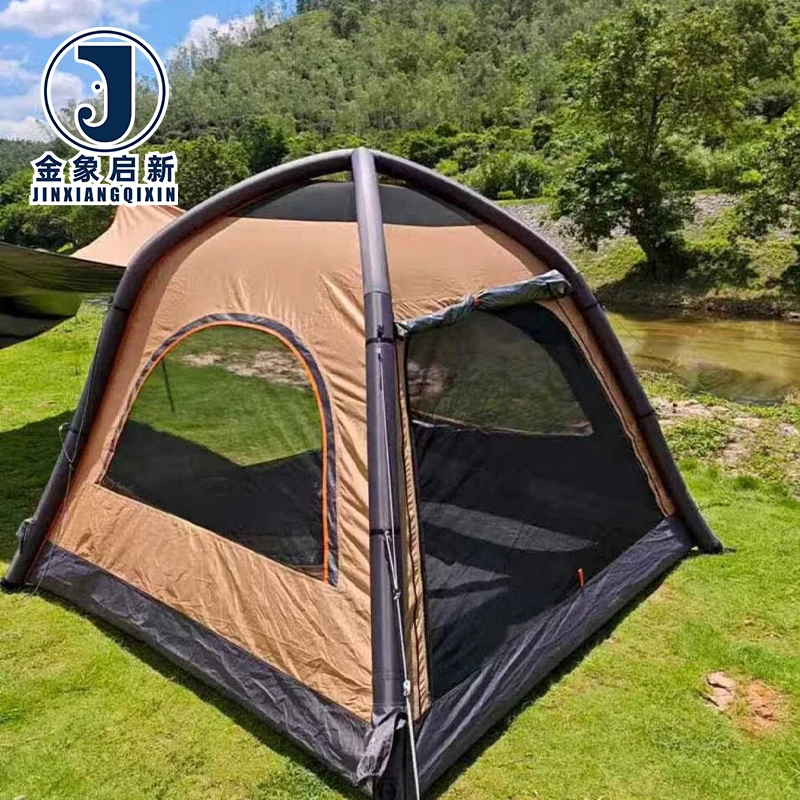
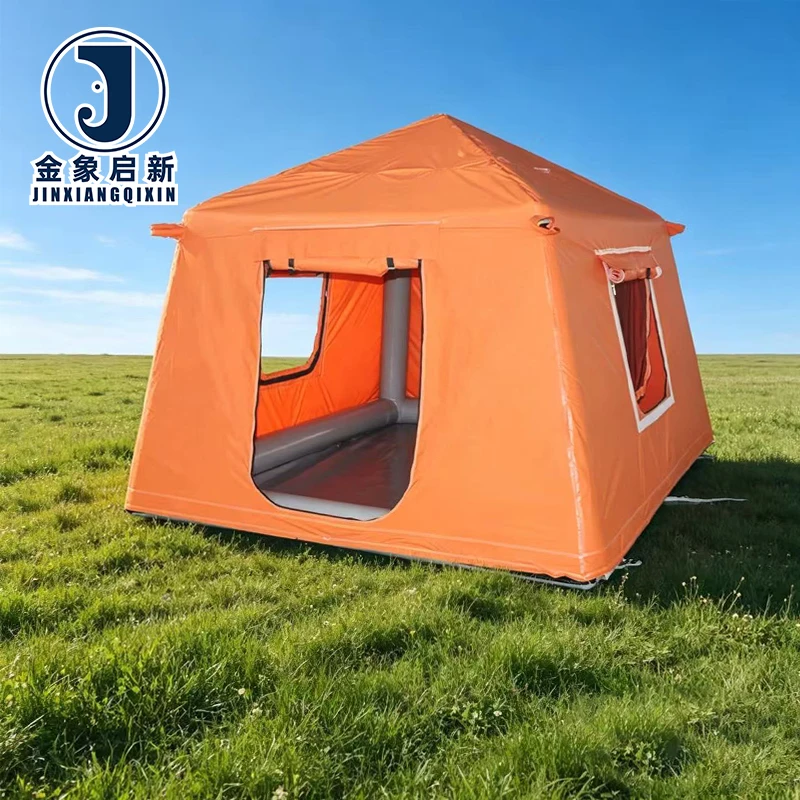

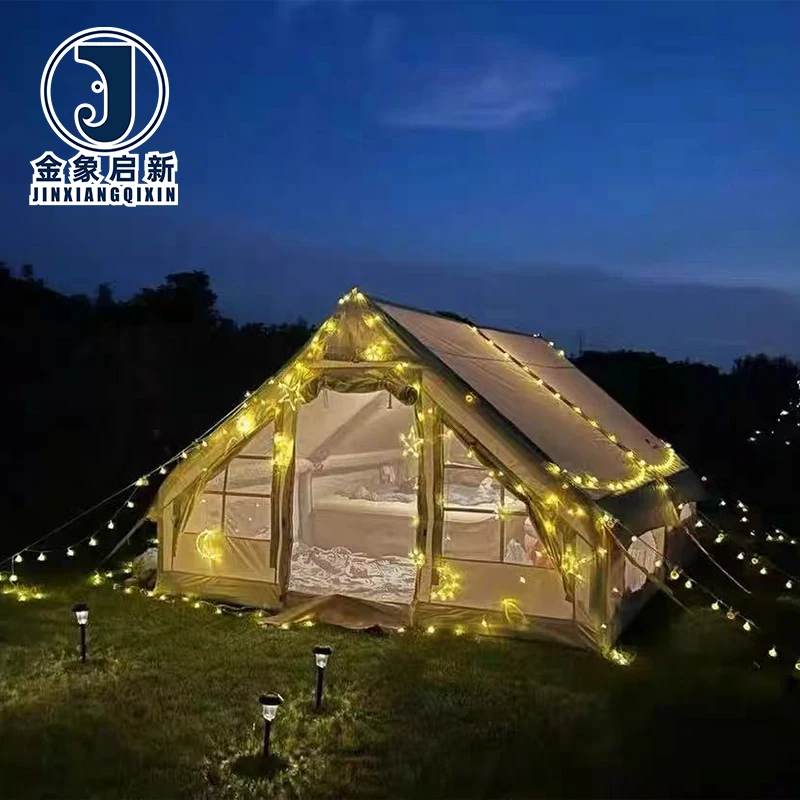
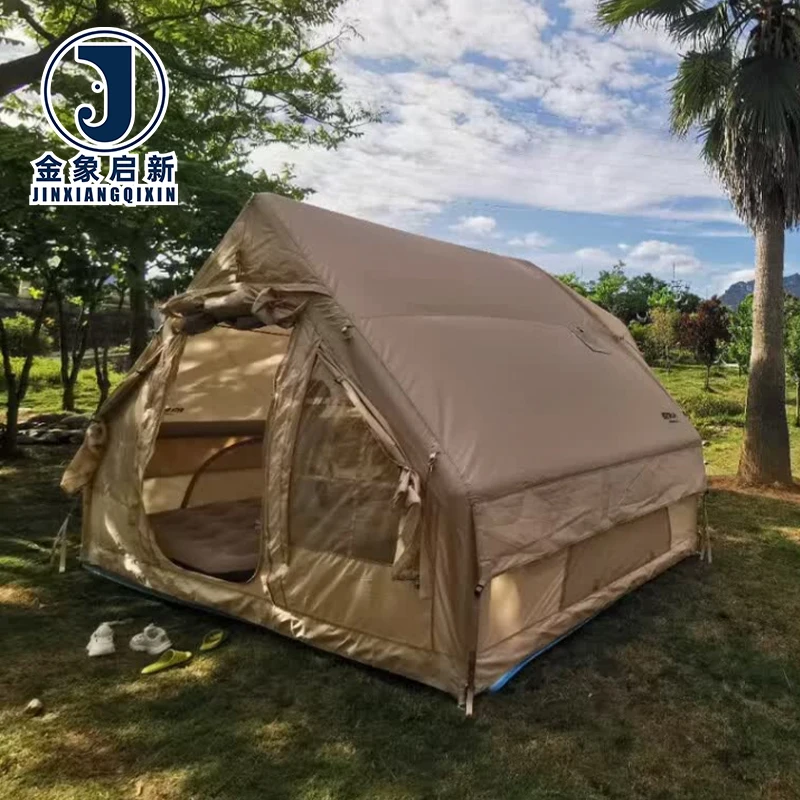
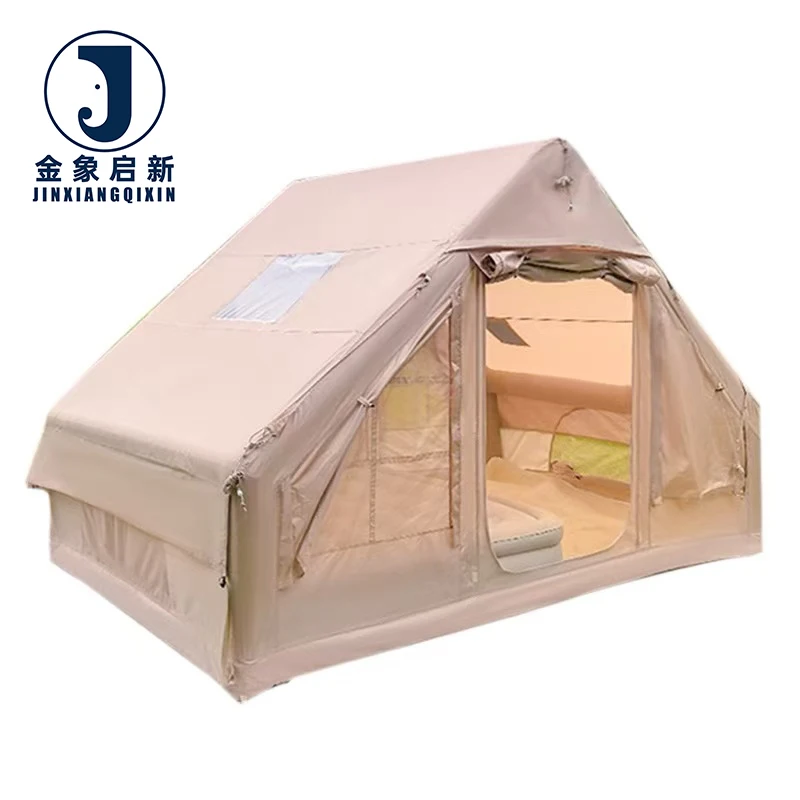
Specialist technical fabric — deep process control over PVC coating weight and adhesion applied to inflatable structure fabric engineered for regulated industrial environments.
Technical Specifications
| Parameter | Value |
|---|---|
| Product Type | Inflatable Tent Fabric / Inflatable Emergency Shelter |
| Core Material | PVC Tarpaulin |
| Capacity | 8-10 Person |
| Season Rating | 4 Season |
| Waterproof Rating | Hydrostatic head ≥ 5000mm |
| Tensile Strength | ≥ 3000N/5cm |
| Fire-Retardant Standard | EN 13501-1 |
| Anti-Static | Stated, surface resistance grade (not stated) |
| UV Treatment | UV-resistant (test basis not stated) |
| Fabric Thickness Tolerance | ±0.1mm |
| Inflation Pressure Test | 24-hour airtightness test before shipment |
| Coating Material | PVC |
| Customization | OEM & ODM (sample customization, pattern printing, custom dimensions, fabric thickness adjustments) |
| Certifications | ISO9001, ISO14001, ISO45001, CE |
Application Suitability
| Application | Exposure & Requirement |
|---|---|
| Mining and tunnelling emergency shelters | Confined underground environments requiring certified fire-retardant fabric, high humidity, potential rock dust abrasion, mandatory compliance documentation for site audits |
| Disaster relief command centers | Rapid deployment in hazardous or regulated zones, exposure to rain and wind, need for continuous occupancy over multi-day operations |
| Temporary industrial workspaces | Proximity to sensitive electronic or volatile equipment requiring anti-static fabric, frequent inflation and deflation cycles, forklift and foot traffic abrasion |
| Equipment storage during infrastructure projects | Sustained weather exposure, UV degradation risk over extended installation periods, protection of high-value assets from moisture ingress |
| Mobile command centers for logistics coordination | Repeated transport and redeployment, flex stress on welded seams during packing and unfolding, requirement for structural airtightness over continuous use |
Why Inflatable Emergency Tent Fire Retardant Certified Fabric Demands More Than a Data Sheet Claim
A flame-retardant label without a documented EN 13501-1 grade is a compliance gap waiting to shut down your site.
Procurement specifications for mining, tunnelling, and industrial disaster response increasingly mandate traceable fire-retardant certification tied to a specific standard. When an inflatable emergency shelter arrives on site with only a generic "fire-retardant" claim and no test report linked to the batch, site safety officers reject the installation and operations stall. The cost is not the tent — it is the idle crew, the delayed shift, and the audit finding that follows. [NEED_CITE: EN 13501-1 classification framework for construction products and building materials]
Compliance Documentation as the Real Product Deliverable
When a mining contractor specifies an Inflatable Emergency Tent fire retardant certified to EN 13501-1, the fabric itself is only half the deliverable. The test report documenting the grade, the batch traceability, and the certificate of conformity are what allow the shelter to pass site induction. Without these, the material performance is irrelevant because the structure never gets erected.
Every regulated site operates under an audit cycle where documentation is inspected before physical assets are approved. An inflatable shelter deployed in a tunnelling operation must carry fire-retardant certification that maps to the jurisdiction’s accepted standard — EN 13501-1 across most European and internationally aligned frameworks. The fabric supplier must provide batch-specific reports, not a blanket statement covering a product family. [NEED_CITE: fire safety compliance requirements for temporary structures in underground mining operations]
Anti-Static Fabric Properties in Sensitive Industrial Environments
Inflatable structures deployed near electronic control systems, volatile material handling zones, or fuel-adjacent operations carry an electrostatic discharge risk that standard PVC tarpaulin does not address. Anti-static treatment modifies the surface resistivity of the coated fabric to mitigate charge accumulation, reducing the probability of spark discharge in sensitive atmospheres.
The specification of anti-static performance must be supported by a documented surface resistance measurement or a referenced test method. Without this, the claim remains unverifiable at the procurement stage and indefensible during a site safety review. Buyers specifying inflatable shelters for these environments should confirm the applicable surface resistance range and request the corresponding test documentation before approving samples.
Reading the Specification Sheet for Structural Reliability
The waterproof rating of hydrostatic head ≥ 5000mm indicates sustained resistance to water penetration under pressure, which matters when an inflatable shelter is deployed in driving rain or standing water during disaster response. This is not a decorative figure — it reflects the coating integrity and its adhesion to the base fabric under load.
Tensile strength rated at ≥ 3000N/5cm reflects the combined contribution of the base fabric denier, weave density, and coating penetration. This value determines how the shelter responds to wind loading, internal pressurization, and the mechanical stress of repeated inflation cycles. A fabric thickness tolerance of ±0.1mm across the roll ensures consistent behaviour during heat welding, where variation in material thickness leads to uneven seam strength and potential air leakage at the most critical structural joints.
The 24-hour airtightness pressure test applied to every unit before shipment verifies that welded seams and valve interfaces hold under sustained internal pressure, identifying leaks that would compromise structural stability in the field. [NEED_CITE: tensile and tear test methods for coated fabrics per ISO 1421]
The Hidden Cost of Unverified Material Claims in Specialist Applications
When an inflatable structure is specified for a regulated industrial environment and the fire-retardant grade does not match the site requirement, the entire deployment is rejected at inspection. The shelter may be physically sound, but without the correct certification, it cannot be erected. The project absorbs the delay, the logistics cost of returning or replacing the unit, and the reputational impact with the site operator.
Anti-static claims without documented surface resistance values create a similar problem in environments where electrostatic discharge is a safety concern. Site safety officers require measurable data, not descriptive assurances. When that data is absent, the inflatable shelter is excluded from the approved equipment register, regardless of its other performance characteristics. [NEED_CITE: electrostatic discharge risk assessment standards for temporary structures in hazardous areas]
Weld failures on inflatable structures typically occur at the points of highest flex stress — the tube junctions and base-to-wall transitions. If the coating formulation or thickness varies across the batch, the heat welding parameters that worked on the first unit may not produce equivalent seam strength on subsequent units, leading to inconsistent airtightness performance across a fleet deployment.
Why Source Inflatable Structure Fabric Here
Coating weight and adhesion are controlled through in-process measurement at every production stage, ensuring that the PVC formulation applied to inflatable structure fabric meets the specified thickness tolerance of ±0.1mm across the entire roll.
Three full production lines and 36 sets of processing equipment support batch volumes required for fleet deployments, with the 10-person R&D team handling custom dimensions, fabric formulation adjustments, and sample development for specialist inflatable applications.
Every inflatable unit undergoes a 24-hour airtightness pressure test before dispatch, verifying seam integrity and valve performance under sustained inflation — not a sample check, but a full inspection protocol applied to each unit shipped.
Fire-retardant grades and anti-static formulations are documented with batch-specific test reports, aligned to the standards specified by the buyer’s market and site compliance framework, rather than supplied as generic claims.
Documentation & Verification
- Material specification sheet stating PVC coating formulation, base fabric construction, and fabric thickness tolerance for inflatable structure fabric
- EN 13501-1 fire-retardant test report referenced to the production batch, not a generic product family statement
- Anti-static surface resistance test report included with shipment documentation for site compliance review
- 24-hour airtightness pressure test record covering seam integrity and valve performance per unit
- Pre-shipment inspection record documenting fabric thickness, waterproof rating verification, and tensile strength values
- ISO9001, ISO14001, ISO45001, and CE certificates available for procurement compliance submission
Fabrication, Handling & Storage
- Heat welding parameters must be calibrated to the PVC coating formulation and ±0.1mm thickness tolerance to ensure consistent seam strength across inflatable tube junctions
- Store rolls upright on padded racking to prevent permanent creasing in the PVC coated layer that could compromise airtightness at fold lines
- Inflate structures gradually in cold conditions to allow the PVC tarpaulin to reach operating flexibility before applying full internal pressure
- Use PVC-compatible cleaners only; solvent-based products degrade the coating adhesion and reduce waterproof performance below the rated hydrostatic head
- Field repairs on welded seams require compatible PVC patch material and heat application matching the original coating weight specification
Requesting a Specification Match for Your Deployment
Provide the application environment — underground mining, surface infrastructure, disaster response zone — along with the fire-retardant and anti-static standards mandated by your site safety framework. Include the required unit dimensions, quantity, and whether custom pattern printing or dimensional adjustments are needed.
Specify whether you require individual inflatable units or fabric rolls for on-site fabrication, and indicate the deployment timeline so sample development and production scheduling can be aligned to your project milestones.
Frequently Asked Questions
Q: What fire-retardant grade does the inflatable tent fabric meet, and is it accepted in mining and tunnelling jurisdictions?
A: The PVC tarpaulin fabric is treated to meet EN 13501-1 standards, which is the classification framework accepted across European and internationally aligned mining and tunnelling jurisdictions. A batch-specific test report accompanies each shipment, documenting the grade achieved. Buyers should confirm any additional local requirements their site safety authority may impose for temporary inflatable structures in underground operations.
Q: How is anti-static performance verified and what surface resistance standard applies?
A: Anti-static properties are incorporated into the PVC coating formulation to mitigate electrostatic charge accumulation. Surface resistance measurement and the applicable test standard are documented in the shipment report. Buyers operating in classified hazardous zones should specify the required resistance range at the inquiry stage so the formulation can be matched and verified before production.
Q: Can custom dimensions and fabric formulations be developed for specialist inflatable structures?
A: The R&D team develops custom dimensions, fabric thickness adjustments, and pattern printing for inflatable structures based on buyer specifications. Sample production is completed within days for evaluation before full-scale manufacturing. This includes adjusting the PVC formulation for specific anti-static or fire-retardant requirements tied to the buyer’s deployment environment.
Q: What documentation accompanies each shipment for site compliance audits?
A: Each shipment includes a material specification sheet, EN 13501-1 fire-retardant test report, anti-static surface resistance report where applicable, pre-shipment inspection record, and ISO9001, ISO14001, ISO45001, and CE certificates. All documents reference the production batch, enabling full traceability for site safety audits and procurement compliance verification.
Q: How does the 24-hour airtightness pressure test ensure long-term structural reliability?
A: Every inflatable unit is pressurized and monitored for 24 hours before dispatch, verifying that welded seams, tube junctions, and valve interfaces maintain airtightness under sustained load. This identifies manufacturing defects that would lead to pressure loss in the field, ensuring each unit meets the structural reliability required for continuous deployment in emergency and industrial operations.