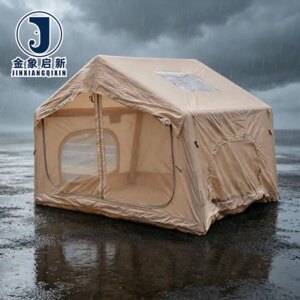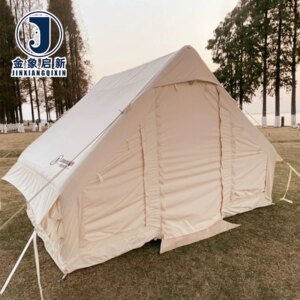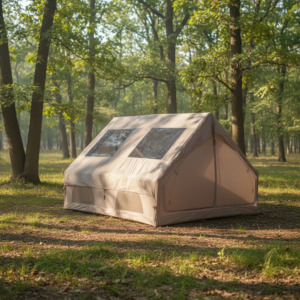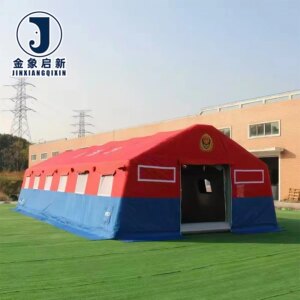
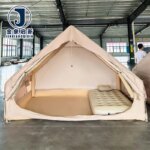
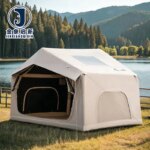
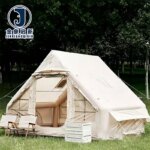
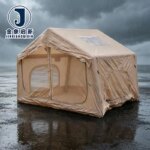
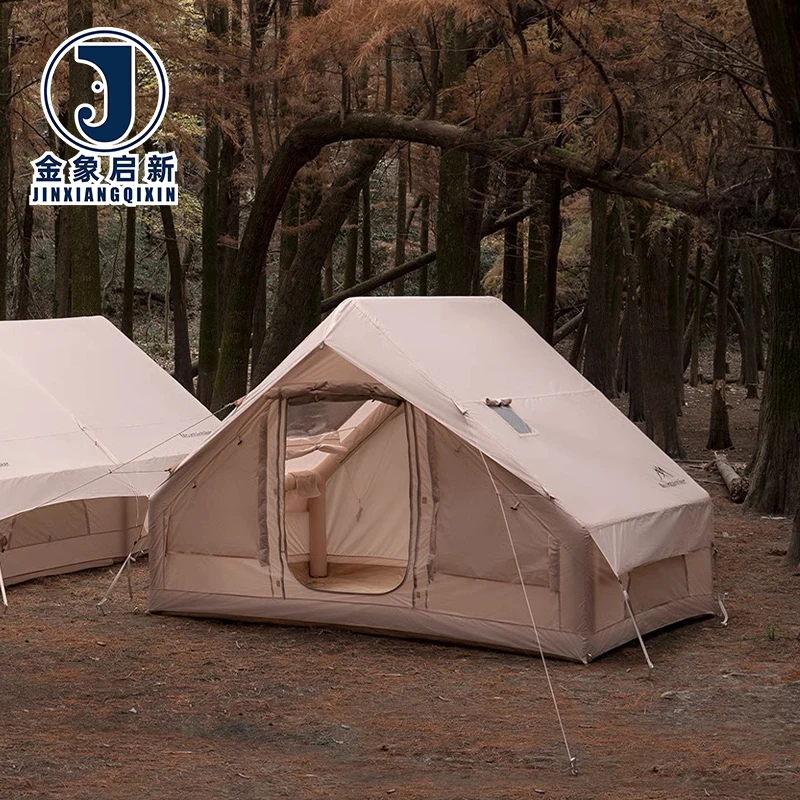
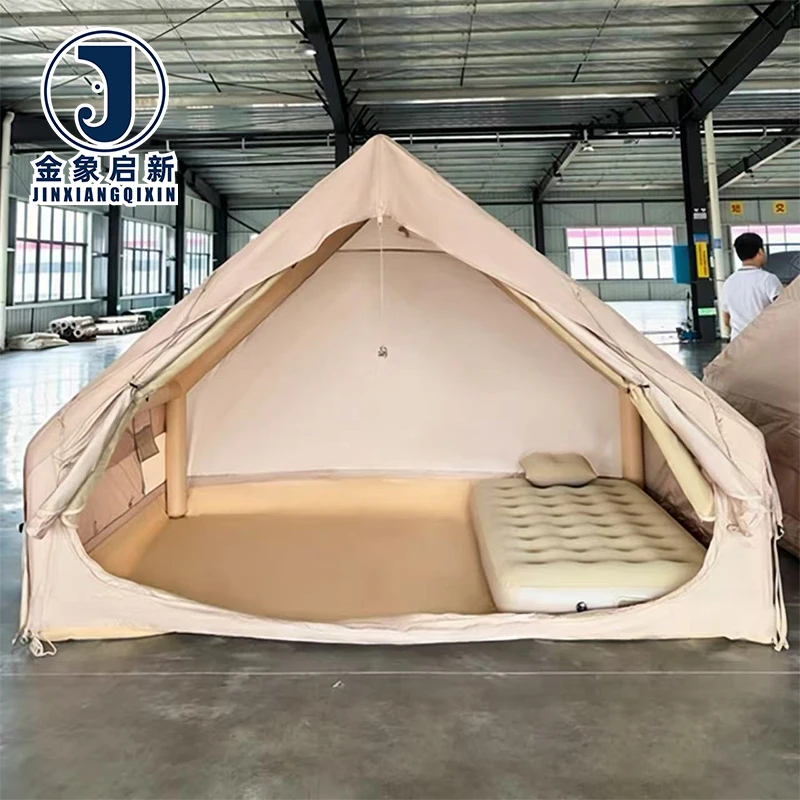
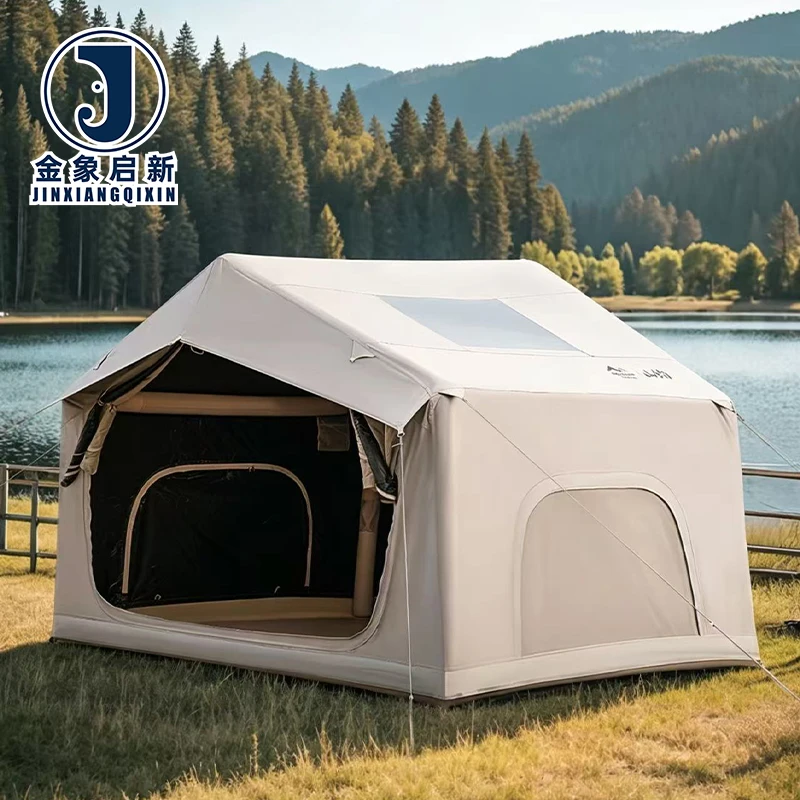
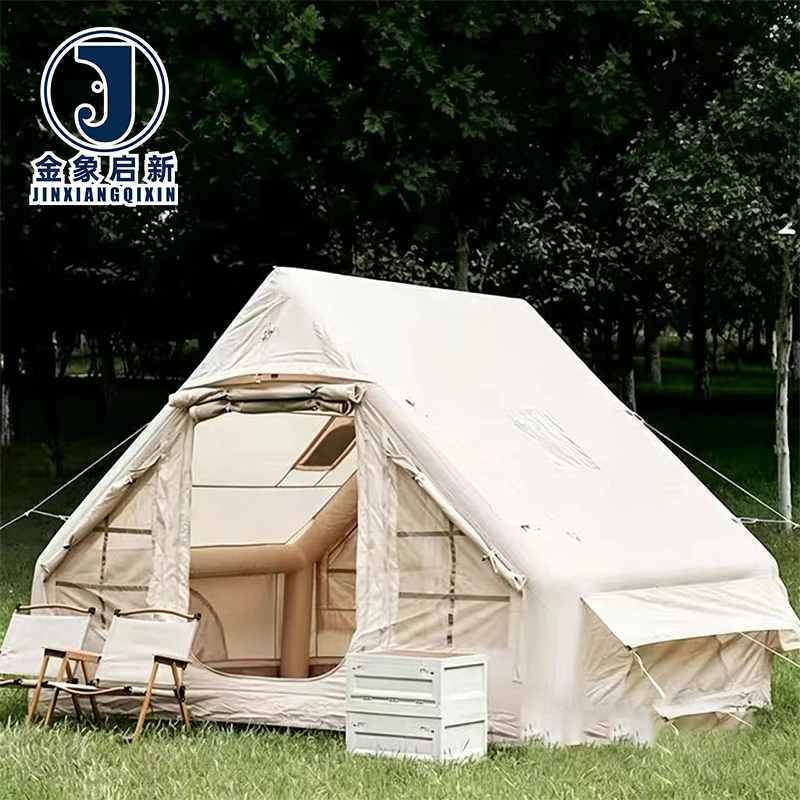
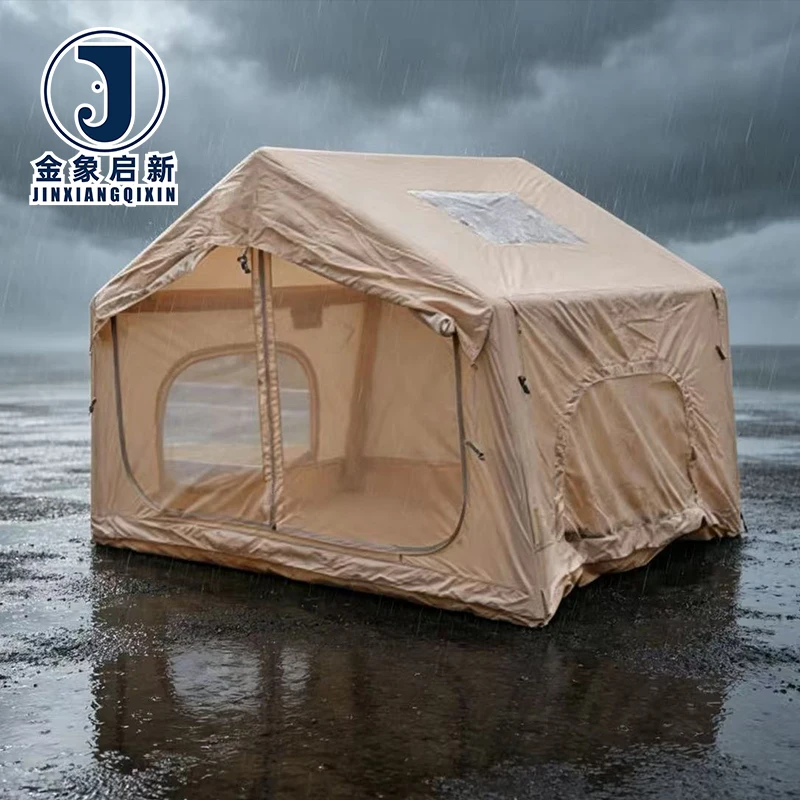
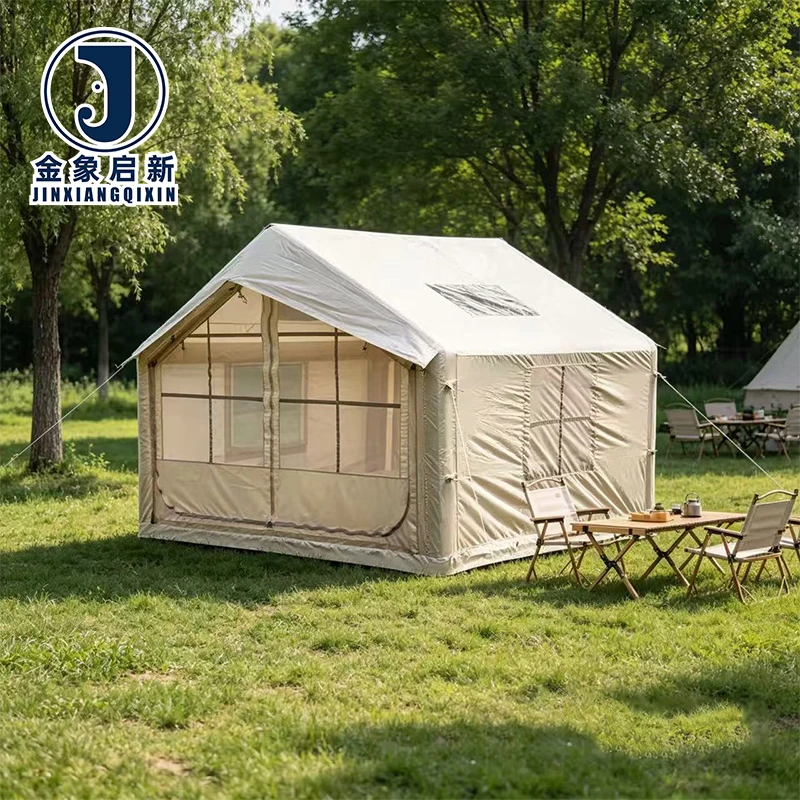
Certified Material Traceability — Every roll and fabricated unit ships with batch-matched fire-retardant and anti-static test documentation, eliminating compliance gaps before your inflatable structure reaches the site.
Technical Specifications
| Parameter | Value |
|---|---|
| Product Type | Inflatable Tent |
| Core Material | PVC tarpaulin |
| Capacity Range | 1–12 Person |
| Season Rating | Four-Season |
| Opening Mechanism | Quick Automatic Opening (Inflatable) |
| Waterproof | Fully waterproof coated construction |
| UV Resistance | UV-resistant formulation (test basis not stated — confirm grade for your region) |
| Fire Retardancy | Fire-retardant treatment available (grade not stated — specify the standard required for your project) |
| Anti-Static | Anti-static treatment available (surface resistance standard not stated — verify against site requirements) |
| Tear Resistance | Tear-resistant construction for repeated inflation cycles |
| Certifications | ISO 9001, ISO 14001, ISO 45001, CE |
| Customization | OEM & ODM — size, material thickness, pattern printing, design modifications |
| Quality Control | Full-process QA & QC with 100% pre-shipment inspection |
Application Suitability
| Application | Exposure & Requirement |
|---|---|
| Mining & tunnelling temporary shelters | Continuous outdoor exposure, fire-retardant compliance for enclosed structures, rapid deployment under shift-change deadlines |
| Aviation emergency response inflatable shelters | Fast inflation and takedown cycles, anti-static requirements near fuel handling zones, four-season weather resistance |
| Temporary workforce accommodations at remote sites | Extended habitation, wind and rain loading, thermal performance across seasonal swings |
| Commercial outdoor event structures | Repeated setup and breakdown cycles, UV exposure during multi-day events, branding and pattern printing on exterior surfaces |
| Mobile field stations for industrial operations | Equipment shelter under variable weather, structural flex during inflation and deflation, transport abrasion during relocation |
Why "Fire Retardant" Without a Grade Is a Compliance Risk on Site
A fire-retardant claim on a quotation means nothing at the inspection point unless it references a test standard and is matched to your batch.
When inflatable tent fabric arrives at a mining camp or aviation facility, the safety officer asks for the test certificate — not the sales brochure. We have seen projects halted because the documentation referenced a generic "FR treated" statement with no standard cited, no batch number, and no third-party lab name [NEED_CITE: fire classification standards for temporary industrial structures]. Fire-retardant and anti-static certified Inflatable Tent Fabric must carry paperwork that ties the specific treatment grade to the specific roll or fabricated unit delivered, so that compliance audits close on the first pass rather than generating weeks of back-and-forth with the supplier.
Compliance Documentation That Closes on the First Audit
Site inspectors at mining, tunnelling, and aviation operations require fire-retardant documentation that names the test standard, the laboratory, and the batch reference. Our Inflatable Tent Fabric ships with batch-matched test reports when a specific grade is ordered, so the paperwork arrives with the product — not weeks later by email. The R&D team works with you during the sample stage to confirm which fire-retardant grade your local regulation demands, and that grade is locked into the production specification before the run begins.
Anti-Static Verification for Sensitive Operating Environments
Inflatable structures deployed near aviation fuel zones, grain handling facilities, or underground mining operations face anti-static requirements that consumer-grade tent fabric cannot meet. The PVC tarpaulin used in these Inflatable Tent structures can be formulated with anti-static treatment to reduce surface charge accumulation [NEED_CITE: anti-static surface resistance testing methods for industrial fabrics]. Confirming the required surface resistance range during the inquiry stage ensures the coating formulation matches the site safety specification, and the test result is included in the dispatch documentation package.
Reading the Specification Sheet Beyond the Headline Numbers
The PVC tarpaulin at the core of this fabric provides waterproof performance and structural body, but the inflation cycle behaviour depends on how the base fabric and coating interact under repeated flex. Tear resistance in inflatable structures is governed not by coating thickness alone but by the denier and weave density of the base fabric — a heavier coating on a light base may crack before the fabric tears. UV-resistant and fire-retardant treatments are applied during the coating stage, and their effectiveness depends on the formulation ratio and curing process. Four-season rating means the fabric must maintain flexibility at low temperatures without becoming brittle, and resist softening or tackiness at high ambient temperatures, both of which are influenced by the plasticiser system chosen for the PVC compound.
The Cost of Underspecifying Inflatable Structure Fabric
When the fabric weight or treatment grade is selected below what the deployment environment demands, the failure does not show up in the warehouse — it shows up after the third inflation cycle, at the welded seam where structural flex concentrates [NEED_CITE: welded seam failure modes in inflatable PVC structures]. A batch that passes initial pressure testing but lacks adequate tear resistance will develop seam creep under wind loading, and a fire-retardant grade chosen without checking local regulation can result in the entire structure being rejected at the site safety audit, forcing replacement under operational deadline pressure.
Why Procurement Teams Source This Fabric Here
Three dedicated production lines and 36 sets of processing equipment mean that multi-unit commercial orders maintain batch-to-batch consistency — critical when you are deploying a fleet of inflatable shelters and need uniform performance across every unit. The 10-technician R&D team handles custom sizing, material thickness adjustment, and pattern printing during the sample stage, so the production run matches the approved specification. Full-process QA and QC with 100% pre-shipment inspection catches coating weight deviations, seam integrity issues, and treatment inconsistencies before dispatch. ISO 9001, ISO 14001, ISO 45001, and CE certifications provide the compliance framework that industrial procurement teams require for vendor qualification. Sample development for custom dimensions and treatment grades is completed within days, keeping project timelines intact.
Documentation & Verification
- Batch-specific fire-retardant test report matched to roll and order reference
- Anti-static surface resistance test data aligned to site safety specification
- Material specification sheet stating base fabric, coating weight, and treatment details per batch
- Pre-shipment inspection record covering pressure testing and waterproof verification per unit
- ISO 9001, ISO 14001, ISO 45001, and CE certificates for vendor compliance audit
Fabrication, Handling & Storage
- Heat-weld seams using temperature and dwell settings matched to the PVC coating formulation to prevent seam failure during inflation cycles
- Store rolls vertically in a dry, shaded environment to avoid permanent creasing that weakens the coating at fold lines
- Confirm inflation pressure limits against the fabric’s tear resistance specification to avoid over-pressurisation damage
- Use compatible PVC adhesive for field repairs, ensuring the surface is clean and dry before patch application
- Plan panel cutting layout to minimise welded seam count, reducing potential flex-failure points in the inflatable structure
What We Need to Quote Accurately
Provide the deployment environment — mining site, aviation facility, commercial event — and the specific fire-retardant or anti-static standard your site safety plan references. Confirm the capacity range, the number of units required, and whether you need finished fabricated tents or roll stock for your own production line. If branding or pattern printing is part of the specification, share the artwork or colour references at the inquiry stage so the sample reflects the final product.
Frequently Asked Questions
Q: What fire-retardant and anti-static certifications are provided with each batch?
A: Each batch ships with a test report referencing the applicable standard, matched to the order and batch number. The specific fire-retardant grade and anti-static surface resistance level are confirmed during the sample approval stage based on your site requirements. ISO 9001, ISO 14001, ISO 45001, and CE certificates are available for compliance audits.
Q: Can the tent be customized in size, material thickness, or branding?
A: Yes. The 10-technician R&D team handles OEM and ODM customization including dimensions across the 1–12 person range, material thickness adjustment, and pattern printing. Samples are developed within days for approval before the production run begins, ensuring the final product matches your deployment specification.
Q: How is batch consistency ensured across large-volume multi-unit orders?
A: Three dedicated production lines and 36 sets of processing equipment provide controlled output with full-process QA and QC. Every unit undergoes 100% pre-shipment inspection including pressure testing and waterproof verification, so performance remains uniform across all units in a commercial deployment.
Q: What documentation is included for site safety compliance audits?
A: Dispatch documentation includes a material specification sheet, batch-specific test reports for fire-retardant and anti-static properties where applicable, pre-shipment inspection records, and relevant ISO and CE certificates. This package is designed to close site safety audits without additional back-and-forth.
Q: What is the expected service life under continuous four-season outdoor deployment?
A: The PVC tarpaulin is formulated for four-season use with UV-resistant and waterproof treatment. Actual service life depends on deployment conditions including wind loading, UV intensity, and inflation cycle frequency. Request the material specification sheet and discuss your specific environment during the inquiry stage for a performance expectation matched to your site.