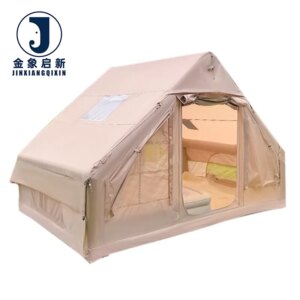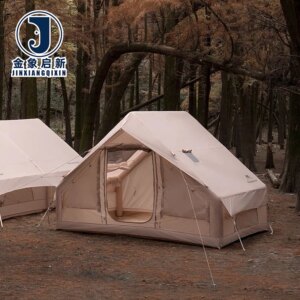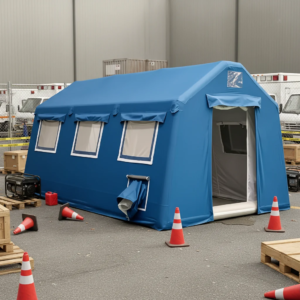

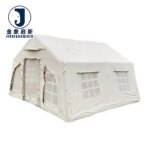
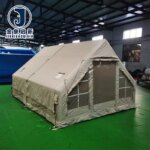
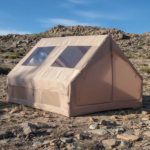

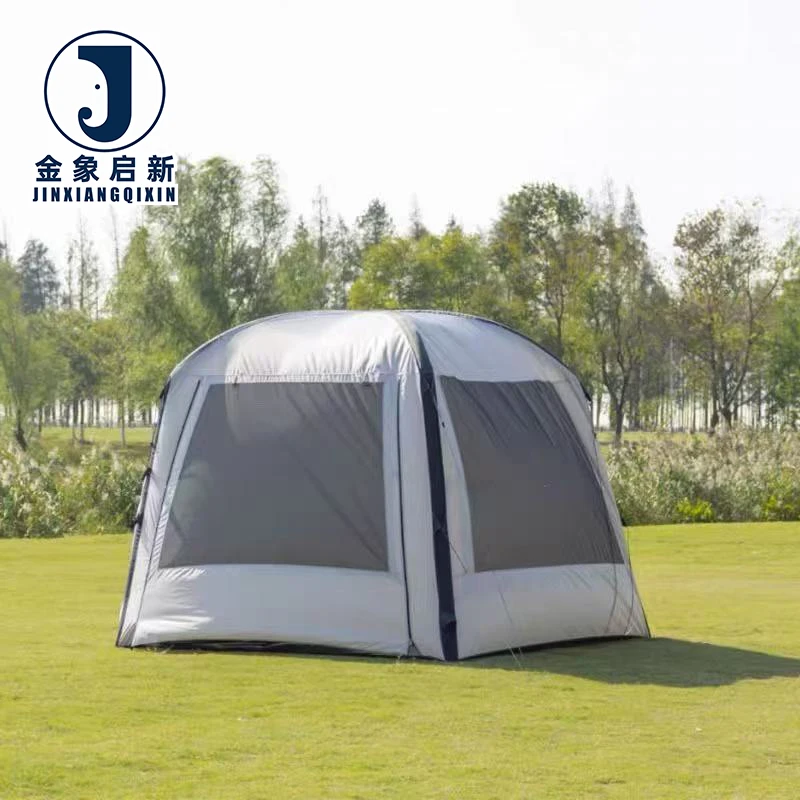
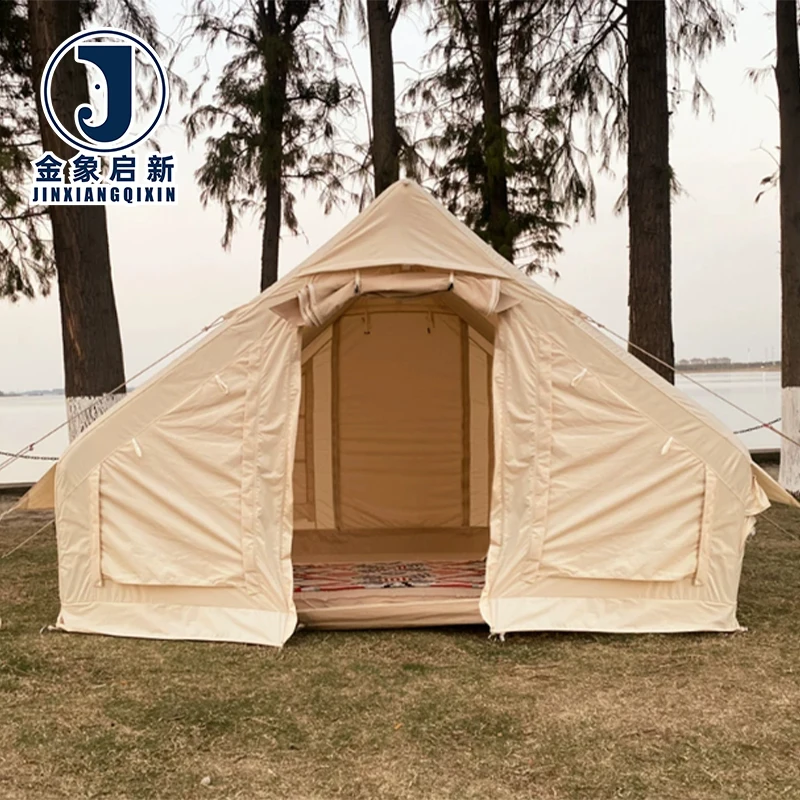
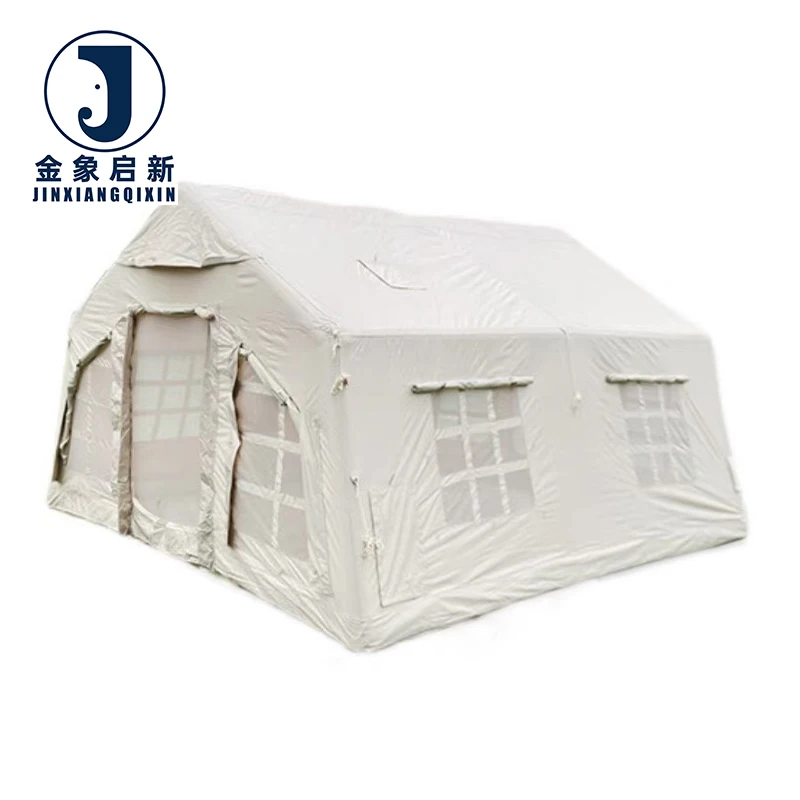
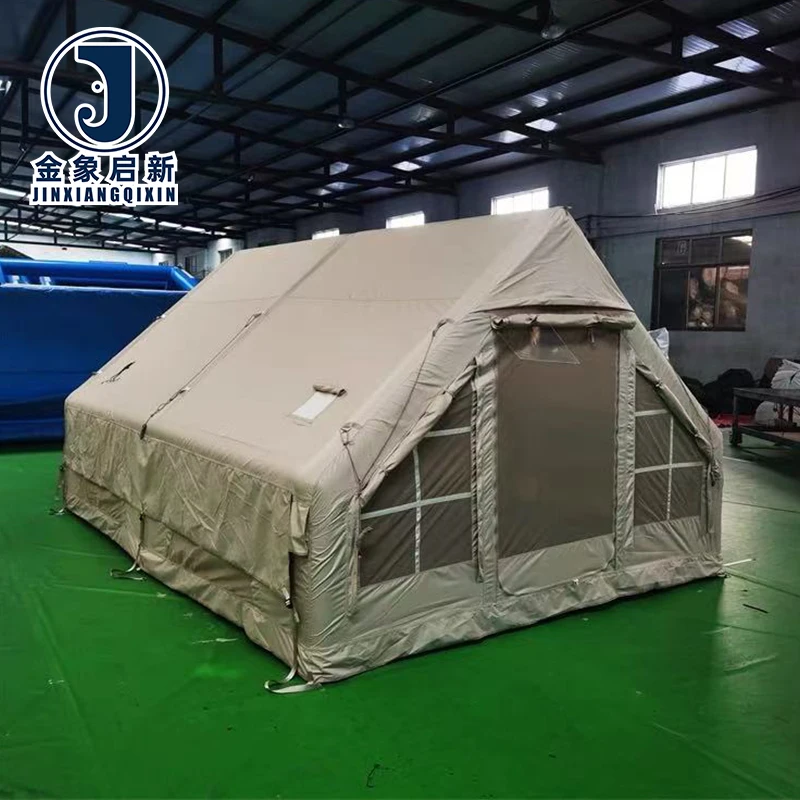
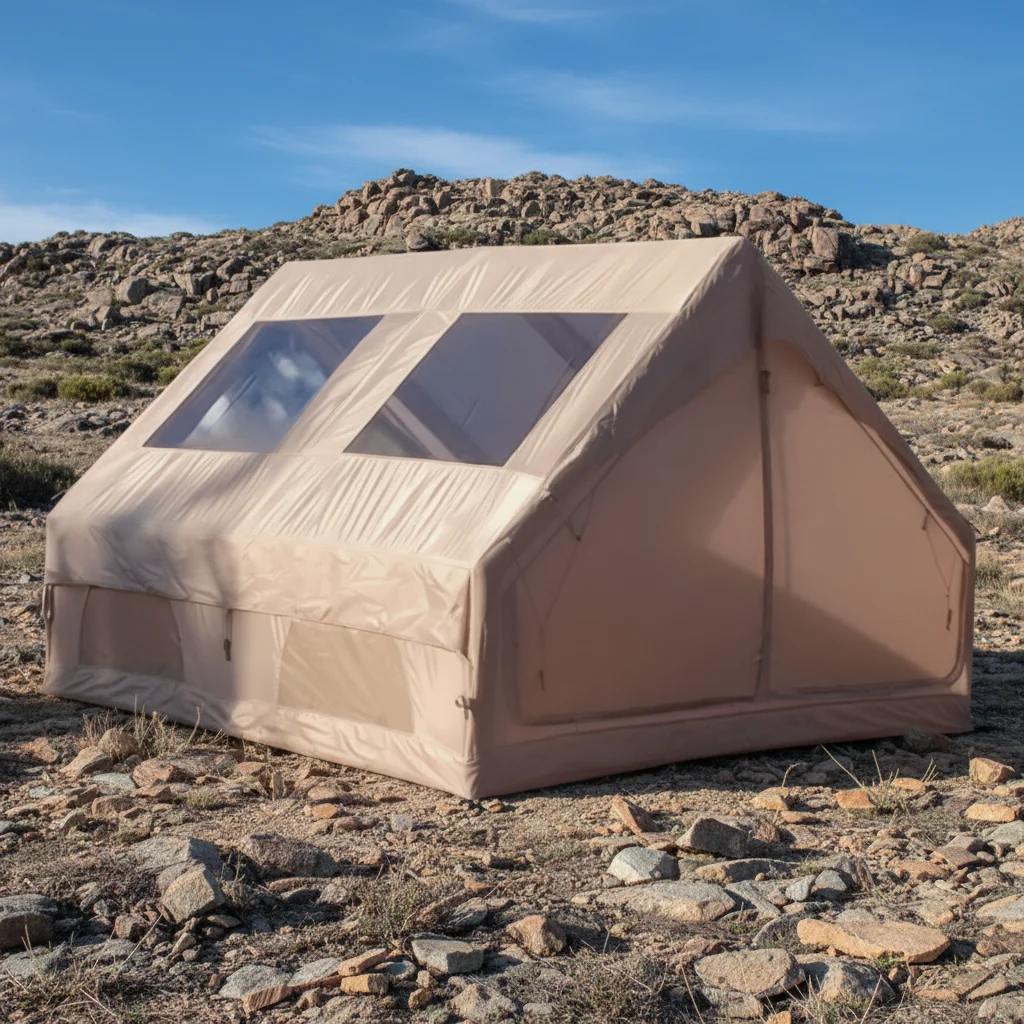

Process-Controlled Coating Expertise — Three dedicated production lines and 36 processing sets enable tight GSM and adhesion consistency across every roll of inflatable tent fabric we ship.
Technical Specifications
| Parameter | Value |
|---|---|
| Product Type | Inflatable Tent |
| Core Material | PVC tarpaulin |
| Construction | Single-layer PVC |
| Capacity | 6-Person |
| Opening Mechanism | Automatic opening |
| Season Rating | Four-season |
| Waterproof | Yes (grade not stated in source) |
| UV-Resistant | Yes (test basis not stated in source) |
| Tear-Resistant | Yes (test basis not stated in source) |
| Flame Retardant | Yes (grade not stated in source) |
| Anti-Static | Yes (surface resistance or standard not stated in source) |
| Customization | OEM & ODM — sample customization, pattern printing, size adjustments, material thickness modifications |
| Inflation Testing | 24-hour continuous leak test pre-shipment |
| Quality Control | Full-process QA & QC with dedicated staff |
| Standards | ISO9001, ISO14001, ISO45001, CE |
Application Suitability
| Application | Exposure & Requirement |
|---|---|
| Commercial glamping sites | Year-round weather cycles, repeated inflation/deflation, guest comfort, fire compliance for hospitality permits |
| Event infrastructure | Rapid deployment, short-term structural integrity, crowd safety regulations, UV exposure during outdoor functions |
| Mining and tunnelling temporary shelters | Anti-static compliance underground, fire-retardant certification for confined-space use, ventilation integration |
| Tourism and outdoor activity operators | Seasonal storage and redeployment, abrasion from transport and ground contact, brand visibility through custom printing |
What "Certified" Means When Inflatable Structures Fail Inspection
Certification only holds value when the test report matches the material batch installed on site.
Too often, inflatable tent fabric arrives with a generic certificate that covers the supplier’s product family rather than the specific roll delivered. Project engineers discover during commissioning that the fire-retardant grade on paper does not align with local building codes, or that anti-static properties were claimed without any surface resistance data to back them up. This compliance gap halts approvals, forces material replacement mid-project, and creates liability exposure for the contractor who signed off on procurement. [NEED_CITE: fire safety classification requirements for temporary membrane structures]
Fire-Retardant and Anti-Static Compliance for Inflatable Tent Fabric
Inflatable structures occupy a grey zone in many building codes — they are not permanent buildings, yet they shelter occupants who depend on the fabric meeting fire safety thresholds. The certified inflatable structure material used in this 6-person glamping tent is available in flame-retardant grades, and buyers must confirm the specific grade required for their market before production begins. Anti-static treatment is similarly available for environments where electrostatic discharge poses a risk, such as mining ventilation corridors or aviation hangars. Requesting batch-specific test documentation ensures the material you receive matches the compliance profile your project demands.
Air-Holding Integrity Through 24-Hour Inflation Testing
The single-layer PVC construction of this inflatable tent is designed to balance structural rigidity with transport efficiency, but air retention depends entirely on seam integrity and coating consistency. Every unit undergoes a 24-hour continuous inflation test before dispatch, validating that welded seams and valve interfaces hold pressure under sustained load. This testing protocol catches micro-leaks that a quick visual check would miss — the kind of defect that only reveals itself on the second or third deployment cycle in the field. [NEED_CITE: inflation pressure retention standards for temporary pneumatic structures]
Decoding the Specification Sheet for PVC Inflatable Tent Fabric
PVC tarpaulin performance in inflatable applications hinges on the relationship between base fabric denier, weave density, and coating weight. A higher GSM does not automatically mean better air retention — it is the coating adhesion to the base fabric that determines whether seams hold under internal pressure or delaminate at the weld line. The single-layer construction here eliminates inter-layer air pockets that can cause blistering in multi-ply laminates, while still delivering the tear resistance needed for repeated inflation cycles. Flame-retardant grades available for this material address different regional standards, from European reaction-to-fire classifications to mining-specific underground safety codes. Anti-static treatment modifies surface resistivity to prevent charge accumulation, a critical requirement when inflatable structures operate near combustible dust or flammable vapours. Buyers should cross-reference the coating weight stated on the specification sheet with the tensile and tear values to confirm the material matches the structural demands of their intended use.
The Cost of Specifying Inflatable Tent Fabric on GSM Alone
When procurement decisions rest solely on quoted GSM, the delivered material may meet the weight target while falling short on coating adhesion or base fabric density — the two properties that actually govern how an inflatable structure behaves under pressure and wind load. Welded seams on under-specified fabric tend to fail at the flex points where the structure bends during inflation, and the repair cost in the field far exceeds the savings from choosing a lighter grade. Fire-retardant claims without a supporting test report create a different problem: the structure passes visual inspection but fails when the fire marshal requests documentation, delaying project handover by weeks. [NEED_CITE: seam peel strength test methods for coated fabrics per ISO 1421]
Why Source This Inflatable Structure Material Here
Nearly 30 years of focused coated-fabric production gives us process control over coating weight and adhesion that translates directly into consistent air-holding performance. Three full production lines and 36 sets of processing equipment support bulk orders without compressing lead times, so custom widths and colours do not get pushed to the back of the queue. A 10-person R&D team handles sample development for OEM and ODM projects, adjusting material thickness, pattern printing, and panel sizing before mass production begins. Dedicated QA and QC staff inspect every production stage, and the 24-hour pre-shipment inflation test is a non-negotiable gate before any unit leaves the facility. Full-process traceability means the specification sheet, test reports, and certification documents you receive all reference the same batch that was tested and shipped.
Documentation & Verification
- Material specification sheet detailing PVC composition, coating weight, and base fabric denier for engineering sign-off
- Batch-specific fire-retardant and anti-static test reports supplied on request for compliance audits
- 24-hour inflation test record confirming air-holding integrity of each unit before dispatch
- ISO9001, ISO14001, ISO45001, and CE certificates included in the shipment documentation package
- Pre-shipment inspection report covering waterproofing, tear resistance, and UV stability verification
Fabrication, Handling & Storage
- Heat-weld seams at temperatures matched to the single-layer PVC thickness to prevent delamination at air-pressure joints
- Store rolls flat or suspended to avoid permanent crease marks that weaken the coating at fold lines
- Use PVC-compatible cleaners only — solvent-based products can degrade the flame-retardant and anti-static surface treatment
- Allow cold-stored fabric to reach ambient temperature before unrolling to prevent cracking at the coating surface
- Reinforce valve insertion points with additional PVC patches to distribute inflation stress across the base fabric
How to Structure Your Enquiry
Provide the intended application environment — commercial glamping, event deployment, or industrial shelter — along with the fire-safety and anti-static standards your local authority requires. Specify the number of units, preferred dimensions, and any custom printing or colour requirements. Confirm whether you need finished tents with automatic opening systems or roll-stock fabric for your own fabrication line, and indicate whether sample approval is required before production commitment.
Frequently Asked Questions
Q: What fire-retardant grade does the inflatable tent fabric carry, and which regional fire safety standards does it meet?
A: The PVC tarpaulin core is available in multiple flame-retardant grades. The specific grade and corresponding test standard — whether European reaction-to-fire classification, NFPA, or local mining codes — must be confirmed at enquiry stage so the correct formulation is produced and documented for your batch.
Q: Is anti-static certification available for inflatable structures used in mining or aviation environments?
A: Yes. Anti-static treatment can be applied to the PVC surface, and the resulting surface resistivity data is provided in the batch test report. Buyers operating in underground mining or aviation hangar environments should specify the applicable standard so we align the treatment to your compliance requirement.
Q: What welding and seam techniques are recommended for PVC inflatable tent fabrication to prevent air leakage?
A: Hot-air or high-frequency welding is recommended for the single-layer PVC construction. Welding temperature and speed must match the material thickness to achieve full coating fusion without burning through the base fabric. We provide recommended weld parameters with each batch based on the specific coating formulation supplied.
Q: What size adjustments and material thickness modifications are available under OEM/ODM, and what is the minimum order?
A: Our 10-person R&D team supports custom panel sizing, material thickness adjustments, and pattern printing. Minimum order quantities depend on the degree of customization — standard sizes in stock colours carry lower thresholds, while fully bespoke dimensions and printed branding require dedicated production runs.
Q: How can buyers verify the PVC coating weight and material thickness upon delivery against the quoted specification?
A: Each shipment includes a pre-shipment inspection record with measured coating weight and thickness values. Buyers can cross-check these against the material specification sheet using standard GSM sampling methods — cut a known-area sample, weigh it, and compare against the stated value to confirm consistency.