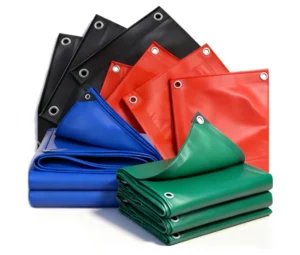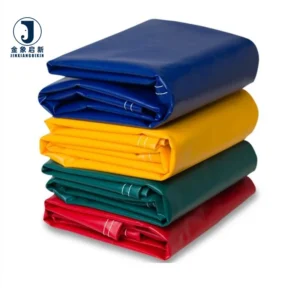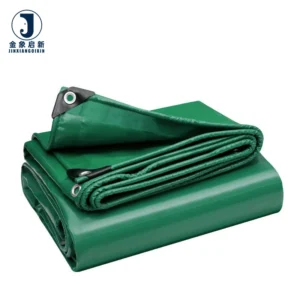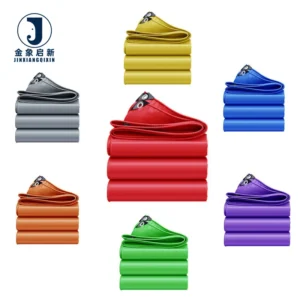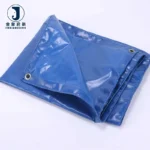
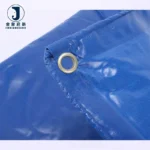
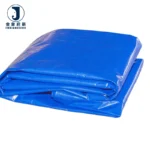
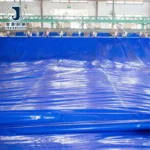
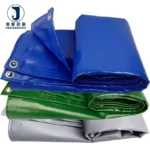
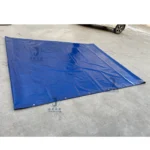
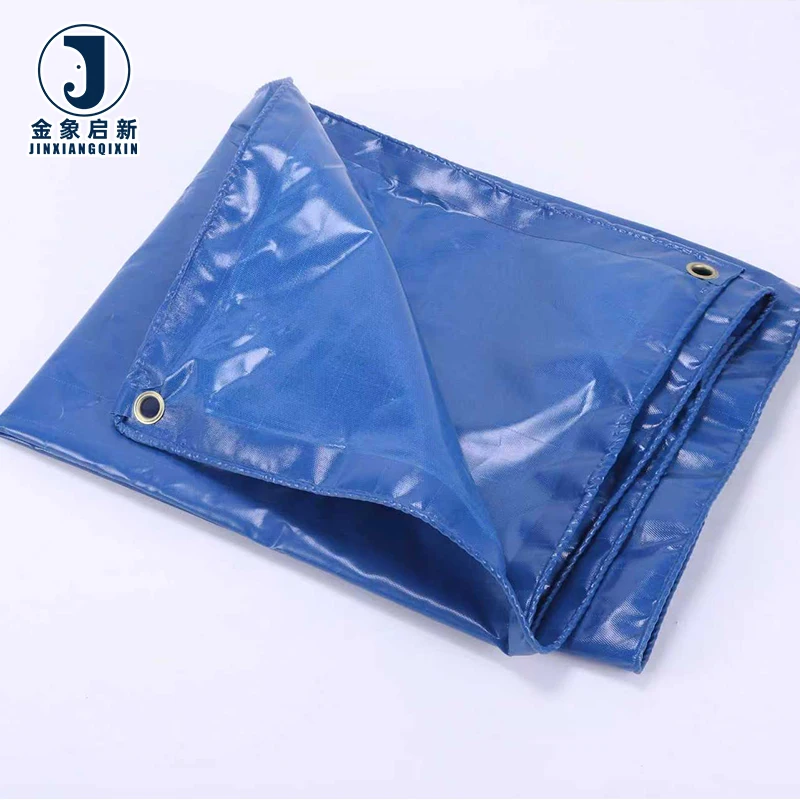
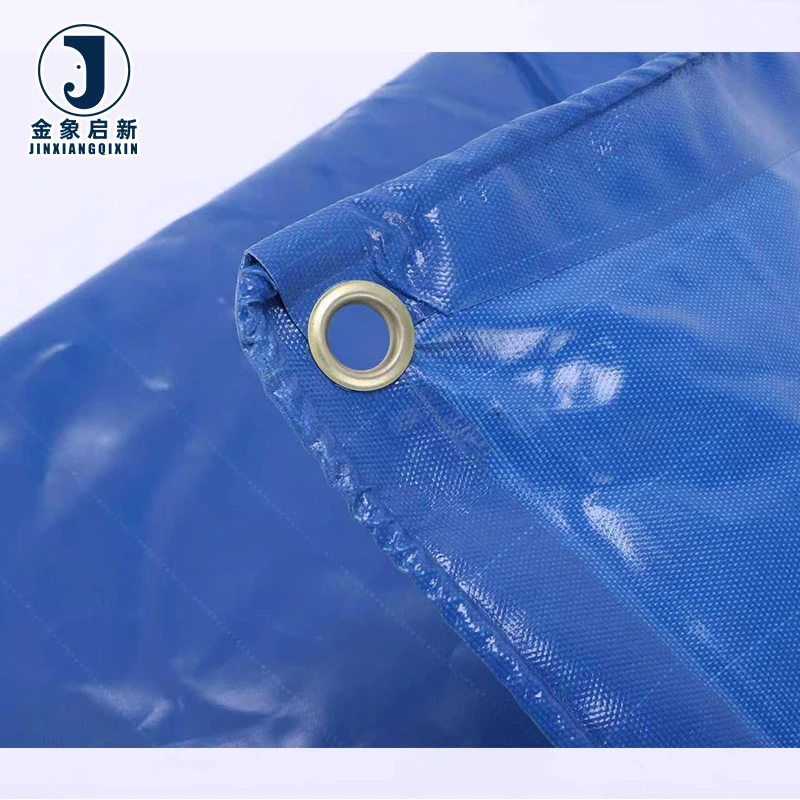
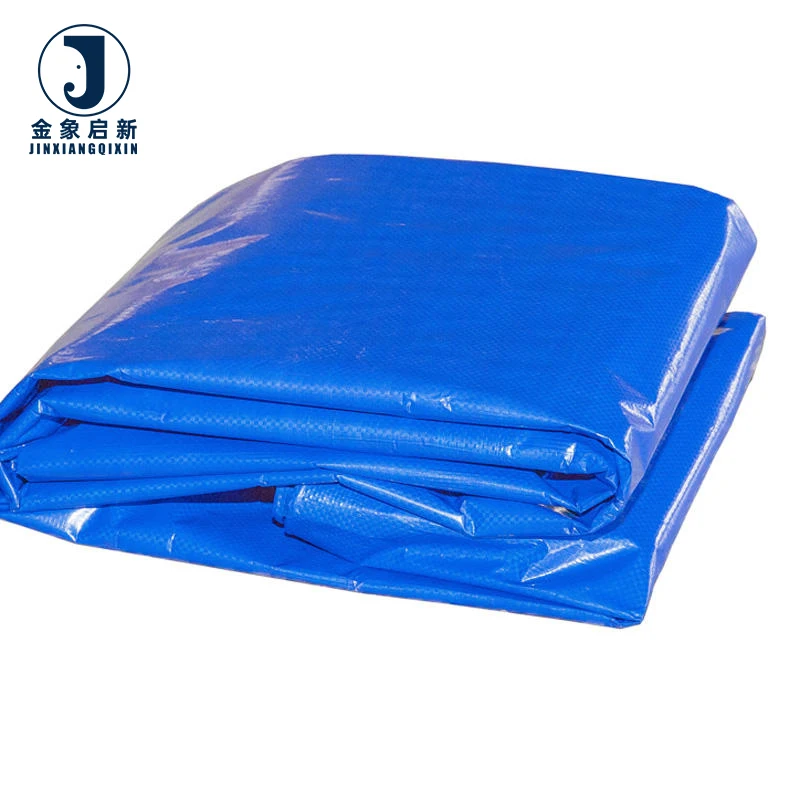
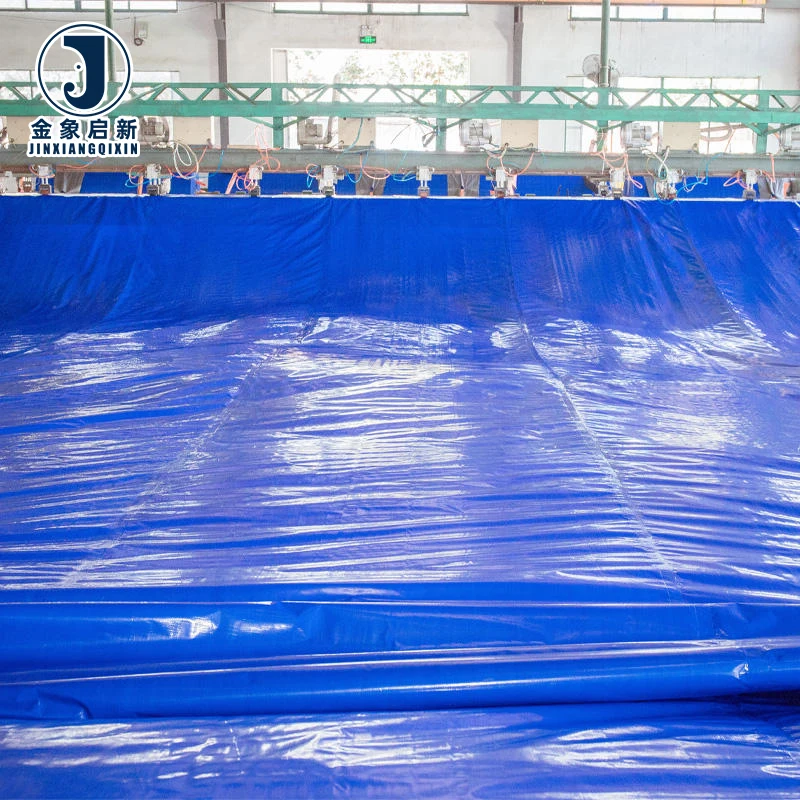
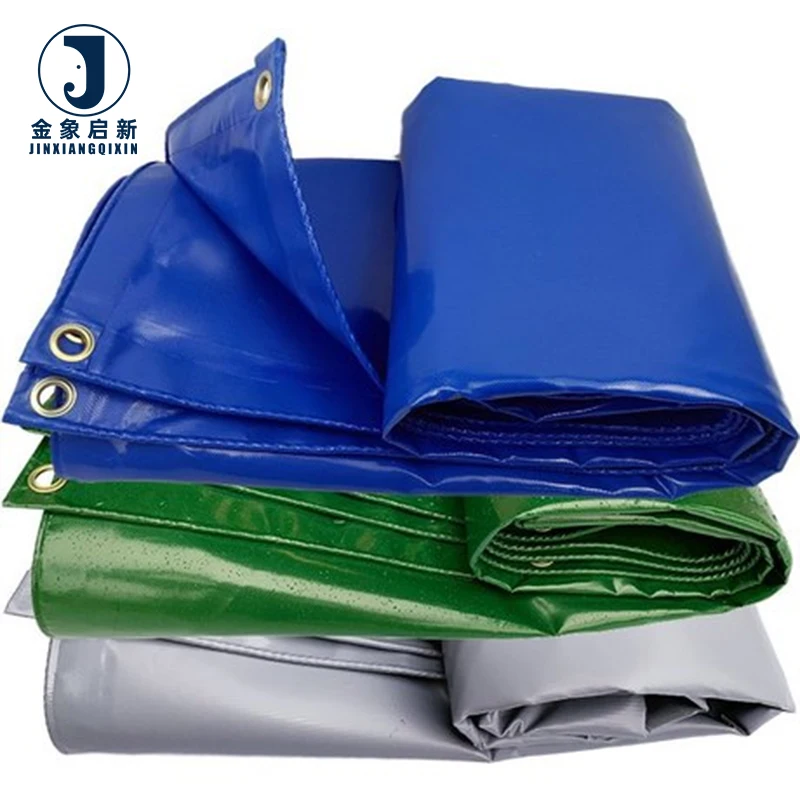
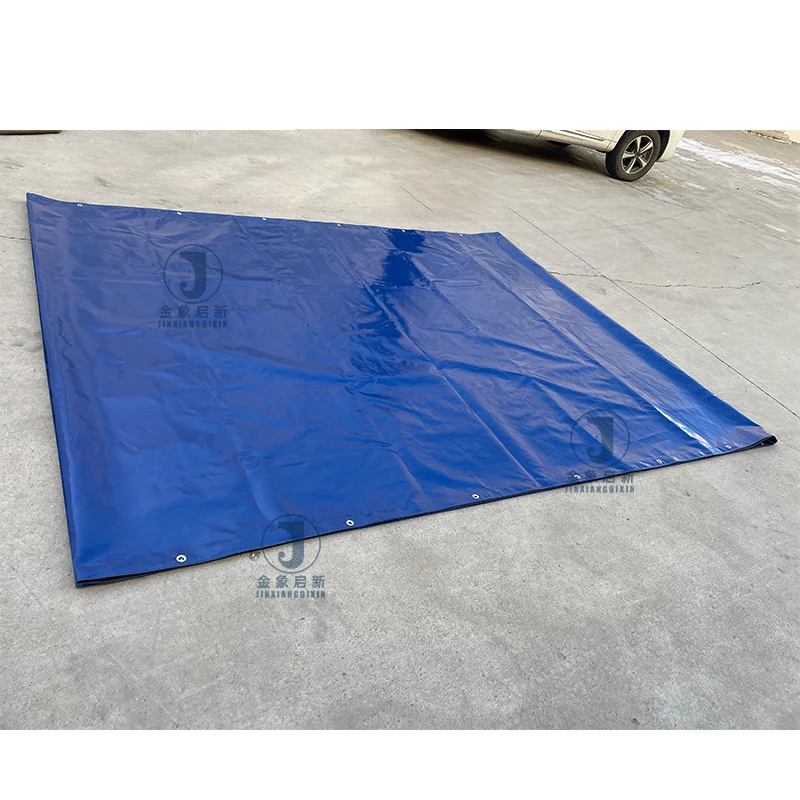
Fire-retardant PVC coated fabric for ventilation ducts and membrane structures — backed by verifiable test reports and grade documentation for every compliant shipment.
Technical Specifications
| Parameter | Value |
|---|---|
| Product Type | PVC Coated Fabric |
| Base Material | PVC & Polyester |
| Yarn Count | 500D-500D |
| Water Resistance | Fully waterproof coated construction |
| Flame Retardant | Available in flame retardant grades — confirm the grade required for your site |
| UV Treatment | Anti-UV treatment available — request test report for verification |
| Anti-Static | Available for mining and tunnelling environments — confirm specification at quotation |
| Weldability | Hot air weldable for duct and structure fabrication |
| Package Options | Roll packing, bale packing, carton |
Application Suitability
| Application | Exposure & Requirement |
|---|---|
| Mining ventilation ducts | Continuous airflow pressure, suspended runs, fire-retardant and anti-static site compliance |
| Tunnelling duct systems | Confined space installation, abrasive particulate exposure, mandatory flame certification |
| Aviation ground support ducting | Aircraft proximity safety standards, temporary deployment and retrieval cycles |
| Membrane and inflatable structures | Tensile loading under inflation, UV exposure on external surfaces, weld seam integrity |
| Construction site ventilation | Dust-laden air handling, confined space worker safety, repeated installation and teardown |
What "Certified Fire Retardant" Actually Means for Your Duct Installation
Fabric labelled flame retardant without a matching test report fails at site inspection — not on the job site, but at the paperwork stage before installation begins.
Mining and tunnelling contractors regularly face this scenario: the duct fabric arrives, the safety officer asks for the fire classification certificate, and the supplier sends a generic material safety data sheet instead of a test report referencing the standard your site mandates. The duct sits in the laydown area while procurement scrambles for documentation. [NEED_CITE: common fire classification standards for ventilation duct fabrics in underground mining include M2, B1, and NFPA 701 depending on jurisdiction]. For aviation ground support ventilation, the compliance path is different again, and the PVC coated fabric must carry the specific grade your airport authority requires.
Fire-Retardant PVC Coated Fabric for Specialist Ventilation Compliance
Ventilation duct projects in mining, tunnelling and aviation demand more than a tarpaulin repurposed for airflow. This fire retardant PVC coated fabric is engineered with polyester base construction and double-sided PVC coating to maintain dimensional stability under the positive and negative pressure cycles that duct runs experience during operation. The fabric accepts hot air welding, allowing fabricators to produce continuous duct sections with seams that match the base material strength.
Anti-Static Treatment for Hazardous Atmosphere Ducting
In underground mining and tunnelling, suspended ventilation ducts operate in environments where static charge accumulation on the fabric surface presents a documented ignition risk. Anti-static treatment is available for this PVC coated fabric — the specific surface resistivity requirement must be confirmed at the quotation stage to match your project’s safety specification. [NEED_CITE: anti-static requirements for ventilation duct fabrics in explosive atmosphere environments per regional mining regulations]. The treatment is integrated during the coating process rather than applied as a topical finish, which supports durability across the service life of the duct installation.
Reading the Specification Sheet Before You Order
The 500D-500D polyester yarn count defines the base fabric grid that the PVC coating encapsulates. Denier alone does not determine tensile or tear performance — the weave density and coating weight together establish how the fabric behaves under load and at the weld line. A heavier coating adds abrasion resistance and improves weld seam adhesion but increases roll weight, which affects handling during duct fabrication on site. The PVC and polyester combination provides the dimensional stability that membrane and inflatable structure fabricators need: the base fabric resists stretch under inflation pressure while the coating seals the weave against air leakage. Surface finish — glossy or matte — affects how the fabric behaves during fabrication and how it sheds dust and particulate in ventilation service. Request the material specification sheet that states GSM, coating weight and base fabric construction for the exact grade you are ordering, so that incoming inspection has a documented baseline to check against.
The Documentation Gap That Stops Projects at the Gate
Ventilation duct fabric delivered without the fire-retardant or anti-static certification the site requires is not a material problem — it is a compliance problem that halts installation and triggers re-inspection. Contractors have received rolls where the supplier quotation stated flame retardant treatment but the accompanying paperwork referenced a different product family entirely. Colour variation between rolls in the same batch forces fabricators to cut and rearrange sections to hide mismatches on visible duct runs. [NEED_CITE: weld seam failures in PVC coated duct fabric typically originate at points of maximum flex or pressure cycling]. When coating adhesion is inconsistent, the weld line delaminates before the base fabric reaches its tensile limit, and the failure shows up weeks into operation rather than during fabrication.
Why Source This Fire-Retardant PVC Coated Fabric Through Jinxiang Tech
Nearly three decades of coated fabric production means the coating weight and adhesion parameters for this PVC coated material are controlled through established process protocols, not adjusted per batch. Three full production lines and dedicated equipment sets support bulk roll output for large-scale duct and membrane projects with consistent on-time dispatch. A ten-person R&D team handles specification matching — if your mining project requires a particular anti-static grade, the team develops a sample with that treatment before you commit to a production run. Dedicated QA/QC inspection at every production stage includes coating adhesion checks and weld seam testing, with full pre-shipment inspection before rolls leave the facility. Custom widths and lengths are produced on dedicated lines, so ordering continuous roll lengths that reduce field weld joints on long duct runs is a standard capability rather than a special request.
Documentation & Verification
- Material specification sheet stating base fabric denier, coating weight and GSM for the exact fire-retardant or anti-static grade ordered
- Test report for the flame-retardant grade matching your site compliance standard, issued against the production batch shipped
- Anti-static surface resistivity test documentation where applicable to mining or tunnelling ventilation requirements
- Pre-shipment inspection record covering coating adhesion, colour consistency and hot air weld integrity
- Certificate of origin and ISO/CE documentation package accompanying every dispatch
Fabrication, Handling & Storage
- Hot air weld temperature and speed settings must be matched to the PVC coating weight of this specific fabric grade for seam integrity
- Roll storage on flat pallets prevents permanent creasing that affects weld seam quality during duct fabrication
- Unroll and allow PVC coated fabric to relax before cutting, particularly after cold transport, to avoid dimensional distortion
- Weld seam test pieces should be produced from each roll before full duct panel fabrication begins
- Surface cleaning with compatible PVC solvents preserves coating integrity on installed duct runs
Requesting a Technical Quotation
Provide the ventilation or structure application, the fire-retardant or anti-static standard your site mandates, and the required roll width and continuous length. If your project spans multiple duct runs, specify total metreage and whether colour consistency across all rolls is a requirement. Sample development is available before production commitment so you can verify weld parameters and material handling on your own fabrication equipment.
Frequently Asked Questions
Q: What fire-retardant certifications can you supply for mining ventilation duct applications?
A: Fire-retardant treatment is available in multiple grades — the specific standard your site requires (M2, B1, NFPA 701, DIN 4102 or another regional classification) must be stated at inquiry. We provide a test report issued against the production batch, referencing the exact standard your safety documentation demands.
Q: Can you supply anti-static PVC coated fabric for explosive atmosphere ventilation ducts?
A: Anti-static treatment is available for mining and tunnelling ventilation applications. The required surface resistivity specification must be confirmed at quotation stage so the treatment is integrated during coating. Test documentation accompanies the shipment to support site compliance verification.
Q: How do you verify GSM and coating weight before dispatch?
A: Every roll undergoes pre-shipment inspection where GSM and coating weight are measured and recorded against the material specification sheet for that grade. The inspection record travels with the shipping documentation so you can cross-check on arrival.
Q: What continuous roll lengths are available for duct fabrication?
A: Custom roll lengths are produced to reduce the number of field weld joints required during duct installation. State the maximum length your fabrication facility can handle at inquiry, and we confirm the achievable continuous run for your specific width and grade.
Q: Do you provide test reports verifying UV and flame-retardant treatment on shipped fabric?
A: Test reports for flame-retardant grades and UV treatment are issued per production batch. Request the specific test documentation you need at the quotation stage so the correct reports are included with your dispatch paperwork.