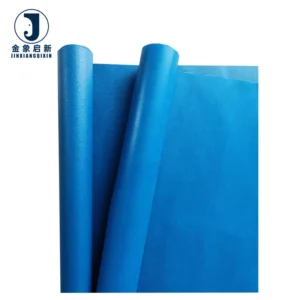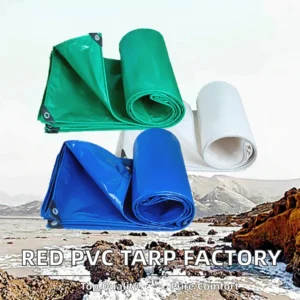

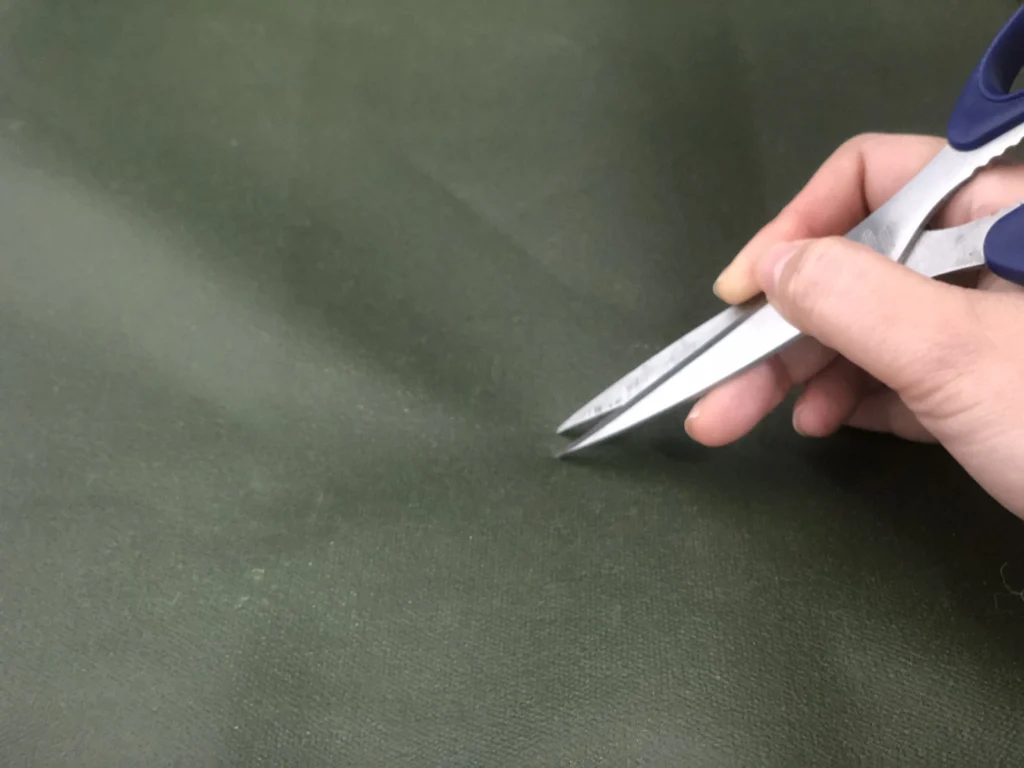

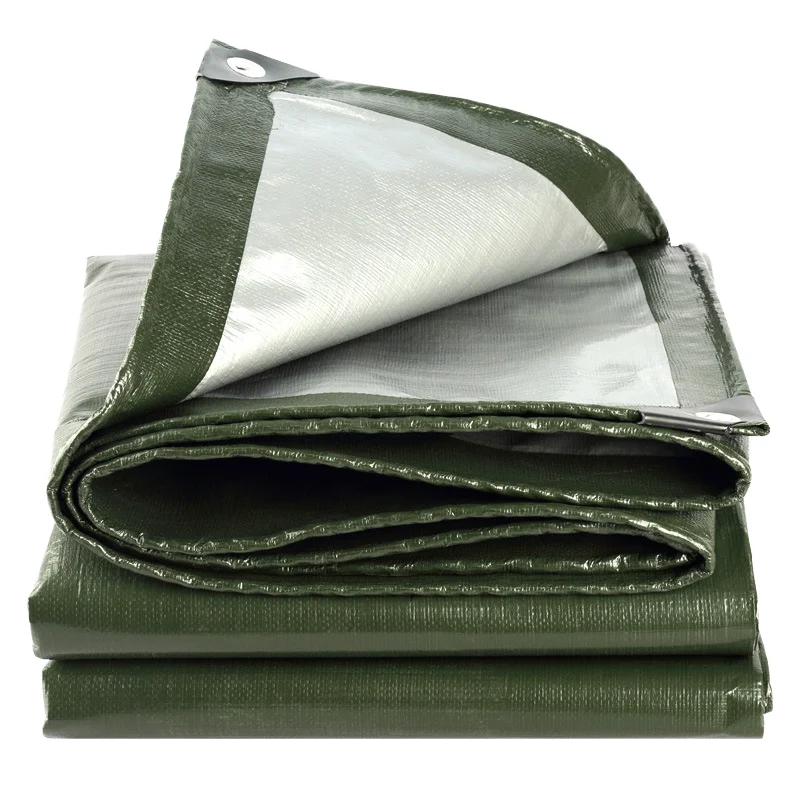
Process Control Over Coating Weight and Adhesion — Nearly three decades focused on coated fabric production enables tight tolerance on PVC coating weight and base fabric adhesion, critical for ventilation duct and membrane structure integrity.
Technical Specifications
| Parameter | Value |
|---|---|
| Product Type | PVC Coated Tarpaulin Roll |
| Base Fabric Denier | 1000×1000 |
| Coating Method | Knife Coated |
| Coating Material | PVC |
| Flame Retardant | Available in flame retardant grades — confirm the grade required for your market (grade not stated) |
| Anti-Static | Available with anti-static treatment — surface resistance standard to be confirmed per project (standard not stated) |
| Anti-Cold | Available |
| Anti-Mildew | Available |
| Waterproof | Yes |
| Finish | Glossy or Matte |
| Roll Format | Available |
| Custom Size | Available |
| Outdoor Life | 3–5 years (source value — verify against manufacturer catalog) |
| Certification | ISO, CE |
Application Suitability
| Application | Exposure & Requirement |
|---|---|
| Mining and tunnelling ventilation ducts | Continuous forced airflow, dust-laden atmosphere, mandatory fire-retardant and anti-static compliance for underground operation |
| Temporary industrial enclosures | Welded seam stress at frame attachment points, wind load, chemical exposure from adjacent processes |
| Inflatable and membrane structures | Biaxial tension across panels, UV and weather cycling, air-holding integrity at heat-welded seams |
| Equipment covers in explosive-dust environments | Static discharge risk, abrasion from repeated removal and reinstallation, fire code compliance |
What "Certified" Means When Your Site Inspector Asks for the Test Report
A fire-retardant PVC coated tarpaulin is only as compliant as the documentation that accompanies it.
Ventilation duct fabric routinely arrives on mining and tunnelling sites with a certificate that references a standard the local authority does not recognise. The inspector rejects the installation, the contractor pulls the duct, and the project schedule slips by weeks. PVC coated tarpaulin fire retardant anti-static certified claims mean little when the test report cites a grade that does not map to the jurisdiction’s fire code. Sourcing teams need the specific test standard — whether M2, B1, NFPA 701, or DIN 4102 — confirmed before the roll is coated, not after it ships. [NEED_CITE: DIN 4102 fire classification for building materials]
Compliance Documentation That Survives a Site Audit
Mining safety regulations require fabric installed underground to carry verifiable fire-retardant and anti-static credentials traceable to the batch on the reel. Each roll of PVC coated tarpaulin fire retardant anti-static certified material shipped by Jinxiangtech can be accompanied by a test report naming the exact grade and test method. This eliminates the gap between a supplier’s general claim and the specific evidence the site safety officer demands at inspection. Procurement teams should request the test report format during the sample stage so there are no surprises at pre-shipment.
Knife Coated Construction for Duct Fabrication Stability
The 1000×1000 denier base fabric, knife coated with PVC, delivers the dimensional stability that duct fabricators rely on when heat-welding long seams into cylindrical or rectangular sections. Knife coating forces PVC compound into the weave interstices under controlled blade pressure, producing a coating-to-yarn bond that resists delamination at the flex points where the duct bends around tunnel profiles. PVC coated tarpaulin produced this way holds its shape during installation and maintains air-holding integrity under positive pressure ventilation systems. [NEED_CITE: tensile and tear test methods for coated fabrics per ISO 1421]
How Base Fabric, Coating, and Treatment Interact in Underground Service
The 1000×1000 denier weave provides the structural backbone, but in ventilation duct service the coating does the sealing and the treatment provides the compliance. Knife coating produces a thicker, more uniform PVC layer than calendaring, filling weave gaps that would otherwise allow air leakage at low pressure differentials. Anti-mildew treatment matters in wet tunnelling environments where condensation accumulates inside the duct. Anti-cold formulation keeps the PVC flexible at the low ambient temperatures encountered in deep-level mining or winter construction sites. Glossy or matte finish selection affects light reflectivity inside the duct and the visibility of surface contamination during inspection.
Specification Breakdown for Technical Buyers
Base fabric denier and weave density jointly determine tensile and tear resistance — a 1000×1000 denier grid provides balanced warp-and-weft strength, preventing the duct from splitting preferentially in one direction under asymmetric loading. Knife coating delivers higher coating weight per pass and better yarn penetration than lamination, which translates to stronger heat-weld seams because the welding iron melts through a homogeneous PVC layer rather than a laminated interface. Flame retardant grade must be matched to the market: European tunnelling projects typically reference DIN 4102 B1, while North American mining may require NFPA 701 or MSHA-specific testing. Anti-static treatment is specified by surface resistivity range, and the acceptable value depends on whether the atmosphere contains combustible dust or flammable gas. Roll width directly determines how many longitudinal welds a duct section requires — wider rolls reduce seam count, cutting fabrication labour and potential leak paths.
When the Wrong Specification Reaches the Job Site
Specifying fire-retardant fabric without naming the exact grade leads to rolls that pass one standard but fail the one the site authority enforces, forcing a full tear-out and reinstallation. Anti-static treatment applied at a surface resistivity level outside the site specification creates a compliance gap that may not surface until an electrostatic discharge incident triggers an investigation. Coating weight that drifts below the quoted GSM reduces weld seam strength, and the duct fails at the joint rather than the fabric body — the exact failure mode that causes emergency shutdowns underground. [NEED_CITE: fire-retardant ventilation duct compliance requirements in underground mining]
Why Technical Buyers Source This Fabric Here
Three full production lines with 36 sets of professional equipment allow Jinxiangtech to hold tight coating-weight tolerances across multi-roll orders, so duct fabricators receive consistent material from first roll to last. A 10-person R&D team handles grade-specific fire-retardant and anti-static formulation adjustments, developing samples within days when a project demands a test standard outside the regular production range. Dedicated QA/QC at every production stage with 100 percent pre-shipment inspection means roll-level traceability on GSM, coating adhesion, and treatment verification before the container is sealed. The ISO and CE certified facility provides the audit trail that regulated mining and tunnelling projects require in their vendor qualification process. Custom width, colour, and treatment combinations are produced on the same lines as standard stock, so lead times and minimums remain practical even for specialist specifications.
Documentation & Verification
- Material specification sheet stating base fabric denier, coating method, and GSM per roll
- Fire-retardant test report citing the specific standard required by your jurisdiction
- Anti-static surface resistance measurement matching site safety specification
- Pre-shipment inspection record with roll-level GSM and coating weight verification
- Certificate of origin and customs documentation for export compliance
- ISO and CE certificates supporting vendor qualification audits
Fabrication, Handling & Storage
- Heat-weld seams at temperatures matched to the knife-coated PVC layer thickness for full penetration
- Allow anti-cold treated rolls to acclimatise before unrolling in low-temperature fabrication shops
- Store rolls upright on pallets to prevent flat-spot deformation of the 1000×1000 base fabric
- Use anti-mildew treated fabric for duct sections installed in high-humidity tunnelling environments
- Select glossy finish for duct interiors where light reflectivity aids visual inspection of contamination
- Match welding dwell time to PVC coating weight to avoid seam delamination under duct flexure
Before You Request a Quote
Provide the fire-retardant test standard and anti-static surface resistivity range your site authority requires, along with the duct diameter or membrane panel dimensions driving your roll width selection. Confirm whether you need rolls only or fabricated sections, the annual volume to support production planning, and any colour or identification marking requirements for project traceability. Sample approval before full production is standard practice — request a roll sample carrying the same treatment grade as the intended order.
Frequently Asked Questions
Q: Which fire-retardant test standards can you supply documentation for?
A: Fire-retardant treatment is available in multiple grades. The specific test standard — such as DIN 4102, NFPA 701, or M2 — must be confirmed at the inquiry stage so the correct formulation is applied and the matching test report is included with shipment. Request a sample with the target grade for your own verification before committing to full production.
Q: How do you verify anti-static surface resistance on each batch?
A: Anti-static treatment is applied during coating and surface resistance is measured before shipment. The acceptable resistivity range depends on your site safety specification for dust or gas atmospheres. Share your required value at inquiry so the treatment can be calibrated and documented accordingly on the pre-shipment inspection record.
Q: Can I verify GSM on arrival against the quoted specification?
A: Every roll undergoes GSM verification during pre-shipment inspection, and the recorded value is included in the dispatch documentation. On arrival, buyers can cut a measured sample from the roll end and weigh it to confirm the coating weight matches the material specification sheet supplied with the shipment.
Q: What are the best practices for welding fire-retardant PVC tarpaulin into duct sections?
A: Heat-weld temperature and dwell time should be matched to the knife-coated PVC layer thickness and the specific fire-retardant formulation, as additives can alter melting behaviour. Run weld trials on sample material first, then test peel strength at the seam. Jinxiangtech’s R&D team can advise on welding parameters for the treatment grade supplied.
Q: What MOQ and lead time apply to custom-width fire-retardant rolls?
A: Minimum order quantities and lead times depend on the roll width, treatment grade, and colour specified. Custom widths and fire-retardant grades are produced on the same lines as standard stock. Share your required width, annual volume, and compliance standard at inquiry so a realistic production schedule can be confirmed.