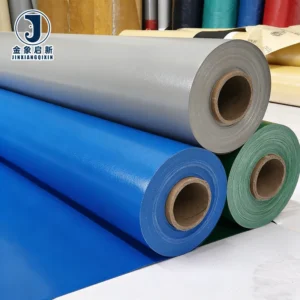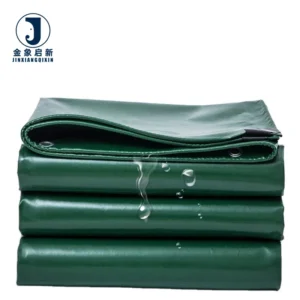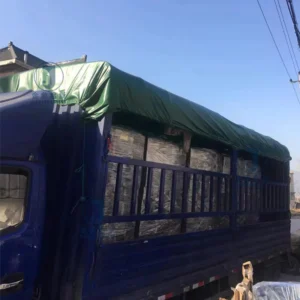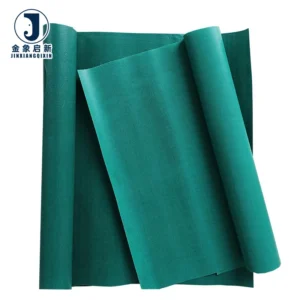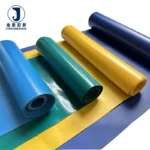
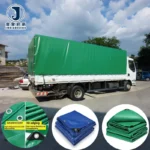

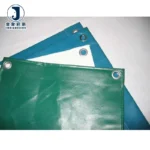
Proven Fire-Retardant Formulation — PVC coated tarpaulin rolls engineered for ventilation duct, membrane structure and specialist applications where compliance documentation and verified treatment grades are non-negotiable procurement requirements.
Technical Specifications
| Parameter | Value |
|---|---|
| Product Type | PVC Coated Tarpaulin Roll |
| Base Fabric Denier | 200D×300D / 500D×500D / 840D×840D / 1000D×1000D |
| Weight Range | 250gsm–1500gsm (confirm required grade at enquiry) |
| Coating Material | PVC |
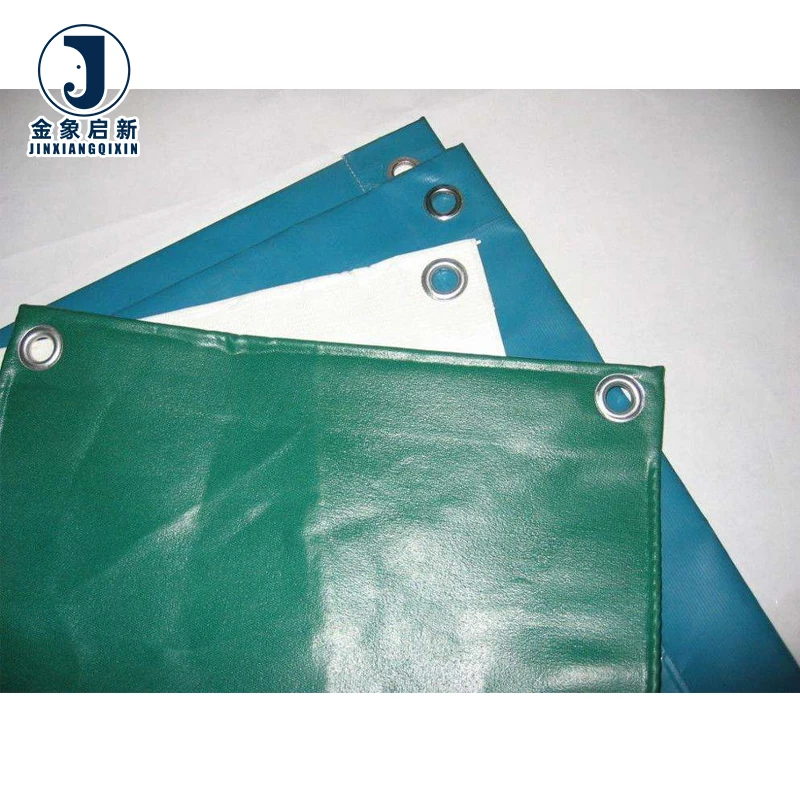
| Surface Finish | Glossy or Matte (available as specified) |
| Temperature Range | -15ºC to 70ºC |
| Treatment Options | Waterproof, UV, Flame Retardant, Anti-fungal (grade and test basis to be confirmed) |
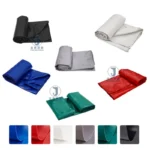
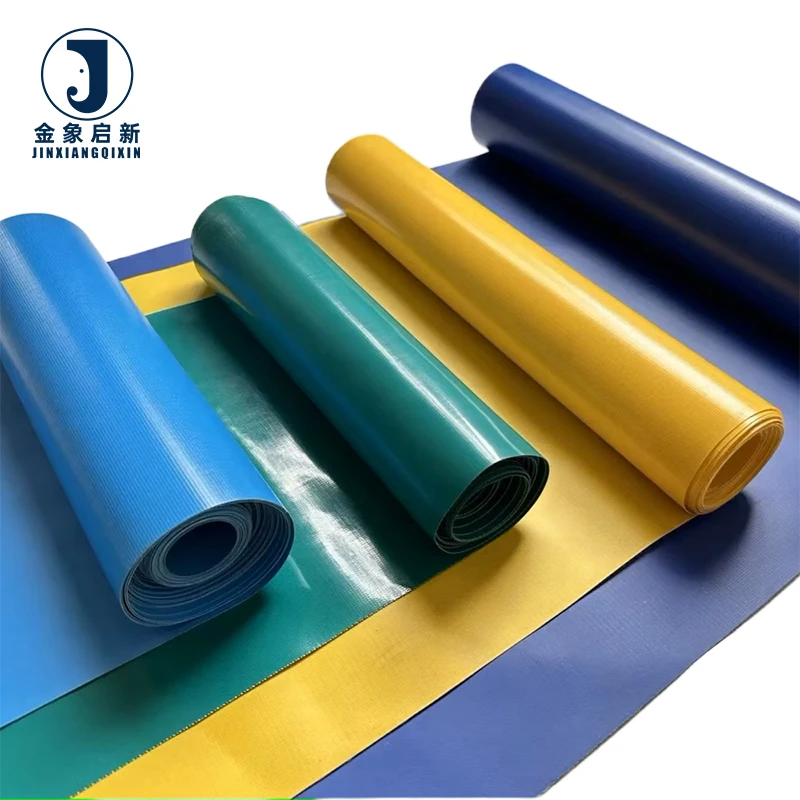
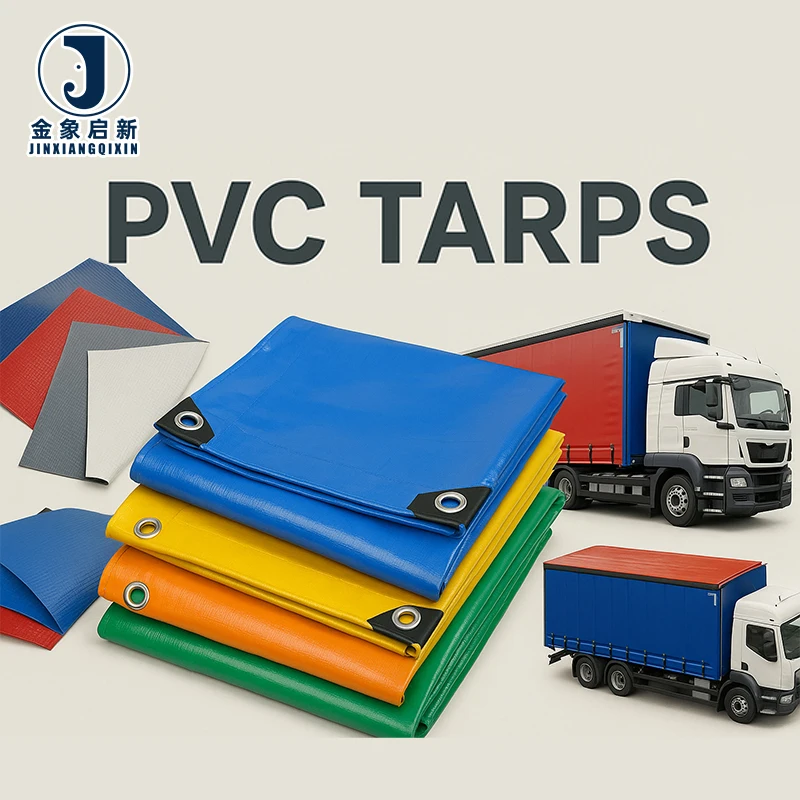
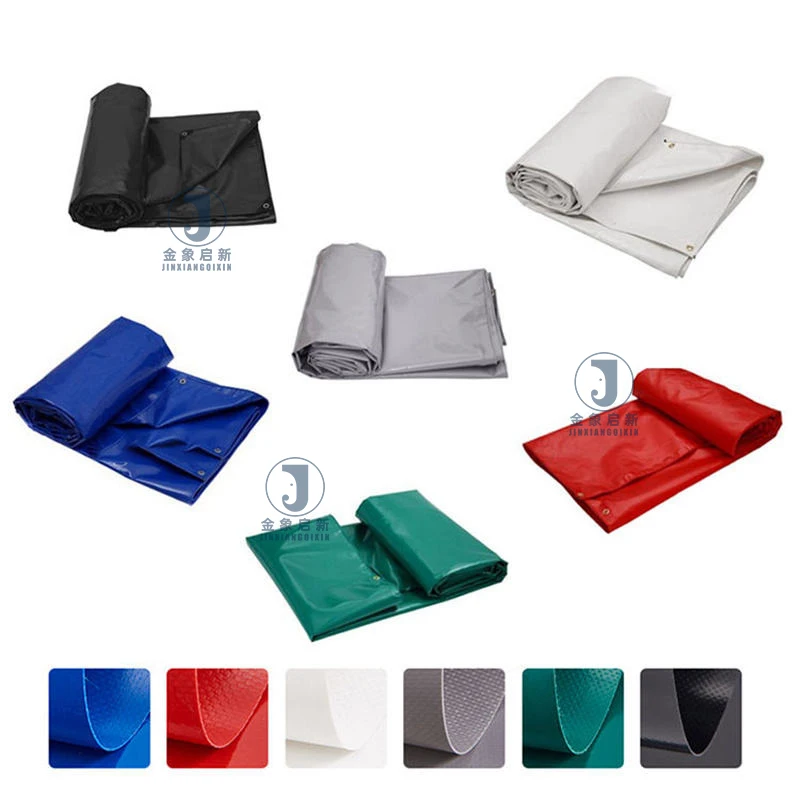
| Colour Options | Blue, Yellow, Black, Green, White, custom colours available |
| Roll Sizes | 3×4m / 6×8m / 8×10m / 10×12m or custom dimensions |
| Key Features | Waterproof, tear-resistant, abrasion-resistant, flexible at low temperature, eco-friendly formulation |
Application Suitability
| Application | Exposure & Requirement |
|---|---|
| Mining and tunnelling ventilation duct | Continuous airflow, underground humidity, mandatory fire-retardant and anti-static compliance for confined-space safety |
| Inflatable and membrane structures | Sustained internal pressure, UV exposure, weld integrity under cyclic stress, certified flame retardant for public-assembly codes |
| Aviation ground support ducting | Fuel-vapour environment, anti-static requirement, fire-retardant documentation for airfield authority approval |
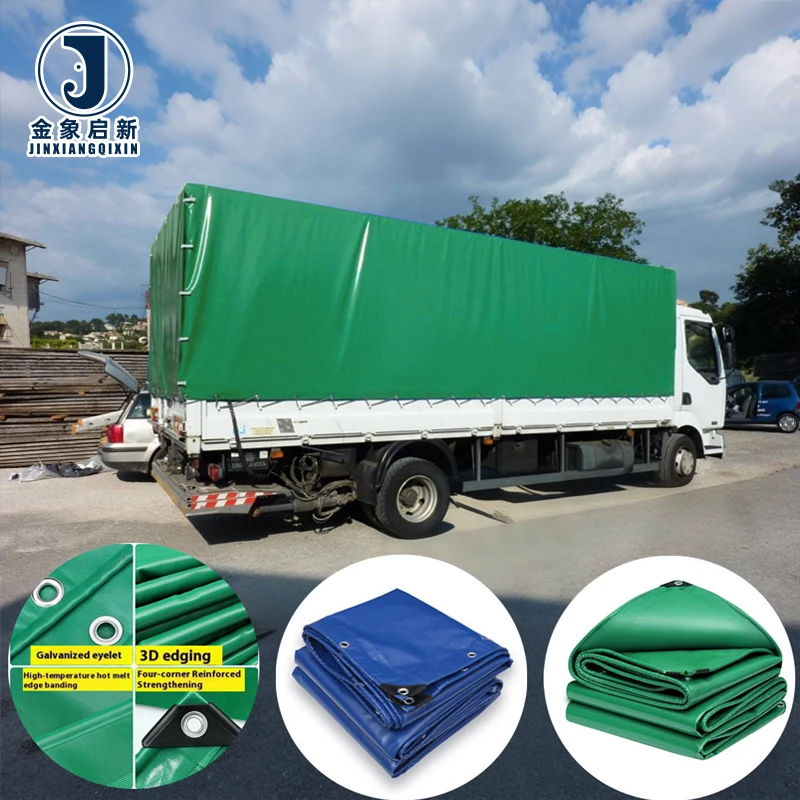
| Temporary industrial enclosures | Wind loading, weather exposure, rapid deploy and strike cycles, abrasion at frame contact points |
| Construction site partitioning | Dust containment, fire-risk zones, compliance with site safety specification before installation |
What "Flame Retardant" Means Without a Verifiable Test Grade
A flame-retardant claim on a PVC coated tarpaulin roll is only as valuable as the certificate that travels with it.
Specialist contractors who fabricate ventilation duct or membrane structures face a recurring problem: the material datasheet states "flame retardant" but the roll arrives without a grade-specific test report tied to a recognised standard such as DIN 4102, NFPA 701, or an M2 classification. Site safety officers then reject the installation because the documentation does not match the specification written into the project brief. The PVC coated tarpaulin roll sits idle on site, lead time compounds, and the fabricator absorbs the cost of replacement and re-installation [NEED_CITE: fire classification standards for textile building materials per DIN 4102].
Fire-Retardant Grade Alignment with Site Requirements
Different jurisdictions and project owners mandate different classification systems. A mining ventilation duct in one region may require an M2 rating under French standard protocols, while a tunnelling project in another jurisdiction references B1 per DIN 4102 or NFPA 701 for temporary enclosures. The base PVC formulation can be compounded with specific retardant packages to target these grades, but the correct chemistry must be selected before production begins. Specifying the required grade and market at enquiry stage ensures the PVC coated tarpaulin roll is produced to the exact compliance target rather than a generic treatment that may not satisfy the inspecting authority.
Anti-Static Verification for Confined-Space Duct Applications
In underground mining and tunnelling environments, static charge accumulation on duct surfaces poses an ignition risk where combustible dust or gas is present. Anti-static treatment reduces surface resistivity to levels that dissipate charge before it reaches dangerous thresholds. However, a treatment claim without a measured surface resistance value leaves the fabricator exposed to rejection at commissioning [NEED_CITE: anti-static surface resistance test methods for industrial fabrics]. Requesting a test report with the roll documentation closes this gap before the material is cut and welded into finished duct sections.
How Denier, Coating Weight and Treatment Interact
Base fabric denier and weave density determine the mechanical backbone of the material — tensile strength and tear propagation resistance scale with denier selection from 200D×300D up to 1000D×1000D. Coating weight, expressed in GSM, adds waterproofing, chemical resistance and the carrier matrix for flame-retardant additives, but it does not by itself dictate strength. A heavier coating on a lighter denier base may resist abrasion well yet tear more easily than a lighter coating on a high-denier base. The temperature range of -15ºC to 70ºC confirms that the PVC formulation remains flexible in cool underground conditions without becoming brittle, while retaining dimensional stability in warmer surface environments. Surface finish selection between glossy and matte affects weld behaviour: glossy surfaces typically heat-seal at slightly different parameters than matte finishes, and fabricators should run test welds on sample pieces before committing to production settings.
The Cost of Specifying Treatment Without Documentation
A ventilation duct contractor who orders flame-retardant fabric without specifying the exact grade and requiring a test report often discovers the problem at site handover, not at the factory gate. The material may carry a generic retardant treatment that satisfies one standard but not the one written into the project specification. The entire duct run must then be removed and replaced — a cost that multiplies when installation has already occurred in a confined underground environment [NEED_CITE: ventilation duct compliance requirements in mining operations]. Similarly, ordering anti-static material without a surface resistance report means the site safety inspector has no documentary basis for approval, regardless of the actual performance of the PVC coated tarpaulin roll delivered.
Why Technical Fabricators Source This Roll Stock Here
Three full production lines and 36 sets of professional coating equipment provide the capacity to deliver large-volume roll orders on schedule for project timelines that cannot absorb delay. A 10-person R&D team develops custom formulations and samples within days, allowing fabricators to verify fire-retardant grade and anti-static treatment before committing to full production. Dedicated quality control at every production stage with full inspection before dispatch ensures that GSM, colour, and treatment parameters stated on the quotation are the parameters that arrive. Nearly 30 years of focused experience in coated fabric manufacturing means the process control over coating weight and adhesion has been refined across thousands of production runs [NEED_CITE: tensile and tear test methods for coated fabrics per ISO 1421]. Documentation discipline ensures every roll ships with the compliance paperwork that specialist contractors need.
Documentation & Verification
- Material specification sheet stating base denier, coating weight, GSM and colour reference per roll
- Fire-retardant test report citing the specific grade and standard applicable to the order
- Anti-static surface resistance test data supplied where duct specification requires it
- Pre-shipment inspection record confirming GSM and treatment against quoted specification
- ISO and CE certificates included in the dispatch documentation package
- Certificate of origin and customs documentation for international shipment compliance
Fabrication, Handling & Storage
- Heat-seal parameters vary between glossy and matte finishes — run test welds on sample before full production
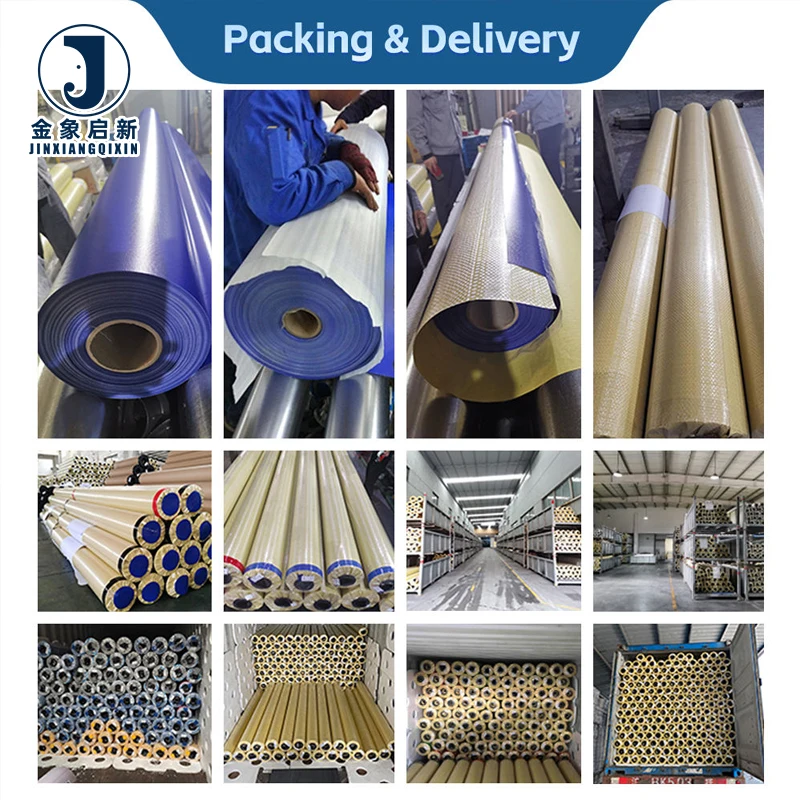
- Store rolls upright on pallets to prevent edge compression marks that affect weld flatness
- Allow PVC coated tarpaulin roll to acclimatise to workshop temperature before unrolling for cutting
- Use compatible PVC welding tape and adjust temperature for the selected GSM and coating thickness
- Cut with sharp blades on flat tables to prevent fraying at denier levels above 840D×840D
- Clean surfaces with mild detergent only — solvents degrade the flame-retardant additive layer
Requesting a Specification-Matched Quotation
Technical fabricators and specialist contractors should provide the intended application, the specific fire-retardant grade or standard required by the project specification, and any anti-static surface resistance target. Include the required denier selection, preferred GSM, finish type, colour reference and roll dimensions. Stating the annual volume and whether sample approval is needed before production allows the quotation to reflect accurate lead time and documentation scope for the PVC coated tarpaulin roll order.
Frequently Asked Questions
Q: Which fire-retardant grades are available and how do they map to mining or tunnelling site requirements?
A: The PVC coated tarpaulin roll range is available in flame retardant grades — confirm the grade required for your market at enquiry. Common classifications include M2, B1 per DIN 4102, and NFPA 701. Providing your project specification or site safety standard at quotation stage ensures the correct retardant chemistry is compounded into the coating formulation and the matching test report is prepared.
Q: Can anti-static treatment be verified with a surface resistance test report before shipment?
A: Yes. Where the duct specification requires anti-static properties, a surface resistance test report can be generated and included with the roll documentation. Request this at enquiry stage so the treatment is applied during production and tested before dispatch rather than as an afterthought.
Q: How is GSM confirmed on arrival and what documentation accompanies each roll?
A: Every roll undergoes inspection before dispatch against the material specification sheet, and a pre-shipment inspection record is included in the documentation package. GSM, denier, colour and treatment are verified. The documentation set also includes fire-retardant test reports, certificate of origin and ISO/CE certificates.
Q: What is the lead time and minimum order for custom width, colour or fire-retardant grade?
A: Lead time depends on the specific grade, colour and dimension requirements. Custom fire-retardant formulations and non-standard colours require sample approval before the full production run. Providing your annual volume and required specifications at enquiry allows an accurate lead time to be quoted alongside the minimum order quantity.
Q: How does the PVC coating formulation affect weld and seam performance in duct fabrication?
A: The coating weight and finish type influence heat-seal temperature and dwell time settings. Glossy and matte surfaces respond differently to hot-air and wedge welding. Fabricators should run test welds on sample material at the selected GSM and denier to establish optimal parameters before cutting production panels from the PVC coated tarpaulin roll.