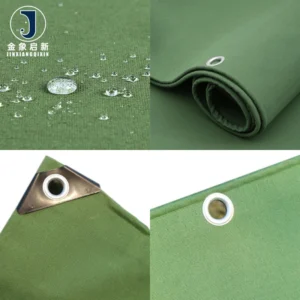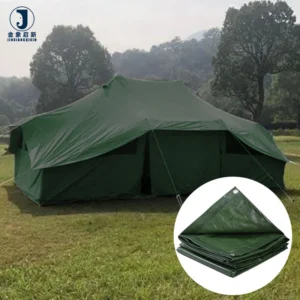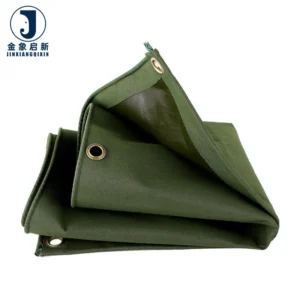

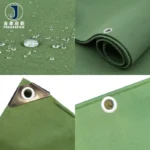


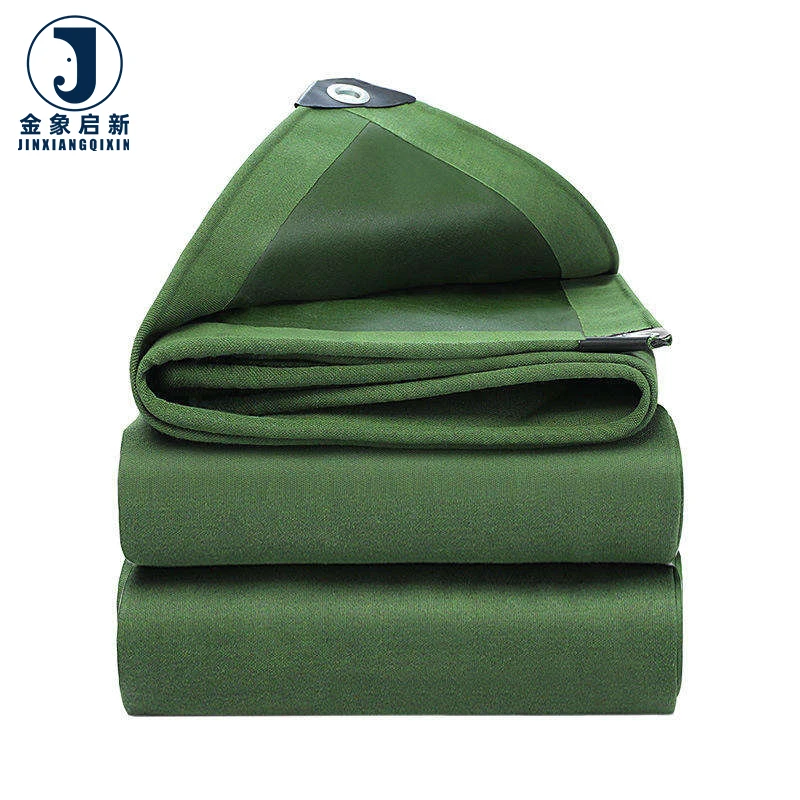
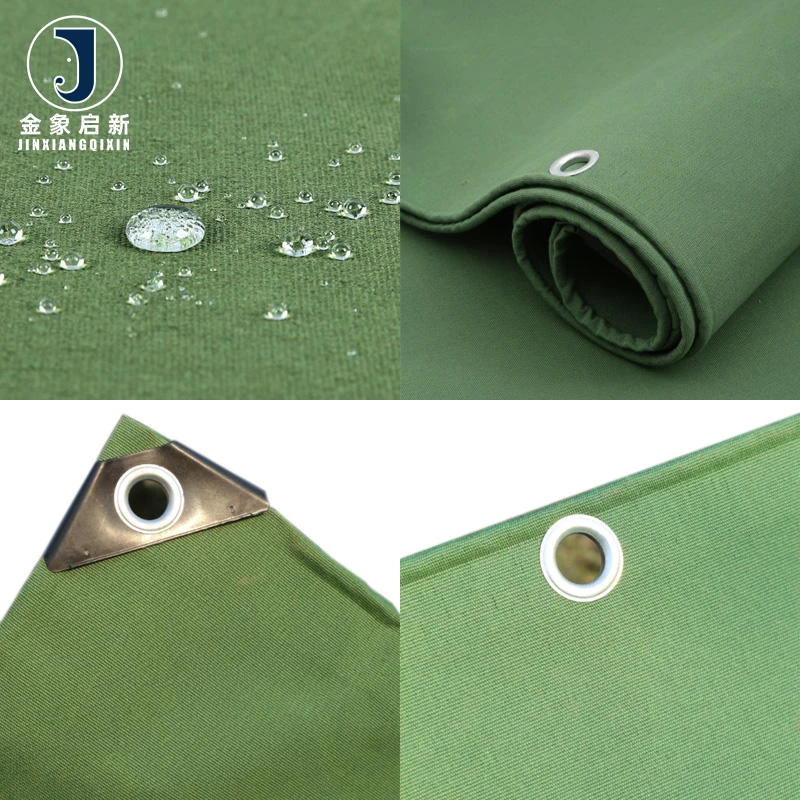

Deep Process Control Over Coated Fabric — Nearly 30 years of coating weight and adhesion expertise applied to every roll of 600gsm laminated canvas tarpaulin, with dedicated QA/QC inspection at each production stage before dispatch.
Technical Specifications
| Parameter | Value |
|---|---|
| Product Type | Canvas Tarpaulin |
| Base Material | Polyester cotton industrial textile, 8-12 strands fine cotton yarn |
| Weight | 600 gsm |
| Total Thickness | 0.5 mm / 0.6 mm / 0.7 mm options |
| Roll Width | 2 m |
| Roll Length | 100 m |
| Finish Product Size | Custom dimensions or inventory stock |
| Colour | Army Green Camouflage / Custom options |
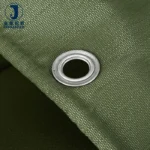
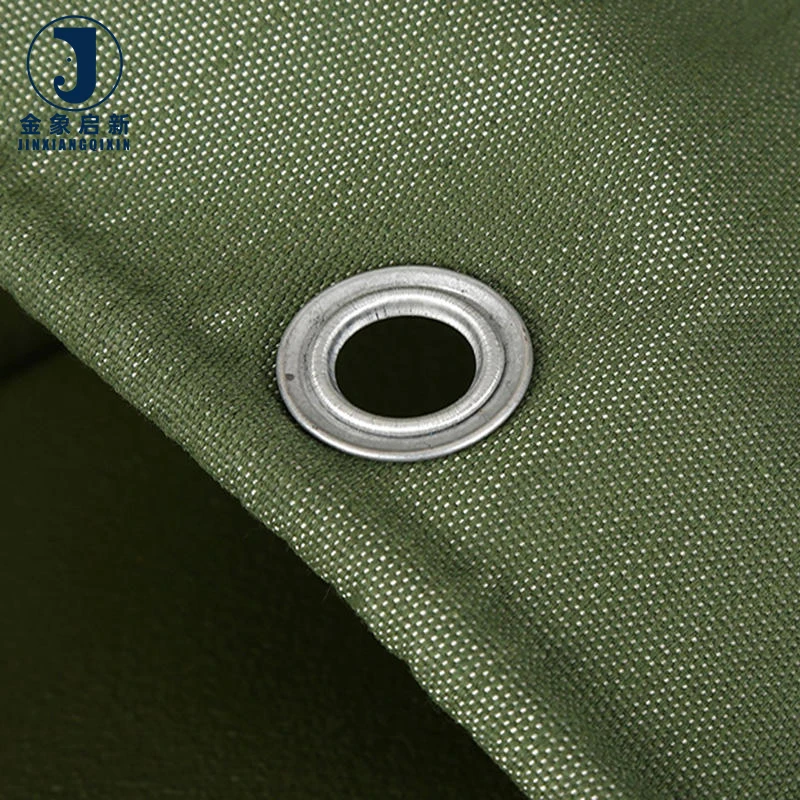
| Eyelets | Rust-proof aluminum, 1 m spacing at corners and hem |
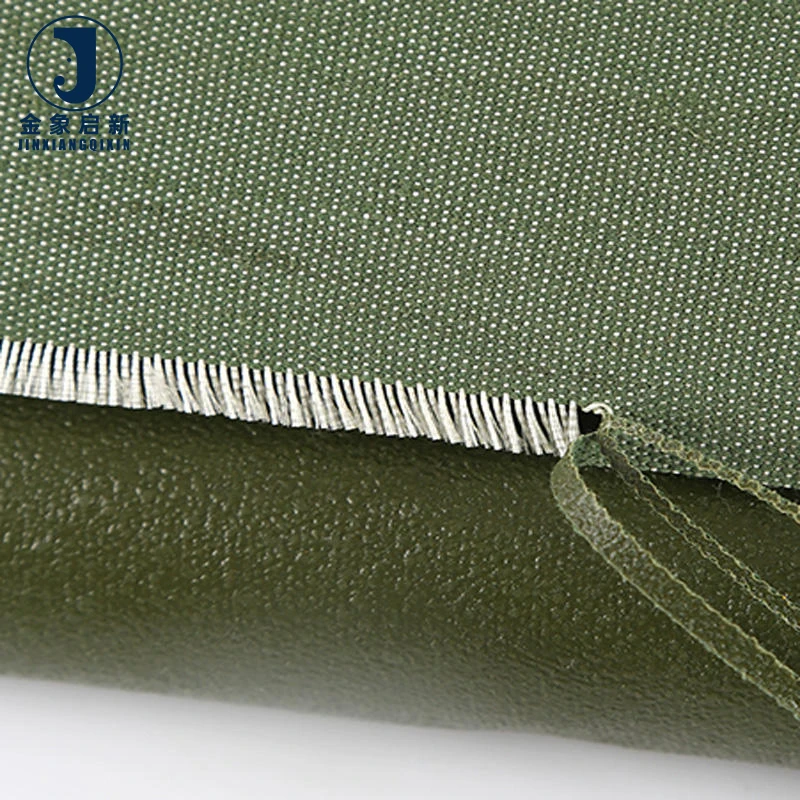
| Hem & Seam Construction | Folded and sewn with poly rope reinforcement |
| Waterproof Rating | Waterproof (test basis not stated) |
| UV Treatment | UV resistant (test basis not stated) |
| Anti-Mildew | Mold resistant (test basis not stated) |
| Temperature Resistance | High- and low-temperature resistant (specific range not stated) |
| Fire Retardant | Available in flame retardant grades — confirm the grade required for your market |
| Certifications | CE, ISO |
Application Suitability
| Application | Exposure & Requirement |
|---|---|
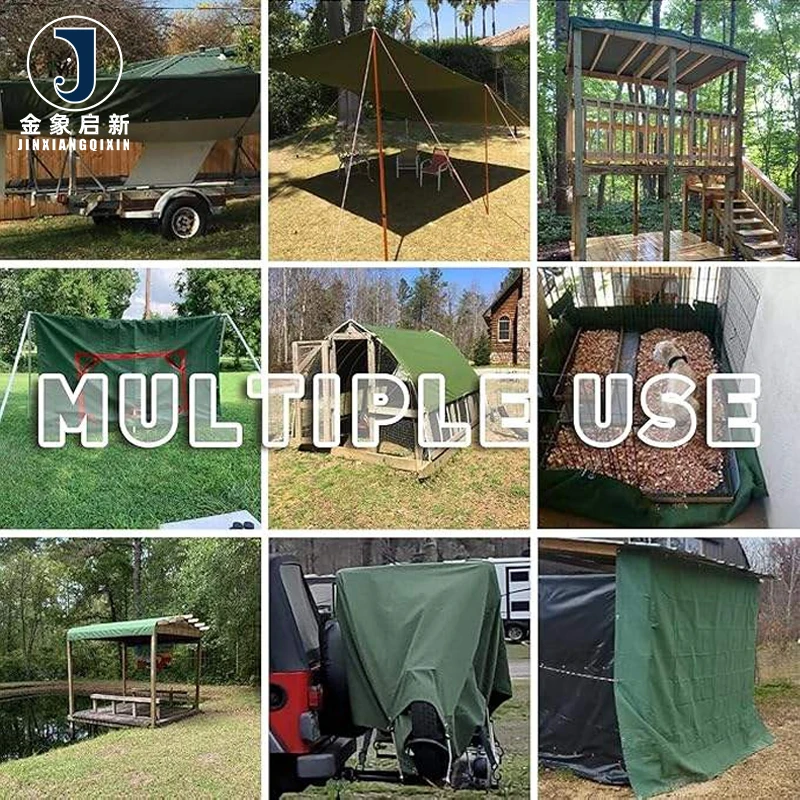
| Mining and tunnelling site covers | Abrasive dust, heavy equipment contact, must sit alongside ventilation duct systems that carry fire-retardant and anti-static compliance |
| Truck and trailer load covers | Constant road vibration, wind uplift at speed, UV and weather exposure over long haul routes |
| Asphalt and construction material covers | High-temperature asphalt contact, puncture from sharp aggregate, prolonged outdoor stacking |
| Heavy equipment wrapping | Outdoor storage through seasonal temperature swings, moisture ingress risk, tie-down stress at corners |
| Tent and temporary structure fabric | Repeated assembly and teardown, flex at pole contact points, weather exposure across varying climates |
Why Ventilation Duct Compliance Standards Should Apply to Your Site Covers Too
A cover that fails on a mining site or construction project carries the same downtime cost as a non-compliant air duct.
Ventilation ducts in mining and tunnelling must carry documented fire-retardant and anti-static certification before they are allowed underground. Yet heavy duty canvas tarpaulin used to cover equipment on that same site often arrives without any compliance paperwork — leaving contractors exposed when site auditors or safety inspectors ask for material documentation. The gap between what the ventilation system requires and what the site covers are certified for creates a compliance blind spot that is only discovered after an incident or an audit failure. [NEED_CITE: site safety compliance requirements for mining and tunnelling operations]
Where Technical Fabric Standards Meet Heavy-Duty Cover Performance
Mining and tunnelling contractors already specify fire-retardant and anti-static ventilation duct to exacting standards. The heavy duty canvas tarpaulin used for site and equipment covers on those same projects should carry equivalent documentation rigour. A 600 gsm laminated canvas construction provides the mechanical durability needed for abrasive site conditions, but the material must also be verifiable on paper — with specification sheets, test reports and pre-shipment inspection records that stand up to the same scrutiny applied to the duct systems overhead.
Bridging the Documentation Gap Between Duct and Cover
Contractors who manage both ventilation duct and site cover procurement often find that duct suppliers provide full compliance documentation while cover suppliers provide only a basic packing list. This inconsistency creates risk at the project level. Requesting material specification sheets that state GSM, base fabric composition, coating type and applicable test standards for the heavy duty canvas tarpaulin — the same documentation already demanded for industrial air duct — closes that gap and puts both material streams under the same quality framework. [NEED_CITE: coated fabric test methods and compliance documentation practices]
What 600 gsm Polyester Cotton Canvas Delivers in Practice
The base fabric uses 8-12 strands of fine cotton yarn woven into a high-density polyester cotton textile. At 600 gsm, this construction provides a balance between tensile strength and handling weight — heavy enough to resist puncture from sharp aggregate and equipment edges, yet manageable for crews who must deploy and retrieve covers daily. The laminated backing adds weather resistance without the stiffness that makes solid PVC difficult to fold in cold conditions. Thickness options of 0.5 mm, 0.6 mm and 0.7 mm allow selection based on the abrasion severity of the specific application.
The Hidden Cost of Specifying Covers Without Compliance Alignment
When site covers arrive without the fire-retardant or material test documentation that the project safety plan requires, the contractor faces a choice: deploy unverified material and accept the audit risk, or hold the covers in storage and source replacements on short notice. Either outcome disrupts the project timeline and adds cost. Covers specified alongside ventilation duct with matching documentation standards — GSM verified per roll, test reports for any claimed treatments, pre-shipment inspection records — eliminate this risk entirely. [NEED_CITE: material compliance audit procedures on industrial construction sites]
Why Technical Fabric Expertise Matters for Your Cover Procurement
Our production lines handle both industrial air duct fabric and heavy duty canvas tarpaulin under the same quality management system. The 10-person R&D team that develops fire-retardant and anti-static duct specifications applies the same process control to canvas cover material selection, coating weight verification and custom sizing. Three full production lines with 36 sets of professional equipment support bulk roll capacity with consistent batch-to-batch output. Every roll undergoes dedicated QA/QC inspection with 100% pre-shipment verification before it leaves the facility. Samples for custom width, colour or finished dimensions are developed within days so buyers can confirm material performance before committing to full production.
Documentation & Verification
- Material specification sheet stating 600 gsm weight, polyester cotton base fabric and laminate coating type
- Test reports for UV and flame retardant treatments where applicable — no undocumented claims
- Pre-shipment inspection record confirming weight, dimensions and eyelet spacing per roll
- Certificate of origin and full customs documentation for cross-border project supply chains
- Roll packing list with individual roll identification for traceability on multi-site projects
- Colour reference documentation to verify consistency across rolls in a single order
Fabrication, Handling & Storage
- Welded and sewn seams with poly rope reinforcement require heat settings matched to the 0.5–0.7 mm laminate thickness
- Rust-proof aluminum eyelets at 1 m intervals distribute tie-down load across the 600 gsm canvas base fabric
- Roll stock at 2 m width should be stored upright on pallets to prevent edge compression and crease damage
- Custom-cut finished sizes should be folded along seam lines to avoid stressing the poly rope hem reinforcement
- Field repairs on the laminated surface require compatible adhesive and patch material matched to the coating chemistry
- Army Green Camouflage colour should be verified under natural light before deployment to confirm batch consistency
What to Include in Your Enquiry
Provide the specific exposure conditions your covers will face — whether that is underground mining environments requiring fire-retardant documentation, outdoor construction sites with abrasive aggregate, or long-haul transport with constant UV and wind load. Specify whether you need roll stock at standard 2 m width or finished custom sizes with defined eyelet placement. If your project requires material test reports aligned with your ventilation duct compliance standards, state the applicable regulations so the correct grades can be confirmed before production.
Frequently Asked Questions
Q: How is the 600 gsm weight verified before dispatch?
A: Every roll undergoes weight inspection as part of our 100% pre-shipment QC process. The inspection record documents the measured GSM against the stated 600 gsm specification, and this record ships with your order. You receive documented verification rather than relying on quotation claims alone.
Q: What fire-retardant documentation is available for use alongside mining ventilation duct specs?
A: Fire retardant grades are available for this canvas tarpaulin range. Confirm the specific grade or standard required by your site safety plan, and we will provide the corresponding test report. This ensures your covers carry the same compliance documentation as your industrial air duct systems.
Q: How is colour consistency maintained across multiple rolls?
A: Each production run uses controlled pigment dosing and the pre-shipment inspection includes colour comparison across rolls in the same order. For side-by-side installation on large covers or structures, request the colour reference documentation to verify batch matching before deployment.
Q: Can eyelet spacing and hem reinforcement be customised for specific truck models?
A: Yes. The standard rust-proof aluminum eyelets are spaced at 1 m intervals, but placement can be adjusted for specific tie-down configurations. The poly rope reinforced hems can also be modified to match the stress points of your particular trailer or equipment geometry.
Q: How are seams tested to prevent failure at flex points?
A: The combination of welded and sewn construction with poly rope reinforcement addresses the most common failure point in heavy duty covers — seam separation under repeated flex. Pre-shipment inspection includes seam integrity checks, and the R&D team can adjust seam construction based on your specific flex and load conditions.