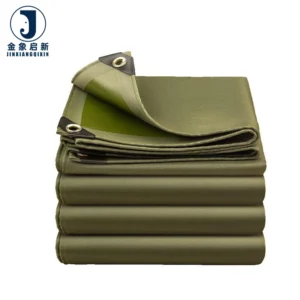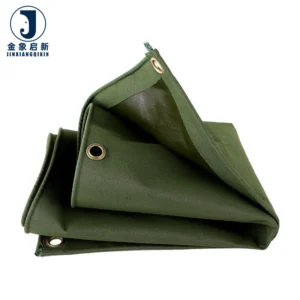

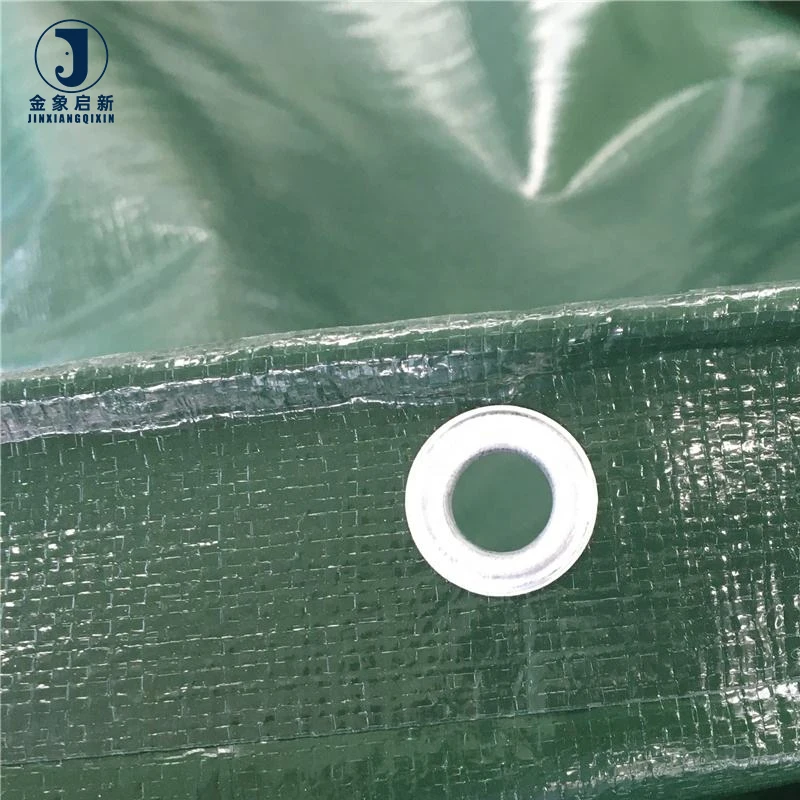
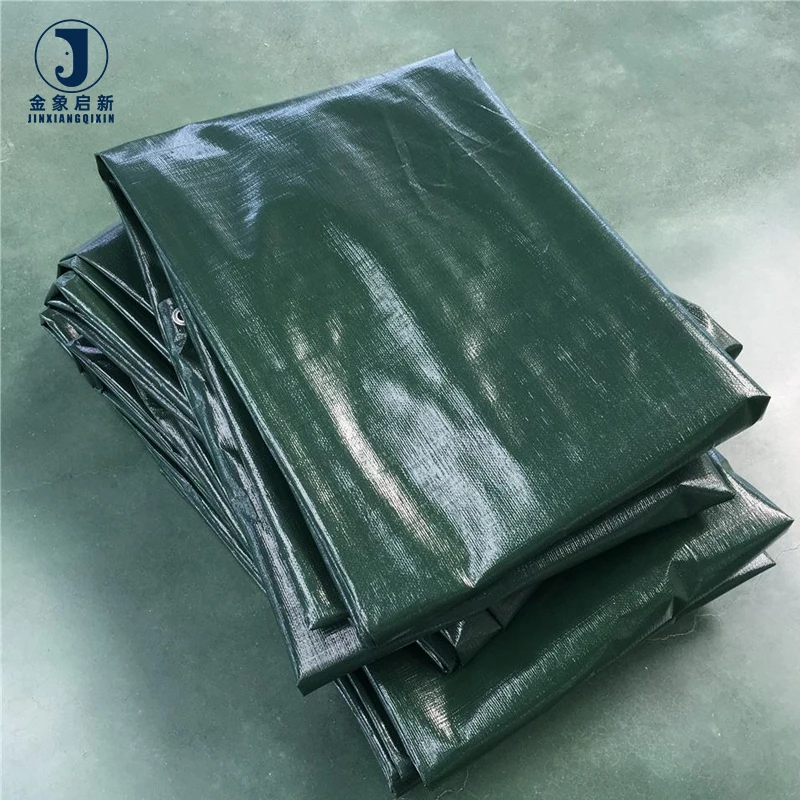
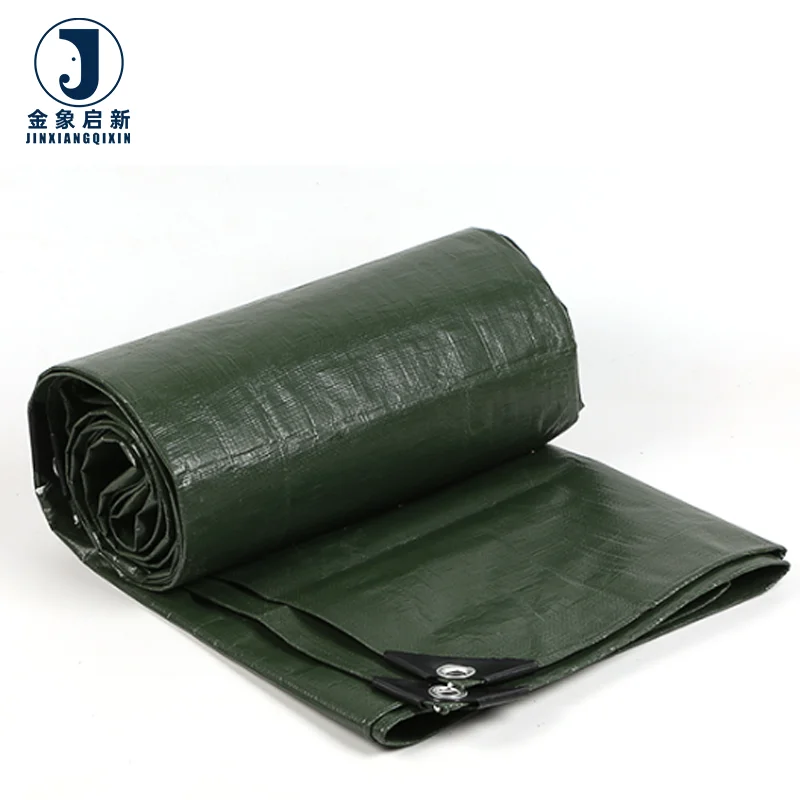
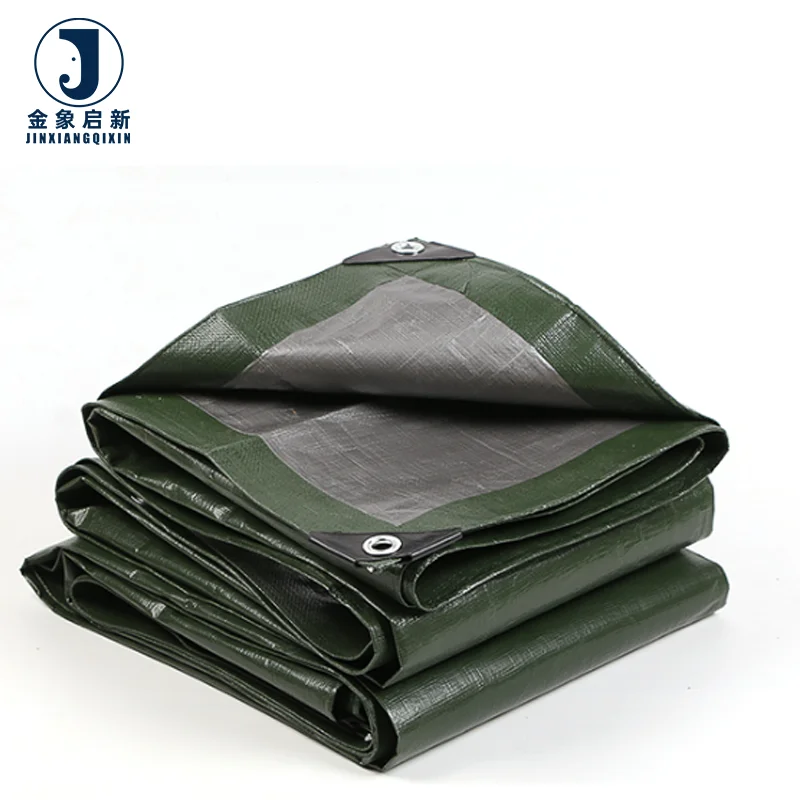
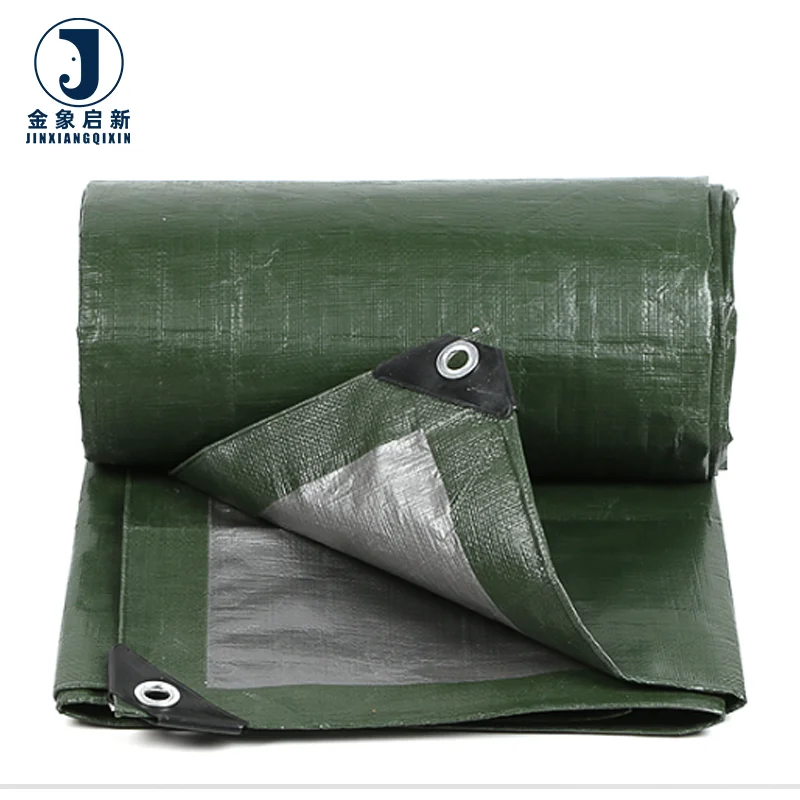
Coating Weight Control — nearly 30 years of process refinement ensures the LDPE coat applied to this HDPE woven base meets the stated GSM on every roll, verified at pre-shipment inspection.
Technical Specifications
| Parameter | Value |
|---|---|
| Product Type | Polyethylene Tarpaulin |
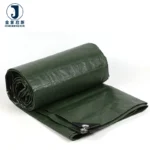
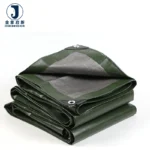
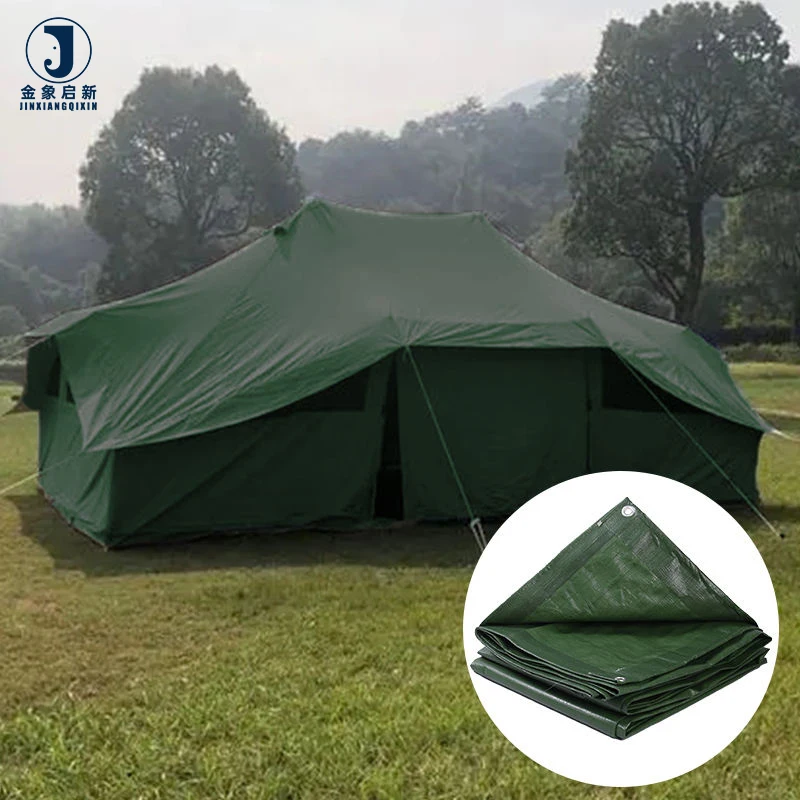
| Material | HDPE woven fabric with LDPE coat on both sides |
| Density (Mesh Count) | 6×6 to 16×16 mesh |
| Weight (GSM) | 50 g/m² to 300 g/m² |
| Color Options | Blue, Orange, White, Black, Grey, Yellow, Green, Red, any color available |
| Sheet Sizes | 2×3, 3×4, 3×5, 4×5, 5×6, 6×8, 10×10, 10×12, 12×14 m or custom |
| Roll Length | 100 m per roll or custom |
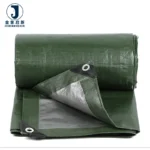
| Edge Finish | PP rope in all edge hems |
| Corner Reinforcement | Black plastic triangle |
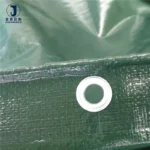
| Eyelet Spacing | Rustproof aluminum eyelet every 1 m or 1.5 m or custom |
| Printing Option | Logos or company information, reinforced strip available |
| Special Treatment | Fire resistant / UV protection available as per requirements (grade not stated in source — confirm the grade required for your market) |
| Container Loading (rolls) | 20GP ~17 tons; 40HQ ~28 tons |
| Container Loading (bales) | 20GP ~11 tons; 40HQ ~28 tons |
| Container Loading (carton) | 20GP ~8 tons; 40HQ ~22 tons |
Application Suitability
| Application | Exposure & Requirement |
|---|---|
| Truck and trailer load covers | Road weather, wind flap, abrasion at tie-down points, UV from daily outdoor parking |
| Construction site equipment covers | Dust, rain, UV exposure, mechanical contact with scaffolding and steel edges |
| Agricultural stockpile wrapping | Moisture ingress, wind uplift, UV degradation over seasonal storage |
| Pond and reservoir liners | Permanent water contact, soil chemistry, puncture from substrate irregularities |
| General industrial waterproof protection | Outdoor storage, chemical splash, handling abrasion |
Why Generic-Size PE Tarpaulin for Truck and Transport Covers Costs More Than the Fabric Itself
A cover that does not match the trailer deck wastes fabric, creates loose folds that catch wind, and accelerates abrasion at every point the load flexes.
Fleet operators regularly receive truck covers cut to a nominal size that assumes a standard trailer deck. In practice, deck lengths vary by manufacturer, side rail height differs, and tie-down spacing is model-specific. When a heavy duty PE tarpaulin aftermarket supplier ships a cover that is 30 cm too long, the excess fabric flaps in road wind, concentrating stress at the hem where eyelets are spaced for a different geometry. The result is premature tearing at the reinforcement points — not because the material was inadequate, but because the cut was wrong [NEED_CITE: truck cover fitment and wind-load stress distribution on flexible covers].
Colour is a second source of rework. When multiple rolls arrive with visible shade variation, installing them side by side on adjacent trailers makes the fleet look inconsistent. Distributors who resell cut sheets face customer complaints that are difficult to resolve after the material has been fabricated.
Mesh Density and the Balance Between Flexibility and Tear Resistance
The HDPE woven base of this heavy duty PE tarpaulin aftermarket supplier product is available in mesh counts from 6×6 through 16×16. Lower mesh counts produce a lighter, more flexible sheet suited to dust covers and short-term stockpile wrapping. Higher mesh counts increase the number of yarns per unit area, improving tear propagation resistance — critical when the cover is tensioned over sharp-edged loads or equipment with protruding brackets. Selecting the correct density depends on whether the primary failure mode is flex fatigue or puncture.
Edge Construction at the Points Where Covers Actually Fail
Most PE tarpaulin failures do not occur in the field of the fabric. They start at the hem, where PP rope is enclosed and aluminum eyelets are punched. The black plastic triangle reinforcement at each corner addresses the concentrated load that occurs when a tie-down strap pulls at an angle. Configurable eyelet spacing — every 1 m or 1.5 m — allows the spacing to align with the actual tie-down rail geometry of a specific trailer model rather than forcing the operator to skip eyelets or add aftermarket grommets [NEED_CITE: eyelet pull-out resistance and hem reinforcement methods for PE woven tarpaulins].
Reading the Specification Sheet Beyond GSM
GSM alone does not define how a PE tarpaulin will perform under load. A 180 g/m² sheet woven at 14×14 mesh with a thin LDPE coat will behave differently from a 180 g/m² sheet at 8×8 mesh with a heavier coat. The weave density determines how load distributes across the yarn network, while the coating weight governs waterproof integrity and surface abrasion resistance. When both sides receive an LDPE coat, the balance between base fabric and coating mass determines whether the sheet tears through the weave or delaminates at the coat interface. Requesting the material specification sheet with base fabric denier and coating weight separated allows a technical comparison between grades that share the same GSM [NEED_CITE: relationship between mesh count, coating weight and tensile performance in HDPE woven tarpaulins per ISO 1421].
What Happens When Roll Consistency Is Not Verified Before Dispatch
Batch-to-batch shade variation is tolerable when rolls are sold individually to end users who will never see two sheets side by side. It becomes a liability when a distributor cuts sheets from multiple rolls to cover a fleet of identical trailers, or when a construction contractor uses adjacent panels on a single site hoarding. The colour difference may fall within a manufacturer’s internal tolerance yet remain visible once installed. Equally, mesh count drift across a production run can mean one roll passes a tensile test while the next roll in the same shipment does not. Pre-shipment inspection that samples across rolls — not just from the first roll off the line — catches both issues before the container is sealed.
Procurement Advantages Built Into This Supply Chain
Three full production lines and 36 sets of professional equipment allow roll stock to be scheduled without competing for capacity with cut-and-sew orders, which means bulk PE tarpaulin roll orders ship on a predictable timeline.
A 10-person R&D team handles pattern development for custom truck cover sizing, ensuring the cut matches the trailer model rather than a generic template — from initial sample through production run.
Dedicated QA/QC inspection at every production stage includes roll-to-roll colour consistency checks and GSM verification against the stated specification before any roll is packed.
Samples for custom width, colour or printed branding are developed within days, allowing fleet operators and distributors to confirm the material before committing to a container load.
Full documentation — material specification sheet, pre-shipment inspection record, certificate of origin — accompanies each shipment to support customs clearance and buyer-side quality audits.
Documentation & Verification
- Material specification sheet stating HDPE base fabric denier, LDPE coating weight and confirmed GSM per batch
- UV protection or fire resistant test report issued against the grade specified on the purchase order
- Pre-shipment inspection record confirming mesh count, colour consistency and eyelet spacing roll by roll
- Roll packing list with individual roll weights, dimensions and production batch numbers
- Certificate of origin and ISO and CE certificates supporting destination customs requirements
Fabrication, Handling & Storage
- Heat-seal LDPE-coated surfaces at moderate temperature to avoid burning through the HDPE woven base
- Punch eyelets through the PP rope hem to distribute load across the reinforced edge, not the field fabric
- Store 100 m rolls horizontally on pallets to prevent permanent creasing in the LDPE coating layer
- Allow cold-stored rolls to reach ambient temperature before unrolling to avoid cracking the LDPE coat
- Specify Pantone or RAL colour reference when ordering multiple rolls to enable batch consistency verification
What to Include in Your Inquiry
Provide the trailer model or equipment dimensions, the exposure conditions (road weather, UV intensity, chemical contact), and whether you require roll stock or finished cut-to-size covers with specific eyelet spacing. If your market mandates a fire resistant or UV protection grade, state the standard so the correct treatment is applied and documented. For printed branding, supply artwork and confirm whether logo placement is required on one or both sides of the sheet.
Frequently Asked Questions
Q: How do I confirm the GSM matches the quotation when the rolls arrive?
A: Request the pre-shipment inspection record that documents actual weight per roll. On receipt, cut a measured sample from each batch, weigh it, and compare against the stated GSM. Any deviation beyond your tolerance threshold should be flagged before the container is unloaded and distributed to your customers or job sites.
Q: Can the tarpaulin be cut to my exact trailer model dimensions?
A: Yes. Provide the trailer deck length, width, side rail height and tie-down rail position. The R&D team develops a cutting pattern that matches these dimensions, positions eyelets to align with your tie-down points, and reinforces corners at the actual load-bearing locations rather than at generic intervals.
Q: Will fire resistant or UV treatment be supported by a test report?
A: Fire resistant and UV protection treatments are available on request. Specify the standard required by your site safety team or destination market — for example, a particular flame classification or UV exposure protocol — so the treatment grade is matched and a corresponding test report is issued with the shipment.
Q: How is colour consistency controlled across multiple rolls in one order?
A: Colour consistency is managed by matching a Pantone or RAL reference and verifying shade across the production run. The pre-shipment inspection includes a side-by-side roll comparison. If your installation places panels adjacent to each other, state this in the order so the tolerance applied is appropriate for visible matching.
Q: What is the lead time for custom width, colour or printed branding?
A: Custom specifications require sample development and approval before production begins. Lead time depends on the complexity of the customisation and current production scheduling. Submit your requirements early and request a confirmed timeline with the quotation so container booking can be planned accordingly.