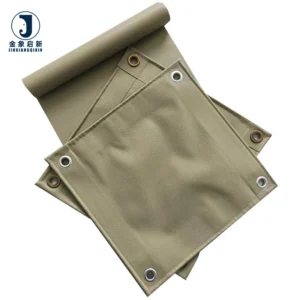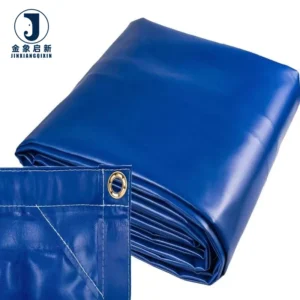
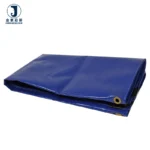
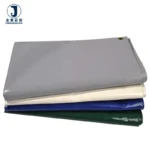
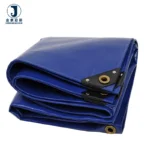
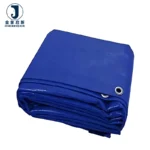
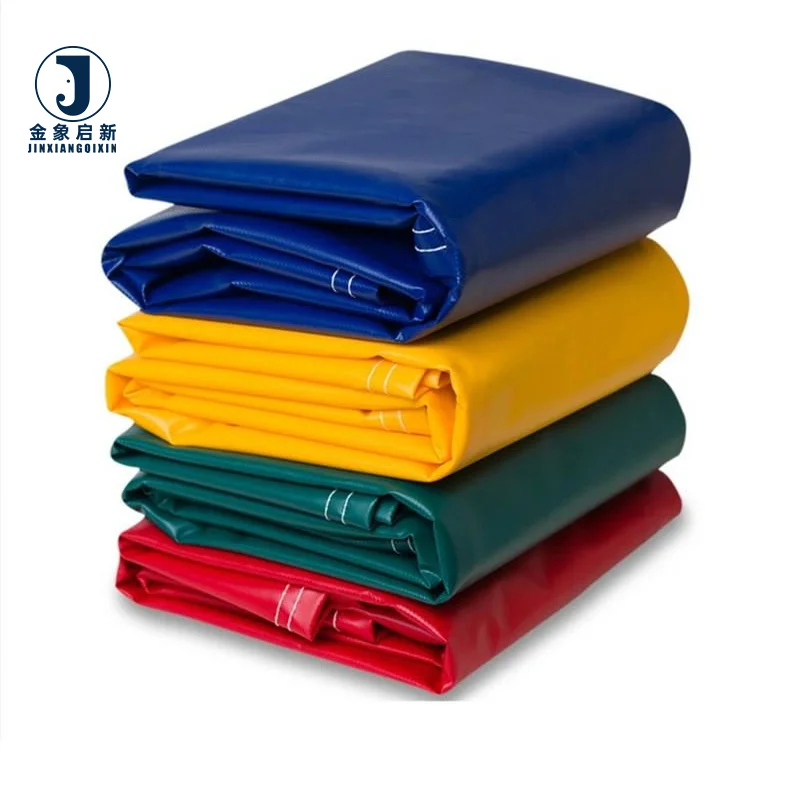
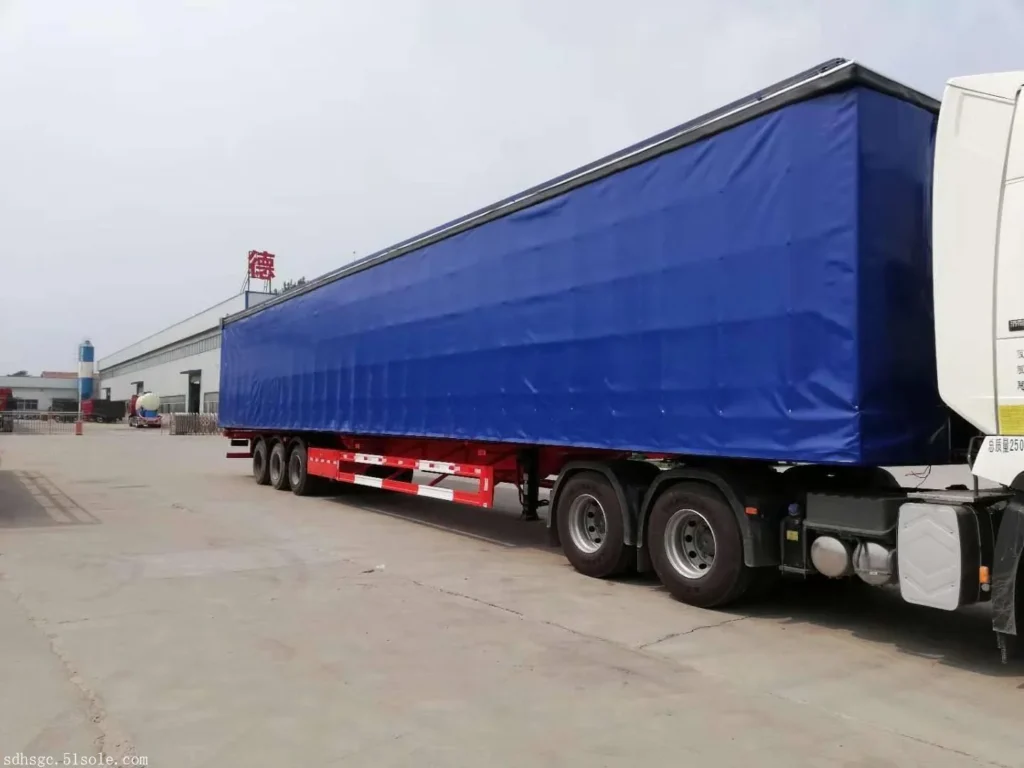
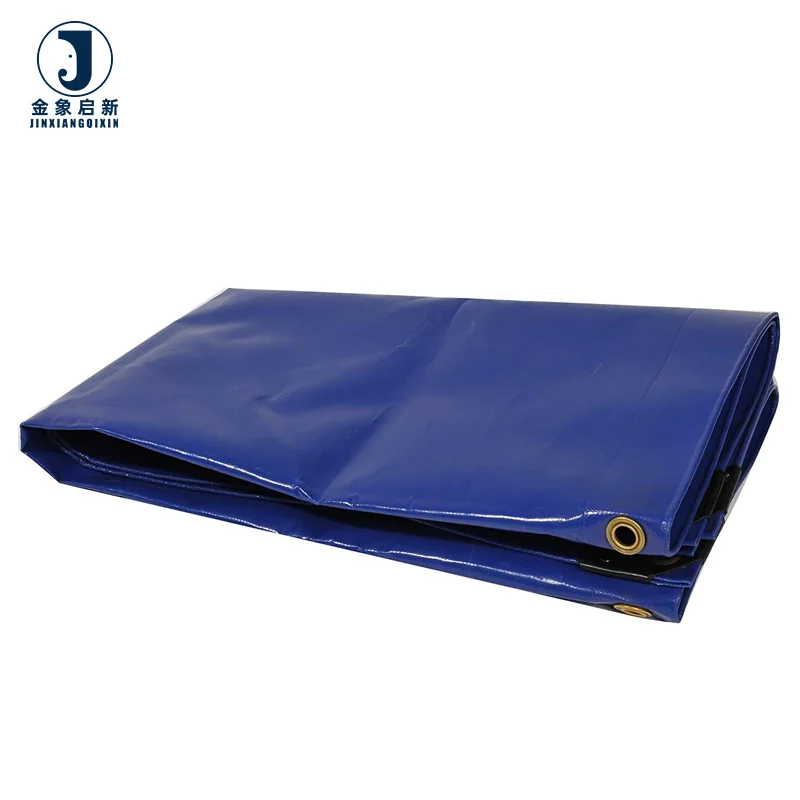
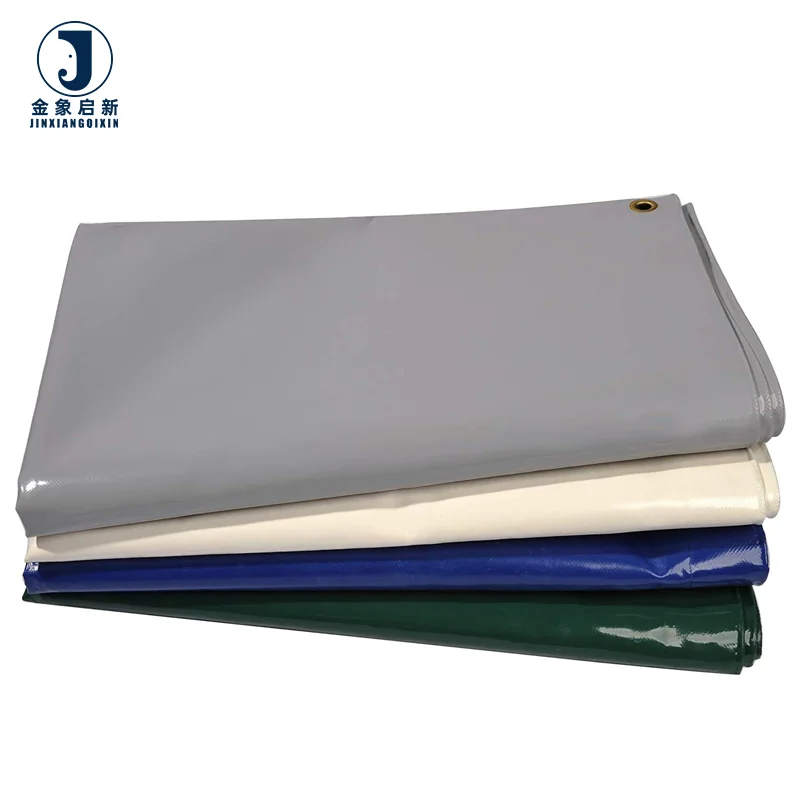
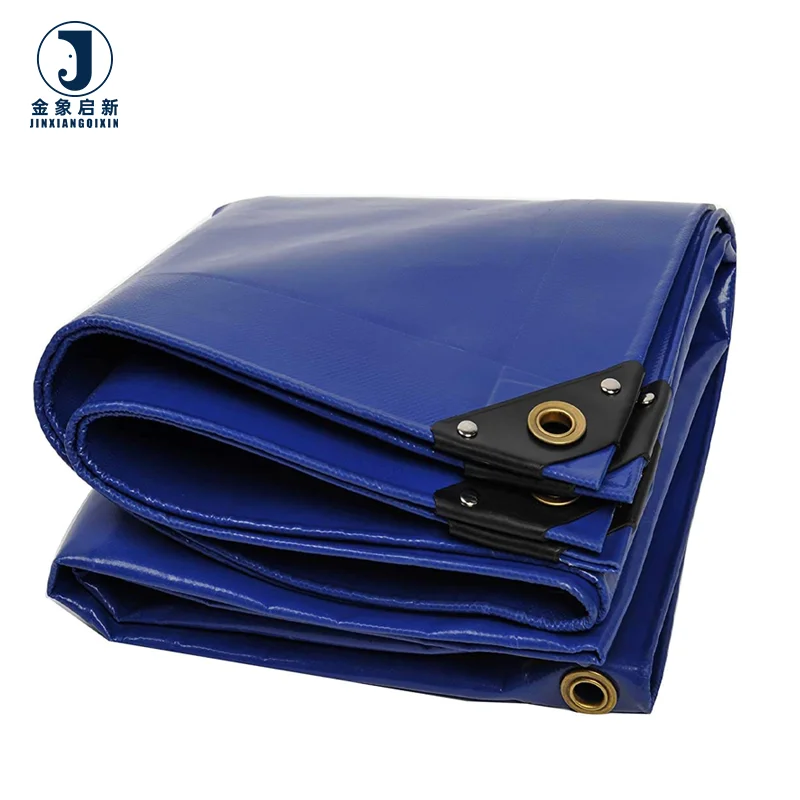
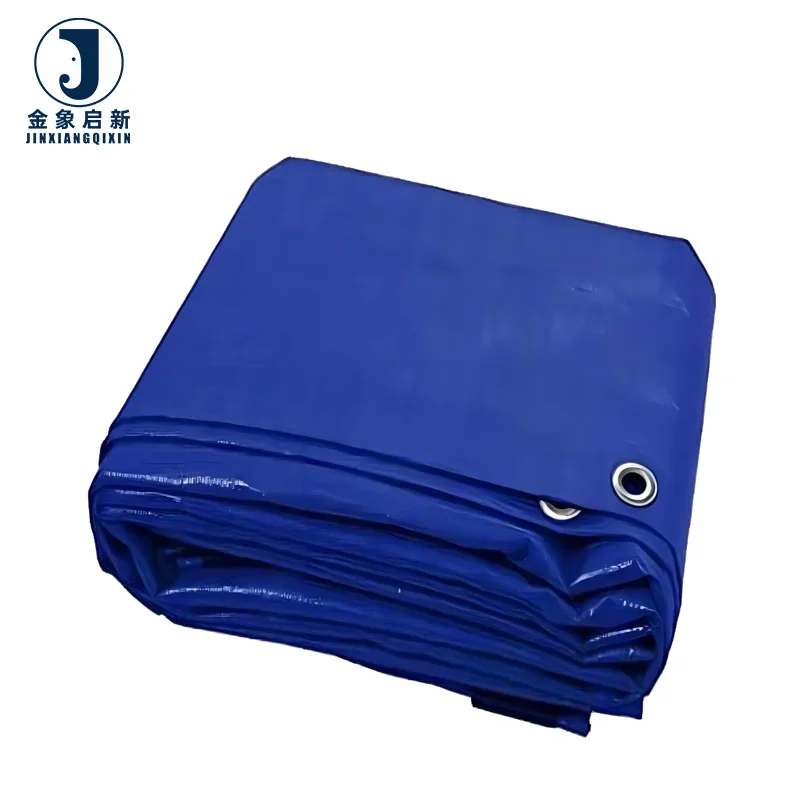
Precision Coating Control — Our in-house formulation and coating line delivers PVC tarpaulin grades where the stated GSM and base fabric denier are verified roll-to-roll, ensuring technical fabricators receive the exact material properties required for inflatable, membrane, and ventilation structures.
Technical Specifications
| Parameter | Value |
|---|---|
| Product Type | PVC Coated Tarpaulin |
| Coating Material | Double-Sided PVC |
| Base Fabric Denier Options | 500D×840D, 500D×1000D, 1000D×1000D, 1000D×1300D, 1300D×1300D, 1000D×2000D |
| Weight Range | 500gsm – 1000gsm (varies by grade) |
| Total Thickness | 0.29mm / 0.32mm / 0.38mm / 0.44mm / 0.46mm / 0.55mm / 0.65mm (varies by grade) |
| Mesh Count | 30×19 / 20×20 / 30×15 (varies by grade) |
| Tensile Strength (Warp) | 1650N – 3900N (varies by grade, test standard not stated) |
| Tensile Strength (Weft) | 1600N – 3500N (varies by grade, test standard not stated) |
| Treatment Options | High frequency hot melt, hot air, sewing |
| Fire Retardant | Available (grade to be confirmed against target market standard) |
| Anti-UV | Available (test basis to be confirmed) |
| Key Features | Waterproof, Anti Mildew, Heavy Metal Free, Flexible, Heavy Duty, Self Clean |
| Density Parameter | 1.15 – 2.00 g/cm³ |
| Brittle Temperature | ≤ -50 to -60 ℃ |
| Softening Temperature | ≥ 80 ℃ |
| Melting Point | 212 ℃ |
Application Suitability
| Application | Exposure & Requirement |
|---|---|
| Industrial Ventilation Ducts (Mining/Tunnelling) | Continuous airflow, internal static buildup, fire-risk environments requiring certified flame-retardant and anti-static fabric |
| Inflatable & Membrane Structures | Sustained internal pressure, UV exposure, high-frequency flexing at seams and anchor points |
| Aviation & Construction Temporary Enclosures | Rapid deployment, wind load, repeated folding and unfolding, weather sealing |
| Technical Equipment Covers | Dust ingress prevention, anti-static requirements for sensitive machinery, outdoor weathering |
Why Certified Grade Matters More Than Quoted Weight for Technical Applications
A fire-retardant claim without a matching test report is a compliance liability on any regulated site.
Technical buyers sourcing fabric for underground ventilation or temporary aviation structures face a specific risk: the PVC coated tarpaulin for industrial ventilation and specialist application arrives on site, passes visual inspection, but the fire safety officer rejects the batch because the certificate does not align with the local standard. The project stalls, the contractor absorbs the delay cost, and the supplier relationship breaks down [NEED_CITE: fire classification standards for textile materials in underground mining environments]. Weight and tensile data are important, but they are secondary to whether the material holds the exact compliance documentation the installation demands.
Matching Base Fabric Denier to Structural Load
The denier of the base yarn determines how much point-load the fabric can absorb before a tear initiates. For membrane structures under tension, a 1000D×1300D or 1300D×1300D base provides the tear propagation resistance needed at stress concentrators like corners and anchor plates. Lighter denier options such as 500D×840D serve applications where weight savings matter more than ultimate structural load, such as short-term event enclosures or lighter inflatable forms. Selecting the correct base fabric is the first decision a technical specifier makes, and it must be matched to the engineered load, not just the target GSM.
Fire-Retardant and Anti-Static Formulation for Confined Spaces
Ventilation ducts in mining and tunnelling operate in environments where static discharge and ignition sources coexist. The PVC coating compound must be formulated to deliver both flame retardancy and anti-static performance simultaneously — treating one property in isolation leaves a gap in the safety envelope. We supply these specialist grades with the test documentation required for site approval, but the specific certification needed varies by jurisdiction and project [NEED_CITE: anti-static and flame-retardant testing standards for flexible ventilation ductwork]. Confirm the exact standard your project specification demands before ordering, so we match the compound to your compliance requirement.
How GSM, Denier, and Mesh Count Interact
A common specification error is treating GSM as the sole indicator of fabric performance. A 650gsm fabric woven at 20×20 mesh with 1000D×1300D yarn behaves very differently from a 650gsm fabric at 30×19 mesh with lighter yarn — the former concentrates mass into heavier, stronger yarns with fewer picks per centimetre, yielding higher individual yarn tensile strength and better tear resistance. The latter distributes mass across more, thinner yarns, producing a smoother surface better suited to printing and welding. For structural applications like inflatable buildings or tensioned membranes, the heavier-yarn, lower-count construction typically performs better under point load and cyclic flexing [NEED_CITE: tensile and tear test methods for coated fabrics per ISO 1421]. Always specify denier and mesh count alongside GSM to eliminate ambiguity.
The Cost of a Weld That Fails Before the Fabric Does
When a ventilation duct or membrane structure fails, the failure point is overwhelmingly at a seam or weld — not in the body of the fabric. This happens when the welding temperature and dwell time are calibrated for a generic PVC tarpaulin rather than the specific coating formulation and thickness of the material in use. A heavier grade with a higher softening point requires different hot-air or high-frequency settings than a lighter one. If the fabrication team does not receive the correct welding parameters for the exact product ordered, the bond strength at the seam can fall well below the parent fabric tensile value. The duct bursts at the longitudinal weld under operating pressure, or the membrane panel delaminates at the panel join under wind load [NEED_CITE: seam peel strength testing for welded PVC coated fabrics]. We supply recommended welding parameters with each grade to prevent this failure mode.
Why Technical Fabricators Source From This Line
Three full production lines and dedicated coating equipment allow us to hold tight control over coating weight adhesion across a production run, so the roll you weld in the workshop behaves identically to the sample you approved weeks earlier. Our ten-person R&D team develops custom formulations — including specific fire-retardant and anti-static compound ratios — and produces samples within days rather than weeks, letting you validate weld parameters and compliance documentation before committing to bulk volume. Every production stage carries in-process QA, with 100% pre-shipment inspection verifying GSM, colour consistency, and coating integrity roll by roll. The result is a PVC coated tarpaulin for industrial ventilation and specialist application that arrives with the predictability a technical fabrication shop requires to hit its own project deadlines.
Documentation & Verification
- Material specification sheet stating exact GSM, base fabric denier, mesh count, and coating weight for the ordered grade
- Fire-retardant test report matched to the standard specified in your project documentation
- Anti-static test data confirming surface resistivity for mining and tunnelling compliance
- ISO and CE certificates issued to the manufacturing facility producing your batch
- Pre-shipment inspection record confirming GSM verification and visual QC per roll
Fabrication, Handling & Storage
- Calibrate hot-air welder temperature and speed to the specific grade thickness before production runs begin
- High-frequency welding suits the double-sided PVC coating; confirm frequency and pressure settings on scrap first
- Store rolls horizontally on racking to prevent permanent creasing that affects membrane panel flatness
- Allow cold-stored rolls to acclimatise to workshop temperature before unrolling to avoid coating micro-cracking
- Cut panels using the stated mesh count orientation to align warp yarns with the primary load direction
- Reinforce all eyelet and tie-down zones with welded patches matching the base fabric denier
Request a Technical Data Package
Tell us the application — ventilation duct, inflatable structure, membrane roof, or specialist cover — along with the compliance standards your project specification calls for. Specify the base fabric denier and target GSM range you have engineered for, and whether you need rolls in standard or custom width. We will respond with a matched grade recommendation, a data sheet, and a sample so your team can verify weld behaviour and certification alignment before placing a production order.
Frequently Asked Questions
Q: Can you supply a fire-retardant test report specific to my country’s mining or building code?
A: Fire-retardant grades are available, but the applicable standard varies by market — for example, some projects require DIN 4102 classification while others reference NFPA 701 or local mining regulations. Provide the exact standard from your project specification, and we will formulate and test the compound to match, issuing a report tied to your batch.
Q: How do you verify GSM consistency across rolls in a bulk order?
A: Every roll undergoes a pre-shipment inspection where GSM is sampled and recorded against the stated specification. The inspection data is compiled into a report that ships with your documentation package, so you can cross-check the delivered weight against the quotation without waiting for your own lab results.
Q: What welding method is recommended for membrane structure seams with this fabric?
A: Both high-frequency and hot-air welding are suitable for the double-sided PVC coating. The optimal method depends on the grade thickness and the seam geometry. We supply recommended welding parameters with each grade, and we strongly advise running test welds on off-cuts to dial in machine settings before committing to production panels.
Q: Is there a minimum order for custom width or colour on specialist grades?
A: Custom widths and colours are available across the PVC coated tarpaulin for industrial ventilation and specialist application range. Minimum order quantities apply and vary depending on the denier, treatment formulation, and width requested. Share your required specification and annual volume, and we will confirm the minimum and lead time for your specific grade.
Q: How quickly can a sample be developed for a custom anti-static or flame-retardant formulation?
A: Sample development typically takes a matter of days once the target formulation and base fabric grade are confirmed. The sample ships with a preliminary data sheet so your fabrication team can begin weld testing and compliance review while the bulk order is in production planning.