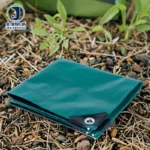
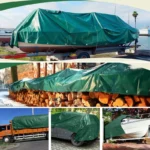
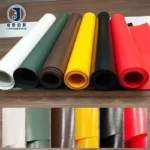
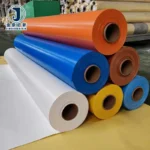
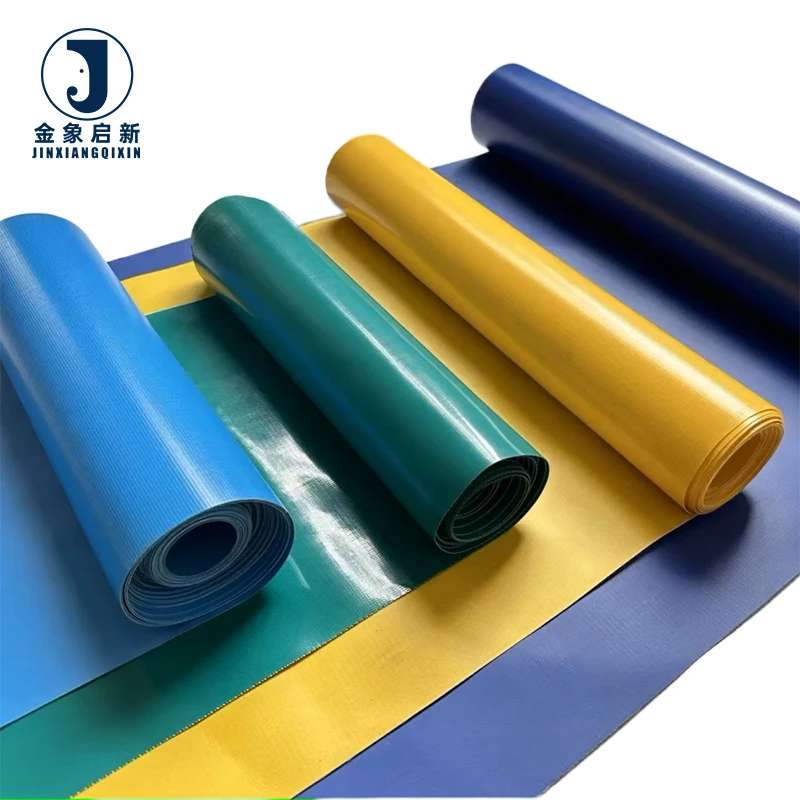
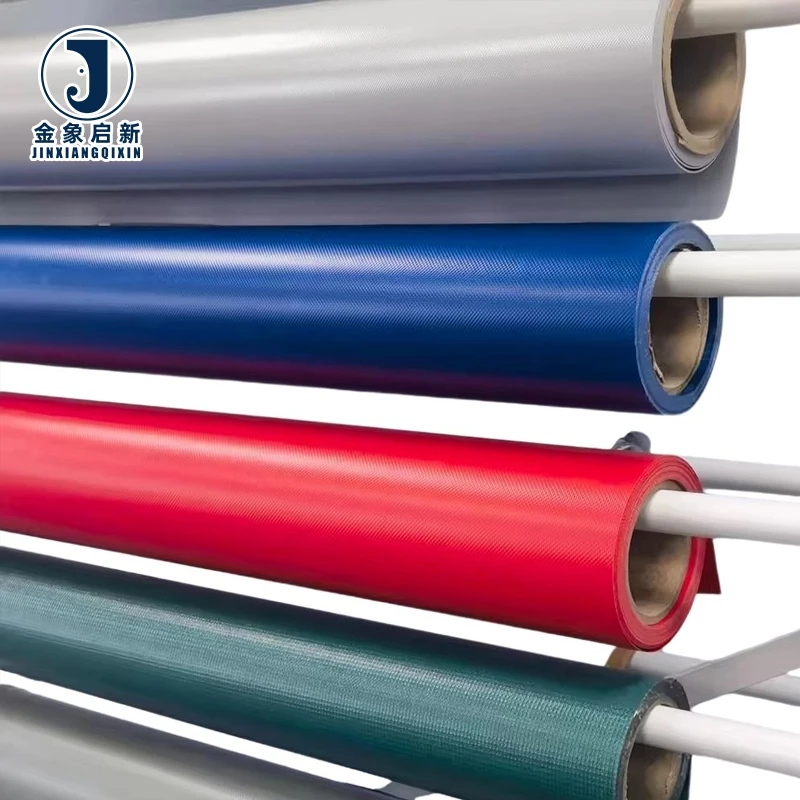
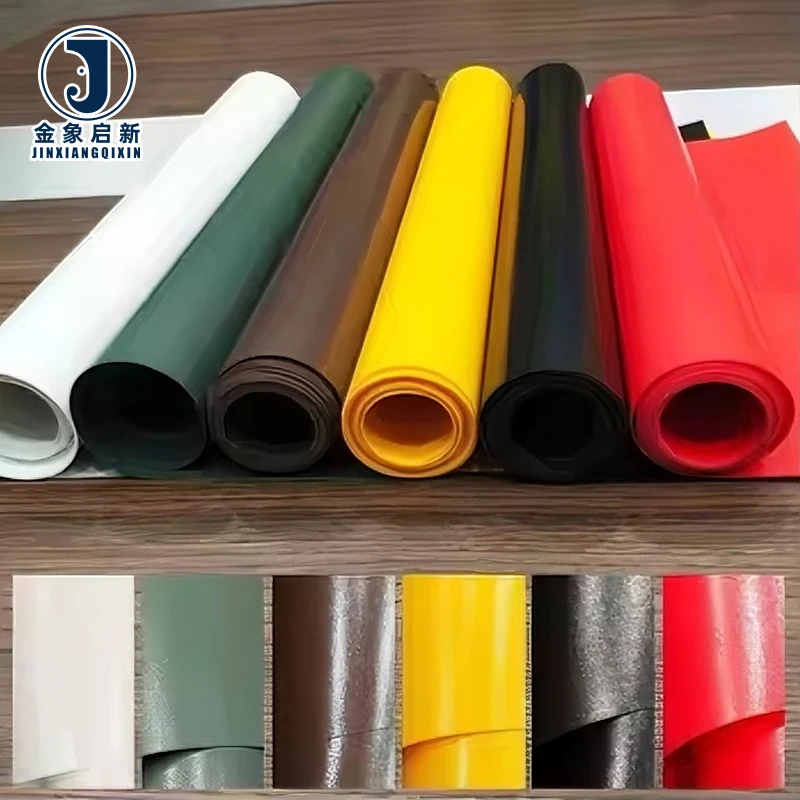
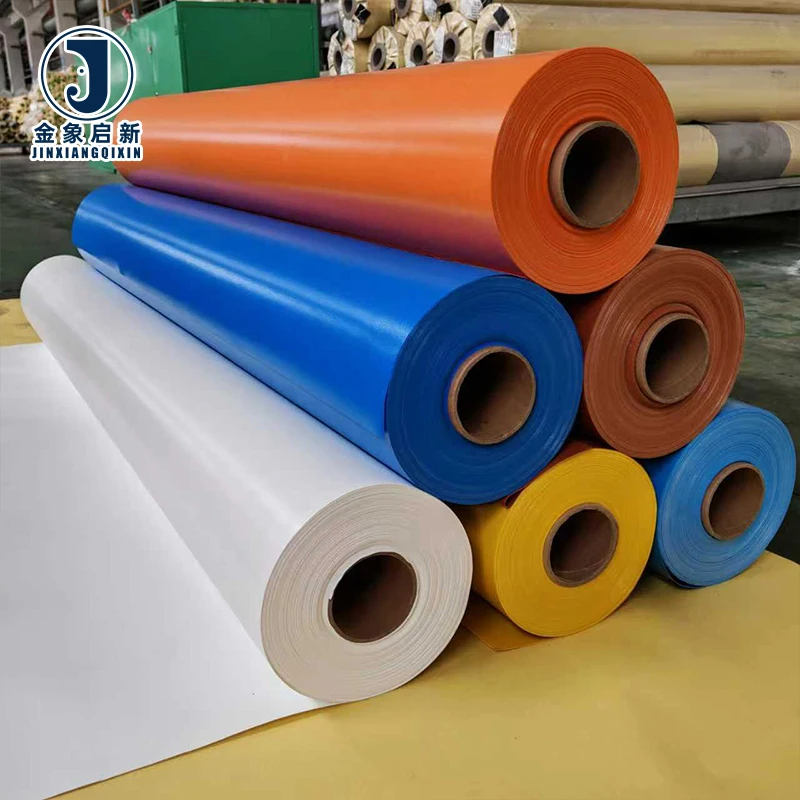
Certified Technical Fabric — Every specialist fabric grade ships with matching test reports and compliance certificates for fire-retardant and anti-static performance.
Technical Specifications
| Parameter | Value |
|---|---|
| Product Type | PVC Coated Tarpaulin |
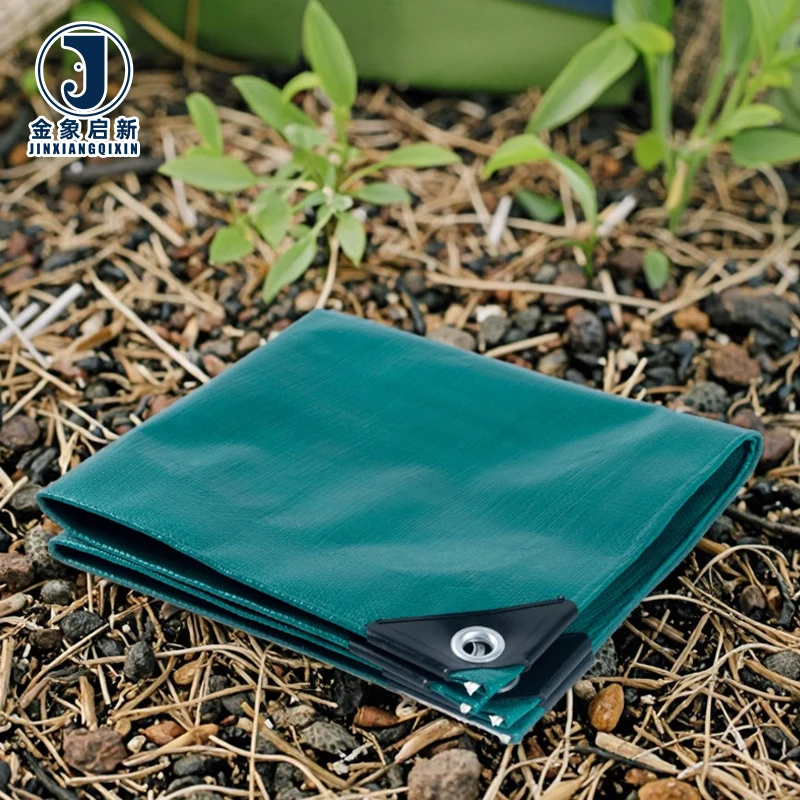
| Material | PVC + High-strength polyester mesh fabric |
| Coating Method | Laminated technology & Hot-melt coating technology |
| Weight (GSM) | 350gsm / 420gsm / 500gsm / 550gsm / 600gsm / 750gsm (confirm grade for application) |
| Total Thickness | 0.32mm / 0.35mm / 0.4mm / 0.45mm / 0.5mm / 0.65mm (confirm grade for application) |
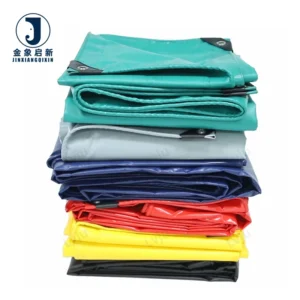
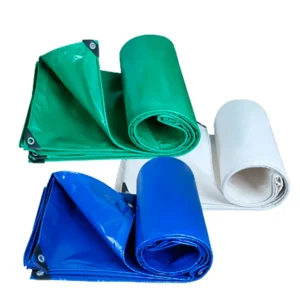
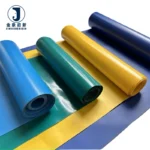
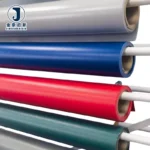
| Color | Blue / Red / Yellow / Light blue / Grey (Customized) |
| Roll Width | 2m / 2.1m |
| Roll Length | 75m (for 2m width) / 50m (for 2.1m width) |
| Flame Retardant | Available as special treatment (grade not stated in source — confirm required standard) |
| Anti-Static | Available as treatment (standard not stated in source — confirm surface resistance requirement) |
| Cold Crack Resistance | Stated (test basis not stated in source) |
| Anti-Mildew | Stated (test basis not stated in source) |
| Waterproof | Stated |
| UV Treatment | Sunproof stated (test basis not stated in source) |
| Key Features | High tenacity polyester yarns, good flexibility, outstanding tearing strength for welding, color fastness |
Application Suitability
| Application | Exposure & Requirement |
|---|---|
| Underground mining ventilation duct | Continuous airflow pressure, methane and coal dust environment, mandatory fire-retardant and anti-static compliance |
| Aviation hangar ventilation system | Fuel vapour exposure, large-diameter duct flex, anti-static surface resistance required |
| Tunnelling and civil construction duct | Abrasive particulate-laden air, high positive or negative pressure cycles, weld seam integrity at flex points |
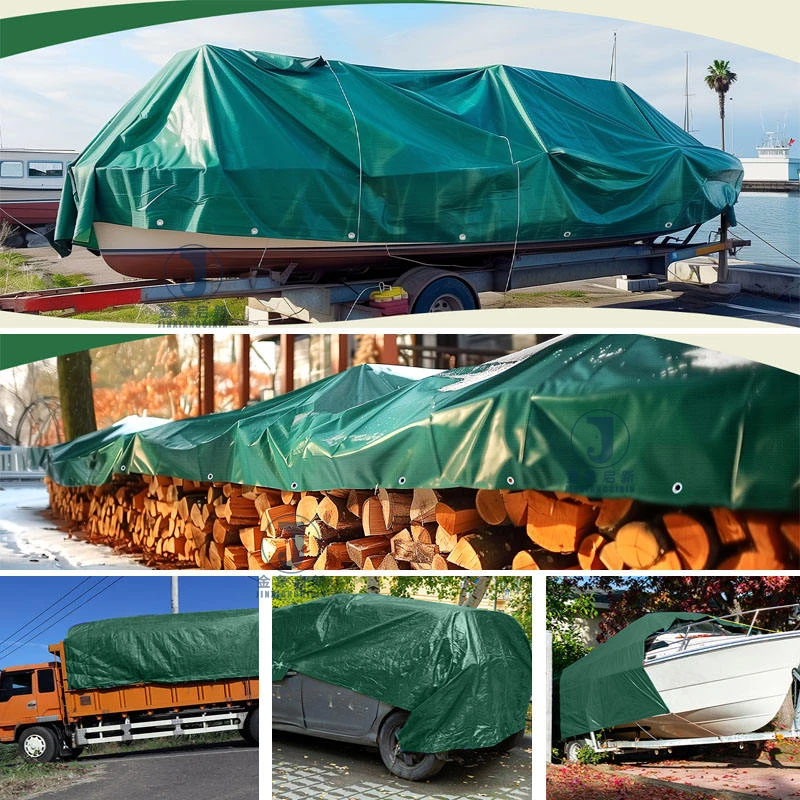
| Membrane and inflatable structures | Wind load cycling, UV exposure, structural tension across welded seams, fire code compliance for occupied spaces |
| Temporary specialist enclosures | Rapid deployment and teardown, repeated folding, weather and chemical splash exposure |
What "Flame Retardant" Means Without a Test Report to Back It Up
A flame-retardant claim on a quotation is not a compliance document — the grade and the test standard behind it are what the site inspector actually checks.
Ventilation duct fabric enters environments where the safety margin between acceptable and catastrophic is measured in seconds. Mining and tunnelling contractors regularly discover that the PVC Knife-Coated Tarpaulin fire retardant / anti-static / certified they specified arrived without the documentation the site safety officer requires. [NEED_CITE: DIN 4102 fire classification for building materials] The result is not a delayed shipment — it is a halted project, an idle crew, and a contractor sourcing replacement material at a premium while the clock runs. This happens because the specification conversation stopped at "flame retardant available" instead of continuing to "flame retardant to [standard], tested by [method], certificate included with dispatch."
Duct Construction Demands More Than Fabric Strength Alone
Ventilation ducts for mining and tunnelling are not static covers; they are pressurised systems that flex, pulse and collapse under airflow changes. The PVC Knife-Coated Tarpaulin fire retardant / anti-static / certified supplied for these applications must perform at the weld line as reliably as it does across the body of the fabric. Hot-melt coating and laminated technology produce adhesion between the PVC layers and the high-strength polyester mesh base that allows welded seams to withstand repeated flex cycles without delamination. The high-tenacity polyester yarn structure provides the tearing strength necessary for the seam to hold where the duct bends or where tie-off points concentrate stress.
Anti-Static Compliance in Fuel and Dust Environments
In aviation hangars and underground mining shafts, static discharge is not a theoretical concern — it is a daily ignition hazard. The anti-static treatment option for this PVC Knife-Coated Tarpaulin fire retardant / anti-static / certified fabric addresses surface resistivity, but the specific standard your site operates under must be confirmed before production begins. Different jurisdictions and different site operators require different surface resistance thresholds. [NEED_CITE: ISO 284 test method for electrical resistance of conveyor belts] Specifying the exact surface resistance value and the test method ensures the duct fabric passes the site safety audit on first inspection, not after a costly resubmission.
Reading the Specification Sheet Beyond the GSM Number
The weight of a coated fabric, expressed in GSM, is often the first number a buyer checks — but it tells only part of the story for ventilation duct performance. A 750gsm fabric with a loosely woven base may tear more easily at a welded seam than a well-constructed 550gsm fabric with high denier yarns and tight weave density. The coating method determines how the PVC bonds to the polyester mesh: hot-melt coating penetrates the weave structure for deeper mechanical adhesion, while laminated technology builds coating weight on the surface. Total thickness, ranging from 0.32mm to 0.65mm across the available grades, correlates with puncture resistance and flex stiffness — a duct that is too stiff will not deploy cleanly in a tunnel, while one that is too thin will collapse under negative pressure. The combination of base fabric denier, weave density, and coating weight together defines the tensile and tear behaviour that a ventilation duct fabric must deliver under continuous operational stress.
The Cost of Specifying the Wrong Grade for the Environment
Selecting a GSM or treatment grade based on price rather than site compliance requirements produces failures that surface only after installation. A duct fabric without verified anti-static treatment in a coal dust environment creates an invisible ignition risk that no site inspector will accept once documented. [NEED_CITE: mining ventilation duct fire safety compliance requirements] Flame-retardant fabric supplied without the matching test report forces the contractor into a reactive position — either operating without documented compliance or halting work to obtain retrospective certification. Colour inconsistency across rolls in a visible membrane structure installation draws client attention even when it does not affect performance, undermining confidence in the entire material specification. These are not material defects; they are specification gaps that originate before the fabric enters production.
Why Source Specialist Duct Fabric From This Production Line
Three full production lines and 36 sets of professional equipment provide the capacity to deliver container-load volumes of ventilation duct fabric within project timelines, without splitting orders across subcontractors. A 10-person R&D team handles material selection, custom width requirements, and sample development — critical when a tunnelling contractor needs a non-standard duct diameter or a mining operation requires a specific fire-retardant grade confirmed by sample testing before bulk commitment. Dedicated QA/QC at every production stage, with inspection before shipment, catches coating weight variance and surface treatment inconsistencies that would otherwise surface only at the job site. Nearly 30 years of focused coated fabric production means the process controls around coating adhesion and base fabric tension have been refined through production cycles, not learned on your order. ISO and CE certified production with documentation packages — specification sheets, test reports, pre-shipment inspection records — included with every dispatch eliminates the documentation chase that delays site approval.
Documentation & Verification
- Material specification sheet confirming GSM, base fabric denier, and coating weight for the specific duct fabric grade ordered
- Flame-retardant test report matched to the compliance standard required by your mining or aviation site authority
- Anti-static surface resistance test result referenced to the applicable standard for your operating environment
- ISO and CE certificates included with dispatch documentation package
- Pre-shipment inspection record with roll-by-roll verification before container loading
- Certificate of origin and customs support documentation for international shipment
Fabrication, Handling & Storage
- Hot-air welding parameters must be calibrated to the specific GSM and coating method of the duct fabric grade received
- Weld seam strength testing at flex points should be conducted on sample sections before full duct fabrication begins
- Rolls stored horizontally on racking to prevent creasing that compromises coating integrity at fold lines
- Cold weather deployment requires gradual unrolling to avoid cold-crack stress on the PVC coating surface
- Duct tie-off and suspension points require reinforced patching to distribute load across the polyester mesh base fabric
- Cut panels should be laid flat and welded within the same shift to minimise dust contamination at seam interfaces
What We Need to Quote Your Duct Fabric Correctly
To provide a specification and quotation that matches your site compliance requirements, we need to know the operating environment — underground mining, aviation hangar, tunnelling, or membrane structure — and the specific fire-retardant and anti-static standards your site authority enforces. Share the duct diameter or finished panel dimensions, the annual or project volume, and whether you require roll stock for your own fabrication or finished duct sections. If colour matching or surface finish is specified by the project architect, provide the reference so we can develop a sample for your approval before production begins.
Frequently Asked Questions
Q: What fire-retardant grades do you supply and how is each tested?
A: Flame-retardant treatment is available as a special option for this PVC knife-coated fabric. The specific grade — such as B1, M2, or NFPA 701 — must be confirmed against your site compliance requirement before production. Each fire-retardant grade is accompanied by a test report from the applicable test method, included with your dispatch documentation so your site safety officer can verify compliance on receipt.
Q: What anti-static surface resistance standard does your duct fabric meet for mining compliance?
A: Anti-static treatment is available for this ventilation duct fabric, but the surface resistance threshold varies by jurisdiction and site operator. We need your specific compliance standard to configure the treatment and produce a test result matched to that requirement. The test report ships with your order, providing documented verification for your site safety audit.
Q: How do I verify GSM and coating weight on arrival against the quotation?
A: Every roll ships with a material specification sheet stating the GSM, base fabric denier, and coating weight confirmed before production. Our pre-shipment inspection includes weight verification, and the inspection record is included in your dispatch documentation. You can cross-reference the received material against the stated specification immediately on container opening.
Q: What roll width and length options are available for duct fabrication, and what is the MOQ for custom sizes?
A: Standard roll stock is available in 2m width by 75m length and 2.1m width by 50m length. Custom widths and lengths for duct fabrication are handled by our in-house R&D team, who develop samples for your approval before bulk production. Contact us with your required dimensions and project volume for lead time and minimum order details specific to your specification.
Q: How are welded seams tested to ensure they hold at flex points in ventilation duct applications?
A: The hot-melt coating and laminated technology used on this fabric produces PVC-to-polyester adhesion designed to support welded seam integrity under flex cycling. The high-tenacity polyester mesh base provides tearing strength at seam junctions. We recommend fabricators conduct peel and shear tests on sample welds using their specific hot-air welding equipment and parameters before committing to full production runs.