

Technical compliance documentation — Every roll ships with verifiable material specs, fire-retardant or anti-static certificates where applicable, and pre-shipment inspection records, so site engineers can match the fabric to ventilation duct or specialist structure requirements without guesswork.
Technical Specifications
| Parameter | Value |
|---|---|
| Product Type | Heavy Duty PVC Laminated Canvas Truck Tarps Side Curtain Cover |
| Base Fabric | Polyester cotton industrial textile with 8-12 strands of fine cotton yarn |
| Weight | 600gsm |
| Total Thickness | 0.5mm / 0.6mm / 0.7mm |
| Roll Width | 2m |
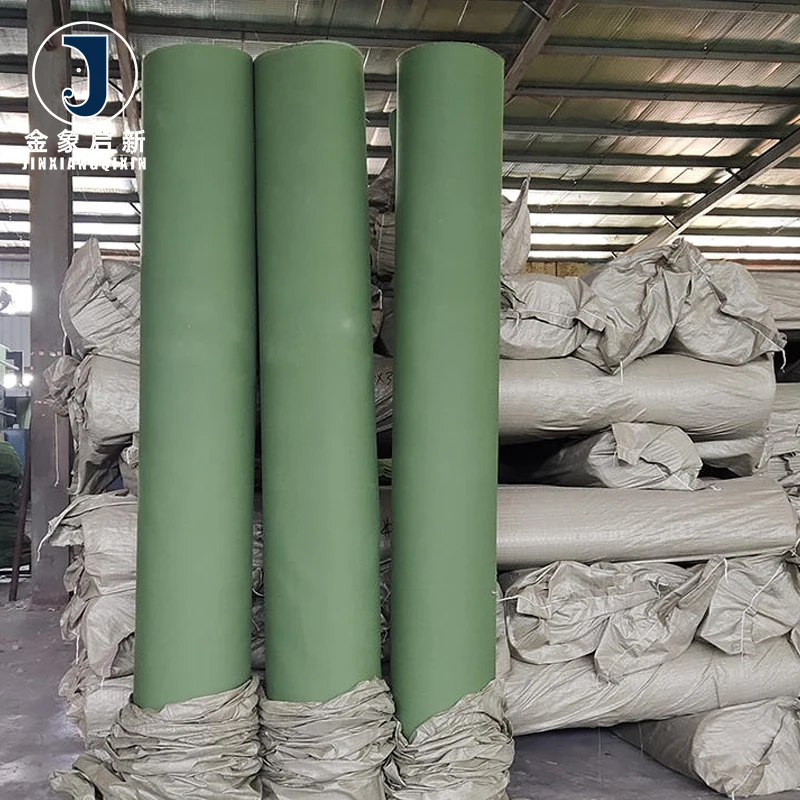
| Roll Length | 100m |
| Finish Product Size | Custom items as per customer’s needs, or sold by inventory |
| Color | Army Green Camouflage / Custom |
| Key Features | Wear-resistant, corrosion-resistant, tensile-resistant, high- and low-temperature resistant, mold resistant |
| Waterproof Rating | Waterproof (grade not stated in source) |
| UV Treatment | UV resistant (test basis not stated in source) |
| Flame Retardant Grade | Available in flame retardant grades — confirm the grade required for your market |
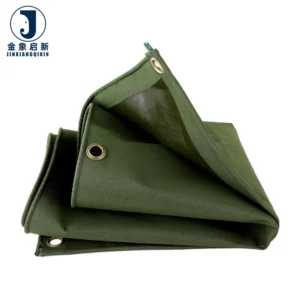
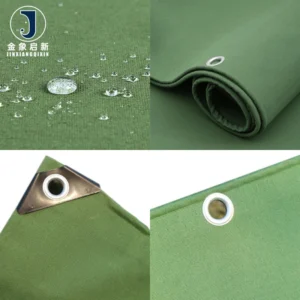
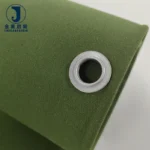
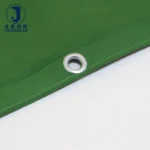
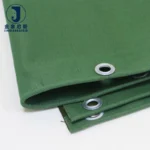
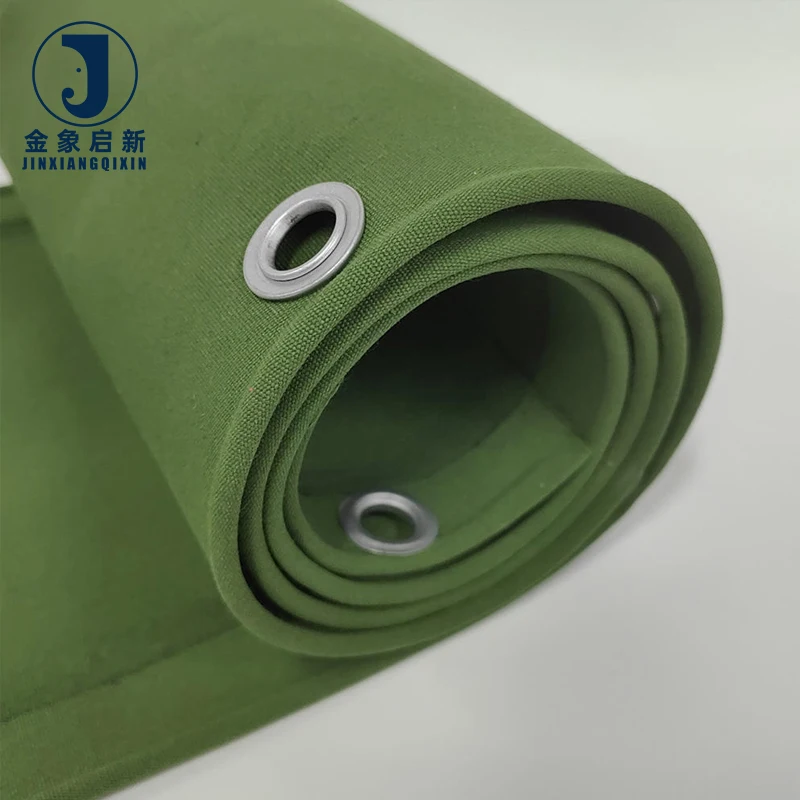
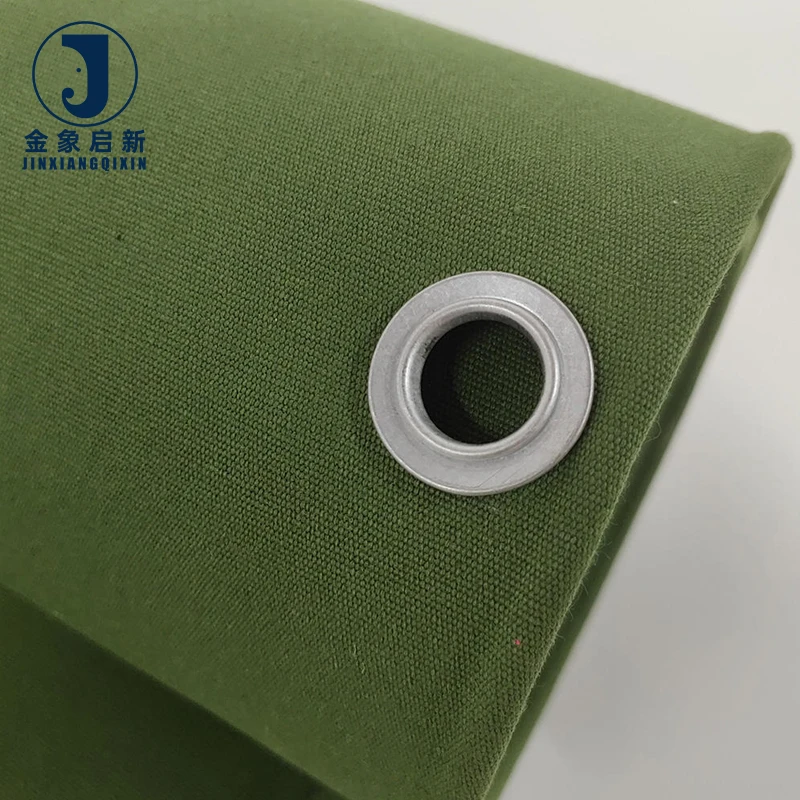
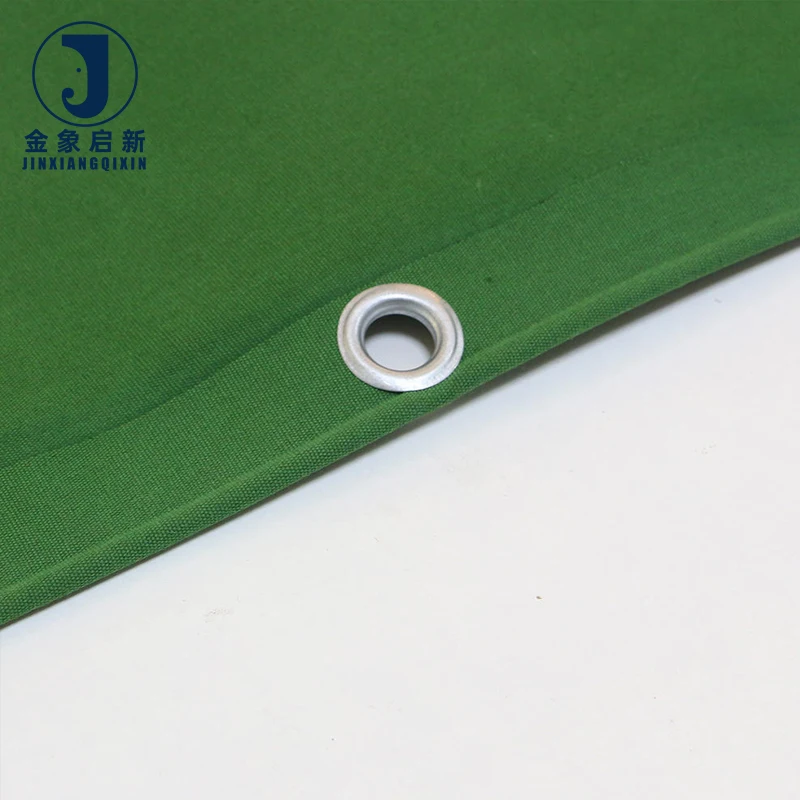
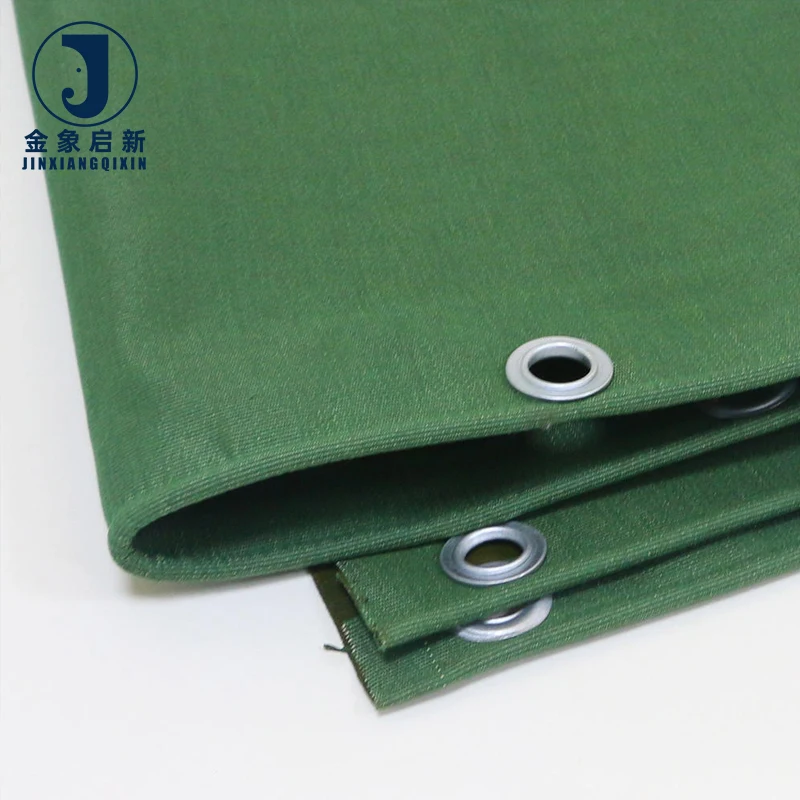
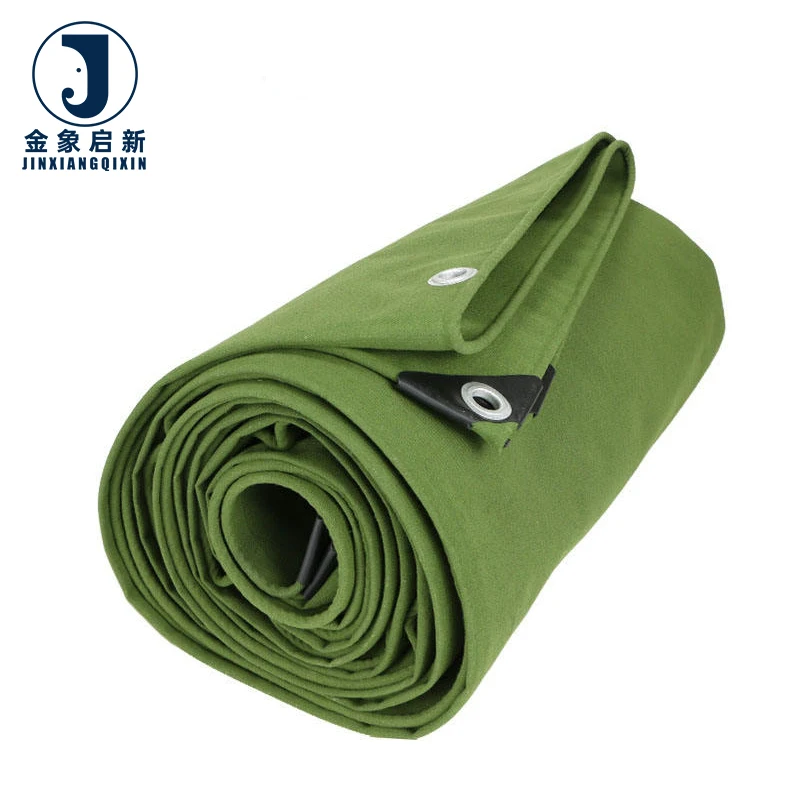
| Reinforcement | Rust-proof aluminum eyelets every 1 meter at corners and hem; folding and seams welded and sewn with poly ropes |
| Standards | CE, ISO (specific standard numbers not stated in source) |
Application Suitability
| Application | Exposure & Requirement |
|---|---|
| Temporary membrane structure cover during construction phase | UV exposure, wind uplift, water ingress, repeated installation and removal cycles |
| Mining and tunnelling staging area equipment cover | Abrasion from rock dust, high humidity, chemical contact, low-light handling |
| Specialist inflatable structure fabric for temporary enclosures | Internal air pressure cycling, flex fatigue at fold lines, rapid deployment stress |
| Aviation ground support equipment shroud | Fuel and hydraulic fluid contact, outdoor weathering, compliance documentation on site |
| Ventilation duct outer wrap in temporary mine ventilation | Fire-retardant requirement, anti-static build-up risk, confined-space handling |
Why "Heavy Duty" Means Nothing Without Verified Weight and Certification
The term heavy-duty canvas truck tarp appears on quotations everywhere, but when the roll arrives and the site engineer weighs a sample, the GSM falls short of what was promised — or the flame-retardant certificate does not match the grade the inspector requires.
I have seen technical fabric orders delayed at site handover because the documentation packet lacked the specific test standard the safety officer needed. [NEED_CITE: fire classification standards for temporary structures on construction sites] A 600gsm PVC laminated canvas can perform well in transport and staging applications, but only when the buyer receives a material specification sheet that states the exact base fabric construction, coating weight, and any applicable treatment grade before the container ships.
Woven Base Fabric Stability Under Flex Load
The polyester cotton industrial textile base with 8-12 strands of fine cotton yarn provides dimensional stability that pure synthetic weaves sometimes lack in specialist structure applications. Cotton-blend yarns absorb coating resin into the fibre rather than sitting on the surface, which improves adhesion and reduces delamination risk at high-flex zones such as duct bends or inflatable structure crowns.
When the fabric is used as an outer membrane for temporary enclosures, the woven base resists the cyclic loading caused by wind gusts and internal pressure changes. This PVC coated tarpaulin for truck side curtain use also translates well to staging covers that are deployed, removed, and redeployed across multiple project phases.
Seam Construction at Maximum Stress Points
Welded and sewn seams with poly rope reinforcement at fold lines directly address the failure mode where heat-sealed joints peel apart under load before the fabric itself shows any damage. [NEED_CITE: tensile and tear test methods for coated fabrics per ISO 1421] The poly rope inserted into the hem distributes tie-down tension across a broader area, preventing the aluminum eyelets from tearing through the canvas at the corner and hem positions.
For ventilation duct applications, longitudinal seams run the full length of the duct run and must hold under continuous positive or negative pressure. The combination of welding and stitching gives redundancy: if one bond type degrades from chemical exposure or temperature cycling, the other maintains structural integrity until a planned replacement window.
How GSM, Thickness, and Weave Density Interact
A 600gsm weight reading alone does not tell you how the PVC laminated canvas will behave under tensile or tear load. The total thickness options of 0.5mm, 0.6mm, and 0.7mm reflect different coating weights applied over the same base fabric — a thicker coating adds puncture resistance and chemical barrier performance but also increases stiffness, which affects how the fabric drapes over curved structure frames or folds into compact storage bundles.
The 8-12 strand fine cotton yarn count in the base textile determines how tightly the weave locks together. A denser weave resists tear propagation because the yarns must break individually rather than unzipping along a single warp or weft line. When evaluating this material for membrane or inflatable structure use, request a specification sheet that breaks down coating weight separately from base fabric weight so you can confirm the ratio matches your structural engineer’s requirements. [NEED_CITE: relationship between coating weight and base fabric denier in coated technical textiles]
Surface finish also plays a role: the army green camouflage colour option absorbs and dissipates heat differently than lighter custom colours, which affects thermal expansion at the coating-to-fabric interface during high-temperature exposure.
The Hidden Cost of Undocumented Treatment Grades
When a site safety officer asks for the flame-retardant test certificate and the supplier can only provide a generic statement, the entire fabric batch may be rejected at inspection — regardless of actual performance. Anti-static treatment for mining or tunnelling staging areas faces the same documentation gap: without a stated test basis, the procurement team cannot confirm compliance with site-specific regulations.
Colour variation between rolls in a single order becomes visible once the panels are installed side by side on a temporary structure or ventilation duct run. Pre-shipment inspection records that confirm roll-to-roll colour consistency and eyelet spacing reduce the risk of on-site rework and the associated schedule delays that follow. [NEED_CITE: batch colour consistency standards for coated fabric in large-scale temporary structures]
Why Procurement Teams Source This Material Here
Three full production lines and 36 sets of professional equipment support bulk capacity for specialist structure and ventilation duct fabric orders, with in-process quality checks at every coating and lamination stage rather than only at final inspection.
A 10-person R&D team handles material selection for non-standard applications — if your project requires a specific thickness from the 0.5mm to 0.7mm range paired with a custom colour beyond the standard army green camouflage, samples are developed within days for approval before production begins.
Dedicated QA/QC runs at every production stage with 100% inspection before shipment, so the 600gsm weight stated on the quotation matches what arrives on site. ISO and CE certification documentation ships with every order, and certificates of origin accompany cross-border deliveries for customs clearance at the destination port.
Documentation & Verification
- Material specification sheet stating 600gsm weight, base fabric denier, and coating type for every roll
- CE and ISO certificates included with shipment documentation for site compliance review
- Pre-shipment inspection record confirming roll-to-roll colour and eyelet spacing consistency
- Fire-retardant test report provided when a specific grade is confirmed at order stage
- Certificate of origin and customs support documents for cross-border specialist project delivery
Fabrication, Handling & Storage
- Heat-seal welded seams at 0.5mm–0.7mm thickness ranges using temperature profiles matched to the PVC coating formulation
- Rust-proof aluminum eyelets at 1-meter intervals require backing plates at high-tension tie-down points on structure frames
- Store 2m-wide rolls vertically on pallets to prevent permanent creasing across the 100m roll length
- Deploy folded panels in low-temperature conditions gradually to avoid coating crack at fold lines
- Clean surface with mild detergent only; solvents may degrade the PVC coating adhesion to the cotton-blend base
- Cut-to-size panels should be patterned from the 2m roll width to minimise offcut waste on rectangular covers
What to Include in Your Enquiry
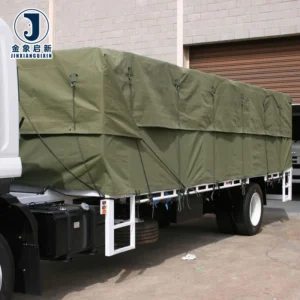
Specify the intended application — whether this PVC coated tarpaulin for truck side curtain will be used as a transport cover, temporary membrane structure skin, or ventilation duct outer wrap — along with the exposure conditions the fabric will face on site. Confirm whether your project requires a specific flame-retardant or anti-static grade for regulatory compliance, and state the target market so the correct test standard can be referenced.
Indicate whether you need finished cut-to-size panels with eyelets and reinforced hems, or roll stock in the standard 2m width for your own fabrication line. If colour matching to an existing structure or fleet livery is required, provide a reference sample or RAL code with your enquiry.
Frequently Asked Questions
Q: Can this fabric meet the fire-retardant grade required for our mining or tunnelling site?
A: Flame-retardant treatment is available in multiple grades, but the specific standard your site requires must be confirmed before production. State the regulation or test method your safety officer references — such as a national mining code or temporary structure fire classification — and we will supply the matching test report with the shipment.
Q: How do we verify the 600gsm weight on arrival against the quotation?
A: Request the material specification sheet before dispatch, which breaks down base fabric weight and coating weight separately. On arrival, cut a measured sample from the roll and weigh it on a calibrated scale. Any discrepancy beyond normal production tolerance should be flagged against the pre-shipment inspection record included in the documentation packet.
Q: Are welded seams reliable for continuous-pressure ventilation duct runs?
A: The seams on this canvas are both welded and sewn with poly rope reinforcement, providing redundancy under positive or negative air pressure. The welding bonds the PVC coating layers together while the stitching adds mechanical strength. For long duct runs, request seam peel-strength test data matched to your operating pressure range.
Q: What is the minimum order for a custom colour or non-standard cut-to-size panel?
A: Custom colours and cut-to-size panels are produced on dedicated lines, so minimum quantities depend on the colour formulation complexity and panel dimensions. Provide your required panel sizes, colour reference, and annual volume estimate in the enquiry so we can confirm the production minimum and lead time for your specification.
Q: Is anti-static treatment available for use in explosive atmosphere staging areas?
A: Anti-static treatment can be applied to this PVC laminated canvas, but the test basis and certification must be matched to the specific explosive atmosphere classification your project falls under. Confirm the required standard in your enquiry so we can verify treatment availability and include the relevant documentation with your order.