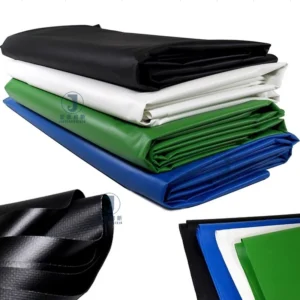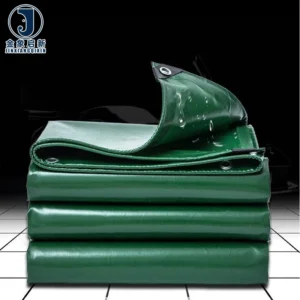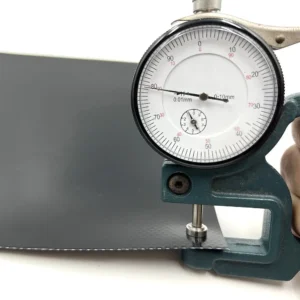
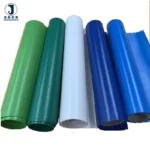
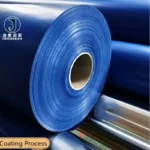
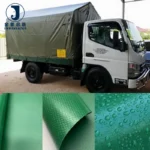
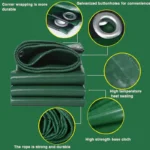
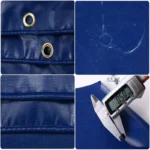
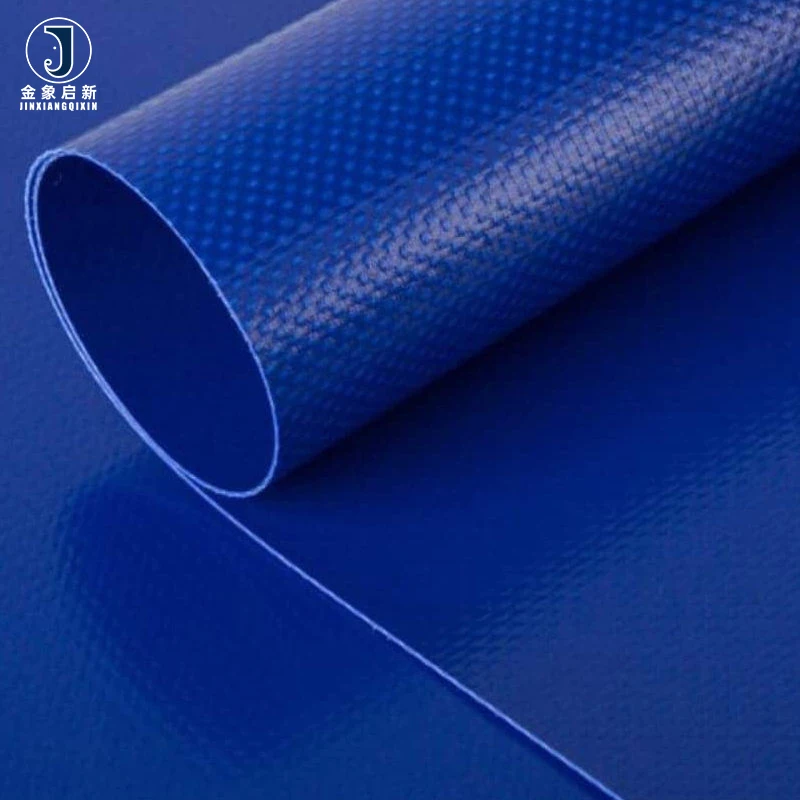
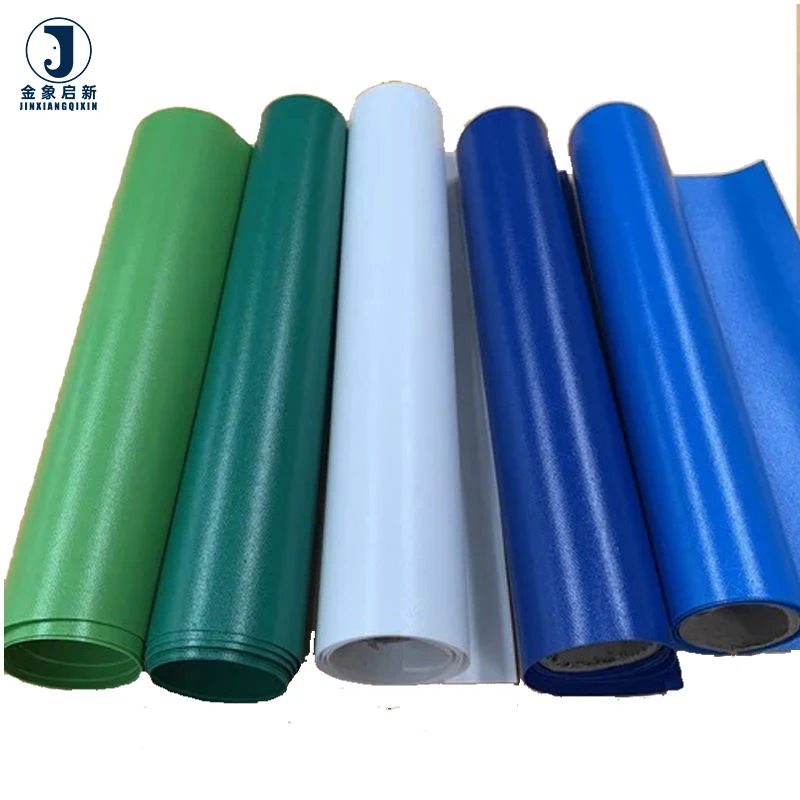
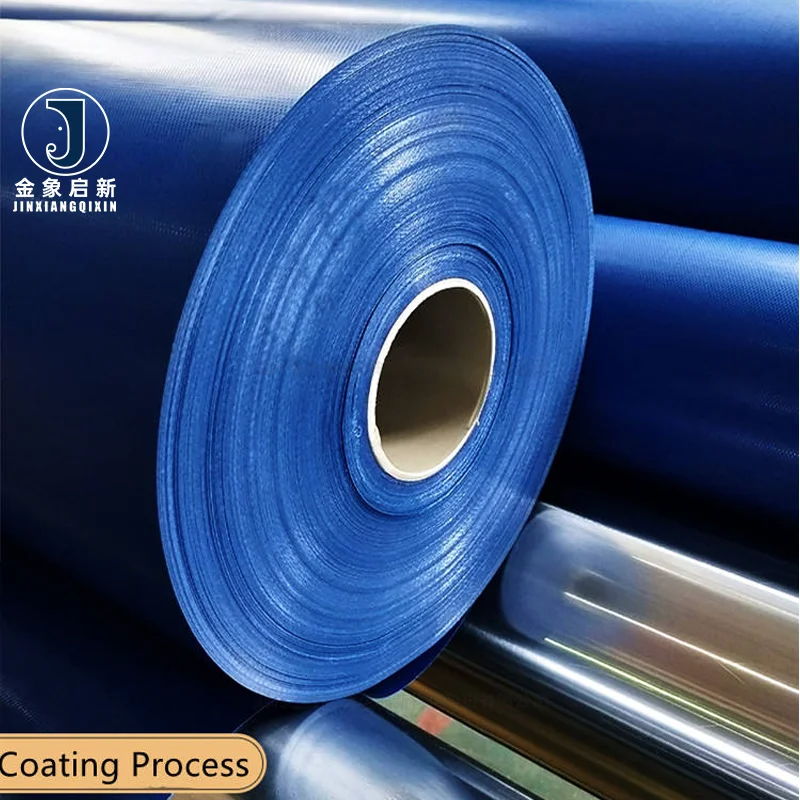
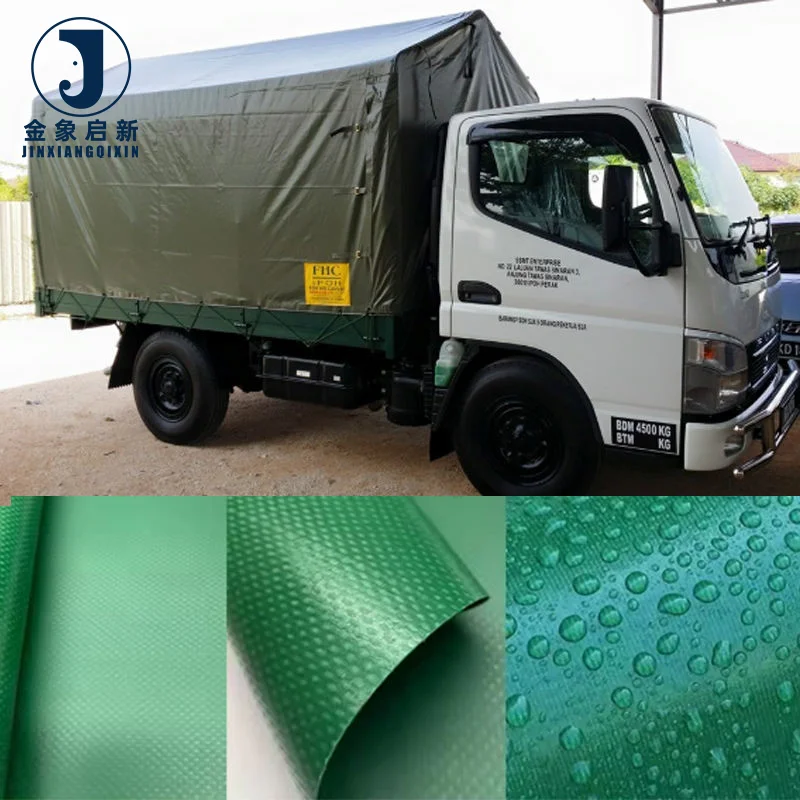
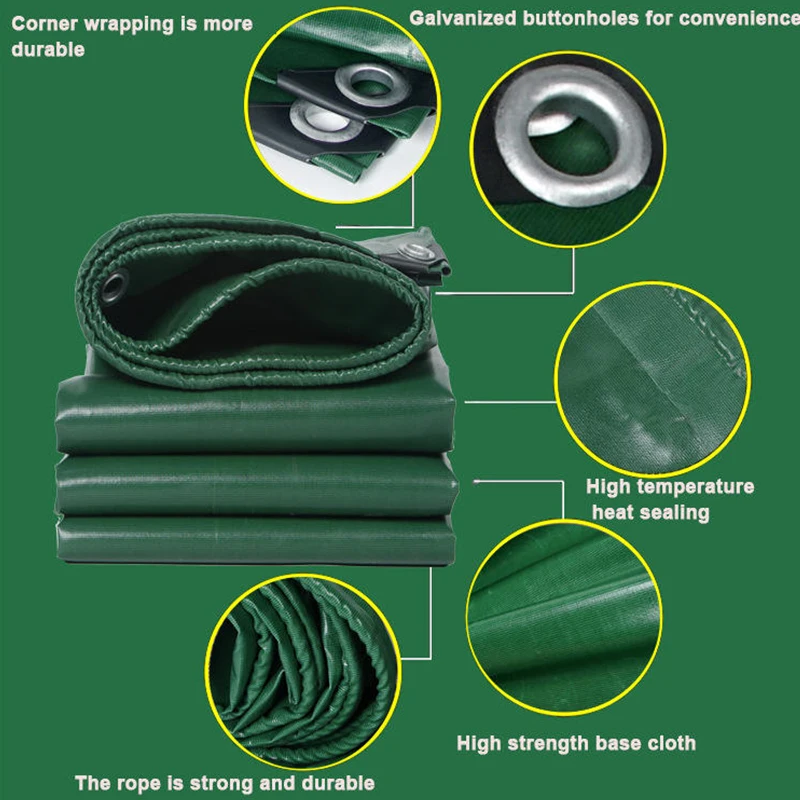
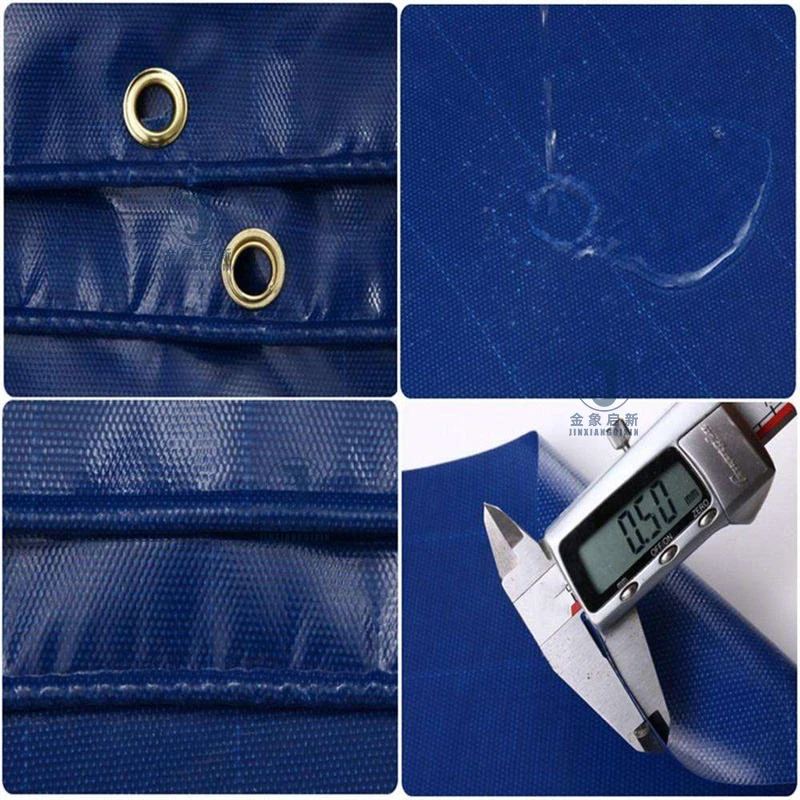
Deep Coating Process Control — consistent GSM and adhesion verified at every production stage for ventilation duct and membrane structure fabric.
Technical Specifications
| Parameter | Value |
|---|---|
| Product Type | PVC Coated Tarpaulin Roll |
| Weight Range | 500gsm-1000gsm (confirm the grade for this item) |
| Coating Material | PVC |
| Base Fabric | Polyester Base Fabric |
| Coating Method | Double-Sided PVC Coating |
| Fabrication Methods | High frequency hot melt, Hot air, Sewing |
| Waterproof Rating | Waterproof (overall coating sealing) |
| Flame Retardant Grade | Flame Retardant (grade not stated in source) |
| UV Treatment | Anti UV (test basis not stated in source) |
| Anti-Mildew | Anti Mildew |
| Surface Finish | Smooth and soft surface with a leather-like texture |
| Density | 1.15-2.00g/cubic centimeter |
| Tensile Strength | 50-80MPa (test standard not stated in source) |
| Brittle Temperature | ≤ -50~-60 ℃ |
| Softening Temperature | ≥ 80 ℃ |
| Melting Point | 212 ℃ |
| Additional Features | Heavy Metal Free, Flexible, Heavy Duty, Self Clean |
| Standards | ISO, CE |
Application Suitability
| Application | Exposure & Requirement |
|---|---|
| Underground mining ventilation duct | Continuous airflow, high humidity, rock dust abrasion, strict fire and anti-static compliance |
| Tunnelling ventilation ducting | Confined space, mechanical handling stress, mandatory flame retardant certification |
| Aviation facility air duct | Large diameter fabrication, wind load tension, certified flame retardant grade required |
| Membrane and inflatable structures | Biaxial tension, UV exposure, thermal welding for panel joining, long-term weathering |
| Construction site ventilation | Temporary deployment, frequent relocation, abrasion from duct supports and ground contact |
What "Certified" Means When the Ventilation Duct Fails Inspection
A PVC coated tarpaulin fire retardant anti-static certified claim on a quotation is worthless if the test report does not match the standard enforced on your job site. Mining inspectors and aviation safety officers do not accept generic statements; they require documentation citing the exact standard number. We see ventilation duct material arrive on site only to be rejected because the supplier provided a flame retardant certificate for M2 while the project specification demanded B1 per DIN 4102 or NFPA 701 compliance [NEED_CITE: fire classification standards for textile ventilation ducts in mining and aviation]. The cost is not just the material — it is the downtime while replacement fabric is sourced and fabricated.
Fabrication Compatibility for Duct and Membrane Construction
The double-sided PVC coating on polyester base fabric supports high frequency hot melt and hot air welding, both essential for duct fabrication where longitudinal seams must hold under positive air pressure. Fabricators working with this PVC coated tarpaulin fire retardant anti-static certified material can achieve continuous weld lines without delamination when temperature and dwell time are matched to the coating thickness. The smooth leather-like surface finish also allows the fabric to pass through automated welding machines without sticking or leaving residue on the heated elements.
Treatment Options Matched to Site Compliance
Flame retardant treatment is available in grades to be confirmed per project requirement — the specific standard your jurisdiction enforces dictates which test report must accompany the shipment. Anti-static treatment is offered as an option for mining and tunnelling applications where surface resistance limits are defined in the site safety plan [NEED_CITE: anti-static surface resistance requirements for underground ventilation ducting]. Requesting the correct documentation upfront avoids the scenario where fabricated duct sections are removed and scrapped because the compliance paperwork was incomplete.
Reading the Specification Sheet Beyond the GSM Number
The 500gsm-1000gsm weight range covers product family options; the specific grade for your application depends on duct diameter, internal pressure, and handling frequency. Tensile strength listed at 50-80MPa reflects the combined contribution of polyester base fabric denier and coating adhesion — a heavier coating alone does not guarantee higher tear resistance if the base weave is open. The brittle temperature of ≤ -50~-60 ℃ and softening temperature of ≥ 80 ℃ define the operating envelope for both storage and deployed service, relevant when duct sections are shipped in open containers or installed in unconditioned spaces. Hot air weld repairability means field damage from rock fall or mechanical impact can be addressed without removing the entire duct section.
When the Specification Gap Surfaces on Site
Ventilation duct material supplied without the fire-retardant or anti-static certification the site requires forces a choice between proceeding without compliance documentation or halting operations until replacement arrives. We have seen heavy-grade coated rolls fail inspection because the test report cited an outdated standard version or a different product line entirely. Colour variation between rolls in a single order becomes visible once membrane panels are welded side by side, requiring rework or selective panel replacement that disrupts the construction schedule [NEED_CITE: batch consistency challenges in coated fabric membrane assembly]. Welded seams failing before the fabric does typically points to a mismatch between welding parameters and the specific coating formulation rather than a material defect.
Why Source This Fabrication-Grade Material Here
Three full production lines and 36 sets of professional equipment provide the bulk capacity needed when a tunnelling project requires multiple container loads of consistent duct fabric. The 10-person R&D team develops samples within days when a membrane structure architect needs to validate weld strength and colour under site lighting conditions. Dedicated QA/QC at every production stage with 100% inspection before shipment means the GSM on the roll matches the quotation, and the flame retardant test report corresponds to the batch being dispatched. Nearly 30 years focused on coated fabric has produced deep process control over coating weight and adhesion — the variables that determine whether a welded seam holds or peels under duct pressure. ISO and CE certification is maintained with documentation packages assembled per shipment, not as a generic certificate download.
Documentation & Verification
- Material specification sheet stating GSM, base fabric denier, coating weight, and treatment grades for each roll
- Fire-retardant test report citing the specific standard required by the project jurisdiction
- Anti-static surface resistance measurement and certification for mining ventilation applications where mandated
- Pre-shipment inspection record with roll-by-roll verification before container loading
- Certificate of origin and customs documentation package assembled per destination country requirements
Fabrication, Handling & Storage
- Hot air welding temperature and speed must be calibrated to the specific double-sided PVC coating weight for consistent seam strength
- High frequency welding produces clean longitudinal seams on duct sections when electrode pressure matches the fabric density
- Rolls should be stored upright on pallets to prevent permanent creasing that transfers into fabricated duct panels
- Low-temperature transport below the brittle point of ≤ -50~-60 ℃ is within range, but allow rolls to reach ambient temperature before unrolling to avoid coating crack
- Field repair of punctures and seam damage uses the same hot air welding method, maintaining continuity with the original fabrication
Moving to Specification and Sample
Provide the ventilation duct diameter, internal operating pressure, and the fire-retardant or anti-static standard enforced on your project. Confirm whether you require roll stock for your own fabrication facility or finished duct sections with welded seams and flanges. Specify the membrane panel dimensions and colour reference if the application involves architectural structures where visual consistency across welded joints is required. Sample development proceeds once these parameters are locked.
Frequently Asked Questions
Q: What fire-retardant grade does the PVC tarpaulin carry, and which test standard is it certified to?
A: Flame retardant treatment is available in multiple grades. The specific standard — M2, B1 per DIN 4102, NFPA 701, or another — must be confirmed against your project specification or jurisdictional requirement. We supply the corresponding test report with each shipment once the target standard is defined at the inquiry stage.
Q: How is anti-static performance measured and documented for mining ventilation duct applications?
A: Anti-static treatment is applied to achieve the surface resistance limits defined in mining and tunnelling safety regulations. The measurement method and acceptable range depend on the jurisdiction enforcing the site. Documentation stating the measured surface resistance accompanies the shipment when this treatment is specified.
Q: What GSM and base fabric denier options are available for ventilation duct and membrane structure fabrication?
A: The weight range covers 500gsm-1000gsm across the product family. The appropriate grade depends on duct diameter, operating pressure, and handling frequency. Base fabric denier and weave density are matched to the selected GSM to deliver the tensile and tear performance required for fabrication and deployment.
Q: Can the fabric be hot air welded on-site, and what weld strength can be expected relative to the base material?
A: Hot air welding is compatible with the double-sided PVC coating, and the same method is used for field repairs. Weld strength depends on temperature, speed, and pressure settings calibrated to the specific coating weight. Fabricators typically achieve seam performance that approaches the base fabric strength when parameters are correctly matched.
Q: What compliance documentation is included with each shipment?
A: Each dispatch includes a material specification sheet, test reports for any specified flame retardant or anti-static treatment, ISO and CE certificates, a pre-shipment inspection record, roll packing list, and certificate of origin. Documentation is assembled per shipment rather than issued as a generic download.