


Specialist Technical Fabric Supply — We back every roll of fire retardant canvas tarpaulin with compliance documentation matched to your project specification, ensuring ventilation duct and structural fabric meets site safety requirements before installation begins.
Technical Specifications
| Parameter | Value |
|---|---|
| Product Type | PVC Laminated Canvas Tarpaulin |
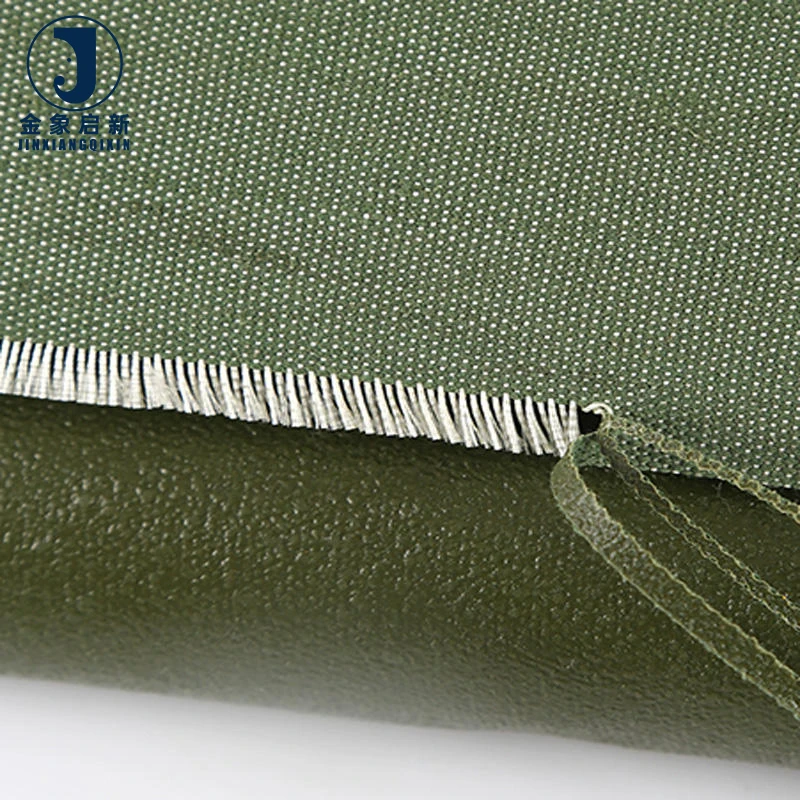
| Base Material | Polyester cotton industrial textile and 8-12 strands of fine cotton yarn |
| Weight | 600gsm |
| Total Thickness | 0.5mm / 0.6mm / 0.7mm |
| Roll Width | 2m |
| Roll Length | 100m |
| Coating Method | Laminated |
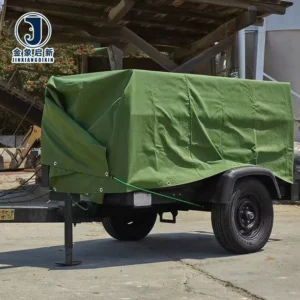
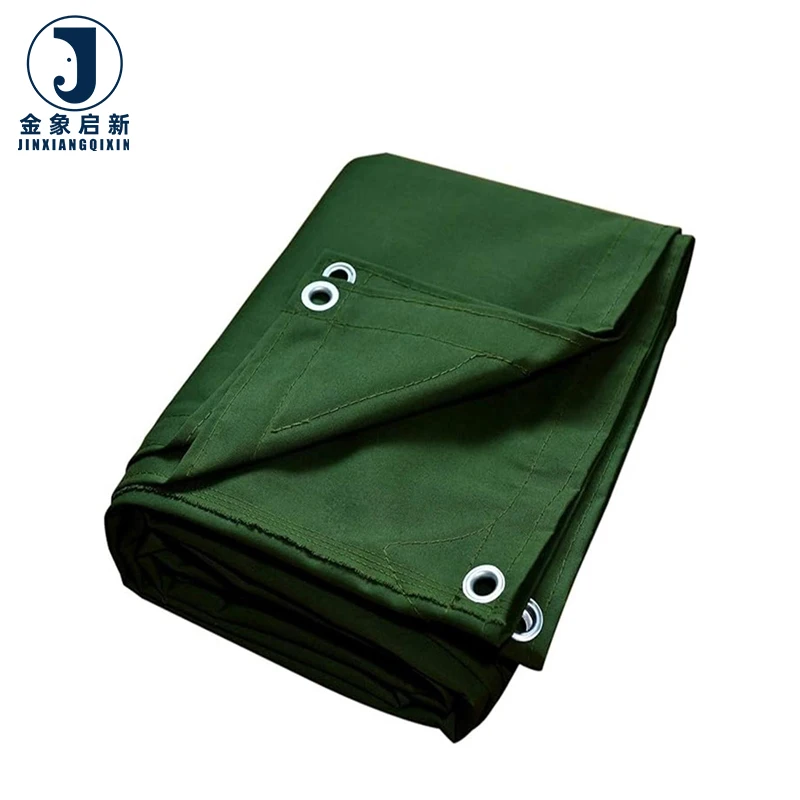
| Color | Army Green Camouflage / Custom |
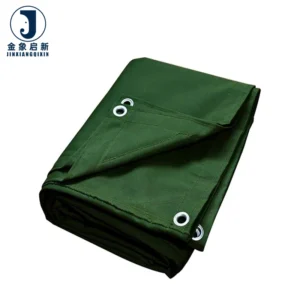
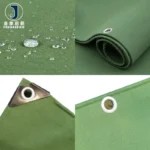
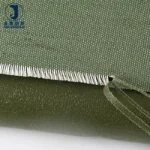
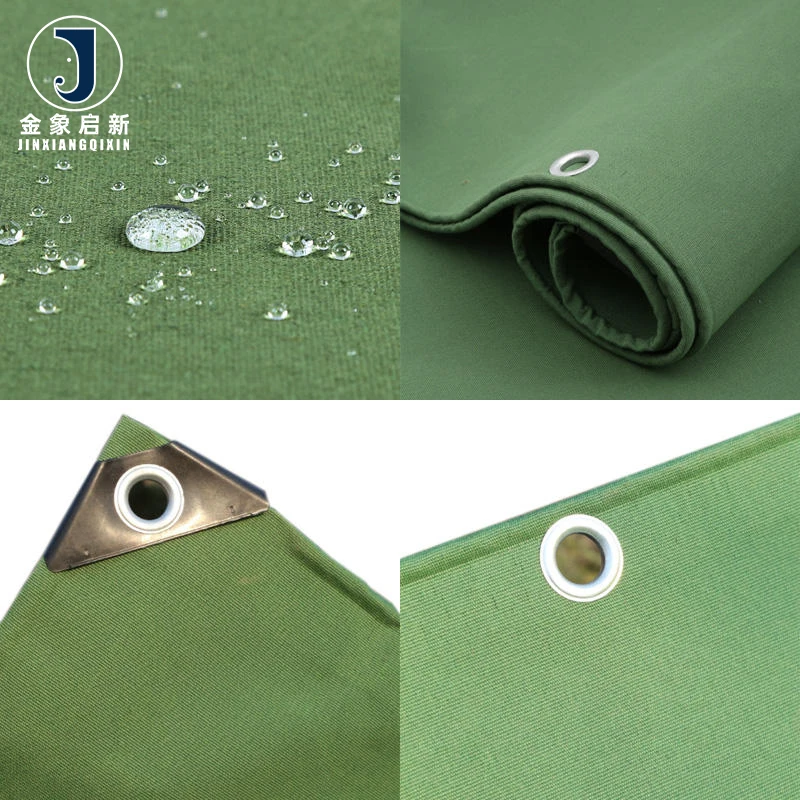
| Eyelet & Hem | Rust proof aluminum holes every 1 meter at corners and hem; folding and seams welded and sewn with poly ropes |
| UV Treatment | UV resistant (test basis not stated) |
| Flame Retardant | Available in flame retardant grades — confirm the grade required for your market |
| Anti-Static | Available with anti-static treatment — test report provided where applicable |
| Service Life | 5-8 years even longer (source value — verify against manufacturer catalog) |
| Key Features | Wear-resistant, corrosion-resistant, tensile-resistant, high- and low-temperature resistant |
| Standards | CE, ISO |
Application Suitability
| Application | Exposure & Requirement |
|---|---|
| Mining and tunnelling ventilation duct | Continuous airflow, dust loading, fire safety compliance in confined underground environments |
| Aviation ground support ducting | Fuel vapour proximity, anti-static surface resistance, frequent handling and relocation |
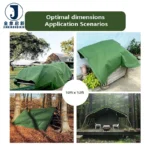
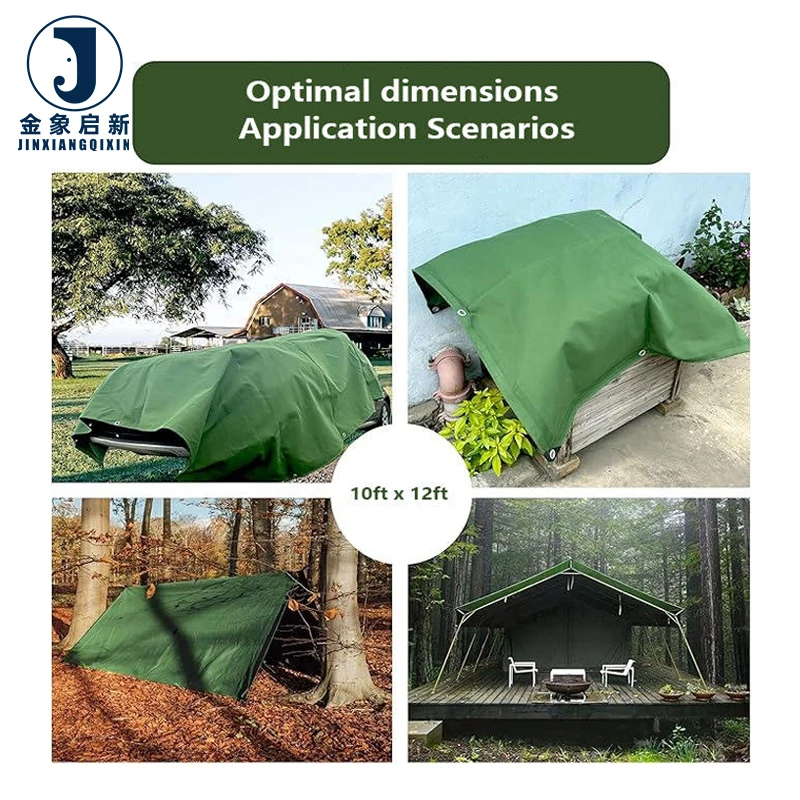
| Temporary industrial membrane structures | Wind uplift, snow loading, thermal expansion and contraction across seasons |
| Inflatable shelter and enclosure fabric | Internal positive pressure, repeated inflation cycles, UV exposure during outdoor deployment |
| Construction site partition and cover | Abrasion from tools and materials, weather exposure, dust and moisture containment |
Why Ventilation Duct Fabric Fails Compliance Audits on Site
Specifying fire retardant canvas tarpaulin for duct construction without a documented test standard leaves your project exposed to rejection at the inspection stage. A fabric labelled "flame retardant" without a grade or test method is a liability, not a specification.
Procurement teams regularly receive duct fabric accompanied only by a generic certificate that does not reference the standard the site safety officer requires. When the inspector asks for the test report, the supplier produces a material safety data sheet instead — which proves nothing about how the fabric behaves under a flame source. This gap between what is claimed on the quotation and what is documented on arrival causes project delays, re-ordering costs, and failed handover inspections [NEED_CITE: fire safety documentation requirements for ventilation ductwork in mining and aviation environments].
Matching Fire Classification to Your Project Environment
When you source industrial ventilation duct fabric for underground mining or aviation hangar use, the fire classification must align with the regulatory framework your site operates under. Different jurisdictions reference different test methods — some require a pass/fail result to a vertical burn test, others demand a classification within a multi-tier rating system. Confirming the correct standard at inquiry stage prevents costly substitution later. Our R&D team reviews your project specification and recommends the appropriate flame retardant grade before sample development begins.
Anti-Static Performance Where Ignition Risk Exists
In aviation ground support and certain mining environments, static charge accumulation on duct surfaces presents an ignition hazard that fire retardancy alone does not address. Anti-static treatment reduces surface resistivity to levels documented by test report, giving site safety teams the evidence they need to approve installation. Where your application involves fuel vapour proximity or combustible dust, request the anti-static test report matched to the relevant standard for your market [NEED_CITE: anti-static requirements for ventilation fabric in aviation and mining sectors].
Reading the 600gsm PVC Laminated Canvas Construction
The 600gsm weight of this PVC laminated canvas tarpaulin reflects the combined mass of the polyester-cotton woven base and the laminated coating layers. Weight alone does not define strength — the 8-12 strand fine cotton yarn construction determines how load distributes across the weave, influencing both tensile capacity and tear propagation resistance. Lamination as a coating method bonds the PVC film to the base fabric under heat and pressure, producing a flat, uniform surface suited to welding and sewing operations. The available thickness options of 0.5mm, 0.6mm, and 0.7mm allow you to select the balance between flexibility for duct forming and rigidity for structural membrane panels. The 2m roll width supports efficient cutting layouts for standard duct diameters while minimising offcut waste. High- and low-temperature resistant coating maintains handling characteristics across seasonal temperature swings, reducing the risk of cold-cracking during winter installation or surface tackiness in summer heat [NEED_CITE: relationship between base fabric density and tear resistance in laminated technical textiles].
The Cost of Undocumented Fabric Properties
When fire retardant canvas tarpaulin arrives on site without a test report confirming the stated grade, the contractor faces a choice between installing unverified material or halting work until documentation is resolved — both outcomes carry financial consequences. Duct fabric that fails a post-installation flame test must be removed and replaced, doubling material cost and pushing the project schedule. Similarly, anti-static fabric deployed without surface resistivity documentation exposes the operator to compliance risk during routine safety audits. Specifying the test standard at purchase order stage, and requiring the report before dispatch, eliminates these downstream failures [NEED_CITE: documented cases of ventilation duct fabric failing site fire inspection].
Why Technical Buyers Source This Fabric Here
Three full production lines and 36 sets of professional equipment support consistent output of fire retardant canvas tarpaulin in volume, with dedicated capacity allocated to duct and membrane fabric orders. The 10-person R&D team handles material selection and test standard matching for your specific compliance environment, rather than supplying a generic product with a generic certificate. Every roll undergoes QA/QC inspection at each production stage, with 100% pre-shipment verification of coating adhesion, seam integrity, and stated GSM. Custom widths and finished duct dimensions are produced against your drawing, with samples developed within days so you can validate weld behaviour and forming characteristics before committing to bulk production.
Documentation & Verification
- Material specification sheet stating 600gsm, polyester-cotton base, and lamination method per roll
- Fire retardant test report matched to the standard specified on your purchase order
- Anti-static surface resistivity test report where applicable to your duct application
- Pre-shipment inspection record confirming GSM, coating weight, and seam weld integrity
- Certificate of origin and customs documentation for international project delivery
- Roll packing list with batch traceability for multi-roll ventilation duct orders
Fabrication, Handling & Storage
- Weld seams at recommended temperature settings to match the PVC laminated coating adhesion characteristics
- Sewn seams with poly rope reinforcement at every stress point to prevent edge failure under duct pressure
- Rust proof aluminum eyelets at 1-meter intervals distribute tie-down load across the 600gsm base fabric
- Store rolls flat on pallets to avoid permanent creasing in the 0.5mm–0.7mm laminated layers
- Allow cold-stored rolls to reach ambient temperature before unrolling to prevent coating micro-cracking
- Clean surfaces with mild detergent only — solvent-based cleaners may compromise the laminated PVC bond
What to Include in Your Inquiry
Provide the ventilation duct diameter, fabric width requirement, and total linear meterage for your project so we can recommend the most efficient roll configuration. Specify the fire retardant grade and anti-static standard your site safety team requires, along with the test method reference. Confirm whether you need finished cut-to-size panels with welded and sewn hems, or roll stock for your own fabrication facility.
Frequently Asked Questions
Q: What fire-retardant grade does this fabric meet, and which test standard applies?
A: Fire retardant grades are matched to the standard required by your project jurisdiction. We supply the fabric with a test report referencing the specific method — confirm the classification your site inspector requires at inquiry stage so we develop the correct formulation and arrange third-party testing before production.
Q: Is anti-static certification available for mining and aviation duct applications?
A: Anti-static treatment is available with surface resistivity verified by test report. Share the standard your project references so we confirm the treatment meets the required threshold and include the documentation with your shipment.
Q: How is GSM verified on arrival, and what documentation accompanies each roll?
A: Each roll is inspected against the stated 600gsm before dispatch, and the pre-shipment inspection record travels with your shipment. You can independently verify weight on arrival using a calibrated scale and the test method referenced in your purchase order specification.
Q: Can duct diameter and fabric width be customised for specific ventilation system designs?
A: Custom widths and finished panel dimensions are produced to your duct design drawing. Our R&D team develops a sample within days so you can validate weld parameters, forming behaviour, and eyelet placement before authorising full production.
Q: What is the recommended welding or sewing method for duct seam construction?
A: The PVC laminated surface responds to standard hot-air and wedge welding techniques. Sewn seams are reinforced with poly rope and welded over for a sealed finish. We recommend testing weld parameters on a sample piece before full fabrication to confirm temperature and speed settings.