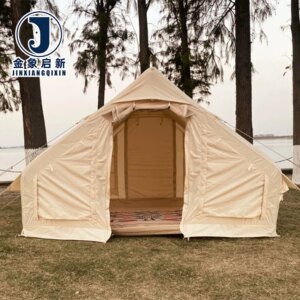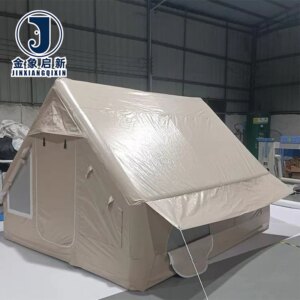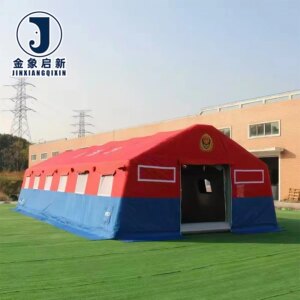
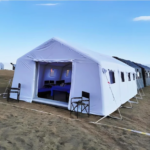

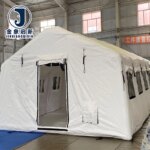
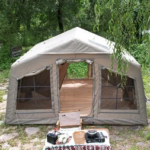
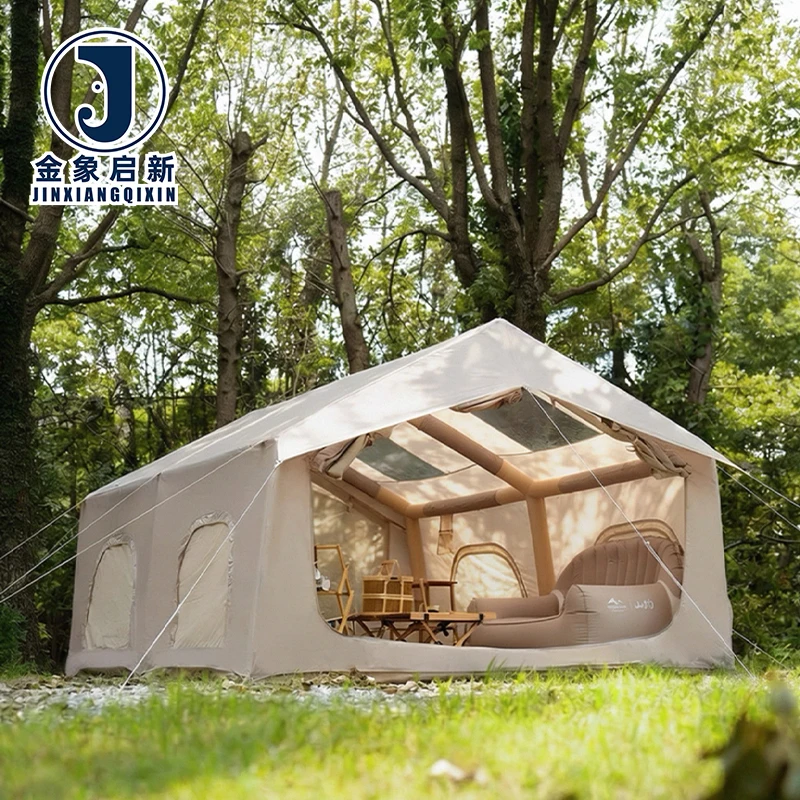


Certified Fabric Compliance — Every roll undergoes batch-specific inspection with fire-retardant and anti-static test reports aligned to site audit requirements before dispatch.
Technical Specifications
| Parameter | Value |
|---|---|
| Product Type | PVC Tent |
| Core Material | PVC tarpaulin |
| Product Forms | Inflatable structure with automatic opening mechanism |
| Construction | Single layer |
| Fire-Retardant Treatment | Available — confirm grade required for your market (grade not stated in source) |
| Anti-Static Treatment | Available — confirm standard required for your environment (standard not stated in source) |
| Key Features | Waterproof, UV-resistant, tear-resistant |
| Customization Service | OEM & ODM (sample customization, pattern printing) |
| Production Facility Area | 9180 square meters |
| Production Lines | 3 full production lines |
| Processing Equipment | 36 sets of professional processing equipment |
| R&D Team Scale | 10 technicians |
| Standards | ISO9001, ISO14001, ISO45001, CE |
Application Suitability
| Application | Exposure & Requirement |
|---|---|
| Mining and tunnelling temporary shelters | Proximity to ventilation ducts carrying particulate-laden air; fire-retardant and anti-static compliance mandatory for underground and confined-zone deployment |
| Aviation ground operations enclosures | Tarmac fuel vapour exposure, jet blast proximity; regulatory fire classification required before inflatable structure erection |
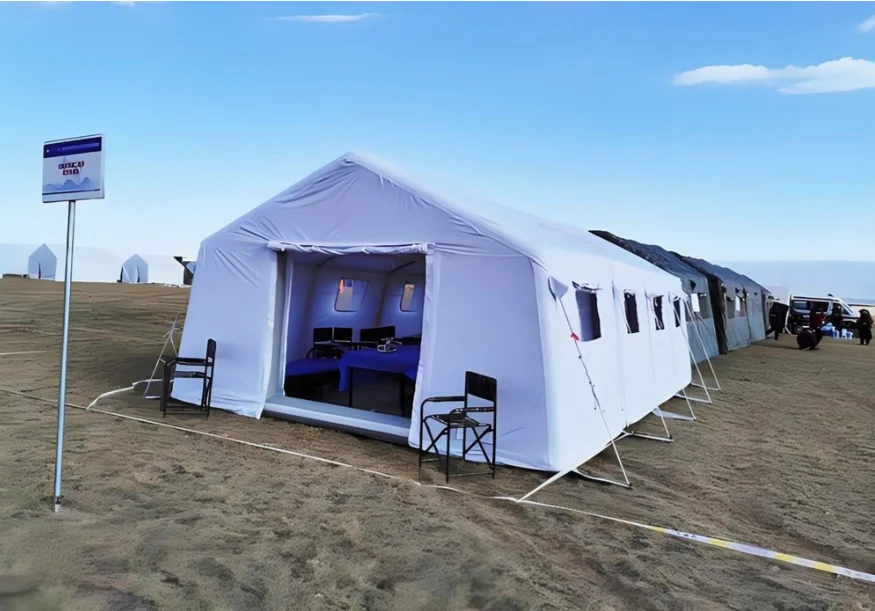
| Disaster relief rapid-setup shelters | Rapid deployment in unpredictable weather; structural integrity under wind load, waterproof performance during prolonged rain events |
| Construction site operational facilities | Dust, equipment contact, UV exposure over multi-week projects; tear resistance at flex and anchor points critical |
| Industrial storage and material processing | Chemical particulate exposure, forklift proximity; fabric must resist puncture and abrasion during loading operations |
Why Certified Inflatable Tent Fabric Fire Retardant Anti-Static Compliance Cannot Be Assumed From a Supplier Claim
A certificate on a brochure is not the same as a batch-specific test report tied to the material arriving at your site.
When procurement teams source inflatable tent fabric for regulated environments, the most frequent failure is not material quality itself — it is documentation. Inflatable tent fabric fire retardant anti-static certified on a quotation can arrive without the accompanying test report that a mining safety officer or aviation compliance auditor demands. The site inspector does not read your purchase order; they read the paperwork attached to the roll or the fabricated structure. I have seen entire shelter deployments held at the gate of a tunnelling project because the anti-static surface resistance value was not recorded on the incoming inspection log [NEED_CITE: anti-static surface resistance verification for temporary structures in explosive atmospheres]. The cost of that delay compounds daily.
What Compliance Means for Specialist Structure Contractors
For contractors working in mining, tunnelling or aviation ground support, an inflatable shelter is not a commodity purchase — it is a compliance-critical deployment. The inflatable tent fabric fire retardant anti-static certified specification must align with the specific regulatory framework governing that site: underground ventilation zones demand different fire classification thresholds than above-ground aviation tarmac areas. Our R&D team works with buyers to map the destination market’s fire and static control requirements before production begins, ensuring the treatment applied matches the audit standard the site enforces.
Single-Layer Construction and Deployment Velocity
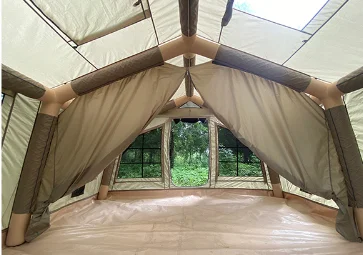
The single-layer PVC tarpaulin construction prioritises rapid inflation and collapse, which directly serves emergency response and disaster relief timelines. Multi-layer inflatable fabrics add thermal insulation but increase packed volume and weight — a trade-off that slows transport logistics when shelters must reach remote locations quickly. Single-layer deployment also reduces the number of seam welds, which are the primary failure points under repeated inflation cycles. For buyers prioritising speed of setup over thermal retention, the single-layer architecture delivers structural integrity with minimal ground crew requirement [NEED_CITE: seam failure frequency in inflatable structures under cyclic inflation loads].
Reading the Spec Sheet Beyond GSM
Coated fabric buyers often anchor decisions on GSM, but for inflatable tent applications the relationship between base fabric denier, weave density and coating adhesion matters more than weight alone. A heavier PVC tarpaulin with poor coating-to-yarn adhesion will delaminate at the valve attachment zone long before the stated tensile strength is reached. The coating method — whether knife-coated, laminated or calendered — determines peel strength, which in turn dictates how well the fabric holds welded seams during inflation pressure cycles. Surface finish also plays a role: glossy coatings shed water and dust more effectively in field conditions, while matte surfaces may be specified where reduced glare is required for operational visibility near equipment. Fire-retardant additives are integrated at the compounding stage, and their effectiveness depends on uniform dispersion through the PVC matrix — a process control variable that varies between production lines.
The Hidden Cost of Specifying Inflatable Fabric Without Application Context
When inflatable tent fabric is ordered by generic GSM and colour without stating the deployment environment, the consequences surface at site inspection. A shelter destined for an underground mining ventilation corridor requires anti-static treatment verified by surface resistance measurement — a parameter absent from a standard material data sheet. Fire-retardant grades differ between building material classifications and textile flame-spread tests; ordering "fire-retardant" without naming the standard risks receiving a grade that does not satisfy the local authority having jurisdiction [NEED_CITE: fire classification standards applicable to temporary inflatable structures in mining environments]. Batch-to-batch variation in coating weight also creates inconsistency in inflation behaviour, where one roll inflates to full pressure in the expected timeframe and the next requires extended blower runtime, disrupting deployment schedules.
Why Procurement Teams Source This Fabric Here
Production runs are scheduled across 3 full lines with 36 sets of processing equipment, giving capacity to fulfil bulk inflatable tent fabric fire retardant anti-static certified orders without splitting batches across external converters. The 10-technician R&D team develops pre-production samples that replicate the exact coating formulation, print registration and valve placement specified, so buyers approve physical prototypes before bulk coating begins. Dedicated QA/QC inspection at every production stage means coating weight, seam peel strength and surface treatment verification are recorded per roll, not sampled per batch. Documentation packages ship with each order — material specification sheets, test reports for applicable treatments, ISO and CE certificates, and pre-shipment inspection records — so the paperwork arrives before the container does. Custom widths and pattern printing are handled in-house, eliminating the lead-time penalty of outsourcing print or slitting to third parties.
Documentation & Verification
- Batch-specific quality inspection report certifying coating weight and treatment compliance per roll
- Fire-retardant test report documenting grade and test method applicable to destination market
- Anti-static surface resistance measurement record for environments with flammable atmosphere risk
- CE certification documentation to facilitate import clearance into European regulatory jurisdictions
- Pre-shipment inspection record with photographic evidence of roll condition before container loading
- Certificate of origin and customs support documents for smooth border clearance
Fabrication, Handling & Storage
- Heat-weld single-layer PVC tarpaulin seams at temperatures matching the coating compound’s fusion window to prevent delamination at valve zones
- Store rolls vertically on pallets to prevent permanent creasing through the coated surface that compromises inflation uniformity
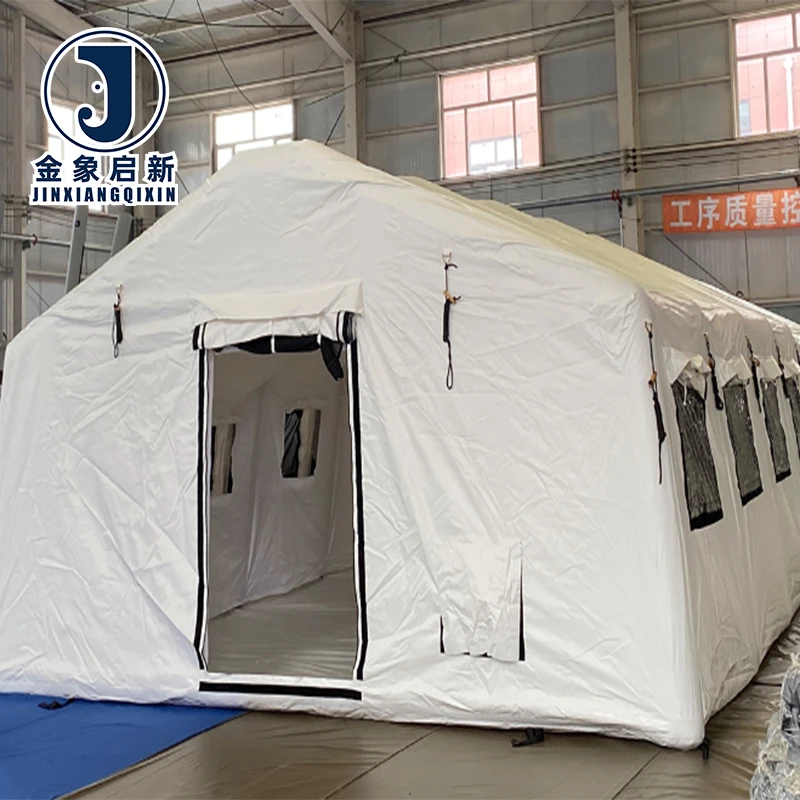
- Inflate test each fabricated shelter in the yard before shipping to verify weld integrity under full internal pressure
- Use compatible PVC-based repair patches for field puncture repair; solvent-based adhesives bond to the coating chemistry
- Avoid dragging fabricated structures over abrasive ground during deployment to protect the outer coating layer
What to Include in Your Enquiry
Specialist structure contractors and procurement teams should state the deployment environment — underground mining, aviation tarmac, disaster relief zone — along with the specific fire classification or anti-static standard the site authority requires. Specify whether the order is for roll stock to fabricate in-house or for pre-fabricated inflatable structures with valve configuration and pattern printing. Include target dimensions, colour references and the volume required per quarter so production scheduling can be confirmed with realistic lead times.
Frequently Asked Questions
Q: What fire-retardant grade and test standard does the inflatable tent fabric carry?
A: Fire-retardant treatment is applied during compounding and available in multiple grades. The specific grade and test standard must match your destination market’s regulatory framework — underground mining corridors require different classifications than above-ground commercial shelters. Request the applicable test report before production to confirm the grade satisfies your site authority.
Q: How is anti-static performance measured and what surface resistance value is guaranteed?
A: Anti-static treatment targets environments with electrical equipment or flammable atmosphere risk. Surface resistance measurement is conducted per the standard applicable to your deployment zone. State the required threshold in your enquiry so the treatment formulation and verification method align with your site compliance audit documentation.
Q: Can the inflatable structure fabric be customised in size, printing and valve configuration?
A: Yes. The 10-technician R&D team develops pre-production samples reflecting your specified dimensions, colour, pattern printing and valve placement. Buyers approve physical samples before bulk production begins, ensuring the fabricated structure matches the deployment requirement without post-delivery modification.
Q: What documentation ships with each order for site compliance audits?
A: Each shipment includes a material specification sheet, batch-specific inspection record, fire-retardant and anti-static test reports where applicable, ISO and CE certificates, and a pre-shipment inspection record. This documentation package is structured to satisfy mining, tunnelling and aviation site compliance audits without additional paperwork requests after delivery.
Q: How does single-layer construction affect deployment speed compared to multi-layer alternatives?
A: Single-layer PVC tarpaulin reduces packed volume and weight, accelerating transport to remote deployment sites. It also minimises seam count, which lowers the probability of weld failure during repeated inflation cycles. Thermal retention is lower than multi-layer options, making single-layer suited to applications prioritising rapid setup over insulation.