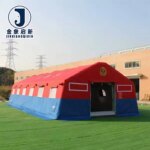
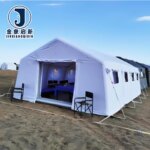


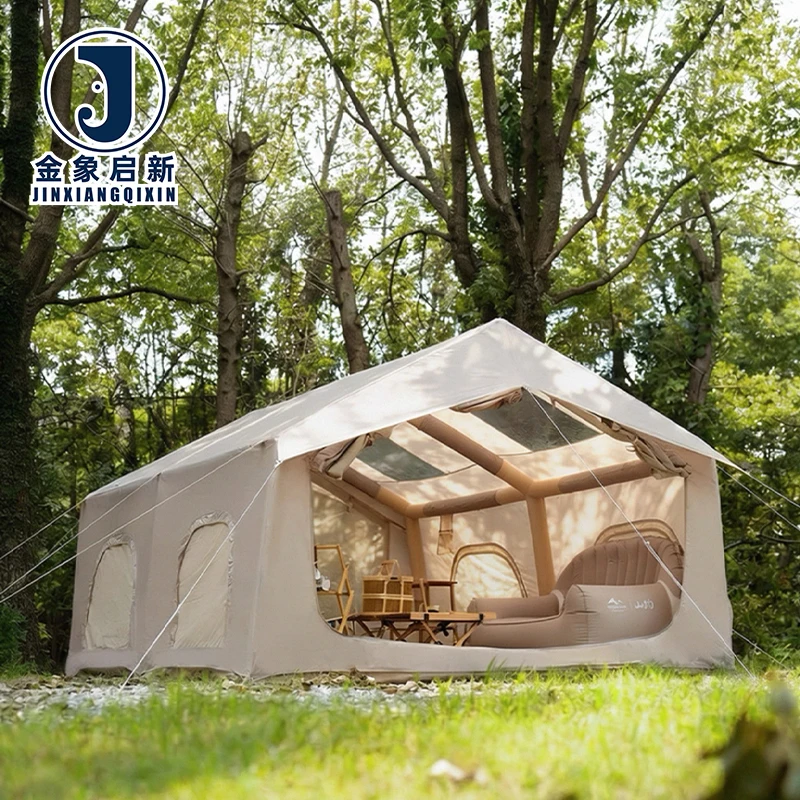
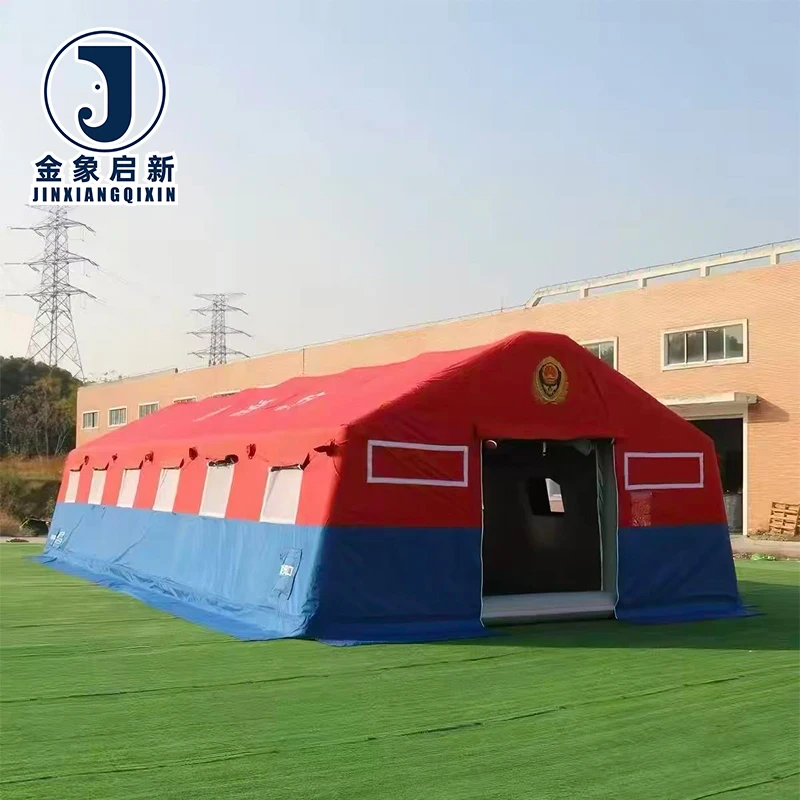
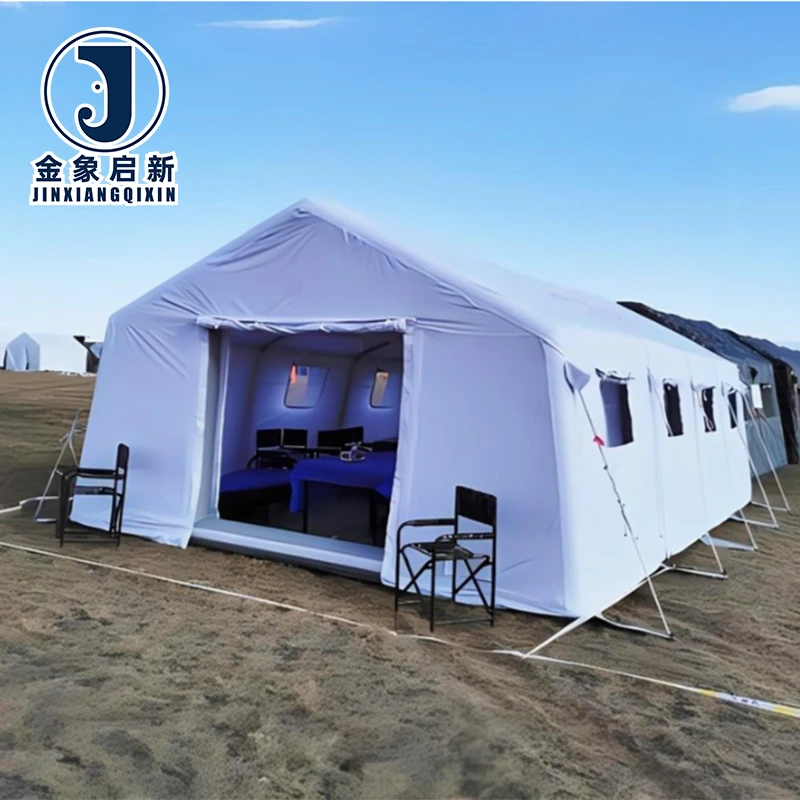
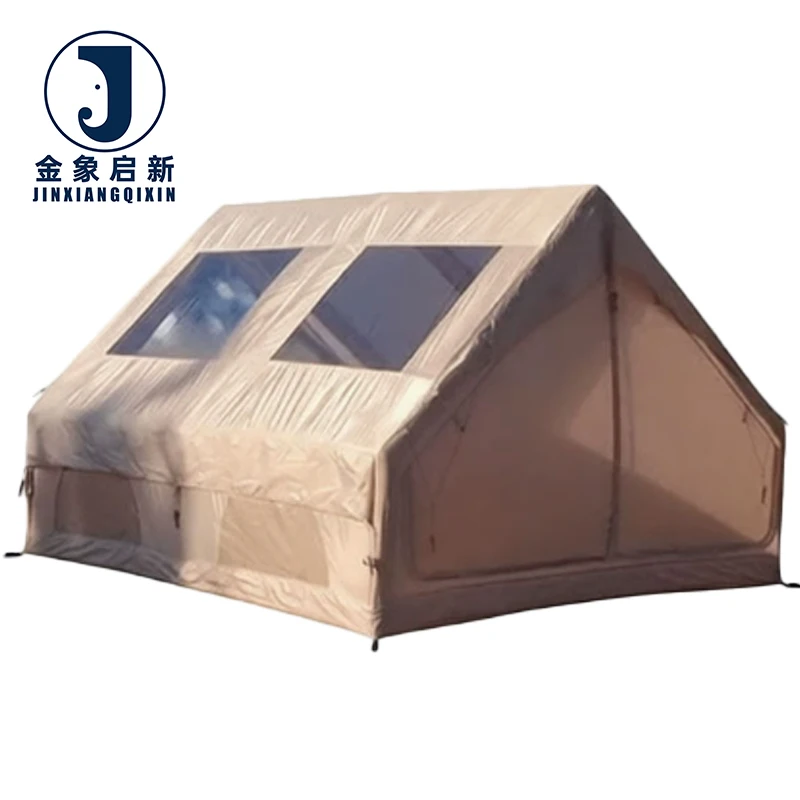
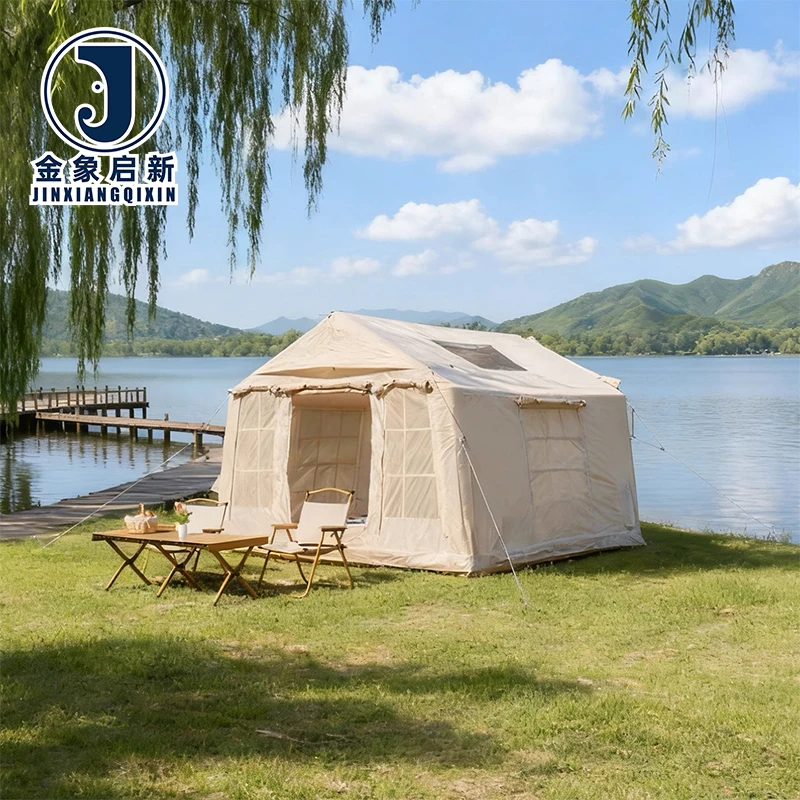

Deep process control over coating — Every roll of inflatable structure fabric we produce undergoes dedicated QA/QC at each coating stage, ensuring the fire-retardant and anti-static treatments meet documented compliance standards before it reaches your fabrication floor.
Technical Specifications
| Parameter | Value |
|---|---|
| Product Type | Inflatable Tent Fabric |
| Core Material | PVC Tarpaulin |
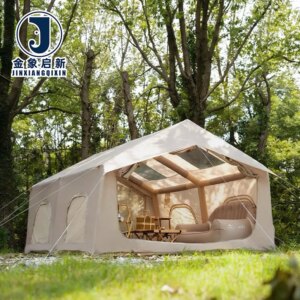
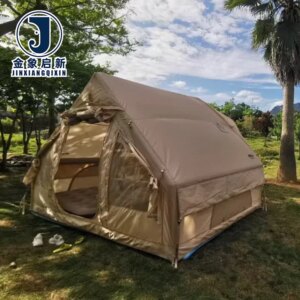
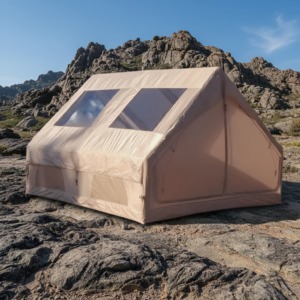
| Product Form | Inflatable structure with quick automatic opening |
| Capacity | 2-3 Person |
| Waterproof | Yes (grade not stated in source) |
| UV Treatment | UV-resistant (test basis not stated in source) |
| Tear Resistance | Tear-resistant (test standard not stated in source) |
| Flame Retardant | Fire-retardant (grade not stated in source) |
| Anti-Static | Anti-static (surface resistance or standard not stated in source) |
| Customization | OEM & ODM (sample customization, pattern printing) |
| Design Option | Extended type available |
| Season Rating | Four-season design |
| Certifications | ISO9001, ISO14001, ISO45001, CE |
Application Suitability
| Application | Exposure & Requirement |
|---|---|
| Mining and tunnelling inflatable shelters | Continuous contact with rock dust, high humidity, and confined ventilation zones requiring verified fire-retardant and anti-static compliance |
| Aviation ground support enclosures | Exposure to jet fuel vapour, tarmac abrasion, and strict airport fire safety codes mandating certified fabric performance |
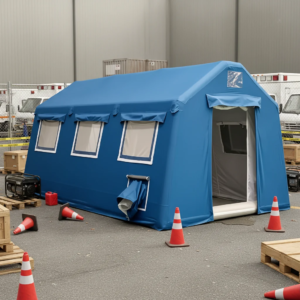
| Emergency disaster relief deployment | Rapid inflation in uncontrolled weather, UV exposure during extended field use, and the need for immediate structural integrity without specialist assembly |
| Temporary industrial workspace creation | Wind loading on large membrane surfaces, temperature fluctuation across seasons, and daily mechanical stress from entry and exit points |
Why Inflatable Tent Fabric Fire Retardant Anti-Static Certified Performance Demands Documentation
A flame-retardant claim without a test report is a compliance liability, not a material specification.
When an inflatable structure fails a site safety audit because the fabric lacks the correct fire classification, the entire deployment halts. Procurement teams often discover too late that the supplier’s verbal assurance of fire retardancy does not translate into the specific grade required by local mining regulations or aviation authority standards [NEED_CITE: fire classification standards for temporary structures in mining and aviation]. The same applies to anti-static treatment: without a documented surface resistance value or test standard, the fabric may not meet the electrostatic discharge limits enforced in fuel-handling or explosives-adjacent environments. We close this gap by issuing batch-specific test reports that name the standard and the result.
Compliance Traceability from Coating Line to Dispatch
Every batch of PVC inflatable tent fabric fire retardant anti-static certified for specialist use carries a documentation trail that begins at the coating head. The treatment chemistry is logged against the production run, and the resulting test sample is evaluated before the roll is released. This means the fire-retardant and anti-static performance stated on your material specification sheet corresponds to the physical roll you receive, not to a generic product family claim [NEED_CITE: coating batch traceability for treated technical fabrics].
Matching the Treatment to the Regulatory Environment
Different sites enforce different standards. A mining operation in Western Australia may require fabric tested to a specific Australian Standard for fire propagation, while an aviation contractor in the EU may reference EN or ISO norms. Our 10-person R&D team reviews your target compliance framework during the sample stage, selects the appropriate treatment formulation, and validates the output before you commit to a full production run. This prevents the costly scenario of deploying inflatable tent fabric fire retardant anti-static certified to one standard when your site demands another.
How Base Fabric and Coating Weight Interact in Inflatable Structures
Inflatable membranes rely on the coated fabric to hold air pressure continuously, which places sustained load on every welded seam and base-fibre intersection. The PVC tarpaulin base used here is selected for tear resistance, though the specific test standard is available upon request — confirm the standard required for your market. The coating weight and adhesion method directly influence how well the fabric resists delamination under repeated inflation and deflation cycles. A heavier coating does not automatically mean higher tear strength; the denier and weave density of the base fabric must be proportioned correctly to carry the structural load, which is why we provide the full material specification sheet rather than a single GSM figure.
The Hidden Cost of Specifying Without Verified Test Reports
When inflatable shelter fabric arrives on site without matching documentation, the consequences compound quickly. A mining contractor may be forced to remove and replace an entire deployed structure if the fire-retardant grade cannot be verified during an inspector’s visit [NEED_CITE: regulatory shutdown costs for non-compliant temporary structures]. An aviation ground crew may reject a batch of inflatable enclosures at delivery because the anti-static certificate references a superseded standard. These are not material failures — they are documentation failures that we prevent by aligning the test report, the material spec sheet, and the certificate of origin to the same batch number before dispatch.
Why Procurement Teams Source Specialist Fabric Here
Our 9,180 m² facility runs 3 full production lines with 36 sets of professional processing equipment, giving us the capacity to supply bulk roll stock for large-scale inflatable structure projects without sacrificing batch-to-batch consistency. The dedicated QA/QC protocol includes 100% pre-shipment inspection, meaning every roll of inflatable tent fabric is checked before it leaves the factory. Samples are developed within days for custom fire-retardant or anti-static requirements, allowing your engineering team to validate performance against your site standard before mass production begins. The R&D team handles material selection, treatment formulation, and pattern printing in-house, keeping the entire specification under one quality system.
Documentation & Verification
- Material specification sheet stating base fabric type, coating weight, and treatment parameters for every roll
- Fire-retardant and anti-static test reports issued per batch — confirm the grade required for your site
- ISO and CE certificates included in the dispatch documentation package
- Pre-shipment inspection record verifying fabric consistency and treatment coverage
- Certificate of origin and customs support documents prepared per destination country
Fabrication, Handling & Storage
- Heat-weld seams at parameters matching the PVC tarpaulin coating weight to prevent delamination under inflation pressure
- Store rolls horizontally on pallets in a covered area to avoid permanent creasing of the coated surface
- Allow cold-stored fabric to reach ambient temperature before unrolling to prevent coating micro-cracking
- Use compatible PVC adhesive and primer for field repairs on the fire-retardant treated surface
- Plan cutting layout to minimise waste across the custom width ordered for your inflatable pattern
Requesting a Specification Match
To move forward, share the fire-retardant and anti-static standards your site enforces, along with the dimensions and inflation pressure range of your inflatable structure. If pattern printing or custom colour is required, provide the reference files so our R&D team can prepare a sample for your approval. Specify whether you need roll stock for your own fabrication line or finished cut-and-welded panels.
Frequently Asked Questions
Q: What fire-retardant grade does the inflatable tent fabric carry, and does it meet my site’s regulatory standard?
A: The fabric is produced with fire-retardant treatment, and the specific grade is documented on a batch test report. Because mining, aviation, and emergency relief sites enforce different standards, we align the treatment to your stated requirement during sampling. Share your target standard and we will confirm the applicable grade before production.
Q: How is anti-static performance verified — what surface resistance or test standard applies?
A: Anti-static treatment is applied during coating and verified with a surface resistance measurement. The test method and result value are recorded on the batch documentation. If your site references a specific standard for electrostatic discharge in hazardous areas, provide it so we can validate the fabric against that threshold.
Q: Can custom dimensions, pattern printing and branding be applied to inflatable structure fabric?
A: Yes. Our R&D team handles custom width, length, pattern printing, and branding as part of the sample development process. You approve the physical sample — including print registration and colour accuracy — before we commit the full order to one of our three production lines.
Q: What compliance documentation ships with each batch?
A: Each dispatch includes a material specification sheet, fire-retardant and anti-static test reports matched to the batch number, ISO and CE certificates, a pre-shipment inspection record, and a certificate of origin. This package supports site audits and customs clearance without requiring follow-up requests.
Q: How does the sample approval process work before committing to a full production run?
A: You provide your application requirements, target standards, and any custom dimensions or print files. Our R&D team produces a sample within days. Once you test and approve it against your criteria, we lock the specification and schedule full production with 100% pre-shipment inspection.