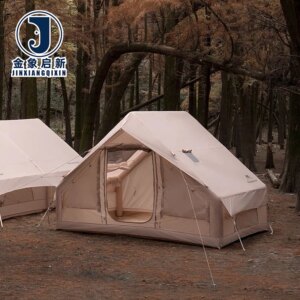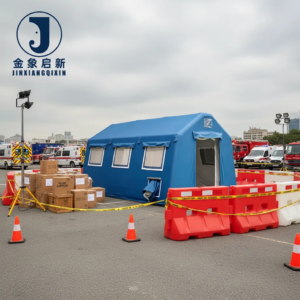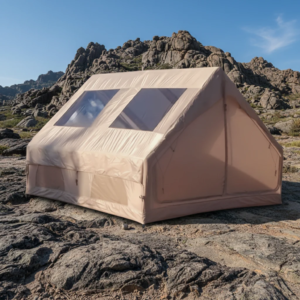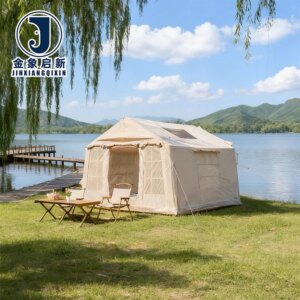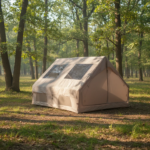
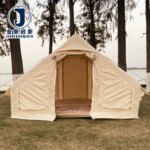
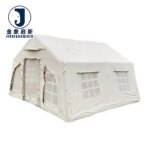
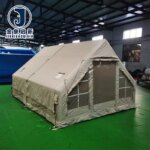

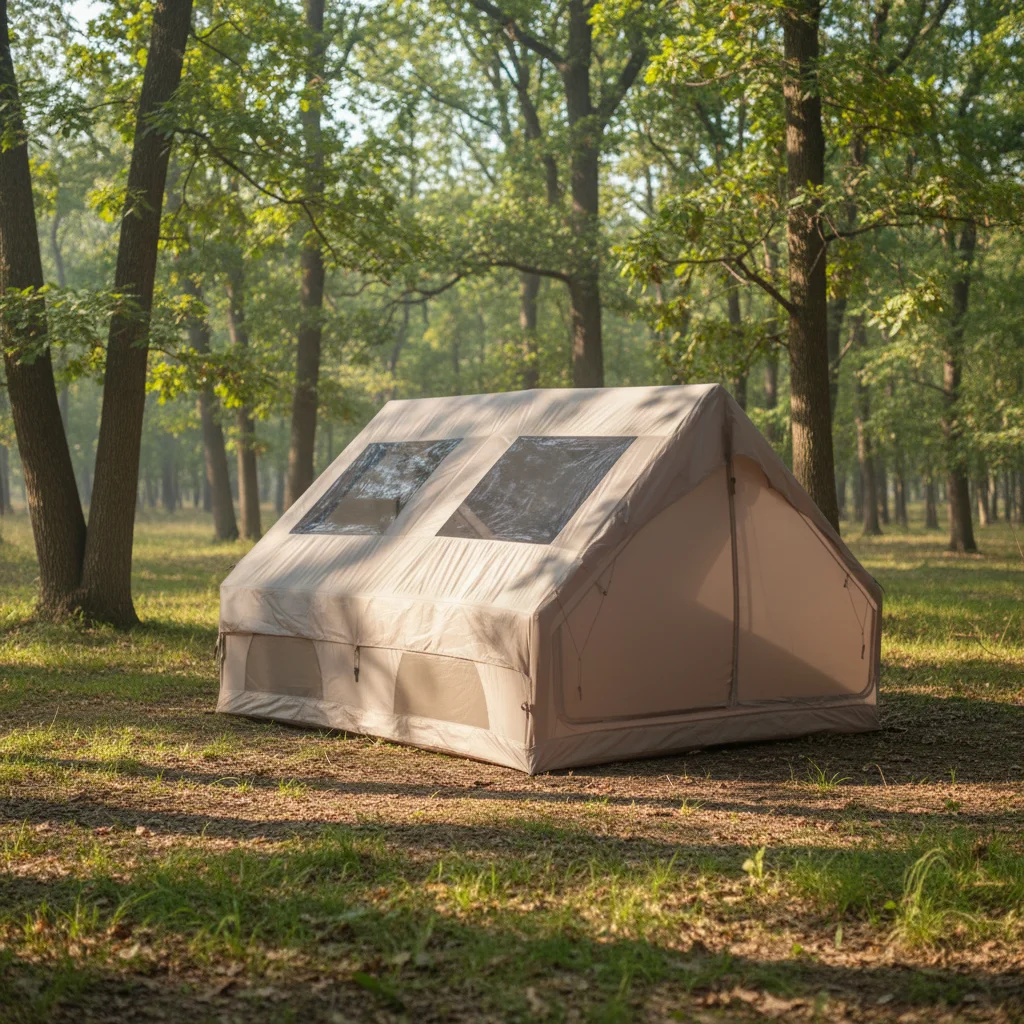
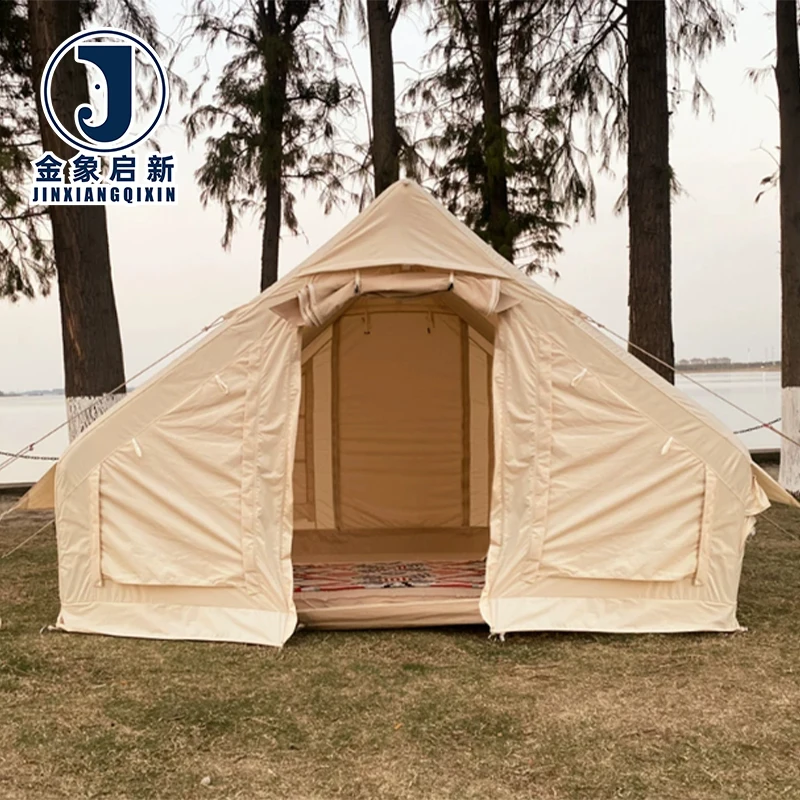
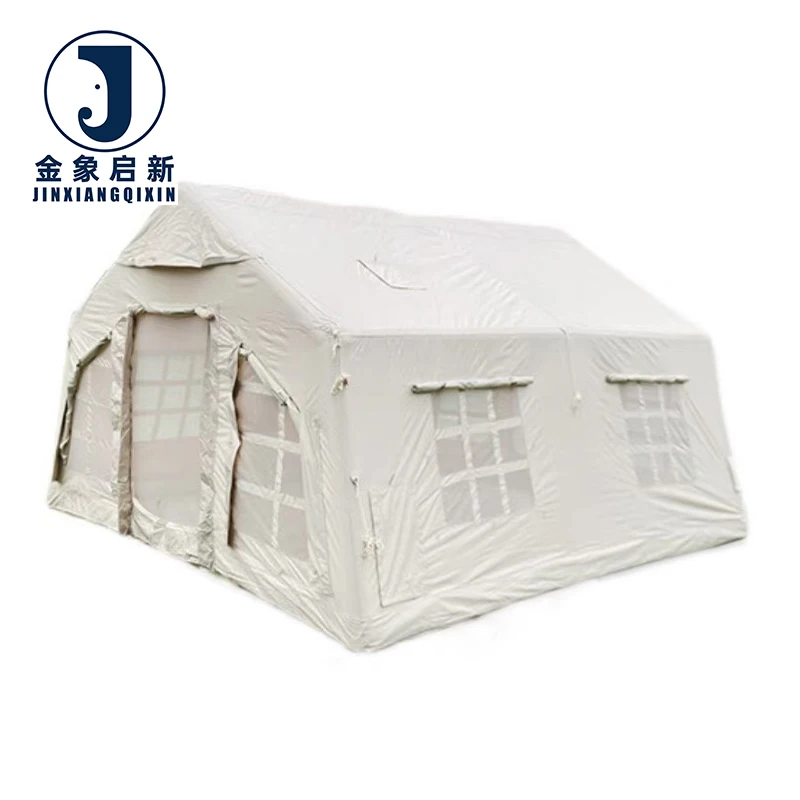
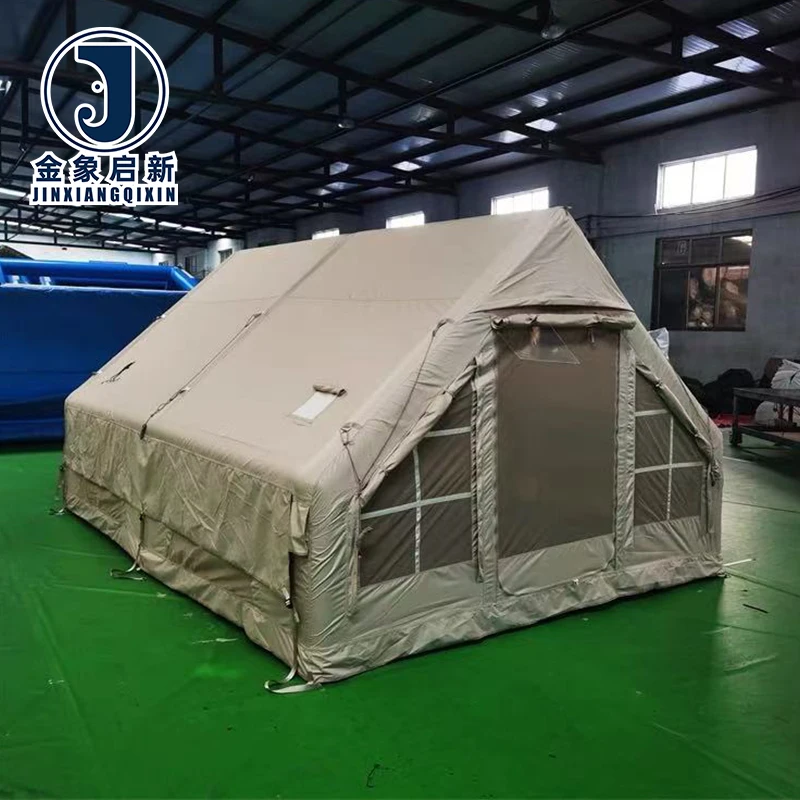
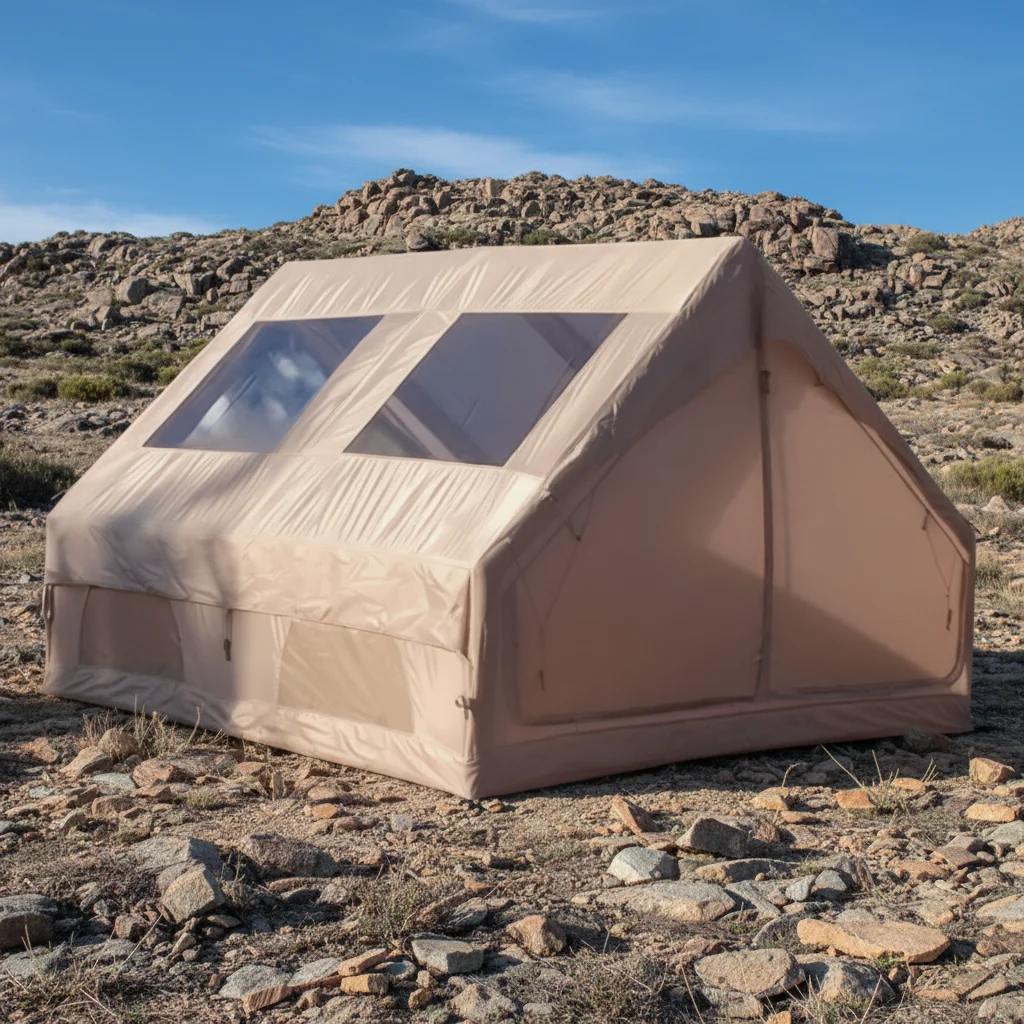

Proven Process Control — nearly 30 years of coated fabric production refined into every PVC inflatable tent we build, with full-process inspection ensuring batch-to-batch consistency for critical deployments.
Technical Specifications
| Parameter | Value |
|---|---|
| Product Type | Inflatable Tent |
| Core Material | PVC Tarpaulin |
| Capacity | 2-8 Person |
| Design | Four-Season, Quick Automatic Opening, Single Layer Construction |
| Key Performance | Waterproof, Windproof, Tear-resistant |
| UV Resistance | Available with UV treatment — confirm the grade required for your market |
| Quality Control | Full-process Inspection with Dedicated QA&QC Staff |
| Standards | ISO9001, ISO14001, ISO45001, CE |
Application Suitability
| Application | Exposure & Requirement |
|---|---|
| Emergency Relief Stations | Rapid deployment under severe weather, continuous human occupancy requiring windproof and waterproof integrity |
| Construction Site Shelters | Prolonged outdoor exposure to dust, rain, and mechanical abrasion from equipment and materials |
| Mobile Command Centers | Frequent relocation, repeated inflation cycles, need for structural stability in varied terrain |
| Temporary Industrial Facilities | Extended UV and weather exposure, requirement for reliable single-layer thermal and moisture barrier |
Why "Waterproof" Means Little Without Verified Seam Integrity
A waterproof fabric that fails at the weld is not a waterproof shelter.
Procurement specifications for emergency and industrial shelters often list waterproof PVC tarpaulin as a requirement, yet field failures frequently originate at seam junctions rather than the fabric body. When an Inflatable Tent for Industrial Emergency Relief is deployed in disaster zones or active construction sites, the inflation structure places constant tension on welded joints. If the welding parameters do not match the coating composition, the seam delaminates under stress or after repeated thermal cycling [NEED_CITE: tensile and tear test methods for coated fabrics per ISO 1421]. Dedicated QA staff inspecting every weld line during production is the only reliable way to catch adhesion failures before the tent leaves the facility.
Ventilation and Structural Demands of Rapid-Deployment Shelters
In disaster response and remote infrastructure projects, the Inflatable Tent for Industrial Emergency Relief must maintain internal climate stability while being erected by minimal personnel. The quick automatic opening mechanism allows a single operator to establish a weatherproof enclosure within minutes, a critical advantage when coordination centers must be operational before permanent facilities arrive. The PVC tarpaulin construction provides a continuous air barrier that supports both inflation pressure and environmental separation.
Single-Layer Engineering for Transport and Durability Balance
Multi-layer tent designs add weight and complexity that complicate logistics for remote site operations. The single layer construction of this PVC inflatable tent reduces packed volume, enabling more units per transport vehicle while maintaining the tear-resistant performance needed for rough terrain handling. The material thickness is selected to withstand puncture risks from debris at construction and disaster sites without requiring secondary ground protection layers for standard deployment scenarios [NEED_CITE: puncture resistance testing protocols for coated technical textiles].
How Material Weight and Base Fabric Density Determine Real-World Performance
The GSM rating of a PVC tarpaulin indicates total coated weight, but structural performance depends equally on the base fabric denier and weave density. A high GSM achieved through excessive coating on a low-density base will resist puncture but remain vulnerable to tear propagation once a cut initiates. Conversely, a high-density base with moderate coating weight delivers superior tear resistance and flex life, which directly affects the longevity of an inflatable structure that undergoes repeated inflation and deflation cycles. The coating method also determines weld compatibility; knife-coated fabrics typically achieve higher peel strength at seams compared to laminated constructions, which is essential for maintaining airtight integrity in inflatable applications. Surface finish selection — whether glossy or matte — affects both cleanability in field conditions and the adhesion of any applied markings or signage.
The Cost of Specifying Without Verification
When inflatable tents arrive at a disaster response staging area with coating weight below the quoted specification, the material may initially appear functional but will degrade faster under UV exposure and mechanical stress. Similarly, if fire-retardant treatment is claimed without a supporting test certificate, the shelter may fail site safety audits, forcing expensive last-minute replacement [NEED_CITE: fire safety compliance requirements for temporary structures in construction zones]. Batch-to-batch colour variation across multiple units becomes visible when tents are deployed side by side as a coordinated relief camp, undermining the professional appearance required for high-profile infrastructure projects.
Production Capability Backed by Coated Fabric Specialization
Our facility operates three full production lines with 36 sets of professional equipment dedicated to coated fabric manufacturing, providing the capacity to fulfill bulk orders for emergency procurement programs without sacrificing lead time reliability. The 10-person R&D team handles material selection and product design for OEM and ODM projects, developing customized samples within days for evaluation before production commitment. Every production stage undergoes inspection by dedicated QA and QC staff, with 100% pre-shipment inspection ensuring that each Inflatable Tent for Industrial Emergency Relief meets the stated specifications. ISO9001, ISO14001, ISO45001, and CE certifications are maintained and provided as documentation, not merely displayed as marketing claims.
Documentation & Verification
- Material specification sheet confirming PVC tarpaulin composition and weight per batch
- UV and flame-retardant test reports provided where treatment is specified and verified
- Pre-shipment inspection record documenting 100% quality check results
- ISO9001, ISO14001, ISO45001, and CE certificates included with shipment
- Certificate of origin and customs documentation for international logistics
Fabrication, Handling & Storage
- Heat welding parameters must match the specific PVC coating formulation to prevent seam delamination
- Store rolled units horizontally in dry conditions to avoid permanent creasing of the single layer construction
- Clean with mild detergent compatible with PVC surfaces to maintain waterproof coating integrity
- Avoid dragging inflated structures over abrasive ground to protect the tear-resistant base fabric
- Inspect valve and inflation ports before each deployment cycle to ensure airtight seal maintenance
Request a Specification Match for Your Deployment Scenario
To provide an accurate quotation for your Inflatable Tent for Industrial Emergency Relief program, we need to understand the specific environmental conditions at your deployment sites, including typical wind loads and temperature ranges. Please share your target compliance standards, required unit dimensions, and estimated annual volume so we can recommend the appropriate material grade and production timeline. If custom sizing or branding is required, we will develop samples for your approval before initiating full-scale manufacturing.
Frequently Asked Questions
Q: What certifications are provided for industrial compliance and regulatory approval?
A: Each shipment includes ISO9001, ISO14001, ISO45001, and CE certificates that verify our quality management systems and product safety compliance. These documents support regulatory approval processes for construction site operations and disaster response procurement audits. Additional test reports for specific performance properties are available upon request.
Q: How is batch-to-batch waterproof and tear performance consistency verified before shipment?
A: Our dedicated QA and QC staff conduct full-process inspection at every production stage, including material weight verification and seam integrity testing. A 100% pre-shipment inspection ensures each unit meets the stated specifications before dispatch, with batch-specific inspection records available for your review.
Q: What OEM and ODM customization options are available for material selection and size?
A: We offer comprehensive customization including PVC tarpaulin grade selection, capacity adjustments beyond the standard 2-8 person range, and design modifications for specific operational requirements. Our R&D team develops customized samples within days, allowing you to evaluate material and construction quality before committing to full production.
Q: What documentation accompanies each shipment for project audit and customs clearance?
A: Every shipment includes a material specification sheet, pre-shipment inspection record, packing list, certificate of origin, and relevant ISO and CE certificates. This documentation package supports project audits, customs clearance procedures, and compliance verification for international procurement programs.
Q: What is the typical production lead time and sample approval process for custom orders?
A: Sample development for custom specifications is completed within days, allowing rapid evaluation of material and design choices. Production lead times depend on order volume and customization complexity, with our three full production lines supporting reliable scheduling for both standard and emergency procurement timelines.