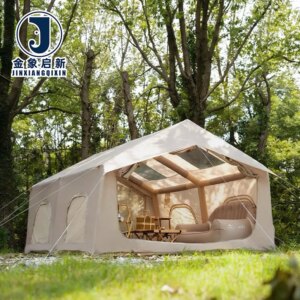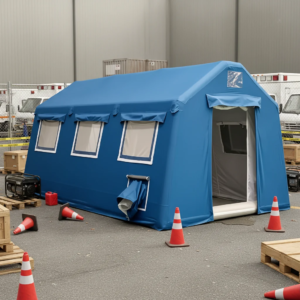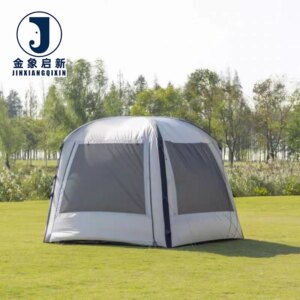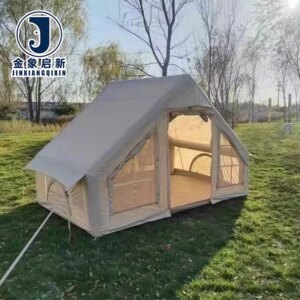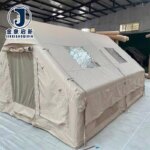
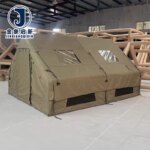
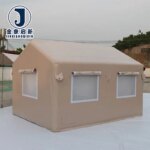
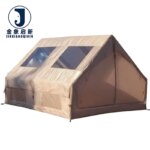

Specialist Ventilation Fabric — Nearly 30 years focused on coated fabric, with deep process control over coating weight and adhesion, adapted here for inflatable tent structures that demand airtight seams and consistent material behaviour.
Technical Specifications
| Parameter | Value |
|---|---|
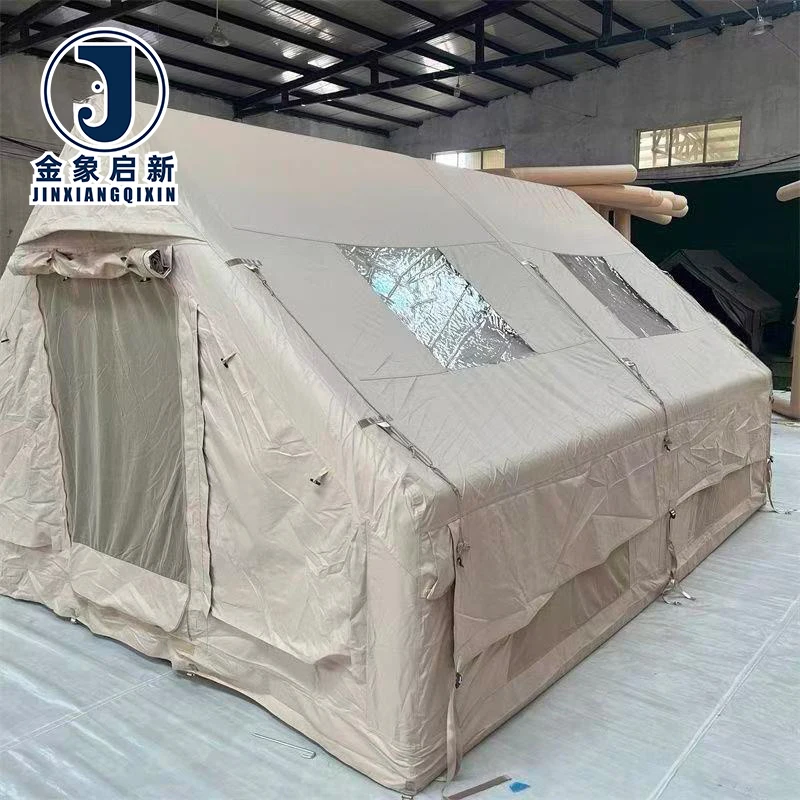
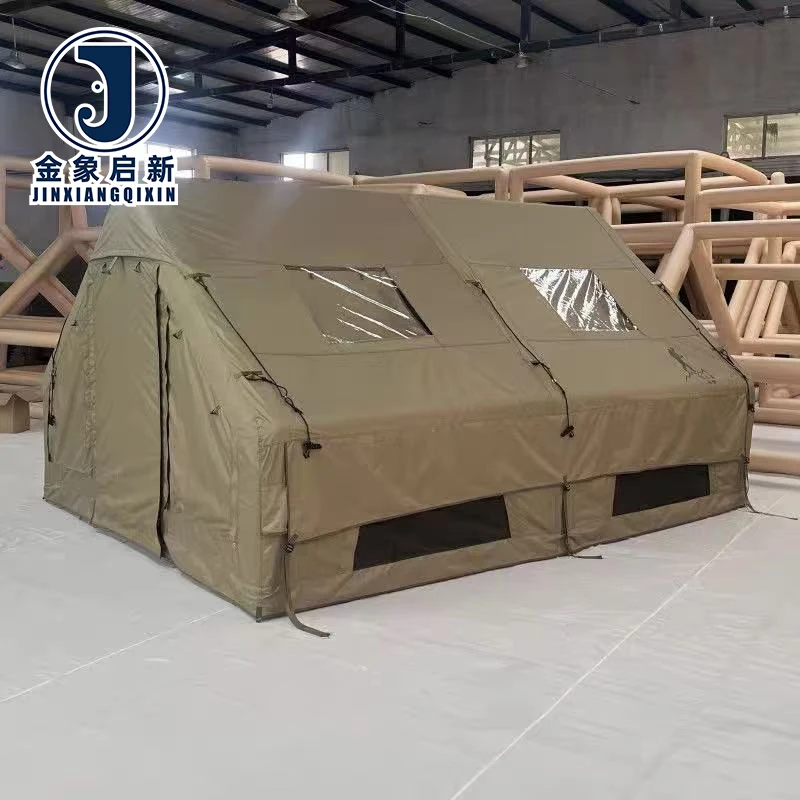
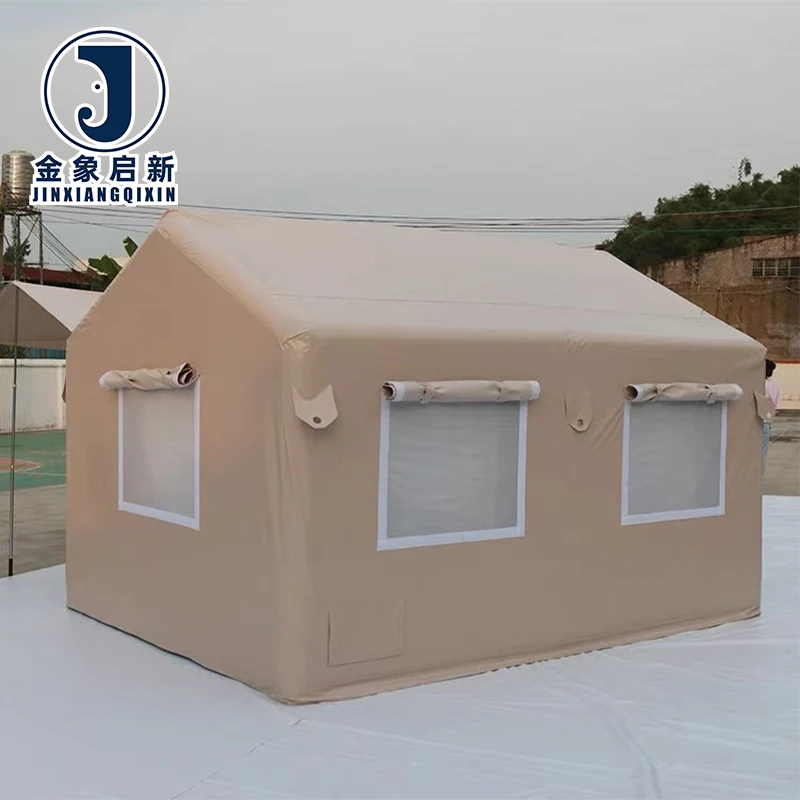
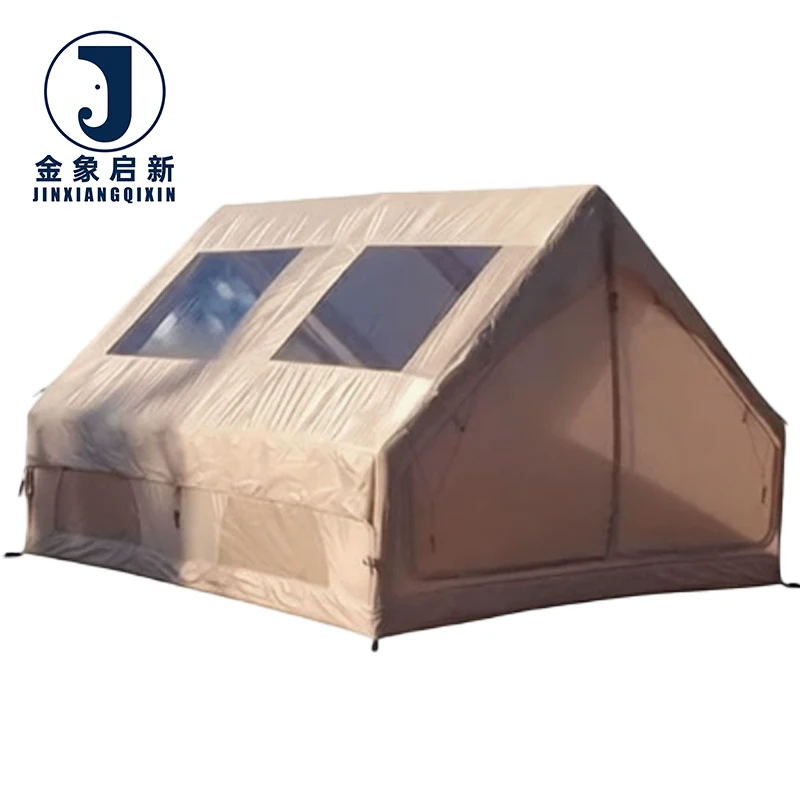
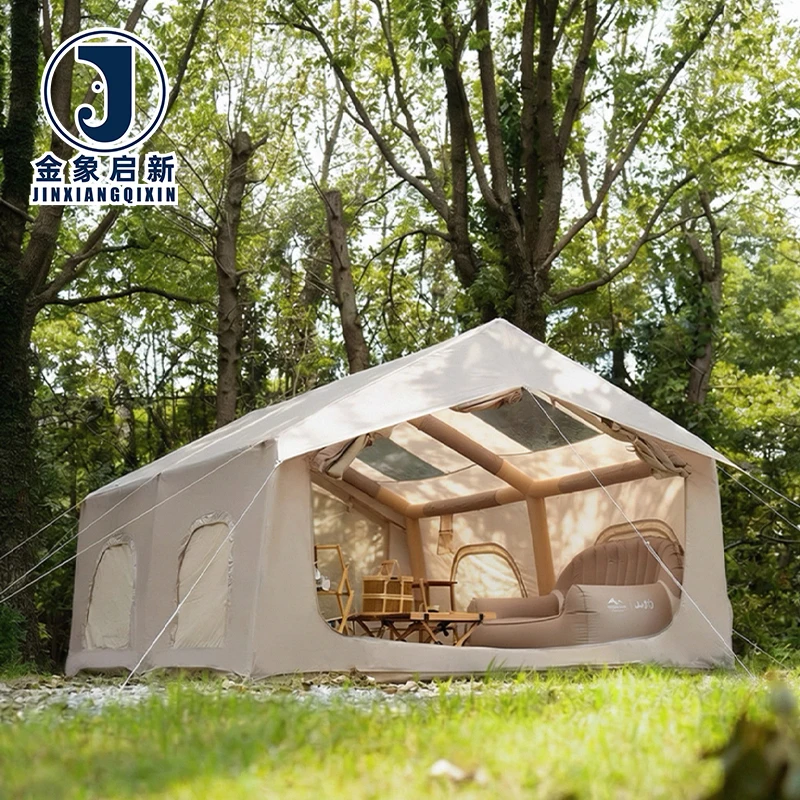
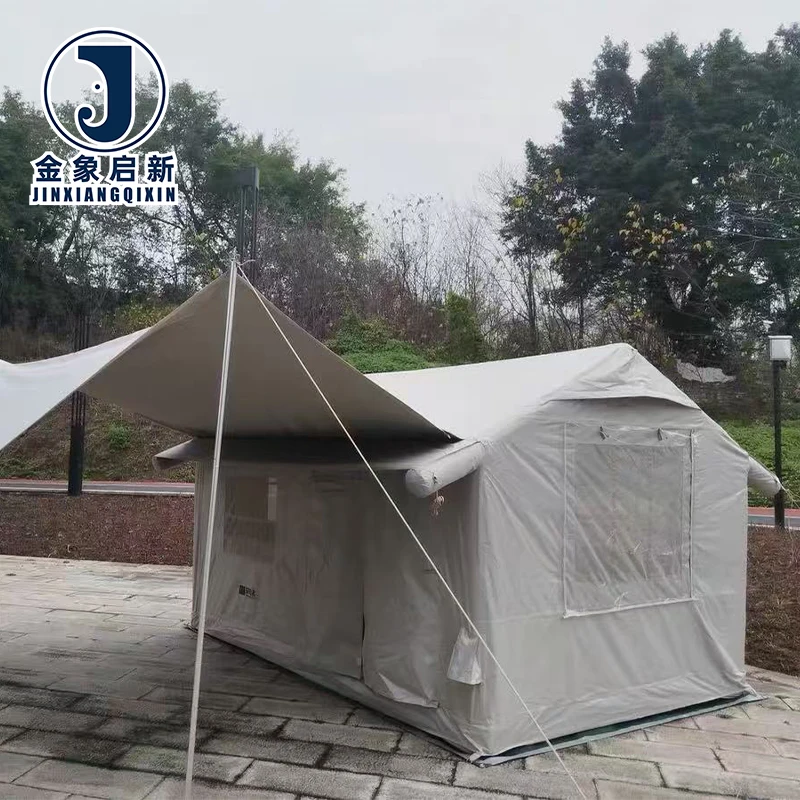
| Product Type | Inflatable Tent Fabric / PVC Tent |
| Core Material | PVC Tarpaulin |
| Key Performance | Waterproof, UV-resistant (test basis not stated), Tear-resistant |
| Capacity | 6-8 Person |
| Season Rating | 4 Season |
| Deployment | Automatic Opening |
| Production Facility Area | 9,180 m² |
| Production Lines | 3 full production lines |
| Processing Equipment | 36 sets of professional processing equipment |
| R&D Team Scale | 10 technicians |
| Quality Control | Strict full-process quality inspection with dedicated QA&QC staff |
| Customization Service | OEM & ODM (sample customization, pattern printing) |
| Standards | ISO9001, ISO14001, ISO45001, CE |
Application Suitability
| Application | Exposure & Requirement |
|---|---|
| Commercial Outdoor Events | High visibility, frequent assembly and teardown cycles, public foot traffic requiring structural integrity and UV resistance |
| Construction Site Temporary Housing | Prolonged weather exposure, dust and debris abrasion, rapid deployment for shifting work zones |
| Industrial Camping Operations | Remote site logistics, repeated seasonal packing and unpacking, thermal fluctuations across day-night cycles |
| Outdoor Gear Manufacturing | Consistent roll-to-roll material quality for cutting and welding at scale, branding pattern clarity |
| Recreational Facility Supply | Continuous outdoor exposure, public safety compliance expectations, ease of cleaning between rental cycles |
What Separates a Certified Inflatable Tent Fabric From a Verbal Claim
A certificate is only as strong as the batch report that accompanies each shipment. When procurement teams receive an inflatable tent certified manufacturer’s promise of UV stability or flame retardancy without a corresponding test document, the material may pass visual inspection but fail during a compliance audit or after a season of sun exposure [NEED_CITE: fire-retardant classification systems and their enforcement at local authority level]. For commercial and industrial buyers operating under insurance or municipal oversight, verbal assurances create documentation gaps that surface at the worst possible moment. Sourcing teams who have dealt with returned shipments or rejected site installations know that the cost of re-certification far exceeds the premium of buying tested material in the first place. An inflatable tent certified manufacturer who ships documentation alongside the rolls eliminates this exposure before the fabric reaches the warehouse.
The PVC Tarpaulin Foundation for Inflatable Structures
PVC tarpaulin provides the base for inflatable tent structures because its coating formulation supports both airtight bladder construction and the external weathering envelope. The material must hold internal pressure across seam lines that experience constant outward force, while simultaneously resisting puncture from ground contact and handling abrasion during site moves. Each inflatable tent certified manufacturer approaches coating adhesion differently, and this directly affects how well the fabric tolerates repeated inflation-deflation cycles without delamination. For commercial operators running multi-day events or extended construction projects, the difference between adequate and premature failure often traces back to how thoroughly the PVC was bonded to the base fabric during manufacturing.
Batch Consistency Across Multi-Tent Orders
When an outdoor gear manufacturer orders enough fabric for a production run of identical tents, colour variation between rolls becomes visible once the units are installed side by side at an event [NEED_CITE: batch consistency challenges in pigment dispersion across PVC coating lines]. This is not a cosmetic issue alone — colour variation can signal differences in coating thickness or additive distribution that affect UV performance and weld behaviour. An inflatable tent certified manufacturer with integrated colour management checks pigment concentration and coating weight at intervals during the production run, rather than only at the final roll inspection. This in-process control gives buyers confidence that the third roll in a container behaves identically to the first when it goes onto the welding table.
Reading Beyond the GSM Number on the Quote
The weight per square metre of PVC tarpaulin correlates with tear resistance and overall durability, but it does not tell the full story on its own. A heavier coating may increase GSM without improving the base fabric’s tensile performance, meaning the material feels substantial but tears easily along the warp or weft direction. The denier of the yarn and the weave density of the base cloth determine how a puncture propagates into a tear, while the coating protects that base cloth from moisture ingress and abrasion. For inflatable tent applications, the internal air pressure places biaxial stress on the fabric that a simple GSM comparison cannot capture — buyers should request tensile and tear test data alongside weight verification. Coating method also matters: knife-over-roll application allows precise coating weight control and produces a surface well suited to hot-air welding, while lamination methods may offer cost advantages but can show reduced peel strength at seam lines under thermal cycling. The finish — glossy or matte — affects how dirt accumulates and how well printed branding adheres over repeated cleaning cycles.
The Hidden Cost When Specifications Do Not Match the Site
A tent fabric that passes initial inspection but carries less coating weight than the quotation stated will show early wear at high-stress points like door zips and ground skirts. For construction site temporary housing, a UV treatment claimed but not verified by batch testing may result in surface chalking and embrittlement after one summer, forcing an unplanned replacement during an active project. Weld failures at seam lines — where the heat input did not match the coating chemistry — cause air leaks in inflatable bladders that are expensive to locate and repair in the field [NEED_CITE: seam failure modes in hot-air welded PVC structures under cyclic loading]. These problems share a common root: the gap between what was ordered and what arrived was not caught before the material left the factory floor.
Why Procurement Teams Place Repeat Orders Here
Ten technicians on the R&D team handle material selection, pattern printing specifications, and sample development, giving buyers direct technical dialogue rather than a sales-only channel. Three full production lines with 36 sets of professional processing equipment provide the capacity to fulfil container-volume orders without splitting batches across subcontractors. Strict full-process quality inspection with dedicated QA and QC staff means each production stage has a verification gate before material moves forward. The ISO9001, ISO14001, and ISO45001 certifications alongside CE marking are maintained through scheduled audits rather than one-time submissions. OEM and ODM capability, including sample customization and pattern printing, allows gear manufacturers to develop a market-specific product without managing multiple supplier relationships.
Documentation & Verification
- Material specification sheet stating PVC tarpaulin GSM, base fabric denier, and coating type per batch
- UV test report issued for the specific production run where applicable to the order
- ISO9001, ISO14001, ISO45001, and CE certificates available for regulatory file submission
- Pre-shipment inspection record confirming roll count, dimensions, and visual quality checks
- Roll packing list with individual roll weights and linear metre counts for inventory intake
Fabrication, Handling & Storage
- Hot-air welding temperature and speed must match the PVC tarpaulin coating formulation to avoid seam porosity
- Store rolls vertically on end caps to prevent flat-spotting and permanent creases in the coating
- Allow material to acclimatise to workshop temperature before unrolling to reduce stiffness and handling damage
- Use PVC-compatible cleaners only; solvents may attack the coating surface and compromise UV additives
- Field repairs on punctures require matching PVC patches heat-welded rather than adhesive-bonded for airtight integrity
- Plan cutting layouts around roll width to minimise off-cuts and maintain grain direction consistency across panels
What We Need to Quote Your Project Accurately
Provide the intended application environment — whether commercial events, construction accommodation, or retail gear manufacturing — along with the expected deployment frequency and duration per cycle. Specify any fire-retardant grade or anti-static requirement that your target market or insurance policy mandates, so the correct material variant is selected. Confirm whether you require roll stock for in-house fabrication or finished custom cut panels, and include colour references or pattern files if branding is involved. Share your annual volume estimate and preferred delivery schedule to align production planning with your project timeline.
Frequently Asked Questions
Q: How do you verify GSM on each roll before it ships?
A: Dedicated QA staff sample each production batch and weigh cut sections against the stated specification. The pre-shipment inspection record includes these measurements, giving you documented confirmation that the PVC tarpaulin coating weight matches your order before the rolls leave the facility. Discrepancies trigger a hold and re-check rather than a shipment.
Q: Can you provide UV test documentation for my compliance file?
A: UV test reports are issued for production batches where UV-resistant treatment has been specified in the order. The report covers the testing method and exposure parameters used. Confirm your target market’s outdoor exposure requirements at inquiry stage so the correct additive package and corresponding documentation are prepared for your shipment.
Q: What fire-retardant certifications are available for inflatable tent fabric?
A: The facility holds ISO and CE certifications, and flame-retardant fabric variants are available for markets that require them. Specify your local fire code or the standard your insurance provider references at the inquiry stage — the R&D team will confirm which grade matches that requirement and arrange the relevant test report with your shipment documentation.
Q: How is colour consistency managed across multiple rolls in one order?
A: In-process quality checks monitor pigment concentration and coating weight during production, not only at final inspection. Rolls from the same order are grouped and cross-checked before packing. If your project places tents side by side in public view, note this at inquiry so additional visual comparison steps are added to the inspection protocol for your batch.