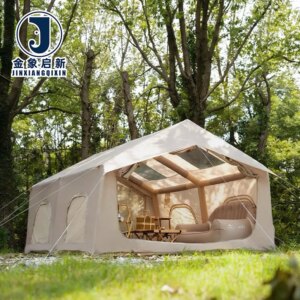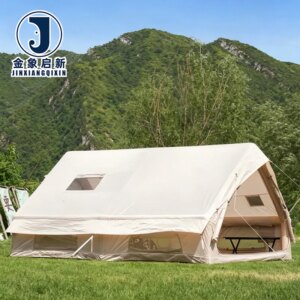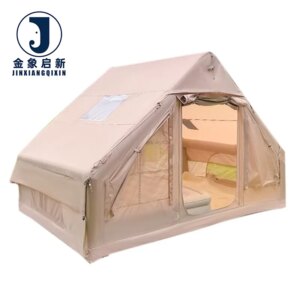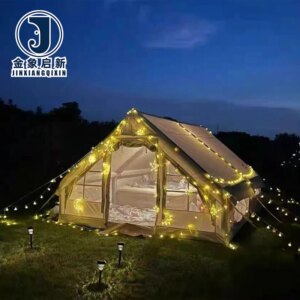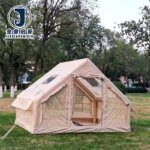
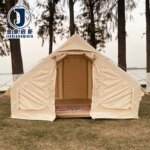
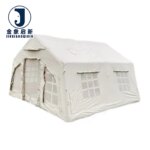
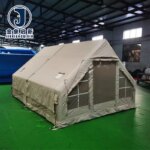

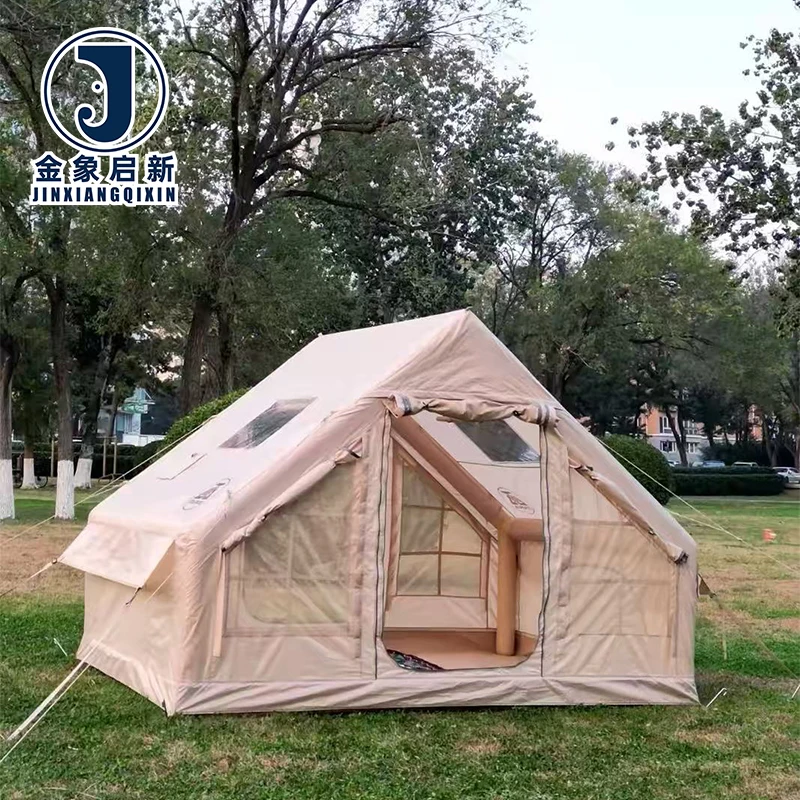
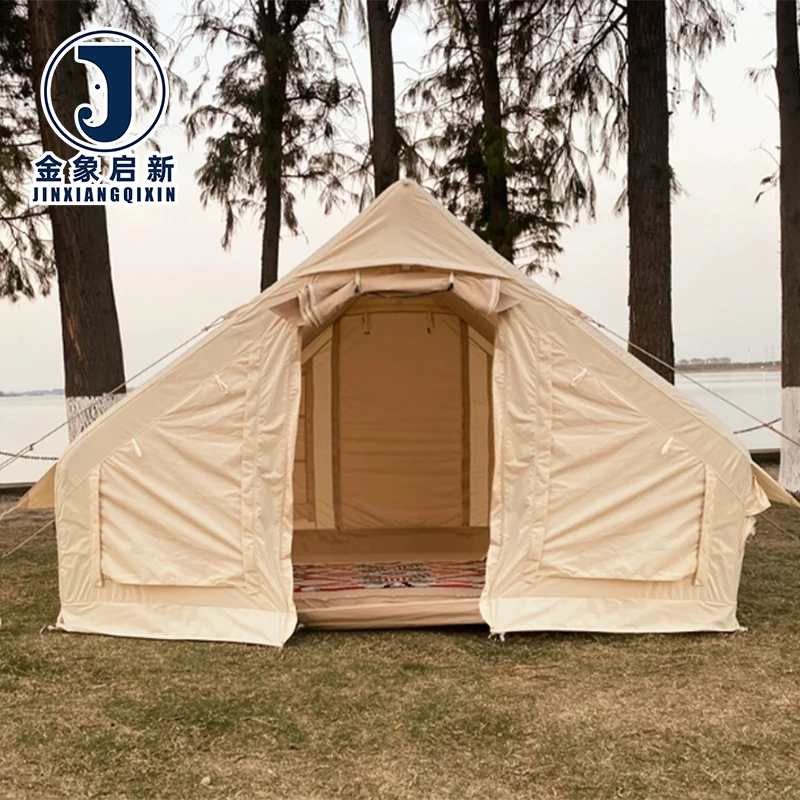
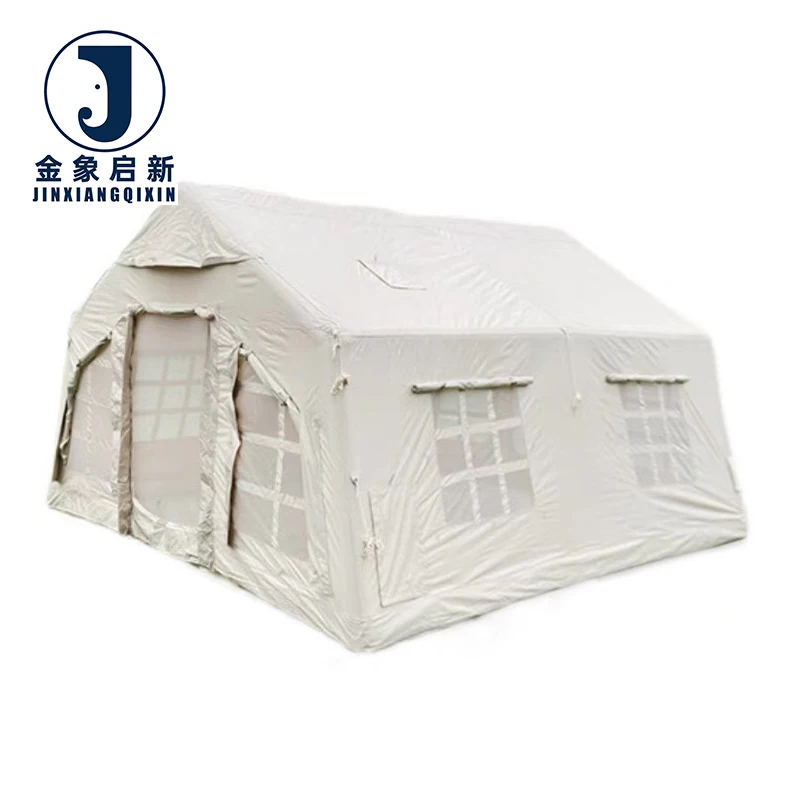
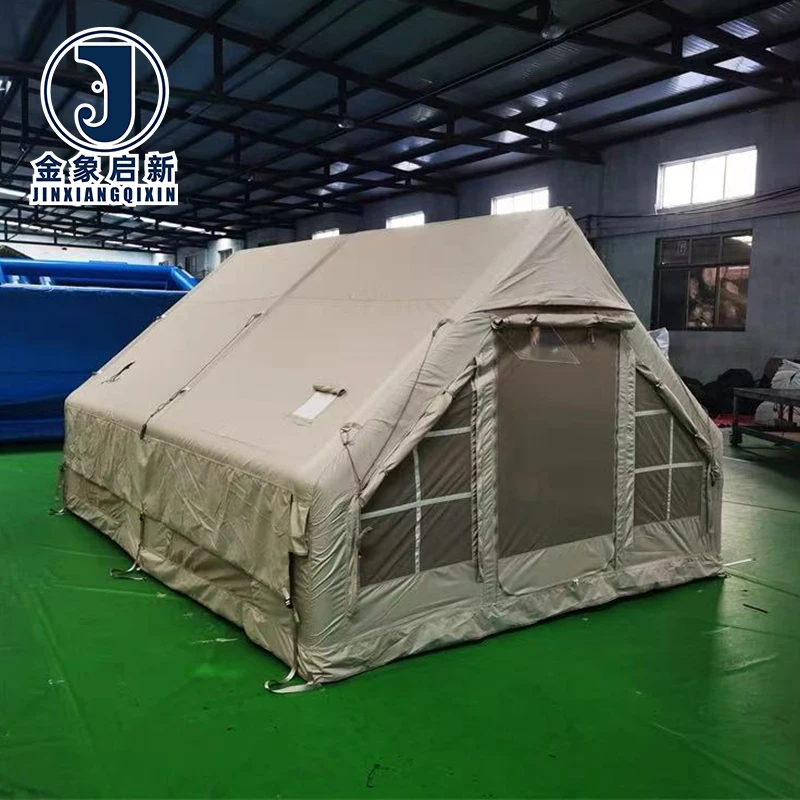
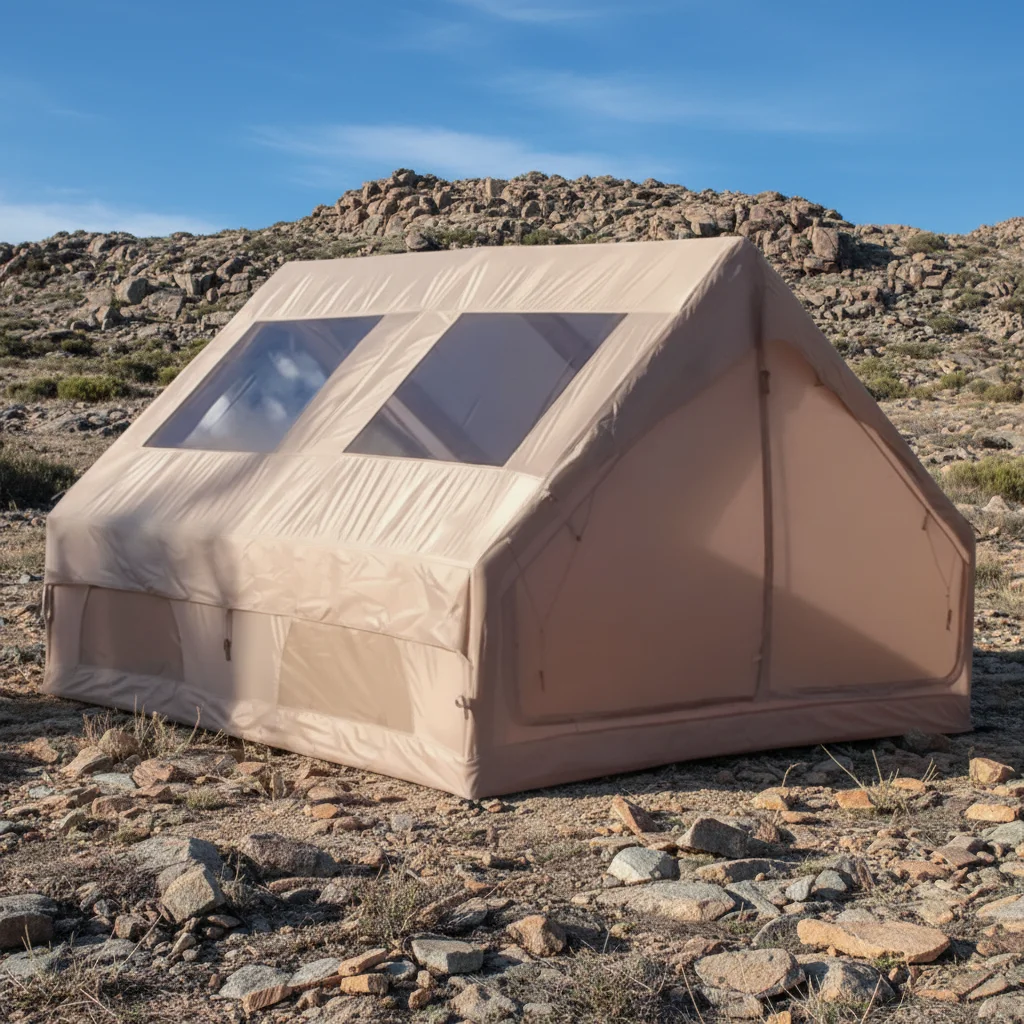
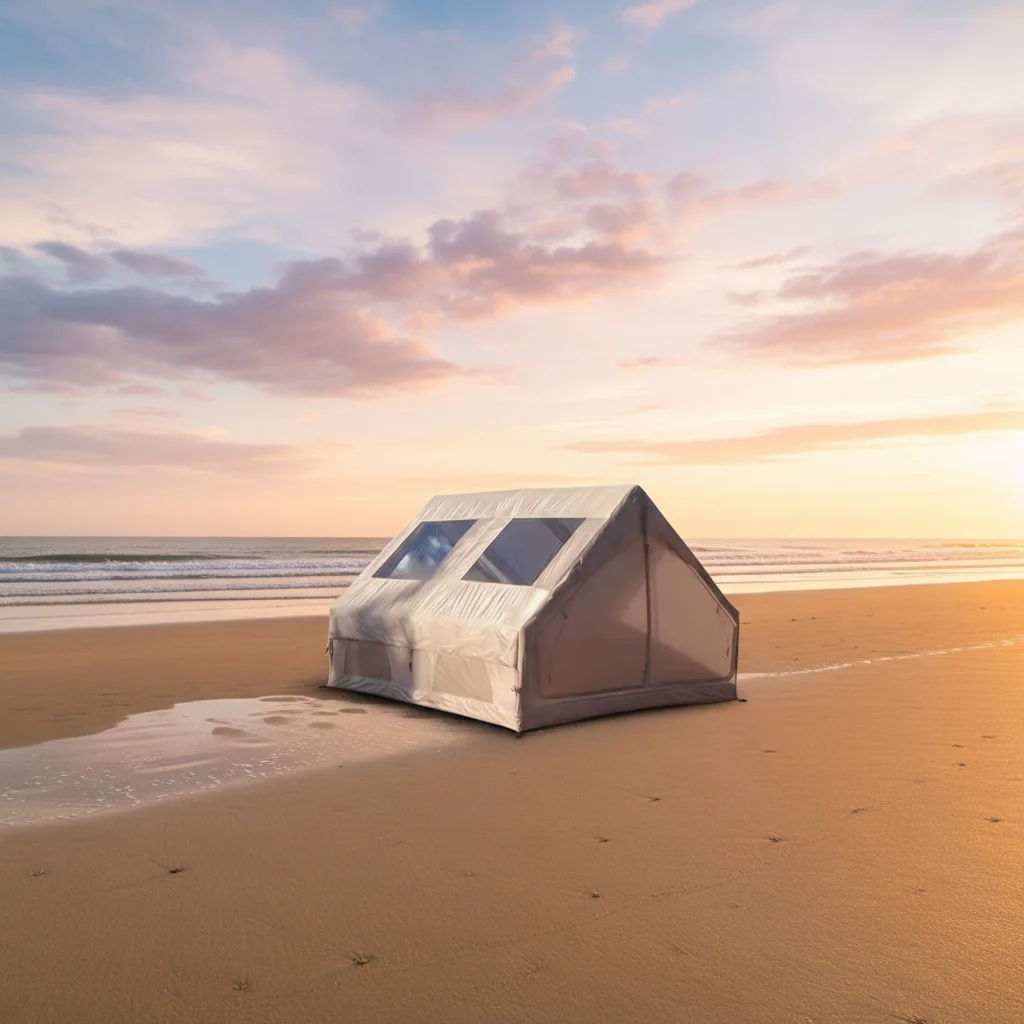
Industrial-grade inflatable tent with automatic deployment for emergency and commercial use — Our 30 years of coated fabric expertise translates into PVC inflatable tent structures that undergo full-process quality inspection, ensuring batch consistency and reliable performance in time-sensitive deployment scenarios.
Technical Specifications
| Parameter | Value |
|---|---|
| Product Type | Inflatable Tent |
| Core Material | PVC waterproof fabric |
| Key Performance | Waterproof, UV-resistant (test basis not stated in source), tear-resistant (test standard not stated in source) |
| Product Forms | Automatic opening, four-season design, single layer construction, extended type |
| Customization Service | OEM & ODM customization, sample customization, pattern printing |
| Production Facility Area | 9,180 m² |
| Production Lines | 3 full production lines |
| Processing Equipment | 36 sets of professional processing equipment |
| R&D Team Scale | 10 technicians |
| Quality Control System | Full-process quality inspection with dedicated QA & QC staff |
| Standards | ISO9001, ISO14001, ISO45001, CE |
Application Suitability
| Application | Exposure & Requirement |
|---|---|
| Mining and tunnelling contractors | Temporary on-site shelters requiring rapid deployment in remote locations with extreme weather exposure |
| Disaster relief operations | Emergency response centers needing immediate weatherproof shelter without complex assembly procedures |
| Construction site shelters | Extended outdoor exposure to UV, rain, and wind while protecting equipment and personnel |
| Specialist structure contractors | Inflatable membrane structures for events or storage requiring structural integrity under inflation pressure |
| Temporary storage facilities | Protection of industrial equipment and materials from moisture, dust, and temperature variations |
Why Rapid Deployment Capability Matters More Than Tent Size
Automatic opening mechanisms eliminate the multi-worker setup delays that compromise emergency response timelines.
When disaster strikes or construction deadlines tighten, traditional tent assembly requiring multiple workers and extended setup time becomes a critical bottleneck. I’ve witnessed emergency response operations stall because shelter deployment took hours instead of minutes. The inflatable tent manufacturer must prioritize deployment speed alongside structural durability, especially when lives or project timelines hang in the balance [NEED_CITE: emergency shelter deployment time standards per Sphere Handbook].
For mining operations in remote locations, the window between weather deterioration and equipment protection can mean the difference between operational continuity and costly downtime. Single layer construction balancing durability with portability enables transport to sites where heavy multi-layer structures simply cannot reach.
Ventilation and Structural Integrity Under Inflation Pressure
The inflatable tent manufacturer must engineer fabric that maintains dimensional stability under constant internal air pressure while resisting puncture from ground contact and equipment movement. PVC waterproof fabric provides the necessary tensile strength to hold inflation pressure without stretching or deforming at seam points. Four-season design requires the material to perform across temperature variations without becoming brittle in cold conditions or softening excessively in high heat [NEED_CITE: inflatable structure fabric performance standards per ISO 1421].
Extended type configurations demand particular attention to how the fabric behaves at connection points between the main structure and extended sections, where flex stress concentrates during inflation and deflation cycles.
UV-Resistant Treatment for Extended Outdoor Deployment
UV-resistant treatment for four-season outdoor deployment must maintain fabric integrity across months of continuous sun exposure without significant degradation or colour fade. The single layer construction reduces weight for transport but places greater demand on the coating to provide comprehensive protection against UV radiation, moisture ingress, and mechanical abrasion simultaneously. Pattern printing and branding applied to the surface must remain legible and adherent despite repeated inflation cycles and environmental exposure.
Batch-to-batch colour consistency becomes critical when multiple inflatable tent units deploy side by side at disaster relief staging areas or construction sites, where visible colour variation undermines professional appearance and suggests inconsistent material quality [NEED_CITE: colour fastness testing methods for coated fabrics per ISO 105 series].
How Single Layer Construction Balances Portability with Durability
Single layer construction represents a deliberate engineering trade-off: reducing transport weight and packed volume while demanding that one fabric layer perform multiple protective functions simultaneously. The PVC waterproof fabric must provide waterproofing, UV resistance, tear resistance, and structural rigidity under inflation without the backup of secondary layers. This places premium importance on coating adhesion to the base fabric and consistent coating weight across the entire roll.
GSM (grams per square metre) indicates total fabric weight but does not reveal how that weight distributes between base fabric and coating layers. A higher GSM with poor coating adhesion will delaminate under inflation stress faster than a moderate GSM with excellent adhesion control. The base fabric denier and weave pattern determine tear propagation resistance, while coating thickness and formulation determine waterproofing reliability and UV stability [NEED_CITE: relationship between GSM, base fabric density, and tensile strength in coated fabrics].
Temperature range performance becomes especially critical for four-season applications where the same inflatable tent may deploy in sub-zero winter conditions and high-heat summer environments within the same year.
The Hidden Cost of Ignoring Batch Consistency Controls
Colour varying between rolls in the same order becomes immediately visible once inflatable tent units install side by side at a deployment site, creating an unprofessional appearance that suggests inconsistent manufacturing quality. This visual inconsistency often signals deeper quality control failures that may manifest as variable waterproofing performance or inconsistent UV resistance across the batch [NEED_CITE: batch consistency testing protocols for coated fabric manufacturers].
When welded seams fail before the fabric does at flex points where the inflatable structure experiences repeated stress during inflation cycles, the entire unit becomes unusable despite the main fabric remaining intact. This failure mode typically traces to inconsistent heat-sealing parameters or variable coating thickness at seam locations rather than fabric weakness itself.
Material arriving lighter than the GSM stated on the quotation compromises structural integrity under inflation pressure, potentially leading to catastrophic failure during high-wind conditions or heavy snow loading on the inflatable roof structure.
Why Procurement Verification Matters for Inflatable Structures
Nearly 30 years of focused coated fabric production provides deep process control over coating weight and adhesion that directly impacts inflatable tent structural reliability under continuous air pressure. Three full production lines and 36 sets of professional equipment support bulk capacity with reliable on-time delivery for emergency stockpiling programs and large-scale construction projects requiring multiple units.
The 10-person R&D team handles material selection and sample development within days, enabling rapid response when project specifications change or when custom dimensions are required for non-standard deployment scenarios. Dedicated QA/QC at every production stage with 100% inspection before shipment catches coating inconsistencies and seam weaknesses that could cause field failures during critical deployment windows.
ISO9001, ISO14001, ISO45001, and CE certification documentation provides the compliance foundation required for international procurement, particularly when inflatable tents deploy across multiple jurisdictions with varying safety standards.
Documentation & Verification
- Material specification sheet stating base fabric type, coating formulation, colour reference, and applicable test reports for UV and tear resistance
- Pre-shipment inspection record including inflation testing, structural integrity verification, and seam strength validation
- ISO and CE certification documentation with batch-specific quality inspection reports traceable to production date
- Sample development records confirming custom dimensions, pattern printing accuracy, and material specification adjustments before full production
- Roll packing list with individual unit identification enabling traceability from production batch to deployment site
Fabrication, Handling & Storage
- Heat-sealing parameters must account for PVC waterproof fabric coating thickness to ensure weld strength matches base fabric tear resistance
- Single layer construction requires careful handling during transport to prevent puncture damage before deployment at site
- Store inflatable tent units in dry conditions away from direct sunlight to preserve UV-resistant treatment effectiveness
- Test automatic opening mechanism after extended storage to confirm reliable deployment when emergency response activates
- Clean with mild detergent compatible with PVC coating to maintain waterproofing integrity without damaging surface treatment
- Inspect seam points before each deployment as flex stress concentrates at connection areas during inflation cycles
What Information to Provide When Requesting Quotation
Specify the intended application environment including typical weather conditions, deployment frequency, and expected continuous inflation duration to enable appropriate material selection. Indicate whether your market requires specific fire-retardant or anti-static certifications for mining, aviation, or construction site compliance.
Confirm whether you need finished inflatable tent units with custom dimensions and pattern printing, or if you require roll stock fabric for your own fabrication operations. Provide target deployment timeline and quantity requirements to determine production scheduling and whether sample development is necessary before full batch production.
Frequently Asked Questions
Q: What fire-retardant or anti-static certifications are available for inflatable tent fabric used in mining or aviation environments?
A: Fire-retardant and anti-static treatments are available in various grades to meet different market requirements. Confirm the specific certification standard required for your jurisdiction and application environment, such as mining safety regulations or aviation authority specifications. We provide test reports and certification documentation for the applicable grades once you specify your compliance requirements.
Q: How is batch-to-batch colour consistency controlled across a large inflatable tent order?
A: Our dedicated QA/QC staff monitor colour consistency at every production stage using standardized colour reference systems. Pre-shipment inspection includes visual comparison across all rolls in the batch to identify any variation before dispatch. For critical applications where units deploy side by side, we recommend ordering the full quantity in a single production run to maximize colour uniformity.
Q: What OEM/ODM customization options are available for size, pattern printing, and material specifications?
A: Our 10-person R&D team supports full customization including custom dimensions beyond standard sizes, pattern printing for branding or identification, and material specification adjustments for specific performance requirements. Sample development occurs within days to confirm specifications before full production. We accommodate both OEM production to your design and ODM development based on your application requirements.
Q: How is the automatic opening mechanism tested before shipment to ensure reliable deployment?
A: Each inflatable tent unit undergoes inflation testing during pre-shipment inspection to verify the automatic opening mechanism functions correctly and the structure achieves proper inflation pressure. We document structural integrity verification including seam strength validation at connection points. Test records accompany shipment documentation to provide deployment confidence for time-sensitive emergency response scenarios.
Q: What documentation is provided for compliance with international industrial safety and quality standards?
A: Documentation includes ISO9001, ISO14001, ISO45001, and CE certification along with batch-specific quality inspection reports traceable to production date. Material specification sheets detail base fabric, coating type, and applicable test reports. Certificate of origin and customs support documentation facilitate international shipping and regulatory compliance across multiple jurisdictions.