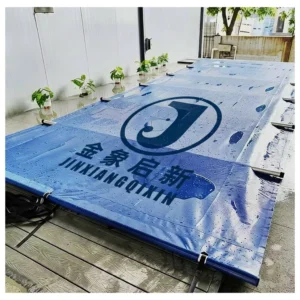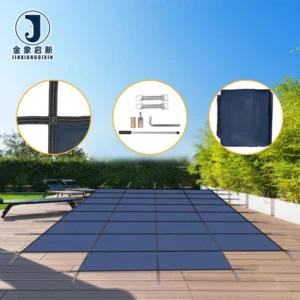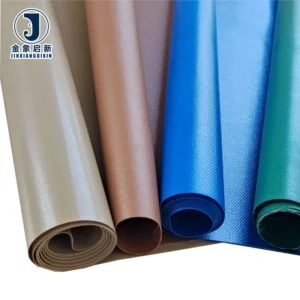

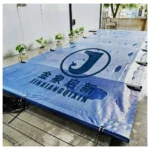
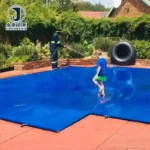
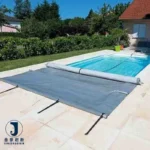
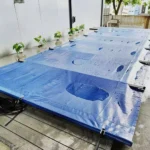
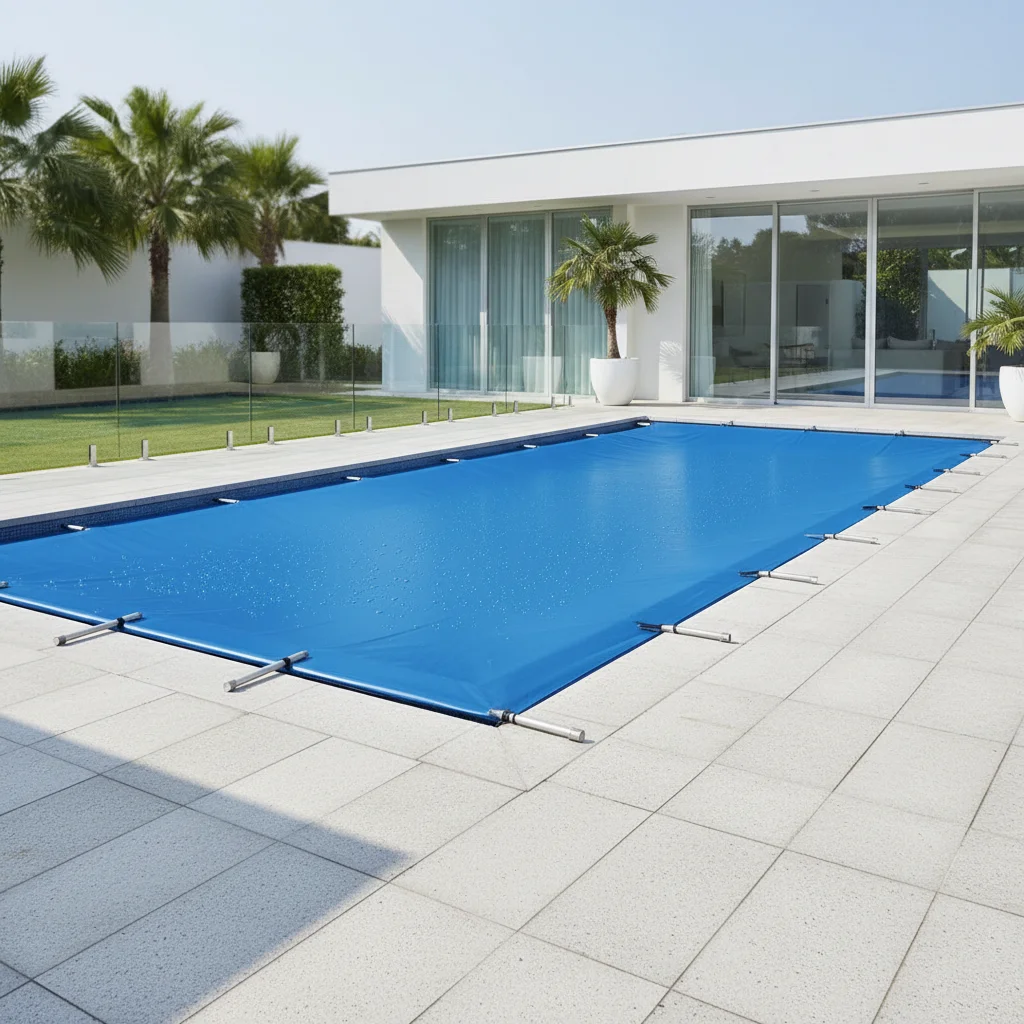
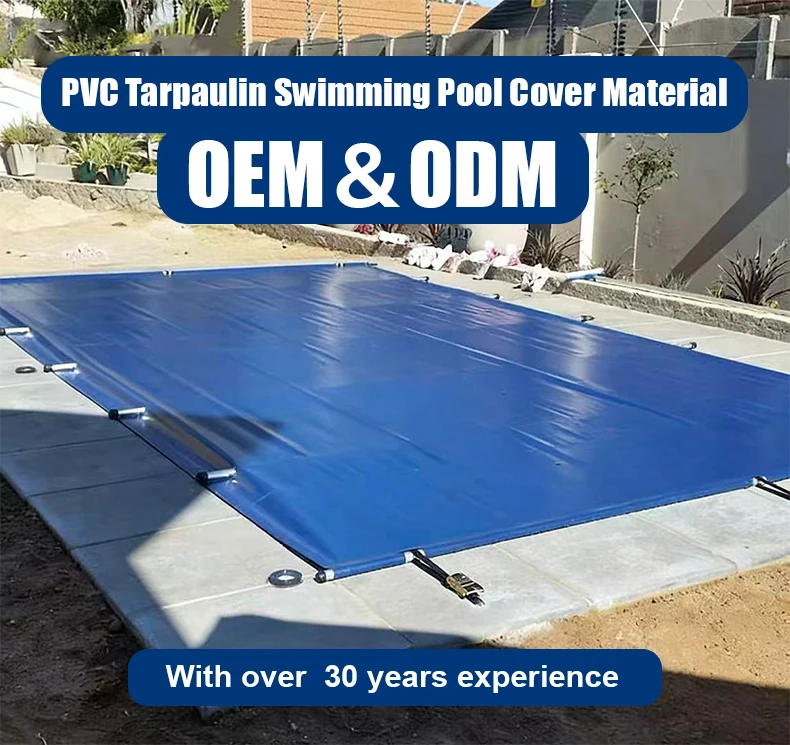
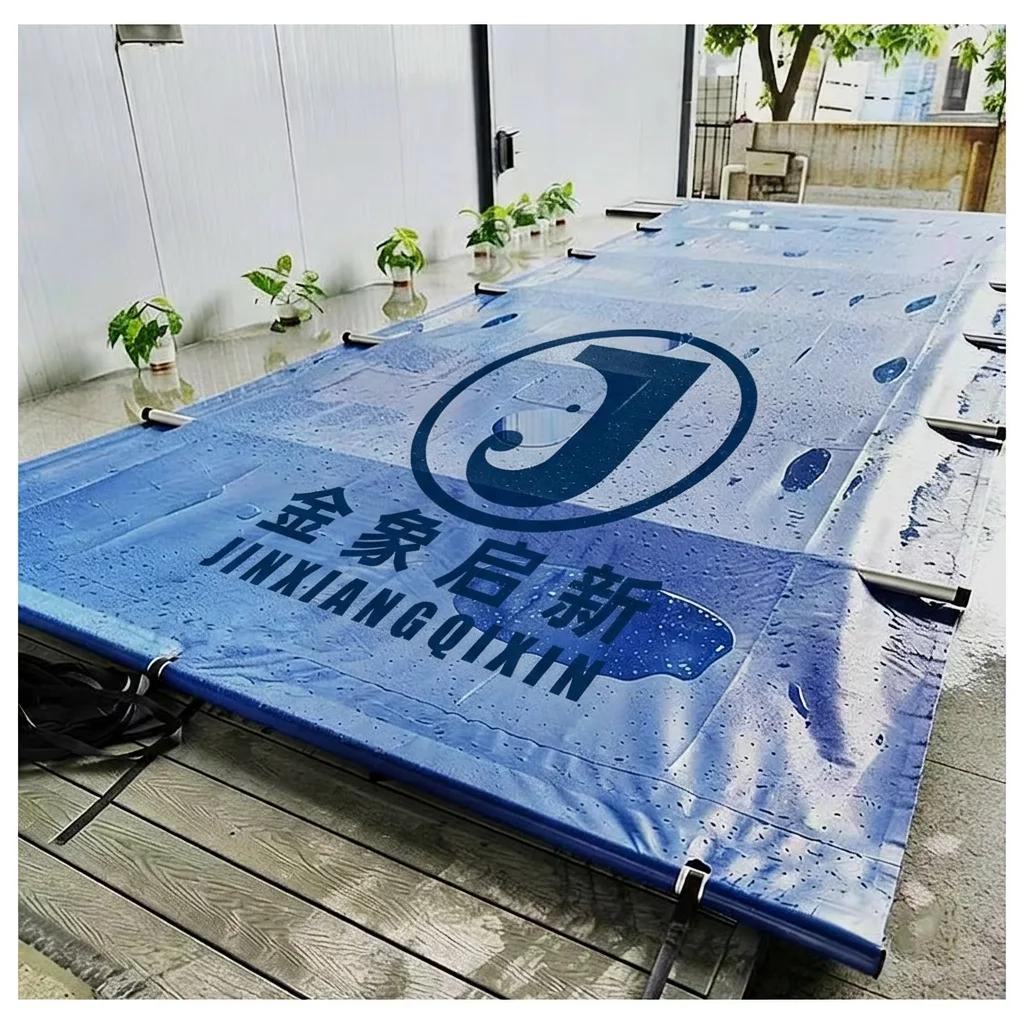
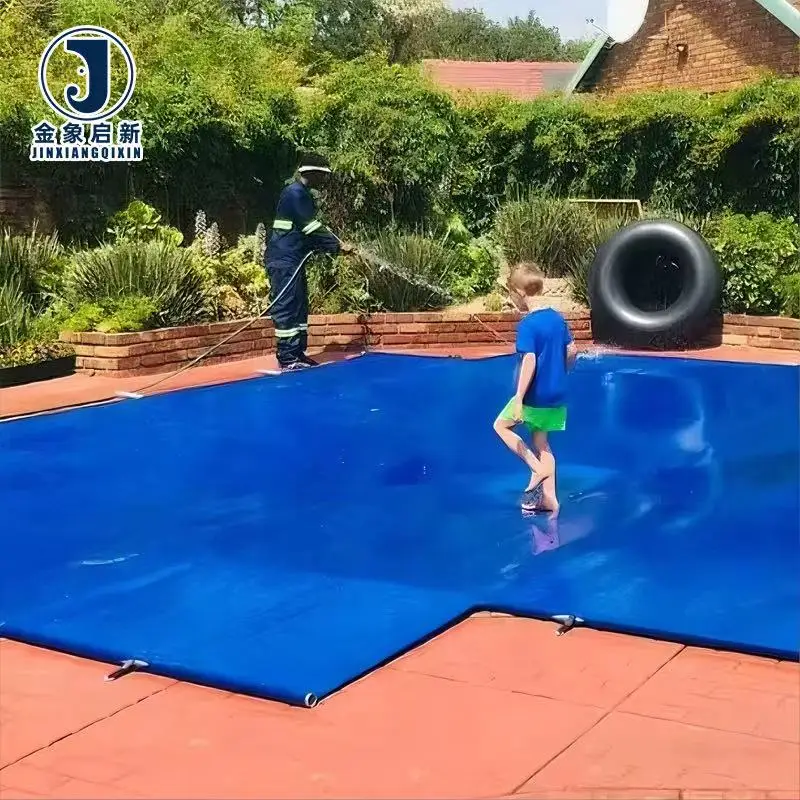
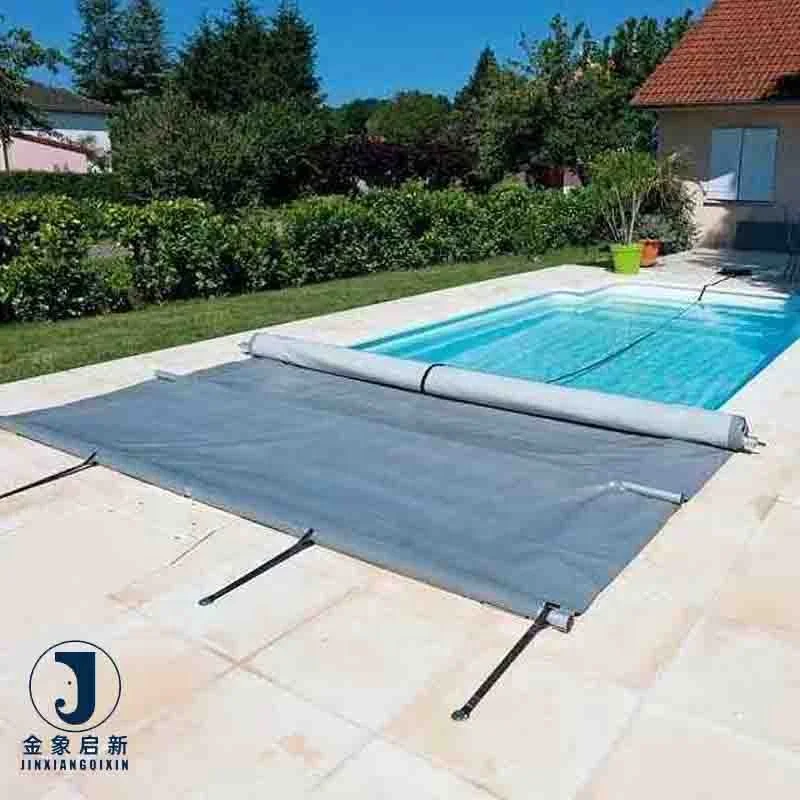
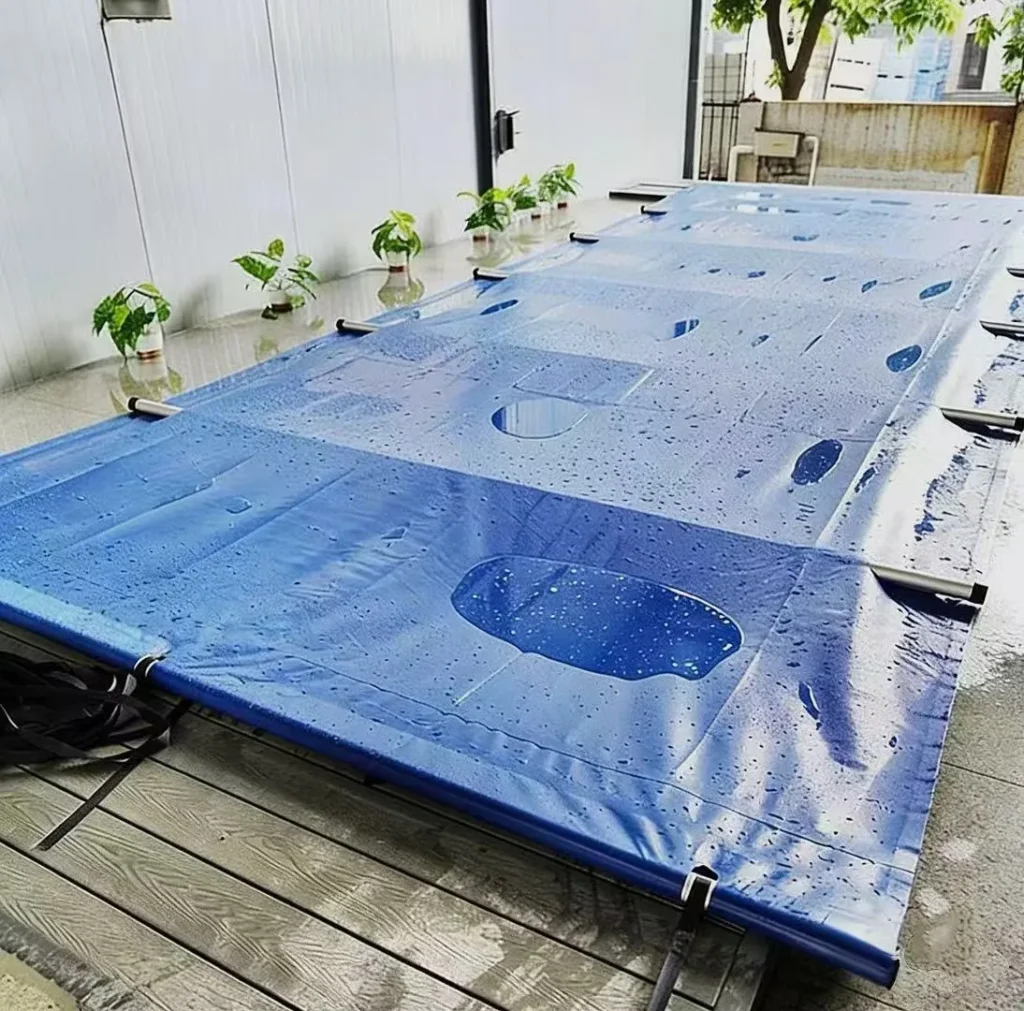
Laminated Coating Precision — Hot-melt and laminated technology on this PVC pool cover ensures verified adhesion between coating layers and the polyester base, supported by three full production lines and stage-by-stage QA.
Technical Specifications
| Parameter | Value |
|---|---|
| Product Type | PVC Tarpaulin Pool Cover |
| Material | PVC + High-strength polyester mesh fabric |
| Coating Method | Laminated Technology & Hot-melt Coating Technology |
| Weight (GSM) | 350gsm / 420gsm / 500gsm / 550gsm / 600gsm / 750gsm |
| Total Thickness | 0.32mm / 0.35mm / 0.4mm / 0.45mm / 0.5mm / 0.65mm |
| Roll Size | 2m width × 75m length / 2.1m width × 50m length |
| Finish Product Size | Custom cut to pool contour or sold by inventory roll |
| Flame Retardant | Available as special treatment (grade not stated in source) |
| Anti-Static | Available as special treatment (surface resistance not stated in source) |
| UV Treatment | Anti-UV treatment available (test basis not stated in source) |
| Special Treatments | Anti-cold, Anti-mildew, 3P |
| Key Features | Cold crack resistance, anti-mildew, waterproof, high tearing strength for welding, best color fastness |
| Service Life | 3-7 years under normal circumstances (source value — verify against manufacturer catalog) |
| Standards | ISO and CE certified (specific certificate numbers not stated in source) |
Application Suitability
| Application | Exposure & Requirement |
|---|---|
| Swimming pool safety covers | UV exposure, water pooling, tension from hook or aluminium bar systems, debris load |
| Fish tank and aquaculture pond liners | Permanent water contact, anti-mildew requirement, puncture risk from substrate |
| Custom-shaped pool covers | Complex contours requiring precise cutting and welded seam integrity |
| Water containment for agriculture | Chemical exposure from fertilisers, seasonal temperature swings, mechanical stress |
| Commercial pool winterisation | Snow load, ice formation, prolonged low-temperature exposure, wind uplift |
Why a Certified PVC Pool Cover Tarpaulin Matters Beyond the Label
Material claims without matching test documentation create compliance risk at the point of installation.
A PVC pool cover that states flame retardant on the data sheet but arrives without a batch-specific test report leaves the installer exposed. Mining and aviation ventilation sites reject duct and cover material that cannot demonstrate fire classification on arrival. Pool environments near electrical plant or public access areas increasingly demand the same rigour. Sourcing the PVC Pool Cover aftermarket supplier with documentation discipline is the difference between first-time acceptance and a failed inspection [NEED_CITE: fire classification standards for PVC coated fabrics in public access environments].
Coating Adhesion and Weld Integrity for Pool Containment
The PVC Pool Cover aftermarket supplier applies laminated and hot-melt coating technology to bond PVC layers to a high-tenacity polyester mesh base. This dual-technology approach addresses the primary failure mode in pool covers: delamination at the weld line where tension concentrates around aluminium bar or hook fixation points. When adhesion between the coating and the base yarn is insufficient, the welded seam separates before the fabric body reaches its tear limit. Laminated construction embeds the mesh within the PVC matrix rather than relying on surface adhesion alone.
Thickness, GSM, and Structural Load on Pool Spans
Selecting between 350gsm and 750gsm grades, and corresponding thickness from 0.32mm to 0.65mm, determines how the cover handles span load and wind uplift on larger pools. Heavier grades with greater thickness resist sagging across wide spans and distribute point loads from debris or standing water more effectively. The relationship between GSM and performance is not linear — base fabric denier and weave density contribute independently to tensile and tear resistance. Confirm the grade required for your specific pool dimensions and local wind conditions before specifying [NEED_CITE: ISO 1421 tensile and tear test methods for coated fabrics].
Reading the Specification Sheet: What Each Parameter Actually Controls
The GSM value indicates total coated weight per square metre, but it is the base fabric construction — polyester yarn denier and weft density — that governs tear propagation resistance. Two covers at the same GSM can perform very differently if one uses a denser, lighter-denier mesh and the other a coarser, heavier-denier mesh with wider gaps filled by coating. Laminated and hot-melt coating methods both produce strong adhesion, yet they differ in how they handle edge sealing and repair patches in the field. Cold crack resistance is critical for pool covers exposed to freezing conditions; a cover that becomes brittle at low temperatures will crack at fold lines during winter removal. Anti-mildew treatment protects the underside where condensation traps moisture between cover and water surface. The stated service life of 3-7 years under normal circumstances assumes correct grade selection for the installation environment.
What Specification Mismatches Cost at the Project Level
Ordering a lighter GSM grade to reduce material cost on a large commercial pool can result in premature weld failure when the cover is tensioned across a span exceeding the grade’s structural capacity. Specifying anti-UV treatment without verifying the test basis means accelerated colour fade and surface chalking may appear within the first season on south-facing installations. Batch-to-batch colour variation becomes visible only after the cover is deployed and adjacent panels are viewed under direct sunlight — at which point the entire installation may require replacement to maintain visual consistency. Weld seam failure at fixation points forces unplanned downtime and emergency patching that compromises the cover’s waterproof integrity [NEED_CITE: common failure modes in tensioned PVC pool covers].
Verification and Process Control Behind Every Roll
Dedicated QA and QC at every production stage means coating weight, adhesion, and colour are checked in-process rather than only at final inspection. The 10-person R&D team handles custom sizing, colour matching, and sample development for non-standard pool contours, with samples produced within days. Three full production lines and 36 sets of professional equipment support bulk roll orders with reliable scheduling. A 100% pre-shipment inspection is completed before dispatch, with records included in the documentation package. Material specification sheets accompany each roll, stating the exact GSM, base fabric construction, coating method, and colour reference for traceability.
Documentation & Verification
- Material specification sheet stating exact GSM, base fabric denier, coating method, and colour reference per roll
- Test report for flame retardant and anti-static grades where applicable, matched to production batch
- Pre-shipment inspection record confirming weight verification and visual check before dispatch
- Roll packing list with dimensions, net weight, and roll count for container loading planning
- Certificate of origin and customs support documentation for international shipment clearance
Fabrication, Handling & Storage
- Hot-air welding recommended for laminated PVC pool covers; adjust temperature and speed to the specific GSM grade and thickness
- Allow seam allowance of sufficient width for aluminium bar tensioning systems on pool edges
- Store rolls horizontally on pallets in shaded conditions to prevent coating compression marks
- Unroll and allow the PVC pool cover tarpaulin to acclimatise before fabrication in cold conditions
- Clean with mild detergent; avoid solvent-based cleaners that attack the PVC coating surface
- Field repairs on welded seams require compatible PVC repair patches matched to coating method
Before You Specify: What We Need to Know
Provide the pool dimensions, shape contour drawings if non-rectangular, and the tensioning system type — whether hook-based or aluminium bar. Confirm the fire classification or anti-static standard required by your local regulatory authority so that the correct treatment grade can be applied and tested. Specify your target colour with a Pantone or RAL reference if matching an existing installation, and indicate whether you require finished cut-to-size panels or roll stock for in-house fabrication.
Frequently Asked Questions
Q: Which fire-retardant standard can be met for PVC pool cover fabric in my market?
A: Flame retardant treatment is available as a special option. The specific grade — whether M2, B1, NFPA 701, or another classification — must be confirmed against your local building and pool safety regulations. Request the applicable test standard at inquiry stage so that the correct formulation is applied and a matching batch test report is included with your shipment.
Q: Is anti-static treatment available with a verified surface resistance for pool environments near electrical equipment?
A: Anti-static treatment is available as a special option for the PVC pool cover range. Surface resistance values depend on the specific formulation applied. State your compliance requirement at the inquiry stage so that the treatment can be matched and tested, with results documented on the material specification sheet before dispatch.
Q: How do I confirm the GSM on arrival matches the quoted grade across the full roll?
A: Every roll undergoes in-process coating weight checks during production and a final pre-shipment inspection. The material specification sheet included with your order states the exact GSM for each roll. On receipt, you can verify by cutting a measured sample and weighing it against the stated value.
Q: What welding method and seam allowance do you recommend for aluminium bar tensioning?
A: Hot-air welding is the standard method for laminated PVC pool covers, with temperature and speed adjusted to the specific GSM and thickness grade. Seam allowance must accommodate the aluminium bar profile and tension load. Request welding parameter guidance matched to your selected grade when placing your order.
Q: What is the lead time and minimum for custom-shaped pool covers cut to exact contour?
A: Custom-cut pool covers are produced based on contour drawings you provide. The R&D team develops samples within days for approval before full production begins. Lead time and minimum quantity depend on the complexity of the shape, the selected GSM grade, and any special treatments required.