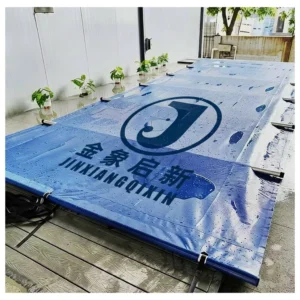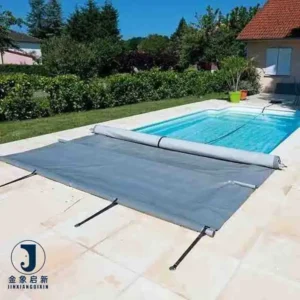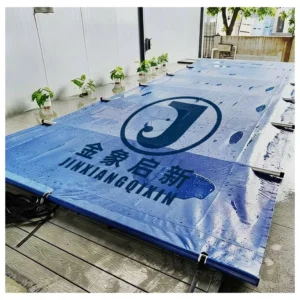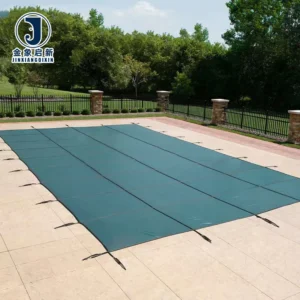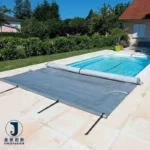
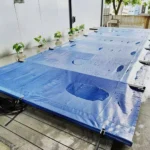
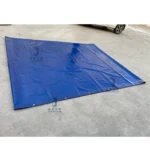
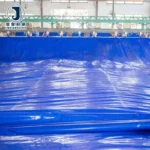
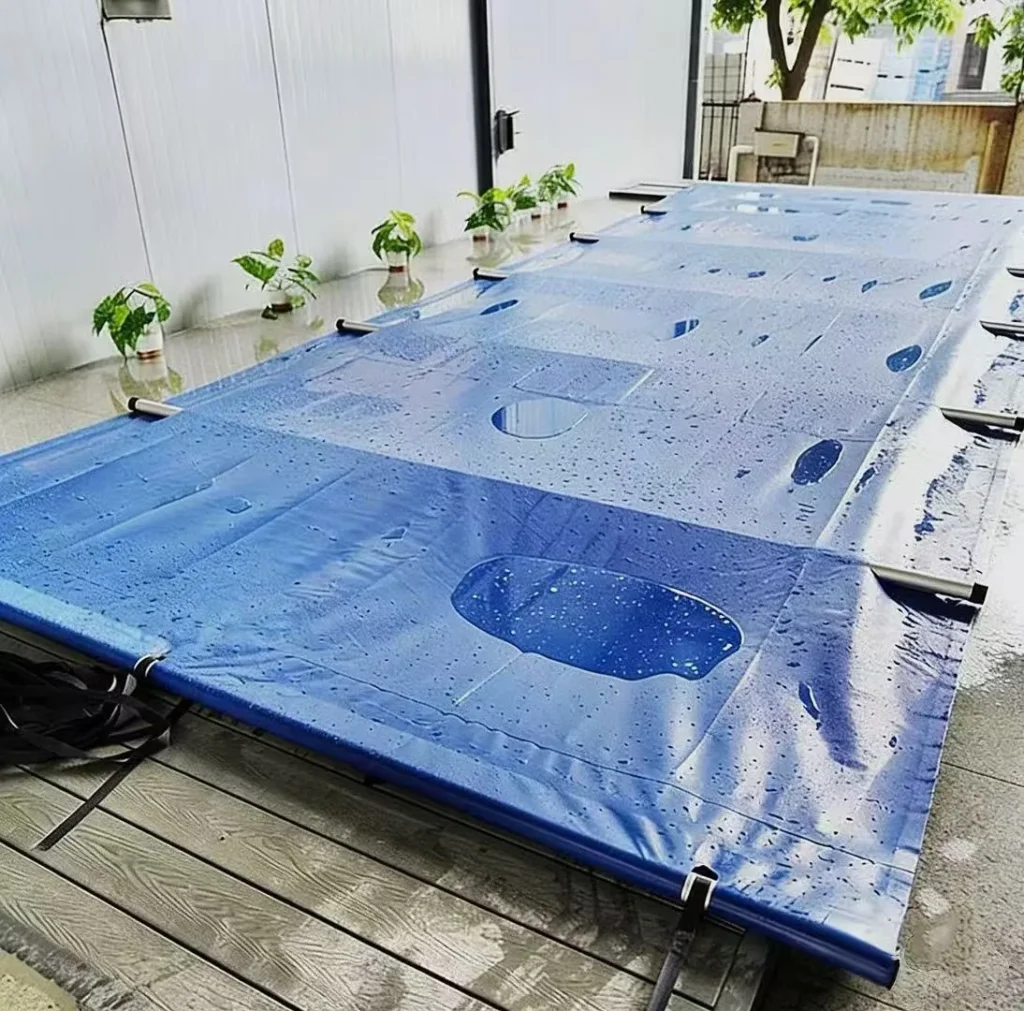
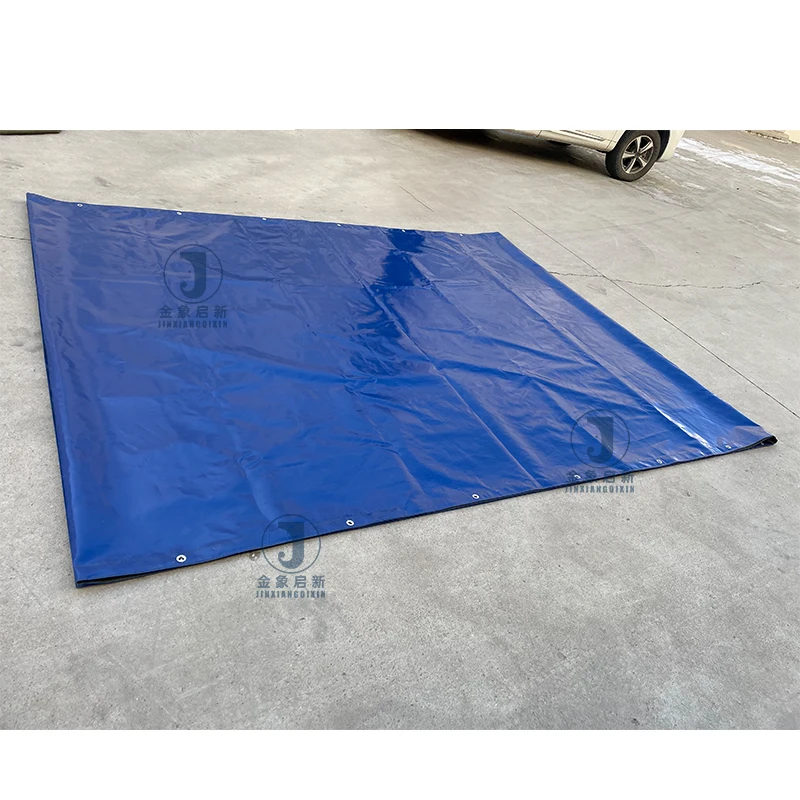
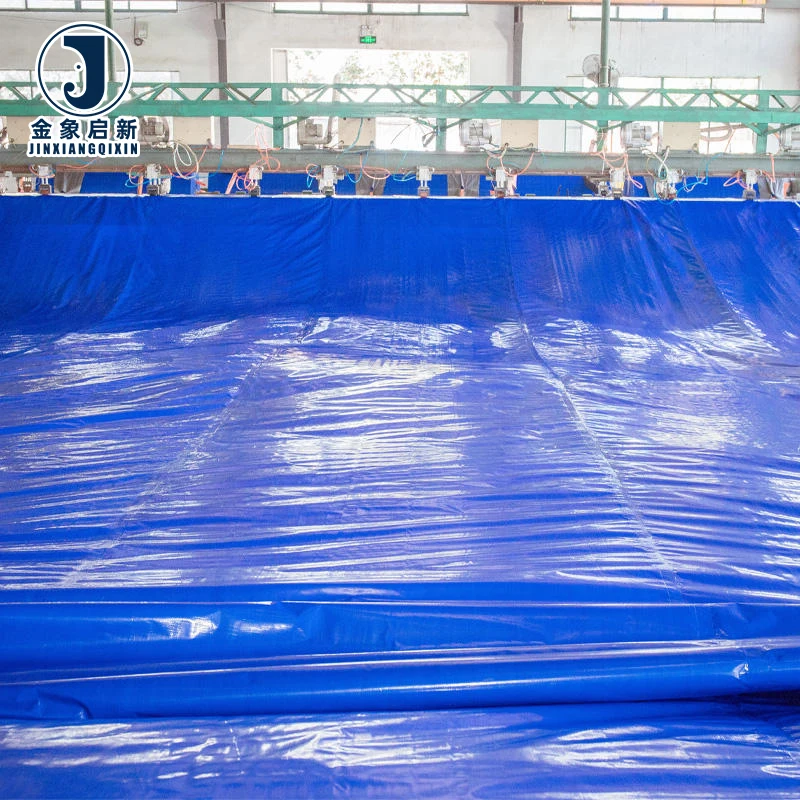
Coating Process Control — Three full production lines and 36 sets of professional equipment allow precise control over laminated coating weight and adhesion, ensuring consistent PVC-to-polyester bonding across every roll of industrial air duct and specialist structure fabric.
Technical Specifications
| Parameter | Value |
|---|---|
| Product Type | PVC Laminated Waterproof Breathable Anti-UV Swimming Pool Covers Tarpaulin |
| Material | PVC + High-strength polyester mesh fabric |
| Coating Method | Laminated technology & Hot-melt coating technology |
| Weight Options | 350gsm / 420gsm / 500gsm / 550gsm / 600gsm / 750gsm |
| Thickness Options | 0.32mm / 0.35mm / 0.4mm / 0.45mm / 0.5mm / 0.65mm |
| Roll Width | 2m / 2.1m |
| Roll Length | 75m (2m width) / 50m (2.1m width) |
| Finished Size | Custom cut to project dimensions or supplied as roll stock |
| Color Options | Blue / Red / Yellow / Light Blue / Grey (custom colours available) |
| Base Fabric | High tenacity polyester yarns |
| Key Features | Waterproof, anti-mildew, cold crack resistant, anti-static treatment, colour fastness |
| Fire Retardant | Available in flame retardant grades — confirm the grade required for your market |
| Anti-UV | Treatment available — verify test basis for your application |
| Standards | ISO, CE |
Application Suitability
| Application | Exposure & Requirement |
|---|---|
| Mining ventilation ducts | Constant airflow friction, underground humidity, fire-retardant and anti-static compliance mandatory |
| Tunnelling temporary ducting | Abrasive dust, mechanical impact, confined-space safety certification |
| Aviation ground support ventilation | Jet fuel proximity, rapid deployment and collapse, weight-sensitive handling |
| Inflatable membrane structures | Biaxial tension, UV exposure, welded seam integrity under inflation pressure |
| Construction site temporary enclosures | Wind loading, rain exposure, frequent repositioning and folding |
Why Fire-Retardant Claims Without a Grade Leave You Exposed on Site
A fabric described as "fire retardant" means nothing until a test standard and classification are named on the certificate.
Ventilation duct fabric that arrives on a mining or tunnelling site without documentation referencing a recognised standard will be rejected at the safety inspection. Contractors face work stoppages and re-procurement delays when the material certificate does not match the jurisdiction’s requirements. We supply PVC laminated tarpaulin fire retardant grades with the specific test standard referenced on the accompanying report, so your compliance submission is complete before the fabric is unrolled. [NEED_CITE: fire classification standards for ventilation ductwork in underground mining]
How Lamination Technology Secures the Coating Bond
The laminated and hot-melt coating process bonds PVC to the high-tenacity polyester mesh under heat and pressure, creating an adhesion layer that resists delamination when the fabric is flexed, folded, or tensioned across duct frames. For ventilation applications, this bond integrity matters at every welded seam where the duct sections join. The PVC laminated tarpaulin fire retardant construction maintains coating adhesion through repeated inflation and deflation cycles common in temporary mining ventilation setups.
Anti-Static Treatment for Underground Compliance
Underground environments demand fabrics that dissipate static charge to reduce ignition risk in combustible dust atmospheres. The anti-static treatment applied during production modifies the surface resistivity of the PVC coating. For mining and tunnelling contractors, specifying anti-static PVC laminated tarpaulin fire retardant fabric requires confirming the surface resistance value against your site’s safety regulation before placing the bulk order. [NEED_CITE: anti-static surface resistance requirements for underground ventilation fabric]
Reading the Weight and Thickness Matrix
Weight grades from 350gsm to 750gsm pair with corresponding thickness values from 0.32mm to 0.65mm, but the relationship between GSM and performance is not linear. The base fabric denier, weave density, and coating ratio all contribute to tensile and tear behaviour. A heavier grade does not automatically deliver proportionally higher tear resistance if the base fabric uses lower-denier yarns. Laminated technology produces a distinct coating-to-substrate interface compared to knife-over-roll coating, affecting both peel strength and weld seam behaviour. Specifying by GSM alone without reviewing the base fabric construction can lead to selecting a grade that is heavier but not stronger at the stress points where duct sections connect.
What Happens When Weld Seams Fail Before the Fabric Does
The most frequent failure point on ventilation ducts and membrane structures is the welded seam, not the fabric body. When welding temperature or dwell time is not matched to the specific coating formulation and thickness of laminated PVC, the seam peels apart under flex load while the surrounding fabric remains intact. This results in air leakage in duct systems and structural deflation in membrane installations. Contractors replacing failed duct sections mid-project absorb both material and labour costs that could have been avoided by verifying the recommended welding parameters for the exact grade supplied. [NEED_CITE: common failure modes in welded PVC coated fabric seams]
Production Capability Behind Every Roll
A 10-person R&D team handles custom width, colour, and treatment formulation for project-specific ventilation and membrane structure requirements. Three full production lines and 36 sets of equipment maintain capacity for bulk orders without sacrificing the coating weight control that laminated technology demands. Dedicated QA/QC operates at every production stage, with 100% inspection before shipment ensuring the PVC laminated tarpaulin fire retardant rolls dispatched match the specification sheet provided at order confirmation. Samples for custom treatment formulations are developed within days, allowing contractors to verify compliance before committing to production volume.
Documentation & Verification
- Material specification sheet confirming exact GSM, base fabric denier, and coating weight for each roll
- Fire-retardant test report referencing the applicable standard for your jurisdiction
- Anti-static surface resistance test data where treatment is specified
- Pre-shipment inspection record with roll-by-roll verification before dispatch
- Certificate of origin and customs documentation for international shipment
Fabrication, Handling & Storage
- Weld temperature and dwell time must be calibrated to the specific laminated coating thickness (0.32mm–0.65mm range) for reliable seam strength
- Store rolls upright on pallets to prevent flat-spot deformation that affects unrolling and tensioning on duct frames
- Allow cold-stored rolls to reach ambient temperature before unrolling to prevent cracking of the PVC coating surface
- Hot-melt coated surfaces accept standard PVC-compatible adhesives for field repair patches on duct sections
- Cut patterns with seam allowance that accounts for the overlap width required by your hot-air or wedge welding equipment
Before You Request a Quotation
Specify the ventilation or structure application, the fire-retardant and anti-static standards required by your site regulations, and the preferred roll width. Confirm whether you need custom colour matching and whether finished panels or roll stock suits your fabrication setup. Providing target annual volume helps determine production scheduling and batch consistency planning.
Frequently Asked Questions
Q: Which fire-retardant standard does the tarpaulin meet, and is the test report valid for my jurisdiction?
A: Flame retardant grades are available, but the specific standard (M2, B1, NFPA 701, or other) must be confirmed against your project requirements. Request the test report referencing the applicable classification before placing your order to ensure the PVC laminated tarpaulin fire retardant documentation satisfies your site safety audit.
Q: What is the surface resistance value, and does the fabric meet mining ventilation safety regulations?
A: Anti-static treatment is applied during production, and the resulting surface resistance value must be verified against your jurisdiction’s mining ventilation safety code. We provide test data for anti-static treated grades so you can confirm compliance before the fabric reaches the site.
Q: How do I verify the GSM on arrival matches the quotation and specification sheet?
A: Every roll undergoes weight verification during our 100% pre-shipment inspection, and the inspection record is provided before dispatch. On arrival, you can cross-check roll weight against the material specification sheet that accompanied your shipment documentation.
Q: What welding temperature and technique are recommended for this laminated PVC construction?
A: Welding parameters depend on the specific thickness grade (0.32mm to 0.65mm) and the laminated coating formulation. We supply recommended hot-air or wedge weld temperature and speed guidance matched to the grade you order, ensuring seam strength matches the fabric body performance.
Q: Can custom widths and colours be produced for specialist structure projects, and what is the minimum order?
A: Custom widths beyond the standard 2m and 2.1m options, along with bespoke colours, are produced through our R&D team. Minimum order quantities vary by specification. Request a sample for approval before bulk production to confirm colour and treatment meet your project requirements.