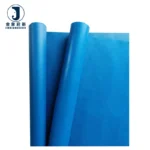
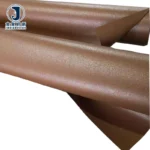
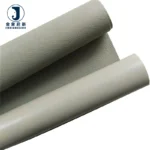
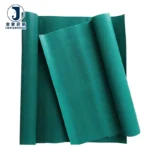
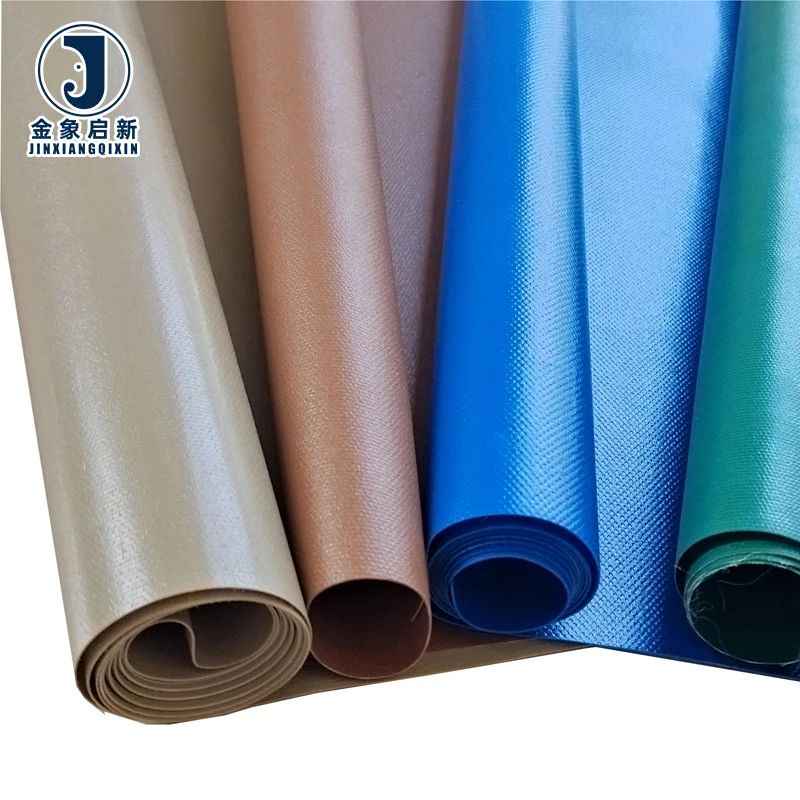
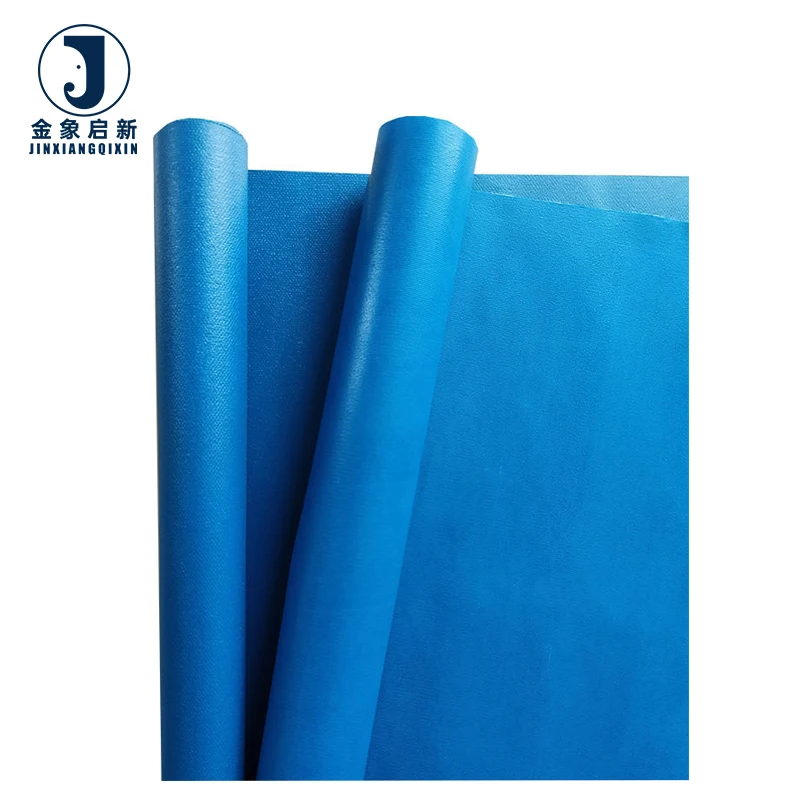
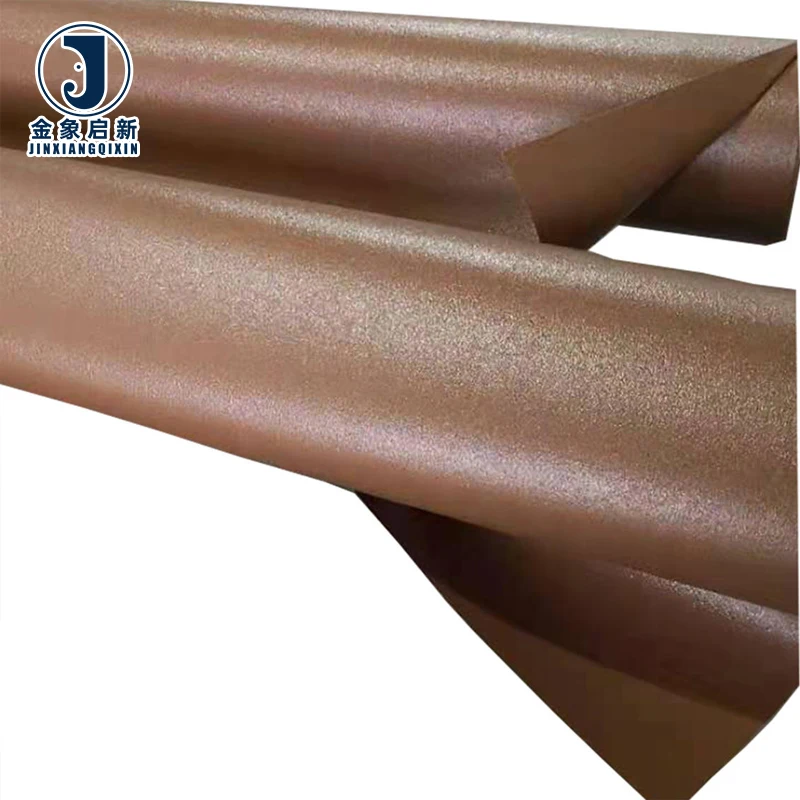
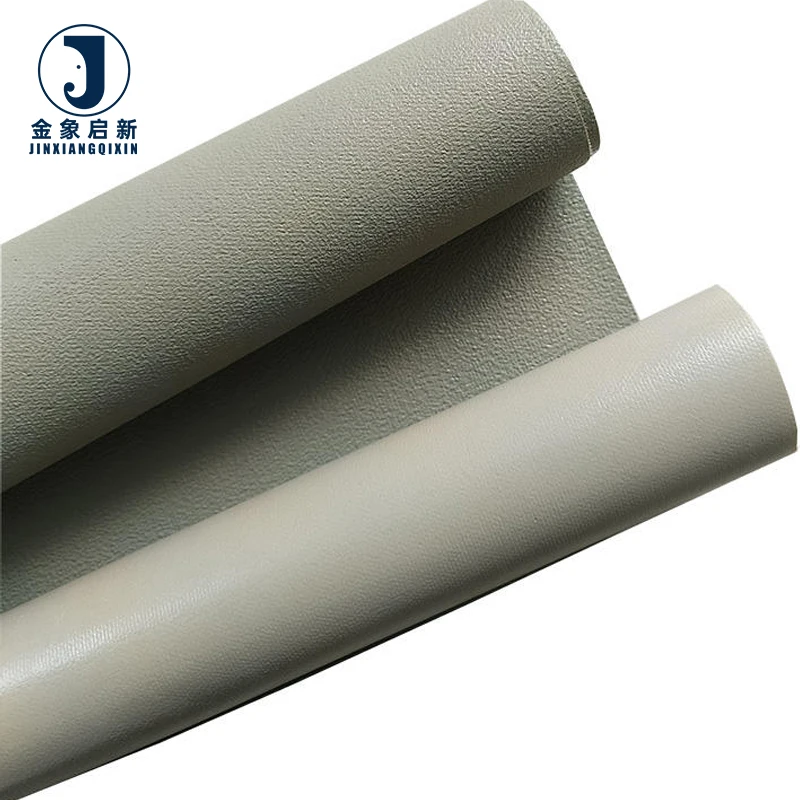
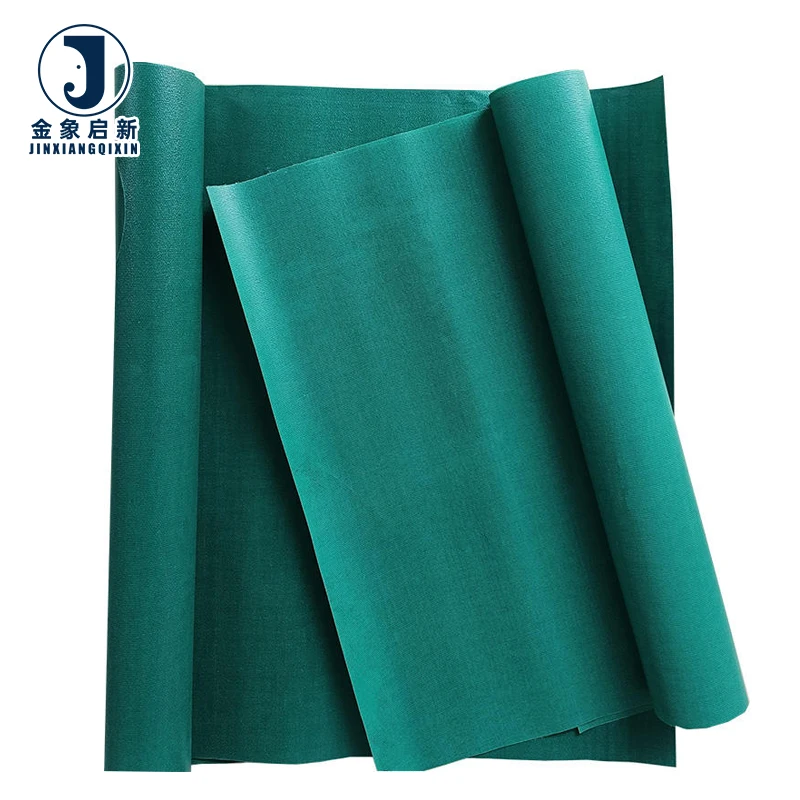
Proven Coating Control — Nearly three decades of PVC coating experience ensures consistent adhesion and weight accuracy across every roll of pool and ventilation-grade fabric we produce.
Technical Specifications
| Parameter | Value |
|---|---|
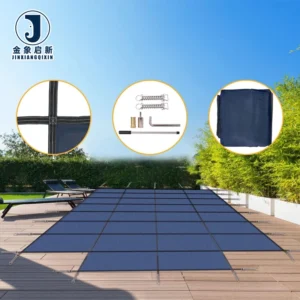
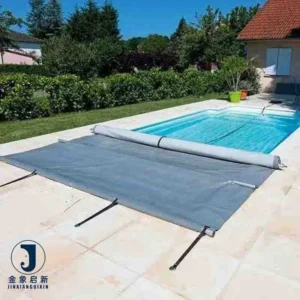
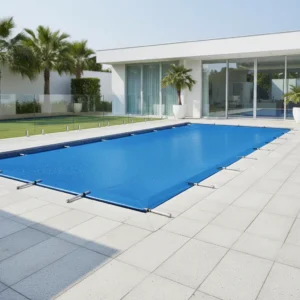
| Product Type | PVC Coated Tarpaulin for Pool Cover |
| Material | PVC + High-strength polyester mesh fabric |
| Coating Method | Laminated technology / Hot-melt coating technology |
| Weight (GSM) | 350gsm / 420gsm / 500gsm / 550gsm / 600gsm / 750gsm |
| Total Thickness | 0.32mm / 0.35mm / 0.4mm / 0.45mm / 0.5mm / 0.65mm |
| Roll Size | 2m × 75m / 2.1m × 50m |
| Finish Product Size | Custom cut-to-size or sold by inventory roll |
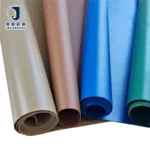
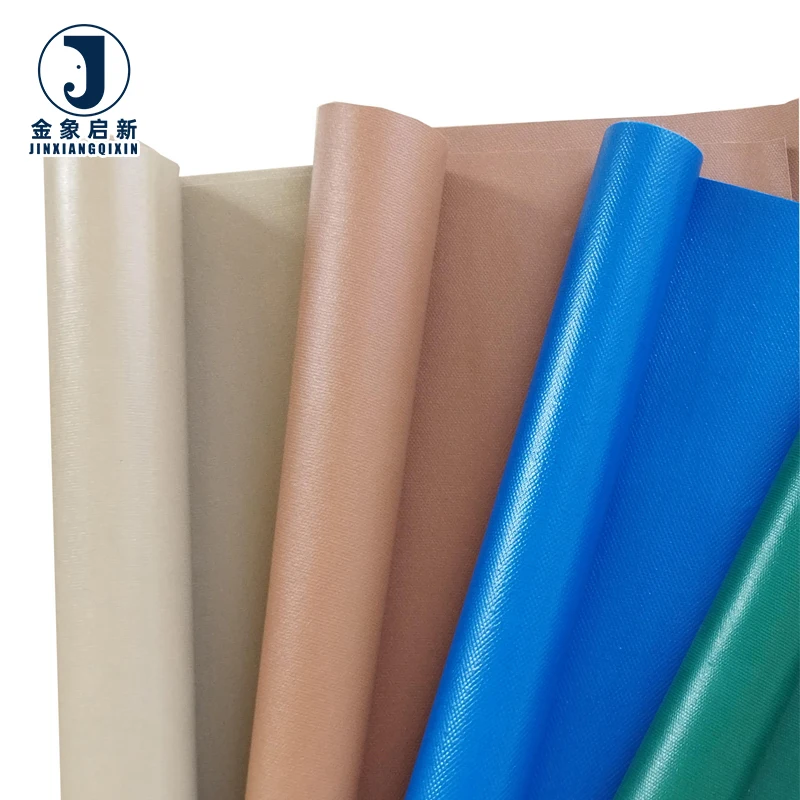
| Color Options | Blue / Red / Yellow / Light blue / Grey (custom colors available) |
| UV Treatment | Anti-UV (test basis not stated — request report for your market) |
| Anti-Mildew | Yes |
| Anti-Static | Anti-static treatment (standard not stated — confirm grade required) |
| Cold Crack Resistance | Yes |
| Waterproof | Yes |
| Flame Retardant | Available in flame retardant grades — confirm the grade required for your market |
| Key Features | High tenacity polyester yarns, good flexibility and adhesion strength, outstanding tearing strength for welding, best color fastness |
| Service Life | 3-7 years under normal circumstances |
Application Suitability
| Application | Exposure & Requirement |
|---|---|
| Swimming pool covers | Constant moisture, UV exposure, tension from ratchet or aluminium bar systems, chemical contact from pool treatments |
| Aquatic facility membrane structures | Fire-retardant compliance mandatory, sustained humidity, structural wind load |
| Fish tank and aquaculture covers | Permanent water immersion, anti-mildew requirement, puncture risk from maintenance tools |
| Inflatable pool enclosures | Air pressure tension, UV and temperature cycling, fire safety certification |
| Specialist water containment | Waterproof integrity, chemical resistance, long-term fold and unfold cycles |
Why Claimed Flame Retardancy Fails at the Compliance Gate
A PVC pool cover fabric listed as flame retardant on a data sheet but supplied without a matching test certificate creates a compliance gap that stops project handover. Specifying the exact fire classification standard before production is the only way to guarantee site acceptance.
Pool and aquatic structure projects increasingly fall under building material fire codes, particularly in enclosed or semi-enclosed facilities where membrane fabrics must demonstrate rated performance [NEED_CITE: fire classification standards for tensioned membrane structures in aquatic environments]. When the PVC pool cover fabric fire retardant grade is not verified against the local standard — whether M2, B1 per DIN 4102, or NFPA 701 — the entire installation faces rejection at inspection. We see this pattern repeatedly: the quotation states flame retardant treatment, the rolls arrive, and the site safety officer asks for a test report that was never issued because the grade was never formally specified.
Coating Adhesion Determines Weld Integrity
The laminated and hot-melt coating technologies used in this fabric directly affect how well heat-welded seams hold under sustained tension. When a PVC pool cover is stretched over an aluminium track system, the highest stress concentrates at every welded joint. Consistent coating weight and strong PVC-to-polyester adhesion prevent the seam from delaminating before the base fabric reaches its own tear limit.
Anti-Static Treatment for Enclosed Aquatic Environments
In enclosed pool structures and inflatable enclosures, static charge accumulation on the fabric surface can attract particulates and create discharge risks near electrical equipment. The anti-static treatment available on this PVC pool cover tarpaulin addresses surface resistivity, though the specific measurement standard should be confirmed during specification [NEED_CITE: surface resistance measurement methods for anti-static coated textiles]. For projects where anti-static compliance is contractually required, the test method and acceptable range must be documented before the order enters production.
Reading the GSM and Thickness Relationship
The weight range from 350gsm to 750gsm corresponds to thickness values between 0.32mm and 0.65mm, and these two numbers together reveal more than either one alone. GSM reflects the total mass per square metre — base fabric plus coating — while thickness indicates the cross-section available to resist puncture and abrasion. A higher GSM driven primarily by coating weight improves waterproofing but adds stiffness; a higher GSM driven by denser polyester yarns improves tear propagation resistance. For pool covers tensioned across wide spans, the base fabric denier and weave density matter as much as the coating mass. The coating method also plays a role: laminated construction typically delivers stronger PVC-to-fabric bonding than simple hot-melt, which directly influences how the material behaves when folded repeatedly in winter storage or when welded at seam lines. Understanding this relationship helps buyers select a grade that matches the actual mechanical demands of the installation rather than choosing on weight alone.
What Happens When the Wrong Grade Goes into Production
Selecting a lighter GSM to reduce cost on a large commercial pool cover often surfaces as premature failure at the hem or weld line, where tension concentrates during wind events. Similarly, accepting anti-UV or flame retardant treatment without a test report means there is no baseline to hold the supplier accountable if the fabric degrades or fails inspection [NEED_CITE: common failure modes of coated fabrics under sustained UV and thermal cycling]. Colour variation between rolls in the same batch becomes visible once panels are welded side by side over the pool surface, forcing costly panel replacement. These are not edge cases — they are recurring patterns when specification is driven by quotation price rather than documented performance requirements.
Why Fabricators and Contractors Source This Range Here
Three full production lines and 36 sets of professional equipment support bulk roll output with controlled lead times, so project timelines are not compromised by capacity bottlenecks. A dedicated 10-person R&D team handles custom width, colour matching, and sample development within days, allowing specification lock before the full production run begins. Every roll undergoes 100% inspection at the pre-shipment stage, catching coating weight deviations and colour drift before they reach the job site. Nearly 30 years of focused coated fabric production has built deep process control over PVC adhesion and coating consistency, which translates directly into reliable weld seam performance in the field. The documentation package — material specification sheets, test reports where applicable, ISO and CE certificates, and packing lists — travels with each shipment, keeping compliance trails intact from factory to site handover.
Documentation & Verification
- Material specification sheet confirming exact GSM, base fabric denier, and coating method per roll
- Fire-retardant and anti-static test reports matched to the grade specified at order placement
- Pre-shipment inspection record verifying coating weight and colour consistency before dispatch
- ISO and CE certificates included with shipment documentation for regulatory clearance
- Roll packing list with individual roll weights and dimensions for receiving verification
- Certificate of origin provided for customs processing in destination market
Fabrication, Handling & Storage
- Heat-weld seams at temperatures calibrated to the specific GSM grade, as laminated coating responds differently than hot-melt
- Reinforce hem and eyelet areas with additional PVC strip layers to distribute ratchet tension load
- Store rolls upright on end caps to prevent flat-spot deformation on the coating surface
- Unfold cold-weather deliveries gradually to avoid cracking the PVC coating at fold lines
- Use mild detergent cleaners only; avoid solvents that attack the PVC coating bond
- Plan cut patterns around 2m or 2.1m roll widths to minimise transverse weld seams
What We Need to Move Your Inquiry Forward
To provide an accurate specification and sample, share the pool or structure dimensions, the tensioning system you plan to use, and whether the installation sits indoors or outdoors. If your project requires fire-retardant or anti-static certification, tell us the specific standard your local authority enforces so we can match the treatment and test documentation accordingly. Let us know your target roll width, colour preference, and whether you need custom cut-to-size panels or full inventory rolls.
Frequently Asked Questions
Q: Which fire-retardant grades are available for pool structure compliance?
A: This PVC pool cover fabric is available in flame retardant grades suitable for aquatic and membrane structure applications. The specific classification — such as M2, B1 per DIN 4102, or NFPA 701 — must be confirmed at inquiry stage so the correct treatment formulation and test documentation are matched to your project’s regulatory requirement.
Q: How do I select the right GSM for my pool cover span?
A: GSM selection depends on span width, tensioning method, and wind load exposure. Lighter grades like 350gsm suit smaller residential covers with minimal tension, while 600gsm or 750gsm grades provide the base fabric density needed for commercial installations tensioned over wide spans with aluminium bar or ratchet systems.
Q: How is anti-static performance verified before shipment?
A: Anti-static treatment is applied during production, and surface resistance measurement can be documented when specified at the order stage. Confirm the test method and acceptable resistance range required by your project specification so the correct verification protocol is followed before dispatch.
Q: What is the difference between laminated and hot-melt coating?
A: Laminated technology bonds the PVC layers to the polyester mesh under heat and pressure, producing higher peel strength at the coating-fabric interface. Hot-melt coating applies PVC in molten form. Laminated construction generally delivers better weld seam integrity and delamination resistance in tensioned pool cover applications.
Q: How do you ensure colour consistency across multiple rolls?
A: Every production run follows a controlled colour reference, and rolls destined for the same order are inspected side by side at the pre-shipment stage. The 100% inspection protocol catches colour drift before dispatch, preventing visible panel mismatches once the PVC pool cover is welded and installed on site.