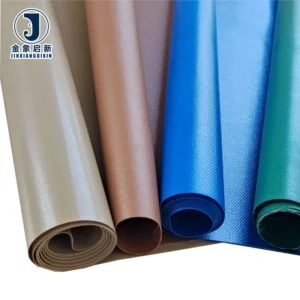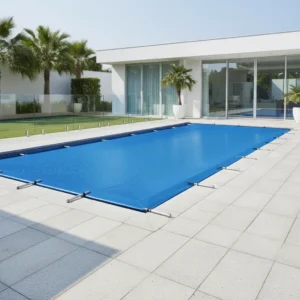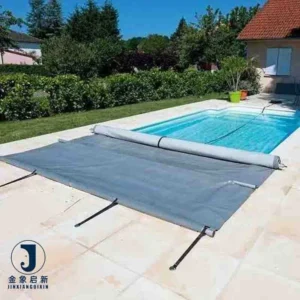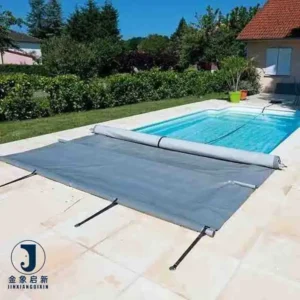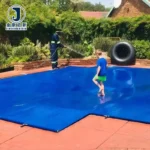
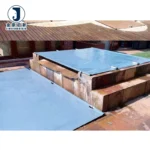
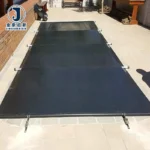
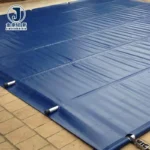
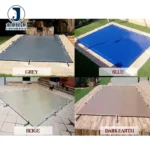
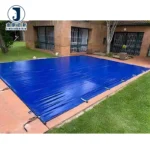
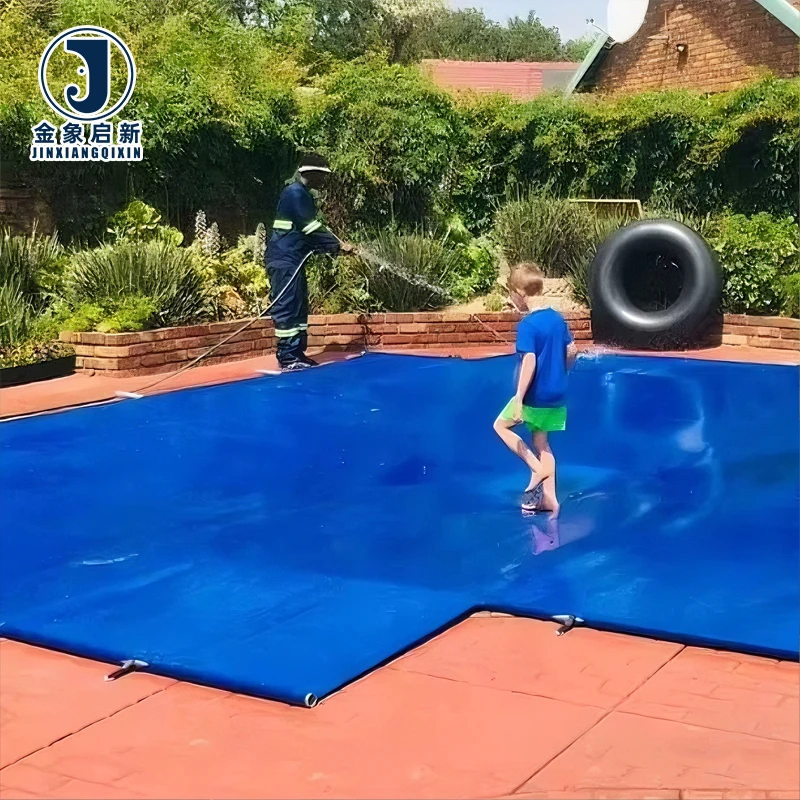
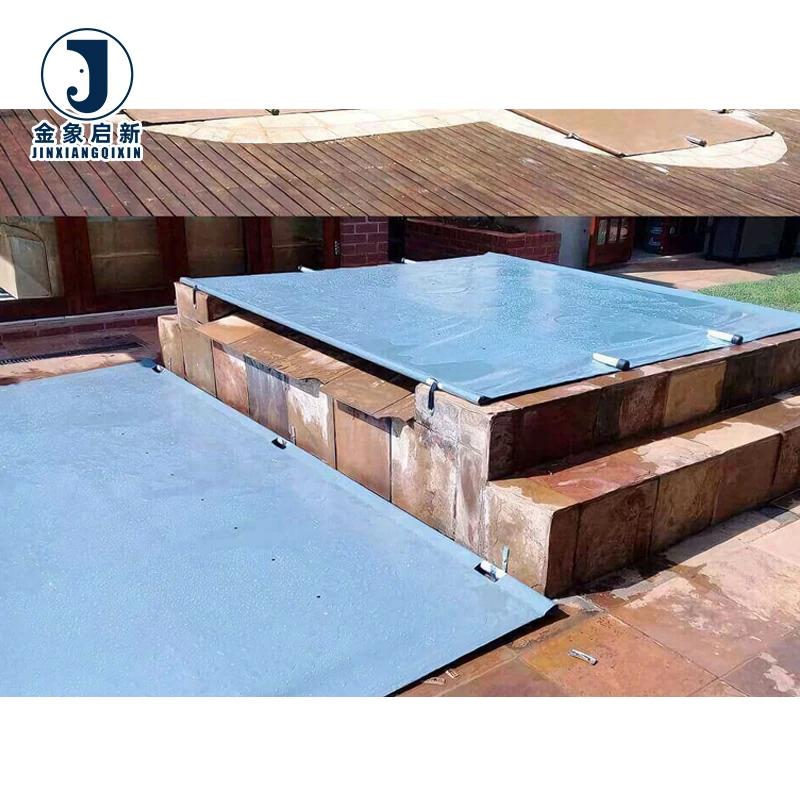
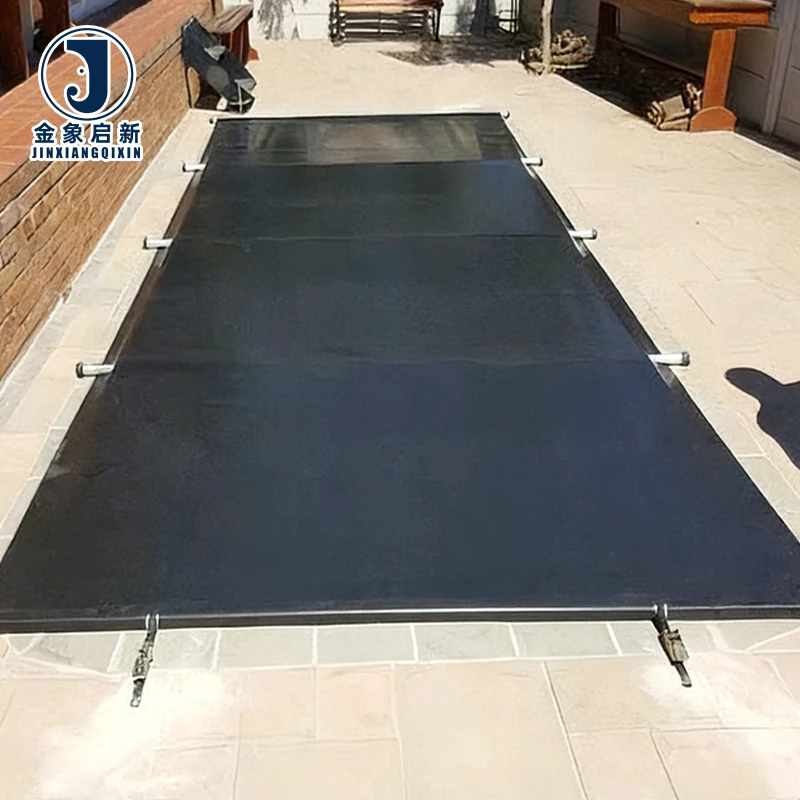
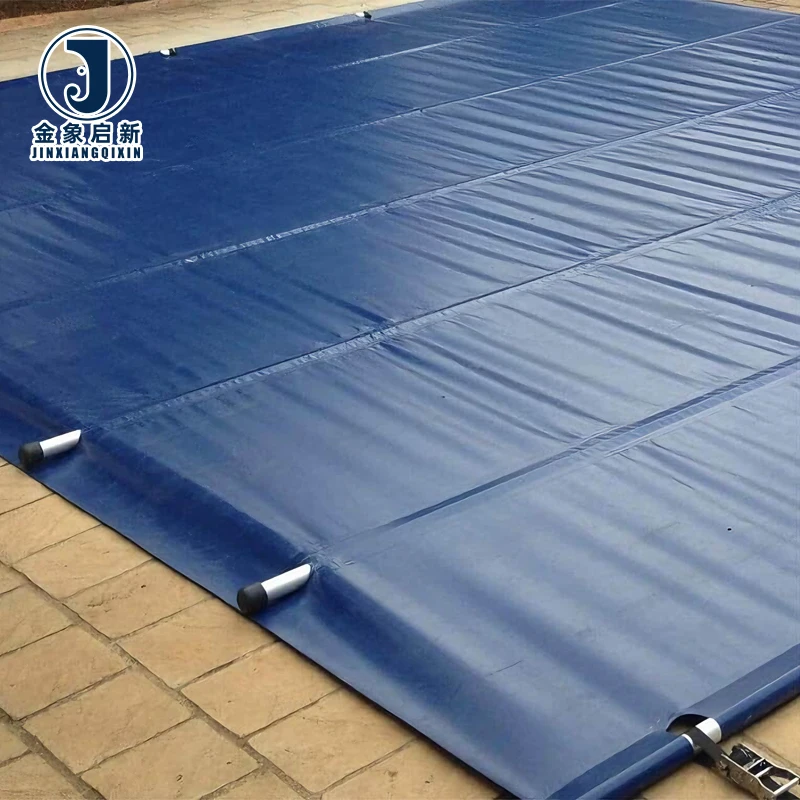
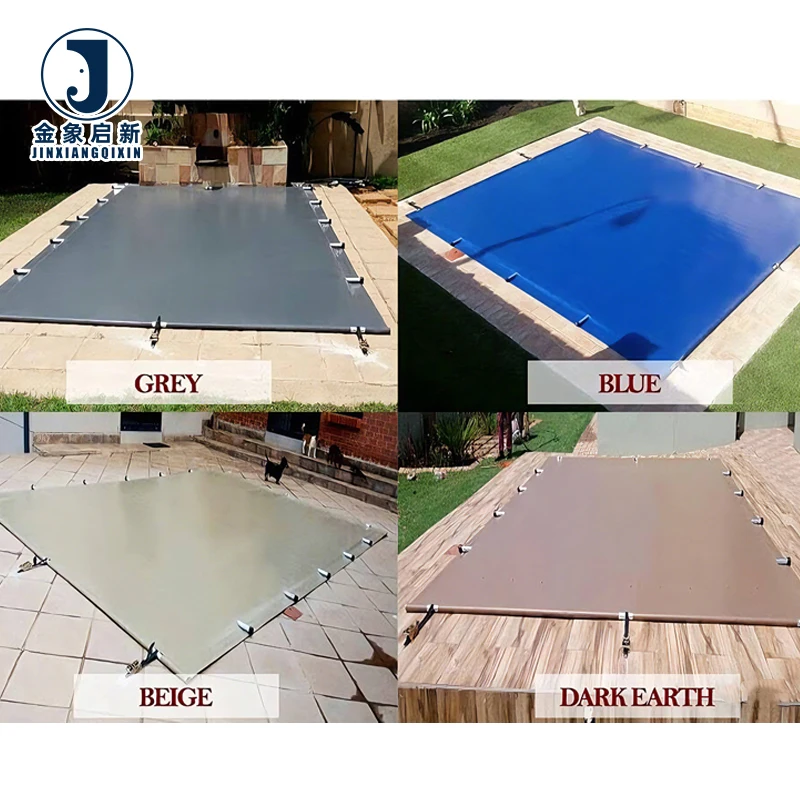
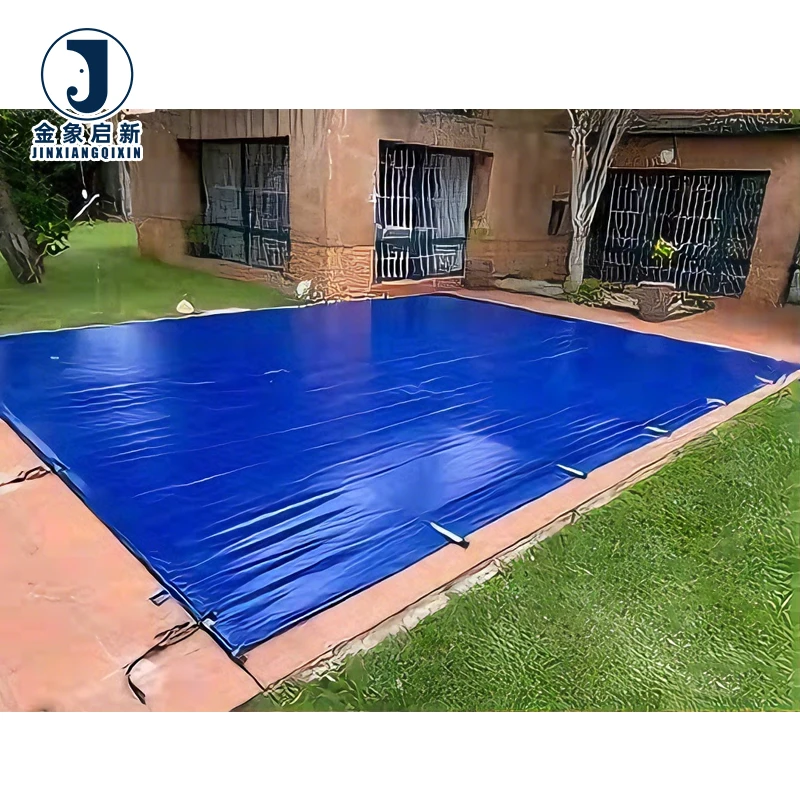
Laminated Coating Precision — Three dedicated production lines controlling hot-melt adhesion and PVC lamination weight per roll, ensuring consistent weld integrity across every batch of pool cover tarpaulin.
Technical Specifications
| Parameter | Value |
|---|---|
| Product Type | PVC Pool Cover Tarpaulin |
| Material | PVC + High-strength polyester mesh fabric |
| Coating Technology | Laminated & Hot-melt Coating |
| Weight Options | 350gsm, 420gsm, 500gsm, 550gsm, 600gsm, 750gsm |
| Thickness Options | 0.32mm, 0.35mm, 0.4mm, 0.45mm, 0.5mm, 0.65mm |
| Roll Size | 2m × 75m / 2.1m × 50m |
| Finish Product Size | Custom cut to pool dimensions or sold by roll |
| Color | Blue / Red / Yellow / Light blue / Grey (Customizable) |
| UV Treatment | Anti-UV (test basis not stated — confirm requirement) |
| Flame Retardant | Available in flame retardant grades (grade not stated — confirm for your market) |
| Anti-Static | Anti-static treatment available (certification basis to be confirmed per order) |
| Key Features | Waterproof, anti-mildew, cold crack resistant, high tenacity polyester yarns, good flexibility, outstanding tearing strength for welding, best color fastness |
| Service Life | 3-7 years under normal circumstances |
| Standards | ISO, CE |
Application Suitability
| Application | Exposure & Requirement |
|---|---|
| Swimming pool covers | Continuous sun exposure, standing water contact, wind load across span, debris impact |
| Fish tank and aquaculture pond covers | Permanent water immersion, chemical exposure from water treatment, biological growth |
| Inflatable pool enclosures | Internal positive pressure cycling, UV and condensation exposure, structural membrane stress |
| Pool ventilation duct systems | Airflow vibration, fire-retardant and anti-static compliance in enclosed humid environments |
| Tent and cargo ship covers | Saltwater atmosphere, high wind tension, prolonged UV and mechanical abrasion |
Why Stated GSM Does Not Guarantee Pool Cover Weld Performance
Coating adhesion and base fabric construction determine weld longevity far more than weight alone.
A pool cover that passes the scale at the quoted GSM can still fail at the welded seam after one season of tension cycling and thermal expansion. The failure point is rarely the fabric body — it is the bond line where two panels meet under load. Laminated and hot-melt coating processes produce different peel strength characteristics at that junction, and the base fabric weave density determines how well the coating anchors into the yarn structure. Without verifying the coating method and base fabric construction alongside the stated weight, buyers are left with a number that tells only part of the story. [NEED_CITE: peel strength test methods for laminated fabrics per ISO 2411]
Coating Method and Its Effect on Weld Integrity
The PVC pool cover tarpaulin uses both laminated technology and hot-melt coating technology applied over a high-strength polyester mesh base. Laminated construction bonds the PVC film to the mesh under heat and pressure, producing a uniform coating layer with strong adhesion. This matters directly for welded seams on large-format pool covers: when two panels are joined by high-frequency or hot-air welding, the coating must re-melt and fuse without delaminating from the base fabric. Hot-melt coated grades offer a different bond profile that may suit specific fabrication setups. Confirming the coating method before ordering ensures your weld parameters align with the material behaviour.
Blackout and Static Dissipation for Enclosed Pool Structures
Inflatable and membrane pool enclosures often require light-controlled interiors or static-dissipative surfaces. This PVC pool cover tarpaulin is available in blackout construction for environments where light penetration must be eliminated, such as algae-sensitive aquaculture pools or temperature-controlled enclosures. Anti-static treatment is also offered — the certification basis should be confirmed per order to match the compliance framework your installation requires. [NEED_CITE: anti-static surface resistance standards for membrane structures] These options are particularly relevant when the pool cover fabric doubles as part of a ventilation or enclosure system where multiple technical demands converge.
Reading the Specification Sheet Beyond the Weight Number
The weight range from 350gsm to 750gsm and thickness from 0.32mm to 0.65mm covers a broad spectrum of structural capability. GSM reflects total mass per square metre — base fabric plus coating — but two fabrics at the same GSM can have very different tear and tensile performance depending on how that weight is distributed. A heavier coating on a lighter base yarn may resist puncture well but propagate tears once the yarn structure is breached. Conversely, a dense high-tenacity polyester mesh with a thinner coating will resist tear spread but may lack the abrasion resistance needed for covers dragged across concrete decks. The lamination and hot-melt processes each lock the coating into the mesh differently, affecting long-term peel strength at seams and edges where tension concentrates. Selecting the right grade requires matching the weight-thickness combination to the pool span, expected wind load, and the tensioning system in use.
The Hidden Cost of Specifying on Colour and Weight Alone
Pool cover projects that specify only colour and GSM frequently encounter problems at installation. Rolls from the same production batch can show visible colour variation when laid side by side across a large rectangular pool — a cosmetic defect that becomes a commercial dispute once the client sees it. More critically, a cover specified without confirming the UV treatment test basis may degrade faster than expected in full-sun climates, with the PVC surface chalking and the base yarn losing tensile strength. Welded seams on covers that flex under wind load are the first point of failure when the coating adhesion was not matched to the application stress. These failures are avoidable with proper specification, but only when the buyer requests documentation beyond the quotation weight and colour reference. [NEED_CITE: tensile and tear test methods for coated fabrics per ISO 1421]
Why Technical Buyers Source This Material Here
Deep process control over coating weight and adhesion comes from nearly three decades of focused production on coated fabric, not from generalist trading. Three full production lines and 36 sets of professional equipment mean that bulk orders of PVC pool cover tarpaulin maintain roll-to-roll consistency — critical when a single pool enclosure requires multiple rolls without visible variation. The 10-person R&D team handles material selection, custom sizing, and sample development in-house, so technical questions about weld parameters or tensioning compatibility get answered by engineers rather than sales staff. Dedicated QA/QC runs at every production stage with 100% inspection before shipment, catching coating defects and colour drift before the rolls leave the facility. Samples for custom pool cover requirements are developed within days, allowing buyers to verify material behaviour before committing to production volume.
Documentation & Verification
- Material specification sheet stating exact GSM, base fabric denier, coating method, and colour reference per roll
- UV resistance and flame retardant test reports supplied where the specified grade applies to the order
- Anti-static certification documentation matched to the compliance standard required for your installation
- Pre-shipment inspection record covering seam integrity, coating adhesion, and roll colour consistency
- ISO and CE certificates, certificate of origin, and customs documentation included with every dispatch
Fabrication, Handling & Storage
- High-frequency welding parameters must be adjusted to the specific laminated or hot-melt coating grade to prevent delamination
- Aluminium bar tension systems with ratchet tensioners require reinforced hem folding matched to the selected GSM grade
- Rolls stored horizontally on pallets to prevent compression marks on the PVC coating surface
- Cold crack resistant formulation allows winter deployment, but rolls should be unrolled at ambient temperature before tensioning
- Mild detergent cleaning only — solvent-based cleaners may compromise the anti-mildew treatment on the PVC surface
- Custom contour cuts for non-rectangular pools should account for seam placement at maximum stress points
What to Include in Your Enquiry
Provide the pool dimensions and shape — rectangular pools with aluminium bar tensioning have different fabrication requirements than freeform pools using hook systems. Specify the exposure environment, including whether the cover will be used in a ventilated enclosure where fire-retardant or anti-static certification is mandated. Indicate the annual volume and whether you require roll stock or finished cut-to-size covers, as this affects production scheduling and pricing structure.
Frequently Asked Questions
Q: What fire-retardant and anti-static grades are available for pool ventilation compliance?
A: Flame retardant grades and anti-static treatment are available for this PVC pool cover tarpaulin. The specific grade and test certification must be confirmed against the compliance framework your installation requires — different markets mandate different standards. Request the applicable test report when specifying your order to ensure documentation matches your site approval process.
Q: How is GSM verified on arrival to match the quoted specification?
A: Every roll is weighed and inspected during pre-shipment QA against the stated GSM on the material specification sheet. The inspection record travels with the shipment so you can cross-check coating weight and thickness on receipt. This process catches deviations before the material reaches your site, not after installation has begun.
Q: What is the test basis for the anti-UV treatment on this pool cover fabric?
A: Anti-UV treatment is applied to the PVC coating, but the specific test method and exposure rating should be confirmed for your climate and application duration. Request the UV test report with your sample or quotation so you can evaluate the treatment against the solar exposure your pool installation will experience over its service life.
Q: How do you handle colour consistency across multiple rolls for large pool enclosures?
A: Roll-to-roll colour consistency is controlled through batch production management and verified during the 100% pre-shipment inspection. For large-format installations requiring several rolls side by side, specify the colour reference clearly and request inspection confirmation before dispatch to prevent visible variation once the covers are installed.
Q: Which tensioning system works best — hooks or aluminium bars?
A: Rectangular pools typically use the aluminium bar method with ratchet tensioners for uniform edge tension across the span. Custom-shaped pools with complex contours suit the standard hook system, which allows flexible attachment around curves. The choice affects hem reinforcement specification, so confirm the pool geometry when requesting your quotation.