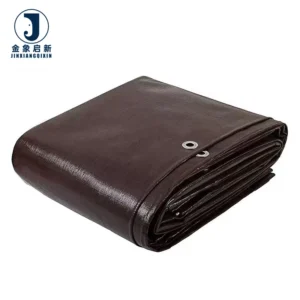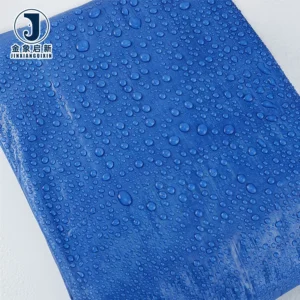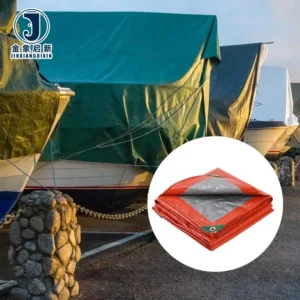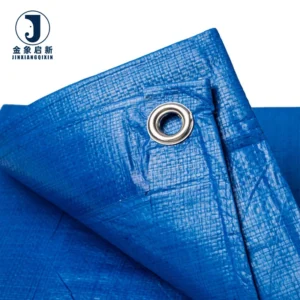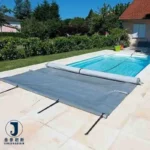
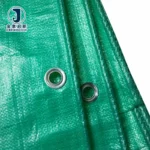
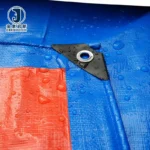
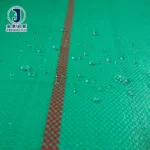

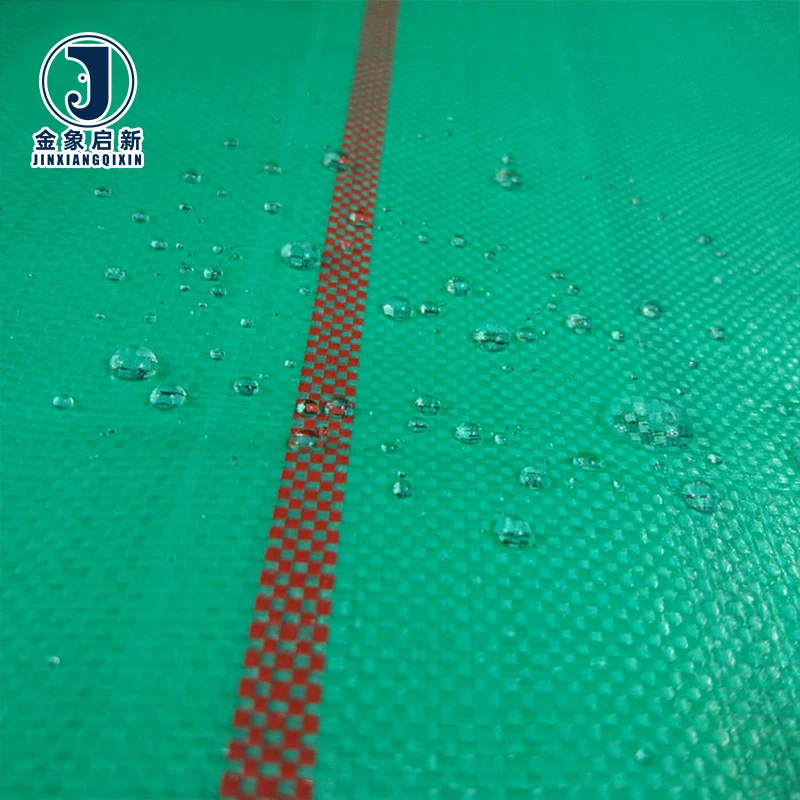
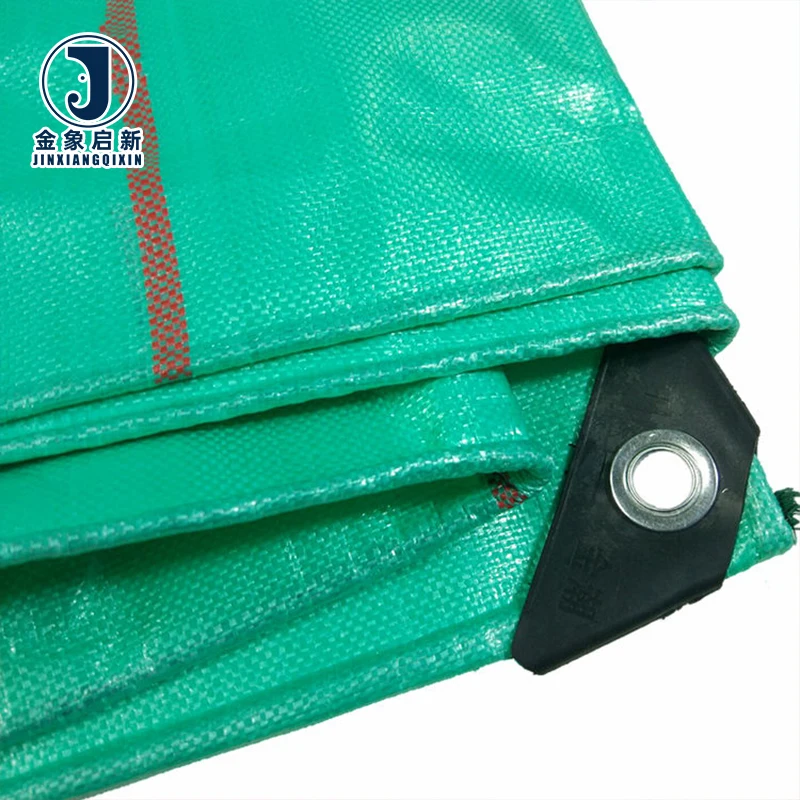
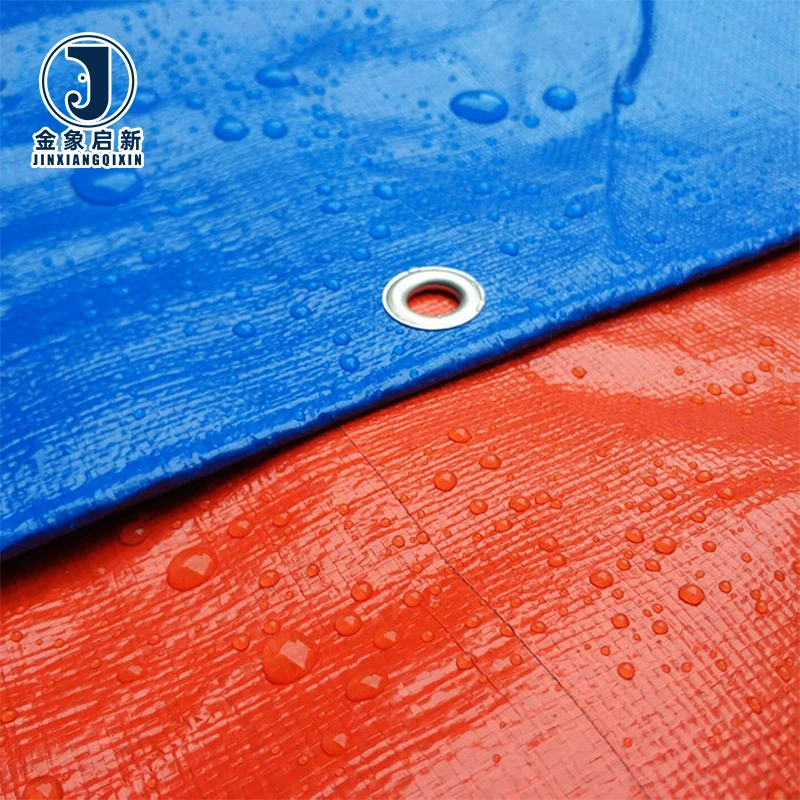
Bulk Capacity with On-Time Delivery — three full production lines and 36 sets of professional equipment support consistent output of HDPE woven, LDPE laminated PE tarpaulin for ventilation duct and specialist fabric applications, with dedicated QA at every stage.
Technical Specifications
| Parameter | Value |
|---|---|
| Product Type | PE Tarpaulin Roll / Finished PE Tarpaulin |
| Material | HDPE weaving with LDPE lamination on both sides |
| Weight (GSM) | 50 gr/m² ~ 220 gr/m² (confirm the grade required for your application) |
| Total Thickness | 0.2 mm – 0.4 mm / 8 mil – 16 mil / Custom |
| Mesh Count / Density | 6×6, 6×7, 7×7, 7×8, 8×8, 9×9, 8×10, 10×10, 12×12, 14×14, 14×16 weave |
| Roll Width | 6 ft, 8 ft, 10 ft, 12 ft or 2 m, 4 m, 6 m |
| Roll Length | 100 yards, 100 meters, or as per buyer requirement |
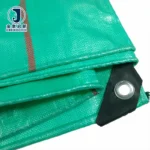
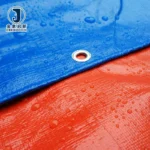
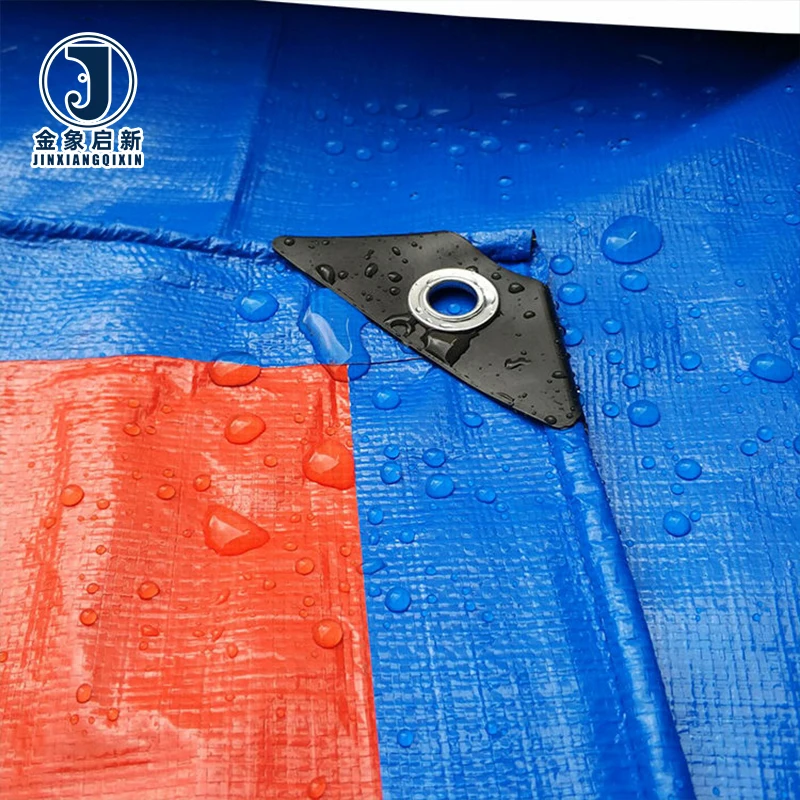
| Color | Blue, Blue/Orange, Green, Grey, Black, Clear, Grey/Green, Orange, or custom |
| Eyelet & Hem | All four edges reinforced with PP rope in hem; galvanized eyelets every 3 ft or 1 m; reinforced plastic corners |
| Coating Material | LDPE lamination |
| UV Treatment | Available — confirm test basis and grade required for your site |
| Waterproof | Yes — waterproof and washable construction |
| Anti-Mildew | Mildew proof and anti-aging — grade not stated in source |
Application Suitability
| Application | Exposure & Requirement |
|---|---|
| Mining and tunnelling site protection | Constant abrasion from equipment movement, dust ingress, heavy material loads; requires high-density weave and reinforced tie-down points |
| Specialist structure and membrane enclosures | Sustained wind loading, UV exposure, thermal cycling; demands dimensional stability from HDPE woven base and consistent LDPE lamination |
| Industrial outdoor storage covers | Rain, standing water, UV degradation; needs verified waterproof integrity and confirmed UV treatment grade |
| Aviation and construction ventilation ducting | Airflow containment, fire safety compliance, anti-static requirements in confined spaces; requires certification documentation matching site regulations |
| Activity pond liners | Permanent water contact, soil chemistry, puncture risk from substrate; demands thicker gauge and confirmed chemical resistance |
Why PE Tarpaulin Ventilation Duct and Specialist Fabric Requires More Than a Weight Claim
GSM quoted on paper means nothing if the base fabric weave and lamination adhesion are not verified against the same sample.
Buyers sourcing PE tarpaulin ventilation duct and specialist fabric regularly receive material that feels lighter than the specification sheet suggests. The issue is rarely deception — it is usually a supplier quoting a product family range and shipping a grade at the lower end. When that material is then fabricated into ventilation ducts or site enclosures, the seams carry loads the fabric was never rated for. Weld failures appear at flex points long before the expected service life, and site managers are left explaining delays to project owners [NEED_CITE: tensile and tear test methods for coated fabrics per ISO 1421]. The cost of replacing installed ductwork or enclosure panels far exceeds the savings from accepting a lower grade.
Woven HDPE Base Versus Extruded Film Construction
The structural foundation of this PE tarpaulin ventilation duct and specialist fabric is HDPE tape yarn woven on looms, then laminated on both sides with LDPE. This is fundamentally different from extruded PE film, which has no woven reinforcement and tears along straight lines once punctured. The woven base provides dimensional stability — the fabric resists stretching under wind load or when tensioned across a duct frame. Fabricators working with this material find it holds its shape during welding and does not distort when eyelets are punched at regular intervals.
Lamination Adhesion and Seam Integrity
The LDPE lamination on both sides serves as the waterproof barrier and the heat-activated layer for thermal welding. Adhesion between the woven base and the coating determines whether a welded seam holds or delaminates under stress. When adhesion is weak, the seam peels apart at the interface even though the fabric itself remains intact. For ventilation duct applications where internal air pressure creates constant outward force on every seam, lamination quality is the controlling factor in service life [NEED_CITE: peel strength testing for laminated woven fabrics]. Specify that the supplier provides lamination adhesion data alongside GSM and weave density.
Reading Density, Thickness and GSM Together
Mesh count — expressed as warp × weft threads per unit area — directly governs tensile strength and tear propagation resistance. A 14×16 weave concentrates more HDPE yarn in the same area than a 6×6 weave, producing higher tensile values even at similar GSM. Thickness from 0.2 mm to 0.4 mm reflects both the yarn diameter and the lamination build. A heavier GSM driven by thick lamination rather than dense weave may feel substantial but will not resist tearing as effectively as a lighter, tightly woven grade. Buyers specifying PE tarpaulin for duct or structural use should request both GSM and mesh count, then cross-reference against the mechanical demands of the installation. Roll widths from 2 m to 6 m and lengths up to 100 meters allow fabricators to plan panel layouts that minimise the number of welded seams in the final assembly.
The Hidden Cost of Specifying on Weight Alone
Accepting a quotation based only on GSM without confirming weave density and lamination adhesion leads to predictable failures. Ventilation ducts that pass initial pressure testing may delaminate at the seams after weeks of cyclic loading in a mining or tunnelling environment. Site enclosure panels cut from rolls with inconsistent lamination thickness show uneven welding results — some seams hold while others peel on the first flex [NEED_CITE: seam failure patterns in laminated PE fabrics under cyclic load]. Batch-to-batch colour variation becomes visible once panels are installed side by side on a structure, forcing costly replacement of visible sections. These are not manufacturing defects in the conventional sense; they are the result of incomplete specification at the purchasing stage.
Procurement Advantages Built Into This Supply Chain
Nearly 30 years of focused production on coated and laminated fabrics means process control over lamination weight and adhesion is embedded in daily operations, not treated as a special request. Three full production lines and 36 sets of professional equipment provide the capacity to fulfil large-volume roll orders for duct and specialist fabric projects without splitting production across subcontractors. A 10-person R&D team handles material selection and sample development, allowing buyers to receive trial rolls that match the exact density, thickness and colour required before committing to full container loads. Dedicated QA and QC at every production stage, with 100% inspection before shipment, catches weave inconsistencies and lamination defects before they reach the container.
Documentation & Verification
- Material specification sheet stating exact GSM, HDPE base weave density, and LDPE lamination weight per roll
- UV treatment test report provided when outdoor exposure duration is critical to the duct or structure specification
- ISO and CE certificates included in shipment documentation package
- Pre-shipment inspection record confirming roll-to-roll consistency on colour, weight and dimensions
- Certificate of origin and customs support documentation for destination market clearance
Fabrication, Handling & Storage
- Thermal welding temperature must match the LDPE lamination grade — request recommended heat settings for the specific GSM ordered
- Galvanized eyelets spaced at 3 ft or 1 m intervals require reinforced PP rope hems to distribute tie-down loads without tearing the woven base
- Store rolls horizontally on pallets in dry, shaded conditions to prevent compression marks on the LDPE surface
- Unroll and allow the PE tarpaulin to acclimatise before fabrication if transported in cold conditions, reducing stiffness at the weld line
- Clean surfaces with mild detergent only; solvents may degrade the LDPE lamination and compromise waterproof integrity
What to Include in Your Enquiry
Provide the ventilation duct diameter, length and internal pressure requirement, or the enclosure dimensions and wind load expectation for the installation site. State the fire-retardant or anti-static certification your site mandates, along with the specific standard referenced in the contract. Confirm roll width and length preferences for your fabrication equipment, and whether you need finished cut-to-size sheets or roll stock only. Request a sample roll in the target GSM and weave density for weld testing before placing the full order.
Frequently Asked Questions
Q: How is the GSM verified against the quoted specification on arrival?
A: Each roll undergoes weight verification during pre-shipment inspection. The inspection record states the measured GSM alongside the quoted value. Buyers can request swatch samples from production before dispatch to conduct independent weight checks and confirm the material matches the specification sheet provided with the quotation.
Q: What test basis supports the UV treatment claim for extended outdoor exposure?
A: UV treatment is available, but the specific test method and duration rating must be confirmed for your application. Request the UV test report that corresponds to the grade ordered, and verify that the exposure duration cited in the report matches the expected service life of your ventilation duct or site enclosure installation.
Q: How do mesh count and weave density relate to tensile and tear performance?
A: Higher mesh counts such as 14×16 concentrate more HDPE yarn per unit area, producing greater tensile and tear resistance than lower counts like 6×6 at comparable GSM. Specify both GSM and weave density rather than weight alone to ensure the fabric meets the mechanical demands of your duct or structural application.
Q: What roll widths and lengths are available for fabricator-scale cutting and welding?
A: Roll widths are available in 2 m, 4 m, 6 m or imperial equivalents of 6 ft through 12 ft. Standard roll lengths are 100 yards or 100 meters, with custom lengths produced to order. Wider rolls reduce the number of welded seams needed when fabricating large duct sections or enclosure panels.
Q: What certifications and documentation ship with each roll or bale?
A: Shipments include a material specification sheet, ISO and CE certificates, pre-shipment inspection record, roll packing list and certificate of origin. Where UV treatment or fire-retardant grades are specified, the corresponding test reports accompany the documentation package for site compliance verification.