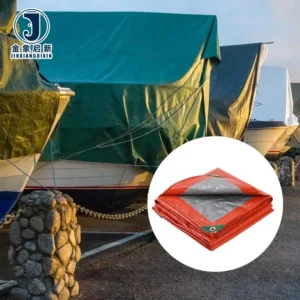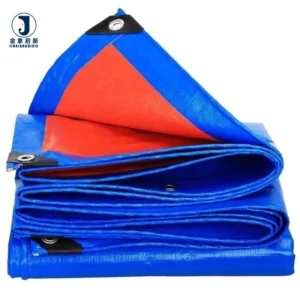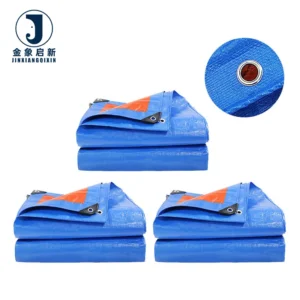
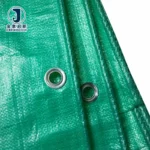
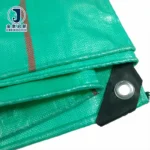
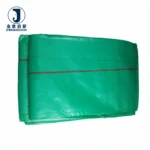
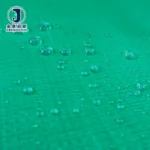
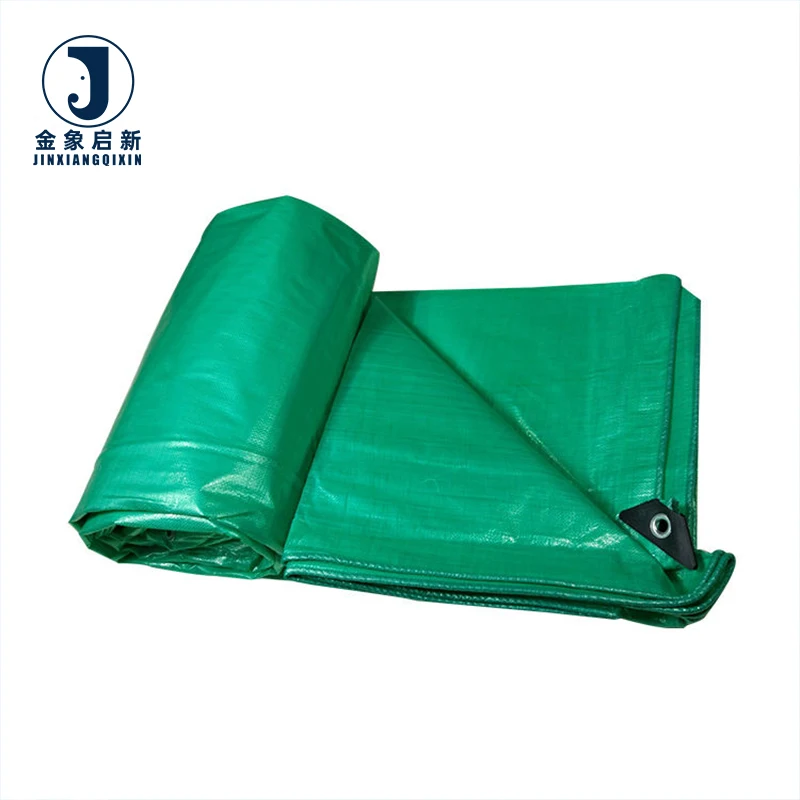
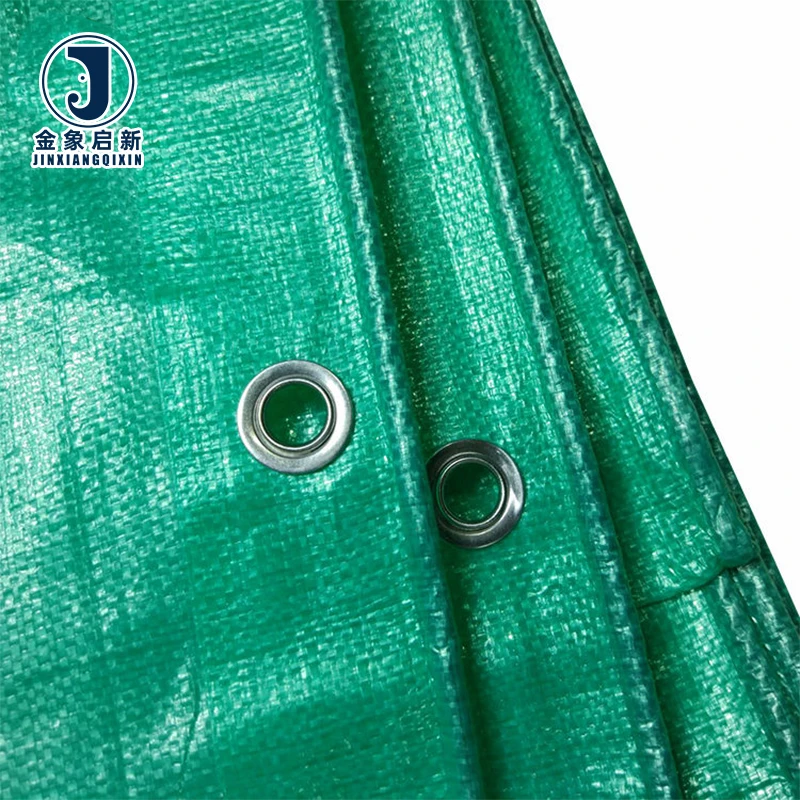
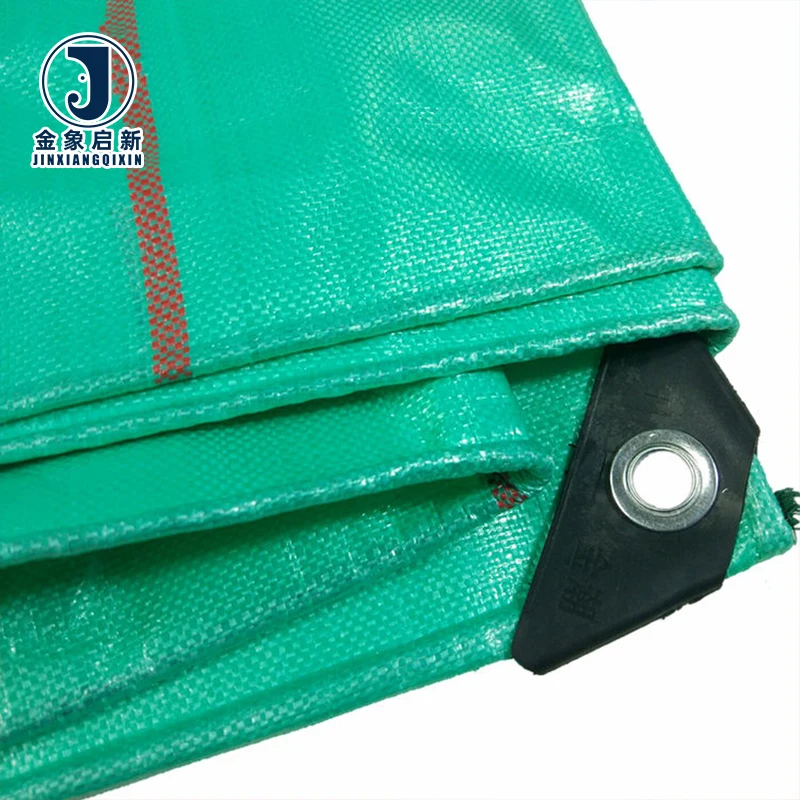
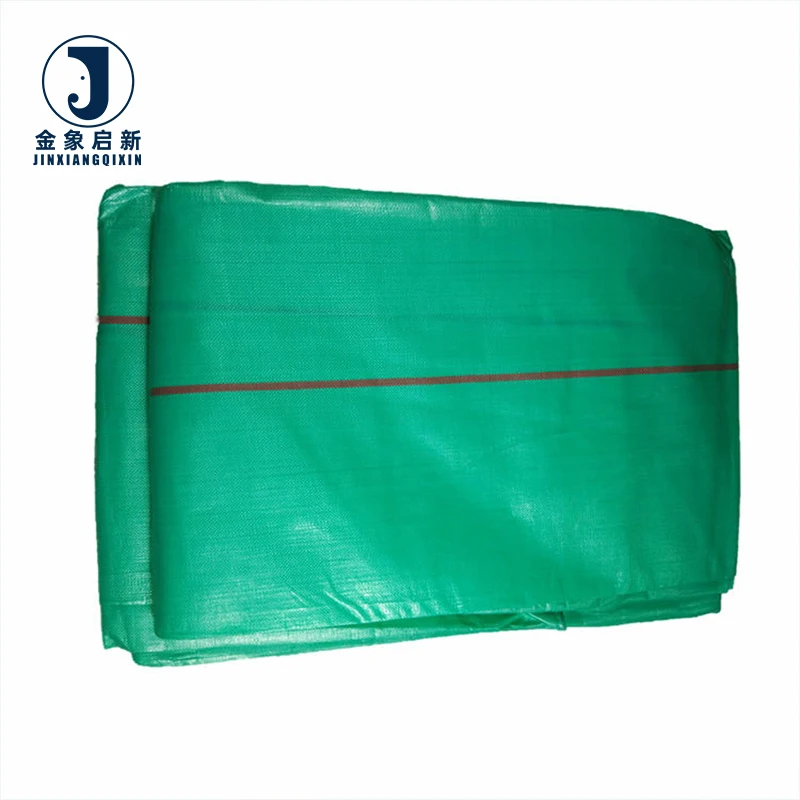
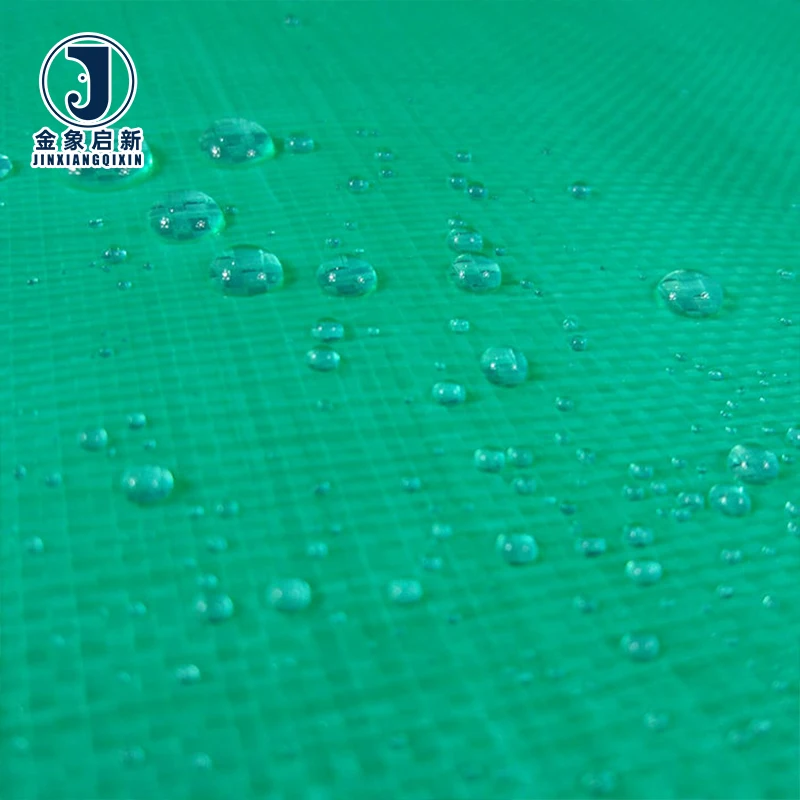
Coated Fabric Process Control — PE tarpaulin production runs through dedicated QA/QC at every stage with 100% pre-shipment inspection, ensuring each roll dispatched meets the stated GSM, weave density, and edge reinforcement specification without deviation.
Technical Specifications
| Parameter | Value |
|---|---|
| Product Type | PE Tarpaulin |
| Material | HDPE woven base fabric with LDPE lamination on both sides |
| GSM Range | 50gr/m2 ~ 220gr/m2 (select grade for your application) |
| Total Thickness | 0.2–0.4mm / 8–16 mil / Custom |
| Weave Density Options | 6×6, 6×7, 7×7, 7×8, 8×8, 9×9, 8×10, 10×10, 12×12, 14×14, 14×16 |
| Coating Material | LDPE lamination |
| Base Fabric | HDPE woven |
| Roll Width Options | 6ft, 8ft, 10ft, 12ft, 2m, 4m, 6m |
| Roll Length Options | 100 yards, 100 meters, or custom |
| Color Options | Blue, Blue/Orange, Green, Grey, Black, Clear, Grey/Green, Orange, or custom |
| Waterproof | Yes |
| UV Treatment | Available (test basis not stated — confirm grade required for your market) |
| Mildew Proof | Yes |
| Tear Resistant | Yes |
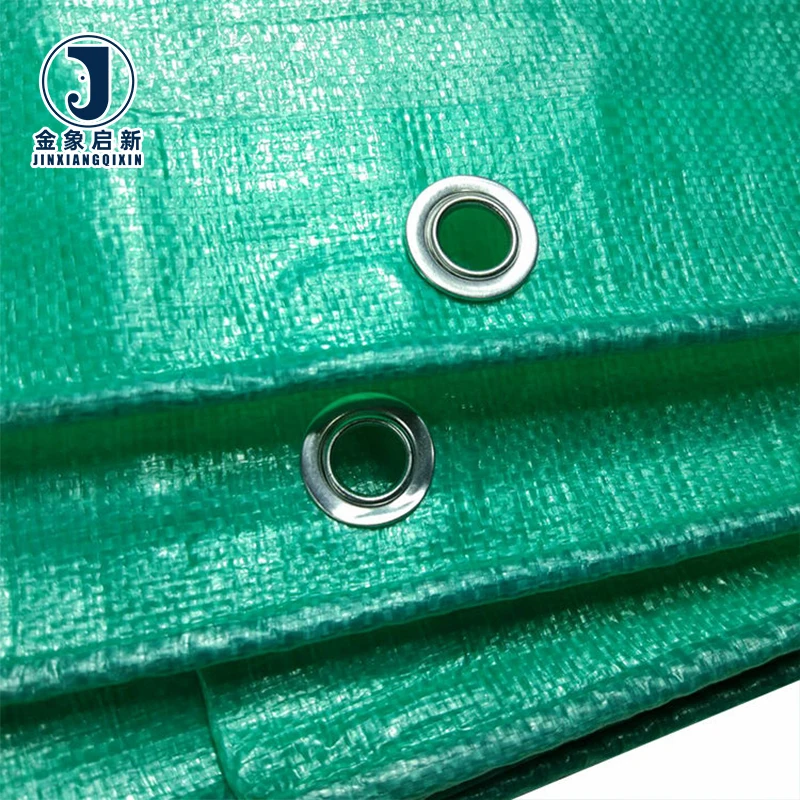
| Edge Reinforcement | PP rope in hem on all four edges |
| Eyelet Spacing | Galvanized eyelets every 3ft or 1 meter interval |
| Corner Reinforcement | Reinforced plastic corners |
| Certification | ISO, CE |
Application Suitability
| Application | Exposure & Requirement |
|---|---|
| Truck and trailer load covers | Constant road vibration, weather exposure, flex at tie-down points — requires reinforced hems and tear-resistant weave |
| Construction scaffolding wraps | Wind loading, UV exposure, debris impact — demands stable mesh count and secure eyelet spacing |
| Timber and hay stockpile covers | Long-term outdoor storage, moisture ingress risk, fungal growth — requires waterproof LDPE lamination and mildew-resistant treatment |
| Crop and cotton field covers | Direct sun exposure, seasonal UV intensity, repeated deployment — benefits from UV-treated grades and high-density weave |
| Pond and reservoir liners | Permanent water contact, soil chemistry, puncture risk — needs verified GSM and consistent coating adhesion |
| Container and boat covers | Salt-laden air, heavy rain, mechanical abrasion during transit — calls for galvanized eyelets and reinforced plastic corners |
Why Stated GSM Without Verification Creates Procurement Risk
Every roll should arrive at your dock with actual weight matching the quoted specification — documented, not assumed.
When procurement teams order PE tarpaulin fire retardant / anti-static / certified grades for industrial or agricultural covers, the quoted GSM becomes the basis for pricing, load planning, and durability expectations. A gap between stated weight and received material shifts the entire cost-benefit calculation. Lighter fabric tears sooner at stress points, fails under wind load on scaffolding, and degrades faster in UV-heavy environments [NEED_CITE: GSM verification methods for woven coated fabrics]. For fleet operators buying truck covers or agricultural operations covering high-value stockpiles, the margin between adequate protection and premature replacement is often a matter of verified coating weight and weave density. PE tarpaulin aftermarket supplier selection should therefore hinge not on the quotation alone, but on the inspection and documentation protocol behind it.
Weave Density Selection Determines Load-Bearing Capacity
The choice between a 6×6 mesh and a 14×16 mesh fundamentally changes how the HDPE base fabric distributes mechanical stress across its surface. Lower-density weaves at 50gr/m2 serve temporary covers and light shielding, while higher-density options approaching 220gr/m2 handle sustained load and repeated deployment cycles. Each weave increment changes the yarn intersection count per square inch, directly affecting how tensile forces propagate through the fabric when tie-downs pull against the eyelets. Selecting the correct mesh count for your PE tarpaulin fire retardant / anti-static / certified requirement means matching the specification to actual field conditions, not defaulting to a mid-range grade.
Edge Reinforcement and Eyelet Spacing Under Load
The PP rope hem running through all four edges works in conjunction with galvanized eyelets spaced at 3ft or 1 meter intervals to distribute tie-down forces across the fabric perimeter. When a truck cover flexes under road vibration or a scaffolding wrap catches crosswind, the load transfers from the eyelet through the reinforced hem into the base fabric. Reinforced plastic corners add a secondary failure barrier at the highest-stress junctions. Without this system, the LDPE-laminated HDPE weave would concentrate stress at individual eyelet points, leading to tear propagation from the edge inward [NEED_CITE: edge reinforcement failure analysis in coated tarpaulin fabric].
Understanding How GSM, Mesh Count, and Coating Weight Interact
The GSM of a PE tarpaulin reflects the combined mass of the HDPE woven base and the LDPE lamination on both sides — it is not a standalone indicator of tensile or tear strength. A 14×14 weave with heavy LDPE coating may weigh the same as a 14×16 weave with lighter lamination, yet their mechanical behavior under load differs significantly. The base fabric denier and yarn density determine how force distributes across the weave, while the coating weight governs waterproof integrity and abrasion resistance. Roll widths up to 6m reduce the number of field seams needed for large-format covers, which directly affects installation time and the number of potential failure points where welded joins meet the base fabric. When specifying PE tarpaulin fire retardant / anti-static / certified grades, requesting the material specification sheet with both mesh count and coating breakdown gives you the data needed to compare options beyond weight alone.
What Happens When Specifications Are Selected by Price Alone
Choosing a lower-density weave or thinner LDPE lamination to reduce unit cost introduces failure modes that appear after deployment, not at the dock. Underspecified mesh counts on truck covers lead to tear initiation at the eyelet line within the first season of road use. Insufficient coating adhesion between the LDPE layer and HDPE base causes delamination where the fabric flexes most — typically at tie-down contact points. For construction scaffolding wraps, a GSM below what wind loading demands results in fabric rupture at the hem rather than controlled deformation. Agricultural operators covering hay or timber find that mildew penetrates underspecified grades within weeks of damp storage [NEED_CITE: delamination failure patterns in laminated PE tarpaulins]. These outcomes are preventable when the procurement decision starts with exposure conditions rather than price-per-square-meter.
Why Source PE Tarpaulin Through This Production System
Deep process control over LDPE coating weight and adhesion to the HDPE base fabric ensures that the GSM stated at quotation is the GSM verified at dispatch. Three full production lines with 36 sets of professional equipment support volume orders across the 50–220gr/m2 range without sacrificing roll-to-roll consistency. The 10-person R&D team handles mesh count selection, custom color matching, and sizing calculations specific to your application — whether that involves roll stock or finished cut sizes with hem and eyelet work. Dedicated QA/QC at every production stage means each roll passes through weight verification, coating inspection, and edge reinforcement checks before it reaches packing. This production depth matters particularly when ordering PE tarpaulin fire retardant / anti-static / certified grades, where documentation must accompany the material to satisfy site compliance requirements.
Documentation & Verification
- Material specification sheet listing GSM, HDPE weave density, and LDPE coating type per roll
- 100% pre-shipment inspection record confirming weight and dimensions against your purchase order
- UV treatment test report provided on request — confirm grade required for your exposure conditions
- Roll packing list with individual roll weights and dimensions for dock-side reconciliation
- Certificate of origin and full customs documentation included with every export dispatch
- ISO and CE certification documentation available to support your compliance submissions
Fabrication, Handling & Storage
- Cut PE tarpaulin rolls on flat surfaces to avoid creasing the LDPE lamination at fold lines
- Space galvanized eyelets according to load requirements — 1 meter intervals suit most heavy-duty tie-down configurations
- Store rolls upright on pallets in dry conditions to prevent compression marks on the LDPE coating surface
- When heat-welding seams, calibrate temperature to the specific GSM and LDPE thickness to avoid coating burn-through
- Avoid dragging finished tarpaulins across abrasive surfaces — the LDPE lamination resists water but not mechanical abrasion
- Clean with mild detergent and water; solvent-based cleaners can degrade the LDPE coating bond to the HDPE base
Request a Specification-Matched Quotation
To receive an accurate proposal, share your application type and the specific exposure conditions the fabric will face — including UV intensity, wind load, and contact with chemicals or standing water. Indicate whether you require roll stock in standard or custom widths, or finished tarpaulin with hem, eyelet, and corner reinforcement already applied. If your site or market mandates specific fire classification or anti-static compliance, state the standard you need met so we can confirm grade availability and supporting documentation before production begins.
Frequently Asked Questions
Q: How do I verify the GSM of PE tarpaulin matches what was quoted?
A: Every roll ships with a pre-shipment inspection record confirming actual weight against your purchase specification. You can also request a material specification sheet that breaks down base fabric weight and LDPE coating weight separately. At receiving, spot-weighing a cut sample against the documented GSM per square meter provides immediate dock-side verification.
Q: Can you supply UV treatment test reports with the shipment?
A: UV treatment is available across the PE tarpaulin range, and test reports can be provided on request. Confirm the specific UV grade or exposure duration standard required by your market before ordering, so the treatment level matches your application. This ensures the documentation accompanying your shipment supports your compliance or warranty requirements.
Q: How do I select the right weave density for my application?
A: Match the mesh count to the mechanical load and exposure duration your cover will face. Higher-density weaves such as 14×14 or 14×16 suit long-term outdoor deployment and heavy tie-down loads, while 6×6 or 7×7 weaves serve temporary shielding. Share your application details and we recommend the grade that balances durability with material cost for your specific use case.
Q: What eyelet spacing and hem reinforcement options are available?
A: Standard configuration includes PP rope hem on all four edges with galvanized eyelets at 3ft or 1 meter intervals and reinforced plastic corners. For high-wind scaffolding wraps or heavy-load truck covers, closer eyelet spacing distributes tie-down force more evenly across the perimeter. Specify your load conditions so we can confirm the spacing that prevents tear initiation at the eyelet line.
Q: What is the lead time for custom roll widths or finished sizes?
A: Custom widths up to 6m and non-standard roll lengths are produced on dedicated lines alongside standard stock. Lead times depend on the specific GSM, color, and size combination requested. Share your annual volume and required dimensions, and we provide a production schedule with dispatch date before you commit to the order.