

Technical fabric expertise — Deep process control over coating weight and adhesion built across decades of specialist fabric production, applied directly to industrial PE tarpaulin where compliance documentation and verified material properties are non-negotiable.
Technical Specifications
| Parameter | Value |
|---|---|
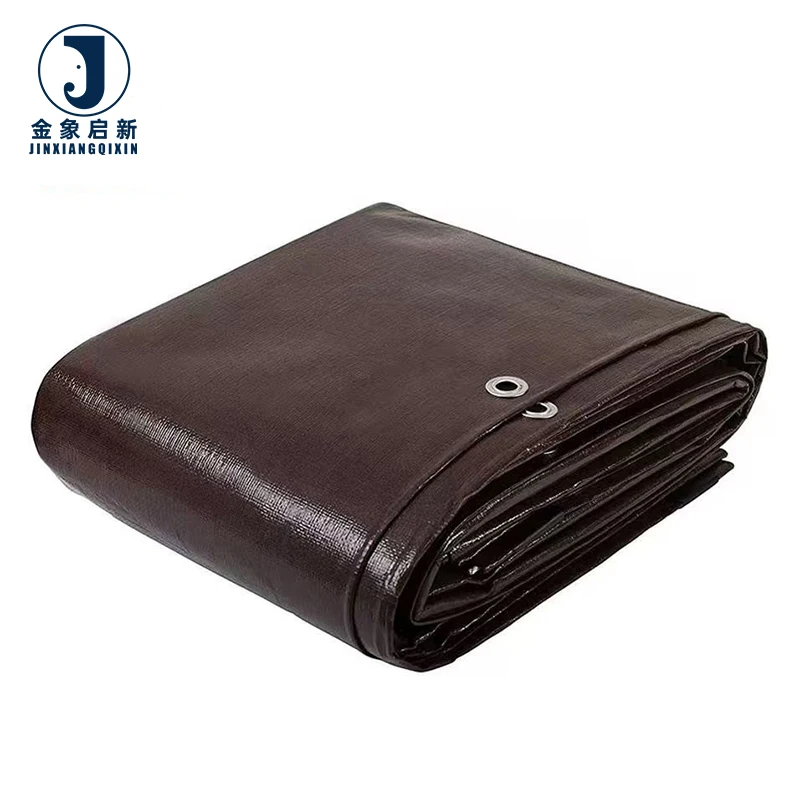
| Product Type | PE Tarpaulin |
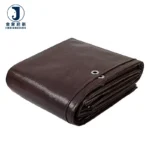
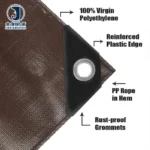
| Material | Polyethylene woven fabric with PE coating |
| Weight Range | 40g~500g/m² (confirm the grade for your application) |
| Mesh Count | 5×5~20×20 (select based on airflow and coverage needs) |
| Thickness | 0.18–0.22 mm (lightweight) / 0.22–0.28 mm (medium) / 0.30–0.35 mm (heavy-duty) |
| Tensile Strength | Lightweight: Meridian 300–500 / Latitude 250–450 N/5cm; Medium: Meridian 500–800 / Latitude 400–700 N/5cm; Heavy-duty: Meridian 900–1200 / Latitude 700–1000 N/5cm |
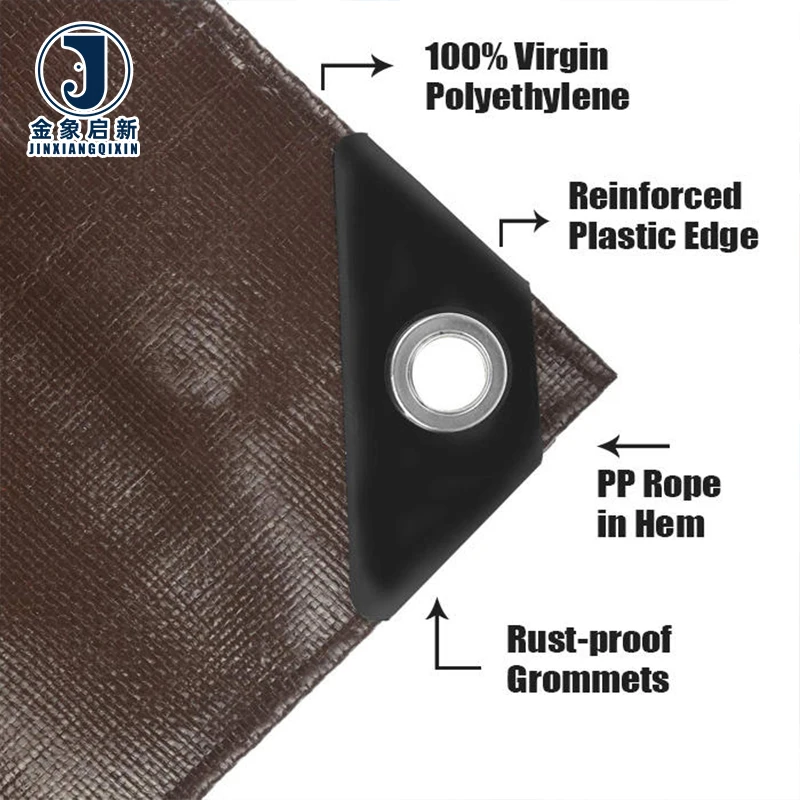
| Water Resistance | Double waterproof surfaces with reinforced corners |
| UV Treatment | Available with mildew proof and anti-aging additives (test basis to be confirmed at inquiry) |
| Fire-Retardant Option | Available in flame retardant grades — confirm the grade required for your market |
| Anti-Static Option | Available for mining and aviation environments — specify surface resistance target |
| Size | Custom cut sizes or roll stock |
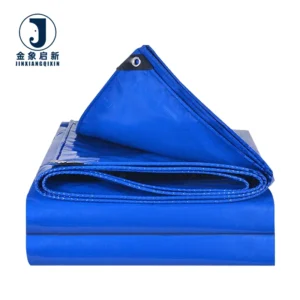
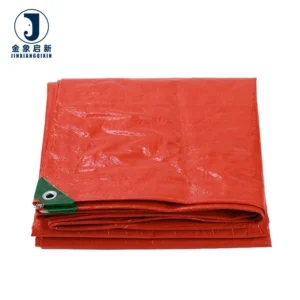
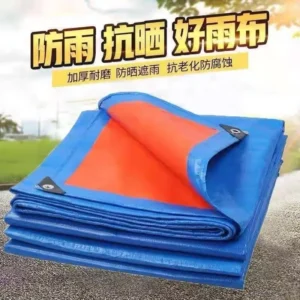
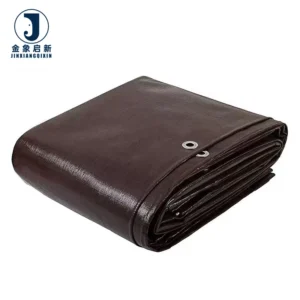
| Color | Custom color per order |
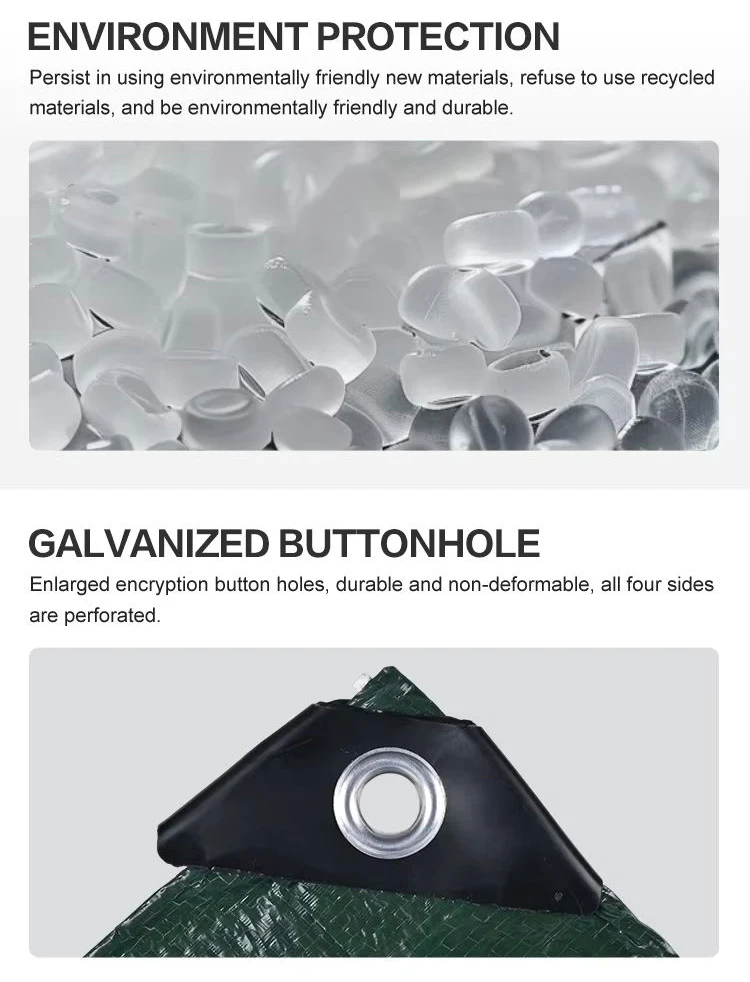
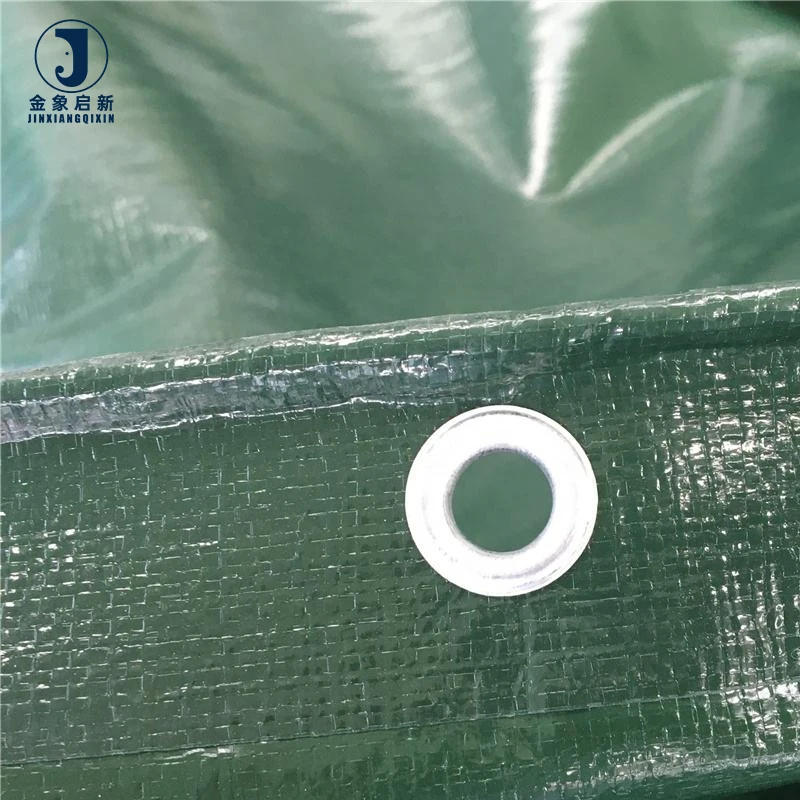
| Eyelet & Hem | Reinforced corners; centre-to-centre spacing available at 39.4 inches |
Application Suitability
| Application | Exposure & Requirement |
|---|---|
| Mining site ground and equipment covers | Abrasive terrain, chemical exposure, mandatory fire-retardant and anti-static documentation |
| Aviation ground protection | Aircraft and ground-support equipment covers requiring certified material records and UV stability |
| Tunnel construction ventilation enclosures | High humidity, continuous flex load, compliance with underground fire safety standards |
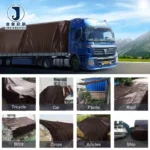
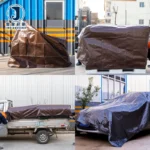
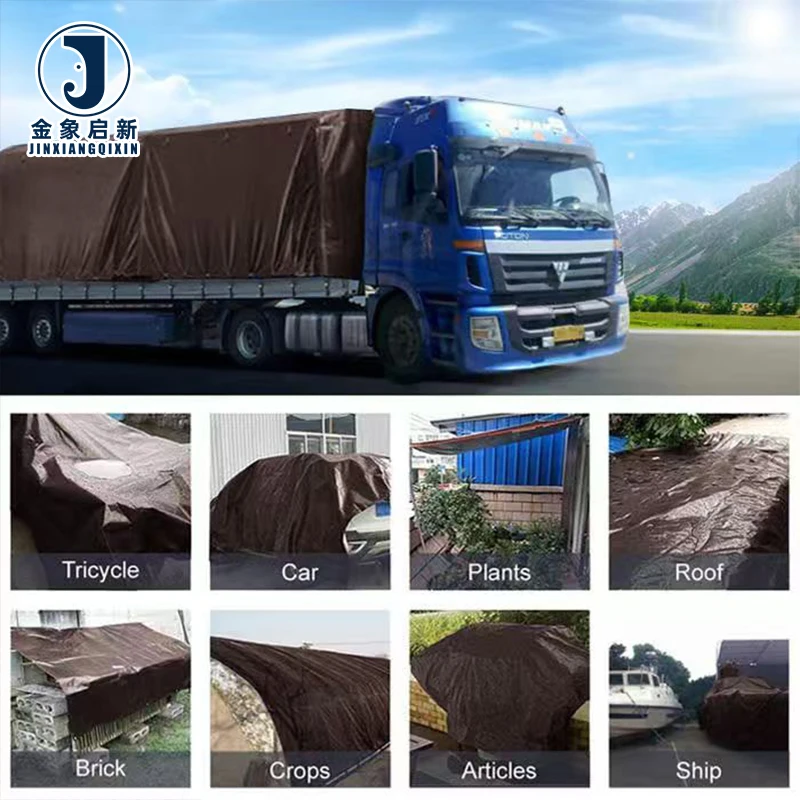
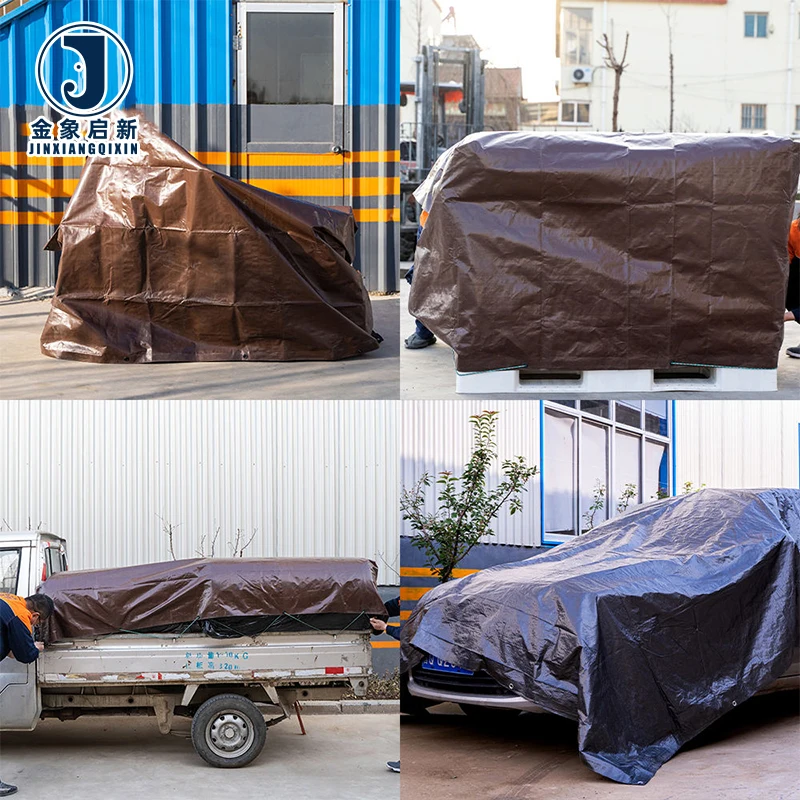
| Industrial transport and logistics | Heavy loads, road abrasion, wind flex, weather exposure across long-haul routes |
| Warehouse and stockpile covers | Extended outdoor UV exposure, water ingress prevention, wind uplift resistance |
What Certified PE Tarpaulin Actually Means on a Mine Site
Compliance is either documented or it does not exist — a claim on a quotation is not a test report.
Mining and tunnelling contractors frequently receive covers and duct material described as fire-retardant or anti-static, only to discover at the site gate that the paperwork does not match the local regulatory requirement. The material may perform adequately, but without a grade-stamped test certificate tied to the batch, the entire shipment can be rejected before it leaves the laydown area. PE Tarpaulin fire retardant / anti-static / certified specifications must be backed by documentation that references the exact standard your jurisdiction enforces, not a generic statement of treatment. [NEED_CITE: mining ventilation duct fire safety standards by jurisdiction]
When we supply PE tarpaulin for regulated environments, the inquiry stage includes a direct question: what standard does your site inspector require? That answer determines the additive package, the test protocol, and the certificate format that ships with the roll.
Matching Duty Grade to the Actual Load Environment
PE tarpaulin spans a wide range from lightweight agricultural sheeting to heavy-grade industrial covers, and the distinction is not marketing language — it is a function of thickness, tensile rating, and mesh count working together. A lightweight 40 g/m² grade suits short-term stockpile covers where wind load is minimal, while a heavy-duty grade approaching 500 g/m² is necessary for truck tarpaulin and equipment wraps that face daily abrasion and tie-down stress. Selecting the correct duty band prevents both over-specification cost and under-performance failure in the field.
Verifying Treatment Claims Before the Roll Arrives
Anti-UV treatment and flame-retardant additives are invisible once the fabric is coated, which makes pre-shipment documentation the buyer’s only reliable safeguard. We recommend requesting the test report that corresponds to the exact grade ordered, not a generic data sheet covering the entire product family. For PE Tarpaulin fire retardant / anti-static / certified applications, this means the certificate must name the test standard, the result achieved, and the batch or production run it applies to. [NEED_CITE: ISO test methods for coated fabric flame retardancy and anti-static surface resistance]
Why Mesh Count and Tensile Strength Must Be Read Together
Mesh count describes how many warp and weft yarns occupy a given area, while tensile strength measures the force required to break those yarns under load. A high mesh count with low-denier yarn can produce a fabric that feels dense but tears easily under point stress, whereas a lower mesh count with heavier yarns delivers genuine puncture and tear resistance. Thickness adds a third variable — a thicker coating fills the weave more completely, improving waterproofing but adding stiffness that affects how the fabric drapes and folds. For industrial protective and transportation tarpaulin, the combination of these three parameters determines whether the cover survives repeated deployment or fails at the first flex point. Coating adhesion to the woven base is equally critical; if the bond fails, the coating delaminates and water channels form along the weave lines, rendering the double waterproof surface ineffective.
The Real Cost When Specifications Are Assumed Rather Than Confirmed
A recurring pattern in industrial fabric procurement is the gap between what was quoted and what arrives. GSM stated on the invoice but not verified on the weigh scale means the buyer paid for a heavy-duty grade and received a medium-duty product. Anti-static treatment claimed in correspondence but absent from the test file means the cover cannot be used in an explosive atmosphere, and the replacement cycle begins before the project even starts. Batch colour variation across rolls in a single order becomes visible the moment two panels are installed side by side on a structure or laid across a site, forcing selective rejection and project delays. [NEED_CITE: common causes of coated fabric specification disputes in industrial procurement]
Welded seams are another frequent failure origin. If the heat and pressure settings used during fabrication do not match the specific coating chemistry and thickness of the PE tarpaulin supplied, the seam fails before the fabric body does — typically at the point where the load flexes most, such as the tie-down edge or the corner reinforcement zone.
Why Industrial Buyers Source PE Tarpaulin Here
Deep process control over coating weight and adhesion ensures that the GSM on the specification sheet is the GSM in the finished roll, verified through in-process QA at every production stage.
Three full production lines and 36 sets of professional equipment support bulk volume with reliable scheduling, so lead times for custom width, colour, or treatment are communicated clearly at the quotation stage and met on dispatch.
A 10-person R&D team handles material selection and sample development, producing application-specific samples within days so buyers can validate weight, hand feel, and treatment response before committing to production.
Dedicated quality inspection covers 100% of output before shipment, catching coating defects, mesh irregularities, and colour deviations before they leave the facility.
ISO and CE certified production systems provide the documentation backbone that regulated industries — mining, aviation, tunnelling — require for site acceptance and audit trails.
Documentation & Verification
- Material specification sheet stating exact GSM, base fabric weave, and coating type for the grade ordered
- Fire-retardant and anti-static test reports referencing the specific standard and batch number
- UV treatment test documentation confirming additive package and exposure rating basis
- Pre-shipment inspection record with roll-by-roll weight and visual check results
- Certificate of origin and customs documentation included with every international dispatch
Fabrication, Handling & Storage
- Heat-seal temperature and dwell time must match the specific coating thickness grade to avoid delamination at seams
- Reinforced corners should be applied before eyelet installation to distribute tie-down load across the full mesh weave
- Store rolls horizontally on pallets in shaded, ventilated areas to prevent flat-spot deformation on the coating surface
- Deploy heavy-duty grades above 0.30 mm in temperatures above freezing to maintain coating flexibility during unfolding
- Clean double waterproof surfaces with neutral pH detergent only; solvents degrade the PE coating bond over time
Preparing Your Inquiry for Fast Specification
To move from general interest to a firm quotation, we need three things: the exposure environment and any regulatory standard your site inspector will enforce, the duty grade or GSM target you have specified, and the total area or roll count with colour requirements. If you need finished covers cut to equipment dimensions rather than roll stock, include the panel sizes and hem or eyelet configuration. Samples can be developed within days once these parameters are confirmed, allowing you to verify weight, treatment, and fabrication response before production begins.
Frequently Asked Questions
Q: How do I verify the GSM on arrival matches the quotation?
A: Request the pre-shipment inspection record that lists weight per roll. On receipt, cut a measured sample from each roll, weigh it on a calibrated scale, and compare against the stated GSM on the specification sheet. Any variance beyond normal production tolerance should be flagged immediately with photographic evidence and the roll identification number.
Q: What fire-retardant standard does my project need?
A: This depends entirely on your jurisdiction and site type. Underground mining operations typically require different classification levels than surface construction or aviation hangars. State the standard your site inspector enforces at the inquiry stage so we supply PE Tarpaulin fire retardant / anti-static / certified material with the correct test report included in the shipment documentation.
Q: How is anti-static performance measured and documented?
A: Anti-static PE tarpaulin is evaluated by surface resistance, measured in ohms per square. The acceptable range depends on the hazard classification of the environment. We supply the test result and certificate referencing the measurement standard and batch, so your safety officer can verify compliance against the site specification before installation.
Q: Will colour vary between rolls in a custom order?
A: Batch colour consistency is controlled through pigment dosing and coating temperature monitoring during production. For orders requiring multiple rolls installed side by side, we recommend requesting a pre-shipment colour comparison record. This documents the visual match across rolls before dispatch and reduces the risk of visible panel differences on site.
Q: What UV treatment documentation is provided?
A: UV treatment is available across the PE tarpaulin range with mildew proof and anti-aging additives. The specific test basis and expected performance duration should be confirmed at inquiry, as requirements vary by climate zone and exposure duration. We provide the test report corresponding to the grade ordered, not a generic product family statement.