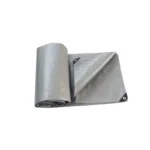
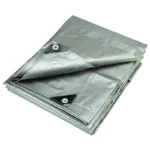
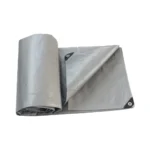
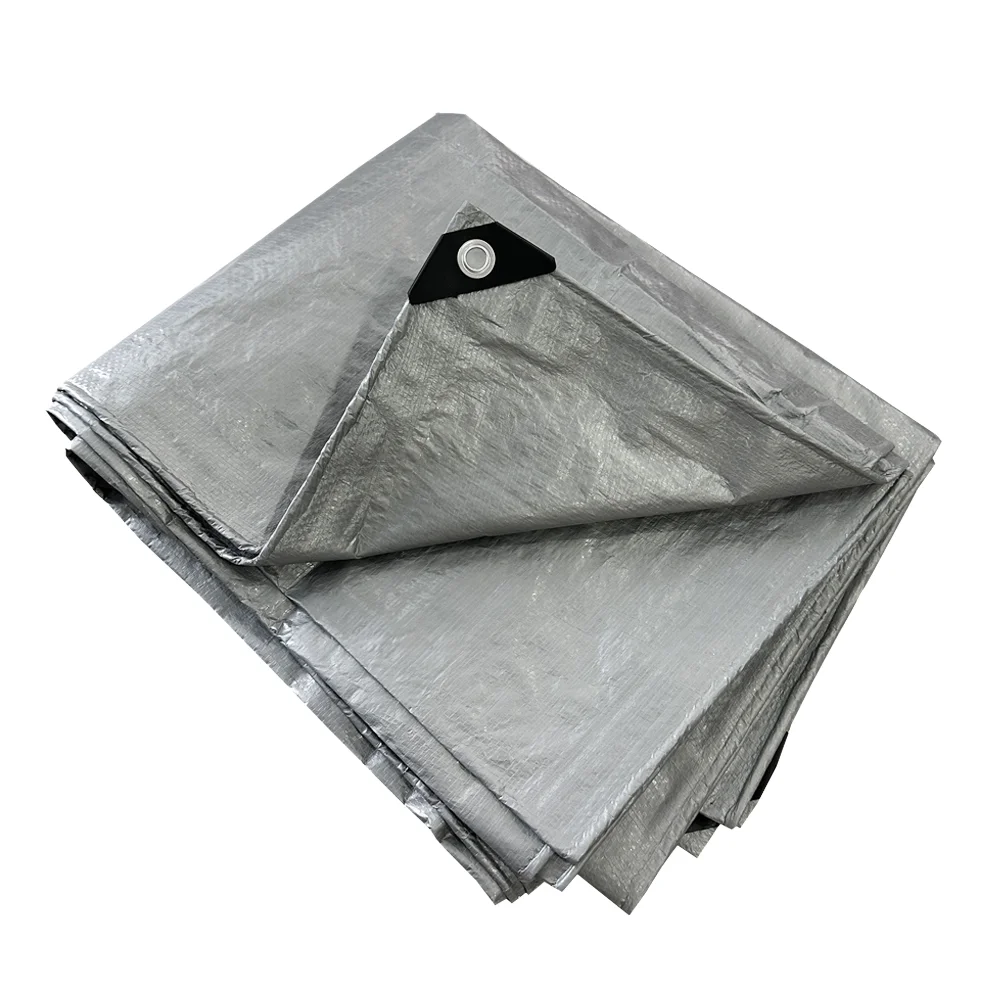
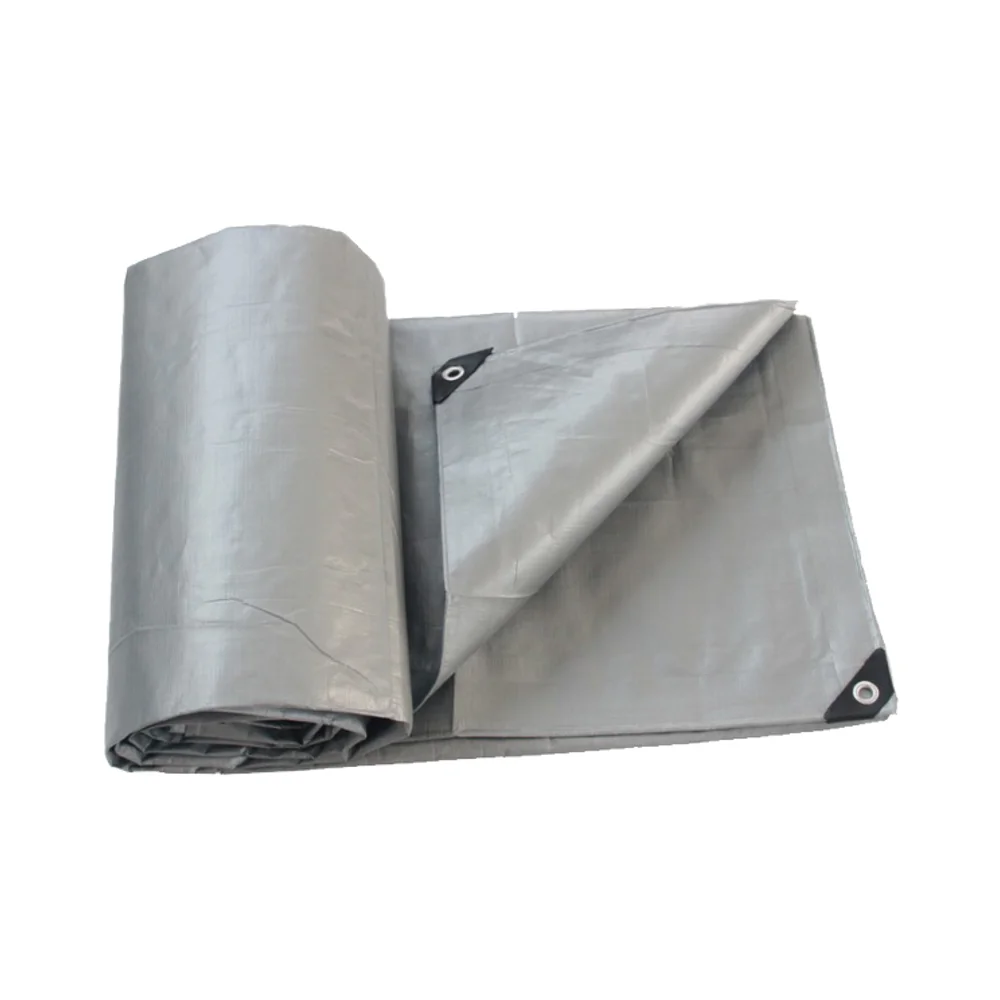
Batch-to-Roll GSM Consistency — Every roll of PE tarpaulin is weighed and documented before dispatch, ensuring the material arriving at your warehouse matches the specification on your purchase order.
Technical Specifications
| Parameter | Value |
|---|---|
| Product Type | PE Tarpaulin Roll |
| Base Fabric | HDPE weaving |
| Coating / Lamination | LDPE lamination on both sides |
| Weight (GSM) | 50 g/m² ~ 300 g/m² (confirm the grade for your application) |
| Total Thickness | 0.2 mm – 0.4 mm (8 mil – 16 mil) |
| Weave Density Options | 6×6, 6×7, 7×7, 7×8, 8×8, 9×9, 8×10, 10×10, 12×12, 14×14, 14×16 |
| Roll Width | 6 ft, 8 ft, 10 ft, 12 ft, 2 m, 4 m, 6 m |
| Roll Length | 100 yards, 100 meters, or custom |
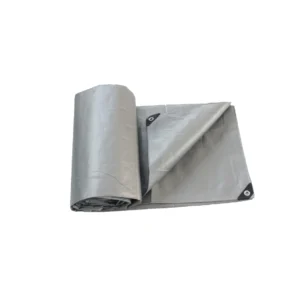
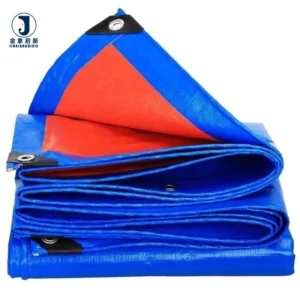
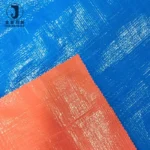
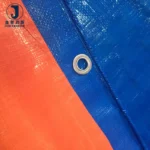
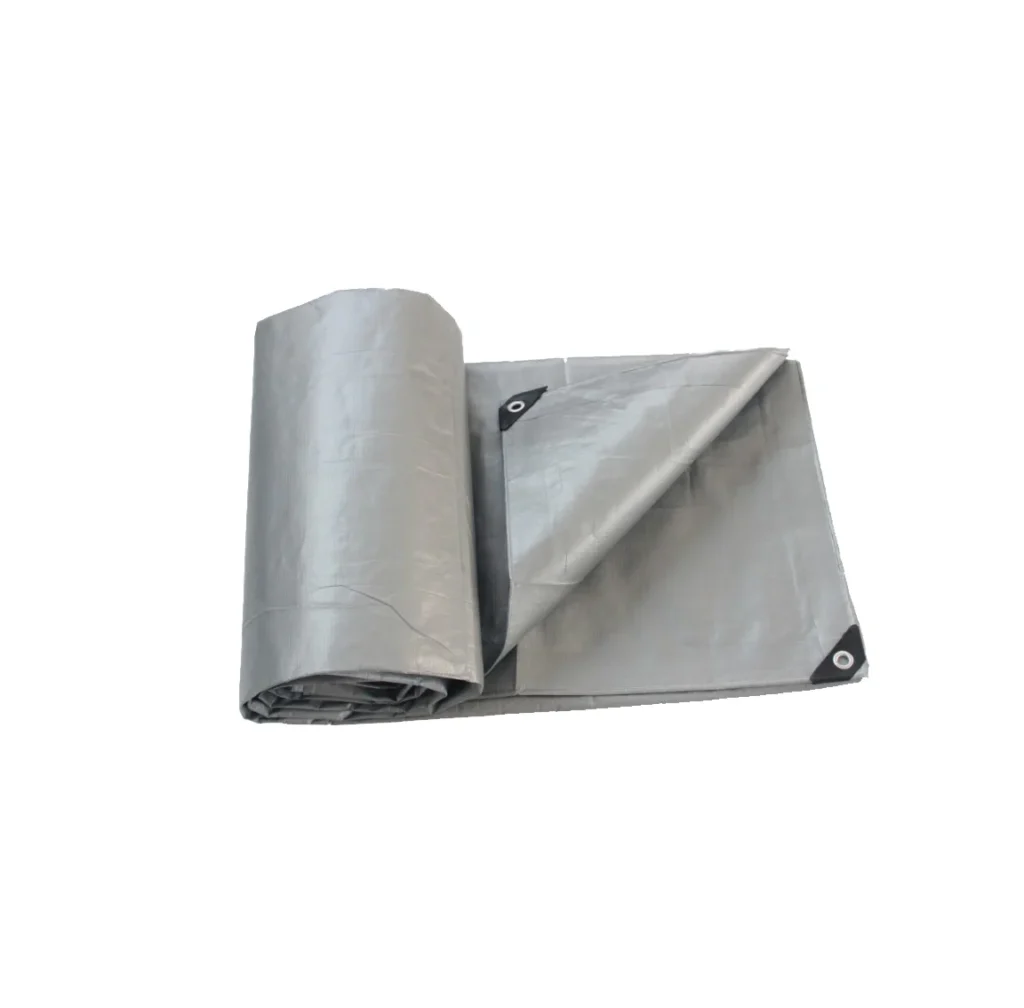
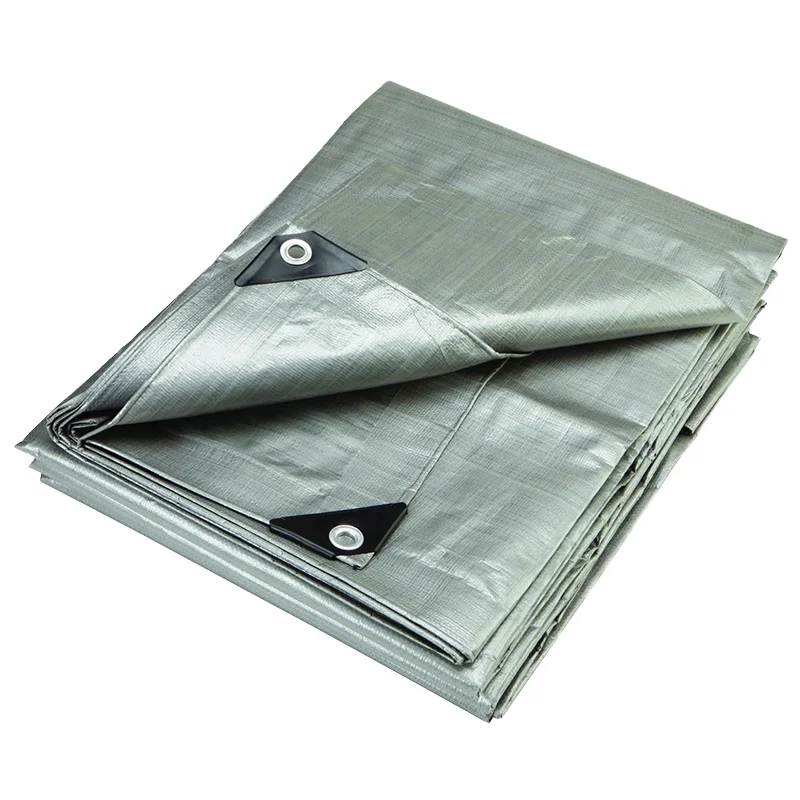
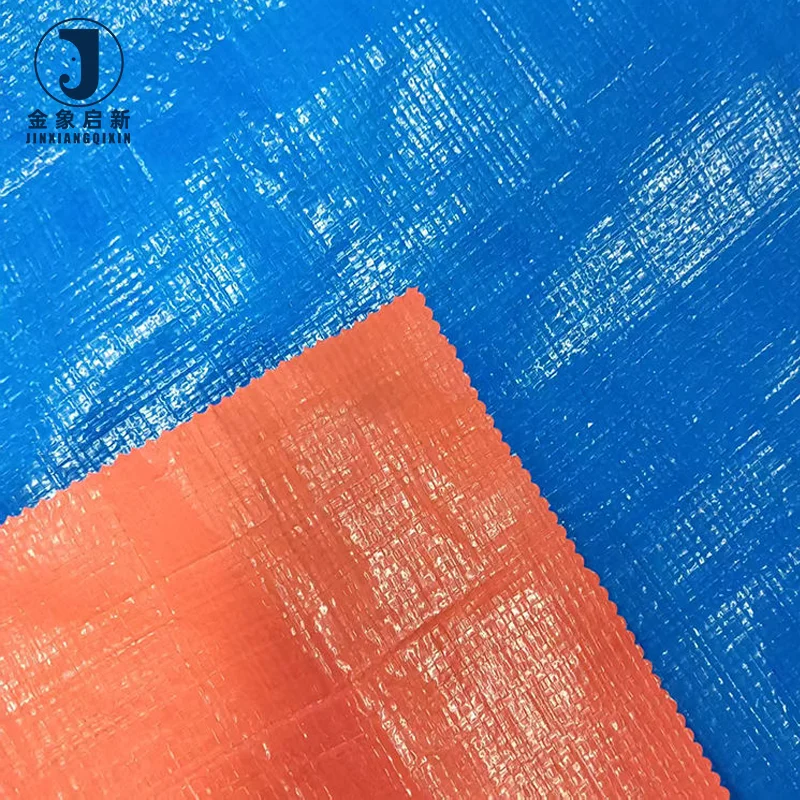
| Color Options | Blue, Blue/Orange, Green, Grey, Black, Clear, Grey/Green, Orange, or custom |
| UV Treatment | Available (test basis not stated) |
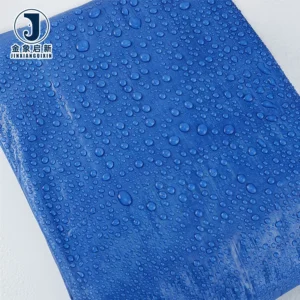
| Waterproof | Yes |
| Mildew Proof | Yes |
| Anti-aging | Yes |
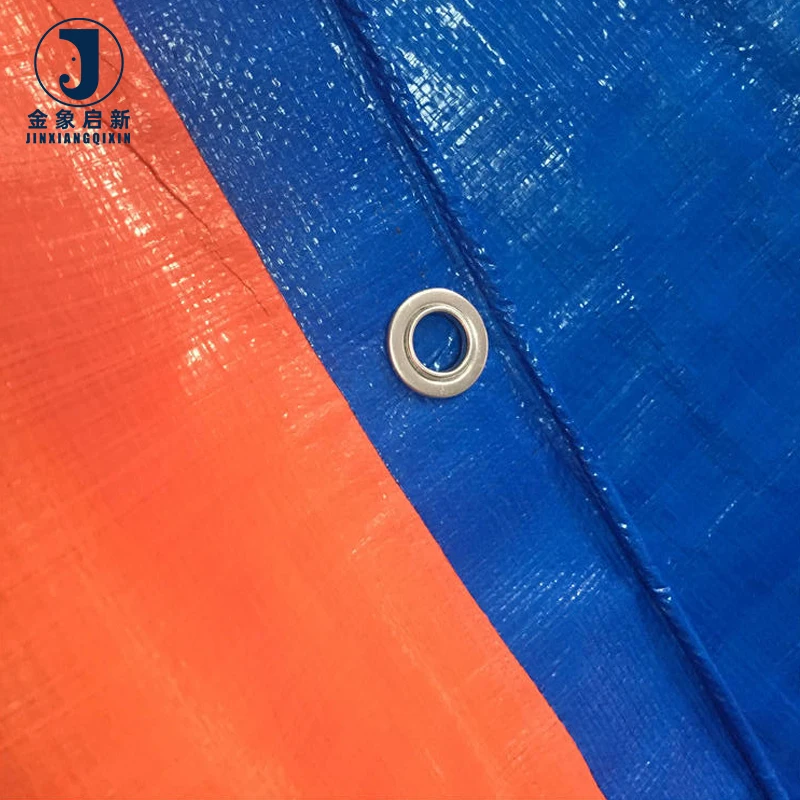
| Finished Edge Reinforcement | PP rope reinforced hem on all four edges |
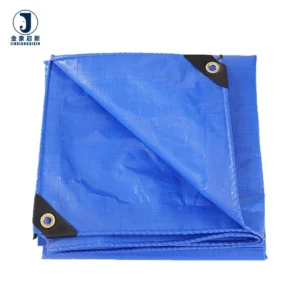
| Eyelets | Galvanized, every 3 ft or 1 m interval |
| Corner Reinforcement | Reinforced plastic corners |
| Certifications | ISO, CE |
Application Suitability
| Application | Exposure & Requirement |
|---|---|
| Pond and reservoir liners | Permanent water immersion, soil chemistry contact, puncture risk from subgrade irregularities |
| Truck and container covers | Road debris impact, UV exposure, constant wind flutter, tie-down abrasion at eyelet points |
| Agricultural stock and hay covers | Moisture ingress, mildew environment, UV degradation, wind uplift on large surface areas |
| Construction scaffolding wrap | Wind load, rain penetration, snagging on scaffold joints, repeated handling |
| Timber and crop drying covers | Ground moisture, direct sun exposure, tearing from dragging across rough surfaces |
Why the GSM on the Label Is Not Enough to Judge Cover Performance
The real measure of a PE tarpaulin roll is how the weave density and lamination weight work together, not the GSM number printed on the bale tag.
Buyers regularly receive rolls that pass a spot-weight check but fail under actual site conditions because the base fabric density was reduced to hold the GSM target with heavier lamination instead of stronger yarn. A PE tarpaulin roll wholesale bulk order spanning multiple container loads amplifies this risk — a GSM variance that is invisible in one roll becomes a visible colour and stiffness shift when two batches are laid side by side on a job site [NEED_CITE: tensile and tear test methods for coated fabrics per ISO 1421]. The consequence is not a warranty claim but a contractor refusing the next order.
Weave Density Selection for Load-Bearing and Lining Applications
A 6×6 weave produces a lighter, more flexible sheet suited to temporary covers where drape and fold-ability matter more than tear propagation resistance. Moving up to 12×12 or 14×16 increases the yarn count per square inch in both warp and weft, which directly improves tear resistance and limits the spread of a puncture across the fabric. For pond liner and reservoir applications where a single tear can drain a lined volume, specifying the higher-density weave at the appropriate GSM is the difference between a cover that holds and one that requires field repair.
Roll Width Strategy for Container Loading Efficiency
Roll widths at 2 m, 4 m, and 6 m determine how efficiently a container is utilised and how many field seams the end user must manage. A 6 m roll covers most truck trailer decks and pond surfaces without a longitudinal weld, eliminating the most failure-prone joint on the installation. When ordering a PE tarpaulin aftermarket supplier shipment, buyers should map the roll width to their most common finished-sheet dimensions to minimise offcut waste and maximise the number of usable sheets per roll.
How Coating Weight and Base Fabric Interact at the Tear Point
The LDPE lamination provides waterproofing and surface durability, but it does not contribute meaningfully to tear strength — that load is carried entirely by the HDPE woven base fabric. A roll with a high GSM achieved through thick lamination over a sparse weave will feel stiff and heavy yet tear easily along the warp or weft line once a nick penetrates the coating. Conversely, a tighter weave with lighter lamination yields a more puncture-resistant sheet at the same or lower GSM. [NEED_CITE: relationship between base fabric denier and tear propagation in woven laminated fabrics] This is why material specification sheets that separate coating weight from base fabric weight give buyers a more accurate basis for comparison than GSM alone.
The Cost of Overlooking Batch Colour and Weight Drift
A distributor who receives rolls that vary in colour across the same order faces customer rejection at the point of installation, when two adjacent sheets on a roof or scaffold show a visible tone difference in daylight. Similarly, GSM drift between production batches means a contractor ordering the same specification six months apart may receive a materially lighter product. These are not cosmetic complaints — colour inconsistency signals a lamination temperature or pigment ratio shift that can correlate with adhesion variance, and weight drift below the quoted GSM means the buyer is paying for material that was never delivered [NEED_CITE: pre-shipment inspection protocols for coated fabric weight verification].
Why Sourcing PE Tarpaulin Rolls Here Reduces Specification Risk
Three full production lines and 36 sets of professional equipment support bulk roll output with consistent scheduling, so a PE tarpaulin roll wholesale bulk order is fulfilled within the quoted lead time rather than pushed back for capacity reasons. A dedicated 10-person R&D team handles custom width, colour matching, and sample development, enabling distributors to confirm material appearance and hand-feel before committing to full production. QA inspection at every production stage with 100% pre-shipment verification means actual roll weight is checked against the quoted GSM, not assumed from the production recipe. The lamination process is controlled to maintain uniform LDPE coating thickness across the full roll width, preventing thin spots that become early failure points. Custom samples are developed within days, shortening the approval cycle for importers who need to show material to their own customers before placing container orders.
Documentation & Verification
- Material specification sheet stating GSM, HDPE weave density, colour reference, and LDPE lamination weight per roll
- Pre-shipment inspection record confirming actual measured roll weight against the quoted GSM
- Roll packing list with roll count, net weight, and container loading plan by roll or bale format
- UV treatment test report where applicable, matched to the specific production batch supplied
- Certificate of origin and full customs documentation supporting export to destination markets
Fabrication, Handling & Storage
- Heat-weld seams using temperature settings matched to the LDPE lamination thickness to avoid burn-through on lighter GSM grades
- Galvanised eyelets at 1 m intervals distribute tie-down loads across the PP rope reinforced hem on all four edges
- Store rolls upright on hard paper tubes to prevent flat-spot creases that weaken the lamination at fold lines
- Unroll and allow heavier GSM sheets to relax in ambient temperature before cutting to minimise dimensional shift
- Clean with mild detergent only; solvent-based cleaners degrade the LDPE lamination surface over repeated use
- Field-repair punctures with compatible LDPE repair tape applied to a clean, dry surface for adhesion
What We Need to Quote Your PE Tarpaulin Requirement
Provide the application type and exposure conditions so we can recommend the appropriate weave density and GSM grade from the available range. Confirm the roll width and length that fits your container loading plan or distribution format. Specify colour requirements and whether you need roll stock only or finished sheets with eyelets and reinforced hems. If your market requires UV treatment documentation, state the test standard your customers expect so we can confirm coverage before production.
Frequently Asked Questions
Q: How is the GSM on each roll verified before shipment?
A: Every roll is weighed on calibrated scales and recorded in the pre-shipment inspection record. The measured weight per square metre is compared against the GSM stated on your purchase order, and any roll falling outside tolerance is flagged before loading. This record is included in your shipping documentation.
Q: Can I expect consistent colour across all rolls in one container order?
A: Rolls within the same production batch are manufactured from the same LDPE pigment mix under controlled lamination temperature. A colour reference is confirmed before bulk production begins, and in-process QA checks compare subsequent rolls against this reference to detect drift before it reaches the packing stage.
Q: What roll widths and lengths are available for bulk orders?
A: Rolls are available in widths from 6 ft to 6 m and lengths of 100 yards or 100 metres, with custom lengths available on request. When planning your container load, share your preferred roll dimensions and packing format so we can optimise the loading plan by roll count and net weight.
Q: What is the lead time for custom colours or widths?
A: Custom colours and non-standard widths require sample development and approval before full production. Once the sample is confirmed, typical lead times for bulk production apply. We recommend submitting your colour and width requirements early in the inquiry process to keep the overall schedule on track.
Q: How are rolls packed to prevent damage during ocean transit?
A: Rolls are wound on hard paper tubes and wrapped in the same tarpaulin sheet material to protect against abrasion and moisture ingress. For finished tarpaulin sheets, pieces are folded into poly bags and baled in outer tarpaulin wrapping. The packing method is selected based on your distribution requirements and container loading plan.