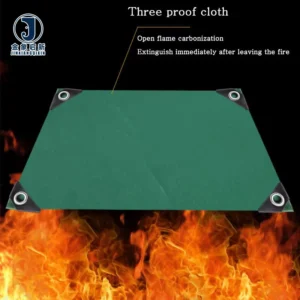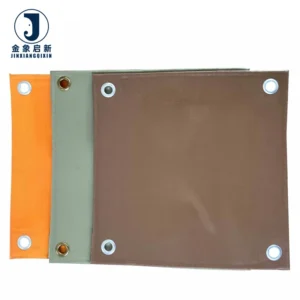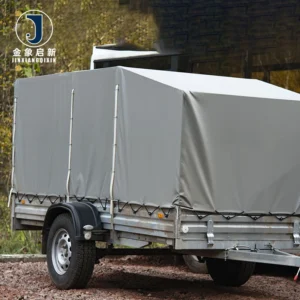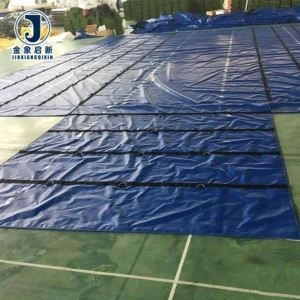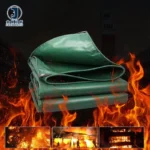
Process-Controlled Coating — nearly 30 years focused on coated fabric, maintaining consistent PVC adhesion and weight across every roll produced for industrial ventilation and structure applications.
Technical Specifications
| Parameter | Value |
|---|---|
| Product Type | PVC Coated Tarpaulin Roll |
| Base Fabric | Woven polyester construction |
| Coating Material | PVC |
| Coating Method | Knife coated |
| Weight | At least 450 GSM |
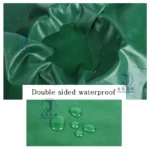
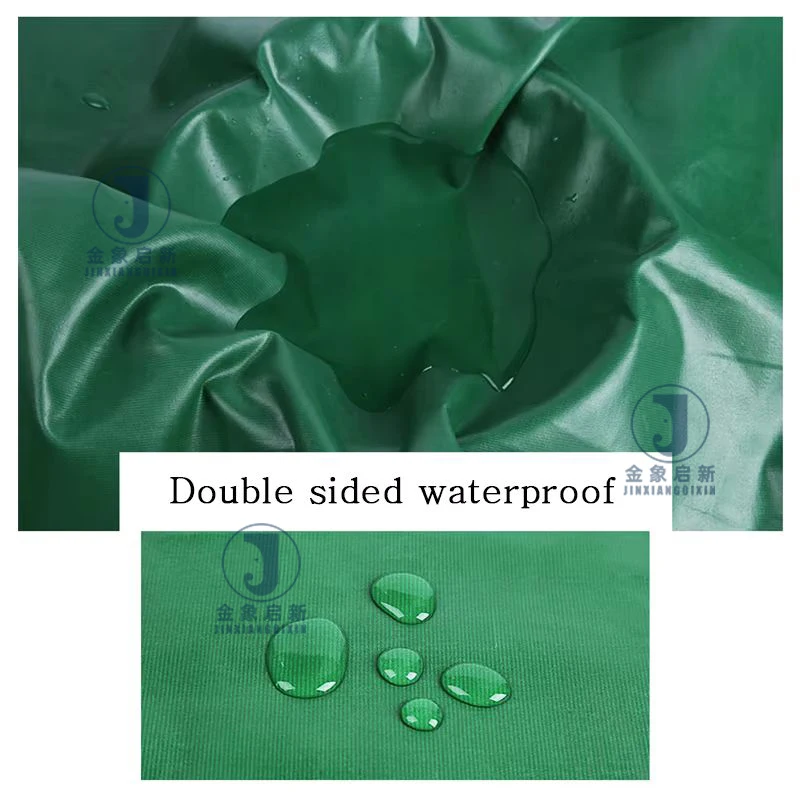
| Waterproof Rating | Fully waterproof coated construction |
| UV Treatment | Anti-UV treated — confirm grade required for your market |
| Surface Finish | Oilproof treated surface (test basis not stated in source) |
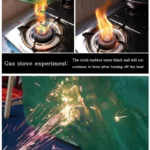
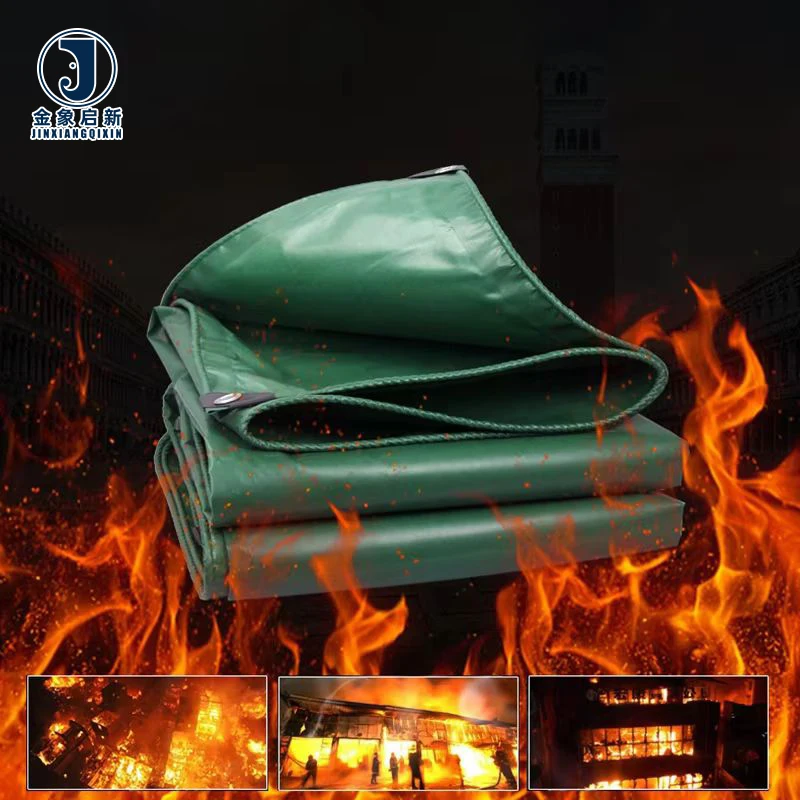
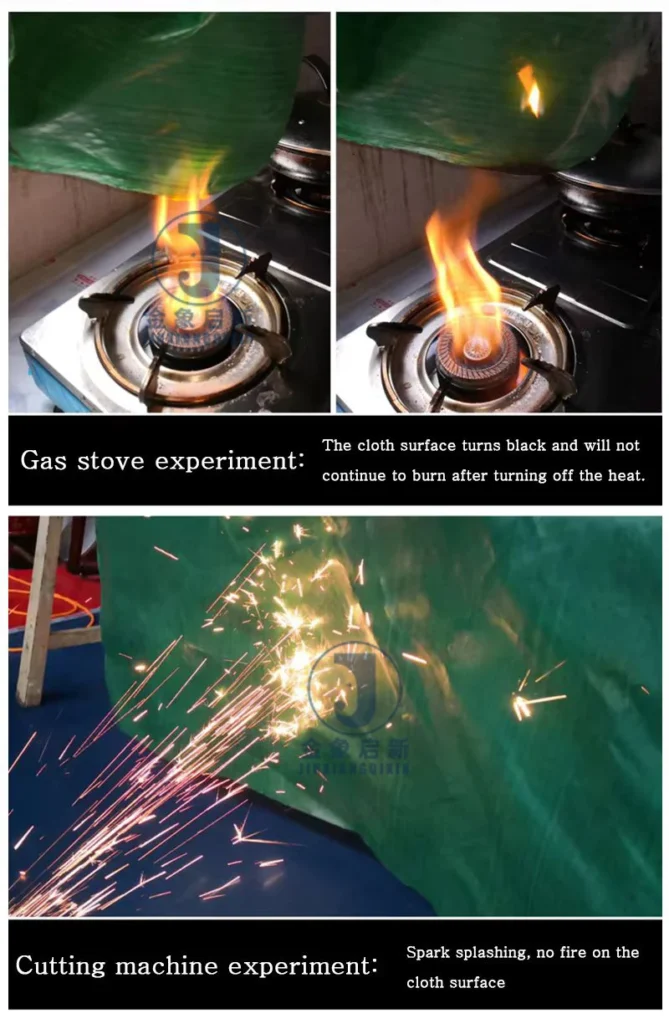
| Fire Retardancy | Available in flame retardant grades — confirm the grade required for your site |
| Anti-Static | Available in anti-static grades — confirm certification needed for your project |
| Format | Supplied in roll |
| Custom Sizing | Custom width and length available |
| Standards | ISO and CE certified production |
Application Suitability
| Application | Exposure & Requirement |
|---|---|
| Mining ventilation duct | Continuous airflow, underground particulate, fire-retardant and anti-static compliance required |
| Tunnelling air duct | Abrasive dust, mechanical contact with tunnel walls, flame-retardant certification to site standard |
| Aviation ground ventilation duct | Fuel-rich environment, anti-static surface to prevent discharge, outdoor weather exposure |
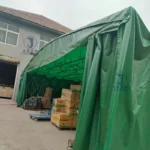
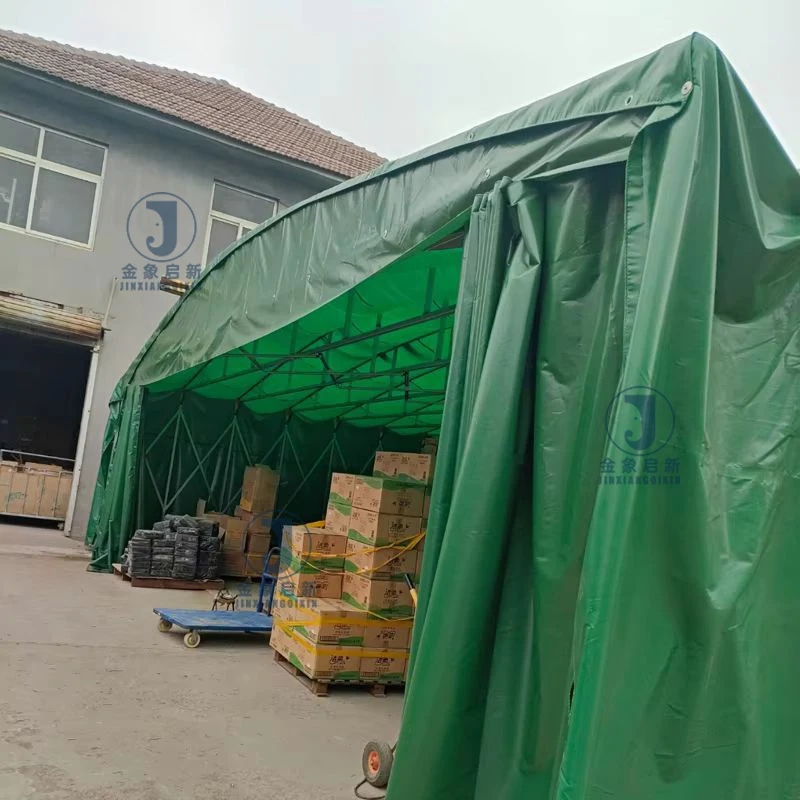
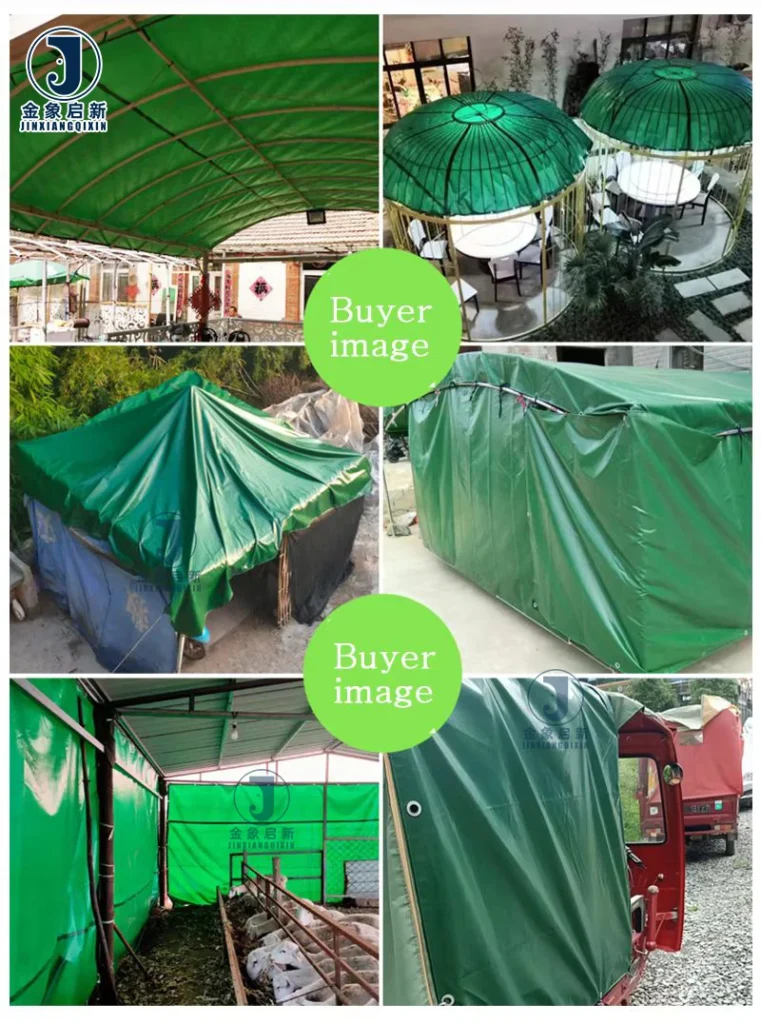
| Membrane and inflatable structures | Wind load, UV exposure, structural tension across welded seams |
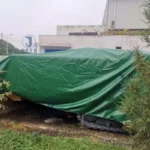
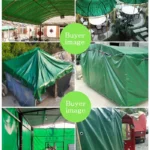
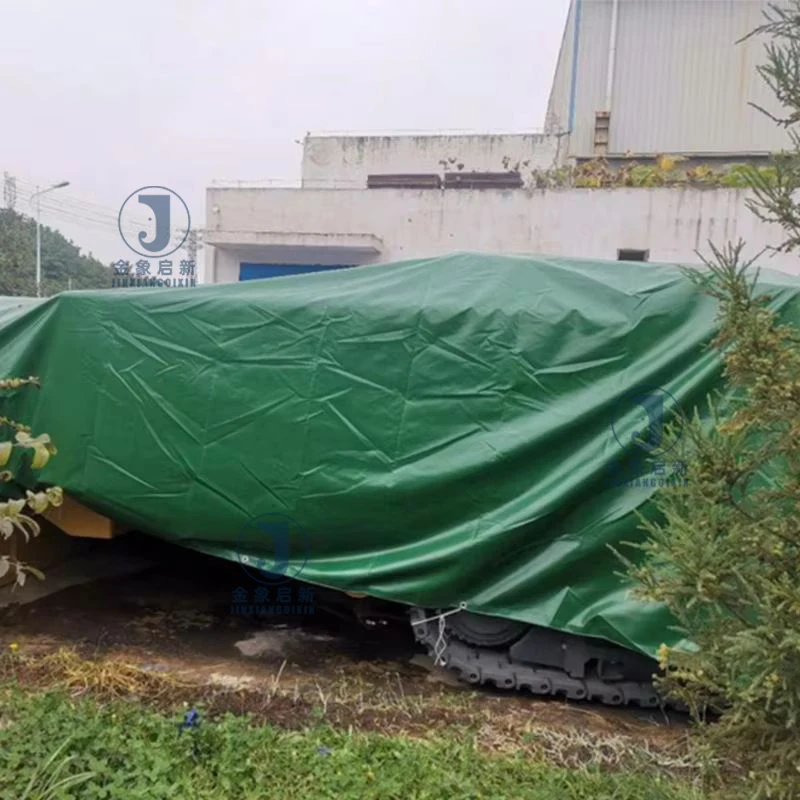
| Industrial equipment and structure covers | Rain, snow, mechanical abrasion, long-term outdoor storage |
What Happens When Ventilation Duct Arrives Without the Certification Your Site Demands
Certification must travel with the roll, not follow weeks later by email.
Mining and tunnelling projects specify fire-retardant and anti-static ventilation duct fabric because underground safety regulations require documented proof before installation. When a supplier ships PVC coated fabric without matching test reports, the entire duct run sits idle on site while procurement scrambles for paperwork. Project timelines slip, and in some jurisdictions the installed duct must be removed and replaced if certification cannot be produced during inspection. We have seen contractors face compliance shutdowns because the fabric delivered did not carry the grade stated in the tender specification [NEED_CITE: fire-retardant classification requirements for underground ventilation materials].
Knife Coated PVC for Consistent Weight and Adhesion in Duct Fabrication
The knife coating process applies a controlled layer of PVC onto the woven polyester base, producing uniform coating weight from edge to edge across the roll. This consistency matters when fabricating ventilation duct, where welded seams must bond reliably along the entire panel length. PVC coated fabric produced through this method delivers predictable behaviour during hot-air or wedge welding, reducing rejected seams on the fabrication floor.
Woven Base Fabric Engineered for Flex and Mechanical Stress
Ventilation duct in mining and tunnelling environments flexes continuously under positive or negative air pressure, and contact with tunnel walls introduces abrasion at the outer surface. The woven polyester base fabric provides dimensional stability and tear resistance suited to these dynamic loads. When the duct is deployed in curved tunnel sections or around equipment, the fabric must resist crack propagation at stress points without delaminating from the PVC coating layer [NEED_CITE: tensile and tear test methods for coated fabrics per ISO 1421].
Understanding Specification Choices for Your Ventilation or Structure Project
Weight, base fabric construction, and coating method interact to determine how PVC coated fabric performs under site conditions. The stated GSM reflects the combined weight of base fabric and PVC coating together — a higher GSM does not automatically mean a stronger base fabric, since a heavier coating layer can inflate the number while the underlying weave remains unchanged. Knife coating produces stronger adhesion between PVC and base fabric compared to laminated alternatives, which matters when welded seams carry structural load in inflatable or membrane applications. The woven base fabric construction resists tear propagation better than non-woven substrates, because individual yarns must break sequentially rather than the material splitting along a single fracture line. Surface treatments such as anti-UV and oilproof finishes serve different purposes — UV treatment protects against solar degradation in outdoor-exposed membrane structures, while oilproof surfaces ease cleaning in environments where hydraulic fluid or lubricant contact occurs. Fire-retardant and anti-static grades must be selected based on the specific standard your site enforces, whether that is M2, B1 per DIN 4102, NFPA 701, or a local mining regulation.
The Cost of Specifying the Wrong Grade for Your Compliance Environment
A ventilation duct installed underground without the correct anti-static certification can trigger a site-wide safety stand-down, halting production until compliant material is sourced and installed. Flame-retardant fabric that lacks documentation matching the applicable standard forces the contractor to either commission independent testing at significant expense or remove and replace the entire duct run. PVC coated fabric ordered without confirming the fire classification required by the local authority means the material may pass visual inspection but fail during compliance audit. We have observed projects delayed by weeks because the certification paperwork did not reference the standard the site inspector was enforcing [NEED_CITE: underground ventilation compliance standards for mining and tunnelling].
Why Fabricators and Contractors Source This PVC Coated Fabric Here
Three full production lines and 36 sets of professional equipment support bulk roll output with reliable on-time delivery for project-scheduled duct and membrane orders. A 10-person R&D team handles material selection, fire-retardant and anti-static grade matching, and sample development for project-specific dimensions within days. Dedicated quality control at every production stage includes coating weight verification and 100% inspection before shipment, so the GSM and certification grade on the spec sheet match what arrives on site. Sample rolls are developed quickly for custom width, colour, or certification requirements, allowing fabricators to test weld parameters and seam behaviour before committing to full production volume. Documentation packages ship with each order, including test reports matched to the applicable fire-retardant or anti-static standard.
Documentation & Verification
- Material specification sheet stating GSM, base fabric weave, coating method, and colour reference for each roll
- Test report for flame-retardant and anti-static grades matched to the applicable project standard before dispatch
- Pre-shipment inspection record with roll-by-roll weight and visual QA documentation
- Certificate of origin, ISO and CE certificates, and customs documentation for international project sites
- Roll packing list with batch reference linking each roll to its production and test records
Fabrication, Handling & Storage
- Hot-air weld temperature and speed must be calibrated to the knife coated PVC surface to avoid coating burn-through on at least 450 GSM material
- Store rolls upright on pallets to prevent flat-spot deformation that causes tracking issues during duct fabrication unrolling
- Anti-UV treated grades should be stored away from direct sunlight until fabrication to preserve the treatment integrity before installation
- Cut panels with sealed edges to prevent base fabric fraying at welded seam margins on woven polyester construction
- Oilproof surface finish allows solvent-free cleaning with mild detergent, avoiding coating degradation from aggressive chemical agents
Preparing Your Enquiry for Ventilation or Structure Fabric
Specify the ventilation duct diameter, duct length per section, and whether the application requires positive or negative pressure ratings so we can recommend the appropriate base fabric and coating weight. Confirm the fire-retardant and anti-static standard enforced at your project site — M2, B1, NFPA 701, or a specific mining regulation — so that test reports and certification are prepared before production. Provide your required roll width, total linear metres, and whether you need sample rolls for weld parameter testing before the bulk order ships.
Frequently Asked Questions
Q: Which fire-retardant standard applies to my mining or aviation ventilation duct project?
A: Fire-retardant requirements vary by jurisdiction and project specification. Underground mining sites typically enforce standards specific to their region, while aviation ground equipment may reference NFPA 701 or equivalent. Confirm the exact standard with your site safety officer before ordering, and we will match the test report and certification documentation to that requirement before dispatch.
Q: How is anti-static performance verified for underground and hazardous environment duct?
A: Anti-static PVC coated fabric is measured by surface resistance values, and the acceptable range depends on the regulation governing your site. We supply test reports documenting the measured surface resistance for the specific batch shipped. Request the target resistance range from your compliance authority so we can confirm the correct grade before production begins.
Q: How do I confirm the quoted GSM matches what arrives on site?
A: Each roll undergoes weight verification during our pre-shipment inspection, and the inspection record ships with your order. Upon receipt, you can conduct a spot-check by cutting a measured sample and weighing it against the stated specification. Any discrepancy should be reported immediately with the batch reference from the roll label.
Q: What weld and seam parameters work with this knife coated PVC fabric?
A: Weld temperature, speed, and pressure depend on your specific hot-air or wedge welding equipment and the coating weight of the fabric ordered. We recommend ordering a sample roll to calibrate your machine settings before full production. The knife coated surface generally provides consistent adhesion when parameters are set correctly for the material thickness.
Q: What lead time and minimum order apply to custom width and certified grades?
A: Lead time depends on the certification grade, roll width, and total quantity required. Custom widths and specific fire-retardant or anti-static grades require dedicated production runs. Submit your project specifications including total linear metres and required certification standard, and we will confirm the production schedule and minimum order before you commit.