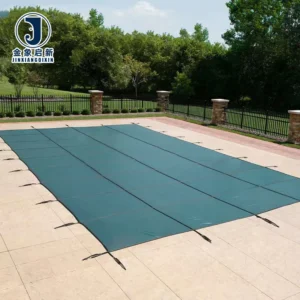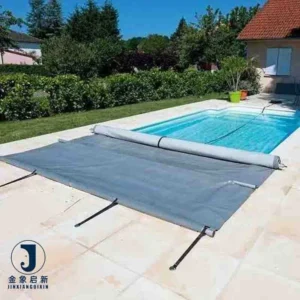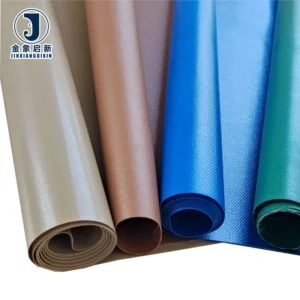
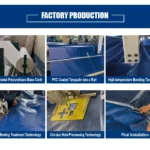
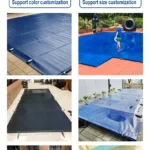
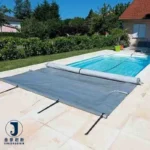
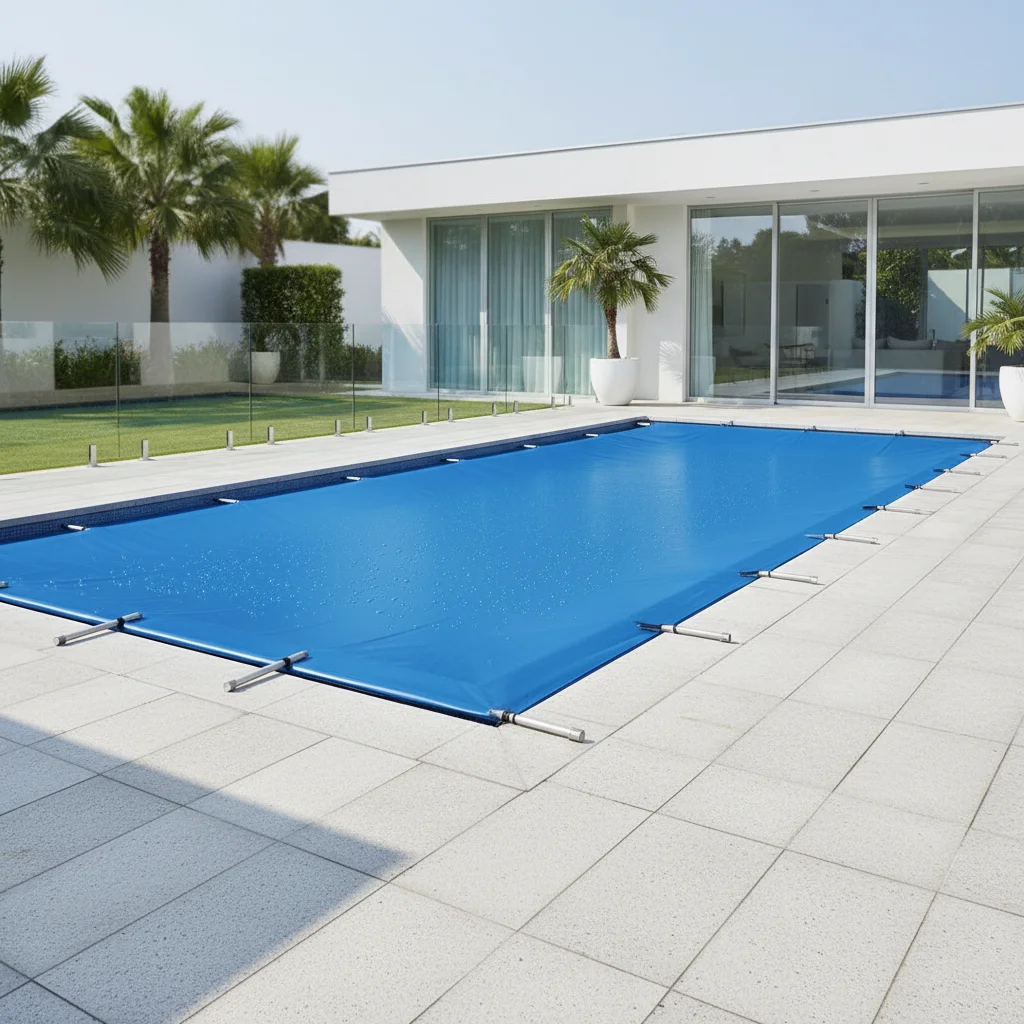
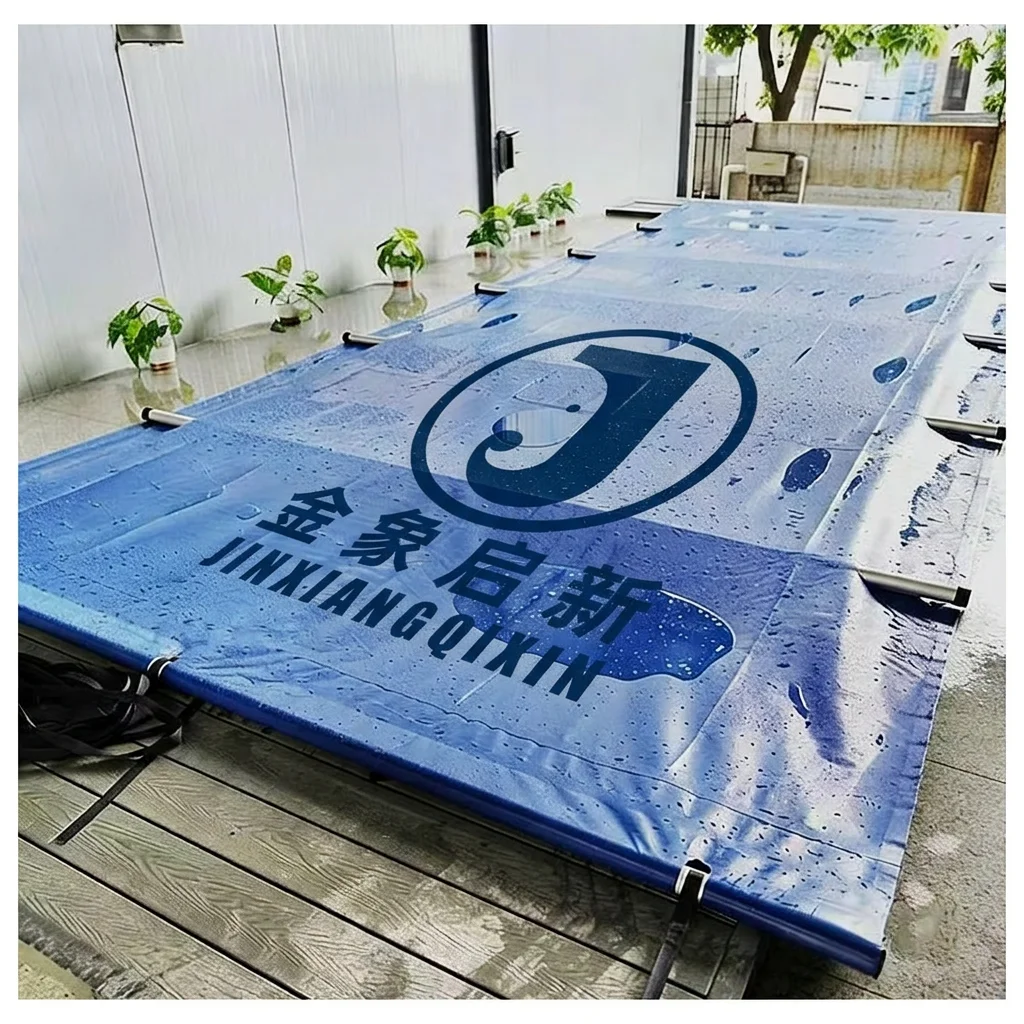
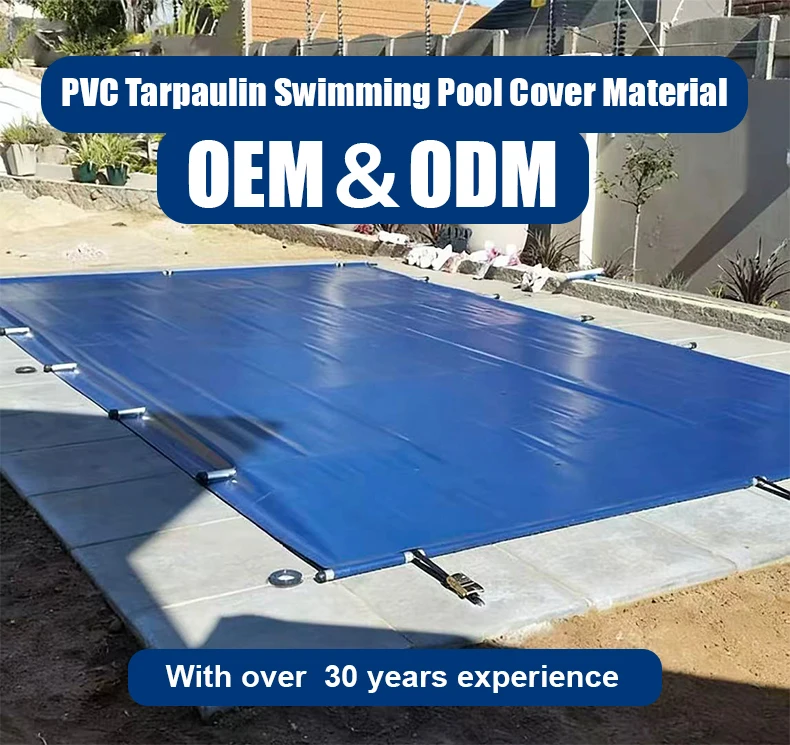
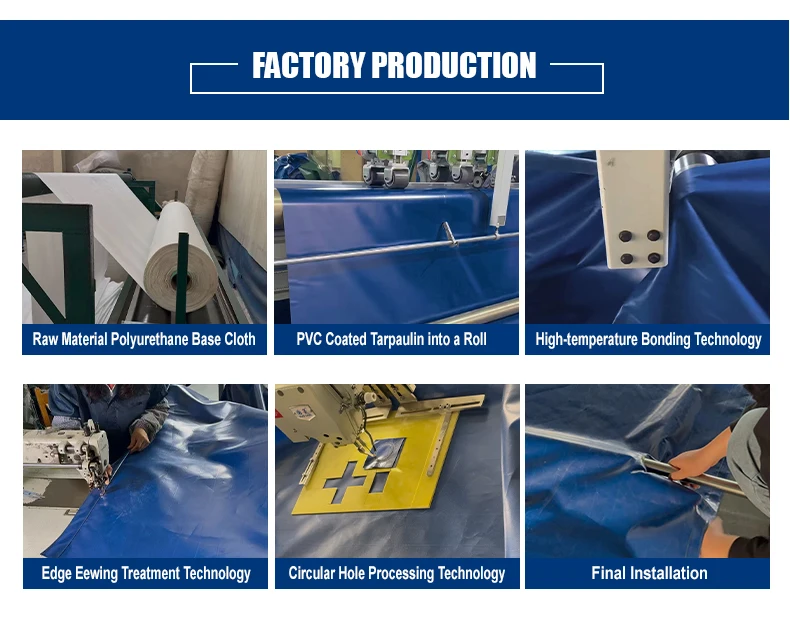
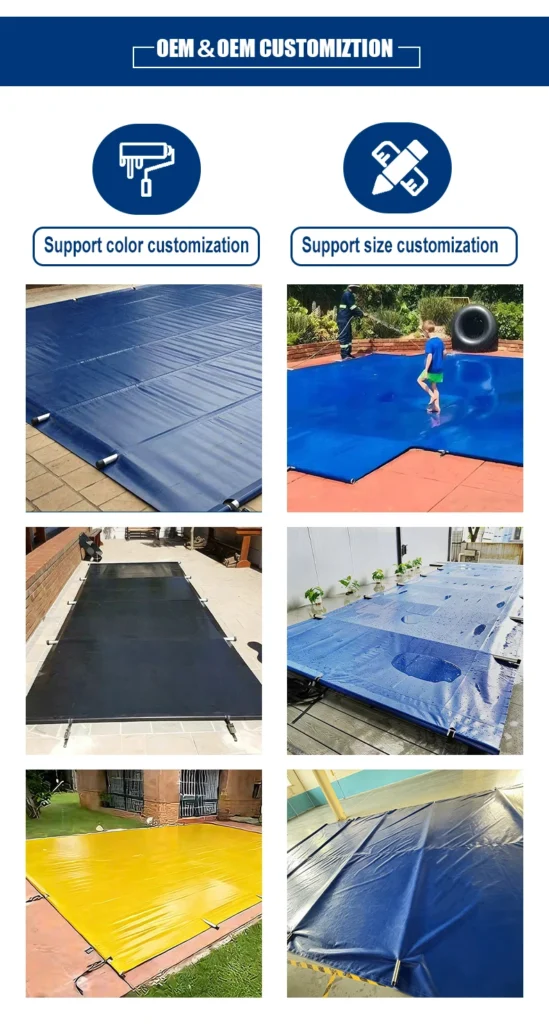
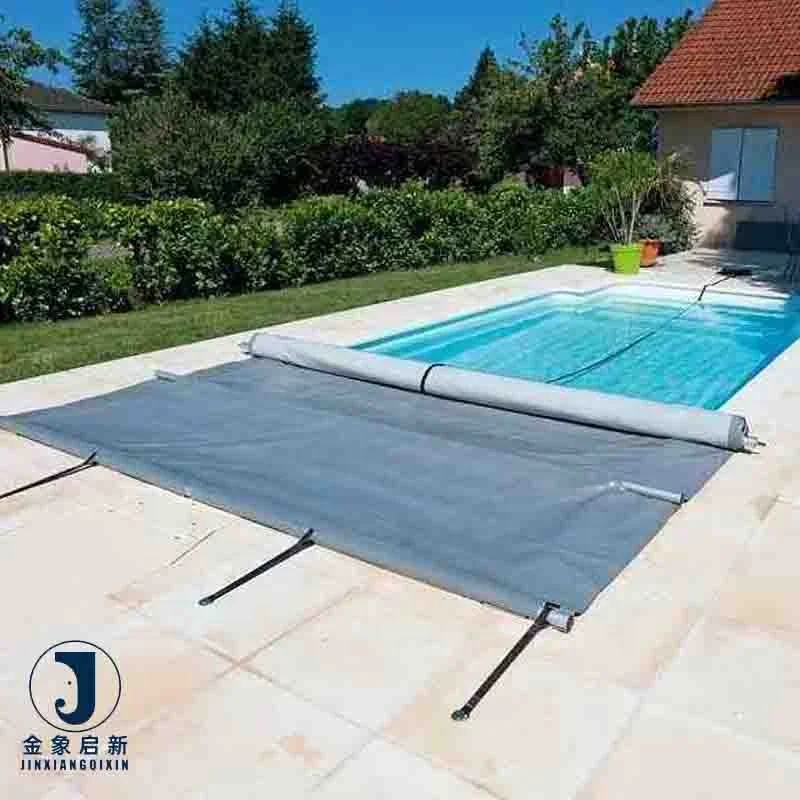
Fabric Weight Consistency — verified through in-process coating control across all production stages, ensuring each roll of PVC coated tarpaulin meets the specified GSM before leaving the facility.
Technical Specifications
| Parameter | Value |
|---|---|
| Product Type | PVC Coated Tarpaulin |
| Coating Material | PVC |
| Waterproof Construction | Yes |
| Anti-UV Treatment | Available (test basis not stated in source — confirm grade required for your market) |
| Weight Grade | Medium Weight |
| Surface Finish | Glossy or matte (confirm option at inquiry) |
| Primary Applications | Outdoor Awning, Shade Sail, Canopy, Pet Dog House Cover |
| Standards & Certification | ISO, CE |
Application Suitability
| Application | Exposure & Requirement |
|---|---|
| Outdoor Awning Fabrication | Sustained sun exposure, rain cycles, wind load on stretched panels, demand for consistent colour across multi-panel spans |
| Shade Sail Installation | High tensile stress at corner fixings, UV degradation risk, requirement for dimensional stability under tension |
| Canopy & Shelter Covers | Water pooling load, abrasion at frame contact points, need for welded seam integrity |
| Pet & Equipment Shelters | Ground moisture exposure, cleaning with mild agents, puncture resistance at floor and corner edges |
Why Coated Weight Alone Fails as a Specification Check
GSM tells you what the fabric weighs — not how it performs under load or how long the coating stays bonded.
When buyers receive a roll of PVC coated tarpaulin for awning or canopy production, the label says one weight but the hand-feel says another. Coating weight can vary across the roll width, or the base fabric denier can shift between batches while the total GSM stays within tolerance. The result is a shade sail that stretches unevenly when tensioned, or an awning panel that welds differently from one roll to the next [NEED_CITE: tensile and tear test methods for coated fabrics per ISO 1421]. This is not a defect you catch after fabrication — it surfaces on site when the installer tensions the last panel and sees it pull out of shape.
Coating Adhesion and What It Means for Welded Panels
PVC coated tarpaulin for specialist structures and shade systems depends on the bond between the base polyester weave and the coating layer. When adhesion is inconsistent, the coating delaminates at welded seams under thermal cycling — the very joints that carry the structural load. Controlled coating application ensures the PVC penetrates the base fabric evenly, producing a bond that survives repeated flex and heat exposure during hot-air welding on the fabrication floor.
Colour Matching Across Multi-Roll Orders
Awning and canopy installations often span multiple fabric panels joined at the site. If colour drifts between rolls, the seams become visible lines across the finished structure. Batch-to-batch pigment control during coating is the factor that prevents this. For large shade sail or commercial awning projects, specifying colour by reference code and requesting a pre-production sample from the actual dye lot eliminates the risk of on-site mismatch [NEED_CITE: colour fastness standards for outdoor coated textiles].
Reading the Specification Sheet Beyond GSM
Medium weight PVC coated tarpaulin covers a range of constructions. The base fabric denier, the weave density, and the coating weight all interact. A fabric with a lighter base and heavier coating may have the same GSM as one with a denser weave and thinner coat — but the tear propagation behaviour is entirely different. For shade sails that concentrate stress at corner rings, a higher-density base fabric resists tear spread even if the total weight is the same. Coating method also matters: knife-over-roll coating produces a smoother surface suited to printed branding, while dip-coating yields deeper penetration for improved peel strength at welded joints.
What Happens When the Wrong Grade Reaches the Site
An awning fabricated from a fabric without documented UV treatment fades unevenly within the first season, and the coating becomes brittle at the fold lines where water pools. A canopy welded with heat settings calibrated for a heavier grade burns through the coating on a lighter fabric, leaving seams that peel apart under the first wind load. These failures trace back to a specification that listed weight but not coating formulation, UV test basis, or recommended welding parameters [NEED_CITE: PVC coating thermal behaviour during hot-air welding].
Sourcing From a Coating-Process Manufacturer
Three full production lines with 36 sets of professional equipment handle bulk roll orders with consistent coating weight across every roll. A 10-person R&D team develops material selections and custom sizing, running sample production within days so you can test weld parameters and colour match before committing to a full order. Dedicated QA at every production stage, including 100% pre-shipment inspection, means the roll you receive matches the specification sheet that accompanied your quotation. ISO and CE certification supports documentation for import and compliance in regulated markets.
Documentation & Verification
- Material specification sheet stating GSM, base fabric denier, and coating weight for every roll shipped
- Anti-UV test report supplied for grades where treatment is specified and documented
- Pre-shipment inspection record confirming weight and colour against the approved sample
- Roll packing list with individual roll dimensions and net weight per unit
- Certificate of origin and customs documentation prepared per destination country requirements
Fabrication, Handling & Storage
- Hot-air welding temperature must match the medium weight PVC formulation to avoid coating burn-through
- Store rolls vertically on pallets to prevent flat-spot deformation across the coating surface
- Unroll in ambient temperature to prevent cracking of the PVC coating in cold conditions
- Clean with pH-neutral agents to preserve the coating surface and any applied treatment layer
- Allow expansion tolerance when cutting panels for shade sails, as PVC fabric relaxes after tensioning
What We Need to Quote Your Project
Provide the end-use application — awning, shade sail, canopy, or shelter — along with the environmental exposure conditions at the installation site. Specify your required roll width, colour reference, and whether you need fabric by the roll or pre-cut panels with hemming. If your market requires documented UV treatment or fire performance, state the grade or standard your project must meet so we can confirm availability and supply the matching test documentation.
Frequently Asked Questions
Q: How do you confirm Anti-UV treatment on the fabric I receive?
A: Anti-UV treatment is available on request with documented test basis. When you specify UV resistance for your outdoor awning or shade sail project, we supply the applicable test report with your shipment. Confirm the UV standard required for your destination market at inquiry stage so we match the correct formulation.
Q: What is the minimum order for a custom width or colour?
A: Minimums vary by colour and width. Custom dye lots and non-standard roll widths carry production thresholds tied to coating line setup. Request a quotation with your target dimensions and annual volume, and we confirm the minimum along with lead time for sample development.
Q: Can this PVC coated tarpaulin be welded and sewn?
A: Yes. The medium weight construction supports both hot-air welding and thread sewing. Welding parameters depend on the exact coating formulation in your batch — we supply recommended temperature and speed settings with the material specification sheet so your fabricator can calibrate before full production.
Q: How do you control colour consistency across multiple rolls?
A: Each production run uses a single dye batch matched to your colour reference code. Pre-shipment inspection checks colour against the approved sample under standard lighting. For large awning or canopy projects spanning several rolls, we recommend ordering the full project quantity in one production cycle.
Q: What documentation arrives with my shipment?
A: Every shipment includes a material specification sheet, roll packing list, pre-shipment inspection record, and applicable certificates. Where UV or flame-retardant treatment is specified and documented, the corresponding test report is included. Certificate of origin and customs paperwork are prepared per your destination requirements.