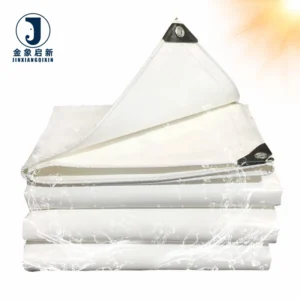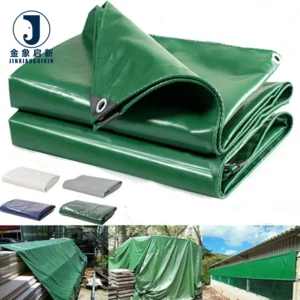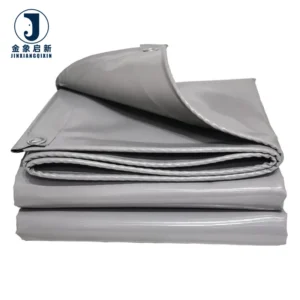
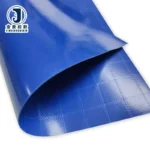
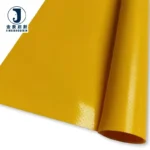
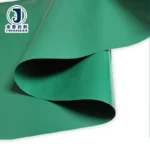
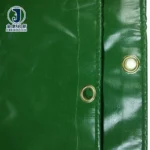
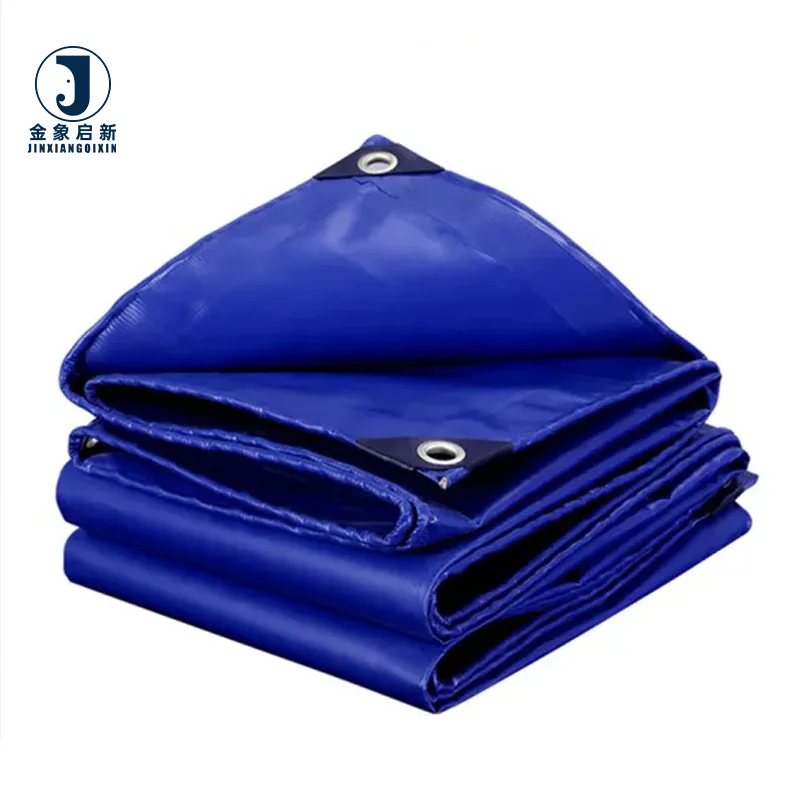
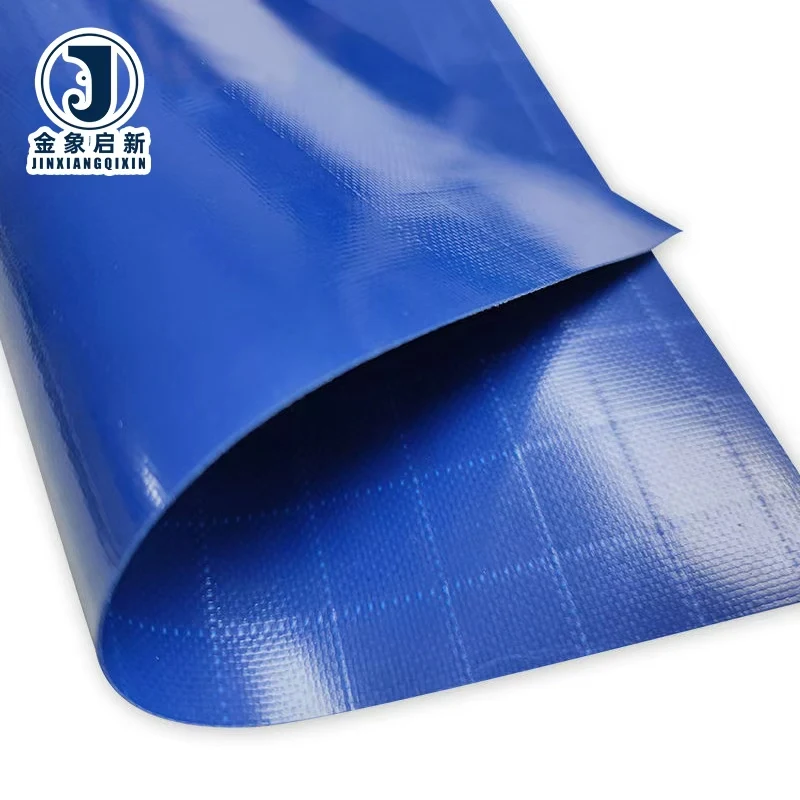
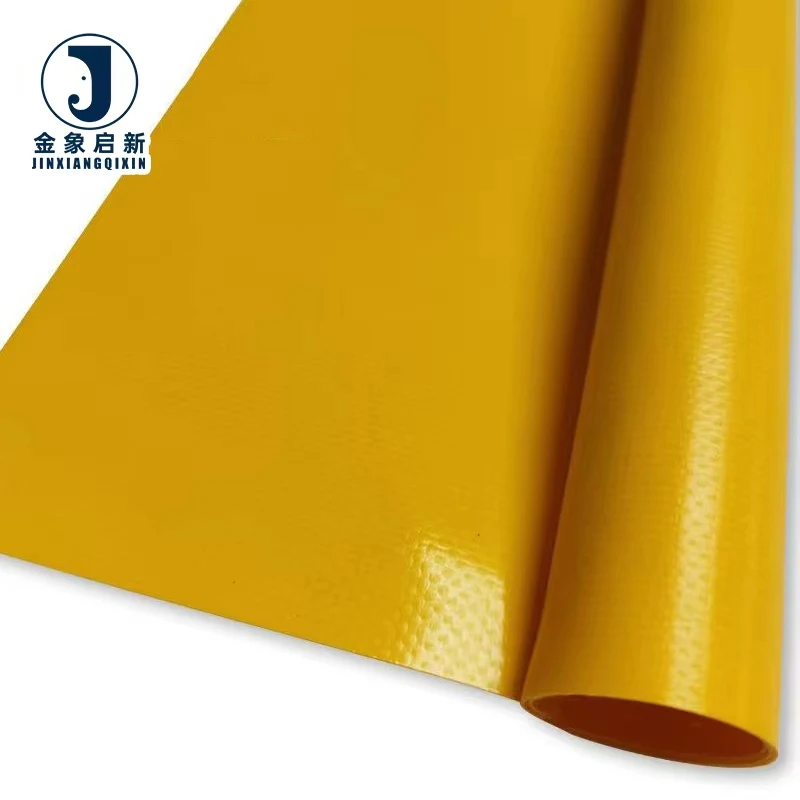
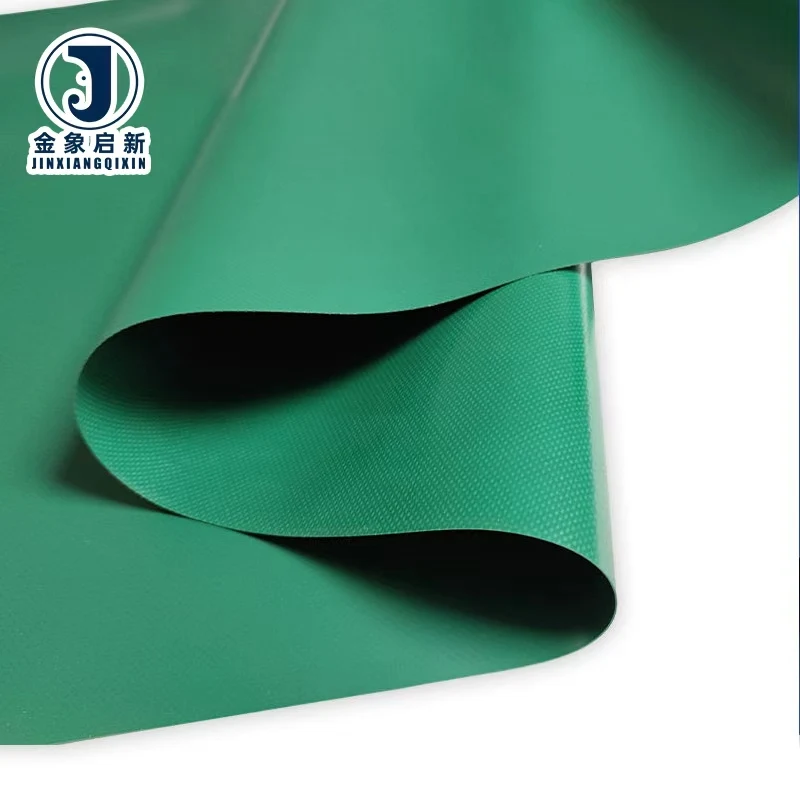
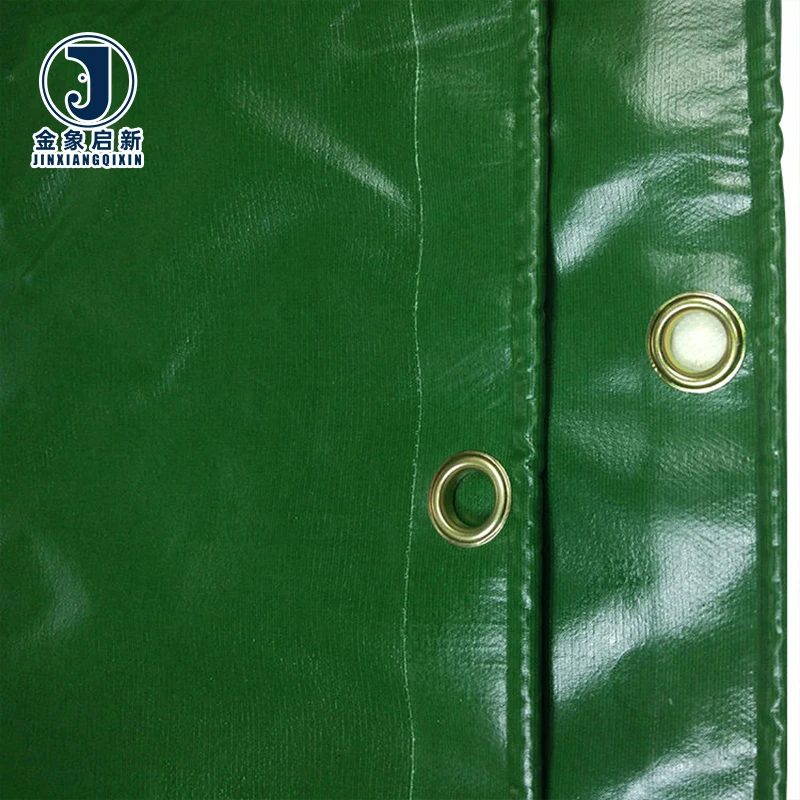
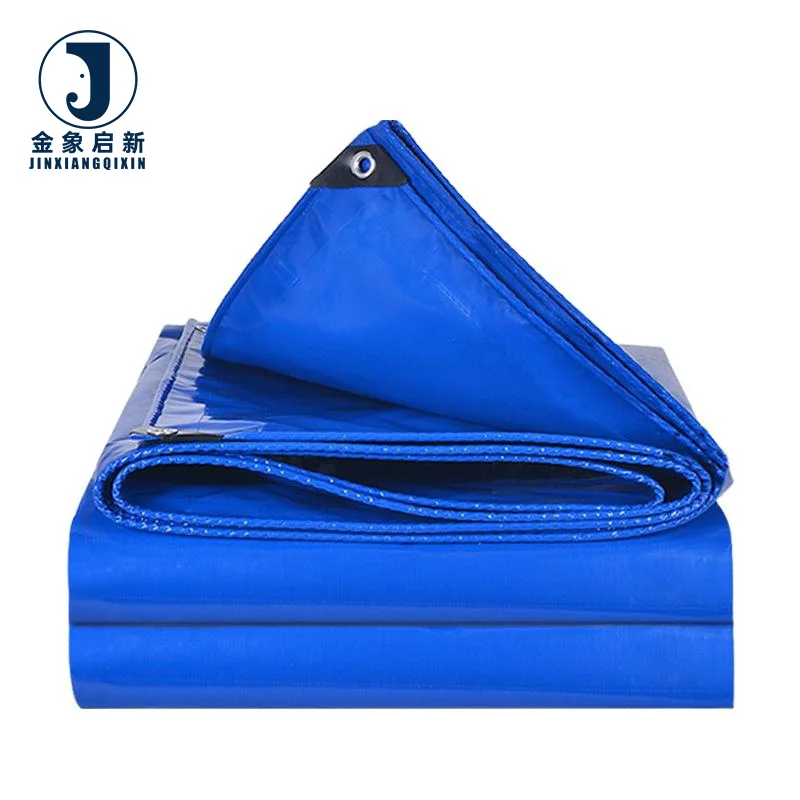
Deep Process Control — coating weight and adhesion managed across every production stage, ensuring this PVC knife-coated fabric meets the exact denier and GSM grade specified for technical ventilation and structural use.
Technical Specifications
| Parameter | Value |
|---|---|
| Product Type | PVC Coated Tarpaulin |
| Category | PVC Knife-Coated Fabric |
| Base Fabric Denier | 500D840D to 1000D2000D (varies by weight grade) |
| Mesh Count / Density | 2020 to 3019 (varies by weight grade) |
| Total Thickness | 0.29 mm to 0.65 mm (varies by weight grade) |
| Coating Material | PVC & Polyester |
| Warp Strength | Up to 3900 N (grade-dependent) |
| Weft Strength | Up to 3500 N (grade-dependent) |
| Tensile Strength | 50–80 MPa (test standard not stated in source) |
| Brittle Temperature | ≤ -50 to -60 ℃ (range covers product family) |
| Softening Temperature | ≥ 80 ℃ |
| Melting Point | 212 ℃ |
| Key Features | Water Resistant, Waterproof, Flame Retardant (grade not stated in source), Anti-UV (test basis not stated in source) |
| Density | 1.15–2.00 g/cm³ (range covers product family) |
| Package | Roll packing, bale packing, carton |
| Standards Referenced | ISO, CE |
Application Suitability
| Application | Exposure & Requirement |
|---|---|
| Underground mining ventilation duct | Continuous airflow, rock dust abrasion, mandatory fire-retardant and anti-static compliance |
| Tunnelling ventilation systems | High positive or negative pressure, moisture ingress, confined-space safety certification |
| Aviation hangar membrane structures | Wind load, UV exposure, large-span tensile stress, flame compliance for enclosed aircraft |
| Inflatable industrial enclosures | Repeated inflation cycles, seam peel stress, rapid deployment requirements |
| Construction plant and equipment covers | Outdoor weathering, mechanical impact, certified flame performance on regulated sites |
Why Fire-Retardant Certification Matters More Than the PVC Coated Tarpaulin Label
A fabric labelled "flame retardant" without a named standard is a liability, not a specification.
On mining and tunnelling sites, ventilation duct must pass fire classification before installation — yet PVC coated tarpaulin rolls regularly arrive with no test report matched to the batch, leaving contractors to discover the gap at inspection [NEED_CITE: fire classification standards for underground ventilation duct materials]. When the certification does not align with the site’s regulatory framework, the entire duct run is rejected and replaced at significant cost and schedule delay. The same pattern appears in aviation and membrane structure projects where the authority having jurisdiction demands a specific flame grade before issuing occupancy approval.
Engineered for Airflow and Structural Load, Not Just Weather Protection
Ventilation duct and membrane structure fabric operates under fundamentally different stress profiles than standard truck tarpaulin. The base fabric denier — ranging from 500D840D through 1000D2000D — must be matched to the duct diameter, internal pressure, and span length so that warp and weft strength balance the tensile forces generated during operation. This PVC coated tarpaulin series is developed with that engineering distinction in mind, offering multiple denier and density options so that the correct construction is selected for positive-pressure forcing duct or negative-pressure exhaust systems.
Coating Adhesion and Seam Integrity Under Continuous Stress
In ventilation and inflatable structure applications, the welded seam is typically the first failure point, not the coated fabric itself [NEED_CITE: tensile and tear test methods for coated fabrics per ISO 1421]. The PVC coating must bond to the polyester base with sufficient peel strength to survive repeated flexing, pressure cycling, and temperature fluctuation. Knife-coating as a process allows controlled coating weight application on each side of the base fabric, supporting consistent hot-air weld performance across the roll length and reducing the risk of delamination at fabricated joints.
Reading the Specification Sheet Beyond GSM Alone
Thickness, base fabric denier, and mesh density together determine how this PVC knife-coated fabric behaves under load. A heavier GSM achieved through coating weight alone — without a corresponding increase in base fabric density — may show adequate tensile strength on a test certificate but tear readily once a puncture initiates in the field. The 500D840D to 1000D2000D range available in this series allows specifiers to select a construction where both the yarn count and the weave density contribute to tear propagation resistance, not just static tensile numbers. Warp strength up to 3900 N and weft strength up to 3500 N are achievable at the heavier constructions, providing the structural margin required for large-diameter duct and tensioned membrane panels.
The Hidden Cost of Specifying Without Verification
When PVC coated tarpaulin for ventilation duct is ordered on weight alone, without confirming the fire-retardant grade or anti-static surface resistance, the consequence is typically discovered at the commissioning stage rather than at goods-in [NEED_CITE: anti-static surface resistance testing for ventilation duct in explosive atmospheres]. Duct that fails the site’s mandatory fire audit must be stripped and replaced while the heading remains idle. Similarly, membrane fabric supplied without batch-matched test documentation can stall an aviation or events project at the building inspection stage. Colour variation between rolls in the same order compounds the problem when membrane panels are installed side by side under uniform lighting.
Why Technical Buyers Source This Range Here
Coating weight and adhesion are controlled through dedicated process management across each production run, reducing the batch-to-batch variation that undermines weld consistency on site. Three full production lines and dedicated equipment capacity support bulk roll output with reliable scheduling for project-timed deliveries. A ten-person R&D team handles material selection, custom width development, and sample fabrication so that trial panels can be evaluated before full production is committed. Dedicated QA and QC stages include full inspection before dispatch, with test documentation matched to the grade and batch ordered rather than drawn from a generic file.
Documentation & Verification
- Material specification sheet stating denier, density, thickness, and coating weight for the exact grade ordered
- Fire-retardant or anti-static test report matched to production batch and referenced on dispatch records
- ISO and CE certificates included with shipment documentation and certificate of origin
- Pre-shipment inspection record confirming coating weight, seam integrity, and roll consistency
- Roll packing list with net and gross weight for container loading reconciliation
Fabrication, Handling & Storage
- Hot-air weld temperature and speed must be calibrated to the specific coating thickness of the grade selected
- Reinforced corner patches recommended at duct end-fittings and membrane anchor points to distribute load
- Rolls stored horizontally on pallets to prevent permanent creasing through the coating layer
- Allow cold-stored rolls to reach ambient temperature before unrolling to avoid coating crack at low ductility
- Cutting layout planned to minimise transverse seams on long duct runs and membrane spans
- Field repair patches cut from the same denier and coating grade to maintain consistent weld adhesion
What to Include in Your Enquiry
To specify the correct grade from this PVC knife-coated fabric range, share the duct diameter or membrane span dimensions, the operating pressure regime, and the fire-retardant or anti-static standard required by the authority having jurisdiction on your project. Indicate the roll widths needed for your fabrication equipment and whether you require sample panels for weld parameter development before committing to production volume.
Frequently Asked Questions
Q: Which fire-retardant standard applies to ventilation duct on my site?
A: The required standard depends on the jurisdiction and industry — mining operations typically reference national mine safety regulations, while aviation and construction membrane projects may require DIN 4102, NFPA 701, or local building code classification. Confirm the exact grade with the site safety engineer before ordering, and request the matching test report with your shipment documentation.
Q: How is anti-static surface resistance verified on each batch?
A: Anti-static performance must be measured on the finished coated surface after production and curing. Request a batch-specific surface resistance test report that documents the measured value against the threshold required by your site safety standard, and cross-reference the batch number against the pre-shipment inspection record supplied with dispatch.
Q: Can the base fabric denier be matched to positive versus negative pressure duct?
A: Yes. Positive-pressure forcing duct and negative-pressure exhaust systems impose different tensile and collapse loads on the fabric construction. Share the duct diameter, operating pressure, and span configuration so the appropriate denier and density combination from the available range can be recommended and sampled for your approval.
Q: How are welded seams tested before membrane and inflatable fabric ships?
A: Hot-air welded seam peel strength is assessed during in-process quality control, with results recorded against the production batch. The pre-shipment inspection record documents seam integrity findings, and sample weld coupons can be supplied with your order for independent verification at your fabrication facility.
Q: What roll formats support efficient container loading of technical fabric?
A: This series ships in roll packing, bale packing, or carton depending on the grade and width ordered. Provide your container type and fabrication equipment unwind capacity so the roll dimensions and packing format can be configured to maximise load efficiency while protecting the coating surface during transit.