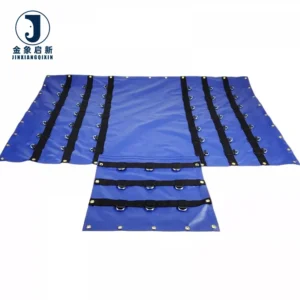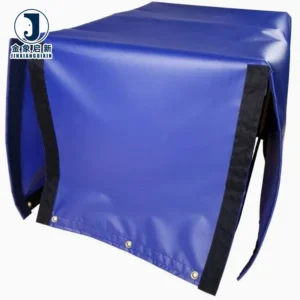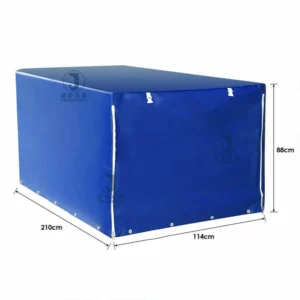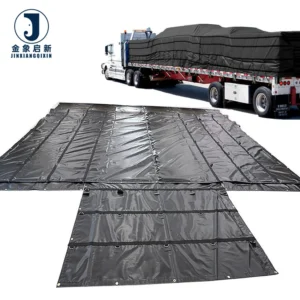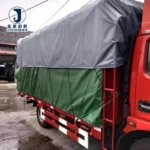

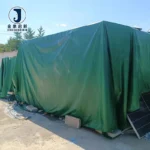

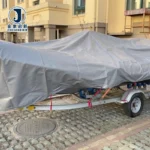
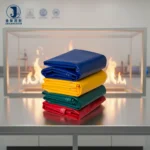
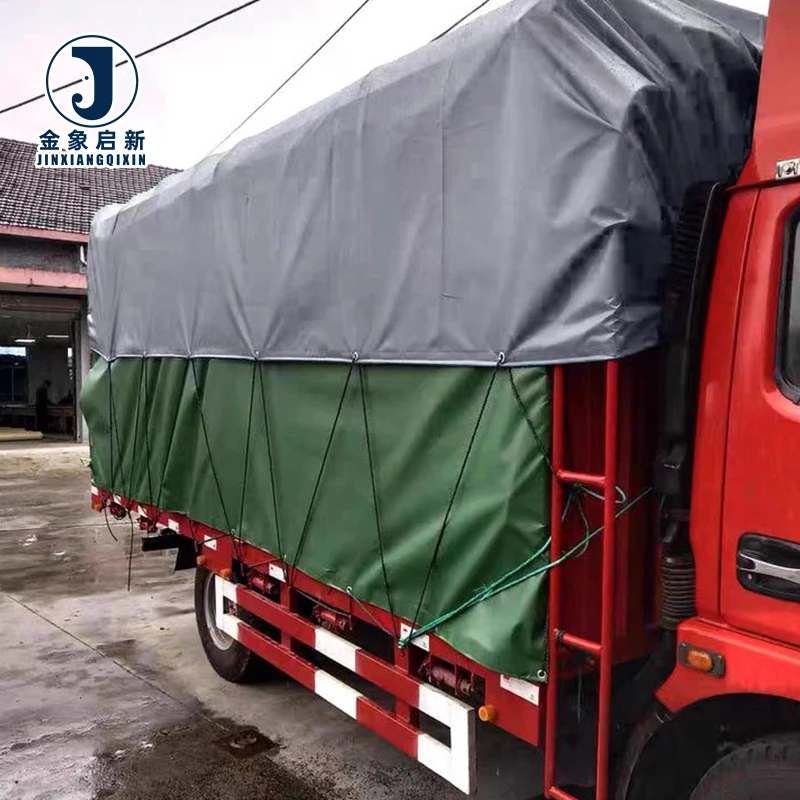
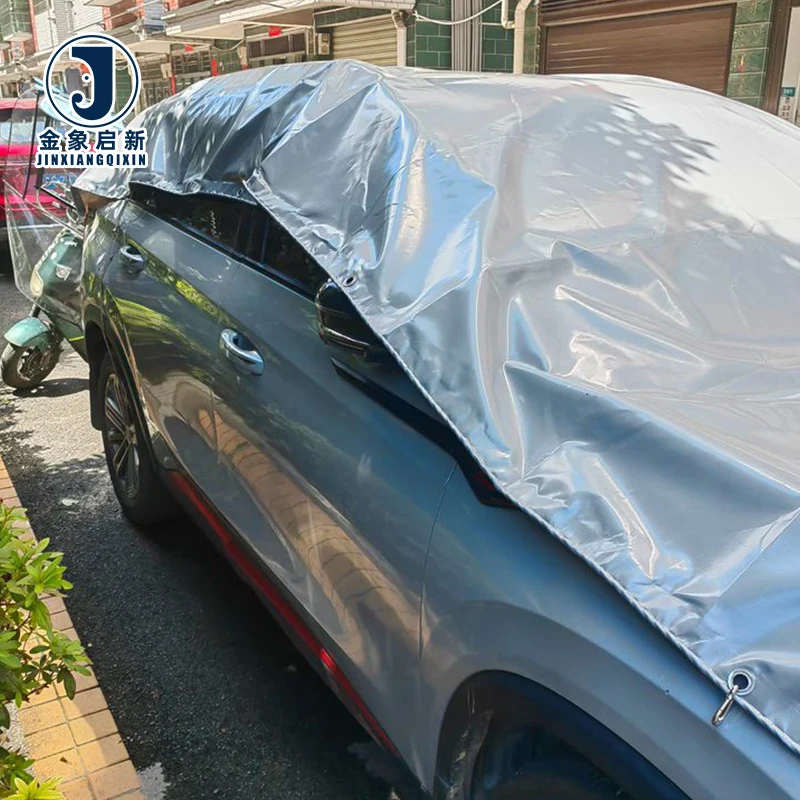
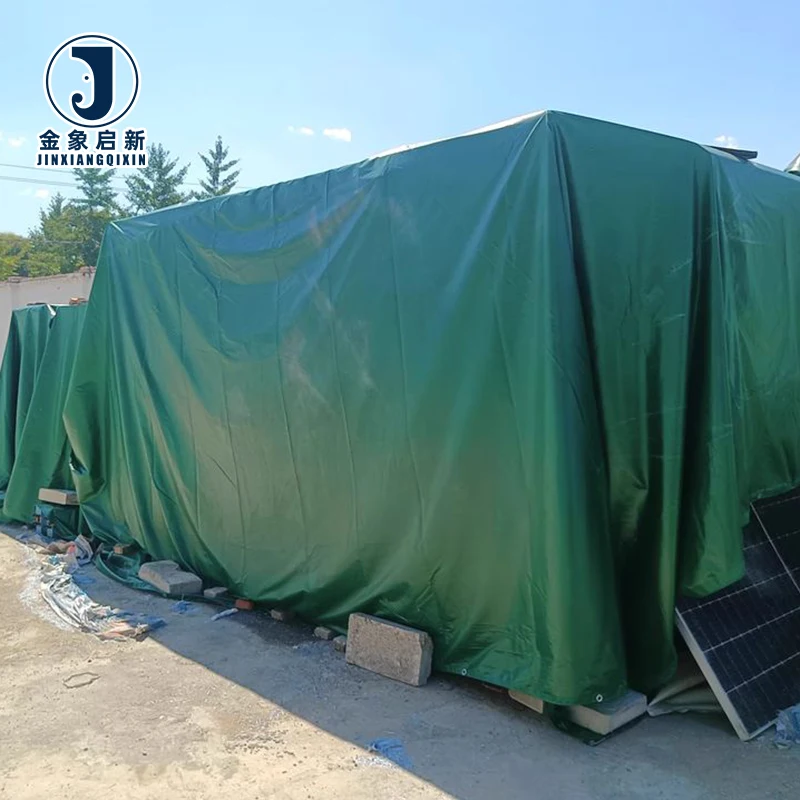
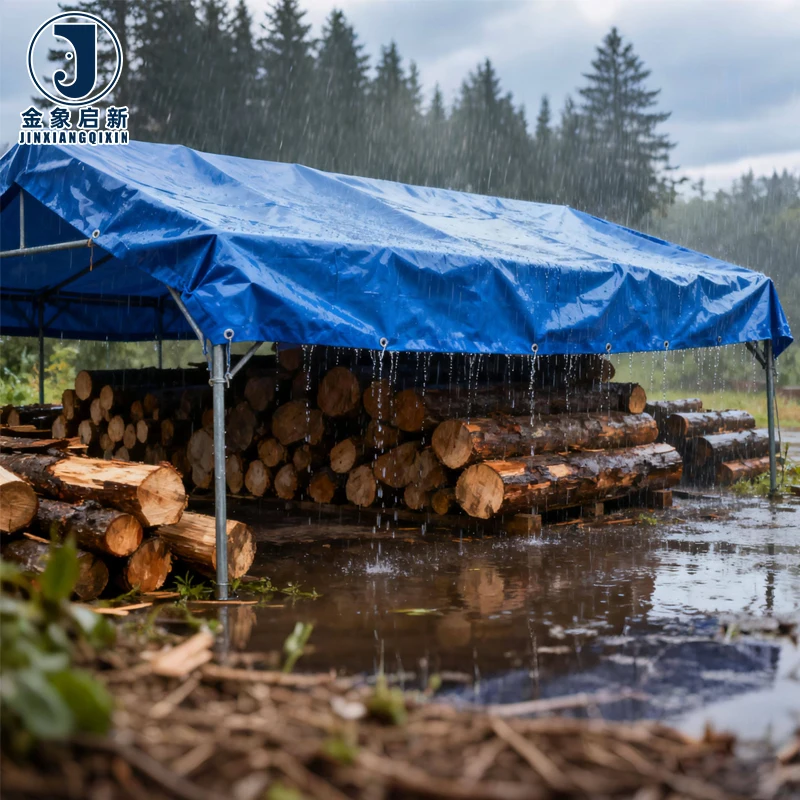
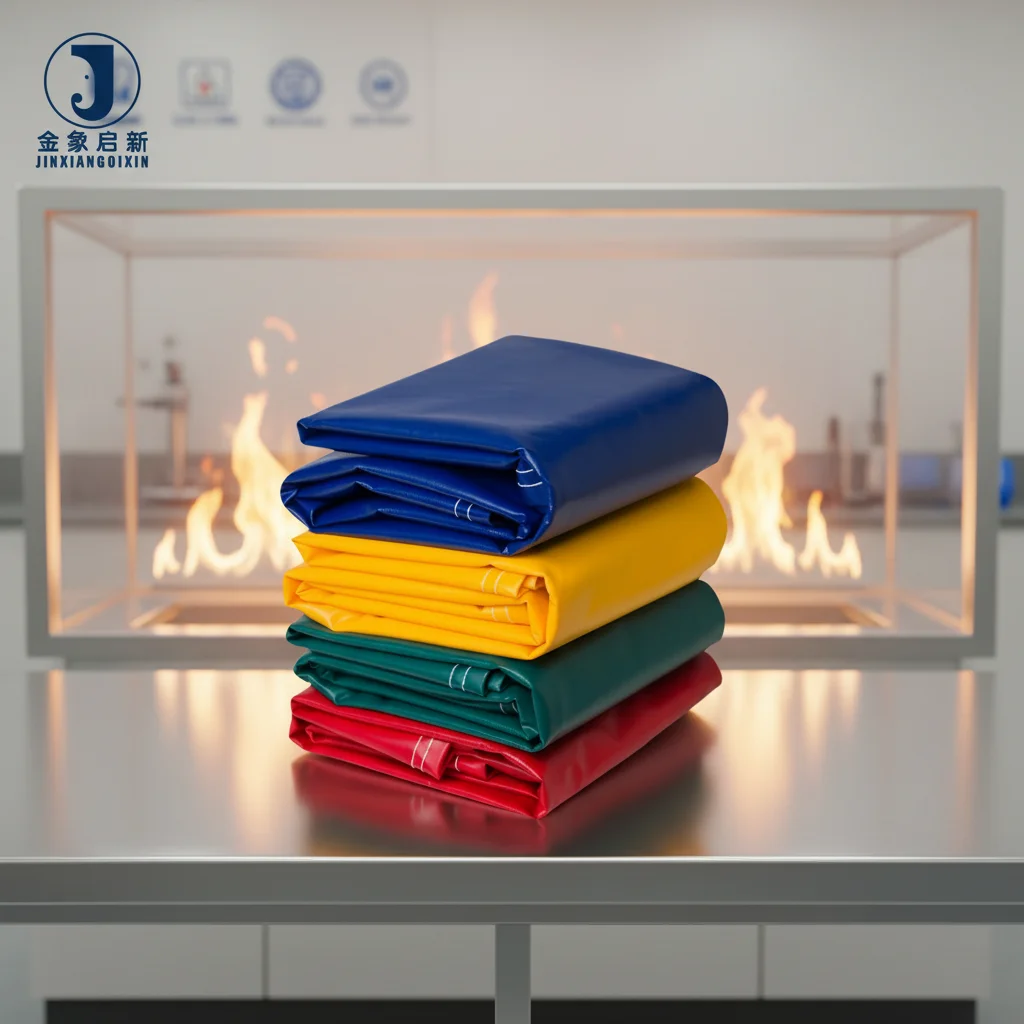
Three-Line QA Gate — Every PVC Coated Tarpaulin Roll leaving our facility passes coating adhesion, weld integrity, and dimensional checks before dispatch, ensuring roll-to-roll consistency for ventilation duct and membrane structure fabrication.
Technical Specifications
| Parameter | Value |
|---|---|
| Product Type | PVC Coated Tarpaulin Roll |
| Base Fabric | 100% high toughness polyester yarn |
| Coating Material | PVC |
| Coating Method | Lamination technology and hot melt coating technology |
| Weight (GSM) | 400–1500 g/m² (confirm the grade required for your project) |
| Base Fabric Denier | 500D / 1000D / 500D–2000D (select by structural load requirement) |
| Total Thickness | 0.35–1.5 mm (varies by grade) |
| Tensile Strength (Warp/Weft) | Up to Longitude 3000 / Latitude 2800 N/5cm (grade-dependent) |
| Waterproof | Yes |
| Flame Retardant | Available in flame retardant grades — confirm the grade required for your market (grade not stated in source) |
| Anti-Static | Anti-static treatment available — surface resistance standard to be confirmed per order (test basis not stated in source) |
| UV Treatment | Anti-UV treatment available (test basis not stated in source) |
| Anti-Mildew | Mold proof |
| Cold Resistance | Cold resistant cracking |
| Color Fastness | High color fastness (test basis not stated in source) |
| Welding Tear Strength | Excellent (test standard not stated in source) |
| Available Sizes | 8’×10′, 10’×12′, 12’×16′, 16’×20′, 20’×20′, 20’×30′ |
| Certifications | ISO, CE |
Application Suitability
| Application | Exposure & Requirement |
|---|---|
| Mining and tunnelling ventilation ducts | Continuous airflow, rock dust abrasion, mandatory fire-retardant and anti-static compliance on-site |
| Aviation ground support ducting | Flame-retardant certification required, frequent deployment and retraction cycles, fuel-proximate environment |
| Membrane and inflatable structures | Tensile load under wind and snow, UV exposure on roof spans, welded seam integrity at stress points |
| Temporary industrial enclosures | Weather exposure, rapid install and teardown, puncture and tear resistance at handling points |
| Industrial pipe canopy covers | Long-term UV and moisture exposure, chemical splash proximity, wind uplift on large spans |
What Happens When Ventilation Duct Fabric Lacks Certified Fire Performance
Every certified roll ships with its test report — no documentation, no dispatch.
Site inspectors on mining and tunnelling projects routinely reject ventilation ducting that arrives without verifiable flame-retardant and anti-static paperwork. The PVC Coated Tarpaulin Roll fire retardant / anti-static / certified specification you specify at inquiry must match the certificate handed to the safety officer at commissioning. When the documentation gap surfaces at the site gate, the entire duct run sits idle while replacement material is sourced. [NEED_CITE: mining ventilation duct fire safety compliance requirements]
Coating Technology and Adhesion Consistency
Hot melt coating and lamination technology bind the PVC layer to the high-toughness polyester base fabric under controlled temperature and pressure. This process determines how well the coating resists delamination when fabricated duct sections flex under positive and negative air pressure cycles. Consistent adhesion across the full roll width means fabricated seams hold their bond through repeated inflation and deflation, which is critical for inflatable membrane structures deployed on temporary project sites.
Denier Selection for Structural Versus Duct Loads
Base fabric denier choices from 500D to 2000D directly influence the tensile and tear behaviour of the PVC Coated Tarpaulin Roll fire retardant / anti-static / certified material under load. Lower denier fabrics suit ventilation duct applications where flexibility and foldability matter more than extreme tensile capacity. Higher denier selections at 1000D and above address membrane structure roof panels and large-span canopy covers where wind uplift generates sustained warp-direction tension. Matching denier to the structural role prevents over-specifying weight on ductwork or under-specifying strength on tensioned spans. [NEED_CITE: tensile and tear test methods for coated fabrics per ISO 1421]
Reading the Specification Sheet Beyond GSM
Weight per square metre alone does not define how a coated fabric performs in a fabricated duct or membrane structure. The base fabric denier and weave density govern how tear forces propagate once a puncture occurs — a high-GSM fabric with low denier yarn can tear more easily than a lighter fabric woven from thicker filaments. Coating method matters equally: hot melt coating delivers deeper penetration into the base weave, improving weld adhesion at fabricated seams, while lamination provides uniform surface coverage. Thickness interacts with stiffness, affecting how readily the material folds for duct installation or stretches across a membrane frame. Selecting the correct combination of denier, coating method, and GSM ensures the material meets both the mechanical demands of the structure and the fabrication requirements of the workshop.
The Cost of Specifying Duct Fabric Without Verified Certification
Ventilation ducting installed underground or in aviation facilities must satisfy fire safety and static discharge requirements enforced by site auditors. When fabric arrives with a generic "flame retardant" label but no test report tied to a recognised standard, the installation fails inspection and work halts until compliant material replaces it. Anti-static surface resistance matters equally in environments where combustible dust or fuel vapour is present — unverified treatment leaves a hidden ignition pathway that no visual inspection can detect. [NEED_CITE: DIN 4102 fire classification for building materials] Batch inconsistency between rolls compounds the problem: one section of duct may pass testing while an adjacent section, woven or coated under slightly different conditions, does not.
Why Fabricators Source Coated Rolls Through This Channel
Nearly 30 years of process control over coating weight and adhesion means the PVC compound formulation and application parameters are adjusted for each product family, not borrowed from a generic recipe. Three full production lines and 36 sets of professional equipment support the volume demands of bulk roll orders with on-time delivery schedules. A 10-person R&D team handles material selection and sample development, producing trial rolls within days so fabricators can validate weld parameters and seam strength before committing to production volume. Dedicated QA/QC checkpoints at every production stage, including 100% inspection before shipment, catch coating inconsistencies and dimensional deviations before they reach the container. Every order ships with complete documentation — material specification sheets, test reports, packing lists, and certificates of origin — so the paperwork chain matches the physical product chain.
Documentation & Verification
- Material specification sheet stating GSM, base fabric denier, and coating weight per roll
- Flame-retardant test report with grade classification matching your market’s fire safety standard
- Anti-static surface resistance verification where mining or aviation compliance applies
- 100% pre-shipment inspection record confirming roll-to-roll consistency across the order
- Certificate of origin and customs documentation for international project site clearance
- Roll packing list with batch numbers traceable to production records
Fabrication, Handling & Storage
- Hot melt coated rolls require weld temperature calibration per GSM grade to achieve full seam fusion without scorching
- Higher denier base fabrics demand slower weld travel speeds to ensure coating penetration at the join
- Store rolls horizontally on pallets to prevent edge deformation that affects unrolling and cutting accuracy
- Cold-resistant formulation allows handling in low-temperature environments, but allow material to reach workshop temperature before folding
- Clean coated surfaces with mild detergent only — solvent-based cleaners may compromise anti-static and UV treatment layers
- Cut panels with allowance for weld seam overlap, typically 25–40 mm depending on duct diameter and fabric thickness
Preparing Your Specification for Quotation
To receive an accurate quotation on PVC Coated Tarpaulin Roll fire retardant / anti-static / certified material, share the target application, the fire safety or anti-static standard enforced at the project site, and the required roll width and annual volume. Specify whether you need raw roll stock for in-house fabrication or pre-cut panels with hemmed edges. If colour matching or batch consistency across multiple shipments is critical, request a physical sample before production begins.
Frequently Asked Questions
Q: Which fire-retardant grade applies to my ventilation duct project?
A: The required grade depends on your market and application — mining sites typically reference specific national standards, while European building applications may require M2 or B1 per DIN 4102. Share the standard cited in your project specification so we supply the correct flame-retardant treatment and matching test report with each roll.
Q: How do I verify anti-static surface resistance before installation?
A: Anti-static treatment is applied during coating and must be measured with a surface resistance meter after production. We provide test documentation showing measured values per roll batch. Confirm the resistance range your site safety standard requires so we align treatment parameters accordingly.
Q: What denier and GSM combination suits membrane structures versus ventilation ducts?
A: Ventilation ducts prioritise flexibility and foldability, typically using lighter denier base fabrics at moderate GSM. Membrane roof panels face sustained wind uplift and benefit from higher denier yarns at heavier GSM grades. Share your structural load calculations so we recommend the appropriate base fabric and coating weight.
Q: Can welded seams match the fabric strength on heavy-grade rolls?
A: Welding tear strength on our hot melt coated PVC rolls is rated excellent across the product family, but actual seam performance depends on weld temperature, speed, and overlap width matching the specific GSM and coating formulation. Request a sample roll to validate your weld parameters before full production.
Q: What roll widths and lengths are available for container loading?
A: Custom width and length options are available to optimise container utilisation and reduce on-site waste. Provide your target roll dimensions and container type so we calculate the loading plan and confirm production feasibility for your required volume.