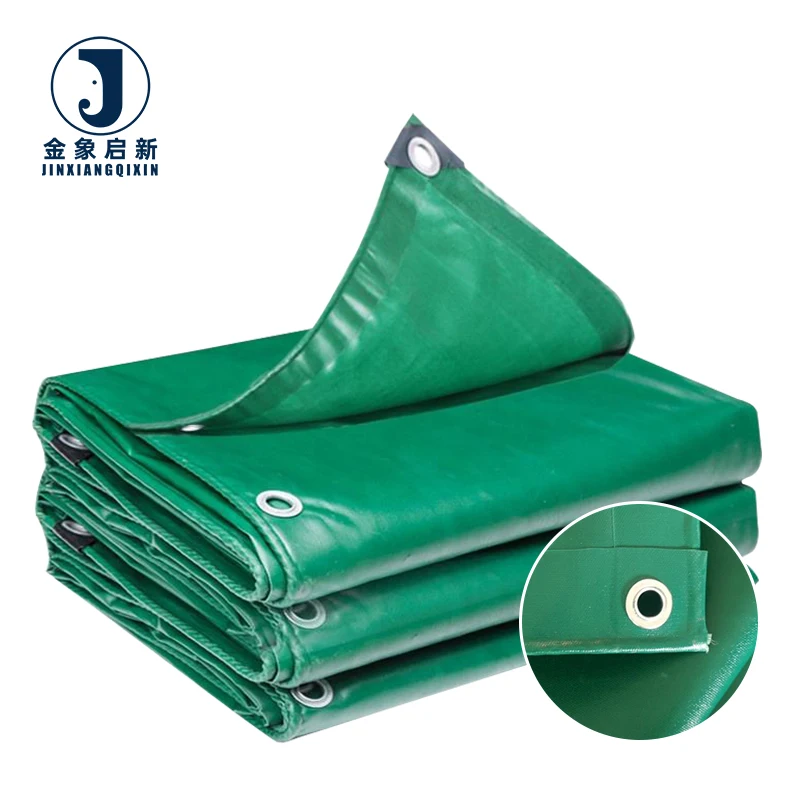
Deep Process Control Over Coating Weight — nearly three decades of PVC coating development with dedicated QA at every stage, ensuring each roll of technical-grade fabric meets the specification you approved before it ships.
Technical Specifications
| Parameter | Value |
|---|---|
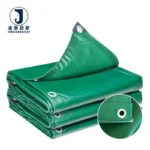
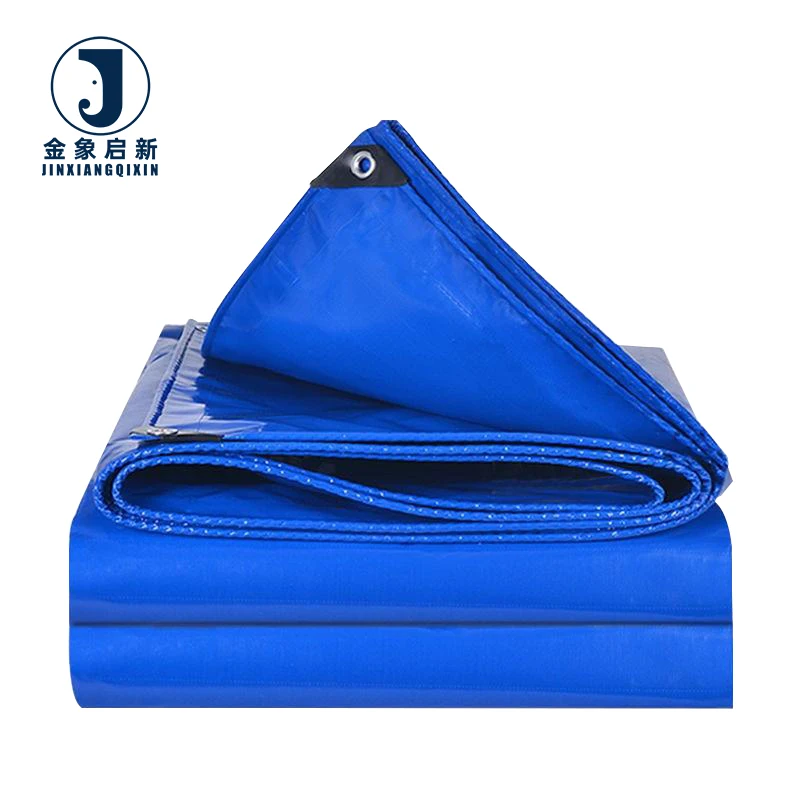
| Product Type | PVC Coated Tarpaulin |
| Base Fabric | 500D-500D Polyester |
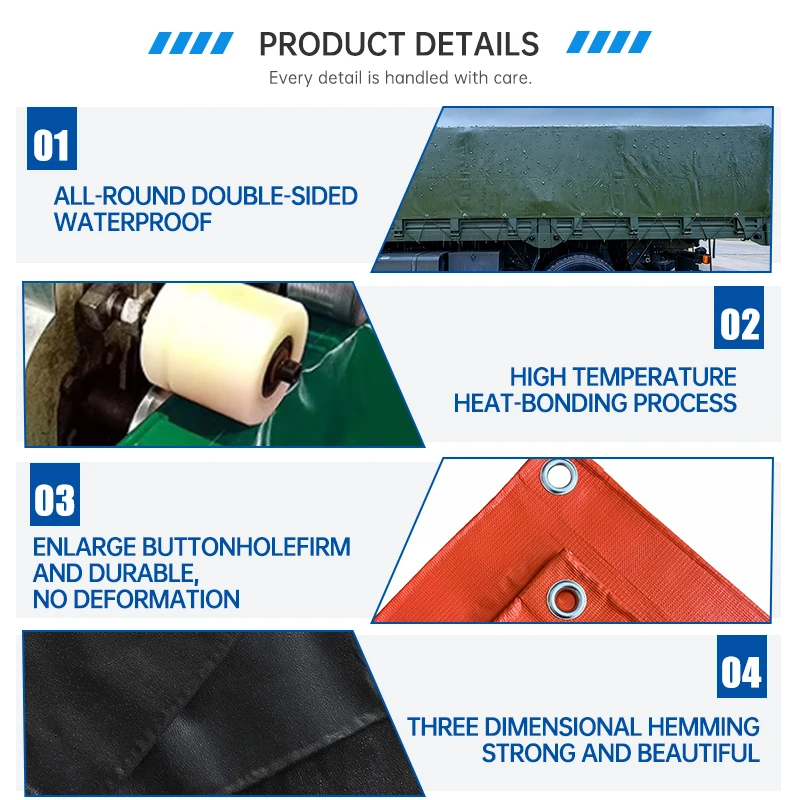
| Coating Material | PVC (double-sided) |
| Weight Range | 450–900 g/m² (available across product family — confirm grade required) |
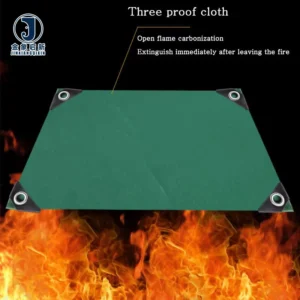
| Key Features | Water resistant, waterproof, flame retardant (grade customizable), anti-UV (test basis to be confirmed per grade) |
| Surface Characteristic | Smooth and soft surface with leather-like texture |
| Repairability | Hot air weldable |
| Package Options | Roll packing, bale packing, carton |
| Standards | ISO, CE |
Application Suitability
| Application | Exposure & Requirement |
|---|---|
| Inflatable and membrane structures | Sustained internal air pressure, cyclic flexing, UV exposure, seam weld integrity under stress |
| Aviation ground covers | Outdoor weather, fuel and chemical splash resistance, fire-retardant compliance on tarmac |
| Mining and tunnelling ventilation enclosures | Particulate abrasion, moisture, documented flame-retardant certification for underground use |
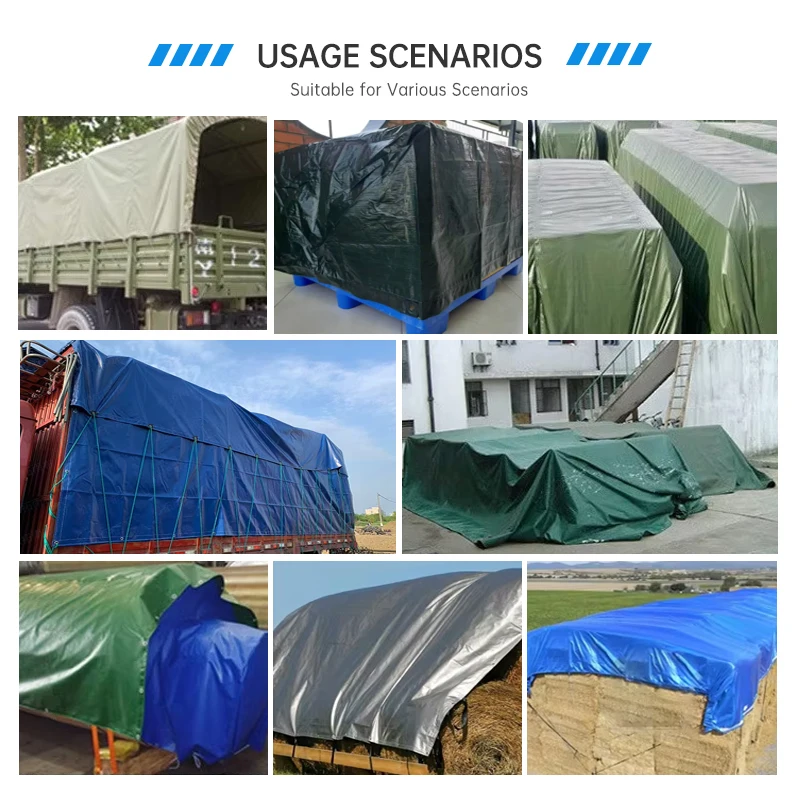
| Technical equipment enclosures | Mechanical abrasion, prolonged UV, water ingress prevention around irregular shapes |
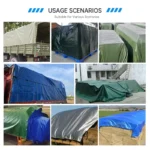
| Temporary and semi-permanent shelters | Wind load, rain, thermal cycling, rapid deployment and dismantling |
What "Flame Retardant" Really Means When No Grade Is Stated
A flame-retardant claim without a test standard behind it is marketing, not compliance.
Site inspectors and safety officers do not accept generic certificates. They ask for a specific classification — B1, M2, NFPA 701 or another code that maps to the jurisdiction where the structure will stand. When the PVC coated tarpaulin fire retardant documentation does not match, the entire installation stalls. [NEED_CITE: DIN 4102 fire classification for building materials]
We have seen projects halted because the fabric supplier provided a generic "flame retardant" label without tying it to the standard the local authority required. The cost is not the fabric — it is the weeks of delay and the reprocurement cycle. This PVC coated tarpaulin is available in flame retardant grades — confirm the grade required for your market at the inquiry stage, and the matching test report ships with your batch.
Coating Adhesion and Weld Integrity in Technical Applications
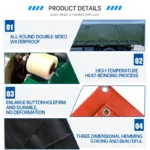
Technical covers and membrane structures rely on seams that hold under sustained load. This PVC coated tarpaulin is hot air weldable, which means fabricators can join panels on-site or in the workshop using standard hot air equipment. The double-sided PVC coating over a 500D-500D polyester base allows the weld to fuse coating to coating, creating a joint that is continuous rather than stitched. Stitched seams introduce needle holes that compromise waterproofing and create stress concentration points where tears can initiate under cyclic flexing.
Matching the Fabric Grade to the Compliance Requirement
Different markets and applications demand different fire classifications. A mining ventilation enclosure underground may require anti-static properties in addition to flame retardancy, while an above-ground membrane structure in a European city may need to satisfy a specific building material classification. Specifying the PVC coated tarpaulin fire retardant grade upfront — whether M2, B1, NFPA 701, or DIN 4102 — ensures the test documentation aligns with what the approving authority expects. [NEED_CITE: tensile and tear test methods for coated fabrics per ISO 1421]
How Base Fabric and Coating Weight Interact
The 500D-500D polyester base provides the structural skeleton: warp and weft yarns of equal denier create a balanced weave that distributes tensile load evenly in both directions. The PVC coating adds mass, waterproofing and surface protection, but it does not replace the base fabric’s contribution to tear strength. A heavier coating on a lighter base may feel substantial but can crack at fold points, while a lighter coating on a dense base maintains flexibility without sacrificing puncture resistance. The weight range across the product family spans 450–900 g/m² — the correct grade depends on whether the application prioritises flex life, wind load resistance or handling weight during installation.
The Cost of Specifying on GSM Alone
Buyers who select fabric based solely on grams per square metre often discover that two rolls with identical GSM behave very differently under stress. [NEED_CITE: relationship between coating adhesion and seam peel strength in coated fabrics] A roll with a thin coating and a dense base may outperform a heavier roll with a thick coating on a loose weave — especially at welded seams where coating-to-coating adhesion determines joint strength. When a technical cover fails at the weld line rather than the body of the fabric, the root cause is usually a mismatch between the coating formulation and the welding parameters used on site. Flame-retardant additives can also alter the melting behaviour of the PVC layer, requiring adjusted hot air temperatures to achieve a consistent bond.
Why Specialist Buyers Source Technical Fabric Here
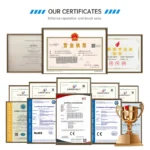
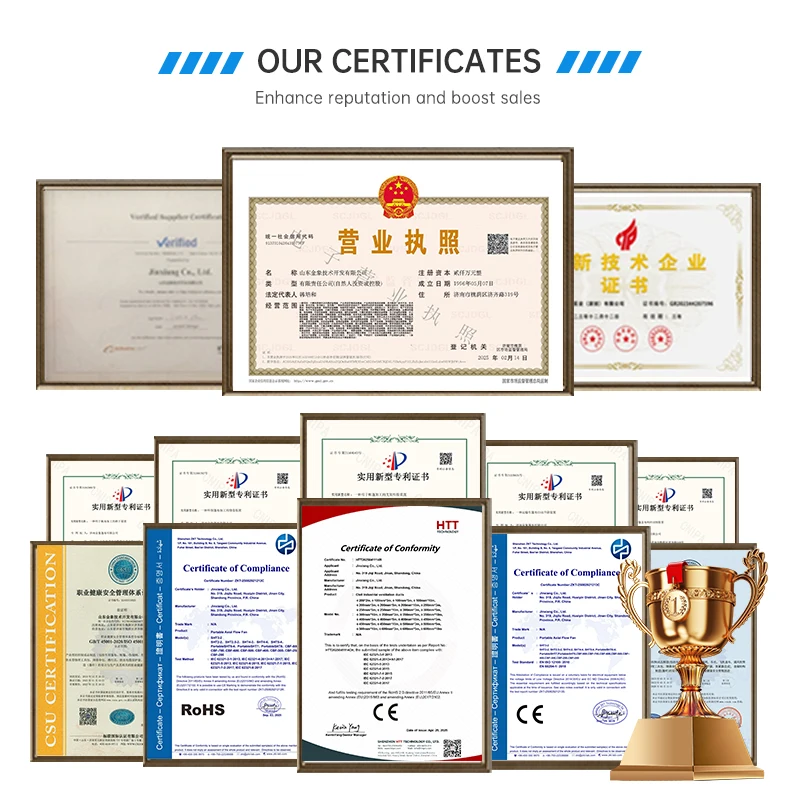
Dedicated QA/QC runs at every production stage, with full inspection of every roll before it leaves the facility — no sampling shortcuts on critical technical orders. A 10-person R&D team handles material selection, custom sizing and sample development, turning around samples for specialist requirements within days rather than weeks. The production floor operates dedicated lines for coated fabric, giving buyers of PVC coated tarpaulin fire retardant grades the batch consistency that multi-purpose factories cannot guarantee. ISO and CE certified processes underpin the documentation chain from raw material to shipped roll. Pre-shipment inspection records are matched to each batch, so the roll you receive corresponds exactly to the specification sheet you approved.
Documentation & Verification
- Material specification sheet confirming GSM, 500D-500D base fabric, coating type and colour reference
- Flame-retardant test report matched to the standard specified at inquiry (M2, B1, NFPA 701, DIN 4102)
- Anti-UV test documentation where applicable, tied to the grade and batch supplied
- ISO and CE certificates covering the production facility and coating processes
- Pre-shipment inspection record with roll-by-roll verification before dispatch
- Roll packing list with weight, dimensions and batch traceability for customs clearance
Fabrication, Handling & Storage
- Hot air weld at temperatures matched to the specific PVC coating formulation — flame-retardant additives may require adjusted settings
- Store rolls upright on a flat surface to prevent permanent creasing through the 500D polyester base
- Allow cold-transported rolls to reach ambient temperature before unrolling to avoid coating micro-cracking
- Cut panels with allowance for weld overlap; the double-sided PVC coating bonds cleanly under hot air
- Clean with mild detergent and soft cloth; solvents may degrade the leather-like PVC surface finish
- Field-repair punctures by hot air welding a patch of matching PVC coated tarpaulin over the damage
How to Structure Your Inquiry
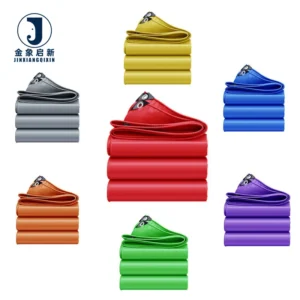
Tell us the application, the environment and the compliance standard your project must satisfy — whether that is an underground mining ventilation duct requiring documented flame retardancy or an inflatable structure needing both fire classification and anti-static properties. Specify the target GSM range, required roll widths and whether you need raw rolls or finished cut sizes. If colour consistency across multiple rolls matters for a visible installation, note that upfront so batch matching is built into the production plan.
Frequently Asked Questions
Q: Which flame-retardant standard applies to my project, and how is it documented?
A: The required standard depends on your jurisdiction and application — common classifications include M2, B1, NFPA 701 and DIN 4102. State the standard at inquiry and the matching test report will ship with your batch, tied to the specific rolls supplied.
Q: What test basis supports the anti-UV claim?
A: Anti-UV treatment is available across selected grades. The test basis and exposure rating vary by formulation — confirm the UV performance level your application demands at the specification stage, and the corresponding test documentation will be provided with your order.
Q: How is GSM verified on arrival, and what tolerance applies?
A: Every roll undergoes weight verification during pre-shipment inspection against the stated specification. The inspection record accompanies your shipment so you can cross-check on arrival. If your contract specifies a tolerance band, communicate it at inquiry so it is built into the QC protocol.
Q: Hot air welding versus sewing — which suits inflatable and membrane structures?
A: Hot air welding fuses the PVC coating layers directly, eliminating needle holes that compromise airtightness and waterproofing. For inflatable and membrane structures where air retention and seam strength under sustained pressure are critical, welded seams are the standard fabrication method.
Q: Can custom widths and fire-retardant grades be combined in one order?
A: Yes — custom widths, colours and flame-retardant grades can be specified together. Minimum quantities apply per variant, so share your full requirement at inquiry and the production plan will consolidate variants to optimise lead time and batch consistency.