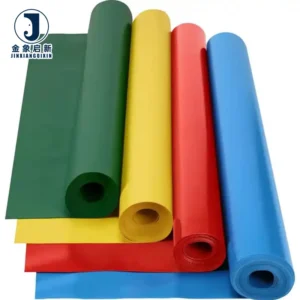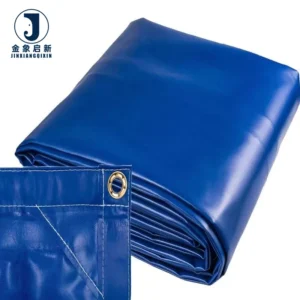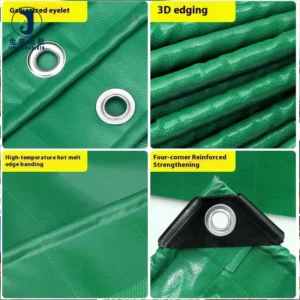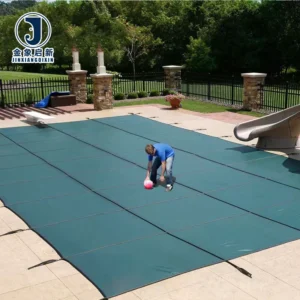
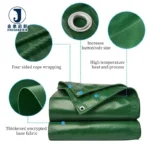
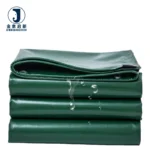
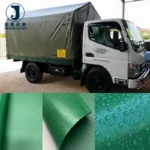
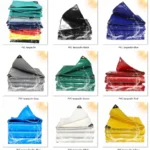
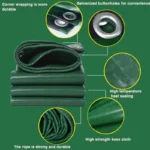
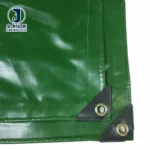
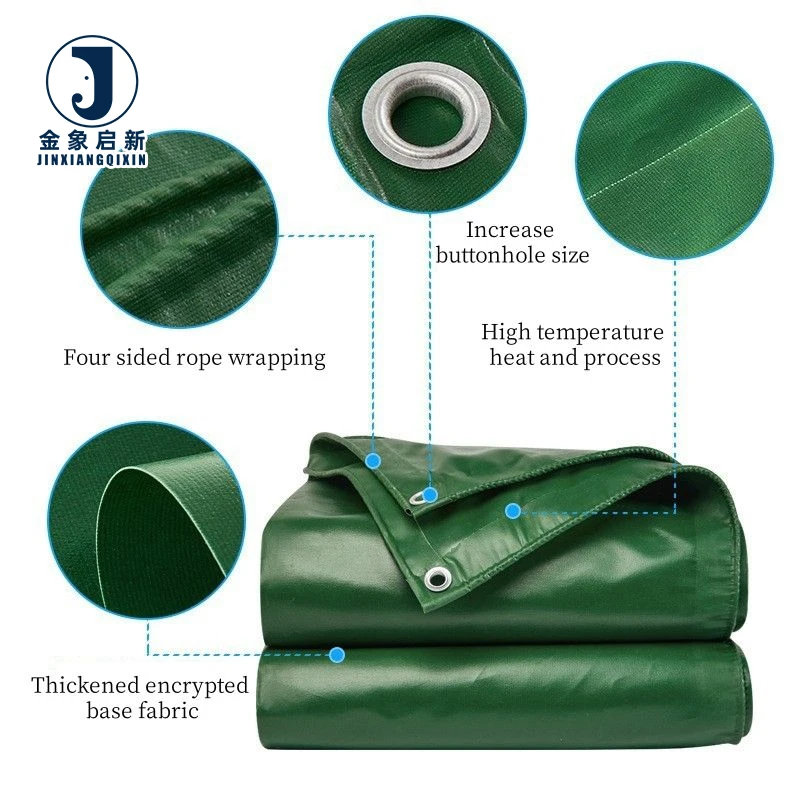
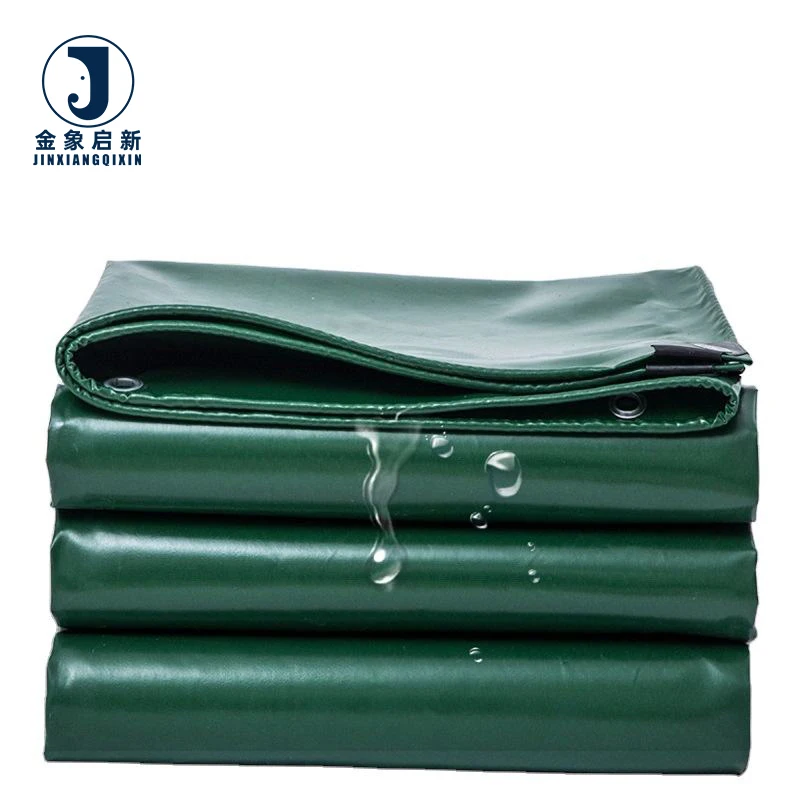
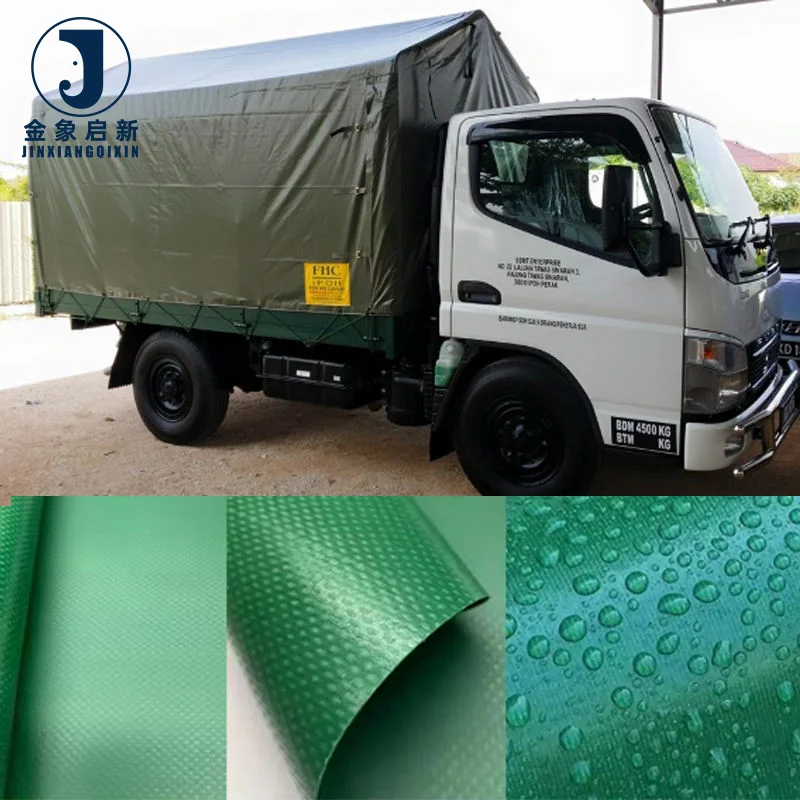
Proven Coating Process Control — Three dedicated production lines ensure roll-to-roll coating weight consistency across every batch of PVC coated tarpaulin roll dispatched from our facility.
Technical Specifications
| Parameter | Value |
|---|---|
| Product Type | PVC Coated Tarpaulin Roll |
| Weight (GSM) | 500GSM |
| Base Fabric | Tricot / Plain Woven Industrial Fabric |
| Coating Material | PVC, Double-Side Coated |
| Waterproof Rating | Anti-permeable ≥20KPa |
| Flame Retardant | ≤10 seconds (grade and test standard to be confirmed with R&D) |
| Low-Temperature Flexibility | Will not fracture at -30°C |
| Corrosion Resistance | Acid, Alkali, Brine |
| Anti-Mildew | Yes (test basis to be confirmed) |
| Surface Finish | Abrasion-Resistant Woven Plain |
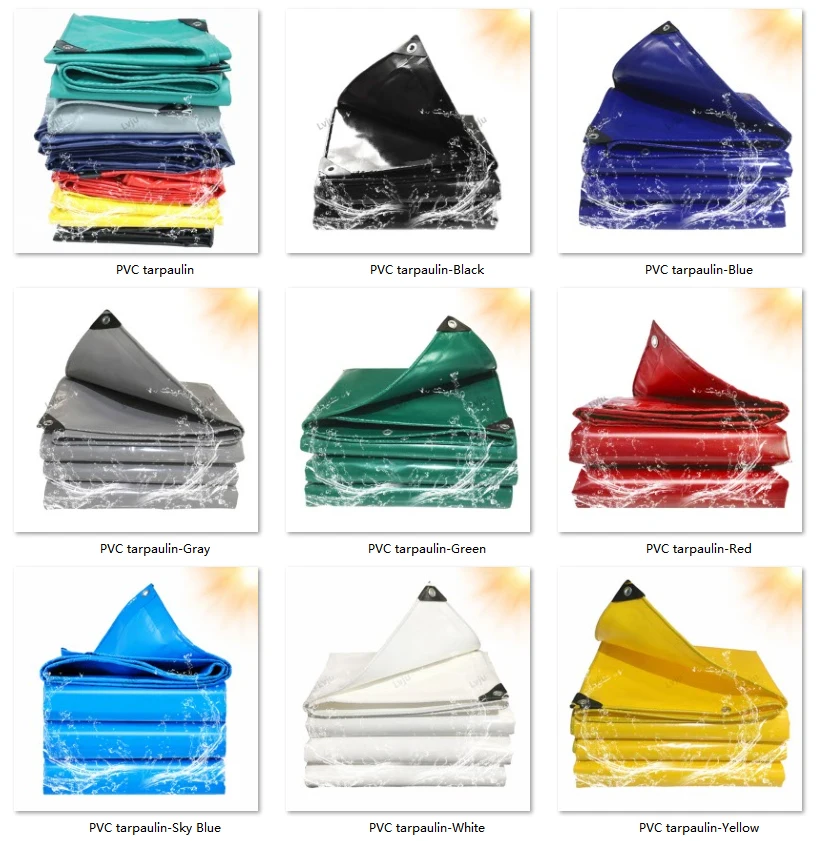
| Custom Options | Width, Length, Colour, Eyelets, Reinforced Hems, Pattern Printing |
Application Suitability
| Application | Exposure & Requirement |
|---|---|
| Truck and Trailer Cargo Covers | Constant flexing at load points, road debris abrasion, UV and rain exposure requiring flexible waterproof fabric |
| Construction Site and Equipment Covers | Prolonged outdoor weathering, dust and moisture ingress prevention, chemical splash resistance |
| Pool and Reservoir Liners | Permanent water immersion, chlorine or soil chemistry contact, puncture risk from substrate |
| Tent and Awning Fabric | Tensioned structural loading, repeated folding and unfolding, solar heat and UV degradation |
| Agricultural Pond Lining | Organic acid exposure, livestock traffic abrasion, long-term water retention |
Why "Fire Retardant" Without a Test Report Is Just Marketing
Many PVC coated tarpaulin fire retardant certified claims fail when site inspectors request documented proof. Specified flame-retardant grades must be backed by batch-specific test reports aligned with local fire codes.
Ventilation duct or technical fabric supplied without the fire-retardant or anti-static certification the site requires leads to rejected installations, costly rework, and project delays. When procurement teams accept a supplier’s generic claim without demanding the underlying test standard, they inherit compliance risk that surfaces only during final inspection [NEED_CITE: fire classification standards for textile building materials and temporary structures]. The gap between a verbal assurance and a documented test result is where most specification failures originate.
Coating Adhesion and Layer Integrity Under Field Stress
PVC coated tarpaulin roll performance depends on how thoroughly the coating penetrates and bonds to the base fabric. Double-side coating on a tricot or plain woven industrial base ensures the PVC locks into the yarn structure, reducing delamination risk at seam lines and high-flex zones. This construction matters most where truck covers flex over uneven loads or where pond liners bear against sharp substrate edges.
Chemical and Temperature Boundaries in Industrial Environments
Exposure to acid, alkali, and brine environments demands a coating formulation that resists chemical migration through the fabric matrix. The -30°C low-temperature flexibility rating means the PVC compound remains pliable in freezing conditions without micro-fracturing, a common failure mode in cold-climate logistics and outdoor storage. These boundaries define where this PVC coated tarpaulin fire retardant certified material can be deployed without supplementary protection [NEED_CITE: low-temperature flexibility test methods for coated fabrics].
Reading the Specification Sheet Beyond GSM
A 500GSM weight reading combines the base fabric mass and the PVC coating applied to both sides. The tricot or plain woven base provides tensile and tear strength, while the coating contributes waterproofing, chemical resistance, and surface durability. Evaluating GSM alone without knowing the base fabric denier and weave density gives an incomplete picture of how the material will perform under tension or abrasion. Coating adhesion method — whether knife-over-roll, laminating, or calendering — directly affects peel strength and heat-welding behaviour during fabrication. Surface finish on an abrasion-resistant woven plain influences how the material handles repeated contact with cargo edges or ground surfaces. Waterproof performance at anti-permeable ≥20KPa indicates the coating’s resistance to hydrostatic pressure, relevant for pond liners and exposed cargo covers. Low-temperature flexibility to -30°C and corrosion resistance to acid, alkali, and brine together define the operational envelope beyond what a single weight figure communicates.
The Hidden Cost of Specifying on Price Per Roll Alone
Rolls arriving with GSM lighter than quoted, colour drifting between batches, or flame-retardant claims with no test report to back them up create downstream failures that cost far more than the original savings. Welded seams failing before the fabric does — typically at the point the load flexes most — trace back to coating formulations that do not match the welding parameters used on-site. Batch colour variation becomes visible only after installation, when adjacent panels show mismatched tones across a truck curtain or site enclosure [NEED_CITE: common causes of welded seam failure in PVC coated fabrics]. These problems surface weeks or months after delivery, when the supplier is already paid and the installer bears the replacement cost.
What Process Control Means for Your Roll Stock
Three full production lines with 36 sets of professional equipment support bulk PVC coated tarpaulin roll output with consistent coating weight across every roll in a batch. A 10-person R&D team handles material selection, custom sizing, colour matching, and sample development, typically producing samples within days for validation before full production runs. Dedicated QA and QC inspection at every production stage, with 100% pre-shipment inspection, means each roll is verified against the material specification sheet before dispatch. Nearly 30 years of focused coated fabric production provides accumulated process data that informs coating formulation adjustments for specific end-use environments. ISO and CE certified production systems underpin documentation traceability from raw material lot to finished roll shipment.
Documentation & Verification
- Material specification sheet confirming 500GSM weight, tricot base fabric, and double-side PVC coating
- Flame-retardant test report matched to roll batch, stating grade and test standard
- Anti-permeable ≥20KPa waterproof rating verified on production sample
- ISO and CE certificates included with every shipment documentation package
- Pre-shipment inspection record with QA sign-off covering coating adhesion and surface finish
- Roll packing list detailing individual roll dimensions, weight, and colour reference
Fabrication, Handling & Storage
- Heat-weld parameters must match the double-side PVC coating formulation — request recommended temperature and dwell time for 500GSM stock
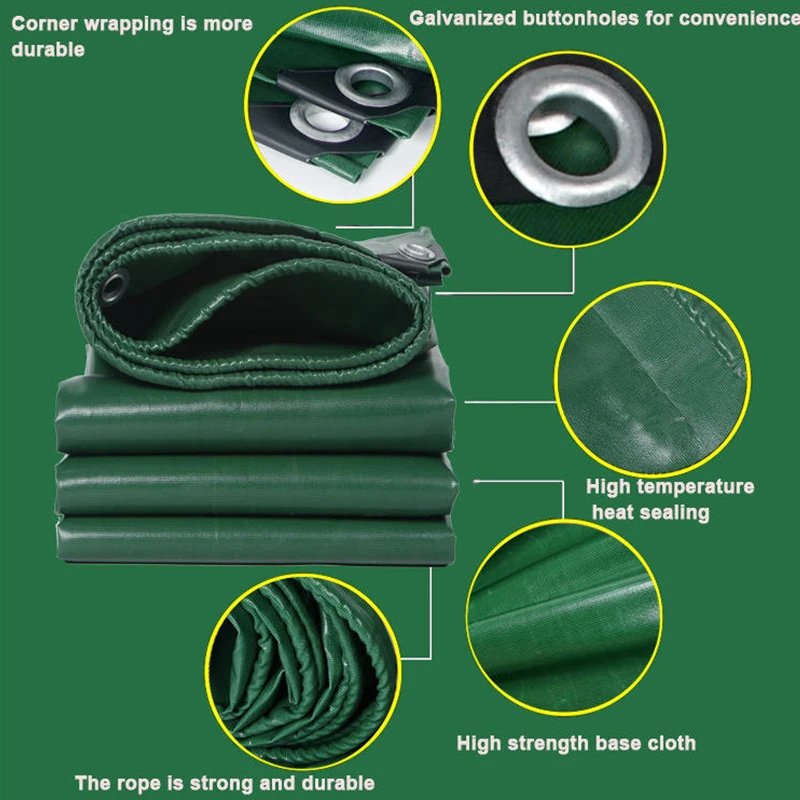
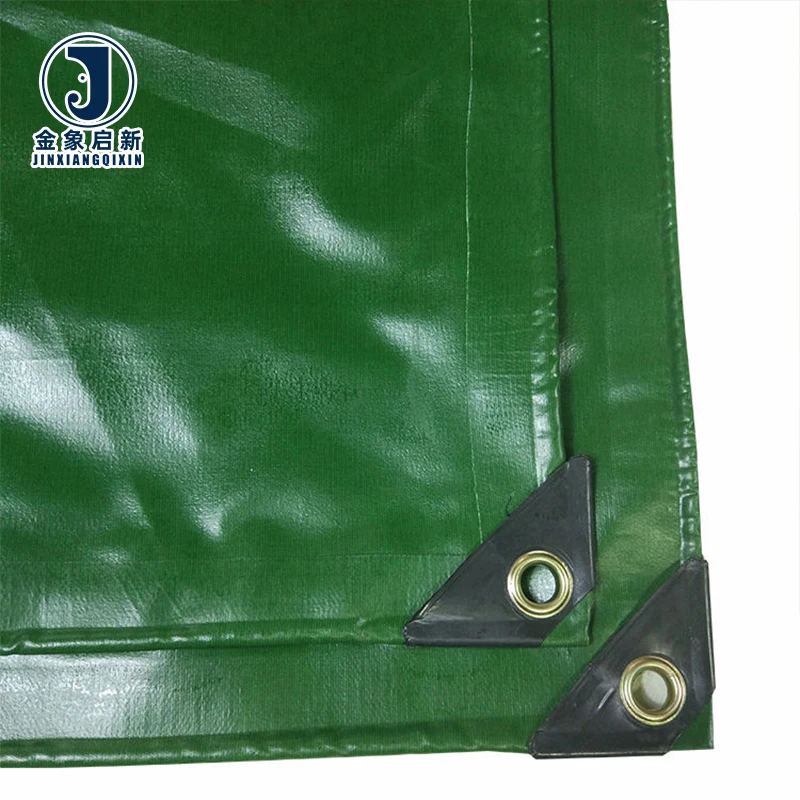
- Eyelet and reinforced hem placement should account for abrasion-resistant woven plain surface characteristics at stress points
- Store rolls upright on cores in dry conditions to prevent permanent creasing across the 500GSM coated fabric width
- Cold-weather handling below -30°C risks coating fracture — allow rolls to acclimatise before unrolling in freezing conditions
- Use pH-neutral cleaners only; acid and alkali resistance of the PVC coating does not extend to aggressive solvent-based products
- Custom pattern printing requires pre-production sample approval to confirm ink adhesion on the specified surface finish
What We Need to Quote Accurately
Provide your target application and the specific environmental exposures the fabric will face, including any chemical contact, temperature extremes, or fire-code requirements for your market. Specify the roll width, colour reference, and annual volume so we can confirm production line scheduling and batch consistency parameters. If you require flame-retardant or anti-static grades, state the certification standard your local authority demands so our R&D team can match the formulation and arrange documented testing before production begins.
Frequently Asked Questions
Q: How do I confirm the flame-retardant grade matches my local fire code?
A: Provide the specific standard your project or market requires — such as DIN 4102, NFPA 701, or a regional equivalent — and our R&D team will confirm whether the current formulation meets it. A batch-specific test report stating the achieved grade and test method accompanies every shipment of flame-retardant PVC coated tarpaulin fire retardant certified rolls.
Q: How is GSM verified on arrival and what documentation supports it?
A: Each roll ships with a material specification sheet stating the 500GSM weight, base fabric denier, and coating weight breakdown. We conduct 100% pre-shipment weight verification against the quoted GSM. Buyers are encouraged to perform incoming inspection using the same method to confirm consistency between documentation and physical roll weight.
Q: What is the lead time and minimum for custom width or colour rolls?
A: Custom width, colour, and pattern printing requirements are handled by our 10-person R&D team with sample development typically available within days. Lead times and minimums depend on the specific colour formulation and roll dimensions requested. Confirm your requirements early so we can allocate production line capacity and confirm batch scheduling.
Q: How is colour consistency maintained across multiple rolls in one order?
A: All rolls in a single production run are coated from the same mixed batch to eliminate inter-roll colour drift. Pre-shipment inspection includes visual and instrumental colour comparison across the batch. If your installation places panels side by side — such as truck curtains or site enclosures — specify this in your inquiry so we apply tighter colour tolerance controls.
Q: Can this PVC coated fabric be heat-welded or does it require sewing?
A: The double-side PVC coating on the 500GSM tricot base is compatible with hot-air and wedge welding when correct temperature and speed parameters are used. We provide recommended welding settings matched to the specific coating formulation. Sewn seams should be sealed with compatible PVC adhesive or tape to maintain waterproof integrity at stitch lines.